Key takeaways
- Traditional SEO metrics no longer tell the full story -- clients can rank on page one and still be invisible in AI-generated answers
- The 10 metrics in this guide cover brand mention rate, citation share, sentiment, prompt-level visibility, answer gap analysis, AI traffic attribution, crawler activity, competitor heatmaps, content coverage, and share of voice trends
- Most monitoring-only tools give you data for metrics 1-3 but leave you stuck on the rest -- the best platforms close the loop between tracking and fixing
- Agencies that report these metrics early will have a significant advantage in client retention and new business pitches
There's an awkward conversation happening in agency meetings right now. A client pulls up their Google Analytics, sees organic traffic flat or declining, and asks why. The agency points to rankings. Rankings look fine. But something is off.
What's off is that a growing share of their potential customers never see the blue links at all. They ask ChatGPT, Perplexity, or Google's AI Mode -- and get an answer that either mentions the client or doesn't. No click. No impression. No trace in the usual dashboards.
This is the visibility gap that agencies need to start reporting on. Not because it's trendy, but because it's real and measurable. The metrics exist. The tools exist. The question is which numbers actually belong in a client report versus which ones are just noise.
Here are the 10 that matter.
1. Brand mention rate
This is the starting point. Out of all the AI-generated responses your client's brand could appear in, what percentage actually include a mention?
You define a prompt set -- say, 50 queries relevant to the client's category -- run them across AI models, and count how often the brand shows up. A brand with a 40% mention rate is appearing in 20 out of 50 relevant conversations. A brand at 8% is nearly invisible.
This metric is easy for clients to understand and gives you a baseline to improve against. Track it weekly or monthly and show the trend line. Even a small upward movement is a story worth telling.
Promptwatch tracks mention rates across 10 AI models simultaneously -- ChatGPT, Perplexity, Claude, Gemini, Grok, DeepSeek, and more -- so you're not just measuring one platform and calling it done.

2. Citation share (share of voice in AI)
Mention rate tells you if the brand shows up. Citation share tells you how often it shows up relative to competitors.
If your client is mentioned in 30% of relevant AI responses and their top competitor is mentioned in 55%, that gap is the story. Citation share is the AI equivalent of share of voice -- a metric clients already understand from traditional media and SEO.
Calculate it by tracking mentions across a shared prompt set for the client and their main competitors, then expressing each brand's mentions as a percentage of total brand mentions across all responses.
This metric tends to land well in executive reporting because it's competitive and concrete. "You're at 22%, your closest competitor is at 41%" is a clearer call to action than almost any other number you could show.
3. Sentiment and framing quality
Being mentioned isn't always good. AI models sometimes describe brands in ways that are neutral at best, damaging at worst -- outdated positioning, incorrect feature descriptions, or framing that puts the brand in a weaker light than competitors.
Sentiment analysis in AI visibility isn't the same as social listening. You're not counting positive tweets. You're looking at how the model frames the brand: Is it recommended? Is it listed with caveats? Is it described as "good for beginners" when the client positions as enterprise? Is a competitor always listed first?
Track this qualitatively at first -- read the actual AI responses and note the framing. Some platforms are starting to automate this, but manual review still catches nuance that automated scoring misses. Include direct quotes from AI responses in client reports. Clients find it eye-opening to see exactly what ChatGPT says about them.
4. Prompt-level visibility breakdown
Aggregate mention rates are useful. Prompt-level data is where strategy lives.
Instead of "you appear in 35% of AI responses," you want to show: "You appear in 80% of responses to 'best project management software for remote teams' but 0% of responses to 'project management software with time tracking' -- and that second query has high volume."
This granularity tells you exactly which content gaps to fix. It also helps clients understand that AI visibility isn't a single dial -- it's a map of specific questions where they're winning or losing.
Good platforms let you organize prompts by topic cluster, funnel stage, or persona so you can slice the data in ways that match how the client thinks about their business.


5. Answer gap analysis (prompts where competitors appear but you don't)
This is arguably the most actionable metric in the list. An answer gap is a prompt where a competitor is being cited by AI models but your client isn't -- despite the client having a legitimate claim to that space.
Answer gaps are direct content briefs. Each gap represents a topic the client's website isn't covering well enough for AI models to trust it as a source. Fix the content, and the citation follows.
For client reporting, show a ranked list of answer gaps sorted by estimated prompt volume. The highest-volume gaps with the weakest client coverage are the priority. This gives the client a clear, prioritized to-do list rather than a vague recommendation to "create more content."
Platforms that combine gap analysis with content generation are particularly useful here -- you can go from identifying the gap to drafting the fix in the same workflow.
6. AI traffic attribution
This one is harder to measure but increasingly important. How much of your client's website traffic is actually coming from AI search?
The challenge is that AI-referred traffic often shows up as direct traffic in GA4 because many AI models don't pass referrer data. There are a few ways to get closer to the truth:
- Look for spikes in direct traffic that correlate with AI mention increases
- Use UTM-tagged links in structured data or llms.txt files
- Analyze server logs for AI crawler activity (more on that below)
- Use a JavaScript snippet that captures referrer data at the session level before it's lost
Some platforms now offer dedicated AI traffic attribution modules. The data is imperfect, but even a directional estimate -- "roughly 12% of your direct traffic appears to be AI-referred" -- is valuable for justifying the investment in GEO work.
7. AI crawler activity
Before an AI model can cite your client's content, its crawler has to find and read it. AI crawler logs tell you whether that's actually happening.
Track which AI crawlers (GPTBot, ClaudeBot, PerplexityBot, etc.) are visiting the site, which pages they're reading, how frequently they return, and whether they're hitting errors. A page that's never been crawled by any AI bot has essentially zero chance of being cited, regardless of how good the content is.
This metric is particularly useful for diagnosing why a client's visibility isn't improving despite publishing new content. If the content isn't being crawled, the answer isn't "write more" -- it's "fix the crawlability."
Most traditional SEO tools don't surface this data at all. It requires either server log analysis or a platform that specifically monitors AI crawler behavior.
8. Competitor visibility heatmap
A heatmap view shows which AI models are citing which competitors for which prompt categories. It's a competitive intelligence layer that goes beyond simple share of voice.
For example: your client might be winning on ChatGPT but losing badly on Perplexity. Or they might dominate "best X for enterprise" prompts but be invisible on "X alternatives" prompts -- which is often where purchase-intent research happens.
The heatmap format works well in client presentations because it's visual and immediately legible. You can show a grid of competitors vs. AI models vs. prompt categories and let the client see exactly where the competitive pressure is coming from.
This also helps prioritize which AI models to focus optimization efforts on. If 70% of the client's target audience uses Perplexity for research but the client has near-zero visibility there, that's where to start.
9. Content coverage score
AI models cite content that comprehensively answers questions. A content coverage score measures how well the client's existing content covers the topics that AI models care about in their category.
This isn't the same as keyword density or word count. It's about topical depth: does the site have authoritative content on the sub-topics, questions, and angles that AI models draw on when constructing answers?
You can approximate this manually by mapping the client's content against the prompt set you're tracking and noting which prompts have no relevant content on the site. Platforms that automate this give you a percentage score and a prioritized list of missing topics.
Improving content coverage is the primary lever for improving AI visibility over time. This metric connects the tracking work to the content strategy work -- which is exactly the story agencies need to tell clients to justify ongoing retainers.
10. Visibility trend over time
All of the above metrics are more powerful as trends than as point-in-time snapshots.
A client at 35% mention rate who was at 20% three months ago is a success story. A client at 35% who was at 45% three months ago has a problem that needs diagnosing. The number alone doesn't tell you which situation you're in.
Track all key metrics weekly and show rolling 90-day trend lines in reports. This does two things: it demonstrates that the work is moving the needle (or flags when it isn't), and it builds a historical record that becomes increasingly valuable as AI search matures.
For agencies, trend data is also the best defense against the "what have you done for me lately" conversation. When you can show a client a chart of their AI visibility climbing steadily over six months, the value of the engagement is self-evident.
How these metrics fit together in a client report
Here's a simple structure that works for monthly reporting:
| Section | Metric | What it shows |
|---|---|---|
| Executive summary | Mention rate + trend | Are we visible? Is it improving? |
| Competitive position | Citation share + heatmap | How do we compare? Where are we losing? |
| Brand health | Sentiment and framing | How are AI models describing us? |
| Content gaps | Answer gap analysis + coverage score | What's missing? What to fix next? |
| Technical health | AI crawler activity | Are AI bots finding our content? |
| Traffic impact | AI traffic attribution | Is visibility translating to visits? |
| Prompt detail | Prompt-level breakdown | Which specific queries are we winning/losing? |
The goal isn't to dump all 10 metrics on every client every month. It's to have them available and pull the ones that tell the most important story for that client at that moment.
Choosing the right tools
Most agencies end up using two or three tools in combination. Here's a rough breakdown of what different platforms are best at:
| Tool | Best for | Gaps |
|---|---|---|
| Promptwatch | Full action loop: tracking + gap analysis + content generation + attribution | N/A -- most complete platform |
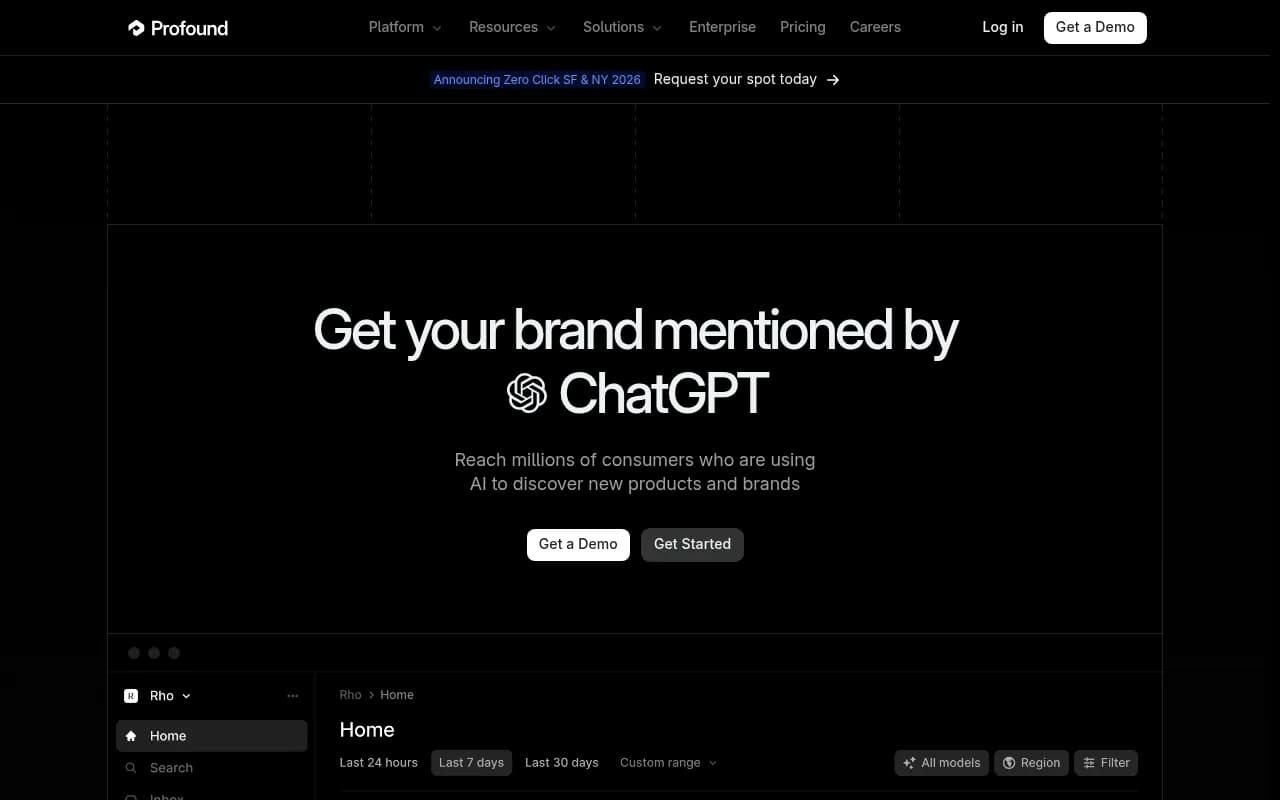
| Profound | Enterprise-scale monitoring | Higher price point, no Reddit tracking |
| Otterly.AI | Affordable entry-level monitoring | No content generation, no crawler logs |
| Peec AI | Multi-language tracking | Monitoring only |
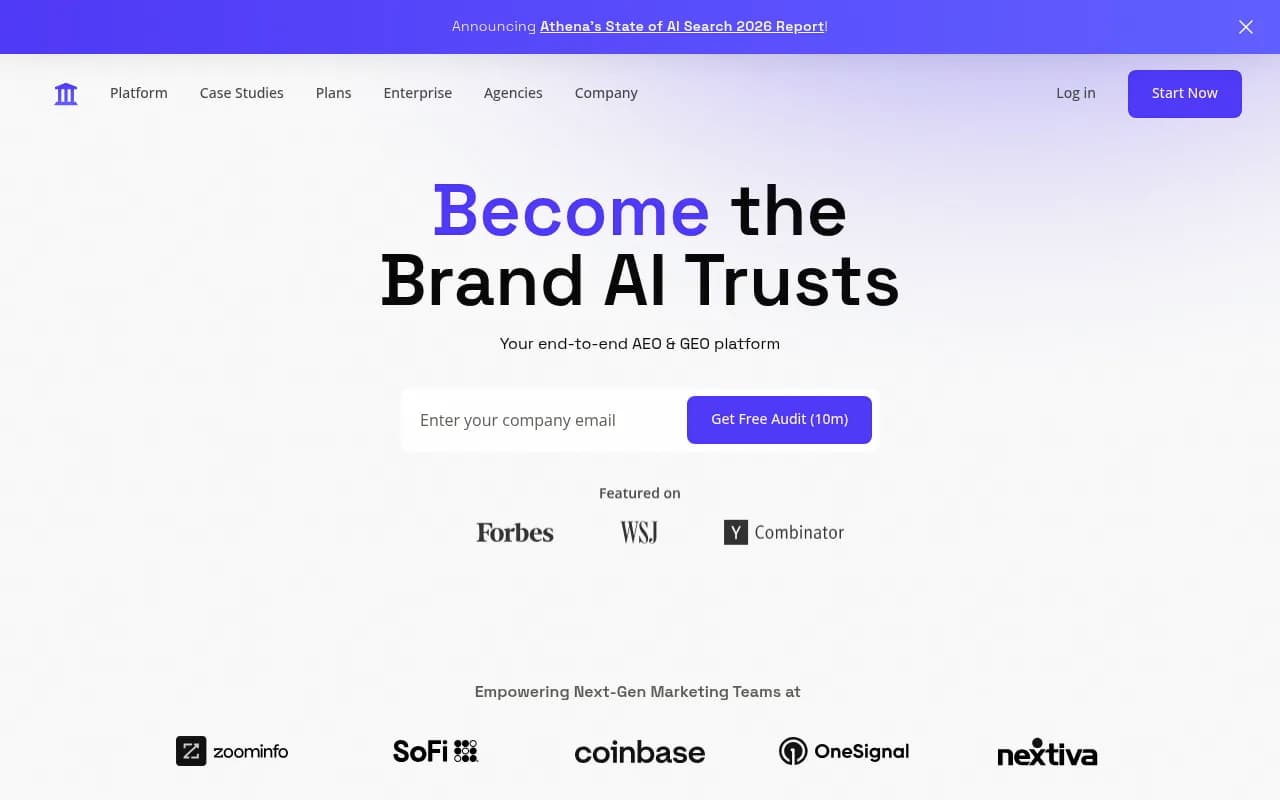
| AthenaHQ | Multi-model tracking | No content optimization |
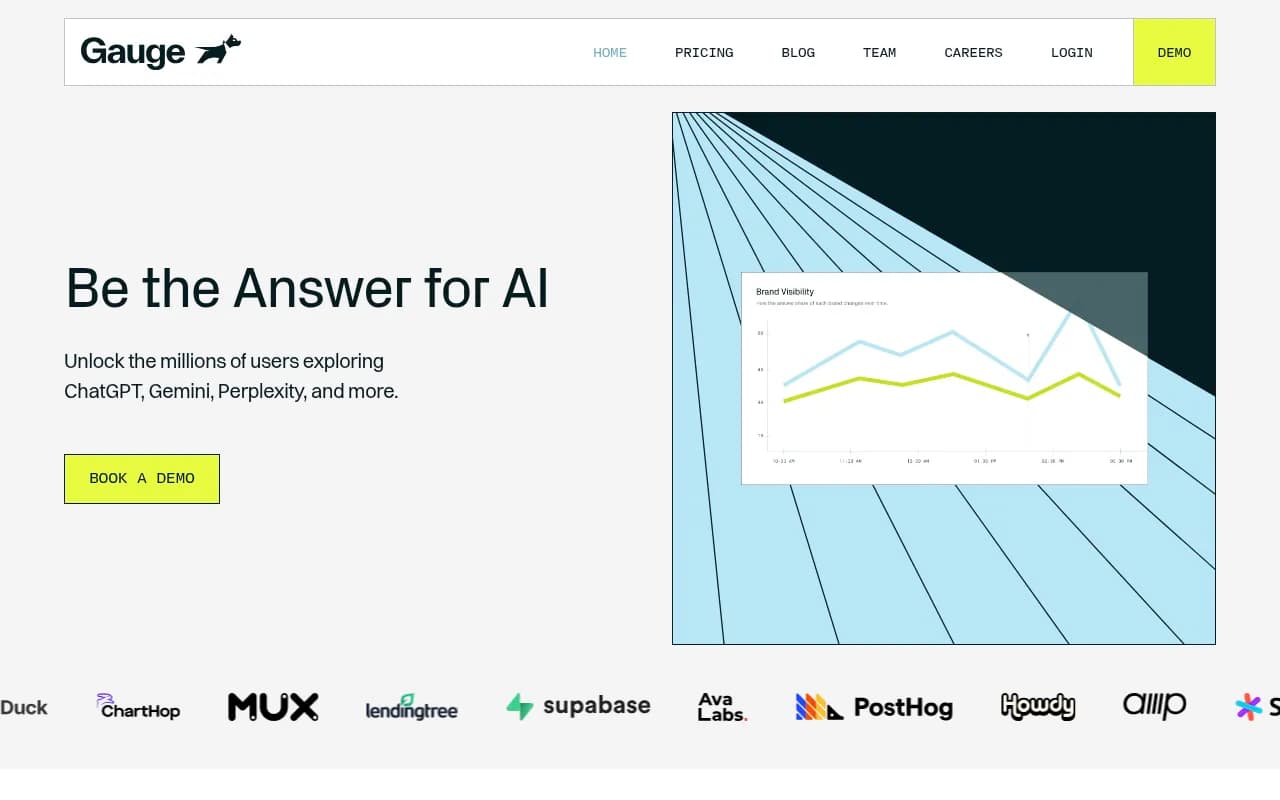
| Gauge | Competitive intelligence | Limited content tools |
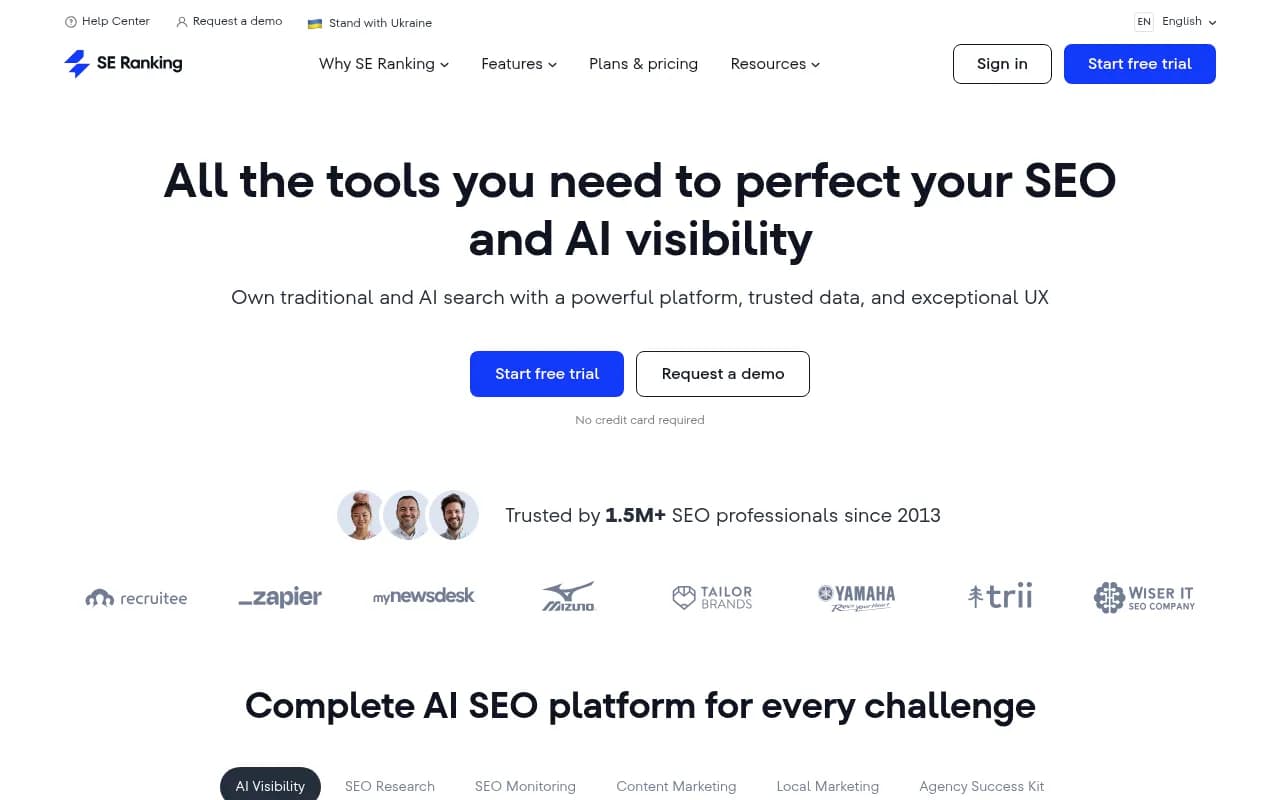
| SE Ranking | Agencies already using SE Ranking for SEO | AI features less mature |
For agencies that want to go beyond monitoring and actually help clients improve their AI visibility -- not just report on it -- Promptwatch is the only platform that covers the full loop: find the gaps, generate the content, track the results. That's the difference between a reporting tool and an optimization platform.
A note on selling this to clients
The hardest part of adding AI visibility metrics to client reports isn't the measurement. It's the conversation.
Some clients will ask why they should care about ChatGPT when they can't see it in their analytics. The honest answer is that they probably can -- they just can't see it labeled as such. AI-referred traffic is hiding in their direct traffic numbers, and it's growing.
The better argument is forward-looking. AI search is where a meaningful portion of research and discovery is happening right now, and that share is increasing. Agencies that help clients build AI visibility today are building an asset that compounds. The ones that wait until AI search is "proven" will be playing catch-up.
Show them the answer gap report. Show them what ChatGPT actually says about their brand. Show them what it says about their competitors. That conversation tends to be pretty short.