Key takeaways
- AI is absorbing the mechanical parts of content work (first drafts, transcription, rough cuts). Editors add the most value in verification, judgment, brand voice and ongoing maintenance.
- Verification is the bottleneck. One practitioner estimate says a draft takes about 5 minutes to generate and roughly 45 minutes to verify. That is anecdotal, but it matches what most teams feel.
- Commercial pages (product, landing, comparison) are where factual errors cost the most, because they are what ChatGPT cites most often.
- Review should be risk-tiered. Not every draft needs the same scrutiny.
- Content decays. Editors who keep pages accurate after publishing protect citations long after the first draft ships.
What human-in-the-loop actually means for content
Human-in-the-loop (HITL) is a design pattern where people actively guide, review or correct an AI system, rather than letting it run end to end. IBM and Databricks both describe it this way, and a 2026 systematic review in Entropy organizes HITL systems by loop placement, interaction granularity and timing.
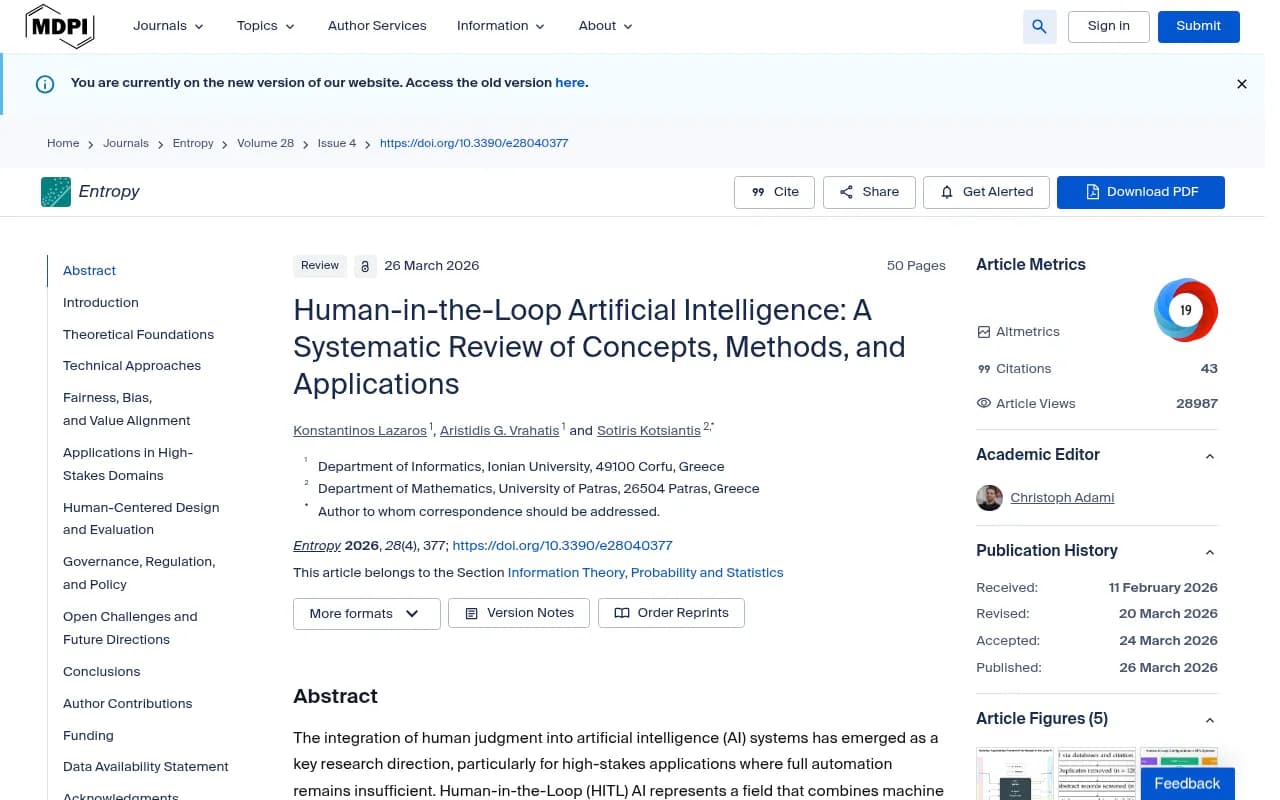
That review focuses on high-stakes domains like healthcare and autonomous systems, but the lesson carries over to content. Where full automation is insufficient, you place a human at the points where errors are expensive. The same review flags scalability, cognitive load and trust calibration as the real deployment problems. Anyone who has asked an editor to review 40 AI drafts in a day knows exactly what cognitive load means.
The Tendem.ai guide puts the placement question simply: if input quality is the bottleneck, put humans before the model. If edge cases are the problem, put them after. For content, that translates into three possible positions for an editor:
- Before generation: briefs, source material, brand rules, angle
- During generation: steering an agent through outline and draft
- After generation: fact-checking, tone, compliance, approval
Most teams over-invest in the third and under-invest in the first. A good brief removes more errors than a good red pen.
What AI has already taken over
It helps to be blunt about which work is no longer worth a human's time. The clearest evidence comes from video, where the automation is furthest along. Loopdesk, which builds an agentic video editor, argues that AI is not replacing video editors but is replacing the mechanical editing: cutting silences, syncing captions, reframing clips, assembling rough cuts.
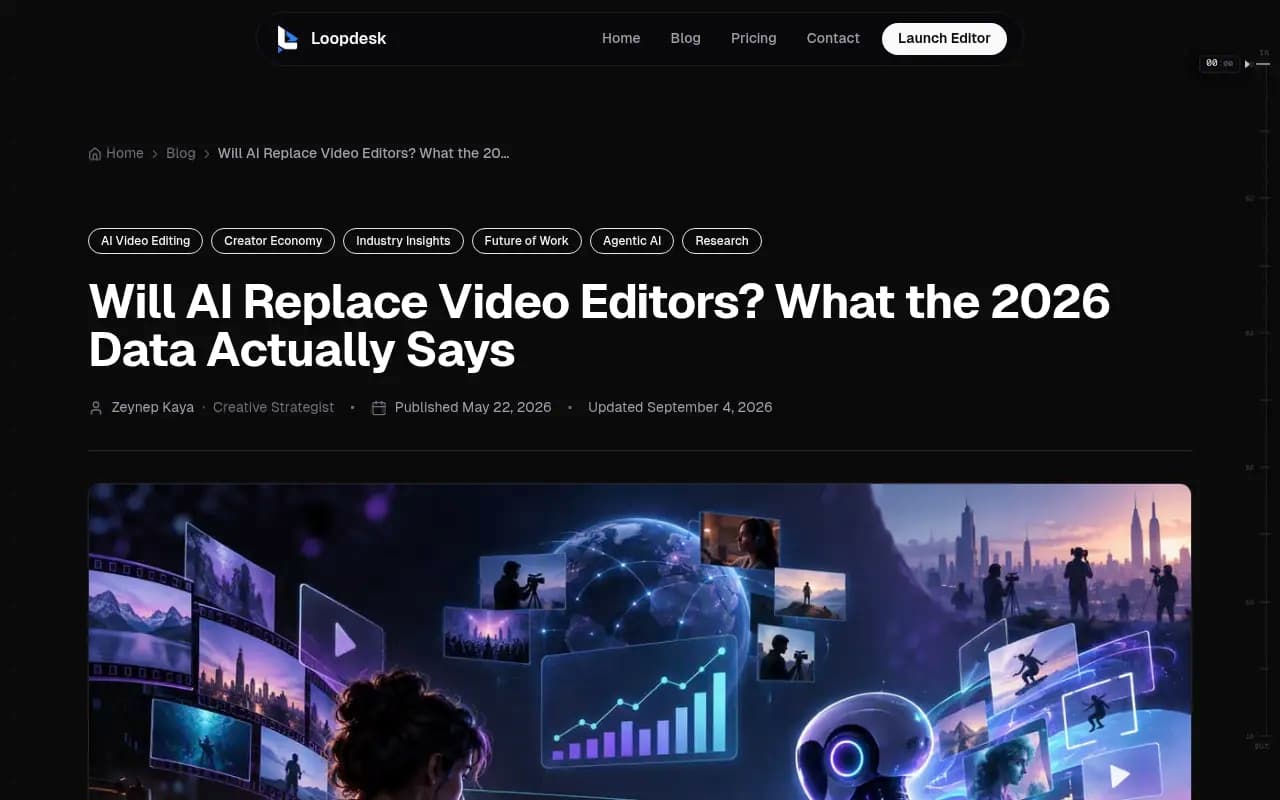
Their study of 250 creators reports 4-8 hours of manual editing per hour of recorded content, and 3-5x more output in about a fifth of the editing time for creators using agentic workflows. Treat those numbers with care. Loopdesk sells the product and ran the study itself. Still, the direction matches what writers see: first drafts, transcripts, summaries and reformatting are cheap now.
The pattern is the same in text. If a task is mechanical, repeatable and easy to check, let the machine do it. For video, tools like Descript handle transcript-based editing.

For text, the equivalents are drafting assistants such as Claude, which many teams use for first passes and rewrites.

The more interesting question is what is left.
Where editors add the most value
1. Verification of facts, sources and statistics
This is the big one. AI drafts read fluently whether or not they are right, so the reader (and the editor) loses the natural error signal that clumsy writing used to give. Insighty AI lists fact verification first among what human editors contribute, and the LinkedIn anecdote about 5 minutes to draft versus 45 to verify rings true even if it is not a rigorous study.
Practical checks that catch most problems:
- Click every cited source and confirm it says what the draft claims
- Re-derive every number that has no link
- Check dates. Models often present old statistics as current
- Search for each named person, product and feature to confirm it exists
Make the verification step explicit and timed. If nobody budgets 30 to 45 minutes for it, it quietly gets skipped.
2. Protecting commercial pages
Promptwatch Data gives a concrete reason to care about accuracy on specific page types. In ChatGPT citation share by content type (Sep 28 to Oct 4, 2026), product pages were 22.4% of classified citations and landing pages 16.8%, together about 39%. Listicles added 13.6%. For commercial prompts, product pages reached 26.0% and landing pages 20.6%.
Those are the pages where a wrong price, spec or "who this is for" line gets repeated inside AI answers. An editor who owns pricing accuracy, feature lists and claims on those pages is guarding the main citation surface. That job is closer to fact maintenance than to writing, and AI is poor at it because it has no way to know what changed in your product last Tuesday.
3. Brand voice and positioning
Models default to a smooth, generic register. Editors add the specific opinion, the odd phrase, the thing only your company would say. They also decide what not to claim. A Brand Book or style guide helps, but someone has to enforce it on the draft in front of them.
Glean's guidance on AI content review makes a useful point here: write your brand rules in a form both humans and AI can follow. If the rules live in someone's head, neither the model nor a new editor can apply them.
4. Judgment about what to publish at all
Cheap drafting creates a new failure mode: publishing things because you can. Editors decide whether a topic deserves a page, whether it duplicates an existing one, and whether the company has anything original to add. This is the work least likely to be automated, and probably the most valuable.
5. Ongoing maintenance
Publishing is the start of a page's life. Promptwatch's content half-life data tracked every classified page ChatGPT cited on July 6, 2026 through Oct 4, 2026:
- After 30 days, ChatGPT still cited 78% of landing pages and 76% of docs
- Product pages, reviews and how-tos had about 55% still cited at day 60, with half-lives of 74 to 77 days
- Listicles had 60% still cited at day 60
- News decayed fastest: half of news pages were gone after 36 days
The takeaway for editors is a refresh calendar by content type. News-style posts need fast attention or acceptance that they are disposable. Listicles and guides should be refreshed before they drop out. Landing pages, docs and product pages need accuracy checks whenever the product changes.
A risk-tiered review model
Not every draft deserves the same review. Glean describes classifying each draft by risk, and that works well in practice. Here is a version you can adapt.
| Tier | Content examples | Human involvement | Typical checks |
|---|---|---|---|
| Low | Social captions, internal summaries, repurposed clips | Spot check a sample | Tone, obvious errors |
| Medium | Blog posts, how-tos, newsletters | Full edit before publish | Facts, sources, voice, links |
| High | Pricing, product, landing, comparison pages, legal or health claims | Editor plus subject-matter owner sign-off | Every claim, every number, compliance |
The tier decides how many people touch the draft and how long review takes. It also decides where the editor sits: before generation for high-risk pages (supply verified facts), after generation for low-risk ones.
A workflow that works like an editorial team
Search Engine Land has framed reliable AI content workflows as an editorial team, with stages for research, outline, write, edit, fact-check and human review, and questioned trusting one agent to do all of it. I agree. A single model that researches, writes and checks its own work tends to confirm its own mistakes.
A workable sequence:
- Human writes or approves the brief: audience, angle, sources, claims to avoid
- AI researches and outlines. Human approves the outline, which is the cheapest place to fix direction
- AI drafts against the approved outline and supplied sources
- A separate pass (another model or a checklist) flags unsupported claims
- Human editor verifies, rewrites for voice and signs off
- Published page goes on a refresh schedule
Automation tools like Zapier, Make or n8n can route drafts, assign review tasks and trigger reminders, so editors spend their time reviewing rather than shuffling files.

For tracking drafts, owners and review status, a base in Airtable or a Notion workspace does the job.
Tools that support the editor, not replace them
The tools you choose should make the human step faster. Three categories matter.
| Category | What it does for editors | Examples |
|---|---|---|
| Drafting and rewriting | Produces first drafts and tone variations | Claude, Jasper, Wordtune |
| Optimization and briefs | Grounds drafts in what ranks and gets cited | Surfer SEO, Clearscope, Frase, MarketMuse |
| AI visibility and citation tracking | Shows which pages AI cites and where gaps are | Promptwatch, Profound, Peec AI, Otterly.AI |
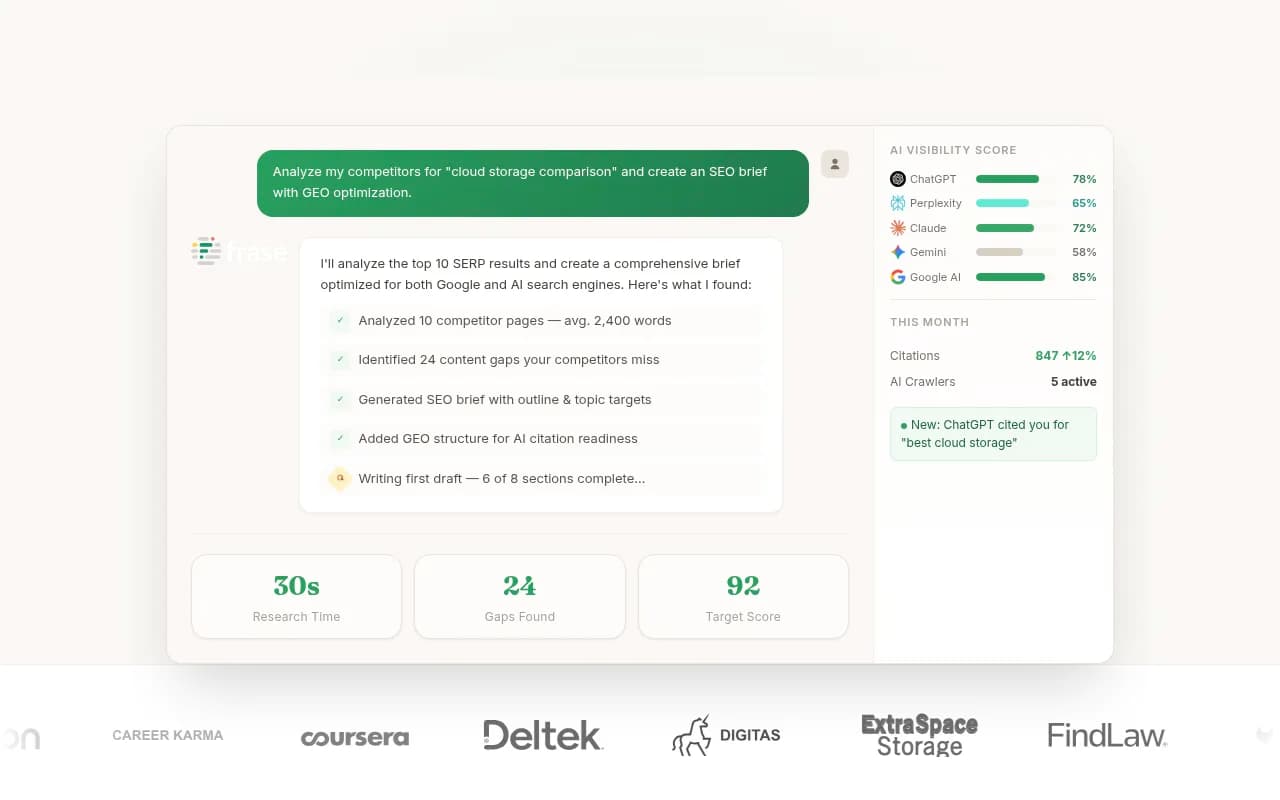
Optimization tools give editors data to work against rather than opinion. Surfer SEO and Clearscope score drafts against search results, and Frase builds briefs.

For the maintenance side, you need to know which pages AI systems actually cite, and which pages stopped. Tools like Promptwatch track citations, AI crawler activity and traffic per page, and its Content Refresh feature suggests updates to existing pages for an editor to approve. That closes the loop from "what do we publish" to "what needs fixing now". If you want to compare other options, the GEO software directory at bestgeosoftware.com lists many of them.

Some platforms now publish content on a schedule with a review inbox, which keeps a human approval step in place even when drafting is automated. Whatever you pick, check that a person can approve before anything goes live. A fully hands-off mode is fine for low-risk content and a bad idea for pricing pages.
What this means for editors' careers
The video-editing debate is a useful preview. Videos like "AI Is Replacing Video Editors in 2026" cite rising AI-attributed layoffs and ask whether editing is next.
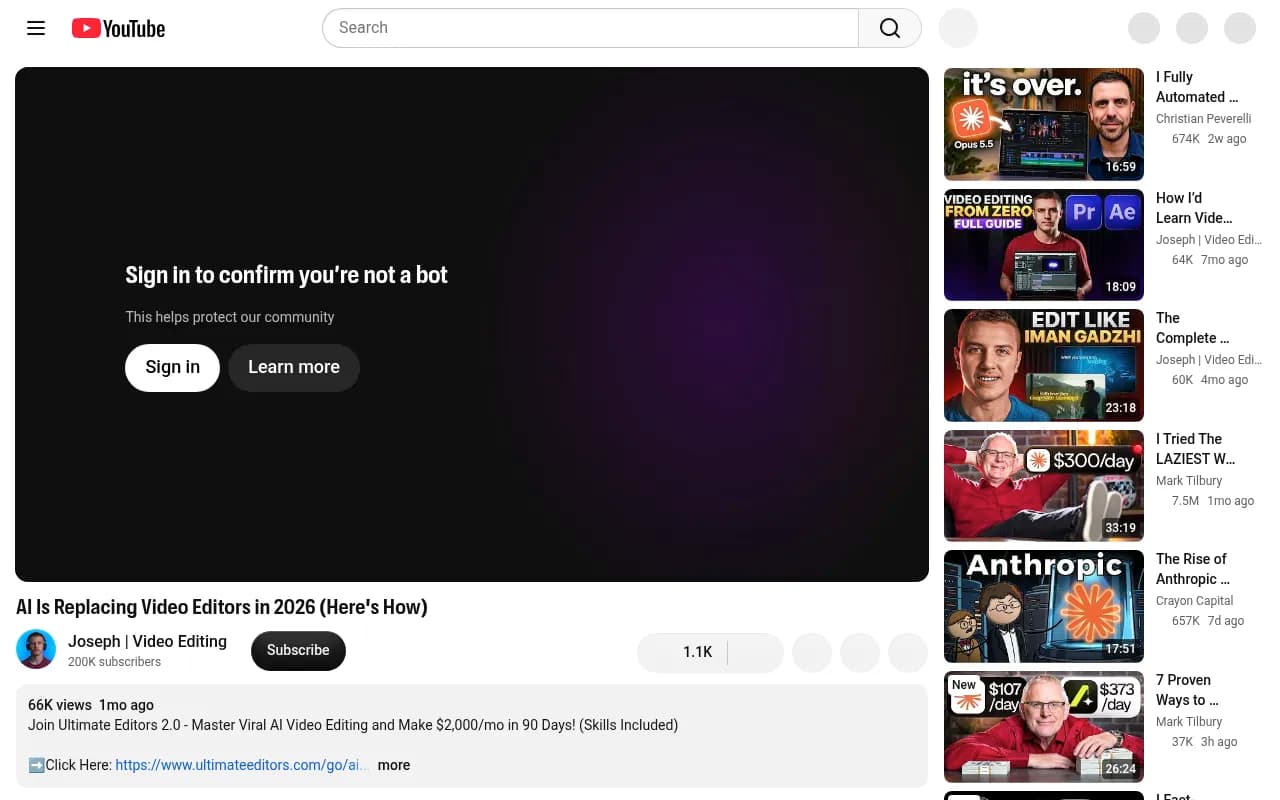
The video's creator also sells an editing course, so read it as a perspective, not neutral data. Loopdesk's counterargument is that demand for video outgrows editing capacity. I think the same holds for written content: there is more to produce, verify and maintain than people can handle, so the job shifts from operating the keyboard to directing and checking systems.
Editors who do well will probably share a few habits:
- They write precise briefs and style rules
- They treat verification as a skill with a method, not a vibe
- They track which published pages perform and decay
- They say no to content that adds nothing
Common mistakes
- Reviewing everything equally. You will burn out your editors on low-risk content and rush the risky pages.
- Editing for style while skipping facts. Smooth prose hides errors.
- No owner for published pages. Without one, refreshes never happen.
- Trusting vendor numbers. Claims that hybrid workflows beat solo AI or solo humans often come from companies selling hybrid tools. Ask for the underlying data. Even the research behind this guide has gaps: I found no primary-source study with hard numbers on editor time savings or error rates, so measure it on your own team.
A simple way to start this week
- List your content by type and assign each a risk tier
- Pick the high-tier pages (pricing, product, comparison) and give each a named owner
- Time a verification pass on three recent AI drafts to get your own draft-to-verify ratio
- Set refresh intervals: short for news, roughly every two to three months for listicles and guides, and on every product change for landing and product pages
- Check what AI systems cite from your site today, then prioritize edits there
The aim is not to slow AI down. It is to spend scarce human attention where a wrong sentence costs the most, and let the machine handle the rest. For more tools in this space, the directory at surferstack.com is a good place to browse.