Key takeaways
- A content gap in 2026 isn't just a missing keyword -- it's information your site doesn't provide that causes AI models to cite a competitor instead of you.
- Forrester's 2026 research found content with unique "information gain" ranks three times higher in AI responses than content rehashing existing consensus.
- Google AI Overviews now appear on 21% of keywords (Ahrefs, 2026), and when they do, traditional organic clicks often disappear entirely.
- The 30-day framework in this guide covers four phases: audit, gap identification, content creation, and tracking -- each building on the last.
- Tools like Promptwatch can automate much of this process, from finding citation gaps to generating content engineered to get picked up by AI models.
Why your SEO playbook stopped working
Here's a scenario that's become painfully common: you rank #1 for a query, traffic is steady, then one day Google rolls out AI Overviews for that keyword and your clicks drop by half. You didn't lose your ranking. You lost relevance to the new layer sitting above it.
Ahrefs data from late 2025 (published 2026) shows AI Overviews reduce clicks on the #1 organic result by 58%. That's not a rounding error. That's a structural shift in how search works.
The problem isn't that your content is bad. It's that AI models have a different selection criteria than Google's traditional ranking algorithm. They don't just want the page with the most backlinks or the longest word count. They want the source that most completely and clearly answers the question -- with specific data points, structured context, and genuine expertise that can't be easily synthesized from a dozen other pages.
That gap between what AI models want and what your content currently provides -- that's what this guide is about closing.
What "content gap" actually means in 2026
The traditional definition -- keywords your competitors rank for that you don't -- still matters. But it's no longer the whole picture.
In 2026, a content gap has four dimensions:
Semantic gaps are topics and entities you haven't covered that AI models expect to find when answering a query. If you write about "project management software" but never mention async workflows, sprint planning, or resource allocation, AI models will pull from sources that do.
Intent gaps happen when your content exists but answers the wrong version of the question. A user asking "best CRM for small teams" wants a comparison with specific recommendations, not a 2,000-word explainer on what CRM software is.
Format gaps occur when your content has the right information but presents it in a way that's hard for AI to parse. Dense paragraphs of prose are harder to cite than structured lists, tables, and clearly labeled sections.
Value gaps -- the most important one -- are where your content says the same thing as everyone else. AI models are specifically looking for "information gain": unique data, original research, first-hand experience, or a perspective that can't be assembled from consensus. If your content doesn't add something genuinely new, there's no reason for an AI to cite you over the ten other pages covering the same ground.
Yotpo's 2026 analysis puts it plainly: the most valuable gap often isn't a missing keyword, it's a missing perspective.
The 30-day framework
This isn't a theoretical exercise. Here's a concrete sequence you can run in four weeks.
Week 1: Audit what AI models actually say about your space
Before you can close gaps, you need to know what's in them. Start by mapping the prompts your target customers are likely typing into ChatGPT, Perplexity, Claude, and Google AI.
Don't guess. Pull your existing keyword data and reframe those keywords as questions. "Project management software" becomes "What's the best project management software for remote teams?" That's the format AI users actually prompt with.
Then run those prompts manually across two or three AI models and record:
- Which sources get cited
- What specific information those sources provide that your content doesn't
- Which questions your content could answer but isn't being cited for
This is tedious at scale, which is why tools exist to automate it. Promptwatch's Answer Gap Analysis does exactly this -- it shows you the specific prompts where competitors are getting cited and you're not, along with what content is missing from your site.

For traditional keyword gap analysis to layer on top, Semrush and Ahrefs remain the standard starting points.
Week 2: Prioritize gaps by value and winnability
Not all gaps are worth closing. Some prompts are dominated by Reddit threads and YouTube videos that AI models heavily favor. Others are wide open -- the AI is citing a mediocre competitor page because nothing better exists.
Prioritize gaps using two filters:
Prompt volume and intent: How many people are asking this? Is the intent commercial (they're close to buying) or purely informational? Commercial-intent prompts are worth more even if they have lower volume.
Competitive depth: What's the quality of the content currently being cited? If the cited source is thin or outdated, you have a real shot at displacing it with something better. If it's a comprehensive guide from a domain authority with 500 backlinks, that's a harder fight.
Tools like Promptwatch give you prompt difficulty scores and volume estimates to make this prioritization less guesswork. Clearscope and MarketMuse are useful for understanding the semantic depth you'll need to match or beat existing cited content.
Week 3: Create content engineered for AI citation
This is where most teams get it wrong. They identify the gap, then produce generic SEO content that covers the topic without adding anything new. AI models ignore it.
Content that gets cited by AI in 2026 shares a few consistent traits:
It has a clear, direct answer near the top. AI models are looking for the specific answer to a specific question. If your page buries the answer in paragraph six, the model may not extract it correctly. Lead with the answer, then explain it.
It includes structured data. Tables, numbered lists, and clearly labeled sections are dramatically easier for AI to parse and cite than flowing prose. If you're comparing five tools, put them in a table. If you're explaining a process, number the steps.
It provides information that can't be synthesized from other sources. This is the hard part. Original research, proprietary data, first-hand testing results, customer case studies -- these are what Yotpo calls "information gain." An AI model has no reason to cite your page if it can assemble the same answer from five other sources. Give it something it can only get from you.
It's fresh. ZipTie's 2026 research found that AI-cited content is 25.7% more likely to be recently updated. Refresh high-value pages every three to six months. Product pages should be updated monthly.
For content creation at scale, a few tools are worth knowing:
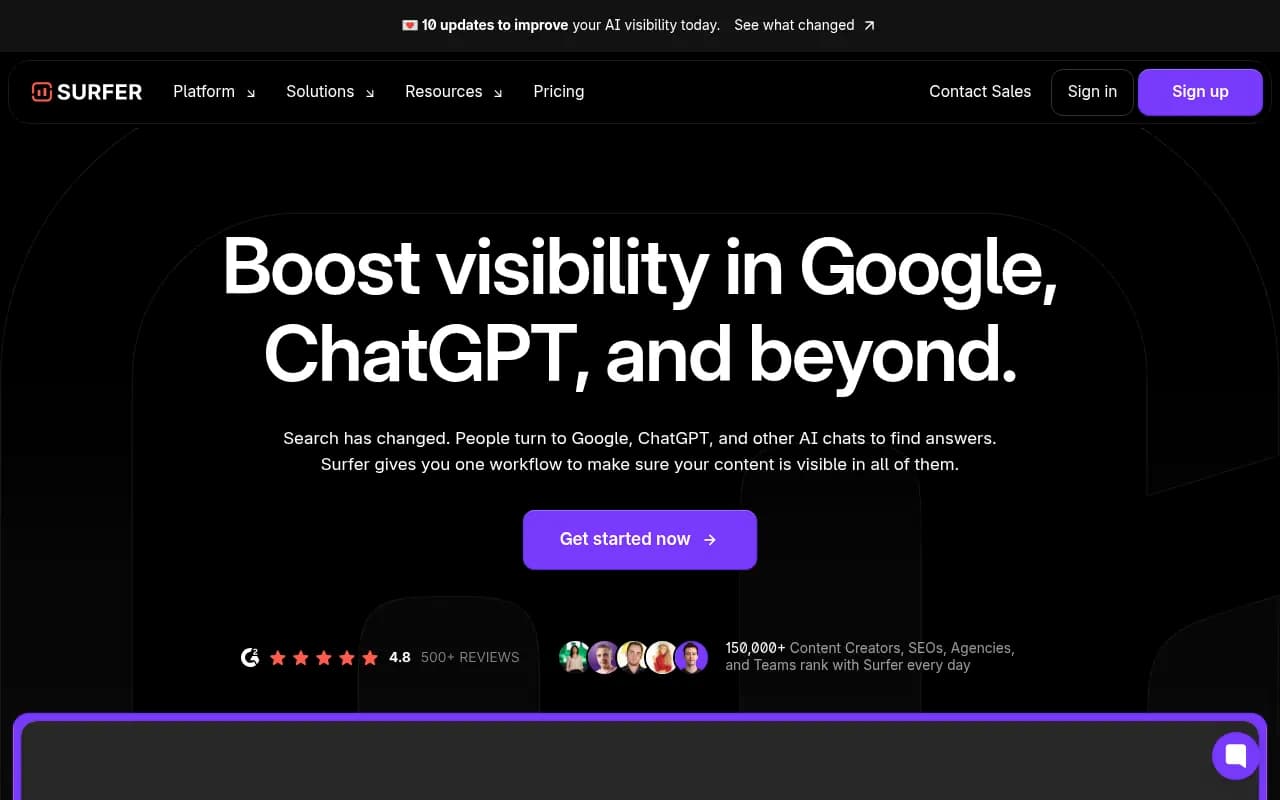
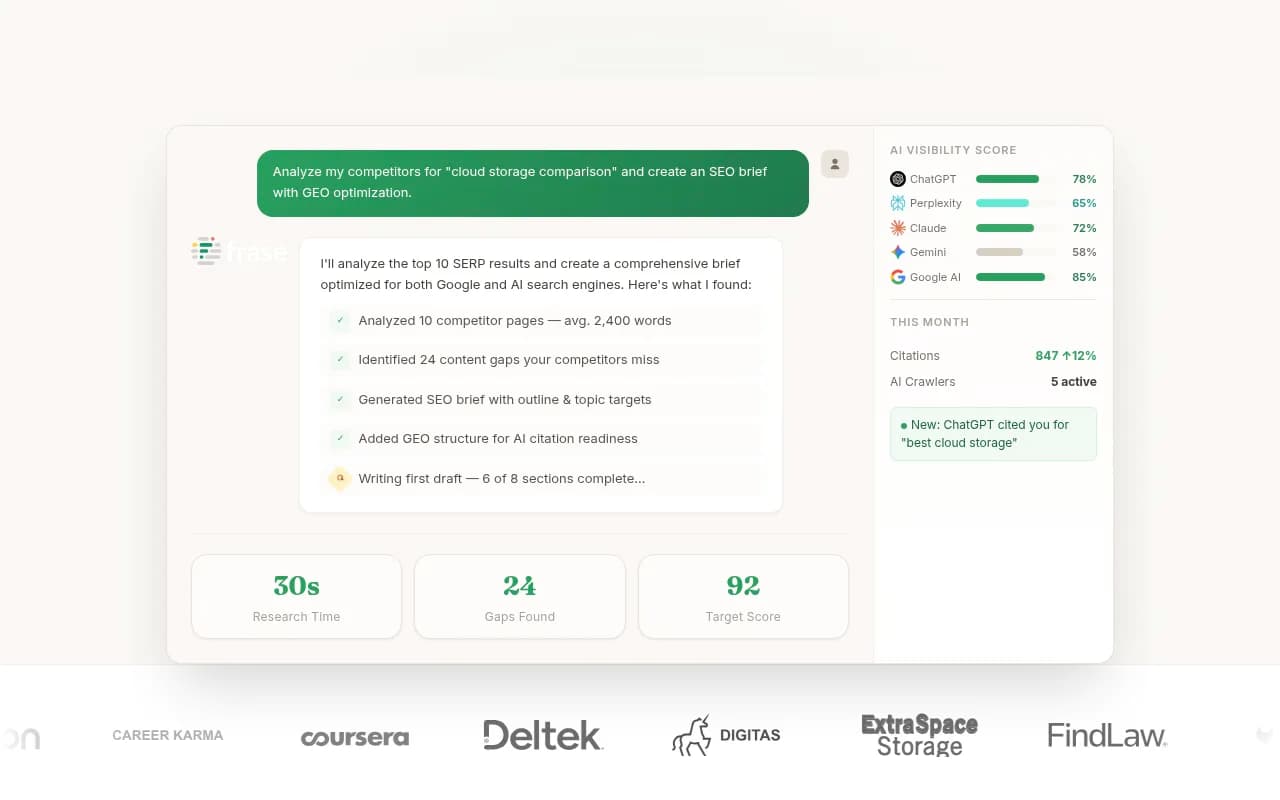
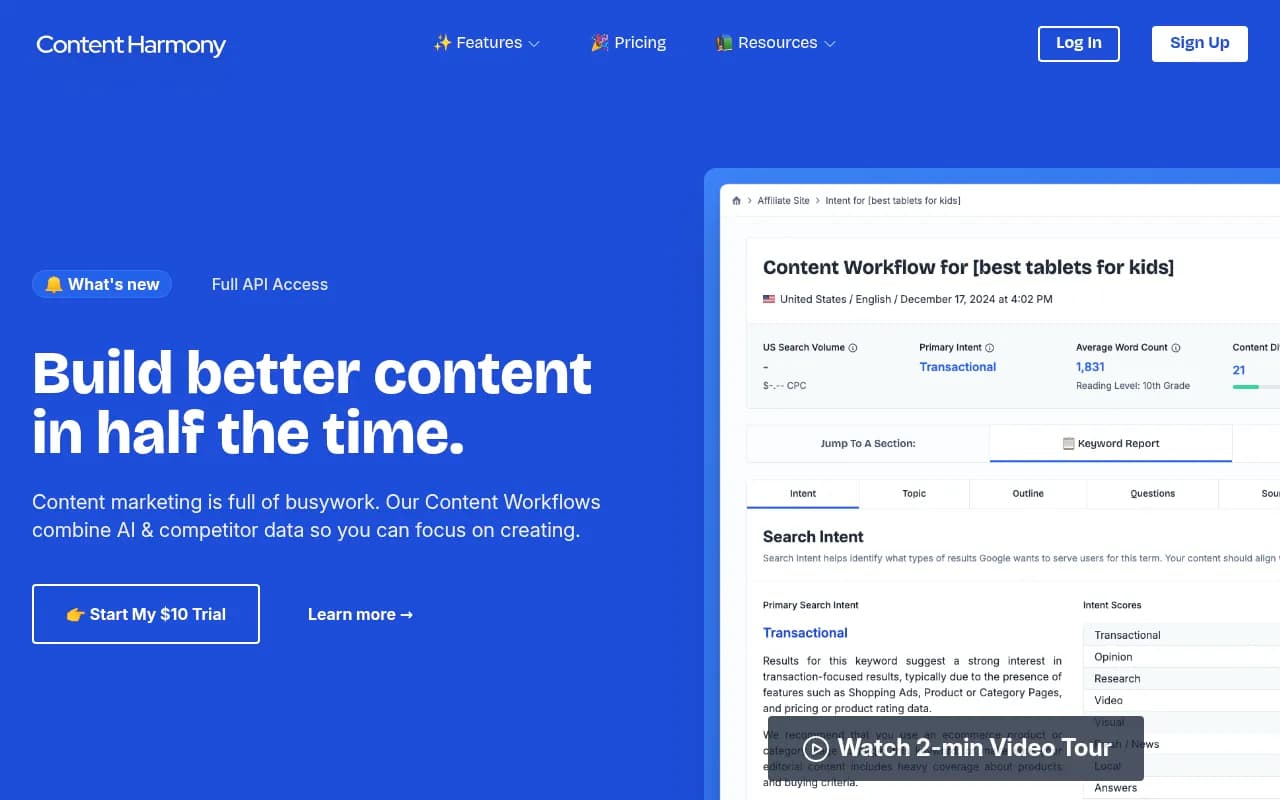
If you're using Promptwatch, the built-in AI writing agent generates content grounded in real citation data -- it analyzes what's currently being cited for a given prompt and writes to fill the specific gaps, rather than producing generic topic coverage.
Week 4: Track citations and close the loop
Publishing content and hoping for the best is not a strategy. You need to know whether your new pages are actually getting cited, by which models, and how often.
Set up tracking before you publish so you have a baseline. Then check weekly for the first month. What you're looking for:
- Are your new pages appearing in AI responses for the target prompts?
- Which AI models are picking them up first? (Different models have different citation patterns.)
- Are there follow-up prompts (query fan-outs) you haven't covered yet that are generating related citations for competitors?
Traffic attribution matters here too. AI citations don't always generate clicks, but when they do, you want to know which pages are driving that traffic. Connect your AI visibility data to actual revenue so you can prioritize the gaps that move the needle.
For teams that want to track AI crawler activity directly -- which AI bots are hitting your site, which pages they're reading, and how often -- Promptwatch's crawler logs give you that visibility. Most monitoring tools don't have this at all.
The four types of content that AI models consistently cite
Based on citation pattern analysis across 2026, these content formats get picked up disproportionately often:
| Content type | Why AI cites it | Best for |
|---|---|---|
| Comparison tables | Structured, scannable, directly answers "X vs Y" queries | Tool comparisons, feature breakdowns |
| Original research / surveys | Unique data that can't be synthesized elsewhere | Industry reports, benchmark studies |
| Step-by-step guides | Clear process structure, easy to extract and summarize | How-to queries, tutorials |
| Expert Q&As | First-hand perspective, attributed quotes | Opinion queries, "what do experts say" |
| Listicles with depth | Covers multiple entities in one place | "Best X for Y" queries |
The pattern: AI models favor content that is easy to parse, specific, and provides something genuinely useful that isn't available elsewhere.
Common mistakes that kill AI citation potential
Writing for the keyword instead of the question. A page optimized for "email marketing software" is structured around a keyword. A page that answers "What email marketing software works best for e-commerce stores with less than 10,000 subscribers?" is structured around a question. AI models respond to the latter.
Ignoring entity coverage. If your page on "best CRM software" doesn't mention Salesforce, HubSpot, Pipedrive, and the other major players, AI models will assume your coverage is incomplete. Even if you're recommending a niche alternative, you need to acknowledge the landscape.
Publishing and forgetting. AI models update their knowledge continuously. A page that was cited six months ago may stop being cited if a competitor publishes something fresher and more comprehensive. Content maintenance is now a core part of the job.
Treating zero-click as failure. When your brand appears in an AI Overview without generating a click, that's still visibility. Users see your name associated with the answer. That brand exposure has real value, especially in competitive categories where trust is built over multiple touchpoints before a purchase decision.
Tools to support the full workflow
Here's a practical breakdown of where different tools fit in the 30-day framework:
| Phase | Task | Tools to consider |
|---|---|---|
| Audit | Map AI citation landscape | Promptwatch, Semrush, Ahrefs Brand Radar |
| Audit | Track AI crawler activity | Promptwatch (crawler logs) |
| Prioritize | Score prompts by volume and difficulty | Promptwatch, Clearscope |
| Prioritize | Analyze competitor content depth | MarketMuse, Frase |
| Create | Write AI-optimized content | Promptwatch AI agent, Surfer SEO, Frase |
| Create | Build content briefs | Content Harmony, MarketMuse |
| Track | Monitor AI citations by page | Promptwatch, Rankscale |
| Track | Connect citations to traffic | Promptwatch (GSC integration, server logs) |
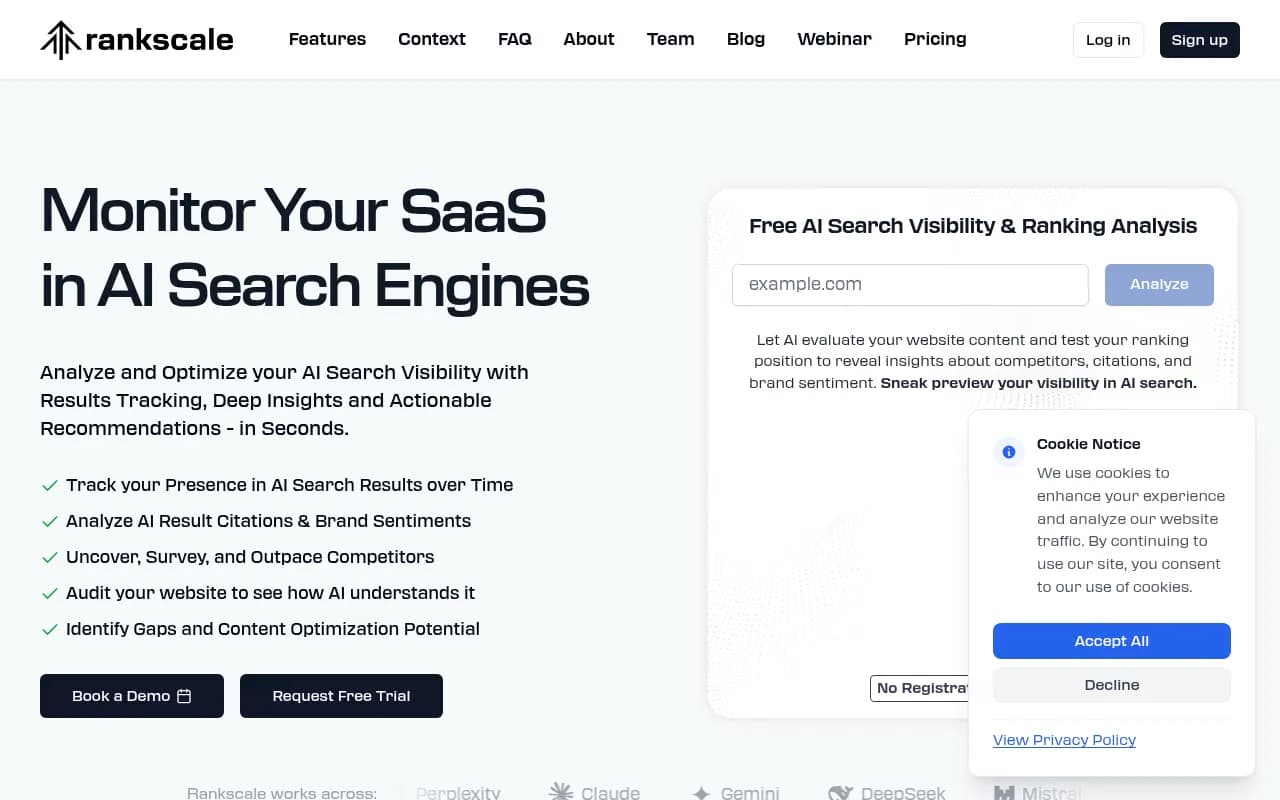
A note on the monitoring-only tools: several platforms in this space (Otterly.AI, Peec.ai, AthenaHQ) will show you where you're invisible in AI search but won't help you do anything about it. That's useful data, but it leaves you with the hardest part of the problem unsolved. The more useful approach is a platform that connects gap identification to content creation to tracking in one workflow.



What to expect at the 30-day mark
Be realistic. AI models don't update their citation patterns overnight. Some models (Perplexity in particular) tend to pick up new content faster than others. Google AI Overviews can take longer.
At 30 days, you should expect to see:
- Clear data on which new pages are being crawled by AI bots (if you have crawler log access)
- Early citation appearances for lower-competition prompts
- A baseline visibility score you can track against going forward
The bigger wins -- displacing a well-established competitor from a high-volume prompt -- typically take 60 to 90 days of consistent content improvement and monitoring. The 30-day framework gets the system running. The results compound from there.
Starting point: the one thing to do today
If you do nothing else from this guide, run this exercise: pick your three most important commercial queries, prompt them into ChatGPT and Perplexity, and look at what gets cited. Is it you? If not, read those cited pages carefully. What do they have that your content doesn't?
That gap -- specific, concrete, visible in five minutes -- is your starting point. Everything else in this guide is about closing it systematically.
The brands getting cited in AI search in 2026 aren't necessarily the biggest or the oldest. They're the ones whose content is most useful to AI models trying to answer a specific question. That's a winnable game if you know what you're optimizing for.