Key takeaways
- AI search visibility is measurable, but it requires different metrics than traditional SEO -- citation rate, mention share, and prompt coverage matter more than keyword rankings
- The first 30 days should focus entirely on understanding your current baseline and identifying which prompts your competitors are winning that you're not
- Content engineered specifically for AI citation (direct answers, comparison pages, tight FAQs) outperforms generic blog posts in every model tested
- Tracking AI crawler activity on your site is one of the most underused signals available -- it tells you exactly which pages AI engines are reading and returning to
- Connecting AI visibility to actual revenue requires traffic attribution, not just citation counts
Let's be honest about where most brands are starting in 2026: zero. Not zero in the sense that AI models never mention them, but zero in the sense that they have no idea whether they're being mentioned, for which prompts, in which models, or whether any of it is driving traffic. That's the real starting point.
The good news is that AI search visibility is genuinely buildable. It's not a black box. There are specific things you can do -- in a specific order -- that move the needle from invisible to cited to driving measurable traffic. This playbook covers exactly that, broken into three 30-day phases.
Phase 1 (days 1-30): Establish your baseline
You can't improve what you haven't measured. The first month is entirely about understanding where you stand before touching a single piece of content.
Audit how AI models currently describe your brand
Start by running your brand name and core product category through at least four AI models: ChatGPT, Perplexity, Gemini, and Claude. Don't just run one prompt -- run ten variations. "What's the best [your category]?" "Who are the top [your category] providers?" "Compare [your brand] vs [competitor]."
Write down what you find. Is your brand mentioned at all? When it is, what's the framing -- positive, neutral, missing context? Which competitors appear consistently that you don't? This manual audit is rough, but it gives you a real feel for the problem before you bring in tooling.
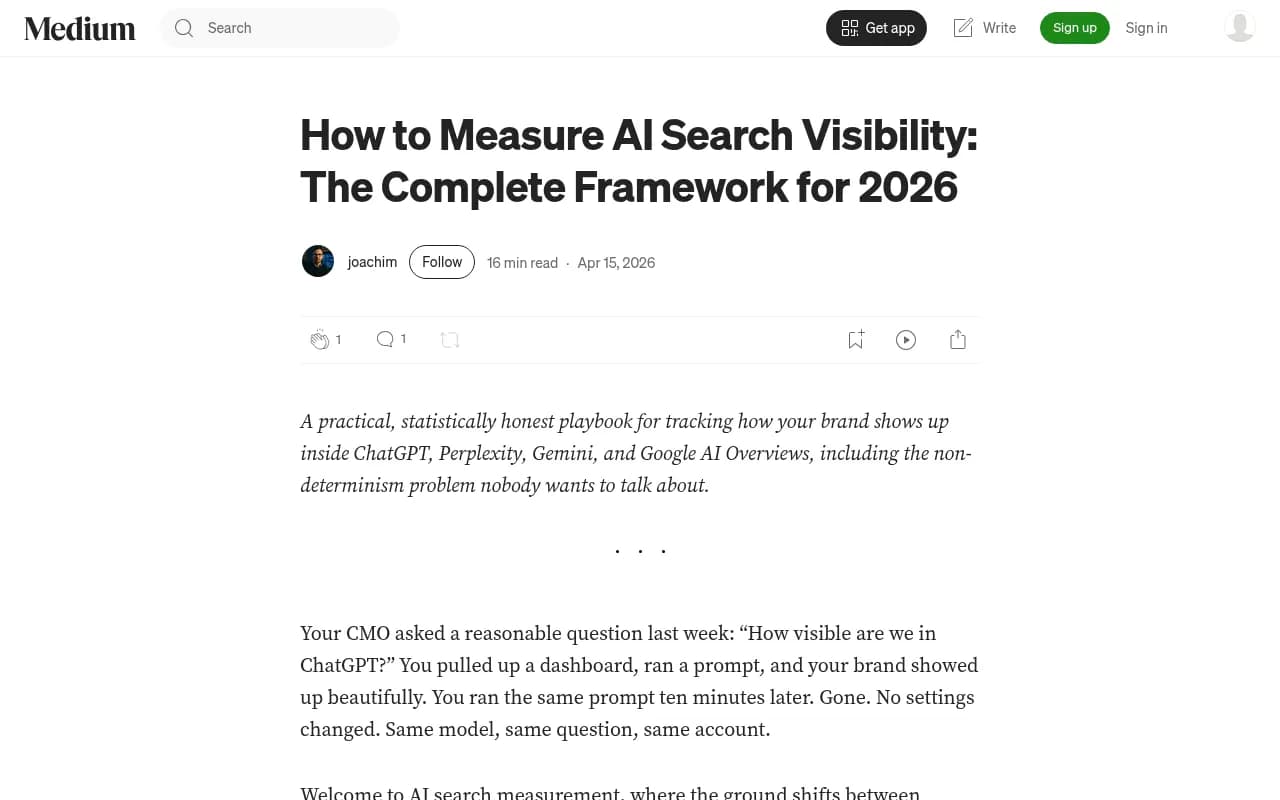
One thing that surprises most people doing this for the first time: the same prompt run twice often produces different results. As one practitioner put it in a Medium piece on AI visibility measurement, "Same model, same question, same account -- and your brand shows up beautifully one run, then disappears the next." This is the non-determinism problem. It means you need to run prompts multiple times and look at mention rates, not single snapshots.
Set up systematic tracking
Manual audits don't scale. You need a platform that runs prompts repeatedly across multiple models and tracks your mention rate over time.
Promptwatch is the most complete option here -- it monitors across 10 AI models simultaneously, tracks citation rates with statistical reliability, and crucially, shows you which prompts competitors are winning that you're not. That last part (the Answer Gap Analysis) is what makes it an optimization tool rather than just a dashboard.

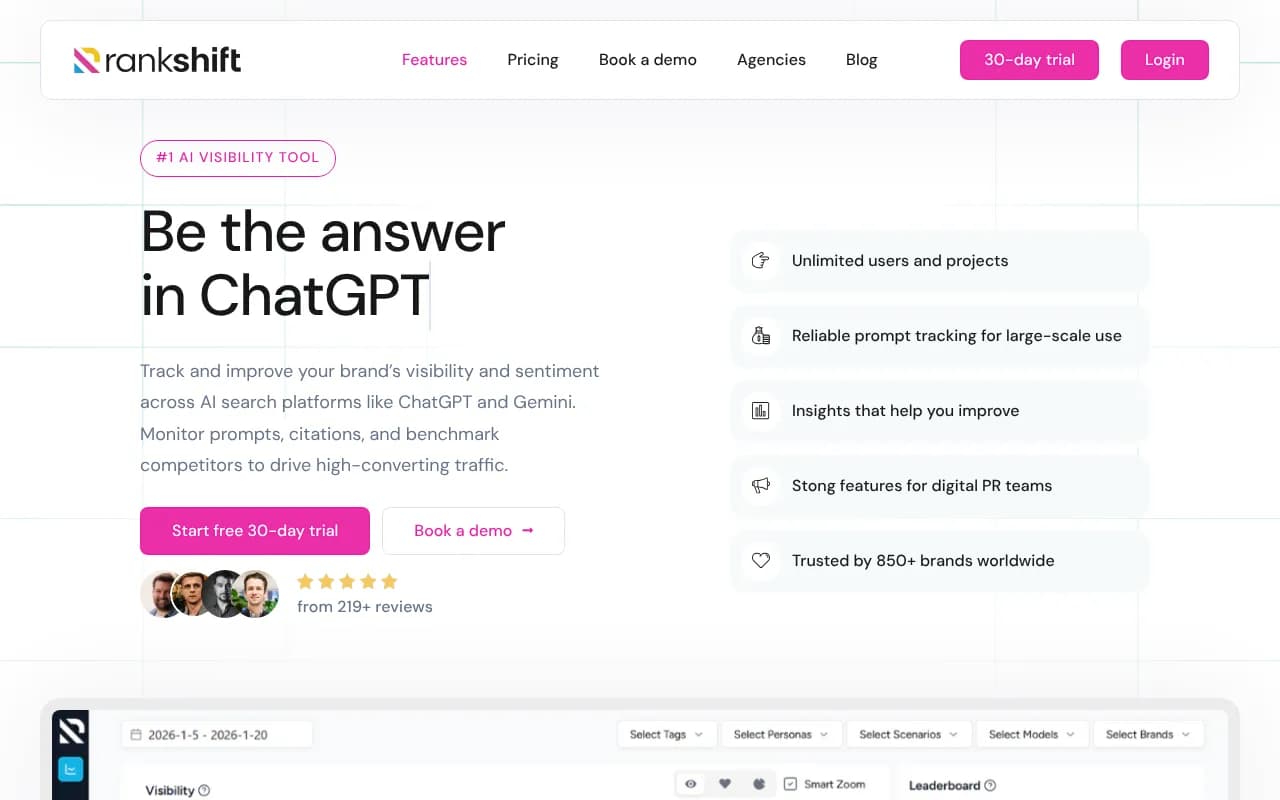
For teams that want to start simpler, there are lighter-weight options worth knowing about:


The key thing to look for in any tracking tool: does it show you prompt-level data (which specific questions trigger your brand vs competitors), or just aggregate mention counts? Aggregate counts are nearly useless for knowing what to fix.
Audit your AI crawler activity
This step gets skipped constantly, and it's a mistake. AI crawlers -- from ChatGPT, Claude, Perplexity, and others -- are already hitting your website. The question is which pages they're reading, how often they return, and whether they're hitting errors.
Check your server logs for user agents like GPTBot, ClaudeBot, PerplexityBot, and GoogleOther. If you're seeing these crawlers bounce off 404s or avoid large sections of your site, that's a direct signal that AI models aren't ingesting your content properly.
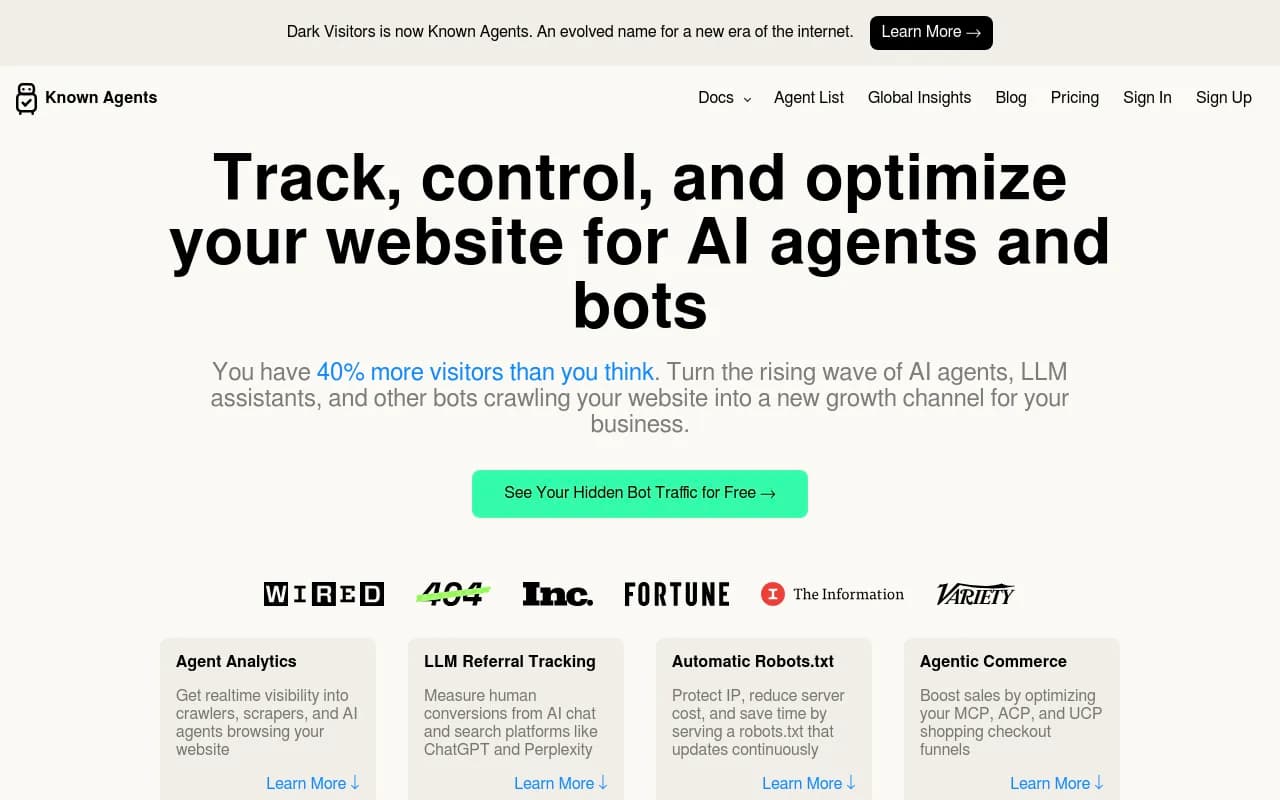
DarkVisitors is a good free starting point for identifying which AI agents are visiting your site.
Promptwatch's Professional and Business tiers include dedicated AI Crawler Logs that show exactly which pages each AI crawler reads, errors they encounter, and how frequently they return -- which is significantly more actionable than raw server log parsing.
Define your prompt universe
By the end of month one, you need a list of 50-150 prompts that matter to your business. These fall into a few categories:
- Brand prompts ("What is [brand]?", "Is [brand] legit?")
- Category prompts ("Best [product category] tools in 2026")
- Comparison prompts ("[Brand] vs [competitor]")
- Problem prompts ("How do I [solve problem your product addresses]?")
- Buying prompts ("What should I look for when choosing [category]?")
Prioritize by two factors: how often people are likely asking this (prompt volume), and how winnable it is given your current authority. Tools like Promptwatch provide volume estimates and difficulty scores for each prompt, which removes a lot of the guesswork.
Phase 2 (days 31-60): Create content that AI models actually cite
Here's what most brands get wrong: they think their existing content should be enough. It usually isn't. AI models cite content that directly answers specific questions in a clear, structured way. Most brand websites are built for conversion, not for answering questions. Those are different jobs.
Understand what AI models want to cite
Based on analysis of hundreds of millions of citations, a few content patterns get cited consistently:
- Direct, specific answers to questions (not "it depends" hedging)
- Comparison content that covers multiple options fairly
- FAQ sections with tight, one-paragraph answers
- Original data, surveys, or proprietary research
- Content that matches the exact framing of how people ask questions
Reddit threads show up in AI citations constantly -- not because Reddit has great SEO, but because the answers there are direct and conversational. Your content should aim for that same quality of directness, just with more depth and accuracy.
Run an answer gap analysis
Before writing anything, find out which prompts your competitors are winning that you're not. This is the single highest-leverage activity in the entire 90 days.
The gap analysis tells you: here are the specific questions AI models are answering for your competitors, and here's the content on their sites that's getting cited. Now you know exactly what to write.
Promptwatch's Answer Gap Analysis does this automatically -- it surfaces the prompts where competitors appear and you don't, shows you the content being cited, and helps you prioritize by volume and difficulty. Most other platforms in this space don't offer this at all.
Build your content calendar around gaps, not guesses
Once you have your gap analysis, you're not brainstorming content ideas -- you're filling specific holes. Each piece of content you create should map to one or more prompts where you're currently invisible.
Prioritize in this order:
- High-volume prompts where you have zero visibility and a competitor is consistently cited
- Comparison prompts (these drive high-intent traffic and AI models love citing them)
- Problem/solution prompts that match your product's core value proposition
- Brand prompts where the AI description of your company is incomplete or wrong
Write for AI citation, not just SEO
The structural difference between content that gets cited by AI and content that doesn't comes down to a few things:
Answer the question in the first paragraph. Don't bury the answer after three paragraphs of context. AI models pull the most direct answer available.
Use clear headings that match how people ask questions. "What is X?" and "How does X work?" as H2s make it easy for AI to identify and extract the relevant section.
Include comparison tables. AI models frequently cite structured comparison data because it's easy to extract and present in a response.
Be specific with numbers and claims. "Studies show X" gets ignored. "A 2025 survey of 500 marketers found X" gets cited.
Keep FAQ answers to one tight paragraph each. Long FAQ answers get truncated or skipped.
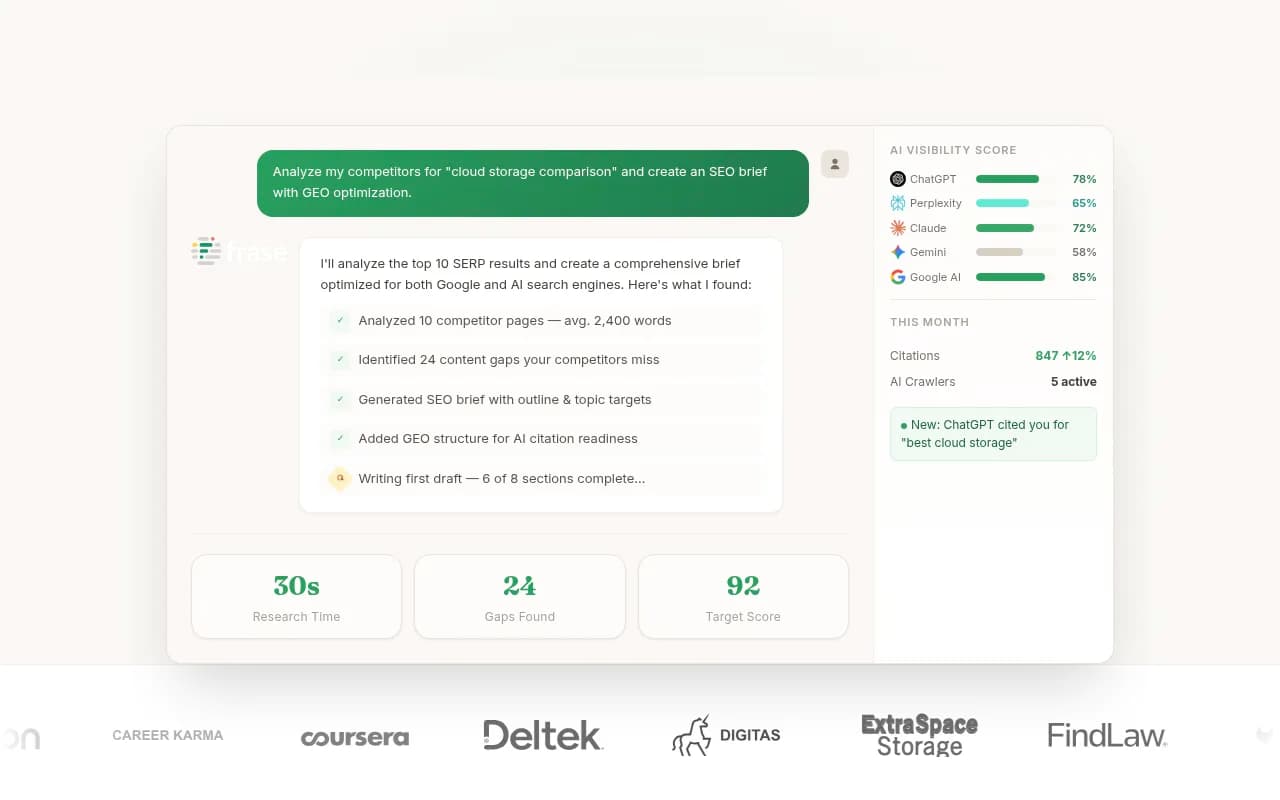
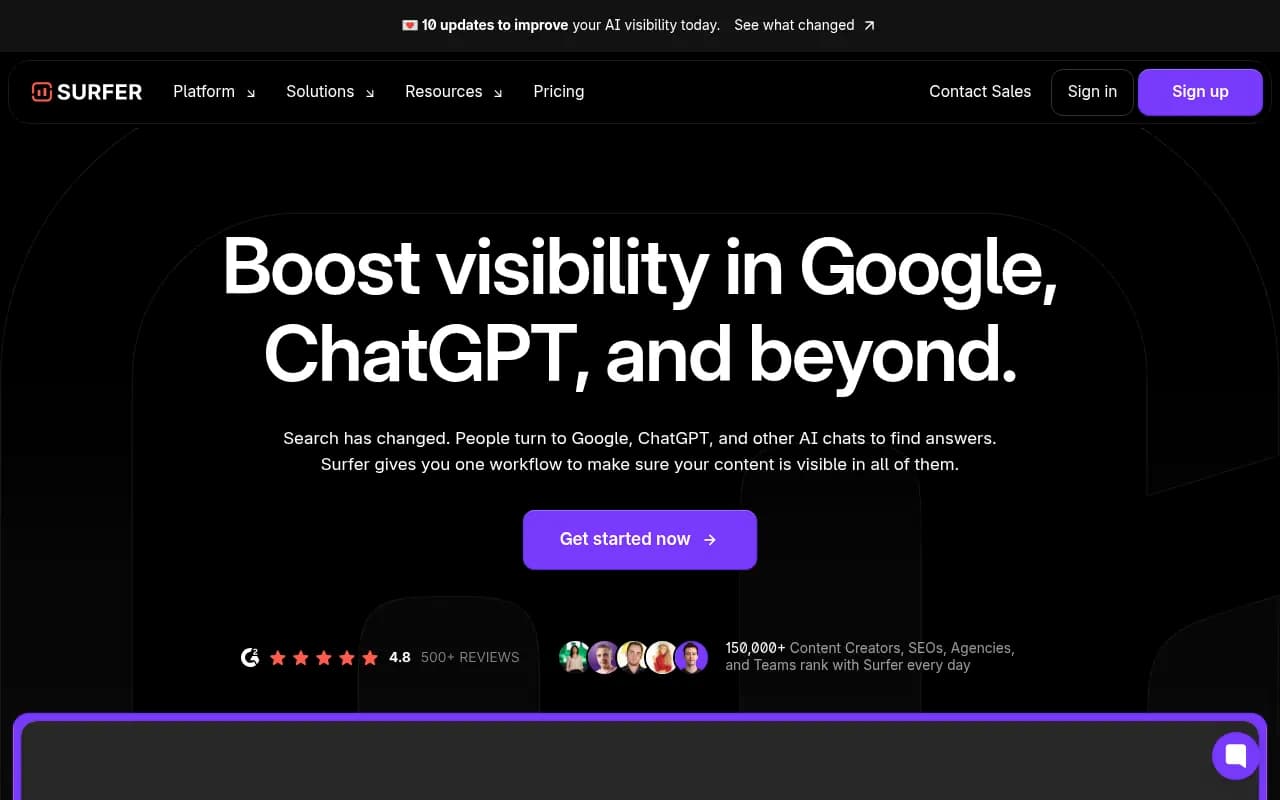
For content production at scale, a few tools worth considering:

Promptwatch's built-in AI writing agent goes a step further -- it generates content specifically grounded in citation data, meaning the output is engineered for AI citation rather than just SEO optimization.
Don't ignore Reddit and YouTube
This sounds odd in a content strategy guide, but AI models cite Reddit threads and YouTube videos in their responses more than most brands realize. Perplexity in particular pulls heavily from Reddit.
If your brand or category has active Reddit communities, participate genuinely. Answer questions. Post original research. A well-upvoted Reddit comment explaining your product category can end up cited in thousands of AI responses.
YouTube is similar -- a clear, well-titled explainer video can appear in AI responses that include video sources. This is a channel most competitors aren't thinking about at all.
Phase 3 (days 61-90): Track results and close the loop to revenue
Publishing content is not the end. Month three is about measuring what's working, iterating on what isn't, and -- critically -- connecting your AI visibility improvements to actual business outcomes.
Track citation rate changes by prompt
For each prompt in your universe, you should now be tracking:
- Your mention rate (what percentage of runs include your brand)
- Your citation rate (what percentage include a link to your content)
- Competitor mention rates for the same prompts
- Which specific pages on your site are being cited
This is where page-level tracking becomes essential. Knowing that your overall visibility score went up 12% is useful. Knowing that your new comparison page is being cited by Perplexity 40% of the time for "best [category] tools" is actionable.
Connect visibility to traffic
Citation rate is a leading indicator. Traffic is the outcome you actually care about.
There are three ways to connect AI visibility to traffic:
UTM parameters and referral analysis. AI models that link to your site will show up as referral traffic in GA4. Tag your content and watch for referrals from perplexity.ai, chatgpt.com, and similar sources. This is imperfect (many AI responses don't include clickable links) but it's a start.
Google Search Console integration. Some AI-influenced queries show up in GSC as zero-click impressions or as queries you didn't previously rank for. Tracking these over time shows the indirect traffic effect of improved AI visibility.
Server log analysis. The most complete picture comes from server logs, which capture every visit including those that don't trigger GA4 (bot traffic, direct URL entry, etc.). Promptwatch supports all three attribution methods.
Measure the "double squeeze" impact
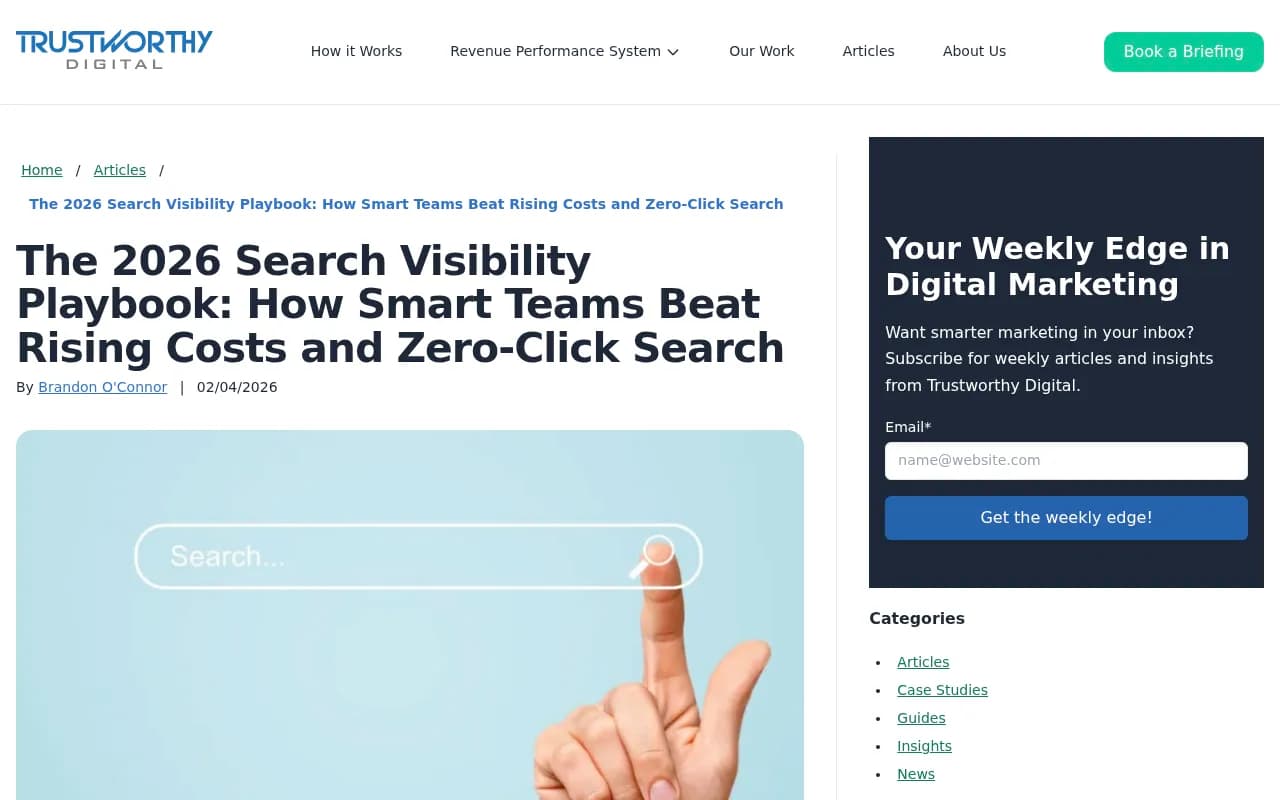
One framing from Trustworthy Digital's 2026 playbook is worth keeping in mind: the "Double Squeeze" of rising paid costs and declining organic clicks means that AI visibility isn't just a nice-to-have -- it's increasingly where buying decisions get made before a user ever clicks anything.
This means your attribution model needs to account for zero-click influence. A buyer who asks ChatGPT "what's the best [category] tool" and sees your brand cited three times may visit your site directly days later. That's not captured in referral traffic. It shows up in brand search volume, direct traffic trends, and pipeline velocity.
Iterate based on what's working
By day 90, you have real data. Use it to answer these questions:
- Which content types are getting cited most? (Articles, FAQs, comparison pages?)
- Which AI models are citing you most? Where are the gaps?
- Which prompts moved from zero visibility to consistent citation?
- Which prompts didn't move despite new content? (These need a different approach -- possibly better structure, more depth, or external citations pointing to them)
The brands that win at AI visibility in 2026 aren't the ones who publish the most content. They're the ones who close the loop fastest -- find gaps, create targeted content, measure citation rates, and iterate. That cycle, run consistently, compounds quickly.
Tool comparison: AI visibility platforms for this playbook
| Tool | Prompt tracking | Gap analysis | Content generation | Crawler logs | Traffic attribution | Best for |
|---|---|---|---|---|---|---|
| Promptwatch | Yes (10 models) | Yes | Yes (AI agent) | Yes | Yes (3 methods) | Full optimization loop |
| Otterly.AI | Yes | No | No | No | No | Basic monitoring |
| Peec.ai | Yes | No | No | No | No | Multi-language monitoring |
| AthenaHQ | Yes | Limited | No | No | No | Monitoring-focused teams |
| Profound | Yes | Limited | No | No | No | Enterprise monitoring |
| Frase | No | No | Yes | No | No | Content creation |
| SE Ranking | Yes | No | Limited | No | No | SEO + AI combo |

What 90 days realistically gets you
Let's be specific about expectations. In 90 days, starting from zero, a realistic outcome for a brand that executes this playbook consistently:
- 15-30 prompts moved from zero visibility to measurable citation rate
- 2-5x increase in AI referral traffic (from a low base, so absolute numbers vary)
- Clear picture of which content types and models are most valuable for your category
- A repeatable system for ongoing optimization
What you won't have in 90 days: dominant AI visibility across your entire category. That takes longer and depends heavily on your domain authority, the competitiveness of your category, and how much content you can produce. But you'll have real, measurable progress -- and more importantly, you'll know exactly what's working and why.
The brands that are winning AI search visibility right now didn't get there by accident. They got there by treating it like a system: measure, create, track, repeat. Start that system today, and 90 days from now you'll have something concrete to show for it.