Key takeaways
- The AEO tool market has split into two camps: monitoring-only dashboards and full optimization platforms. Knowing which you need saves you from paying for the wrong one.
- Most teams need to answer six questions before choosing a tool: what you're trying to achieve, which AI engines matter to your audience, whether you need content creation built in, how many sites and competitors you're tracking, what your reporting workflow looks like, and what budget you're working with.
- Agencies, in-house marketing teams, and enterprise SEO teams have genuinely different requirements -- a tool that's perfect for one is often wrong for another.
- The fastest-growing category in 2026 is "action-oriented" platforms that close the loop between visibility tracking and content creation. Monitoring-only tools are becoming table stakes.
The AEO tool market has exploded. In early 2025 there were maybe a dozen platforms worth considering. By mid-2026, there are well over 50. Some are serious platforms. Some are dashboards with a logo slapped on them. A lot of them look identical until you try to actually do something with the data.
The problem isn't finding an AEO tool. It's figuring out which one fits your specific situation -- your team size, your AI engine priorities, your content workflow, your reporting needs. That's what this guide is for.
Work through the six questions below. By the end, you'll have a clear shortlist instead of a tab graveyard.
What is AEO, and why does the tool choice matter more than people think?
Answer Engine Optimization is the practice of making your content the source AI models cite when users ask questions. When someone asks ChatGPT "what's the best project management software for remote teams?" or asks Perplexity "which CRM do agencies use?", the brands that appear in those answers are winning a new kind of organic traffic.
The catch: optimizing for AI search is fundamentally different from traditional SEO. You're not trying to rank for a keyword in a list of blue links. You're trying to become the authoritative answer to a question -- which means the content, structure, and credibility signals that matter are different.
This is why tool choice matters. A tool built for traditional rank tracking will show you Google positions but tell you nothing about whether ChatGPT is citing your competitors instead of you. A tool built purely for AI citation monitoring will show you the problem but leave you with no way to fix it. The right tool depends on where you are in your AEO journey and what you actually need to do next.
The 6-question framework
Question 1: What outcome are you actually trying to achieve?
This sounds obvious, but most teams skip it and end up with a monitoring tool when they needed an optimization tool, or vice versa.
There are three distinct jobs an AEO tool can do:
Visibility monitoring -- tracking whether your brand appears in AI responses, how often, on which platforms, and with what sentiment. This is table stakes. Almost every tool in the market does some version of this.
Competitive intelligence -- understanding how your visibility compares to competitors, which prompts they're winning that you're not, and where the gaps are. A smaller subset of tools does this well.
Content optimization and creation -- taking the gap data and actually doing something about it. Generating content that's engineered to get cited, tracking whether that content improves your visibility scores, and closing the loop between effort and outcome. Very few tools do this.
If you're just starting out and need to understand your current AI visibility baseline, a monitoring-focused tool is fine. If you've been tracking for a few months and know you have gaps but don't know how to close them, you need a platform that goes beyond monitoring.
The honest question to ask yourself: "If this tool shows me I'm invisible for 40 prompts my competitors are winning, what happens next?" If the answer is "I export a CSV and figure it out myself," that's a monitoring tool. If the answer is "the platform shows me what content to create and helps me create it," that's an optimization platform.
Question 2: Which AI engines matter to your audience?
Not all AI search engines are equal for every audience. A B2B software company selling to developers will find Perplexity disproportionately important. A consumer brand targeting Gen Z shoppers needs to care about ChatGPT's product recommendations and shopping carousels. A company with European customers needs Google AI Overviews and potentially Mistral. A brand targeting enterprise buyers in Asia needs DeepSeek coverage.
Before you evaluate any tool, write down the three AI engines that matter most to your audience. Then check whether the tools you're considering actually monitor those engines -- not just list them on a features page, but actively query them and return real data.
The major engines to look for coverage of: ChatGPT (OpenAI), Perplexity, Google AI Overviews, Google AI Mode, Claude (Anthropic), Gemini, Copilot (Microsoft), Grok, Meta AI/Llama, DeepSeek, and Mistral.
Most tools cover ChatGPT and Perplexity. Fewer cover Grok, DeepSeek, and Mistral. If your audience is international or technically sophisticated, that gap matters.
Also worth asking: does the tool let you set personas and locations? A prompt answered differently for a user in Germany vs. the US, or for a CFO vs. a developer, is a different data point. Tools that support persona customization give you a much more accurate picture of your actual visibility.
Question 3: Do you need content creation built in?
This is the question that separates monitoring tools from optimization platforms, and it's the biggest decision point in 2026.
If you have a strong in-house content team that can take gap analysis data and run with it, you might be fine with a monitoring tool that exports data to your existing workflow. But if your content team is stretched, if you're an agency managing multiple clients, or if you want to close the loop between "we found a gap" and "we published something to fill it," you need a platform with content generation built in.
The key thing to look for isn't just "has an AI writer." It's whether the content generation is grounded in actual citation data. Generic AI content won't get cited by ChatGPT or Perplexity. Content that's engineered based on what those models actually cite -- the specific topics, angles, and structures that appear in their responses -- has a much better chance.
Ask any tool you're evaluating: "Where does your content generation get its training signal?" If the answer is vague, the content output will be generic.
Question 4: How many sites, prompts, and competitors are you tracking?
This is the practical question that determines which pricing tier you need, but it also reveals something about tool architecture.
Some tools are built for single-brand monitoring. Others are built for agencies managing dozens of clients. The difference shows up in the interface, the reporting, the prompt management, and the price.
Think through:
- How many domains do you need to monitor? (Your own site, plus any regional variants or sub-brands)
- How many prompts do you need to track? (A realistic AEO program needs at least 50-100 prompts to be meaningful; enterprise programs often track 300+)
- How many competitors do you want to benchmark against?
- Do you need city or state-level tracking for local visibility?
One thing that's easy to overlook: prompt management. Some tools let you set a fixed list of prompts and that's it. Better tools give you prompt volume estimates and difficulty scores so you can prioritize which prompts are worth tracking and which are low-traffic dead ends. The best tools also show you query fan-outs -- how one prompt branches into sub-queries -- so you understand the full shape of a topic, not just one question.
Question 5: What does your reporting and integration workflow look like?
A tool that produces great data but doesn't fit your reporting workflow will get abandoned. This is especially true for agencies and enterprise teams.
Questions to ask:
- Do you need white-label reports for clients?
- Do you need Looker Studio integration or a data export API?
- Does your team live in Slack? Does the tool send alerts there?
- Do you need GA4 or Google Search Console integration to connect AI visibility to actual traffic?
- Do you need server log analysis to understand how AI crawlers are actually accessing your site?
That last one is underrated. AI crawler logs -- real-time data on which AI bots (ChatGPT, Claude, Perplexity) are crawling your site, which pages they're reading, and what errors they're encountering -- are one of the most actionable data sources in AEO. Most tools don't offer this at all. If you want to understand why certain pages aren't getting cited, crawler log data is often the answer.
Question 6: What's your actual budget, and what's the cost of the wrong choice?
AEO tools range from free tiers with very limited prompt counts to enterprise contracts in the tens of thousands per year. The pricing structures vary a lot, which makes comparison tricky.
A few things to watch for:
- Per-prompt pricing can get expensive fast if you're running a serious program. Make sure you understand what "50 prompts" or "150 prompts" actually means in practice.
- Some tools charge separately for AI engine coverage (e.g., a base plan plus an AI add-on). Read the pricing page carefully.
- Free trials are common but often limited to a small prompt set. Run a real trial with your actual prompts, not the demo prompts the tool suggests.
The cost of the wrong choice isn't just the subscription fee. It's the time your team spends on a tool that doesn't give them what they need, the opportunity cost of not fixing your AI visibility gaps while competitors do, and the switching cost when you eventually move to a better platform.
Tool categories and what they're good for
Monitoring-focused tools
These tools are good for establishing a baseline, running competitive benchmarks, and reporting on AI visibility trends. They're the right starting point if you're new to AEO or if your primary need is executive reporting.
Otterly.AI is one of the more accessible entry points -- clean interface, reasonable pricing, covers the major AI engines.

Peec AI is worth looking at if you have multi-language needs, with solid coverage across European markets.

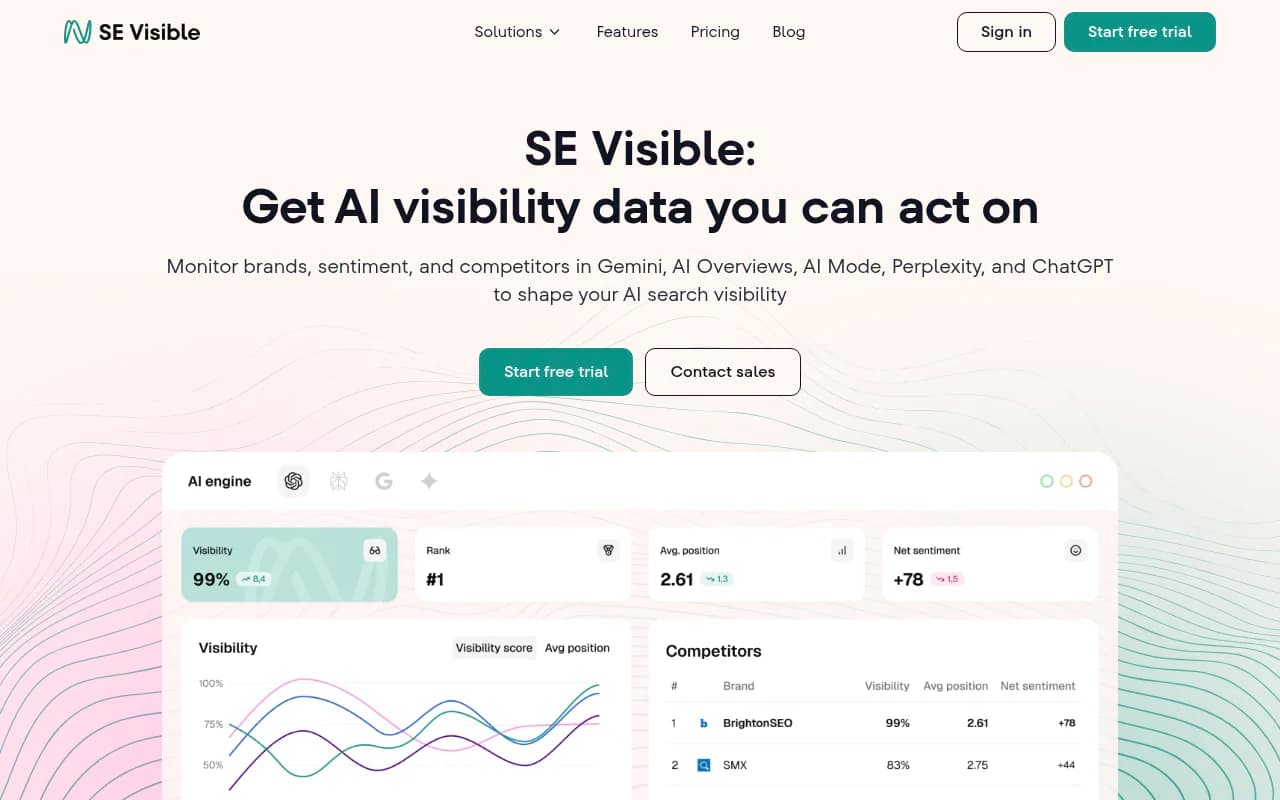
SE Visible from SE Ranking sits in an interesting spot -- it's part of a broader SEO platform, which means you get AI visibility data alongside traditional rank tracking in one place.
AthenaHQ covers 8+ AI engines and has a clean competitive benchmarking interface, though it's primarily a monitoring tool without content optimization built in.

Content optimization tools
These tools focus on helping you create content that performs in AI search. They're most useful once you know where your gaps are and need to fill them.
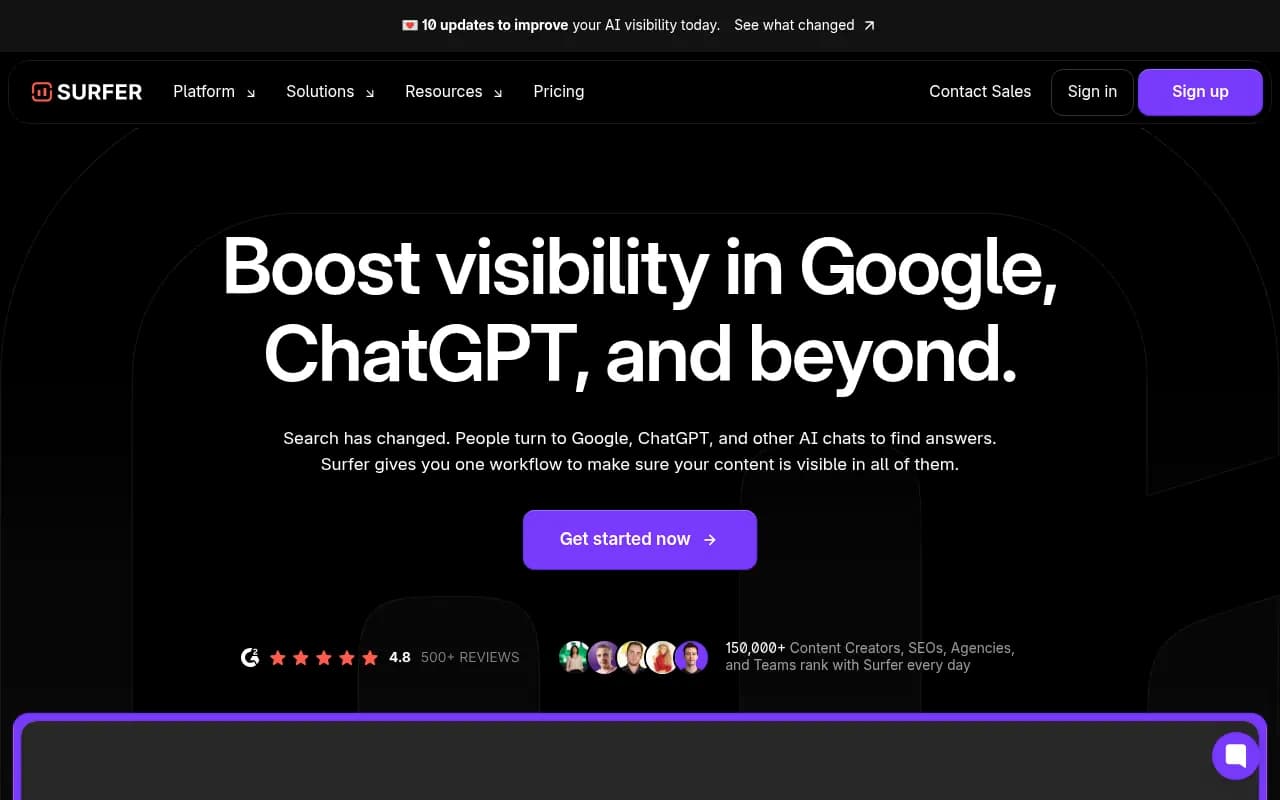
Surfer SEO has added AEO tracking to its content optimization workflow, which makes it a natural fit for teams that are already using it for traditional SEO.
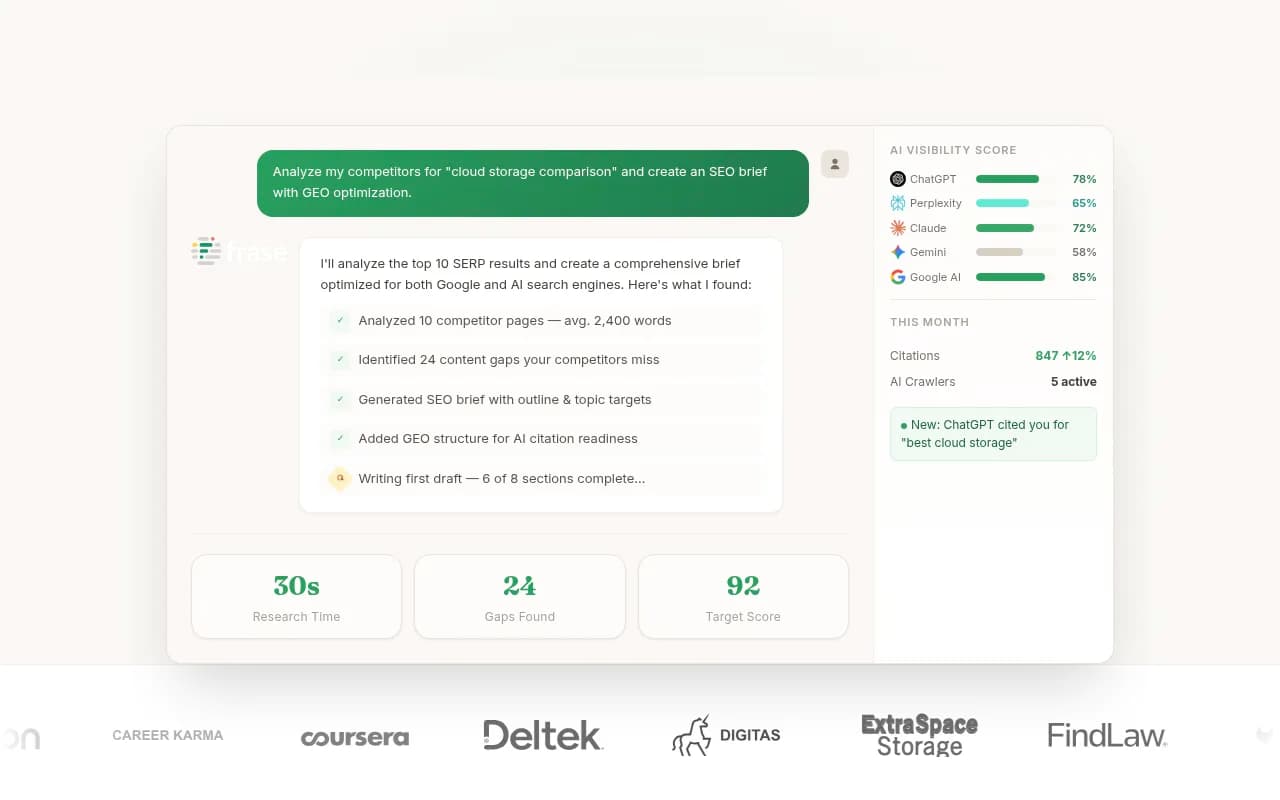
Frase is strong for research-heavy content creation, with good support for structuring content around questions -- which is exactly what AEO requires.
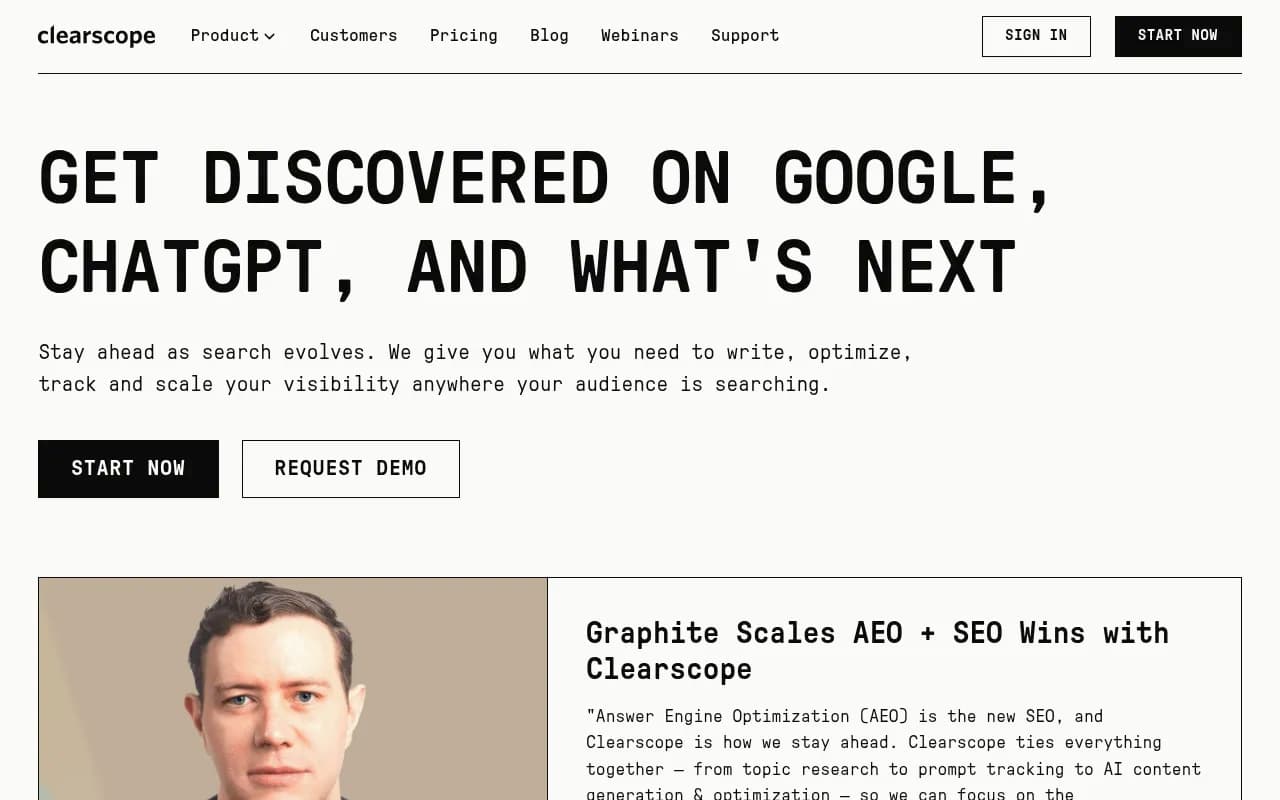
Clearscope remains one of the better tools for content scoring and optimization, though its AEO-specific features are still maturing.
Full optimization platforms
These are the tools that try to close the full loop: find gaps, create content, track results. They're more expensive but more powerful for teams that are serious about AI visibility as a channel.
Profound has strong tracking and competitive intelligence features, with a focus on enterprise use cases.

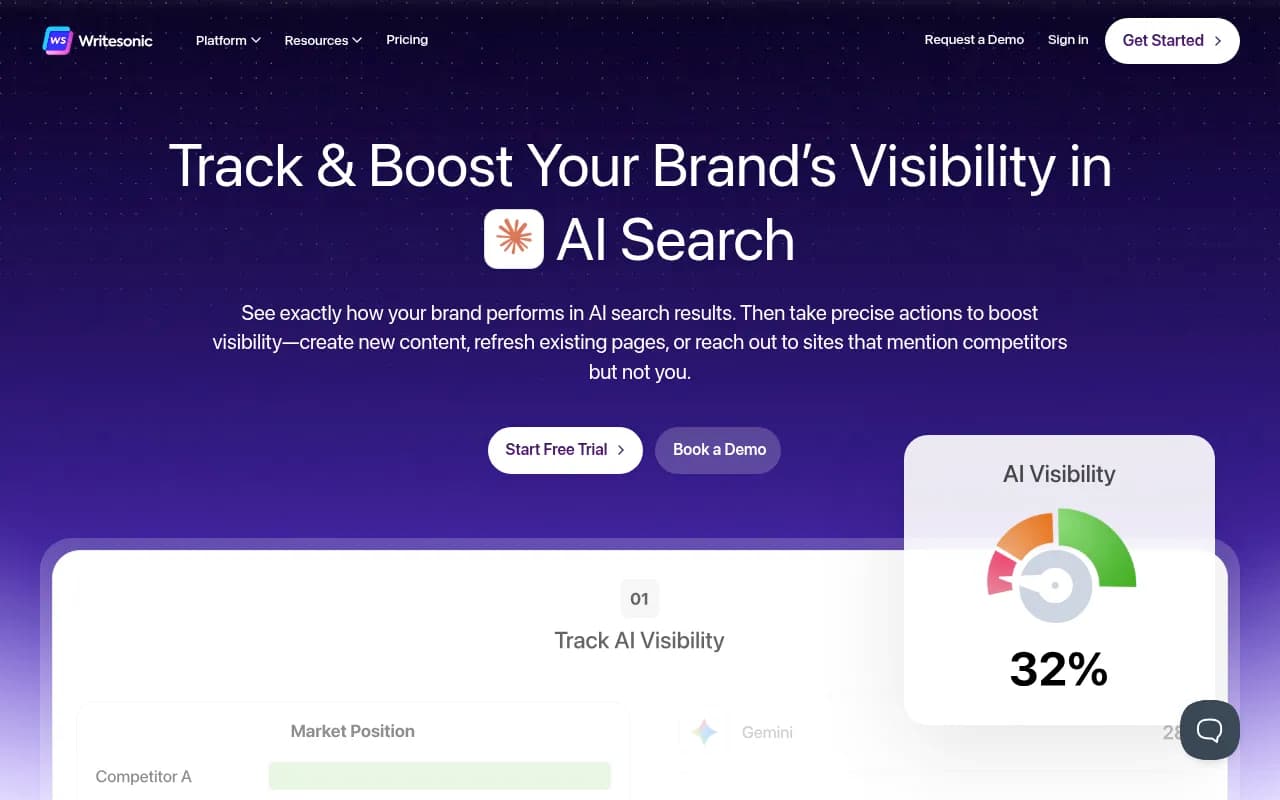
Writesonic has built a GEO workflow that combines visibility tracking with in-platform content optimization -- one of the more complete stacks for mid-market teams.
Promptwatch is the platform that most directly addresses the full action loop: Answer Gap Analysis shows you exactly which prompts competitors are winning that you're not, a built-in AI writing agent generates content grounded in real citation data, and page-level tracking shows whether that content is actually getting cited. It also includes AI crawler logs (which most tools lack entirely), prompt volume and difficulty scoring, Reddit and YouTube citation tracking, and ChatGPT Shopping monitoring. Used by 6,700+ brands including Booking.com and Center Parcs.

Traditional SEO platforms with AEO features
Semrush and Ahrefs have both added AI visibility features, but they're bolt-ons to platforms built for traditional search. Semrush uses fixed prompts, which limits how well it maps to your actual customer questions. Ahrefs Brand Radar has similar constraints and no AI traffic attribution.
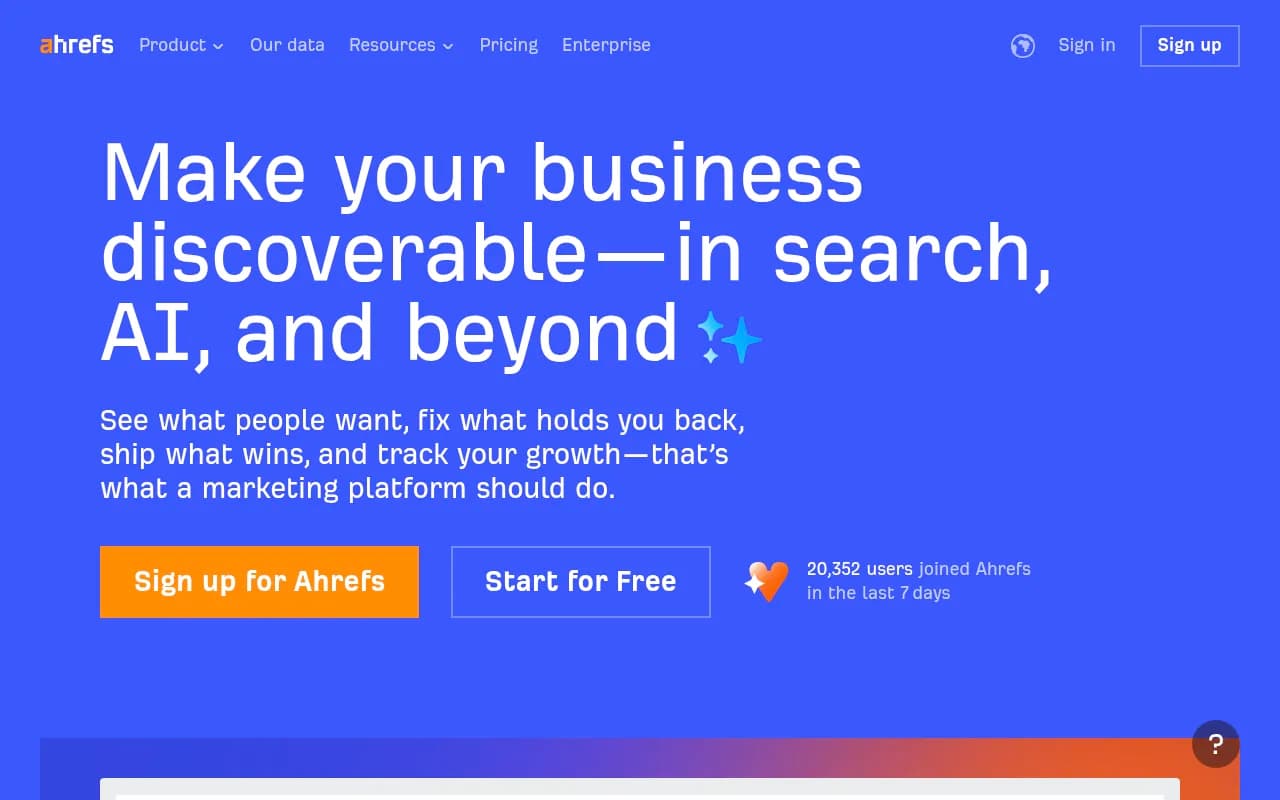
These are worth considering if you're already paying for these platforms and want basic AI visibility data alongside your existing SEO workflow. They're not the right choice if AI search is a primary focus.
Comparison table: AEO tools by use case
| Tool | Best for | AI engines covered | Content generation | Crawler logs | Starting price |
|---|---|---|---|---|---|
| Promptwatch | Full optimization loop | 10+ (ChatGPT, Perplexity, Claude, Gemini, Grok, DeepSeek, Copilot, Mistral, Meta AI, Google AIO) | Yes (citation-grounded) | Yes | $99/mo |
| Profound | Enterprise tracking | ChatGPT, Perplexity, Gemini, others | Limited | No | Custom |
| Writesonic | Mid-market GEO workflows | ChatGPT, Gemini, Perplexity, Claude, Google AI Mode | Yes | No | $199/mo |
| Otterly.AI | Monitoring, small teams | ChatGPT, Perplexity, Gemini, Bing | No | No | Freemium |
| Peec AI | Multi-language monitoring | Multiple, European focus | No | No | From ~$49/mo |
| SE Visible | SEO + AEO combined | ChatGPT, Perplexity, Gemini, Google AIO | No | No | $99/mo |
| AthenaHQ | Competitive benchmarking | 8+ engines | No | No | Custom |
| Surfer SEO | Content teams doing AEO | ChatGPT, Perplexity, Gemini | Yes (SEO-focused) | No | $99/mo |
| Semrush | Existing Semrush users | Limited (fixed prompts) | Via ContentShake | No | $139/mo+ |
| Ahrefs Brand Radar | Existing Ahrefs users | Limited (fixed prompts) | No | No | $129/mo+ |
Which type of team should use what
In-house marketing teams
If you're a marketing team at a single brand, your priority is usually a clean workflow that connects AI visibility data to content production without requiring a data analyst to interpret the output. You want prompt-level data, competitive benchmarking, and ideally content generation that your writers can use directly.
The full optimization platforms (Promptwatch, Writesonic) are the best fit here. If budget is tight, start with a monitoring tool to establish your baseline, then upgrade once you can show the business case.
Agencies
Agencies have different needs: multi-client management, white-label reporting, and the ability to show clients clear before/after visibility improvements. You also need to be able to run a meaningful AEO program at scale without it eating your team's time.
Look for tools with strong multi-site support, good export and reporting options, and content generation that can produce client-ready output. Promptwatch has agency and custom pricing tiers. Profound and AthenaHQ also have agency-oriented features. Otterly.AI is a common starting point for smaller agencies.
Enterprise teams
Enterprise requirements typically include: high prompt volumes (300+), multi-region and multi-language monitoring, API access for custom reporting, integration with existing data stacks (Looker Studio, data warehouses), and SSO/security compliance.
BrightEdge and seoClarity are established enterprise SEO platforms that have added AI visibility features.
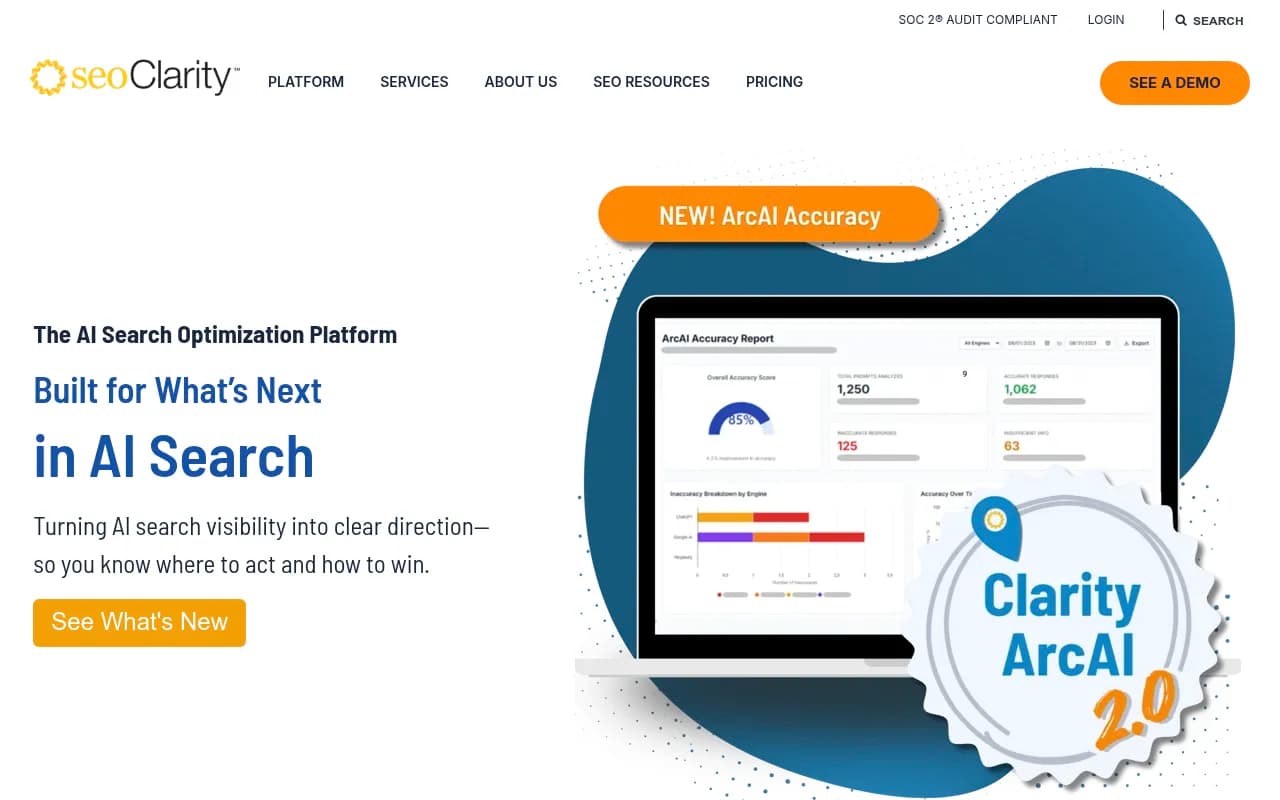
Promptwatch's Business and Enterprise tiers cover the core requirements, and the Looker Studio integration and API make it workable within existing reporting stacks. For very large enterprises with complex data infrastructure needs, BrightEdge or seoClarity may be a better fit given their longer track record with enterprise IT requirements.
A practical shortlisting process
Once you've worked through the six questions, you should have a clearer picture of what you need. Here's how to turn that into a shortlist:
- Filter by AI engine coverage first. If a tool doesn't monitor the engines your audience uses, nothing else matters.
- Filter by whether you need content generation. This cuts the market roughly in half.
- Check prompt limits against your actual needs. If you need 200 prompts and the tool's mid-tier caps at 150, you're already at the enterprise tier.
- Run a real trial. Most tools offer free trials. Use your actual prompts, your actual competitors, and your actual use case -- not the demo data.
- Check the reporting output. Export a sample report and ask yourself whether you'd actually send this to a client or a CMO.
The AEO tool market will keep evolving -- new engines, new features, new pricing models. But the six questions above don't change. What you're trying to achieve, which engines matter, whether you need content creation, your scale, your workflow, and your budget are the constants. Get those right and the tool choice follows naturally.