Key takeaways
- Most GEO and AI visibility platforms in 2026 are built for marketing teams, not IT security -- SSO and SAML support is inconsistent and often undocumented
- Enterprise authentication requirements (SSO, SAML 2.0, SCIM provisioning, role-based access) are now a real procurement blocker for large organizations adopting GEO tools
- Platforms like Bluefish, Conductor, Semrush, and BrightEdge are the most enterprise-ready in terms of auth and access controls; lighter tools like Otterly.AI and Peec.ai are not built for enterprise IT requirements
- Promptwatch sits in a strong middle ground -- enterprise-capable with multi-user access, agency/enterprise custom tiers, and an API -- while also being the only GEO platform rated "Leader" across all capability categories in 2026
- Before signing any GEO platform contract, run authentication requirements through your IT/security team early -- it's faster than retrofitting access controls after rollout
Why enterprise authentication matters for GEO platforms
AI search visibility has moved from a niche experiment to a board-level priority. Conductor's 2026 AEO/GEO Benchmarks Report puts it plainly: AI isn't replacing search, it's replacing your website as the first touchpoint in the customer journey. If your brand isn't cited in ChatGPT, Perplexity, or Google AI Overviews, you're invisible before the customer ever reaches your site.
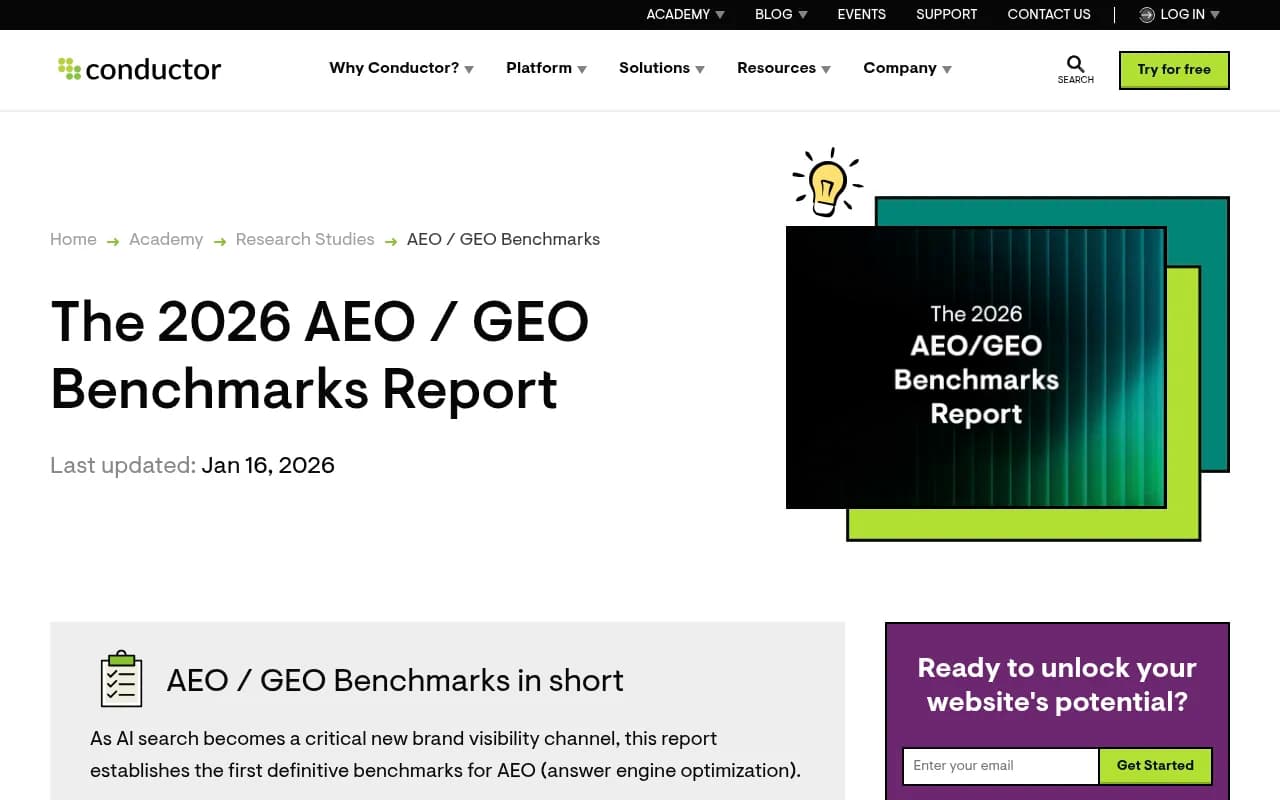
That urgency has pushed GEO tools into enterprise procurement pipelines -- and that's where authentication becomes a real issue. Enterprise IT and security teams have non-negotiable requirements: Single Sign-On (SSO), SAML 2.0 federation, SCIM for automated user provisioning, role-based access controls (RBAC), and audit logs. Most GEO platforms were built by small teams optimizing for marketing usability, not enterprise IT compliance. The gap between what marketing wants and what IT will approve is real.
This guide maps the authentication and access control landscape across the major GEO platforms so you can shortlist tools that will actually clear your security review.
What enterprise authentication actually requires
Before comparing platforms, it helps to be precise about what "enterprise authentication" means in practice. These are the capabilities IT teams typically ask for:
- SSO (Single Sign-On): Users log in via your company's identity provider (IdP) -- Okta, Azure AD, Google Workspace, Ping Identity -- rather than maintaining a separate password for each tool
- SAML 2.0: The protocol most enterprise IdPs use to federate identity. Some platforms support OAuth/OIDC instead, which is acceptable for many organizations
- SCIM provisioning: Automated user lifecycle management -- when someone joins or leaves your company, their access to the GEO tool is provisioned or deprovisioned automatically
- RBAC (Role-based access control): Different users get different permissions -- an analyst can view dashboards but can't change prompt tracking settings; an admin can manage billing
- Audit logs: A record of who did what and when, required for SOC 2 compliance and internal security reviews
- Data residency and privacy controls: Where data is stored and processed, relevant for GDPR compliance (especially for EU-based organizations)
Not every organization needs all of these. A 10-person agency can get by with email/password and shared logins. A 500-person enterprise with a security team cannot.
GEO platform authentication: what each tool actually supports
The honest answer is that most GEO platforms don't publish their authentication capabilities prominently -- you have to ask during a sales call or dig through documentation. Here's what's known about the major players:
Enterprise-tier platforms (SSO/SAML typically available)
Bluefish positions itself as an enterprise GEO platform for Fortune 500 brands. Enterprise authentication features including SSO are part of their custom enterprise tier. If you're a large brand with strict IT requirements, Bluefish is one of the few GEO-native platforms built with that buyer in mind.
Conductor is the most mature enterprise option in this space, partly because it started as a traditional enterprise SEO platform before expanding into AI visibility. Conductor supports SSO via SAML 2.0, has established enterprise security practices, and is already in the procurement systems of large organizations. If your company already uses Conductor for SEO, extending to GEO is the path of least resistance from an IT perspective.
BrightEdge is another legacy enterprise SEO platform that has added AI visibility capabilities. Like Conductor, it has enterprise-grade security, SSO support, and is familiar to enterprise IT teams. The tradeoff is that its GEO capabilities are less specialized than purpose-built AI visibility tools.
Semrush (and the broader Semrush One suite) offers SSO for Business and Enterprise plan customers. It's a known quantity in enterprise procurement and has SOC 2 Type II certification. The GEO features are less deep than dedicated platforms, but the security posture is solid.
seoClarity is an enterprise SEO platform with AI search visibility tracking. It has enterprise authentication support and is built for large-scale deployments with complex team structures.
Evertune is specifically positioned for Fortune 500 brands doing GEO at scale. Enterprise authentication is part of the offering, though specifics require a sales conversation.
Mid-market platforms (SSO sometimes available, varies by tier)
Promptwatch offers agency and enterprise custom pricing tiers with multi-user access and API access. For teams that need SSO, the enterprise tier is the right conversation to have. What makes Promptwatch stand out beyond authentication is that it's the only platform in the 2026 GEO landscape rated as a "Leader" across all capability categories -- monitoring, content generation, traffic attribution, and crawler intelligence -- rather than just one dimension.

Profound has enterprise capabilities and works with large brands. SSO availability depends on the plan tier and is worth confirming directly.

AthenaHQ tracks brand visibility across 8+ AI search engines and has enterprise customers. Authentication capabilities are not prominently documented and should be confirmed during evaluation.

Scrunch AI has enterprise-oriented features for AI search visibility monitoring. Authentication specifics require direct inquiry.
Search Party is agency-oriented and has enterprise customers. SSO support is not publicly documented.
SMB/self-serve platforms (SSO typically not available)
These tools are built for individuals, small teams, and agencies. They're excellent for what they do, but enterprise IT requirements are not part of their design:
Otterly.AI -- lightweight monitoring, no SSO

Peec AI -- multi-language tracking, self-serve focused

Rankscale -- AI search ranking, no enterprise auth documented
Brandlight -- brand visibility tracking, SMB-focused
Writesonic -- content generation with GEO features, team plans available but not enterprise SSO
Authentication comparison table
| Platform | SSO/SAML | SCIM | RBAC | Audit logs | Enterprise tier | Best for |
|---|---|---|---|---|---|---|
| Conductor | Yes (SAML 2.0) | Likely | Yes | Yes | Yes | Enterprise SEO + GEO |
| BrightEdge | Yes | Likely | Yes | Yes | Yes | Enterprise SEO + AI |
| Semrush One | Yes (Business+) | Not documented | Yes | Yes | Yes | Broad SEO + GEO |
| Bluefish | Yes (Enterprise) | Not documented | Yes | Not documented | Yes | GEO-native enterprise |
| seoClarity | Yes | Yes | Yes | Yes | Yes | Enterprise SEO + AI |
| Evertune | Yes (Enterprise) | Not documented | Yes | Not documented | Yes | Fortune 500 GEO |
| Promptwatch | Enterprise tier | Not documented | Yes | Not documented | Yes (custom) | Full GEO action loop |
| Profound | Varies by tier | Not documented | Partial | Not documented | Partial | AI answer monitoring |
| AthenaHQ | Not documented | No | Partial | No | No | AI brand monitoring |
| Otterly.AI | No | No | Limited | No | No | SMB monitoring |
| Peec AI | No | No | Limited | No | No | SMB/agency |
| Writesonic | No | No | Team roles | No | No | Content + GEO |
Note: "Not documented" means the feature isn't publicly confirmed -- it may exist at enterprise tiers. Always verify directly with vendors.
The procurement reality: what actually slows down GEO tool adoption
Here's something that doesn't get discussed enough: the authentication gap is causing real delays in enterprise GEO adoption. Marketing teams find a tool they want, get excited about the AI visibility data, then hand it to IT for security review -- and the process stalls for weeks or months because the vendor can't answer basic questions about SAML configuration or data processing agreements.
A few things that tend to trip up procurement:
Data processing agreements (DPAs): GDPR requires a signed DPA before EU personal data can be processed by a third party. Most GEO platforms process prompt data and potentially user behavioral data. Enterprise vendors like Conductor and Semrush have standard DPAs ready. Smaller platforms may not.
Subprocessor lists: Enterprise security teams want to know which third parties the GEO platform shares data with (cloud providers, analytics tools, AI model APIs). This is rarely published proactively.
AI model data usage: Some GEO platforms query live AI models (ChatGPT, Perplexity, etc.) to gather visibility data. Enterprise IT teams sometimes have concerns about what data is sent to those models. Understanding the data flow matters.
Penetration testing and SOC 2: Larger enterprise vendors have these certifications. Most GEO-native startups do not yet.
The practical advice: if you're in enterprise procurement, start the security review in parallel with the product evaluation, not after. The product team will love the tool; the security team needs time to review it. Running them in parallel saves weeks.
How to evaluate GEO platforms for enterprise authentication
A structured approach works better than hoping the vendor's website answers your questions. Here's a checklist:
During the demo or first sales call:
- Ask directly: "Do you support SAML 2.0 SSO? Which identity providers have you tested with?"
- Ask: "Do you have a SOC 2 Type II report we can review?"
- Ask: "Do you have a standard DPA for GDPR compliance?"
- Ask: "What data do you send to third-party AI model APIs, and under what terms?"
Before signing:
- Request a security questionnaire response (most enterprise vendors have a standard one)
- Confirm SCIM provisioning if automated user lifecycle management is required
- Review the subprocessor list
- Confirm data residency if you have requirements (EU data staying in EU, etc.)
For the IT/security team:
- Test SSO configuration in a sandbox before full rollout
- Confirm audit log format and retention period
- Understand the offboarding process -- what happens to your data if you cancel?
Which platform should you choose?
The answer depends on where you sit on the enterprise maturity spectrum.
If you're a large enterprise with a formal IT security function, mandatory SSO, and a procurement process that requires SOC 2 certification, your realistic shortlist is: Conductor, BrightEdge, Semrush One, seoClarity, or Bluefish. These platforms have the security posture to clear enterprise procurement. The tradeoff is that some of them (particularly the legacy SEO platforms) have less specialized GEO capabilities.
If you're a mid-market company or a large agency that needs strong GEO capabilities with reasonable enterprise controls, Promptwatch is worth a serious look. It covers the full optimization loop -- finding content gaps, generating content engineered for AI citation, tracking results, and attributing traffic -- in a way that monitoring-only tools simply don't. The enterprise tier supports the access controls most teams need, and the platform's depth (crawler logs, 880M+ citations analyzed, Reddit and YouTube tracking, ChatGPT Shopping monitoring) is genuinely differentiated.
If you're a smaller team or agency where SSO isn't a requirement, tools like Otterly.AI, Peec AI, or Profound offer solid monitoring capabilities at accessible price points. Just don't expect them to clear an enterprise security review.
The bigger picture
Authentication is a procurement requirement, not a product feature. The GEO platforms that will win enterprise deals in 2026 and beyond are the ones that treat security and compliance as first-class concerns, not afterthoughts. Right now, that's still a relatively short list.
The good news: the category is maturing fast. A year ago, most GEO platforms didn't have enterprise tiers at all. Now several do. SAML support, DPAs, and SOC 2 audits are becoming table stakes for any platform that wants to sell to large organizations.
For marketing teams navigating this: your job is to pick the best tool for AI visibility. Your IT team's job is to make sure it's safe to deploy. The teams that coordinate early -- sharing security requirements with vendors before the evaluation gets too far along -- are the ones that close deals without the last-minute delays.
The AI search visibility race is real. Don't let a preventable authentication issue slow you down.