Key takeaways
- Mid-market teams typically need 2-5 sites, 100-400 prompts tracked, and content optimization — not just monitoring dashboards
- Most "affordable" GEO tools (Otterly.AI, Peec.ai, Rankscale) stop at monitoring and leave you without a path to actually improve visibility
- Enterprise platforms (Profound, Evertune, BrightEdge) are priced for Fortune 500 budgets and have onboarding overhead that mid-market teams can't absorb
- The tools that actually fit the mid-market gap combine tracking, content gap analysis, and some form of content generation or optimization guidance
- Promptwatch's Professional ($249/mo) and Business ($579/mo) tiers were purpose-built for this segment, with crawler logs, multi-site support, and a built-in AI writing agent
There's a frustrating gap in the GEO tool market right now. On one end, you have lightweight trackers that cost $25-99/month and basically show you a dashboard of where you appear (or don't). On the other end, you have enterprise platforms with custom pricing, dedicated onboarding teams, and sales cycles measured in weeks.
If you're running a marketing team at a company doing $10M-$200M in revenue, neither of those fits. You need real data, multi-site support, competitive intelligence, and ideally some help actually fixing the gaps you find. You also need to justify the spend to a CFO who's heard the phrase "AI SEO" too many times already.
This guide is specifically for that middle ground. We'll cover what mid-market teams actually need from a GEO platform, where the current tools fall short, and which ones are genuinely worth evaluating.
What mid-market teams actually need from a GEO platform
Before getting into specific tools, it's worth being precise about what separates mid-market needs from the two extremes.
A solo operator or small agency can get by with a tool that tracks 15-50 prompts across one brand and shows a visibility score. That's enough to know if you're being mentioned. A Fortune 500 brand needs custom enterprise contracts, dedicated support, and integration with existing data stacks.
Mid-market teams are somewhere in the middle, and their requirements tend to cluster around a few things:
Multi-site or multi-brand support. Most mid-market companies have more than one domain to worry about — a main brand site, a regional subdomain, maybe a product-specific microsite. Tools that only support one site at the base tier create immediate friction.
Enough prompts to be meaningful. Tracking 15 prompts tells you almost nothing about competitive positioning. You need at least 100-200 prompts to get a real picture of where you stand across different product categories, use cases, and buyer questions.
Competitive visibility, not just self-monitoring. Knowing you're not being cited is only half the problem. Knowing which competitors are being cited instead of you — and for which specific prompts — is what lets you prioritize.
A path to actually fixing gaps. This is where most tools completely fail mid-market teams. They show you the problem and then leave you to figure out the solution yourself. Content gap analysis and some form of content optimization guidance aren't nice-to-haves at this level; they're the whole point.
Reasonable pricing with predictable costs. "Custom pricing" is a red flag for mid-market. You need to know what you're paying before you sign up, and you need it to be a number your team can approve without a procurement process.
The starter tier: what you outgrow quickly
Several tools in the GEO space are genuinely good for getting started, but hit walls fast when you need more depth.

Otterly.AI is one of the most commonly recommended entry points. At $25/month, it's accessible, and the interface is clean. But it's monitoring-only — there's no content gap analysis, no crawler logs, no content generation. For a solo consultant or a startup testing the waters, that's fine. For a mid-market team trying to move the needle, you'll outgrow it within a month.

Peec.ai is similar. Good multi-language support, solid visibility tracking, and a reasonable price point. But again, it stops at monitoring. You can see where you're invisible; you can't do much about it from within the platform.
Rankscale comes in at $20/month and is genuinely useful for budget-conscious tracking. But the feature depth isn't there for teams that need competitive intelligence and content workflows.
The pattern across all of these: they're dashboards, not optimization platforms. That's a real distinction, and it matters more as your team grows.
The enterprise tier: real power, wrong price
On the other end, several platforms are technically excellent but priced and structured for organizations with dedicated GEO teams and six-figure tool budgets.
Profound starts at $499/month with no free trial. It has strong brand intelligence features and is genuinely well-regarded for enterprise use cases. But the onboarding overhead and price point make it a tough sell for a mid-market team that needs to show ROI within a quarter.
Evertune is explicitly positioned for Fortune 500 brands. The feature set is deep, but the target customer is a company like a major CPG brand or financial institution with a dedicated AI search team. Mid-market teams aren't the intended audience.
BrightEdge is a comprehensive enterprise SEO and GEO platform. If you're already a BrightEdge customer, the AI visibility features are worth exploring. But as a standalone GEO solution for a mid-market team, the pricing and complexity are overkill.
Bluefish positions itself for enterprise marketing teams. Solid feature set, but again: the pricing and sales process are built for larger organizations.
The mid-market sweet spot: tools worth evaluating
Here's where it gets more interesting. A handful of platforms have landed in the range that actually works for mid-market teams — enough depth to be useful, pricing that's defensible, and some form of optimization capability beyond pure monitoring.
Promptwatch
Promptwatch is the most complete option in this segment. The Professional tier ($249/month) covers 2 sites, 150 prompts, 15 articles per month, crawler logs, and state/city-level tracking. The Business tier ($579/month) scales to 5 sites, 350 prompts, and 30 articles.
What separates it from monitoring-only tools is the full action loop: Answer Gap Analysis shows you exactly which prompts competitors are visible for that you're not, the built-in AI writing agent generates content grounded in citation data from 880M+ analyzed citations, and page-level tracking shows which specific pages are being cited by which AI models. There's also real traffic attribution via GSC integration, a code snippet, or server log analysis — so you can connect AI visibility to actual revenue.
The crawler logs feature is worth calling out specifically. Seeing which AI crawlers (ChatGPT, Claude, Perplexity) are hitting your site, which pages they're reading, and what errors they're encountering is genuinely useful data that most competitors don't offer at all.

AthenaHQ

AthenaHQ is frequently cited as a good fit for SMBs and mid-market teams that want quick setup and easy prompt libraries. The interface is clean and the onboarding is fast. The limitation is that it's primarily monitoring-focused — it tracks visibility across 8+ AI engines well, but the optimization and content generation capabilities are limited compared to Promptwatch. Good choice if your primary need is tracking and you have a separate content workflow.
Semrush (AI Visibility Toolkit)
If your team is already paying for Semrush, the AI visibility toolkit is worth activating. The advantage is zero additional onboarding — you're already in the platform. The limitation is that the GEO features are an add-on to a traditional SEO tool, not a purpose-built GEO platform. Fixed prompts, no AI traffic attribution, and less depth on the optimization side. But for teams that want to consolidate tools, it's a reasonable option.
SE Ranking
SE Ranking has been adding AI visibility features to its all-in-one SEO platform. Similar story to Semrush — good if you're already a customer, less compelling as a standalone GEO solution. The pricing is mid-market friendly, and the feature set is growing.
Scrunch AI
Scrunch has a solid monitoring feature set and is priced in the mid-market range. Worth evaluating if competitive intelligence is your primary need, though it lacks the content generation capabilities that make Promptwatch stand out.
Gauge
Gauge focuses on competitive intelligence for AI visibility. Custom pricing, which is a slight concern for mid-market teams wanting predictable costs, but the competitive analysis depth is strong. Worth a demo if understanding competitor positioning is your main priority.
Feature comparison: mid-market GEO tools
| Tool | Starting price | Multi-site | Prompt volume | Content generation | Crawler logs | AI traffic attribution | Free trial |
|---|---|---|---|---|---|---|---|
| Promptwatch Professional | $249/mo | 2 sites | 150 prompts | Yes (15 articles/mo) | Yes | Yes | Yes |
| Promptwatch Business | $579/mo | 5 sites | 350 prompts | Yes (30 articles/mo) | Yes | Yes | Yes |
| AthenaHQ | Custom | Multi | High | Limited | No | No | Demo |
| Semrush AI Toolkit | $99/mo add-on | Multi | Fixed | Via ContentShake | No | No | No |
| SE Ranking | ~$65/mo | Multi | Limited | Limited | No | No | Yes |
| Scrunch AI | Custom | Multi | High | No | No | No | Demo |
| Otterly.AI (starter) | $25/mo | 1 site | 50 prompts | No | No | No | Yes |
| Profound (enterprise) | $499/mo | Multi | High | Limited | No | No | No |
The monitoring-only trap
One thing worth naming directly: a lot of mid-market teams buy a monitoring tool, look at the dashboard for a few weeks, and then quietly stop using it because they don't know what to do with the data.
This isn't a user problem. It's a product design problem. Showing someone that they have low AI visibility doesn't help them fix it. Showing them which specific prompts competitors are winning, what content those competitors have that you don't, and then generating a draft article targeting that gap — that's a different product category entirely.
The distinction matters when you're evaluating tools. Ask any vendor: "If I find a gap in my AI visibility, what does your platform do to help me close it?" If the answer is "we show you the data and you take it from there," that's a monitoring tool. If the answer involves content gap analysis, content generation, and tracking whether the new content actually improved your citation rate, that's an optimization platform.
Most tools in this space are still in the first category.
How to evaluate GEO platforms for your team
A few practical questions to ask during any demo or trial:
How are prompts generated? Some platforms let you define your own prompts; others use fixed prompt libraries. For mid-market teams with specific product categories, custom prompt definition matters.
Which AI models are covered? The meaningful ones for most B2B and B2C brands are ChatGPT, Perplexity, Google AI Overviews, Claude, and Gemini. Tools that only cover one or two of these give you an incomplete picture.
What does "optimization" actually mean in this platform? Push on this. Is it recommendations? Content briefs? Actual generated drafts? The answer tells you how much work you'll still need to do after the platform surfaces a gap.
How is attribution handled? Knowing you're being cited is good. Knowing that citations are driving traffic and conversions is better. Ask specifically how the platform connects AI visibility to business outcomes.
What's the onboarding timeline? Enterprise tools often require weeks of setup. Mid-market teams need to be operational in days.
A note on the tools that don't quite fit
A few tools come up frequently in GEO discussions but don't really fit the mid-market use case cleanly.
Ahrefs Brand Radar is in beta and worth watching, but the fixed prompts and lack of AI traffic attribution are real limitations right now. If you're an Ahrefs power user, it's worth exploring — just don't expect it to replace a dedicated GEO platform yet.
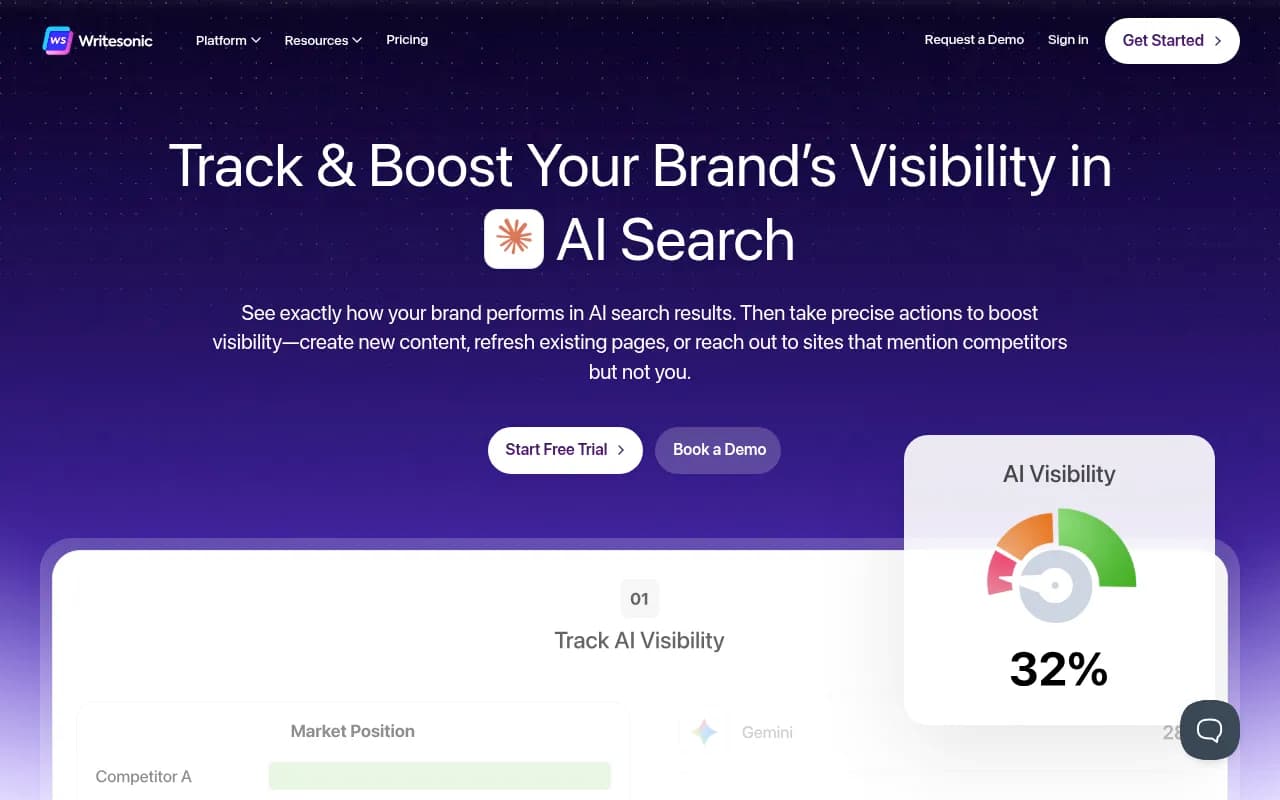
Writesonic has added GEO tracking features to its content platform. It's an interesting hybrid, but the tracking depth is secondary to the content generation use case. Better as a writing tool with some visibility features than as a primary GEO platform.
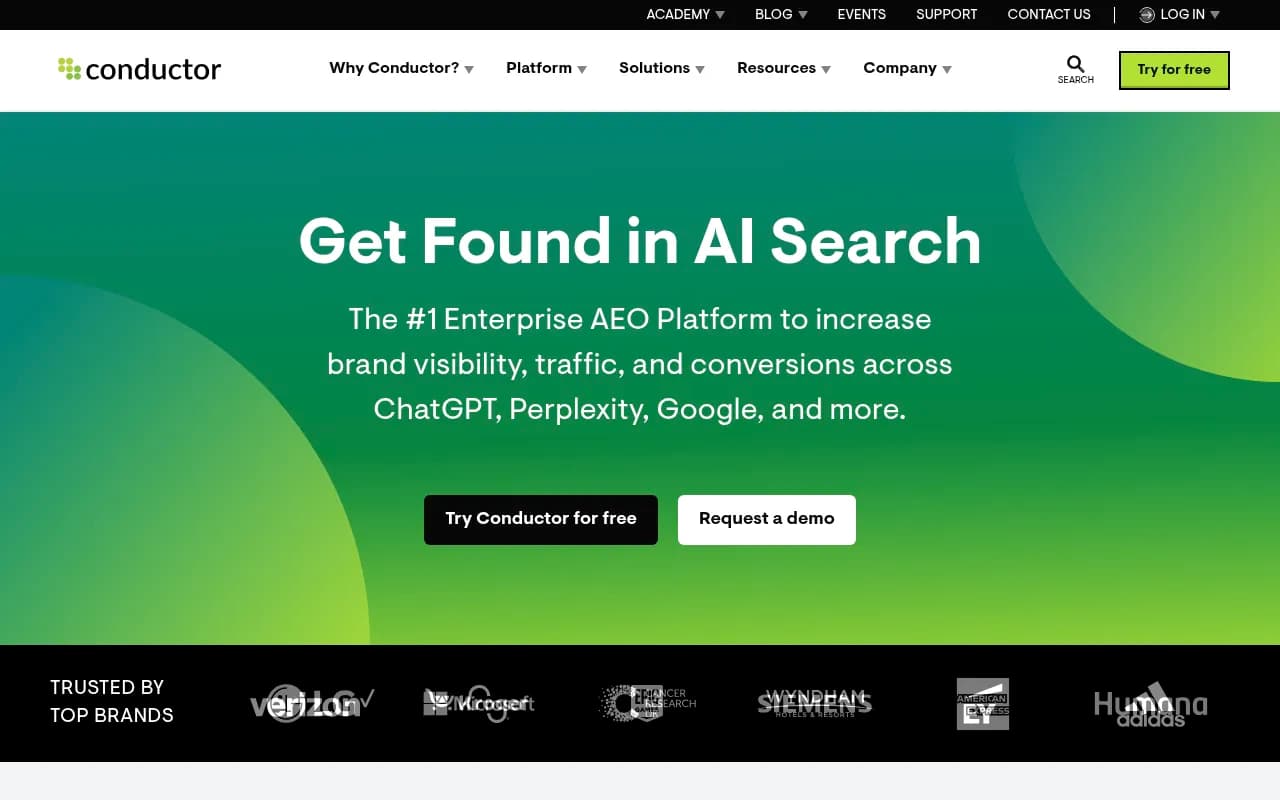
Conductor is a solid enterprise SEO platform that has added AI visibility tracking. Strong for teams already in the Conductor ecosystem, but the pricing and positioning skew enterprise.
The bottom line
The mid-market GEO gap is real, and most tools haven't fully addressed it. Starter tools are too shallow. Enterprise tools are too expensive and complex. The platforms that actually fit are the ones that combine serious monitoring depth with genuine optimization capabilities — and do it at a price point that a mid-market marketing team can approve without a six-month procurement process.
Promptwatch is the most complete option in this segment right now. The Professional tier at $249/month covers most mid-market needs, and the Business tier at $579/month handles teams managing multiple brands or sites. The combination of Answer Gap Analysis, AI content generation grounded in citation data, crawler logs, and traffic attribution is genuinely differentiated from the monitoring-only tools that dominate the lower end of the market.
That said, if you're already deep in the Semrush or SE Ranking ecosystem and your primary need is tracking rather than optimization, activating their AI visibility features is a reasonable starting point. Just go in knowing that you'll likely hit the ceiling faster than you expect.
The teams that will win at AI search visibility over the next 12-18 months aren't the ones with the best dashboards. They're the ones that can find gaps and ship content fast enough to close them.