Summary
- Modern content gap analysis isn't about missing keywords -- it's about missing perspectives, data, and expertise that AI models need to cite your brand
- Traditional SEO tools (Semrush, Ahrefs) focus on competitor keywords; AI-era tools reveal which prompts competitors rank for but you don't
- The goal is "Information Gain" -- providing unique insights AI models can't generate from consensus sources
- Tools like Promptwatch show exactly which prompts your competitors are visible for but you're not, then help you create content to close those gaps
- Effective gap analysis in 2026 requires tracking AI crawler behavior, analyzing citation patterns, and optimizing for zero-click visibility in AI Overviews
The problem with traditional content gap analysis
You've done everything right. You identified high-volume keywords, wrote comprehensive guides, optimized for featured snippets. Your traffic plateaued anyway.
The issue: you're solving a 2019 problem in a 2026 world. When ChatGPT can generate a 2,000-word summary in three seconds, "more content" isn't a strategy. The gap that matters now isn't a missing keyword -- it's a missing perspective.
Traditional content gap analysis tools (Semrush's Keyword Gap, Ahrefs' Content Gap) compare your keyword rankings against competitors. They tell you: "Competitor A ranks for 'best project management software' but you don't." Useful, but incomplete. They don't tell you:
- Which prompts in ChatGPT, Claude, or Perplexity mention your competitors but not you
- What specific angles, data points, or expert insights AI models are looking for
- Whether your existing content is even being crawled by AI agents
- How to create content that gets cited, not just ranked
The shift from keyword gaps to citation gaps is the defining challenge of 2026. AI models don't care about keyword density. They care about authority, specificity, and Information Gain -- the degree to which your content provides something new that consensus sources don't.
What AI models actually want (and how to find it)
AI models are trained on the internet, but they don't cite the internet uniformly. They have preferences:
- Structured, factual content: Lists, comparisons, step-by-step guides with clear headings
- Primary sources: Original research, case studies, proprietary data
- Expert perspectives: Named authors with credentials, quotes from practitioners
- Recency signals: Dates, version numbers, "as of [year]" markers
- Specificity over generality: Concrete examples beat abstract principles
When Claude generates a response to "best CRM for small teams," it's not pulling from every blog post ever written. It's synthesizing from sources that meet these criteria. If your content doesn't, you're invisible.
The modern content gap analysis workflow looks like this:
- Identify prompt gaps: Which prompts do competitors appear in but you don't?
- Analyze citation patterns: What types of content (format, depth, angle) do AI models cite most?
- Audit AI crawler access: Are AI agents even reading your site?
- Map semantic gaps: What topics, subtopics, or perspectives are missing from your content?
- Prioritize by impact: Which gaps, if closed, would drive the most visibility?
- Create and track: Generate content designed for AI citation, then measure results
Let's break down each step and the tools that make it possible.
Step 1: Identify prompt gaps (the prompts competitors win but you don't)
This is the foundation. You need to know which prompts your competitors are visible for that you're not. Not keywords -- prompts. The questions real users ask ChatGPT, the queries they type into Perplexity.
Promptwatch is built for this. Its Answer Gap Analysis feature shows you exactly which prompts competitors appear in but you don't. You see the specific content your website is missing -- the topics, angles, and questions AI models want answers to but can't find on your site.

How it works: Promptwatch monitors 10 AI models (ChatGPT, Perplexity, Claude, Gemini, Google AI Overviews, Meta AI, DeepSeek, Grok, Mistral, Copilot). For each prompt, it tracks which brands get cited and how often. The Answer Gap Analysis compares your visibility against competitors and surfaces the prompts where you're missing.
Example: You run a project management SaaS. Promptwatch shows that a competitor appears in responses to "best project management tool for remote teams" but you don't. The gap isn't that you lack content about remote teams -- it's that your content doesn't address the specific pain points (async communication, timezone coordination, visibility) that AI models associate with that query.
Alternatives:
- AthenaHQ tracks brand mentions across 8+ AI engines and offers prompt-level visibility comparisons

- Otterly.AI provides affordable monitoring of AI citations but lacks the content gap analysis and generation features

- Peec AI offers multi-language tracking but is monitoring-focused without optimization tools

The key differentiator: most tools stop at showing you the gap. Promptwatch helps you close it with built-in content generation (more on that in Step 5).
Step 2: Analyze citation patterns (what gets cited and why)
Once you know which prompts you're missing, you need to understand why. What are competitors doing that you're not?
This requires citation-level analysis: looking at the specific pages, formats, and content structures AI models prefer.
What to look for:
- Content format: Are AI models citing listicles, comparisons, tutorials, or case studies?
- Depth signals: How long are the cited articles? Do they include data, examples, screenshots?
- Structural patterns: Do cited pages use specific heading structures, tables, or schema markup?
- Source diversity: Are citations coming from official docs, Reddit threads, YouTube videos, or blog posts?
Prompwatch's Citation & Source Analysis shows you exactly which pages AI models cite in their responses. You can see the URLs, the context in which they're cited, and the frequency. This tells you what "good" looks like for a given prompt.
Other tools with citation analysis:
- Profound offers detailed citation tracking across AI engines with strong analytics

- Hall AI tracks how AI platforms cite and talk about your brand with sentiment analysis
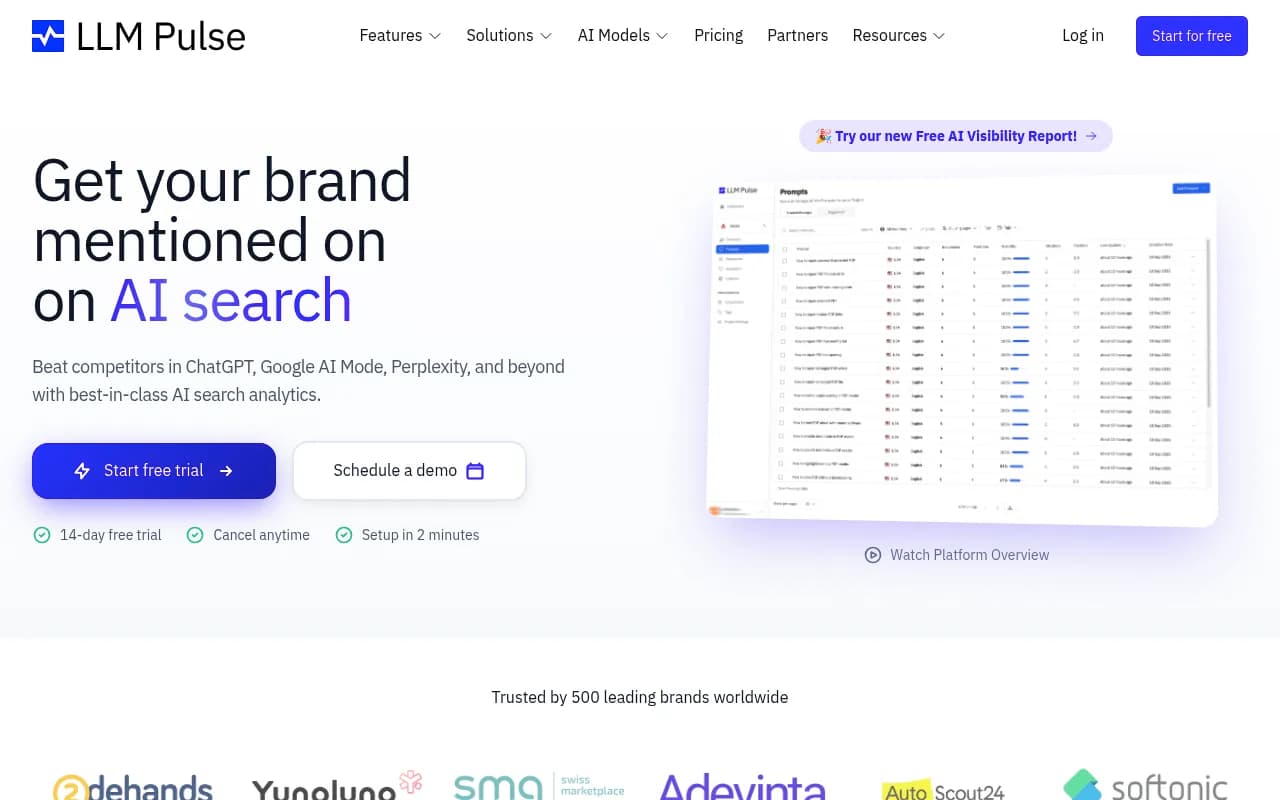
- LLM Pulse provides comprehensive LLM response tracking and citation monitoring
A practical example: You're analyzing the prompt "how to reduce customer churn." Citation analysis reveals that AI models heavily cite:
- A case study from a SaaS company showing 40% churn reduction with specific tactics
- A Reddit thread where a founder shares a detailed retention playbook
- An academic paper with statistical models for predicting churn
None of these are traditional SEO blog posts. The gap isn't that you need another "10 ways to reduce churn" article. You need primary research, real numbers, and practitioner voices.
Step 3: Audit AI crawler access (are AI agents even reading your site?)
Here's a gap most people miss entirely: your content might be invisible to AI models because they're not crawling it.
AI models use web crawlers (GPTBot for OpenAI, ClaudeBot for Anthropic, PerplexityBot, etc.) to discover and index content. If these bots are blocked, rate-limited, or encountering errors, your content doesn't exist to them.
Prompwatch's AI Crawler Logs show real-time logs of AI crawlers hitting your website -- which pages they read, errors they encounter, how often they return. This is critical for diagnosing indexing issues.
Common problems:
- robots.txt blocking AI crawlers: Many sites block GPTBot or ClaudeBot without realizing it
- Rate limiting: Aggressive bot protection can throttle AI crawlers, causing incomplete indexing
- Redirect chains: AI crawlers may give up after multiple redirects
- Slow page load times: Crawlers have timeout limits; slow pages get skipped
Most competitors (Otterly.AI, Peec.ai, AthenaHQ, Search Party) don't offer crawler logs at all. This is a blind spot. You can't close a content gap if AI models aren't even seeing your content.
DarkVisitors is another tool specifically for tracking AI agents and bots visiting your website, with detailed logs and referral data.
Step 4: Map semantic gaps (the topics and angles you're missing)
Semantic gap analysis goes deeper than "you don't rank for keyword X." It identifies the conceptual territory you haven't covered.
This is where knowledge graphs and AI-powered analysis come in. Tools like InfraNodus visualize content as a knowledge graph, showing topical clusters and the connections between them. Gaps appear as disconnected clusters -- topics that should be related but aren't in your content.
Example: You write about "SEO tools." A knowledge graph analysis of top-ranking content reveals two clusters:
- Cluster 1: keyword analysis, rank tracking, backlink monitoring
- Cluster 2: market insights, competitor intelligence, trend forecasting
These clusters are weakly connected in existing content. The gap: content that bridges "keyword analysis" and "market insights" -- e.g., "How to use keyword data to predict market trends."
This is Information Gain in action. You're not just covering more keywords; you're connecting ideas in a way that existing content doesn't.
InfraNodus uses network analysis to identify these structural gaps, then uses AI to generate content ideas that bridge them. The approach differs from traditional competitor analysis because it analyzes the discourse at large, not just what competitors rank for.
Other tools for semantic analysis:
- Semrush offers topic research and content gap analysis based on keyword co-occurrence
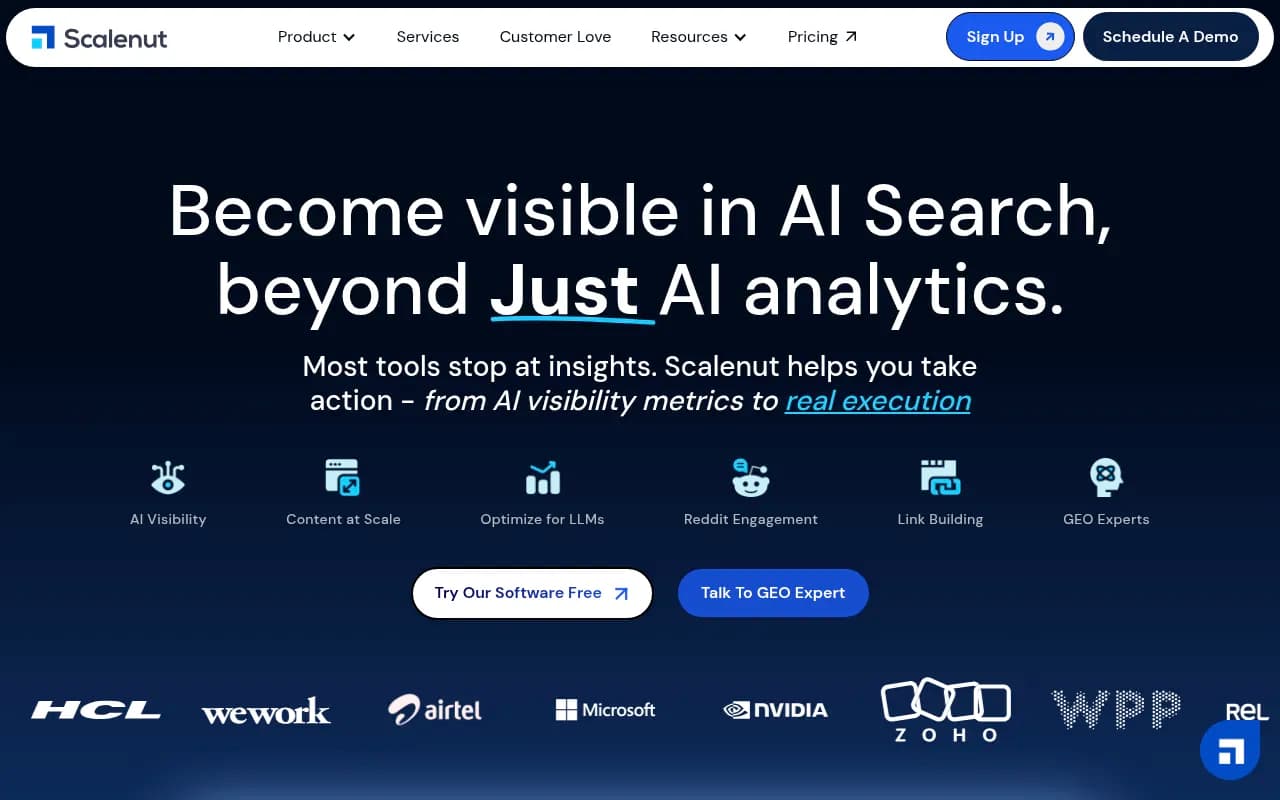
- Scalenut uses AI to analyze top-ranking content and suggest missing topics
- Thruuu is a content team tool that monitors AI Overviews and analyzes topical coverage
The key insight: semantic gaps are often more valuable than keyword gaps because they represent white space -- angles no one else is covering.
Step 5: Prioritize by impact (which gaps actually matter)
Not all gaps are worth closing. You need a prioritization framework.
Consider:
- Prompt volume: How often is this prompt asked? (Promptwatch provides volume estimates)
- Competitive difficulty: How strong are the competitors currently cited?
- Business relevance: Does this prompt align with your target audience and conversion goals?
- Content feasibility: Can you create genuinely differentiated content, or would you just be adding noise?
Prompwatch's Prompt Intelligence includes volume estimates and difficulty scores for each prompt, plus query fan-outs that show how one prompt branches into sub-queries. This helps you prioritize high-value, winnable prompts instead of guessing.
A comparison table of prioritization features across tools:
| Tool | Prompt volume data | Difficulty scoring | Business alignment filters | Query fan-outs |
|---|---|---|---|---|
| Promptwatch | Yes | Yes | Yes (persona targeting) | Yes |
| AthenaHQ | Limited | No | No | No |
| Otterly.AI | No | No | No | No |
| Profound | Limited | No | Yes (custom tracking) | No |
| Semrush | Yes (keyword-based) | Yes | Yes | Limited |
The goal is to focus on gaps where you have a realistic chance of winning and where winning matters to your business.
Step 6: Create content that closes the gap (and gets cited)
This is where most content gap analysis workflows fail. You identify the gap, then... write another generic blog post that AI models ignore.
The content you create must be designed for AI citation. That means:
- Structured format: Clear headings, bullet points, numbered lists, comparison tables
- Factual density: Specific numbers, dates, examples, case studies
- Expert voices: Named authors, quotes from practitioners, original research
- Schema markup: Structured data that helps AI models parse your content
- Recency signals: Dates, version numbers, "as of 2026" markers
Prompwatch's built-in AI writing agent generates articles, listicles, and comparisons grounded in real citation data (880M+ citations analyzed), prompt volumes, persona targeting, and competitor analysis. This isn't generic SEO filler -- it's content engineered to get cited by ChatGPT, Claude, Perplexity, and other AI models.
The workflow:
- Promptwatch identifies a gap (e.g., "best CRM for small teams")
- You review the citation analysis to see what types of content AI models prefer for this prompt
- The AI agent generates an outline that addresses the gap, includes the topics AI models expect, and incorporates the angles competitors are missing
- You refine and publish
- Promptwatch tracks whether your new content starts getting cited
This closes the loop. Most competitors (Otterly.AI, Peec.ai, AthenaHQ, Search Party) stop at step one -- they show you the gap but leave you to figure out how to close it.
Alternatives for AI-powered content generation:
- Scalenut offers AI content creation with SEO optimization
- SnowSEO auto-generates content for AI visibility
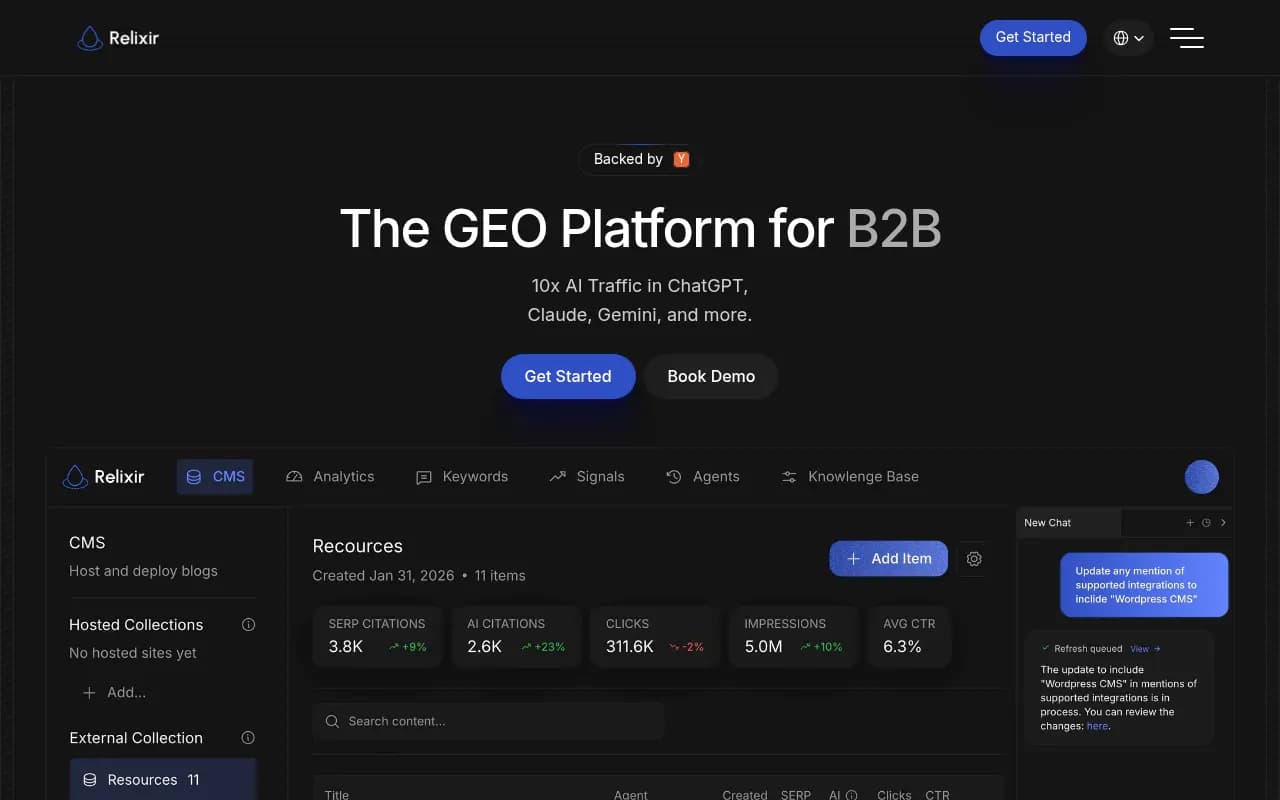
- Relixir is an all-in-one GEO platform with an AI-native CMS
But none of these integrate gap analysis, citation data, and content generation in a single workflow the way Promptwatch does.
Step 7: Track results (close the loop)
Content gap analysis isn't a one-time project. It's a continuous optimization loop:
- Find the gaps
- Create content that closes them
- Track whether AI models start citing your content
- Identify new gaps as the landscape shifts
Prompwatch's page-level tracking shows exactly which pages are being cited, how often, and by which models. You can connect visibility to actual traffic with code snippet integration, Google Search Console integration, or server log analysis.
This is the action loop that makes Promptwatch an optimization platform, not just a monitoring dashboard.
Key metrics to track:
- Visibility score: Your overall presence across AI models for your target prompts
- Citation frequency: How often your pages are cited in AI responses
- Prompt coverage: Percentage of target prompts where you appear
- Competitive position: Your visibility vs competitors for each prompt
- Traffic attribution: Actual visitors and conversions from AI search
Tools with strong tracking capabilities:
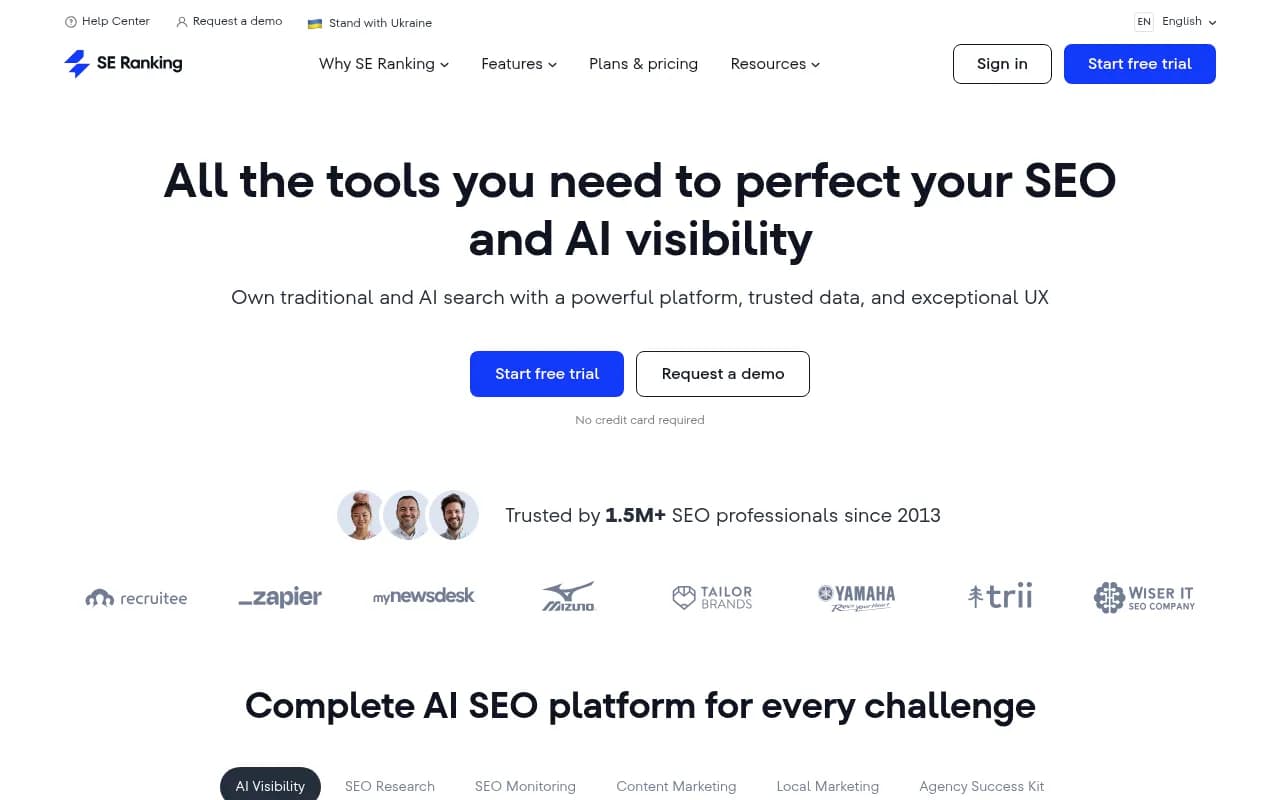
- SE Ranking offers an all-in-one SEO platform with AI visibility toolkit
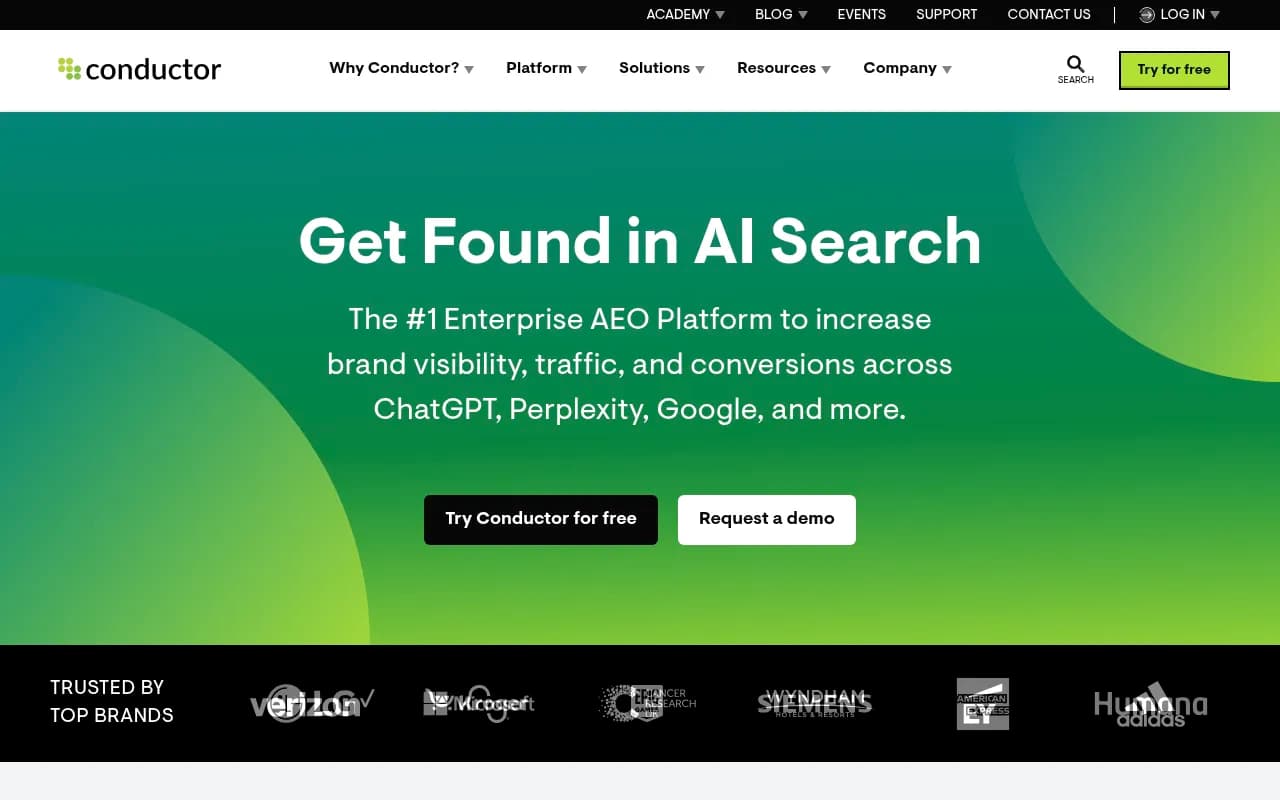
- Conductor provides AI visibility tracking with persona customization
- BrightEdge is an enterprise SEO platform with AI-powered optimization and visibility tracking
The four strategic gaps you must close
Beyond the tactical workflow, there are four fundamental gap types to address:
1. Semantic gaps
Topics, subtopics, or conceptual connections missing from your content. Example: You cover "email marketing" and "automation" separately but never connect them in a piece about "automated email sequences."
2. Intent gaps
Mismatches between what users want and what your content provides. Example: Users searching "best CRM" want comparisons and pricing; your content is a feature overview.
3. Format gaps
Your content exists but in the wrong format for AI citation. Example: You have a podcast discussing case studies, but AI models can't cite audio -- you need written transcripts or summaries.
4. Value gaps
Your content lacks the unique data, expertise, or perspective that AI models prioritize. Example: Your "guide to reducing churn" is generic advice; competitors have case studies with real numbers.
The value gap is the hardest to close and the most important. This is where Information Gain lives. AI models can generate generic advice from consensus sources. They need you for:
- Original research and proprietary data
- Expert commentary from named practitioners
- Case studies with specific results
- Contrarian perspectives backed by evidence
If your content doesn't provide one of these, you're competing on volume, not value -- and you'll lose to AI-generated summaries.
E-commerce specifics: product pages and AI shopping
For e-commerce brands, content gaps extend to product pages and shopping experiences.
ChatGPT now includes shopping features and product recommendations. If your products don't appear when users ask "best running shoes for flat feet" or "affordable standing desk under $500," you're missing sales.
The gaps:
- Structured product data: Missing or incomplete schema markup (Product, Offer, AggregateRating)
- Detailed specifications: AI models need technical details to match products to queries
- User-generated content: Reviews, Q&A, and UGC provide the social proof and specificity AI models cite
- Comparison content: "X vs Y" pages that help AI models recommend your product over competitors
Prompwatch tracks ChatGPT Shopping visibility -- when your brand appears in ChatGPT's product recommendations and shopping carousels. This is a direct revenue channel, not just brand awareness.
Tools for e-commerce AI visibility:
- Scrunch offers AI visibility tracking for influencer marketing and product mentions
- GetMint is an AI visibility and reputation management platform with e-commerce focus
Technical implementation: the invisible gap
Most content gap analysis focuses on what to write. But technical implementation is often the bottleneck.
Key technical gaps:
- Schema markup: Product, Article, HowTo, FAQ, and other structured data types
- Crawl accessibility: Ensuring AI bots can access your content (robots.txt, rate limits, authentication)
- Page speed: Slow pages get skipped by crawlers with timeout limits
- Mobile optimization: AI models prioritize mobile-friendly content
- Internal linking: Helping AI crawlers discover your content through logical site structure
Prompwatch's crawler logs help diagnose these issues. You can see when AI bots encounter errors, which pages they skip, and how often they return.
For technical SEO audits, consider:
- Semrush for comprehensive site audits
- seoClarity for enterprise-level technical SEO and AI visibility tracking
Case study: closing the gap in the real world
A B2B SaaS company selling project management software ran a content gap analysis using Promptwatch. They discovered:
- Competitors appeared in 47 high-value prompts they didn't (e.g., "best project management tool for agencies," "project management software with time tracking")
- Citation analysis showed AI models preferred comparison content and case studies over feature overviews
- Their existing content was generic "best practices" articles with no real-world examples
- AI crawlers were hitting their site but skipping key pages due to redirect chains
Actions taken:
- Fixed technical issues (simplified redirects, improved page speed)
- Created 12 comparison articles targeting the identified prompt gaps ("Tool A vs Tool B," "Best tools for [use case]")
- Published 5 case studies with specific results ("How Agency X reduced project delays by 35%")
- Added schema markup to all new content
Results after 3 months:
- Visibility score increased from 23 to 61 (out of 100)
- Citations in AI responses increased by 340%
- Traffic from AI search (tracked via Promptwatch's attribution code) accounted for 18% of total organic traffic
- 3 new enterprise deals directly attributed to AI search visibility
The key insight: they didn't just create more content. They created the specific content AI models needed to cite them, in the formats AI models preferred, addressing the gaps competitors weren't filling.
Measuring success in 2026
Success metrics for content gap analysis have shifted:
Old metrics (still relevant but incomplete):
- Keyword rankings
- Organic traffic
- Backlinks
New metrics (critical for AI visibility):
- AI visibility score (presence across AI models)
- Citation frequency (how often you're cited in AI responses)
- Prompt coverage (percentage of target prompts where you appear)
- Zero-click visibility (brand mentions in AI Overviews, even without clicks)
- AI-attributed traffic (visitors from AI search engines)
The shift to zero-click visibility is controversial but necessary. When ChatGPT cites your brand in a response, that's valuable even if the user doesn't click through. Brand awareness, authority building, and top-of-funnel visibility all happen in that moment.
Tools that track zero-click visibility:
- Promptwatch (visibility scores, citation tracking)
- AthenaHQ (brand mention tracking across AI engines)
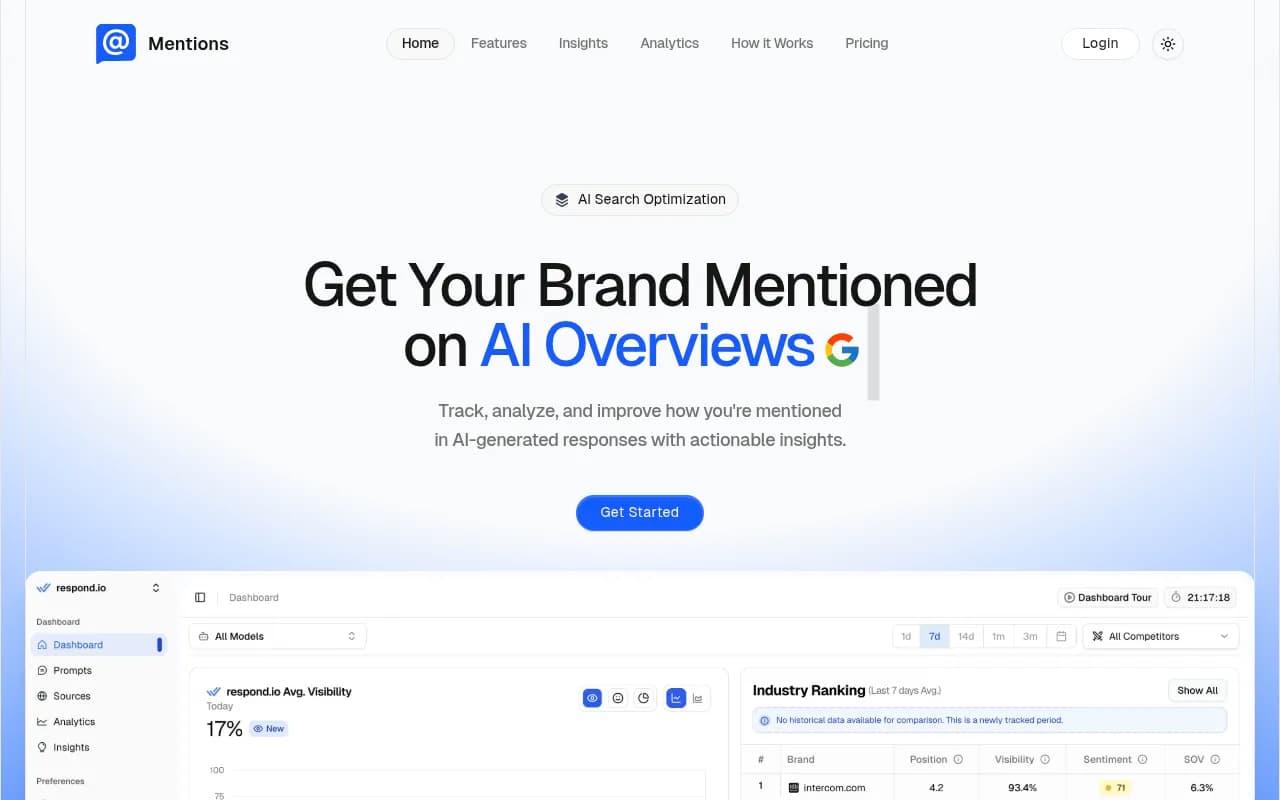
- Mentions.so (brand mention tracking in AI)
Final thoughts: from keyword gaps to knowledge gaps
The content gap that matters in 2026 isn't a missing keyword. It's a missing perspective, a missing data point, a missing connection between ideas.
AI models are trained on the internet, but they don't cite the internet uniformly. They cite sources that provide Information Gain -- the unique insights, data, and expertise that consensus sources don't.
Traditional content gap analysis tools (Semrush, Ahrefs) show you which keywords competitors rank for. AI-era tools like Promptwatch show you which prompts competitors are cited in, why they're cited, and how to create content that closes the gap.
The difference: one is a list of keywords to target. The other is a roadmap for becoming the source AI models can't ignore.
If you're still optimizing for Google's algorithm, you're fighting yesterday's war. The battle now is for AI citation -- and the brands that win are the ones that close the gaps AI models care about.