Key takeaways
- Patients now read AI answers before they pick a clinic, so tracking and improving how you appear in ChatGPT, Google AI Overviews, Gemini and Perplexity is a real marketing task, not a curiosity.
- In Promptwatch Data's healthcare report (Sep 9 to Oct 8, 2026), NIH was the most cited source in ChatGPT at 5.46%, and government and public health sites took 7.06% of all healthcare citations. Individual clinics start from a low base.
- Monitoring-only tools tell you that you are missing. For a small practice with no content team, tools that also help you fix the gap are worth more.
- Nobody should take HIPAA or BAA claims from a listicle. Ask each vendor for its trust page and a signed BAA if patient data could ever touch the tool.
- Most practices do not need an enterprise platform. A mid-priced tracker, a clean site, and a monthly review of citations will cover most of the ground.
Why healthcare is a different GEO problem
Healthcare content is YMYL territory (Your Money or Your Life). AI systems lean on authoritative medical sources, and a small practice site is competing with the NIH, the NHS and the Mayo Clinic for the same answer slot. Patients ask things like "do I need to see a doctor for this", "how long does recovery take" and "what does treatment cost". Those answers are assembled before anyone visits your website.
That changes what you need from a tool. A generic brand tracker that says "you were mentioned 3 times" is not much use if you do not know which pages the AI read, which sources it trusted instead of you, and what to change. For a clinic, the useful questions are:
- For the prompts patients actually ask in my city and specialty, do I show up?
- When I do not, which sources get cited instead?
- Is AI even able to read my site?
- Which fix should I do first?
What AI actually cites for healthcare prompts
Before choosing a tool, look at what you are up against. Promptwatch Data's healthcare citation report covers organic healthcare prompts in ChatGPT from Sep 9 to Oct 8, 2026. A few numbers worth knowing:
- NIH is the top source at 5.46% of all healthcare citations, across six nih.gov subdomains. PubMed Central is 2.38% and PubMed 2.33%.
- The FDA is second at 1.76% and the NHS third at 1.1%.
- Government and public health sites together earn 7.06% of all healthcare citations. Medical associations earn 1.39%, hospitals and clinics 0.89%, reviews and directories 0.46%.
- The top non-government site is the American Society of Plastic Surgeons at 0.64%, then the American Academy of Dermatology at 0.54%. Mayo Clinic (0.49%) and Cleveland Clinic (0.4%) are the only hospitals in the top 20.
- Doctify and WebMD doctor profiles are the only review and directory sites in the chart, at 0.23% each.
My reading: a clinic site is rarely going to be the main source for a generic medical question. Where you can win is local and branded intent ("best dermatologist in Leeds", "is [clinic name] good"), and by being the practice that specialty associations and directories point to. Promptwatch's own takeaways point the same way: back claims with PubMed-linked studies, match FDA, CDC, NHS and NICE guidance, and keep directory profiles complete.
Content type matters too. In Promptwatch's content-type data (Sep 28 to Oct 4, 2026, all industries), product pages took 22.4% of ChatGPT citations and landing pages 16.8%. For branded prompts, landing pages were 22.8%, reviews 5.6% and FAQ pages 4.8%. For a clinic, read "product page" as service page. A clear page per treatment, with price ranges, recovery times and an FAQ, is the closest thing to a product page you have.
And the content half-life report found landing pages and docs stay cited longest while news loses half its pages within 36 days. Evergreen service pages beat blog news for staying power.
How we grouped the tools
There are well over a hundred AI visibility tools now. I grouped them by what a healthcare team actually needs rather than by feature count:
- Platforms that track and help you act
- Enterprise platforms for health systems and pharma
- SEO suites with an AI add-on
- Budget trackers for single practices
- Local presence and reputation tools
- Agencies
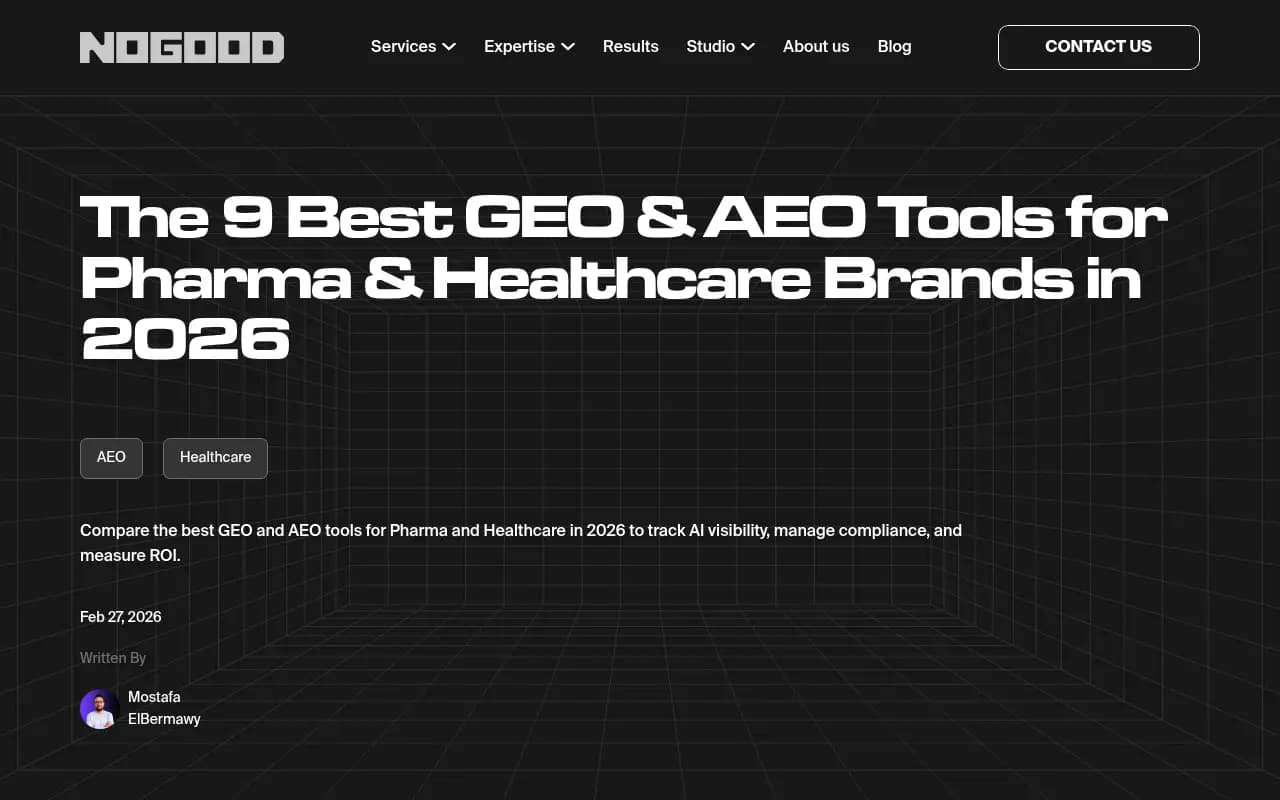
A caveat on sources. Several rankings out there are written by vendors who place themselves first. The NoGood listicle on healthcare GEO tools ranks Goodie AI first, and the First Page Sage agency list ranks First Page Sage first. They are useful for discovering names, not for settling the order.
Comparison at a glance
| Tool | Best for | Acts on gaps? | Compliance note |
|---|---|---|---|
| Promptwatch | Practices and agencies that want tracking plus fixes | Yes, content agent and action board | Verify BAA needs with vendor |
| Profound | Large health brands needing deep analytics | Mostly analytics | Vendor-claimed SOC 2 and HIPAA, verify |
| Goodie | Enterprise healthcare and pharma, content with review controls | Yes, content tools | Vendor-claimed SOC 2 Type II, verify |
| Semrush | Teams already on Semrush | Limited | Standard SaaS terms |
| Otterly.AI | Small practices wanting basic monitoring | No | Standard SaaS terms |
| Peec AI | Multi-language practices | No | Standard SaaS terms |
| Yext | Multi-location listings and local answers | Listings data | Check healthcare terms |
| Birdeye | Reviews and reputation | Review workflows | Check healthcare terms |
Pricing is deliberately not in the table. The only pricing figures in the research I gathered come from a vendor-written listicle (Goodie from $399 a month, Profound from $99 a month), and the Profound number looks too low to trust. Check each vendor's pricing page.
Platforms that track and help you act
Promptwatch
Promptwatch is the tool I would look at first for a practice that has no spare SEO headcount. It tracks real ChatGPT, Google AI Overviews, AI Mode, Gemini, Perplexity and Copilot interfaces, not just API outputs, which matters because what a patient sees can differ from what an API returns. You can track by country on every paid plan and by state or city from the Business plan, which fits local healthcare queries.
What separates it from a plain tracker is the follow-through. IP-verified AI crawler logs show whether GPTBot, ChatGPT-User or PerplexityBot can read your treatment pages at all. Weekly site audits flag the technical blockers. Citation analytics show which pages and third-party sources get cited, and the Action Board turns that into a prioritised to-do list. The Content Agent can then draft and publish to WordPress, Webflow or Framer, with a review inbox so a clinician or compliance lead approves every page before it goes live. For medical content, I would not run it fully hands-off.

Public plans start with a free Explore tier (10 prompts, ChatGPT only). Essential is $95 a month for 50 prompts and all models, Professional is $245, and Business is $579. Agency plans start at $199 a month. Confirm on promptwatch.com/pricing. I have not verified a HIPAA or BAA position for it, and you should ask before connecting anything that touches patient data. In practice GEO tracking only needs public prompts and your public site, so PHI should never be involved.
Goodie
Goodie is aimed at enterprise healthcare and pharma. Its pitch is broad engine coverage plus a content writer, an optimization hub and attribution. The NoGood listicle singles out controlled content generation as an advantage where medical, legal and regulatory review is a bottleneck. That is a fair point, though the claim comes from a vendor-adjacent source.
Profound
Profound is a strong analytics platform with prompt volumes and crawler data, and it is often mentioned for enterprise healthcare. It is analytics-first, so expect to build your own fix workflow around it. Treat the HIPAA and SOC 2 claims as something to confirm directly.

Enterprise and pharma options
Health systems and pharma brands have more stakeholders, more review steps and more risk. A few names worth a demo:
- Evertune, built for large brands
- Bluefish, an enterprise AI marketing platform
- BrightEdge and BrightEdge AI Catalyst, for teams already running enterprise SEO
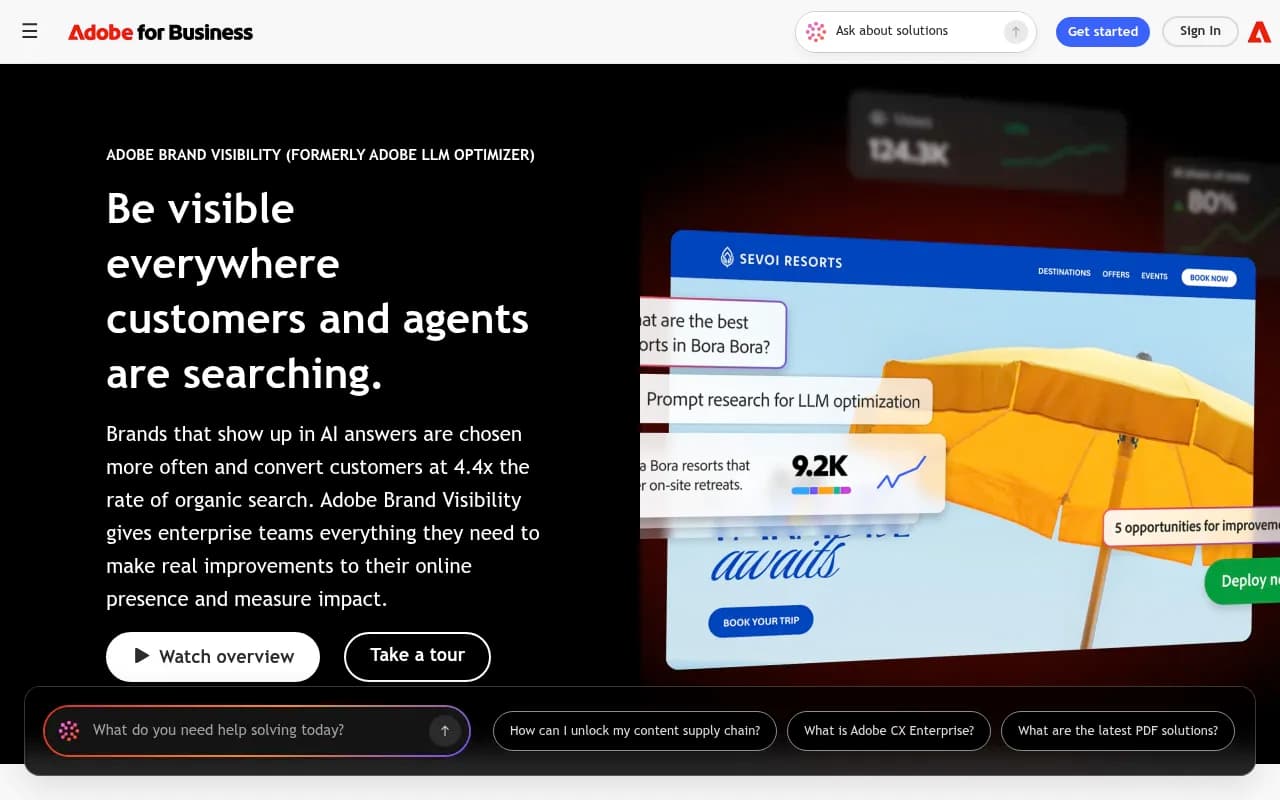
- Adobe Brand Visibility, for Adobe shops
For a deeper side-by-side of this tier, the GEO software directory at bestgeosoftware.com lists more options.
SEO suites with an AI add-on
If your team already lives in an SEO suite, the AI add-on is the lowest-friction start. Semrush's AI visibility toolkit gives baseline tracking inside a tool your team already knows. The tradeoff is shallower AI-specific data and fixed prompt sets compared with dedicated platforms.
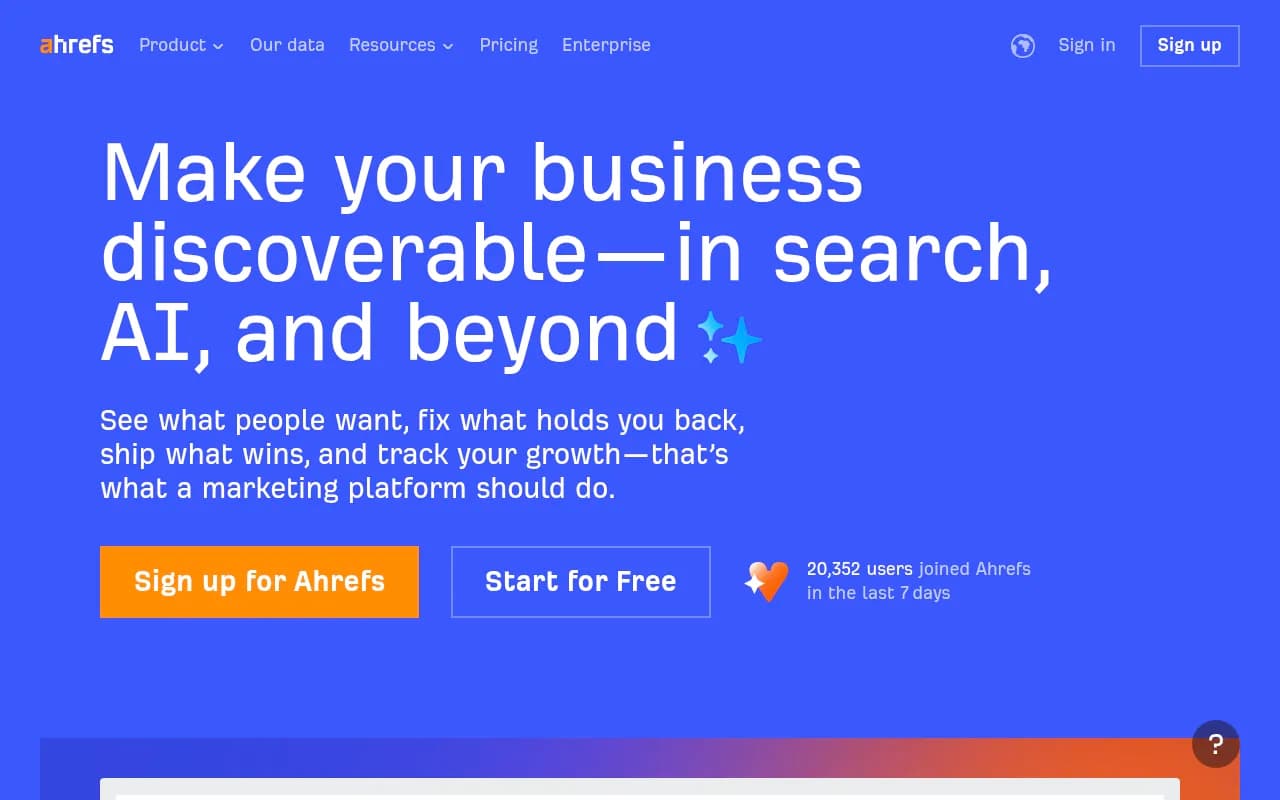
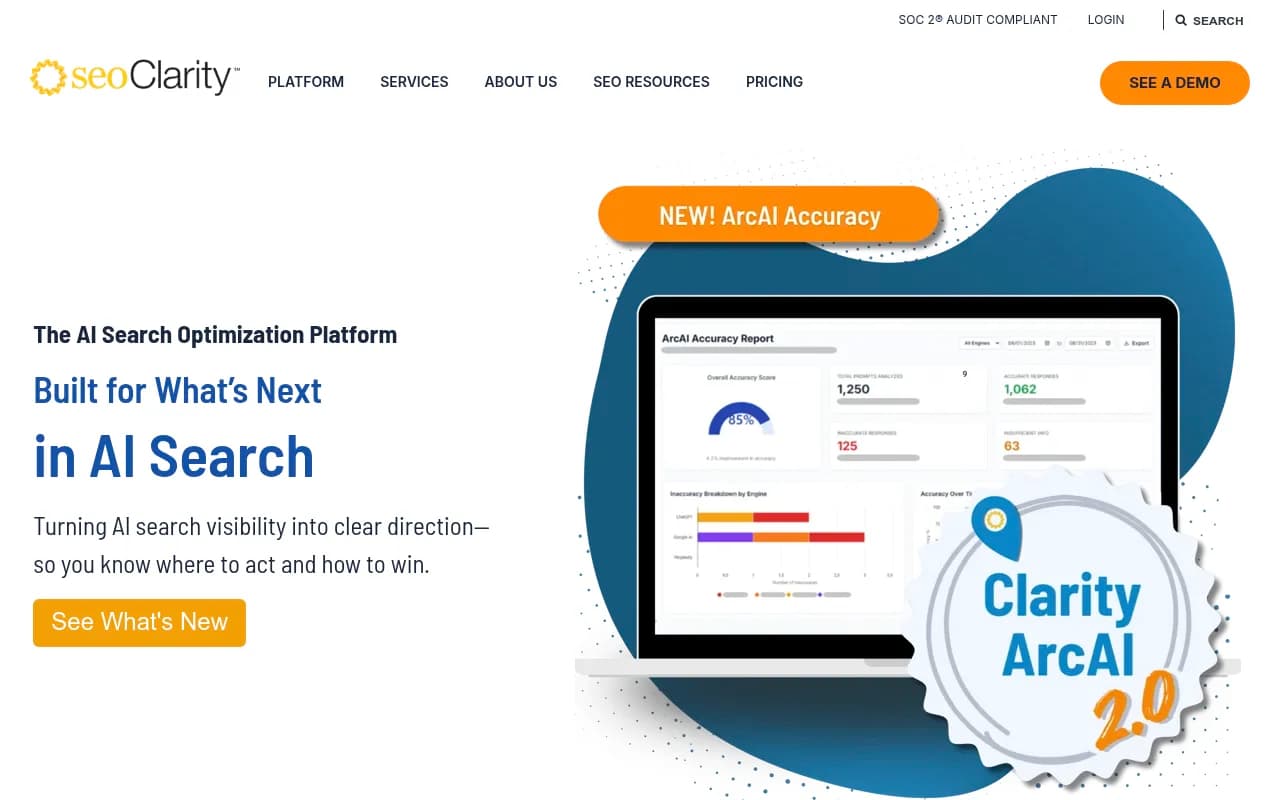
They are fine for a baseline. They will not tell you whether AI crawlers can read your site, and they will not give you AI traffic attribution.
Budget trackers for a single practice
A solo or two-location practice may not need more than a monthly report on its core prompts. These are lighter options:


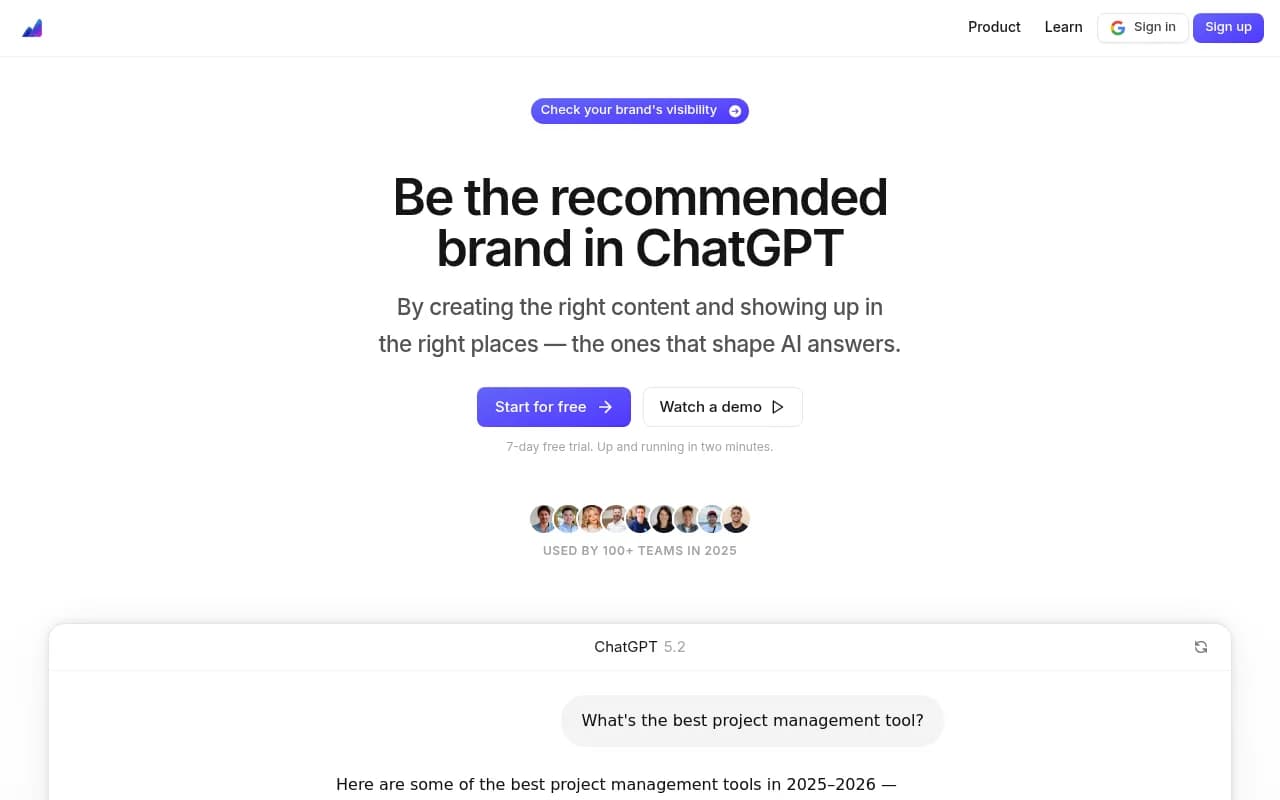
They answer "was I mentioned" well. They will not fix anything. If you pick one, plan time to do the fixing yourself, or pay an agency.
Local presence and reputation
Branded and local prompts lean on directories and reviews, and the healthcare data above shows Doctify and WebMD profiles earning citations. Two tools help keep that ground covered:
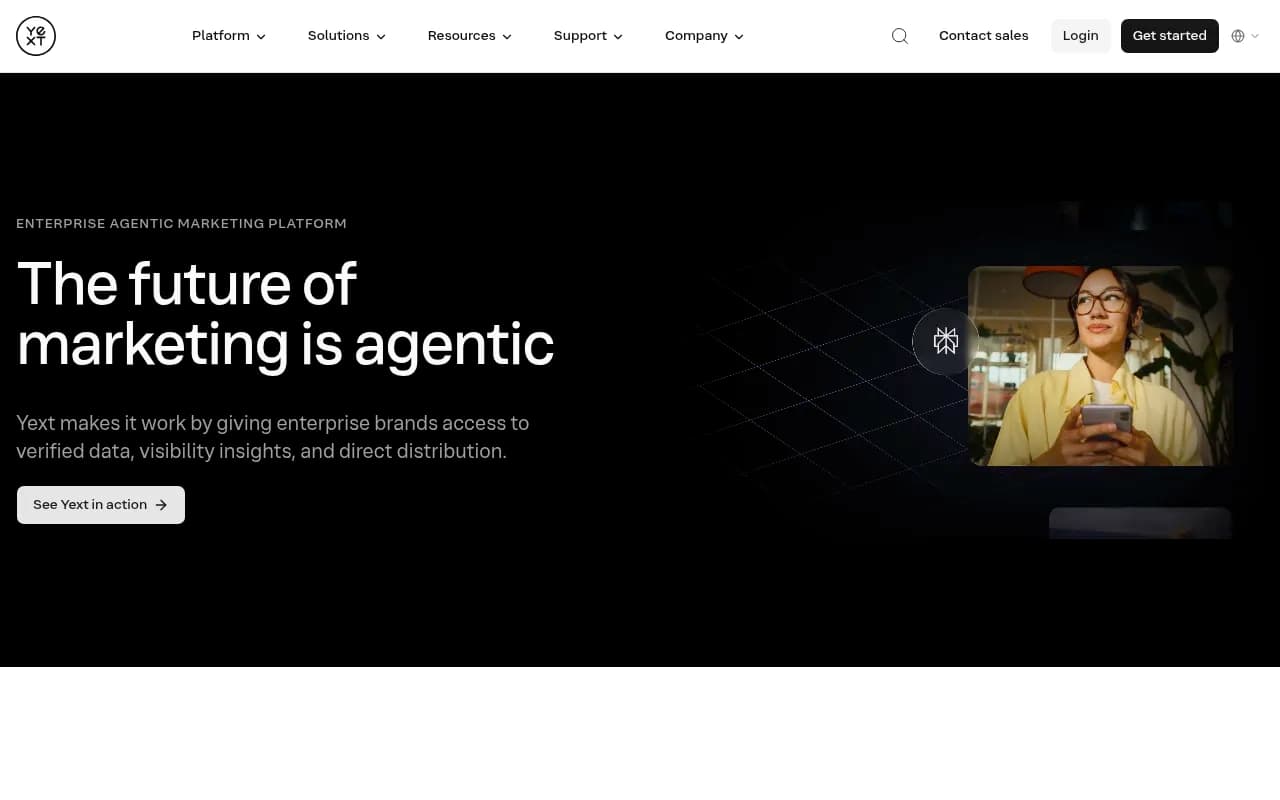
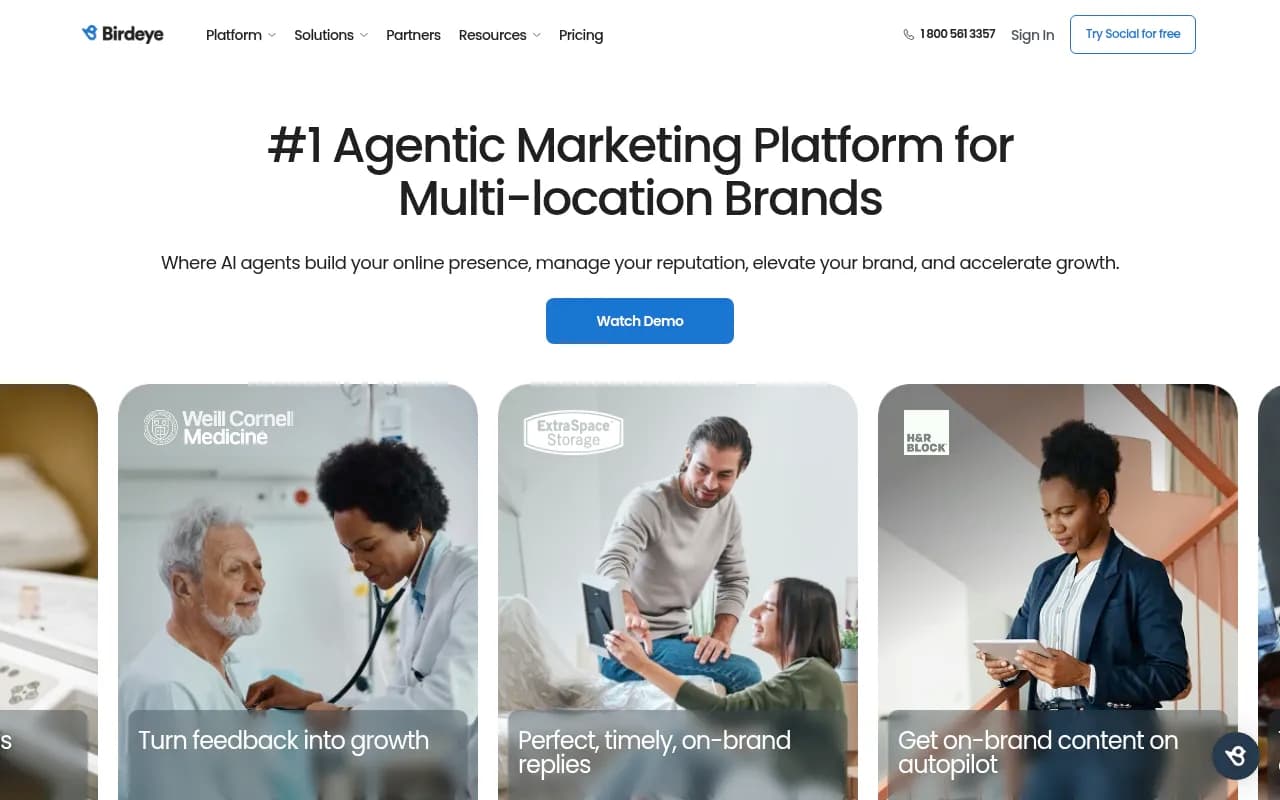
Yext keeps listings consistent across locations. Birdeye handles review requests and responses. Neither is a GEO tool in the strict sense, but both feed the sources AI reads.
Hiring help instead
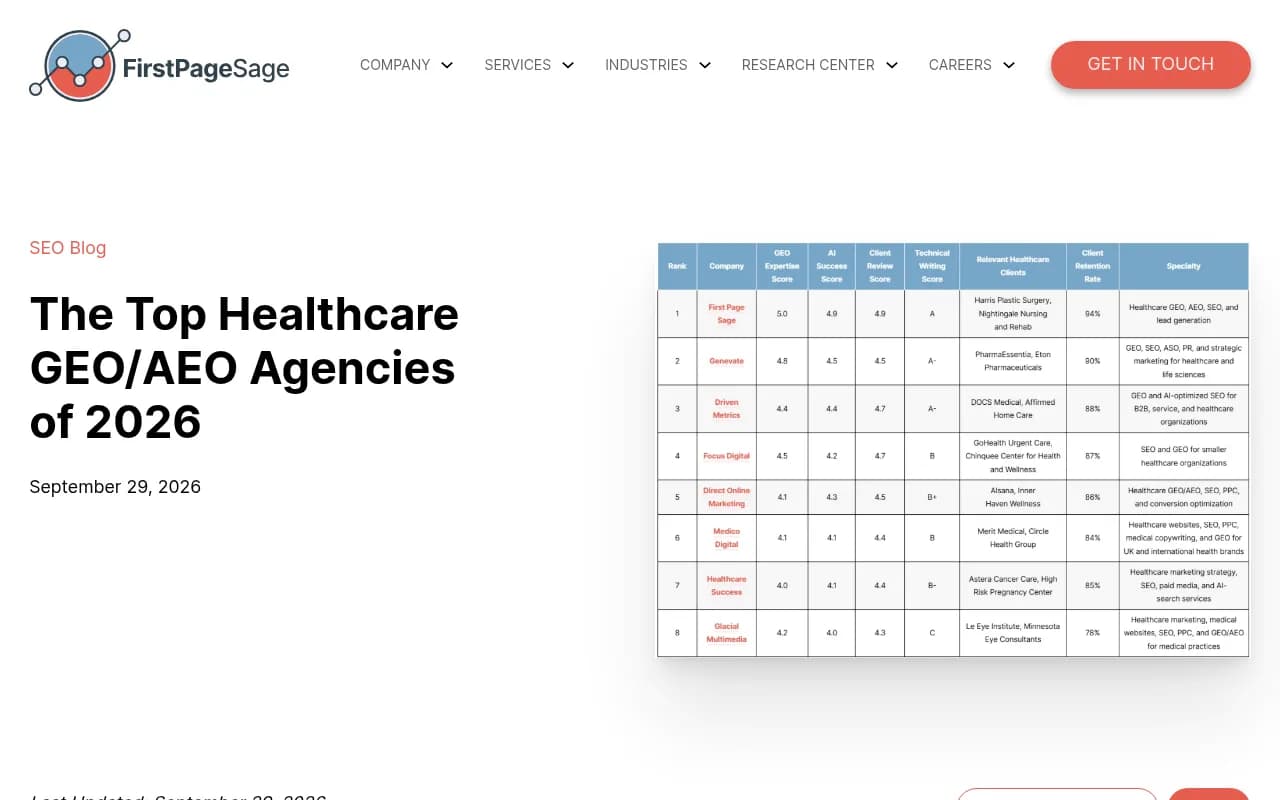
The First Page Sage agency table (September 29, 2026) lists First Page Sage, Genevate, Driven Metrics, Focus Digital, Direct Online Marketing, Medico Digital, Healthcare Success and Glacial Multimedia. It ranks its own publisher first, so I would read it as a shortlist rather than a verdict. Genevate's clients praise its testing and tracking but also say they wanted a longer healthcare track record.
If you want an agency that works across technical SEO, content and AI search together, 1001 SEO Media is one to speak to. They are the team behind this site, so weigh that accordingly, and they use Promptwatch for AI visibility work.
Compliance checklist before you buy
GEO tools mostly track public AI answers and your public website, so PHI risk is low. Still, ask:
- Will you sign a BAA if we ever connect anything with patient data? If not, do not connect it.
- Where is data stored, and which regions?
- Do you have SOC 2 or ISO 27001 reports available under NDA?
- Can AI-written content go through an approval step before publishing?
- Who can see our workspace, and is SSO available?
Do not rely on a roundup for any of this. Vendor trust pages and signed documents are the only valid evidence.
A simple 30-day plan
- Week 1: pick 30 to 50 patient prompts, mixing local, symptom, cost and branded questions. Track them in your chosen tool.
- Week 2: check crawler access and site health. If AI bots hit errors on your treatment pages, nothing else matters until that is fixed.
- Week 3: rewrite your top service pages with a short answer block, FAQ, named clinician author and reviewer, last-updated date, and links to PubMed, NHS, FDA or CDC sources where relevant.
- Week 4: complete directory profiles (Doctify, WebMD, Google Business Profile), then re-run the prompts and compare.
Social is not worth over-investing in for ChatGPT. Promptwatch Data's social citations report found ChatGPT drew 0.46% of citations from social platforms (Sep 28 to Oct 4, 2026), while Google AI Overviews drew 12.2%. If your patients use Google, social presence matters more there. Reddit's share of ChatGPT citations also fell from about 4% to 0.5% on August 14, 2026.
Which one should you pick?
- Single practice, tight budget: a budget tracker plus the 30-day plan.
- Multi-clinic group with a small marketing team: Promptwatch, because the action layer saves hours.
- Health system or pharma with MLR review: shortlist Goodie, Profound and Evertune, and demand compliance documents.
- Already in Semrush or seoClarity: start with the add-on and upgrade if you outgrow it.
- No in-house capacity at all: an agency, plus a tracking tool so you can check their work.
For more options by category, browse the AI rank tracking tools directory. Whatever you choose, pick the prompts first. The tool is the easy part.