Key takeaways
- The AI visibility tool market has an average price of around $337/month, but several solid options exist well below that threshold
- Most budget tools are monitoring-only -- they show you where you're invisible but don't help you fix it
- Promptwatch starts at $99/month and is the only budget-accessible platform that combines tracking, content gap analysis, and AI content generation in one loop
- Peec AI, LLMrefs, and Otterly.AI are strong monitoring picks if you just need data without the optimization layer
- The right tool depends on whether you need to understand your AI visibility or actively improve it -- these are different problems
The AI visibility tool market has exploded. Over $31 million has flowed into this segment in the last two years alone, and new platforms appear every few weeks. Most of the coverage focuses on enterprise-grade platforms -- Profound ($499/month), AthenaHQ, Evertune -- which are genuinely impressive but out of reach for most marketing teams and agencies.
So what do you actually get if you cap your budget at $300/month?
More than you might expect. But you have to know what to look for, because the gap between "monitoring dashboard" and "optimization platform" is massive -- and most budget tools sit firmly in the former camp.
This guide ranks 10 platforms under $300/month based on what they actually do: platform coverage, data quality, actionability, and whether they help you close the loop between finding gaps and fixing them.
 Rankability's analysis of 22+ AI search visibility tools -- a useful reference for understanding how the market is structured by price and capability.
What to look for before you spend a dollar
Before getting into the rankings, it's worth being clear about what these tools actually do -- because the category is young and the marketing language is slippery.
Most platforms track some version of the following:
- Whether your brand appears in AI-generated responses (ChatGPT, Claude, Gemini, Perplexity, etc.)
- Which URLs AI models cite when answering relevant prompts
- How your visibility compares to competitors across those same prompts
That's the baseline. The more interesting question is what happens after you see the data. Can the tool tell you why you're not appearing? Can it show you which content you're missing? Can it help you create that content?
Most budget tools stop at the dashboard. A few go further. That distinction drives most of the rankings below.
The 10 best AI visibility platforms under $300/month
1. Promptwatch -- $99/month (Essential plan)
Promptwatch is the clearest example of a platform that doesn't just show you a problem -- it helps you solve it. The Essential plan at $99/month covers one site, 50 prompts, and 5 AI-generated articles per month. That's a meaningful package for a small team.

What separates Promptwatch from most tools in this price range is the full action loop. Answer Gap Analysis shows you the specific prompts where competitors appear but you don't. The built-in AI writing agent then generates content grounded in real citation data -- not generic SEO filler, but articles and listicles engineered to get cited by ChatGPT, Claude, Perplexity, and others. Then page-level tracking shows whether that new content is actually getting picked up.
It monitors 10 AI models (ChatGPT, Perplexity, Claude, Gemini, Grok, DeepSeek, Copilot, Meta AI, Mistral, and Google AI Overviews), includes AI crawler logs on the Professional plan ($249/month), and has Reddit and YouTube source tracking that most competitors ignore entirely.
For teams that want to actually move the needle rather than just watch a dashboard, this is the strongest option under $300/month.
2. Peec AI -- ~$99/month
Peec AI is a well-regarded monitoring platform that covers the major LLMs and offers multi-language tracking. It's consistently cited as one of the better price-to-value options in the market, and the interface is clean enough that non-technical marketers can use it without much ramp-up time.

The limitation is that Peec AI is primarily a monitoring tool. It shows you where you appear and where you don't, but the optimization layer is thin. If you're early in your AI visibility journey and just need to establish a baseline, it's a solid starting point. If you need to act on what you find, you'll hit its ceiling quickly.
3. LLMrefs -- $79/month
LLMrefs is one of the most affordable options that still delivers meaningful data. At $79/month, it tracks brand visibility across ChatGPT, Perplexity, and other major models, and it's bootstrapped -- which means no VC pressure to inflate pricing or pivot the product.
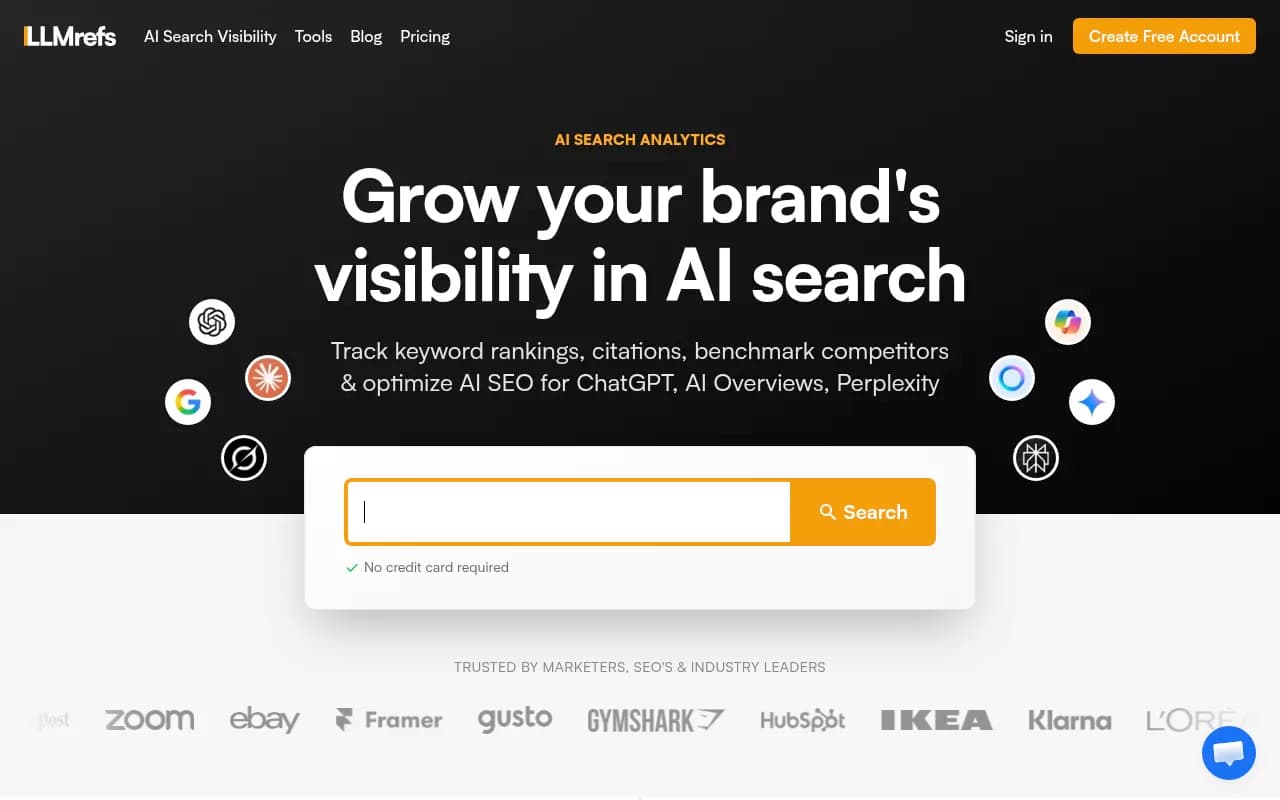
The platform is lightweight by design. It works well for solo founders, small SaaS companies, or anyone who wants a simple answer to "is my brand showing up in AI search?" without a complex setup. Don't expect deep competitor analysis or content optimization -- this is a tracker, not a strategy tool.
4. Otterly.AI -- affordable tier available
Otterly.AI is a monitoring-focused platform that covers the main LLMs and provides brand mention tracking with sentiment context. It's positioned as an accessible entry point for teams that are new to AI visibility tracking.

Like Peec AI, Otterly.AI is honest about what it is: a visibility monitor. It doesn't have crawler logs, content generation, or gap analysis. But it does the core job cleanly, and for teams that just need to report on AI visibility to stakeholders without building a full optimization program, that's sometimes enough.
5. Rankability Reporter -- $149/month
Rankability is agency-focused, and the Reporter product at $149/month reflects that. It's built for teams managing multiple clients who need clean, exportable data on AI search visibility across ChatGPT, Gemini, Claude, and Perplexity.
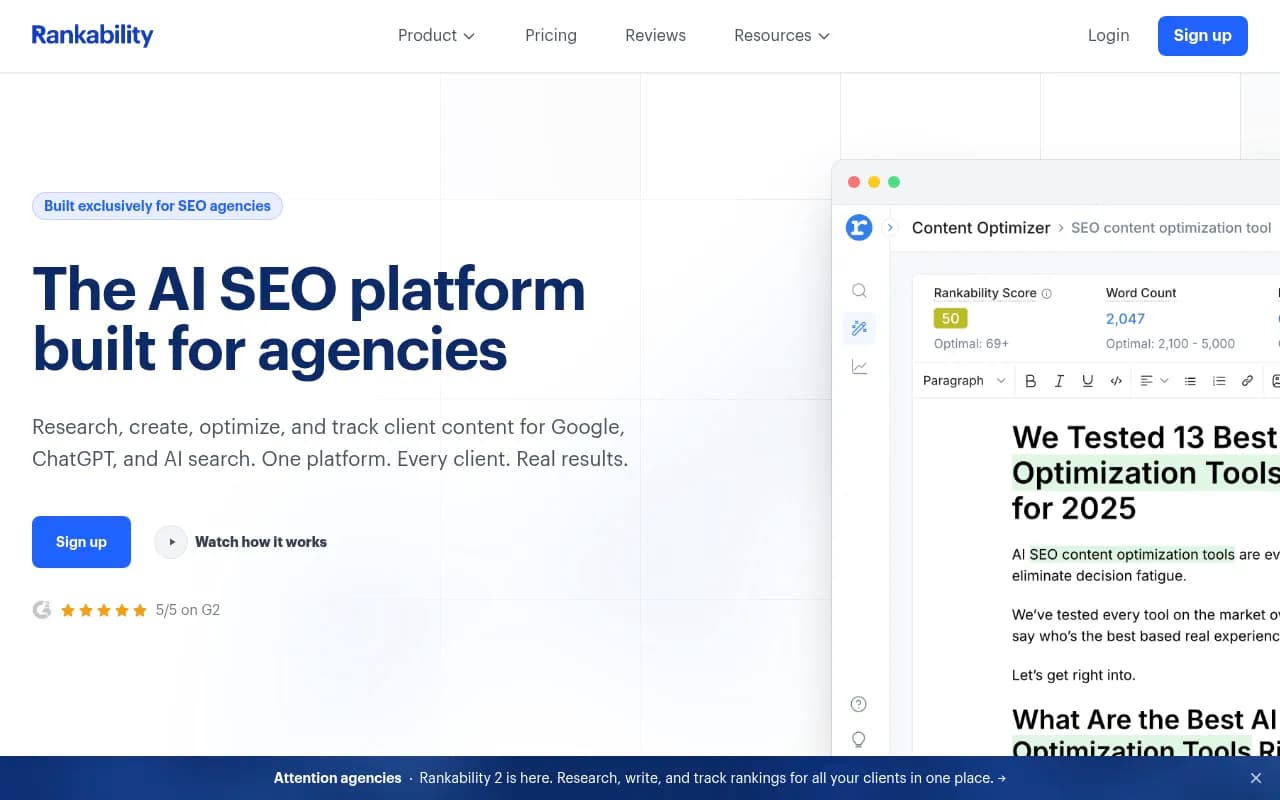
The platform scores well on data transparency -- it's clear about how it collects data and what the numbers mean. For agencies that need to show clients a visibility score and track it over time, this is a practical choice. The content optimization features are limited compared to Promptwatch, but the reporting infrastructure is solid.
6. SE Visible (SE Ranking) -- part of SE Ranking subscription
SE Ranking's AI visibility module, SE Visible, is worth mentioning because it's bundled into an existing SEO platform subscription. If your team already uses SE Ranking for traditional rank tracking, getting AI visibility data at no additional cost is a real advantage.
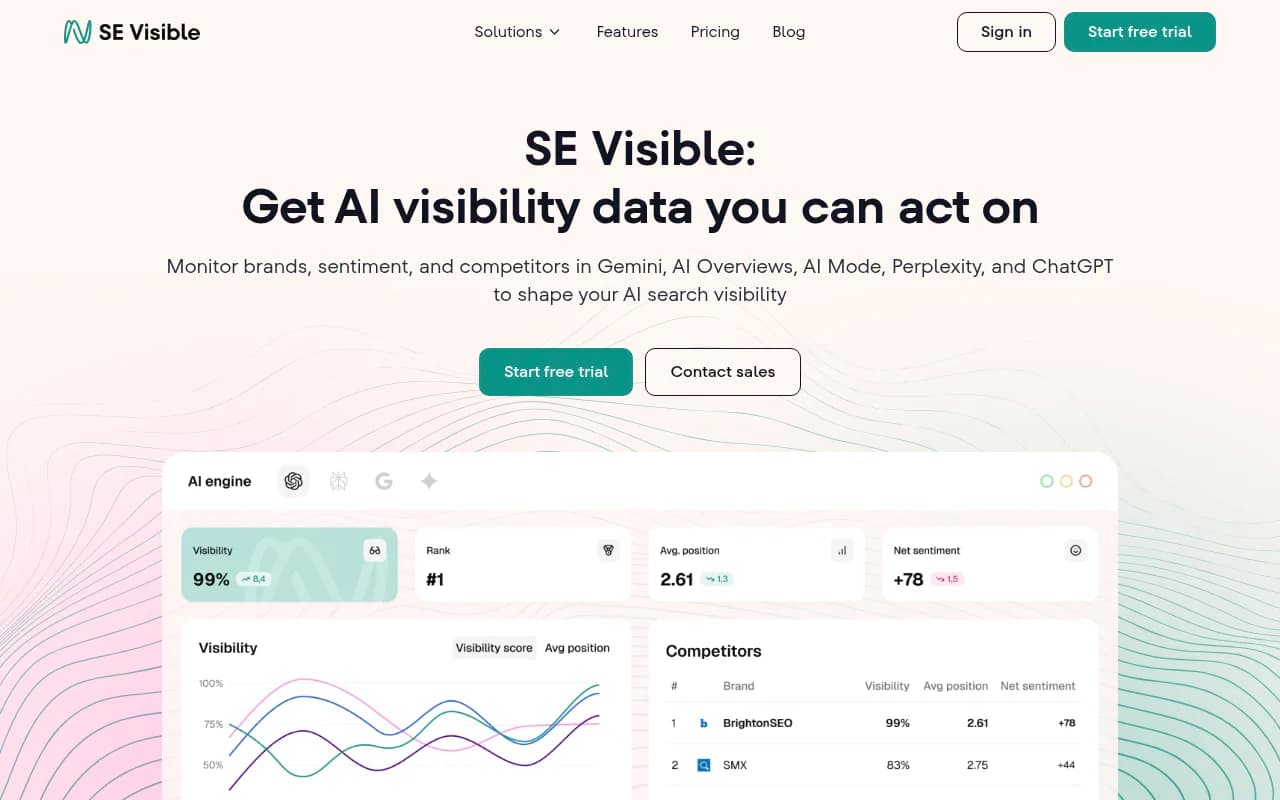
The standalone AI visibility features are not as deep as dedicated platforms, but the integration with keyword data, site audits, and content tools makes it useful for teams that want a single platform rather than a separate AI visibility subscription.
7. Nightwatch -- affordable plans available
Nightwatch has been a reliable rank tracking tool for years, and it's added AI search monitoring to its feature set. The pricing is competitive, and the interface is one of the cleaner ones in this space.
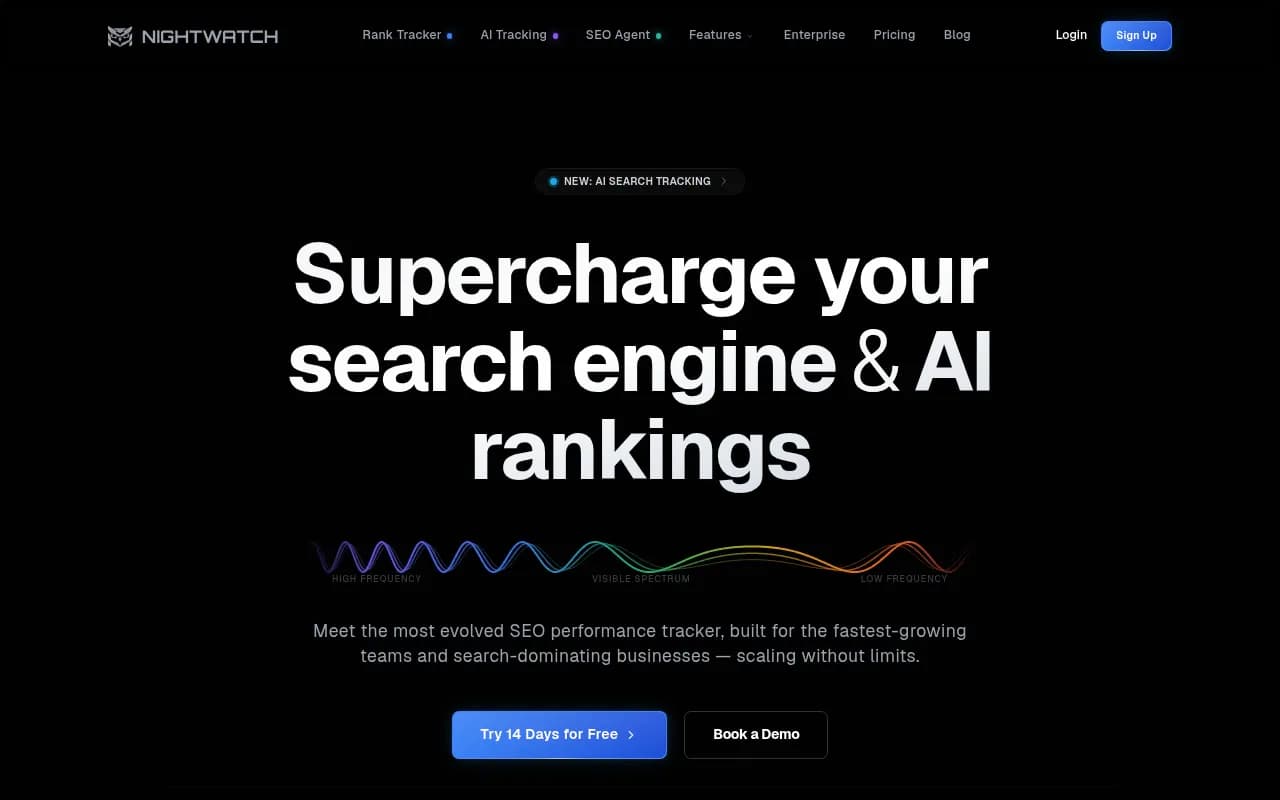
It's a good fit for SEO-first teams who want to add AI visibility tracking without switching platforms. The AI-specific features are still maturing compared to dedicated GEO tools, but Nightwatch's core data quality is strong.
8. Brandlight -- entry-level pricing
Brandlight focuses on AI brand visibility tracking with an emphasis on understanding how your brand is being portrayed -- not just whether it appears, but the sentiment and context around those mentions.
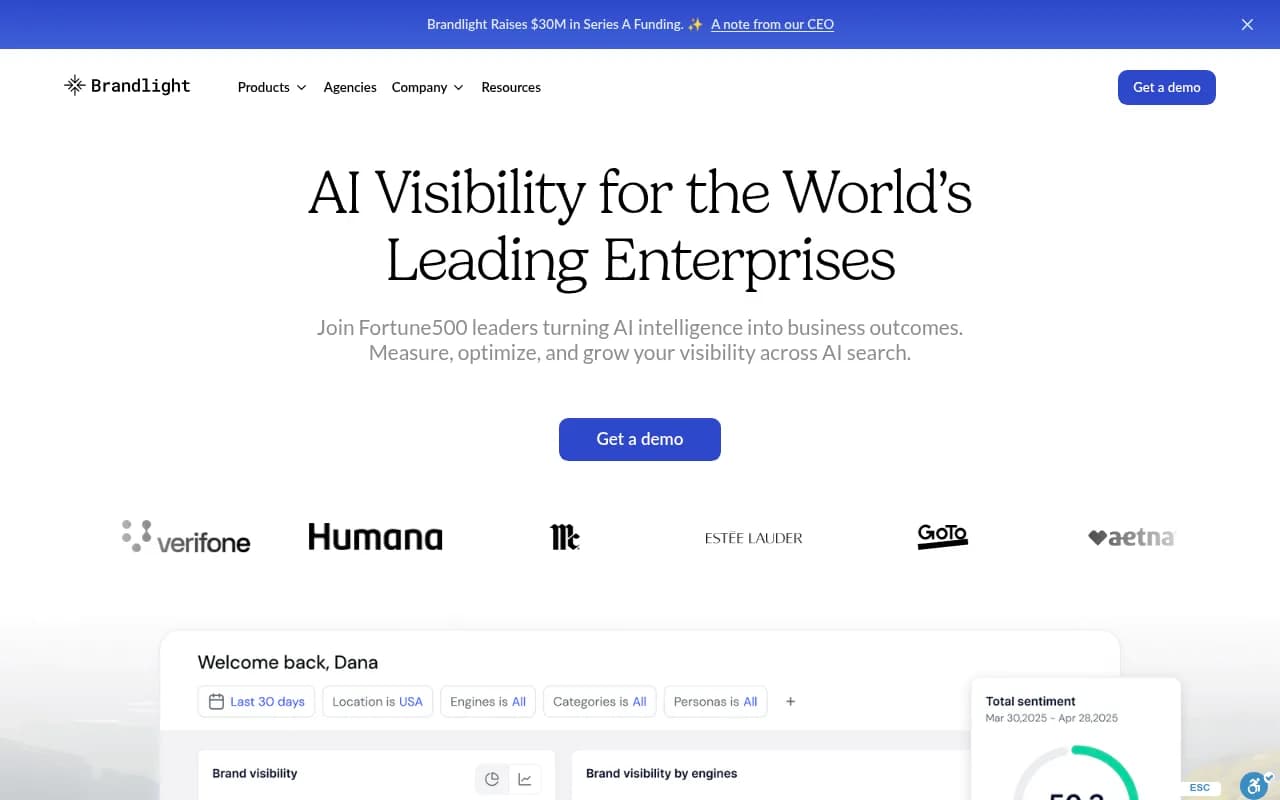
This is a niche but useful angle. If your concern is brand reputation in AI responses rather than pure citation volume, Brandlight's approach is worth exploring. The platform is lighter on the optimization side, but the brand perception data is more detailed than most tools at this price point.
9. Trakkr.ai -- entry-level pricing
Trakkr.ai covers ChatGPT, Claude, and Perplexity with a straightforward interface. It's a newer entrant in the space, but it's gained traction among smaller teams who want something that works without a steep learning curve.
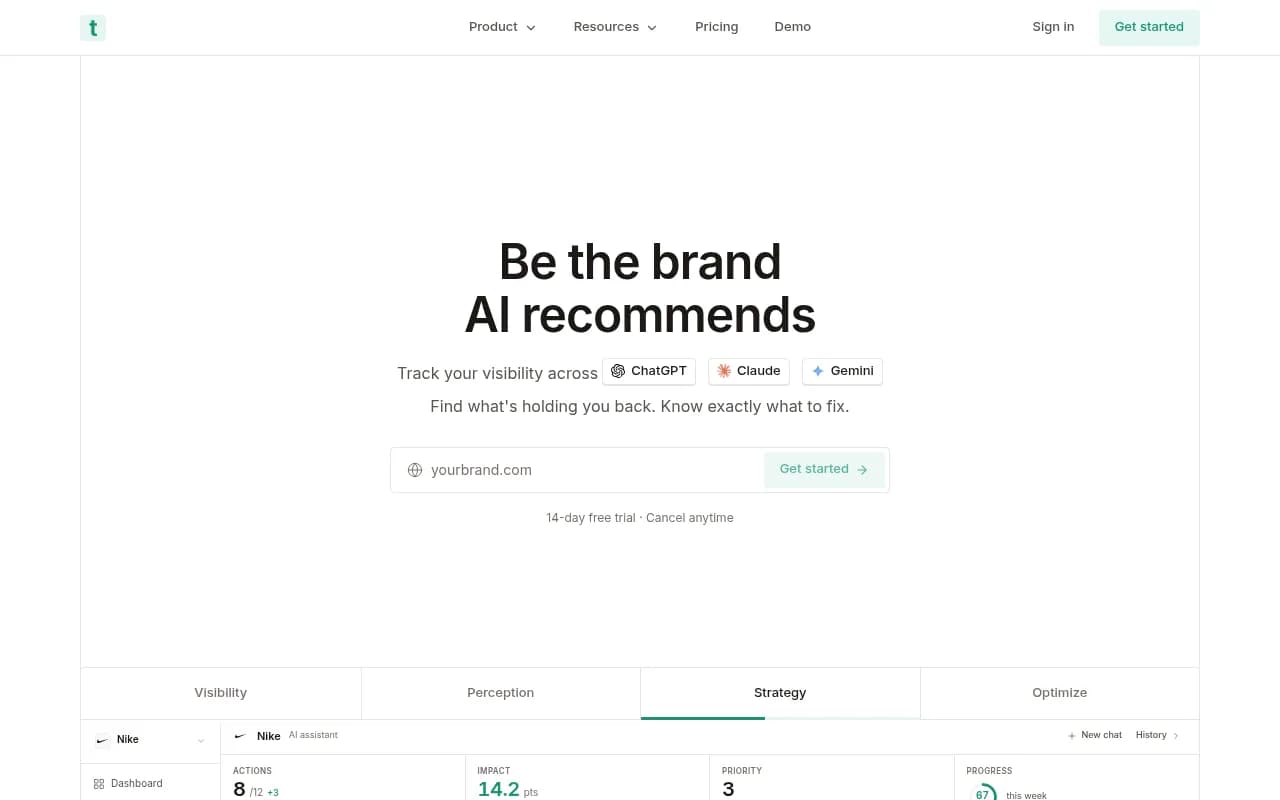
The platform is honest about being a tracker rather than an optimizer. Setup is fast, the dashboards are readable, and it integrates with basic reporting workflows. For teams just getting started with AI visibility, it's a low-friction way to begin.
10. Promptmonitor -- entry-level pricing
Promptmonitor rounds out the list as a lightweight option for teams that want to monitor specific prompts and track brand mentions across AI models without a large investment.
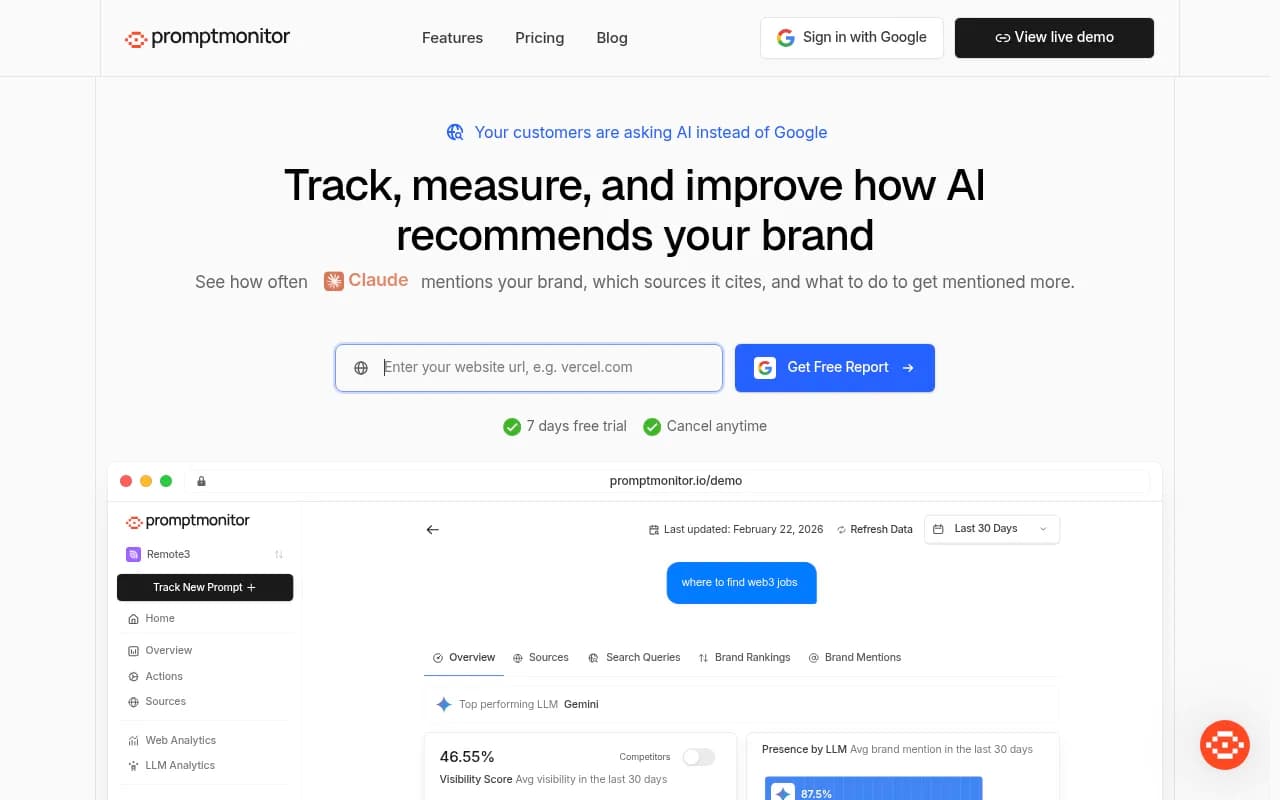
It's not the most feature-rich platform, but it covers the basics and is priced accessibly. For small businesses or individual consultants who need to demonstrate AI visibility to clients without a significant tool budget, it fills a gap.
How these tools compare
Here's a side-by-side view of the key dimensions that matter most when choosing a budget AI visibility platform:
| Tool | Starting price | AI models covered | Content gap analysis | AI content generation | Crawler logs | Reddit/YouTube tracking |
|---|---|---|---|---|---|---|
| Promptwatch | $99/mo | 10 | Yes | Yes (5 articles/mo) | Yes (Pro plan) | Yes |
| Peec AI | ~$99/mo | 5+ | No | No | No | No |
| LLMrefs | $79/mo | 3-4 | No | No | No | No |
| Otterly.AI | Varies | 4+ | No | No | No | No |
| Rankability Reporter | $149/mo | 4+ | Limited | No | No | No |
| SE Visible | Bundled | 3-4 | No | No | No | No |
| Nightwatch | Varies | 3-4 | No | No | No | No |
| Brandlight | Varies | 3-4 | No | No | No | No |
| Trakkr.ai | Varies | 3 | No | No | No | No |
| Promptmonitor | Varies | 3-4 | No | No | No | No |
The pattern is clear: most budget tools are monitoring dashboards. Promptwatch is the exception at this price point -- it's the only one that closes the loop between finding gaps and fixing them.
The monitoring-vs-optimization gap
This is the thing that most tool comparisons gloss over, so it's worth being direct about it.
Knowing that your brand doesn't appear when someone asks ChatGPT "best project management tools for remote teams" is useful information. But it doesn't tell you what to do about it. Which page on your site is closest to ranking for that prompt? What content does the AI model want to see that you're not providing? Which competitor's page is getting cited instead, and why?
Monitoring tools give you the first piece. Optimization platforms give you all of it.
At the $300/month ceiling, most platforms are monitoring tools. That's not a criticism -- monitoring is the necessary first step, and for teams that are just establishing a baseline or reporting to stakeholders, a clean monitoring dashboard is genuinely valuable.
But if you're trying to actually improve your AI visibility -- to move from invisible to cited -- you need something that tells you what content to create and helps you create it. At this price point, that's Promptwatch.
The Professional plan at $249/month adds crawler logs (so you can see exactly which pages AI crawlers are reading and which they're ignoring), state and city-level tracking, and 15 articles per month from the AI writing agent. That's a meaningful step up from the Essential plan and still well under the $300 threshold.
Who should use which tool
The right choice depends on where you are in your AI visibility journey:
Just getting started / need a baseline: LLMrefs ($79/mo) or Peec AI (~$99/mo). Both are clean, affordable, and give you the data you need to understand your current position without overwhelming you.
Agency managing multiple clients: Rankability Reporter ($149/mo). Built for client reporting, good data transparency, reasonable pricing for multi-client workflows.
Already tracking SEO with SE Ranking: SE Visible is bundled in. Use it before adding another subscription.
Want to actually improve visibility, not just monitor it: Promptwatch ($99-$249/mo). The only platform in this price range that combines tracking, gap analysis, and content generation into a single workflow.
Brand reputation focus: Brandlight. If sentiment and brand portrayal matter more than citation volume, its approach is more tailored to that use case.
A note on pricing transparency
One frustration with this market is that many tools don't publish clear pricing. Several platforms on this list use "contact us for pricing" or offer only annual billing with no monthly option visible. That makes comparison difficult.
The tools that publish clear monthly pricing -- Promptwatch ($99/$249/$579), LLMrefs ($79), Rankability ($149) -- deserve credit for that transparency. When you're evaluating budget options, hidden pricing is a red flag: it often means the "affordable" tier has significant limitations that only become clear after a sales call.
The bottom line
The AI visibility tool market is maturing fast, but the $300/month ceiling still gets you real capability. The key question is whether you need to see your AI visibility or improve it.
For pure monitoring, Peec AI and LLMrefs are the strongest options at their price points. For teams that want to close the loop -- find the gaps, create the content, track the results -- Promptwatch is the only platform under $300/month that does all three. Most competitors in this space are still building toward that; Promptwatch already has it.
Start with a free trial on whichever platform fits your use case, run it for 30 days against a defined set of prompts, and see what the data actually tells you. The tools are only as useful as the prompts you track.