Key takeaways
- Botify crawls up to 50M URLs and analyzes server logs at scale, but it publishes no pricing. Third-party estimates run from roughly $30K to $60K per year up to $2,000-$10,000 per month, so treat every number as a negotiating starting point.
- For pure crawl and log analysis at lower cost, the realistic shortlist is JetOctopus, Oncrawl and Lumar. seoClarity and BrightEdge suit teams that want a full enterprise suite instead of a crawler.
- The question that matters for ecommerce in 2026 is whether an alternative separates AI bots (GPTBot, ChatGPT citation bots) from Googlebot in its log analysis.
- Crawlers do not tell you what ChatGPT or AI Overviews say about your products. Pair your crawler with a dedicated AI visibility tool.
- Pricing in this guide comes mostly from vendor and third-party blogs. Confirm current quotes before you budget.
Why people look for a Botify alternative
Botify is good at what it does. It was founded in 2012, serves 500+ enterprise brands (Expedia, Nike and Marriott are named in third-party write-ups), and Forrester recognizes log file analysis as a core strength. If you run a catalog with tens of millions of URLs, faceted navigation and constant stock churn, it earns its reputation.
Botify is also not the right fit for everyone. The reasons I hear most:
- No published pricing and no self-serve signup. Every deal is a sales process, and log file volume is reportedly the main cost driver, with modules like Intelligence and Activation priced as add-ons.
- Annual or multi-year commitments are the norm.
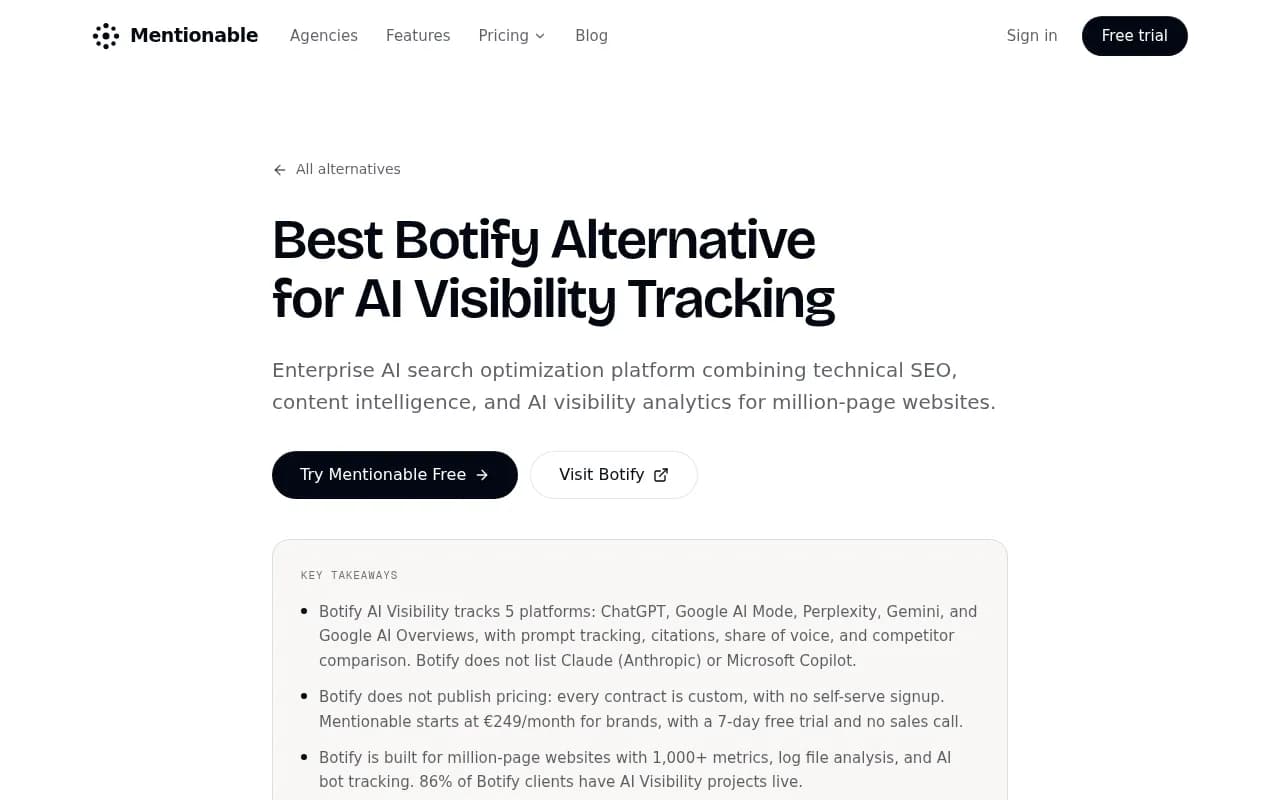
- The AI visibility add-on covers ChatGPT, Google AI Mode, Perplexity, Gemini and AI Overviews, but not Claude or Microsoft Copilot, according to Mentionable's comparison page.
- Some teams only need one piece, usually crawling plus logs, and are paying for a platform.
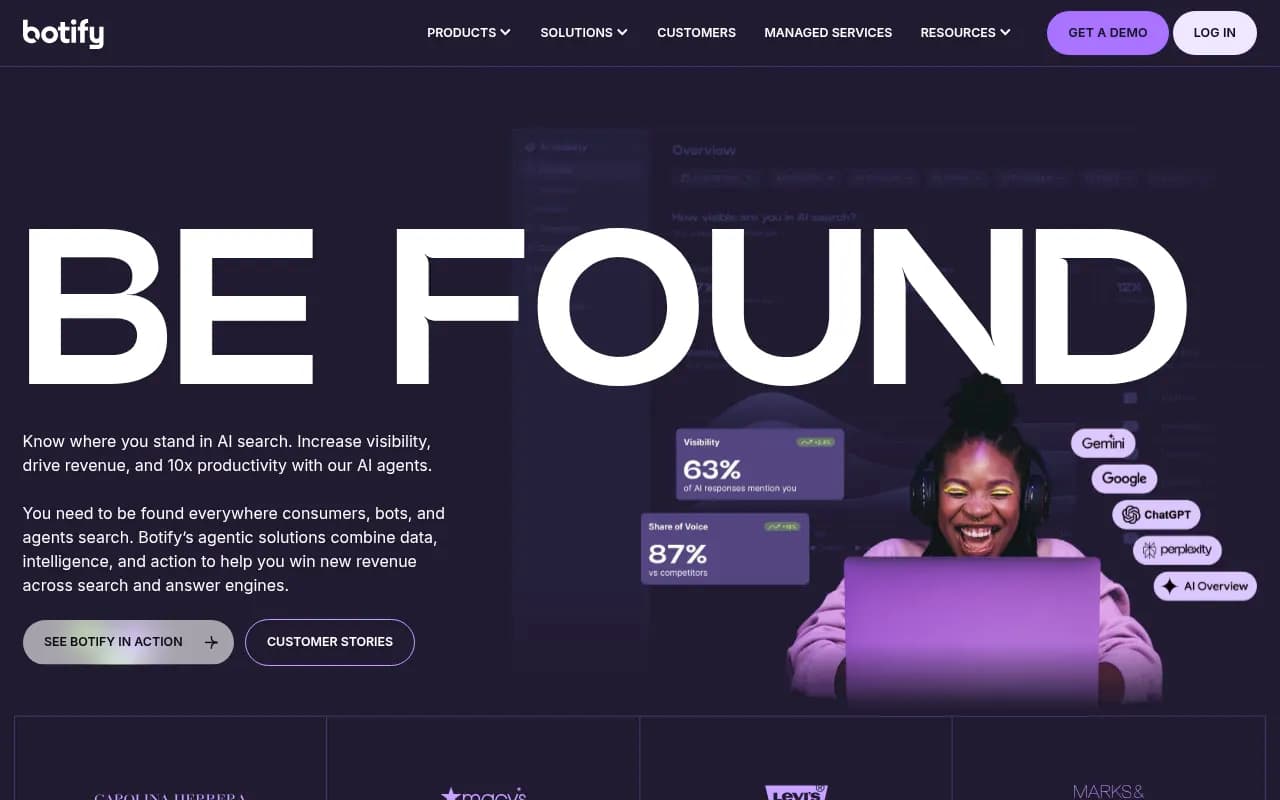
Before you switch, be honest about what you actually use. If your team lives in Botify's activation and automation features for pushing changes at scale, replacing it with a cheaper crawler means rebuilding that workflow elsewhere. If you mostly run crawls and read logs, there is real money to save.
What a million-page ecommerce site actually needs
Small-site crawlers fall over on ecommerce for specific reasons, so here is the checklist I would use to evaluate anything below.
- Crawl capacity and speed. Botify's quoted ceiling is 50M URLs at 250 URLs per second. Ask every vendor what they will crawl in a single run and how fast, and whether limits are per crawl, per month or per project.
- Log file analysis at volume. Botify's Log Analyzer is claimed to process 100M search engine requests per day. Vendor claims are marketing until you test them with your own logs.
- Faceted navigation and parameter handling. Filters, sort orders and session parameters are where crawl budget goes to die. You want segmentation by URL pattern and the ability to see bot hits against those segments.
- Segmentation by template. Product, category, brand, search results and blog pages need separate views.
- AI bot separation in logs. This is newer and increasingly important.
- Data export and API access, so crawl data can join your product feed, analytics and revenue data.
Why AI crawler visibility now matters for ecommerce
Product and category pages are what AI search actually cites. In Promptwatch's data for Sep 28 to Oct 4, 2026, product pages were 22.4% of classified ChatGPT citations and landing pages 16.8%. For commercial prompts, product pages reached 26.0% and landing pages 20.6%. That makes crawlability and indexation of your product and category pages an AI citation problem too, not just a Google one.
The bot mix is also shifting. Promptwatch's AI crawler traffic data shows OpenAI at 79.8% of IP-verified AI crawler requests in the week of Aug 31 to Sep 6, 2026, down from 94.8% in the week of Jun 8-14. Their advice is worth following: compare your own logs with that mix. A provider that is big in the chart but near zero in your logs suggests you are blocked by robots.txt, a CDN or a WAF rule.
So when you demo a Botify alternative, ask one pointed question: can it split GPTBot, OAI-SearchBot and other AI bots from Googlebot in the logs, and verify them against published IP ranges?
Quick comparison
| Tool | Strength | Log analysis | Pricing signal (verify) | Best for |
|---|---|---|---|---|
| Botify | Scale, logs, activation | Core capability | Custom; estimates $30K-$60K/yr and up | Largest catalogs with budget |
| JetOctopus | Cloud crawler, logs | Strong | Cited as a fraction of Botify's cost | Growing teams below enterprise scale |
| Oncrawl | Crawl plus logs | Strong | Older listings: from EUR 49/mo, Ultimate EUR 399/mo, enterprise custom | Technical SEO teams wanting data depth |
| Lumar | Site health, QA | Limited or add-on | From about $89/mo, enterprise custom | Governance and release QA |
| seoClarity | Full enterprise suite | Included | Listed from about $3,020/mo | Teams with content and keyword work too |
| BrightEdge | Enterprise content and search suite | Via platform | Custom | Very large organizations already in the suite |
| Screaming Frog | Desktop crawler | Separate log analyzer | Low | Audits and spot checks |
The pricing column comes from third-party and competitor blogs, some of it stale. Treat it as a ballpark.
The alternatives
JetOctopus
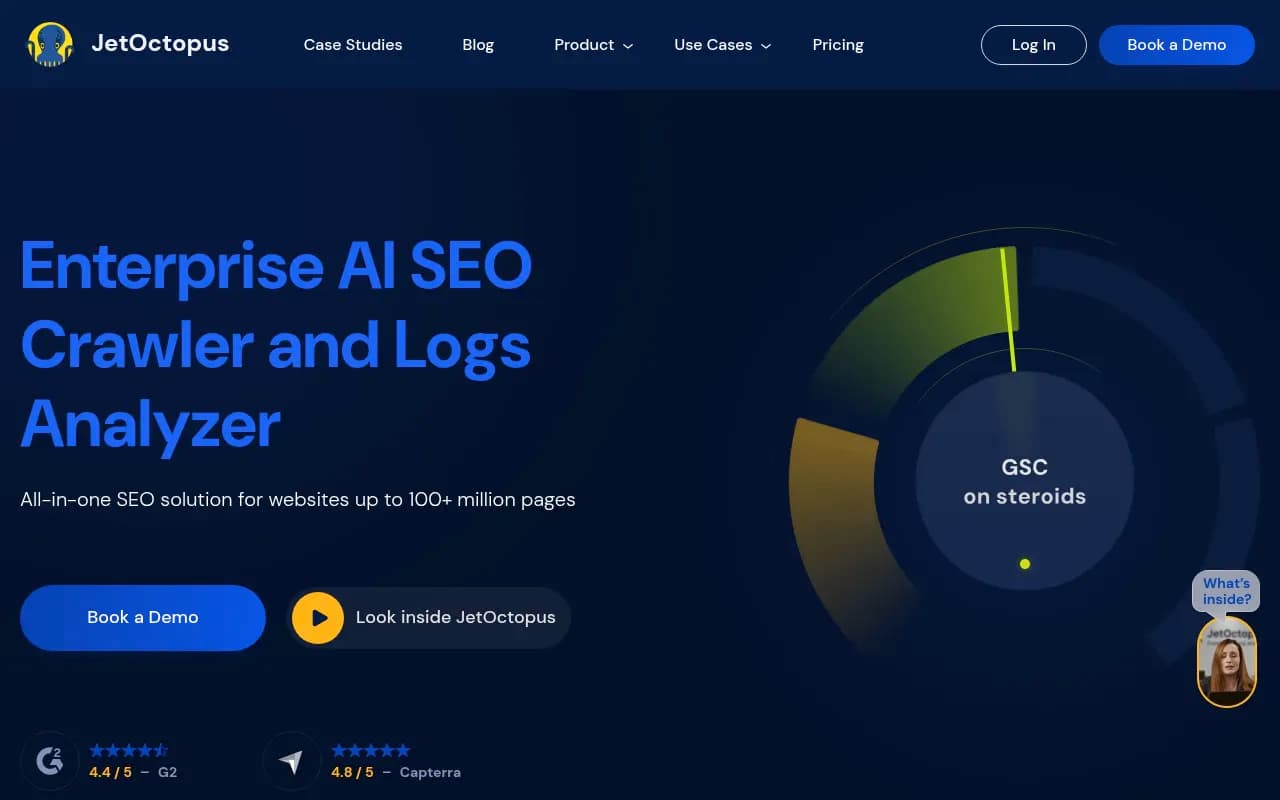
A cloud crawler with strong log analysis, described by reviewers as comparable to Botify at a fraction of the cost. The catch is the audience it is built for: growing teams below the biggest enterprise tier. If your site is a few million URLs and your team is three or four SEOs, this is the first one I would trial. Push a real crawl and a real week of logs through it and see whether segmentation handles your filter URLs.
Oncrawl
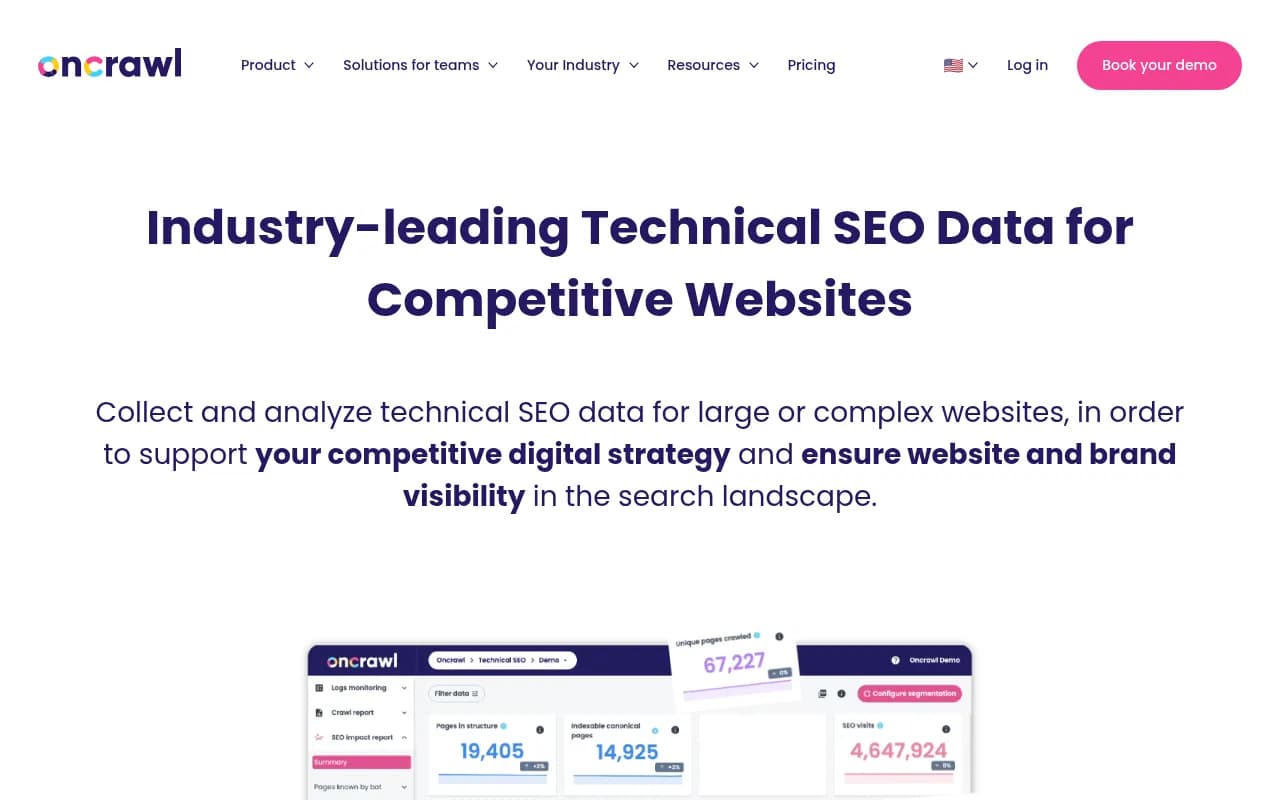
Oncrawl pairs crawling with log analysis and is typically described as strong on logs at a lower price, but less feature-rich than Botify. Older listings show Explorer at EUR 49 per month for 100K URLs and Ultimate at EUR 399 per month for 2M URLs, with custom enterprise plans and a 14-day trial. Those tiers will not fit a 10M-page catalog, so expect to land on the enterprise plan, and check current pricing. Its strength is that data scientists and technical SEOs can dig into the cross-analysis of crawl, logs and ranking data.
Lumar
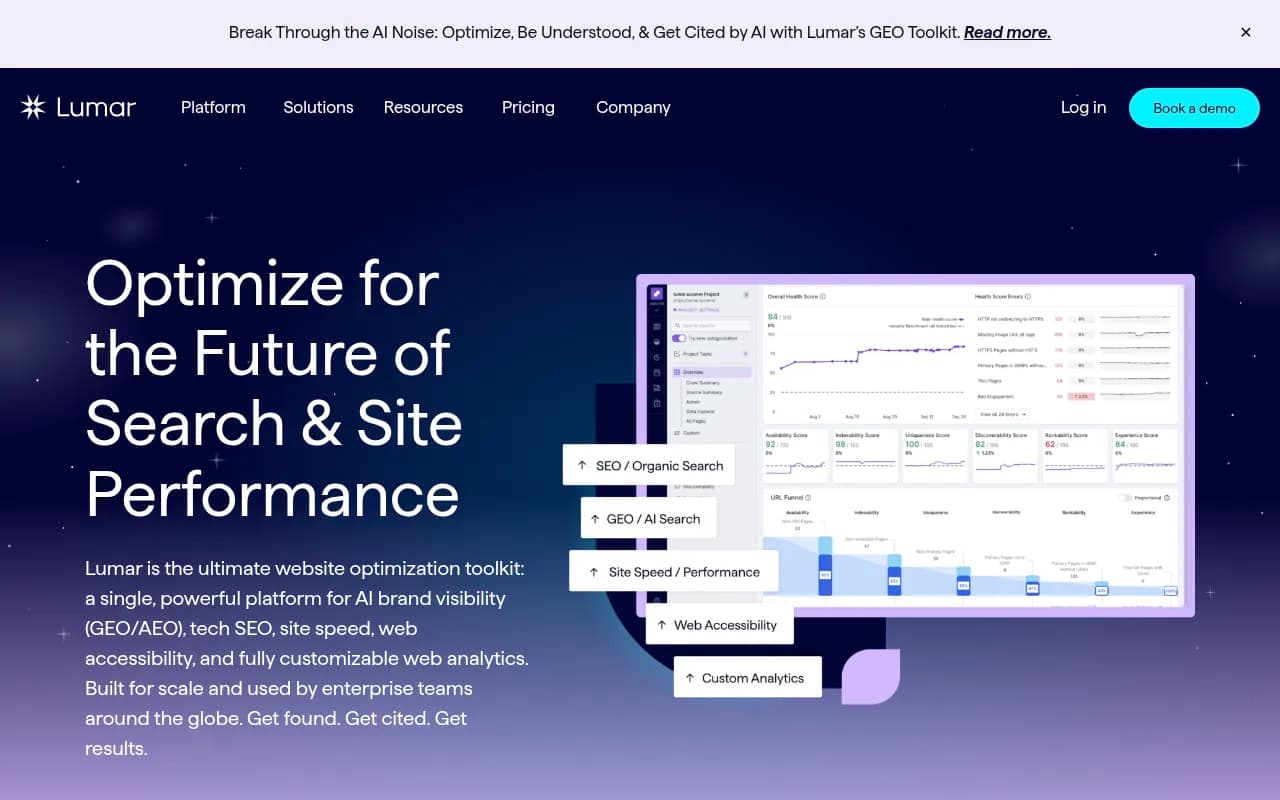
Lumar (formerly Deepcrawl) leans toward site auditing, crawl health, accessibility and QA through its Protect module. Its log analysis is described as limited or an add-on, which matters if logs are your main reason for using Botify. Named clients include Adobe, Microsoft, eBay and Deloitte. Entry pricing is cited around $89 per month, with enterprise custom. Where it shines for ecommerce: catching regressions before and after releases, which is a daily risk when engineering ships template changes to millions of product pages.
seoClarity
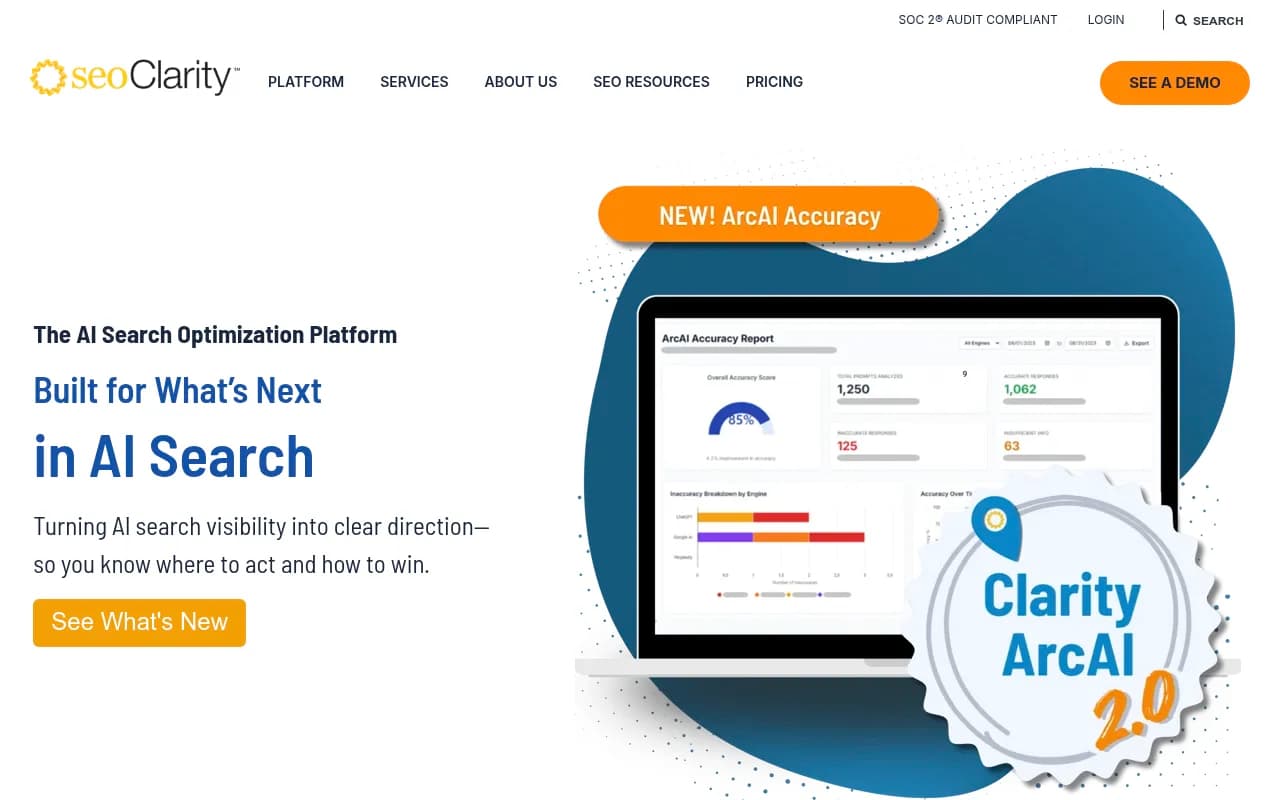
seoClarity is the broader enterprise suite option. Its own materials list the technical SEO platform from about $3,020 per month with unlimited crawl pages and projects, log file analysis and its Clarity 360 reporting. That is a vendor claim, and the source text has a typo in the figure, so get a quote. Saffron Edge positions it as a fit for teams with content and keyword bottlenecks, not just crawl problems. If your SEO team also needs rank tracking, content tooling and AI search tracking under one contract, this consolidates vendors.
BrightEdge
BrightEdge's ContentIQ is reported to crawl hundreds of millions of pages at a custom crawl rate, so scale is not the constraint. It is a full enterprise platform, priced and sold like one. Worth a look if your organization already runs BrightEdge for content and search reporting. It is overkill if you simply want a better crawler.
Screaming Frog and Sitebulb
Neither replaces Botify at millions of pages, but both are useful alongside whichever platform you pick. Screaming Frog suits small teams or agencies that need crawl data without enterprise overhead, and it is handy for validating a single template or a sample of URLs. Sitebulb is another desktop and cloud option with friendlier reporting.
The AI visibility gap: what crawlers will not tell you
Here is the thing a crawler cannot do. It tells you whether bots can reach your pages. It does not tell you whether ChatGPT, Perplexity or Google AI Overviews recommend your products when a shopper asks. Those are different problems, and most Botify alternatives above do not solve the second one.
Botify has its own AI visibility product, but the coverage gap (no Claude, no Copilot) and the contract structure are the reasons teams look elsewhere. Mentionable describes itself as an AI-visibility-only alternative from EUR 249 per month with a 7-day trial, and it is clear that it does not replace crawling or log analysis. That is the honest framing for any tool in this category: pair it with a crawler, do not expect it to be one.
For tracking how AI engines talk about your catalog, Promptwatch is the one I would put at the top of the list. It monitors the real interfaces of ChatGPT, AI Overviews, AI Mode, Gemini, Perplexity, Copilot and others rather than only APIs, and it includes IP-verified AI crawler logs that separate GPTBot and similar bots from the rest of your traffic. That fills the exact gap noted earlier. It also has an AI Shopping view for product visibility in ChatGPT carousels, plus visitor analytics that tie AI referrals to conversions, and an Action Board that turns gaps into a to-do list. That makes it more than a mention counter.

Other options in the catalog worth a look depending on your needs:
- Profound and Scrunch for enterprise-grade monitoring.
- Peec AI and Otterly.AI for lighter, cheaper prompt tracking.
- Yotpo Discover, Azoma and Goodie AI if you specifically want ecommerce product discovery and shopping surfaces.
- DarkVisitors for a narrower look at AI agents and bots hitting your site.
For a wider list of options, the GEO software directory at bestgeosoftware.com is a good place to compare.
Recommended stacks by situation
| Situation | Suggested stack |
|---|---|
| 5M+ URLs, big budget, activation matters | Stay with Botify, add an AI visibility tool for Claude and Copilot coverage |
| 1M-5M URLs, lean technical SEO team | JetOctopus or Oncrawl for crawl and logs, plus Promptwatch for AI visibility |
| Heavy release cadence, QA risk | Lumar for regression monitoring, a log tool for bots |
| One vendor for crawl, content, rankings | seoClarity or BrightEdge |
| Tight budget, mostly audits | Screaming Frog plus a log analyzer |
How to run a fair bake-off
Demos hide weaknesses. Do this instead.
- Pick a representative slice: a few product templates, a category tree with heavy filtering, and a section you already know has problems.
- Give every vendor the same week of raw server logs. Ask them to report on Googlebot and AI bot hits separately.
- Check whether the tool finds issues you already know about. If it misses your known crawl traps, move on.
- Test export and API access. You will want crawl data joined to product and revenue data.
- Ask for the contract terms in writing: crawl limits, log volume caps, overage pricing, and what happens at renewal. Reviewers suggest negotiating near fiscal quarter-end and being wary of multi-year lock-in.
Checking AI bot access before you decide
A quick, free sanity check: look at your robots.txt, CDN and WAF rules for each major AI provider. A surprising number of ecommerce sites block AI crawlers by accident through bot-protection settings. Fix that first, because no tool can make a page citable if the bot never reaches it.
What I could not verify
It is worth being upfront. Most pricing here comes from competitor or third-party blogs and may be out of date. I found no hands-on ecommerce-specific tests of faceted navigation or crawl budget across these tools, and one commonly repeated claim of 20-30% traffic gains on sites over 1M URLs has no source I could trace, so I left it out of the comparison. Get written quotes and run your own trial.
Bottom line
If logs and crawling are what you actually use, JetOctopus and Oncrawl are the first two to trial, with Lumar if release QA is your pain point and seoClarity or BrightEdge if you want one suite. Keep Botify if its activation features are doing real work for you. Whatever you pick, add an AI visibility layer on top, since the crawler cannot show you what shoppers see in ChatGPT. For more crawler and SEO platform options, browse the surferstack.com directory.