Oncrawl Review 2026
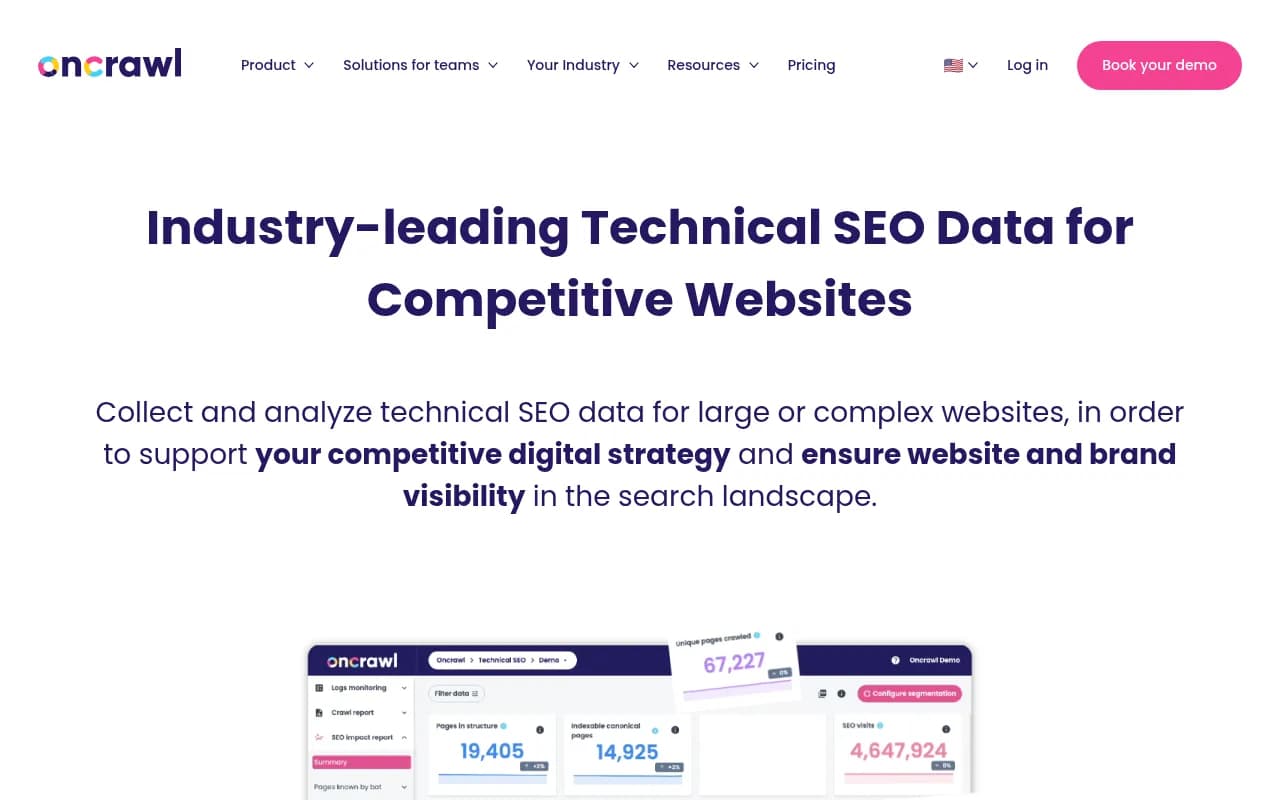
Oncrawl is an enterprise-grade technical SEO platform designed for large, complex websites. It combines deep crawling, log file analysis, and AI bot monitoring to help SEO teams at e-commerce sites, media companies, and agencies diagnose technical issues, track AI crawler behavior, and prove SEO ROI
Summary
- Best for: Enterprise SEO teams, large e-commerce sites, media companies, and agencies managing complex websites with 100K+ pages
- Standout strength: Handles massive crawls (millions of URLs) with advanced segmentation and cross-analysis that connects technical metrics to business KPIs
- Key limitation: High price point ($4,500+/year minimum) puts it out of reach for small businesses and solo SEOs
- Missing vs Promptwatch: Monitors AI bot crawling behavior but lacks content gap analysis, AI content generation, and visibility tracking across ChatGPT/Perplexity/Claude responses that Promptwatch provides for optimizing brand presence in AI search results
- Bottom line: If you're managing a technically complex site at scale and need to prove SEO value to stakeholders, Oncrawl delivers the depth. For smaller sites or teams focused on AI search visibility, look elsewhere.

Oncrawl has been around since the mid-2010s as one of the original enterprise-focused technical SEO crawlers. It's built by a French company and used by brands like L'Oréal, Ticketmaster, Harrods, and HelloFresh -- the kind of sites where a single crawl might hit 5 million URLs and where a 0.5% improvement in crawl efficiency translates to real revenue. This isn't a tool for bloggers or small business owners. It's infrastructure for SEO teams that need to diagnose technical problems across massive, complex site architectures.
The platform has evolved significantly in the past year. Where it used to be purely a crawler + log analyzer combo, Oncrawl now includes AI bot monitoring (tracking OpenAI, Claude, Mistral, Perplexity crawlers), a new "Lenses" interface that surfaces insights faster, and a Content Lens feature that uses AI to evaluate content quality. These additions signal Oncrawl's attempt to stay relevant as SEO shifts toward AI-driven search, though the execution feels more like feature additions than a fundamental rethinking of the product.
Core crawling and analysis capabilities
Oncrawl's crawler is legitimately impressive if you're dealing with scale. It handles JavaScript rendering, respects crawl budgets, and can process millions of pages without choking. The segmentation system is where it shines -- you can group pages by template type, URL pattern, content category, performance metrics, or custom rules, then analyze each segment independently. This matters when you're trying to figure out why your product pages perform differently than your category pages, or why one section of your site gets crawled more frequently than another.
The cross-analysis features let you overlay crawl data with log file data, Google Search Console metrics, and Google Analytics. You can see which pages Googlebot visits most often, which ones generate the most organic traffic, and which technical issues correlate with traffic drops. The platform visualizes this through charts, data tables, and a "Data Explorer" interface that lets you build custom queries. It's powerful but has a learning curve -- expect to spend time figuring out how to structure your segments and queries to get useful answers.
Log file analysis is a major component. Oncrawl ingests your server logs (via SFTP, S3, or direct upload) and breaks down bot behavior in detail. You see crawl frequency by bot type, which URLs get hit, HTTP status codes, response times, and crawl budget waste. The AI bot monitoring feature (new in 2025) extends this to non-Google bots -- OpenAI's crawler, Claude, Mistral, Perplexity. You can track when these bots visit, what they're reading, and how their behavior differs from traditional search crawlers. This is useful context but doesn't tell you whether your content is actually being cited in AI responses, which is where tools like Promptwatch come in.
Oncrawl Lenses and Content Lens
The Lenses interface is Oncrawl's attempt to make the platform less overwhelming. Instead of dumping you into a sea of metrics, Lenses are pre-configured views focused on specific SEO problems: crawl budget optimization, indexability issues, internal linking, content quality, mobile performance. Each Lens surfaces the most relevant data for that problem and suggests next steps. It's a smart addition for teams that don't have time to build custom dashboards from scratch.
Content Lens uses AI (likely GPT-based, though Oncrawl doesn't specify) to evaluate content quality and suggest improvements. It looks at factors like content depth, keyword usage, readability, and relevance, then flags pages that need work. The suggestions are generic -- "add more detail," "improve readability" -- and don't approach the specificity of tools like Clearscope or MarketMuse. It's a nice-to-have for identifying low-quality pages at scale, but you'll still need human judgment or better content tools to actually fix them.
Who this is actually for
Oncrawl makes sense for:
- Enterprise e-commerce sites with hundreds of thousands of SKUs, faceted navigation, and complex URL structures (think Ticketmaster, Skyscanner, classified ad sites)
- Large media companies managing multiple domains, heavy pagination, and high crawl volumes
- SEO agencies with enterprise clients who need detailed technical audits and ongoing monitoring
- In-house SEO teams at companies where a 1% traffic increase equals six figures in revenue and where proving ROI to executives is critical
You need technical chops to use this effectively. If your SEO team doesn't understand crawl budget, log file analysis, or how to interpret segmented data, Oncrawl will be overkill. It's not a "run a crawl, get a checklist" tool like Screaming Frog or Sitebulb. It's a data platform that requires you to know what questions to ask.
Who should NOT use Oncrawl:
- Small businesses or solo SEOs managing sites under 10,000 pages
- Teams without a dedicated technical SEO specialist
- Anyone looking for AI search visibility tracking (monitoring citations in ChatGPT, Perplexity, Claude) -- that's not what Oncrawl does
- Budget-conscious teams -- the $4,500+/year minimum is steep
Integrations and ecosystem
Oncrawl integrates with Google Search Console, Google Analytics (GA4 and Universal Analytics), and Adobe Analytics. You can pull in data from these sources to enrich your crawl analysis. The platform also supports API access, so you can export data to custom dashboards, feed it into Looker Studio, or build automated workflows. Log file ingestion works via SFTP, Amazon S3, Google Cloud Storage, or direct upload.
There's no browser extension or mobile app. This is a web-based platform you access through a browser. The interface is functional but not beautiful -- it prioritizes data density over aesthetics, which fits the enterprise audience but feels dated compared to newer tools.
Pricing and value
Oncrawl doesn't publish pricing on their website. Based on Reddit discussions and industry knowledge, expect a minimum of $4,500/year, with pricing scaling based on crawl volume, number of projects, and features. There's no monthly option -- annual contracts only. No free trial is advertised, though they may offer demos or pilot programs for qualified prospects.
Compared to competitors:
- Screaming Frog (£149/year): Far cheaper but limited to 500K URLs per crawl, no log analysis, no cross-analysis with GSC/GA
- Sitebulb ($35-$115/month): More affordable, better UX, but caps at 1M URLs and lacks Oncrawl's segmentation depth
- Botify (enterprise pricing, likely $20K+/year): Oncrawl's main competitor, similar feature set but even more expensive
- DeepCrawl/Lumar (enterprise pricing): Another direct competitor, comparable capabilities
For the target audience (enterprise sites, agencies with big clients), the pricing is defensible if the tool helps you identify issues that move the needle. For everyone else, it's hard to justify.
Strengths
- Handles massive scale: Crawls millions of URLs without breaking, which most tools can't do
- Segmentation system: Best-in-class for breaking down site sections and analyzing trends
- Log file analysis: Deep insights into bot behavior, crawl budget, and server performance
- Cross-analysis: Connects technical metrics to GSC, GA, and business KPIs in ways that help prove ROI
- AI bot monitoring: Tracks OpenAI, Claude, Mistral, Perplexity crawlers -- useful context as AI search grows
- Data export and API: Permanent access to historical data, build custom workflows
Limitations
- Price: $4,500+/year minimum, annual contracts only -- eliminates most small businesses and solo SEOs
- Learning curve: Complex interface, requires technical SEO expertise to use effectively
- AI search visibility gap: Monitors AI bot crawling but doesn't track whether your brand appears in ChatGPT/Perplexity/Claude responses, doesn't offer content gap analysis or AI content generation like Promptwatch does
- Content Lens underwhelms: AI-powered content suggestions are generic compared to dedicated content optimization tools
- No mobile app or browser extension: Web-only access
- Dated UI: Functional but not modern -- prioritizes data over design
Bottom line
Oncrawl is a serious tool for serious technical SEO work at enterprise scale. If you're managing a site with hundreds of thousands of pages, complex architecture, and a team that knows how to interpret crawl data and log files, it delivers value. The segmentation, cross-analysis, and scalability are legitimately best-in-class for traditional technical SEO.
But it's expensive, complex, and increasingly incomplete as SEO shifts toward AI search. Oncrawl can tell you which AI bots are crawling your site, but it can't tell you whether your brand is being cited in ChatGPT responses or how to optimize content for AI visibility. For that, you need a platform like Promptwatch, which focuses on AI search optimization, content gap analysis, and visibility tracking across LLMs -- capabilities Oncrawl doesn't offer.
Best use case in one sentence: Enterprise SEO teams managing large, complex websites who need to diagnose technical issues, prove ROI through data, and have the budget and expertise to use a powerful but demanding platform.
Frequently asked questions
What is Oncrawl and what does it do?
Who is Oncrawl best for?
How much does Oncrawl cost?
Can I use Oncrawl for free?
What are the key features of Oncrawl?
What is the main limitation of Oncrawl?
How does Oncrawl handle large-scale website crawls?
Similar and alternative tools to Oncrawl