Key takeaways
- Screaming Frog, Sitebulb, and Oncrawl are excellent at diagnosing traditional crawlability issues, but none of them were designed to simulate how LLM crawlers like GPTBot, ClaudeBot, or PerplexityBot actually process your site.
- JavaScript rendering is the single biggest blind spot: most AI crawlers don't execute JS, so content that depends on client-side rendering is effectively invisible to them -- even if Google indexes it fine.
- Server response speed, crawl depth, and internal linking structure matter more for AI crawlability than most teams realize.
- Log file analysis (available in Oncrawl and Sitebulb Cloud) is the most direct way to see whether AI crawlers are actually visiting your pages and which ones they're ignoring.
- Technical SEO fixes that improve LLM crawlability -- clean HTML, fast server responses, shallow site structure -- also tend to improve traditional SEO performance.
The problem with using traditional crawlers for AI search
Screaming Frog has been the default technical SEO tool for over a decade. Sitebulb made audits more visual. Oncrawl brought log file analysis into the mix. All three are genuinely good at what they were built to do.
But here's the thing: they were built for a world where Googlebot was the crawler you cared about. In 2026, that's no longer the only crawler that matters.
ChatGPT's GPTBot, Anthropic's ClaudeBot, Perplexity's PerplexityBot, and a dozen other AI crawlers are now visiting websites and using what they find to inform what they tell users. When someone asks ChatGPT which CRM to use, or asks Perplexity for the best running shoes under $150, those answers are built on content those crawlers were able to read.
If your content isn't readable to them, you don't exist in those answers.
The uncomfortable truth is that traditional crawlers simulate Googlebot behavior, not LLM crawler behavior. There's meaningful overlap -- both care about server responses, both follow links, both struggle with certain JavaScript patterns. But the differences matter enough that you can't just run a Screaming Frog audit and assume your LLM crawlability is fine.
This guide breaks down what each tool actually tells you, where the gaps are, and what to do about them.
What Screaming Frog tells you (and what it doesn't)
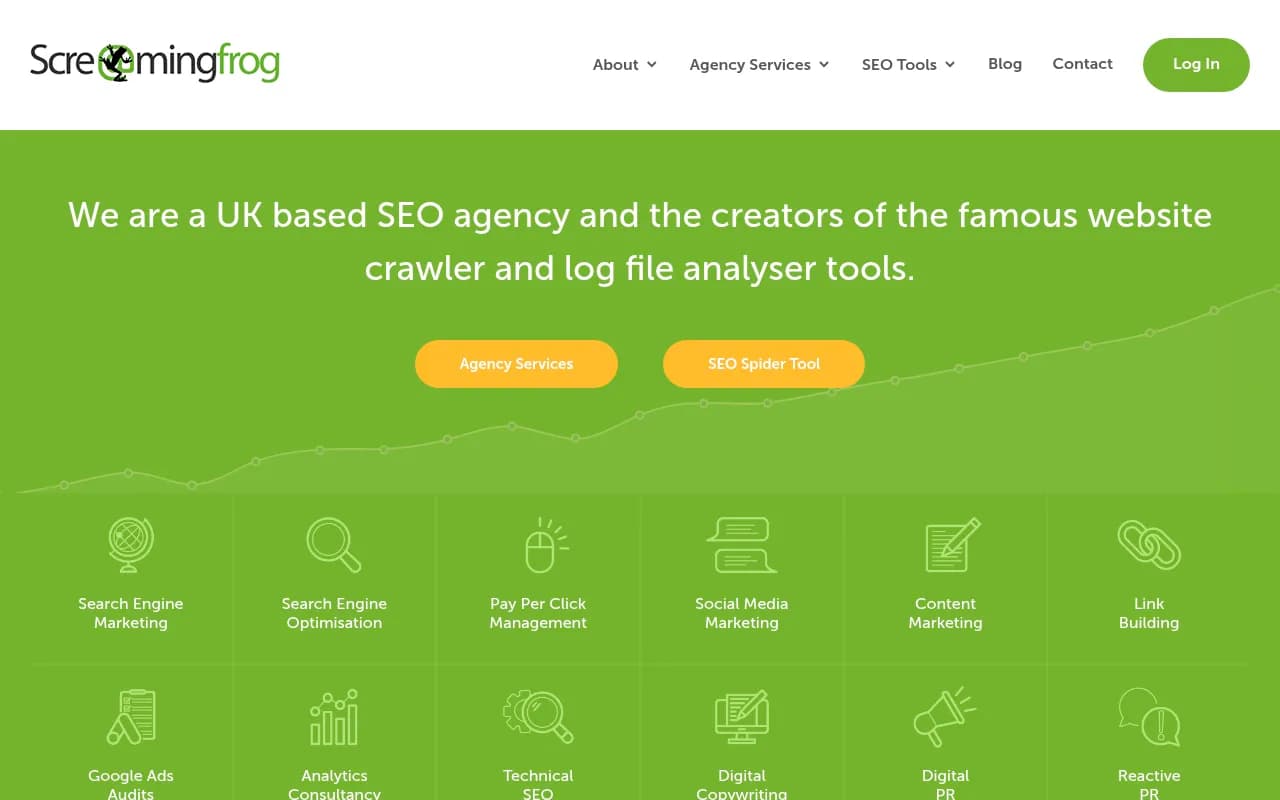
Screaming Frog is the fastest, most flexible desktop crawler available. For raw technical diagnostics -- broken links, redirect chains, duplicate content, missing meta tags, page depth -- it's hard to beat.
What it's genuinely useful for in an AI crawlability context
Server response codes. If a page returns a 404, 500, or gets stuck in a redirect loop, no crawler can index it -- including GPTBot and ClaudeBot. Screaming Frog surfaces these quickly across thousands of pages.
Crawl depth. Pages buried more than three or four clicks from the homepage are less likely to be discovered by any crawler. Screaming Frog's crawl depth report shows you exactly how deep your important pages sit. In a Reddit thread on crawlability improvements in 2026, the most upvoted answer was simply: "cleaning up internal linking and simplifying site structure." That's exactly what Screaming Frog helps you audit.
Robots.txt and meta robots. If you've accidentally blocked GPTBot in your robots.txt (which happens more often than you'd think, especially after migrations), Screaming Frog will show you which pages are blocked. You can also check for noindex tags that might be preventing content from being read.
Sitemap coverage. Submitting a clean sitemap helps AI crawlers discover your content. Screaming Frog can compare your sitemap against your actual crawled pages and flag orphaned content or pages missing from the sitemap entirely.
JavaScript rendering (with caveats). Screaming Frog can render JavaScript using its built-in Chromium renderer. This is useful for spotting content that only appears after JS execution. But -- and this is the critical part -- most AI crawlers don't render JavaScript. So the rendered view in Screaming Frog shows you what Google might see, not what GPTBot sees.
Where Screaming Frog falls short for LLM crawlability
It doesn't show you which AI crawlers have actually visited your site. It doesn't tell you which pages they read, how often they return, or whether they encountered errors. It simulates a crawl; it doesn't record real crawler behavior.
It also can't tell you whether your content, once read, is structured in a way that LLMs find useful for generating answers. That's a content and schema question, not a crawl question.
What Sitebulb adds to the picture
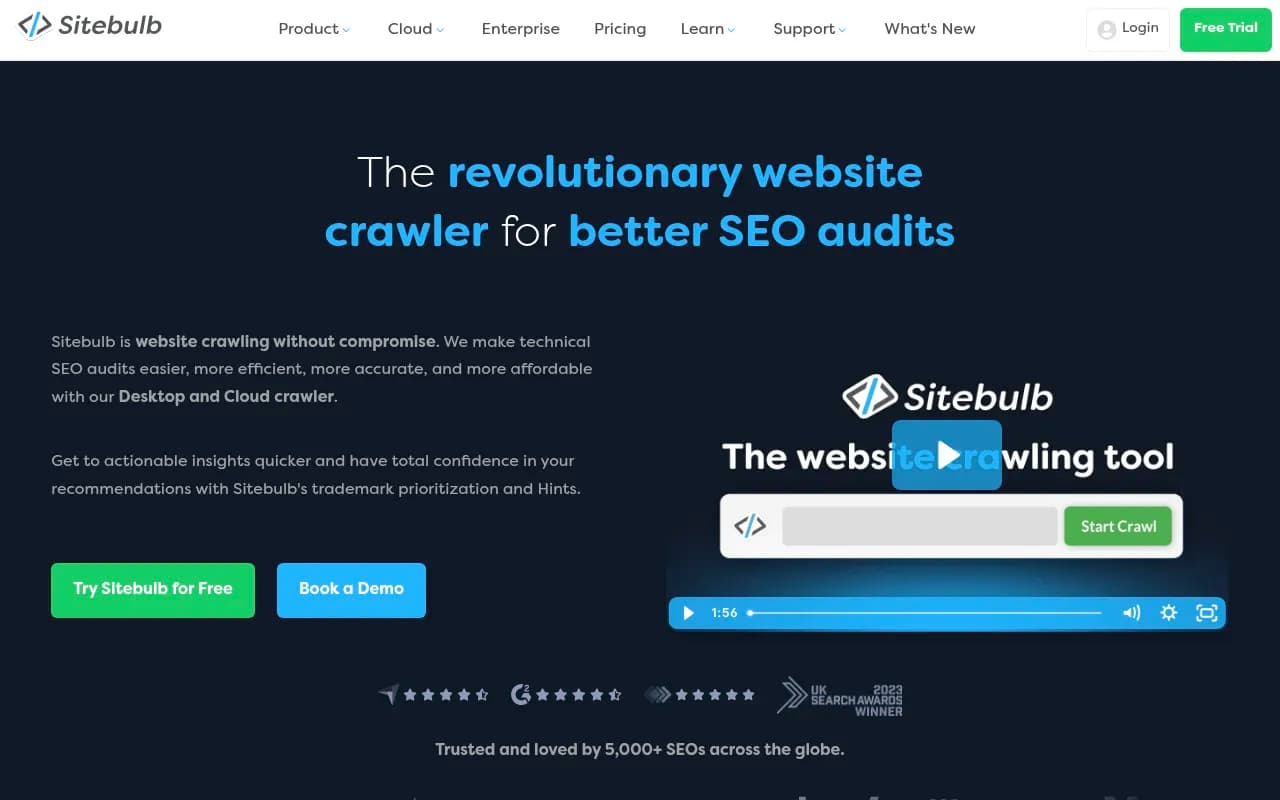
Sitebulb covers similar ground to Screaming Frog but with better data visualization and more opinionated audit hints. Where Screaming Frog gives you raw data, Sitebulb gives you prioritized recommendations with explanations.
JavaScript SEO and AI crawlers
Sitebulb has been paying attention to the LLM crawlability problem. In a March 2026 Q&A with JS SEO consultant Will Kennard, Sitebulb published a detailed breakdown of what AI crawlers can and can't see -- specifically around JavaScript rendering.
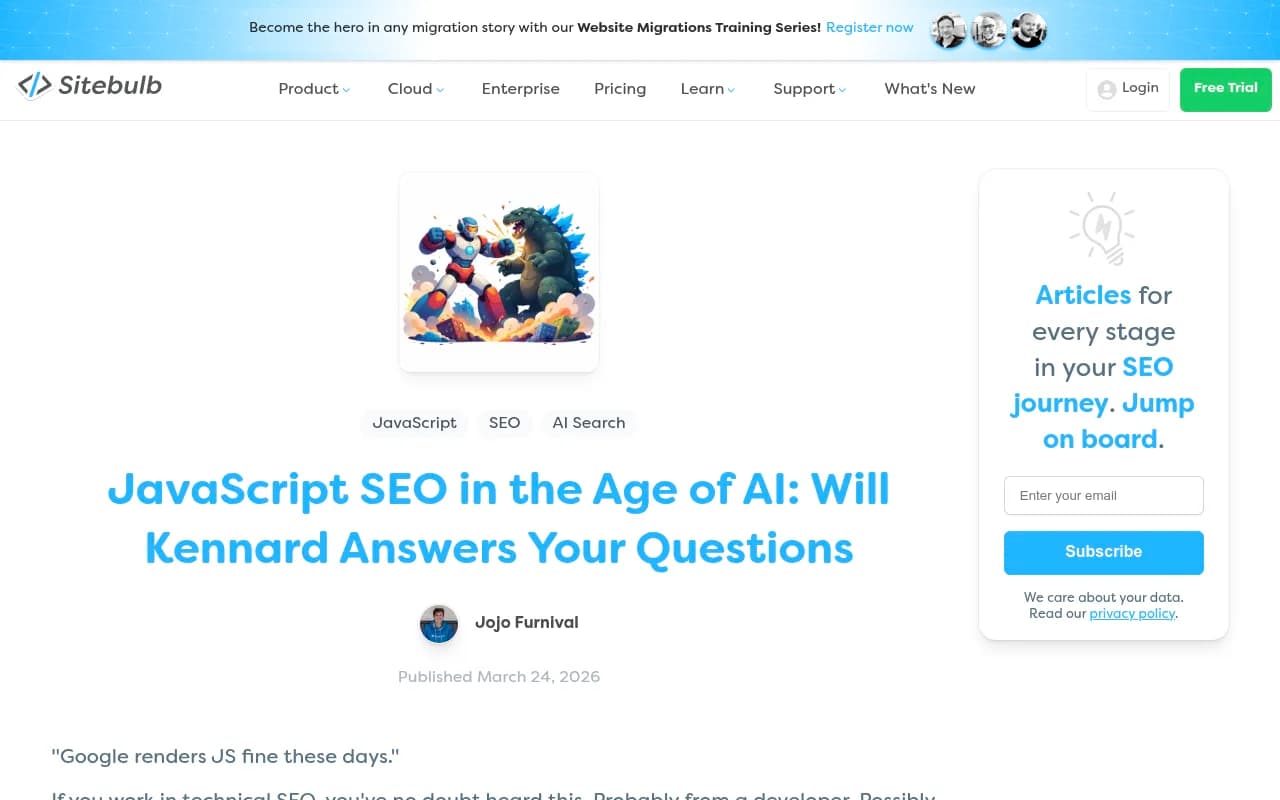
The key insight from that piece: most LLM crawlers are essentially HTML-only readers. They don't execute JavaScript. So if your product descriptions, blog content, or navigation links are rendered client-side (common in React, Vue, and Next.js apps without proper SSR), those crawlers see an empty shell.
Sitebulb's JS rendering comparison -- which shows you what a page looks like with and without JavaScript -- is one of the most practically useful features for diagnosing this. If there's a significant difference between the two views, you have a problem for AI crawlers even if Google is handling it fine.
Will Kennard's specific warning in that piece: "SSR for Googlebot only is a fix that's making things worse." Some teams implement server-side rendering conditionally, only when they detect Googlebot's user agent. This is a form of cloaking, and it means AI crawlers still get the client-side version. Sitebulb can help you spot inconsistencies in what different crawlers see.
Crawl depth and internal linking visualization
Sitebulb's crawl depth visualizations are cleaner than Screaming Frog's for communicating issues to stakeholders. If you need to convince a development team that your site structure is burying important content, Sitebulb's visual reports make the case more effectively.
Sitebulb Cloud and log file analysis
Sitebulb Cloud includes log file analysis, which is where things get genuinely interesting for AI crawlability. By uploading your server logs, you can see which bots are visiting, which pages they're hitting, and how frequently. This is the only way to know whether GPTBot or ClaudeBot has actually been to your site recently.
What Oncrawl brings for enterprise-scale analysis
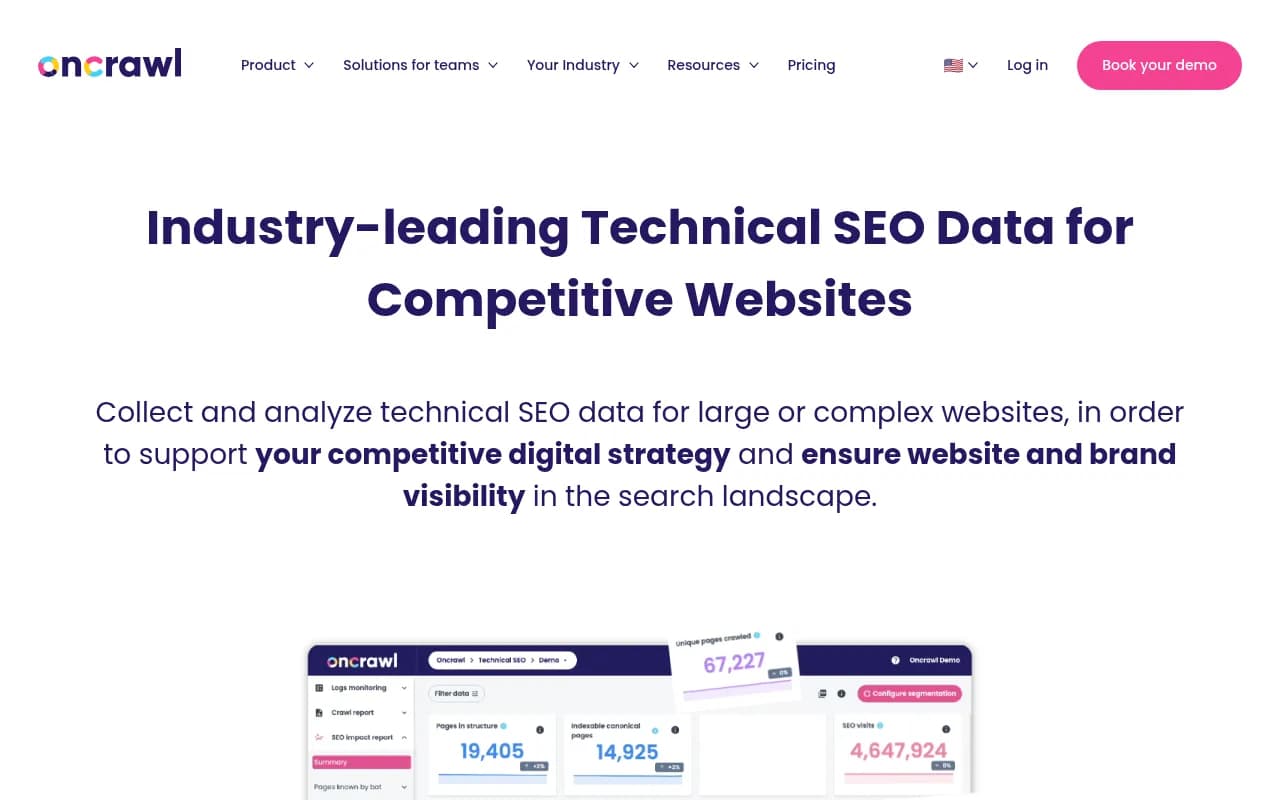
Oncrawl is built for large sites -- think hundreds of thousands of pages -- where you need to combine crawl data with log file data and Google Search Console data in one place.
Log file analysis as a first-class feature
This is Oncrawl's strongest differentiator for AI crawlability work. Log file analysis shows you the real behavior of every bot visiting your site, including AI crawlers. You can filter by user agent to isolate GPTBot, ClaudeBot, PerplexityBot, and others, then see:
- Which pages they're visiting
- How often they return
- Which pages they're ignoring entirely
- Whether they're hitting errors
If GPTBot is crawling your homepage and your about page but ignoring your entire product catalog, that's a signal worth investigating. Maybe those pages are too deep in the site structure. Maybe they're blocked. Maybe they're returning slow server responses that cause the crawler to give up.
Combining crawl data with log data
Where Oncrawl gets powerful is in correlating crawl data with log data. You can see, for a given set of pages: are they crawlable? Are they actually being crawled? Are they being crawled by the right bots? This three-way analysis is harder to do when your crawl data and log data live in separate tools.
Limitations
Oncrawl doesn't tell you what AI models are saying about your content, whether you're being cited in AI responses, or what content gaps exist between you and competitors. It's a technical infrastructure tool, not an AI visibility platform.
Comparing the three tools for LLM crawlability work
| Capability | Screaming Frog | Sitebulb | Oncrawl |
|---|---|---|---|
| Broken links and redirects | Excellent | Excellent | Good |
| Crawl depth analysis | Excellent | Excellent | Good |
| JS rendering comparison | Good (Chromium) | Good (with/without JS view) | Limited |
| Robots.txt / noindex auditing | Excellent | Excellent | Good |
| Log file analysis | Basic (separate tool) | Cloud version only | Excellent |
| AI crawler bot identification | No | Via log files (Cloud) | Via log files |
| Real AI crawler visit data | No | Partial (log files) | Partial (log files) |
| Sitemap coverage | Excellent | Excellent | Good |
| Pricing model | Free (limited) / £259/yr | From ~$14/mo | Enterprise pricing |
| Best for | Fast, flexible audits | Visual audits + stakeholder reports | Large sites, log analysis |
The honest summary: all three tools help you build a crawlable foundation, but none of them close the loop on whether AI models are actually citing your content or what you need to fix to appear in AI search results.
The JavaScript problem is bigger than most teams realize
This deserves its own section because it's the issue that comes up most often when technical SEOs start looking at AI crawlability seriously.
Modern web development defaults have shifted heavily toward client-side rendering. React, Next.js, Nuxt, SvelteKit -- these frameworks are everywhere, and they often ship with client-side rendering as the default or with inconsistent SSR configurations.
Google has invested heavily in rendering JavaScript. Its two-pass rendering system (crawl first, render later) means it eventually sees most JS-rendered content, though with delays.
AI crawlers haven't made that investment. GPTBot, ClaudeBot, and PerplexityBot are largely HTML-first crawlers. They read what's in the initial server response. If your content isn't there, they don't see it.
The practical implication: a site that passes a Screaming Frog audit with flying colors might still be largely invisible to AI crawlers if it's built on a client-side rendering architecture.
What to check:
- Use Sitebulb's JS comparison view to see what pages look like without JavaScript
- Check your framework's SSR configuration -- Next.js, for example, requires explicit configuration for server-side rendering on each page
- Use
curlor a tool likewgetto fetch pages without executing JS and see what the raw HTML contains - Look for content that only appears after user interaction (scroll, click, hover) -- this is almost certainly invisible to AI crawlers
Log file analysis: the most underused technique
Most SEO teams never look at their server logs. This is a mistake even for traditional SEO, but it's a significant blind spot for AI crawlability.
Your server logs record every request made to your server, including the user agent. GPTBot identifies itself as Mozilla/5.0 AppleWebKit/537.36 (KHTML, like Gecko; compatible; GPTBot/1.1; +https://openai.com/gptbot). ClaudeBot, PerplexityBot, and others have their own user agent strings.
By parsing your logs, you can answer questions like:
- Is GPTBot visiting my site at all?
- Which pages does it visit most frequently?
- Are there pages it never visits?
- Is it encountering 5xx errors that might be causing it to deprioritize my site?
- How does its crawl pattern compare to Googlebot's?
Oncrawl makes this analysis easier at scale. Sitebulb Cloud supports it for smaller sites. If you're comfortable with command line tools, you can also parse logs directly with tools like grep, awk, or a log analysis tool like GoAccess.
One thing to watch for: AI crawlers tend to crawl less frequently than Googlebot. Seeing GPTBot visit your site once every few weeks is normal. Seeing it never visit, or seeing it consistently hit error pages, is worth investigating.
What technical SEO fixes actually move the needle for AI crawlability
Based on what we know about how AI crawlers work, these are the technical changes most likely to improve your LLM crawlability:
Move content into server-rendered HTML. Anything you want AI crawlers to read should be in the initial HTML response, not injected by JavaScript after page load. This is the single highest-impact change for JS-heavy sites.
Flatten your site structure. Important pages should be reachable within two or three clicks from the homepage. Deep pages get crawled less frequently by all crawlers, including AI ones. Clean up your internal linking to surface important content.
Fix server response times. Slow servers cause crawlers to give up or deprioritize your site. AI crawlers, which are running at scale across millions of sites, are probably less patient than Googlebot. A server that consistently responds in under 200ms is less likely to get skipped.
Don't block AI crawlers in robots.txt unless you mean to. This sounds obvious, but it happens. Check your robots.txt for entries that block GPTBot, ClaudeBot, PerplexityBot, and other AI crawlers. Some security tools and CDN configurations add these blocks automatically.
Add structured data where it helps. Schema markup (FAQ, HowTo, Article, Product) gives AI crawlers explicit signals about what your content contains and how to interpret it. It's not a guarantee of citation, but it makes your content easier to parse.
Keep your sitemap current. A sitemap that includes your most important pages, with accurate last-modified dates, helps AI crawlers prioritize what to read.
The gap these tools don't fill
Here's what Screaming Frog, Sitebulb, and Oncrawl can't tell you:
- Whether ChatGPT, Perplexity, or Claude is actually mentioning your brand in responses
- Which prompts your competitors appear in that you don't
- What content you need to create to get cited in AI answers
- Whether your AI visibility is improving or declining over time
Technical crawlability is necessary but not sufficient. You can have a perfectly crawlable site and still be invisible in AI search results because your content doesn't match what AI models are looking for when they answer user questions.
That's where dedicated AI visibility platforms come in. Promptwatch tracks how your brand appears across ChatGPT, Claude, Perplexity, Gemini, and other AI models -- and goes beyond monitoring to show you exactly which content gaps are costing you visibility, then helps you create content designed to get cited.

The technical foundation (crawlability) and the content strategy (what to write and how to structure it) are two different problems. Traditional crawlers solve the first. They don't touch the second.
A practical audit workflow for 2026
If you want to assess your LLM crawlability properly, here's a reasonable workflow:
-
Run a Screaming Frog crawl to identify broken pages, redirect chains, noindex tags, and crawl depth issues. Fix anything that would prevent any crawler from reaching your content.
-
Use Sitebulb's JS comparison to identify pages where content is only visible after JavaScript execution. Prioritize getting that content into server-rendered HTML.
-
Check your robots.txt for AI crawler blocks. Add explicit allow rules for GPTBot, ClaudeBot, PerplexityBot, and other AI crawlers if needed.
-
Pull your server logs (via Oncrawl, Sitebulb Cloud, or manually) and filter for AI crawler user agents. See which pages they're visiting and which they're ignoring.
-
Test key pages with curl (
curl -A "GPTBot" https://yoursite.com/page) to see what the raw HTML response looks like without JavaScript. Is your content there? -
Layer in AI visibility monitoring to track whether your technical improvements translate into actual citations in AI search results.
The technical work creates the conditions for AI visibility. Whether you actually achieve it depends on your content -- and that's where the work gets interesting.
Wrapping up
Screaming Frog, Sitebulb, and Oncrawl are still worth using in 2026. The fundamentals they audit -- crawlability, site structure, server responses, JavaScript rendering -- matter for AI search just as they matter for traditional search.
But they were built for a different era, and their blind spots around LLM crawlers are real. Log file analysis gets you closer to the truth. Checking your JS rendering behavior gets you closer still. And accepting that technical crawlability is just the foundation -- not the whole answer -- is probably the most important mindset shift for SEO teams working on AI visibility right now.