Key takeaways
- Traditional keyword research tools (Ahrefs, Semrush, Google Keyword Planner) measure Google search volume — they don't tell you what people are asking ChatGPT, Perplexity, or Gemini.
- A new category of AI visibility platforms tracks prompt-level demand across LLMs, showing you which questions your brand is missing from AI-generated answers.
- The most useful tools in 2026 combine prompt volume data, competitor gap analysis, and content generation — not just monitoring dashboards.
- For teams serious about AI search, the gap between "monitoring-only" tools and full optimization platforms is significant and growing.
- Free tools like AlsoAsked and Google Search Console still have a role, but they don't capture AI-native demand at all.
There's a version of keyword research that most SEO teams are still doing in 2026, and it's increasingly incomplete. You open Ahrefs or Semrush, type in a topic, sort by volume, and build a content calendar around what Google users are searching. That process still works for Google. But it tells you nothing about what people are asking ChatGPT at 11pm, or what Perplexity surfaces when someone researches your product category.
The problem is that AI search demand doesn't look like Google search demand. People prompt AI engines with full sentences and follow-up questions. They ask for recommendations, comparisons, and explanations. The "keywords" are conversational, contextual, and often invisible to traditional tools entirely.
This guide is about closing that gap. We'll cover which tools still matter for traditional keyword research, which new platforms actually surface AI search demand, and how to think about both together.
Why Google volume alone isn't enough anymore
Google still handles billions of searches per day. Nobody is abandoning traditional SEO. But the share of informational and research-oriented queries going to AI engines has shifted meaningfully. When someone wants to know "which CRM is best for a 10-person sales team," they're increasingly asking ChatGPT or Perplexity, not typing it into Google.
The implication for keyword research is real. If you only optimize for Google volume, you're building content for one channel while your audience splits across several. Worse, you might rank on page one of Google for a query that barely anyone types into Google anymore because they're asking an AI instead.
Traditional keyword tools have no visibility into this. They measure what people type into search boxes. They can't tell you what prompts are trending on ChatGPT, which questions Perplexity users ask most often about your category, or whether your brand gets mentioned when someone asks for a recommendation.
That's the gap the newer AI visibility platforms are trying to fill.
The traditional keyword research tools: still useful, but limited
Before getting into AI-native tools, it's worth being honest about what the established platforms do well and where they fall short.
Semrush and Ahrefs
Both are genuinely powerful for Google-focused keyword research. Ahrefs has excellent keyword explorer functionality with click-through data, and Semrush's keyword magic tool handles large-scale discovery well. Both have added AI features in recent years — Ahrefs has brand radar for AI mention tracking, Semrush has an AI visibility toolkit as an add-on.
The honest limitation: their AI visibility features use fixed prompt sets. You can't customize which prompts get tracked, and neither platform connects AI visibility data to content gap analysis in a meaningful way. They're good at showing you where you're missing from AI results; they don't help you fix it.
AlsoAsked
AlsoAsked pulls questions from Google's "People Also Ask" boxes and maps them into topic clusters. It's genuinely useful for understanding how questions branch and relate to each other — which is actually a decent proxy for how AI engines do query fan-outs. If someone asks about X, what do they ask next? AlsoAsked answers that for Google-sourced data.
The free tier gives you 3 credits per day, which is enough for occasional research. It won't tell you anything about AI-native prompt volumes, but for mapping question hierarchies it's one of the better free options.
Surfer SEO and Clearscope
These are content optimization tools more than keyword research tools. They analyze what's ranking for a given term and tell you how to structure your content to compete. Both are solid for on-page optimization. Neither has any meaningful AI search visibility capability.
The honest summary
Traditional tools are fine for Google. They're blind to AI search demand. If your audience is increasingly using ChatGPT, Perplexity, or Gemini to research your category, you need something else alongside them.
What AI search demand actually looks like
Before picking tools, it helps to understand what you're trying to measure.
AI search demand isn't a keyword list. It's a set of prompts — full questions or requests that users type into AI engines. "What's the best project management tool for remote teams?" is a prompt. "Compare Notion vs Asana for a startup" is a prompt. These are the queries you want to appear in.
A few things make this different from traditional keyword research:
- Prompts are longer and more conversational
- The same underlying intent can be expressed in dozens of different ways
- AI engines often fan out a single prompt into multiple sub-queries before generating an answer
- The "result" isn't a ranked list of links — it's a generated answer that may or may not mention your brand
This means the metrics matter differently. You're not tracking rank position 1-10. You're tracking mention rate (does your brand appear in the AI's answer?), citation rate (does the AI link to your content?), and share of voice (how often do you appear versus competitors?).
AI visibility platforms that surface prompt-level demand
This is where the newer category of tools comes in. Several platforms now track what prompts are being asked across AI engines and whether your brand appears in the answers.
Promptwatch
Promptwatch is the most complete platform in this category right now. What separates it from most competitors is that it's built around doing something with the data, not just collecting it.
The Answer Gap Analysis feature shows you exactly which prompts your competitors are appearing in that you're not. That's prompt-level keyword research for AI search — you can see the specific questions AI engines are answering where your brand is invisible. From there, a built-in AI writing agent generates content engineered to get cited by ChatGPT, Claude, Perplexity, and others, based on analysis of 880M+ real citations.
It also tracks prompt volumes and difficulty scores, so you can prioritize which gaps are worth closing first. Query fan-outs show how a single prompt branches into sub-queries — useful for understanding the full scope of a topic cluster in AI search terms.
For teams that want to connect AI visibility to actual traffic, Promptwatch has crawler logs (showing which AI bots are visiting your site and which pages they read), plus traffic attribution via GSC integration, code snippet, or server log analysis.

SE Ranking
SE Ranking has added an AI visibility toolkit to its all-in-one SEO platform. It's a reasonable option for teams that want to consolidate tools — you get traditional rank tracking, site audits, and AI visibility monitoring in one place. The AI tracking isn't as deep as dedicated platforms, but the integration with existing SEO workflows is convenient.
Profound
Profound focuses on brand visibility tracking across AI engines with a strong feature set. It's positioned at the higher end of the market, which makes it a better fit for larger brands and agencies. It doesn't have the content generation capabilities that Promptwatch has, so you'd need separate tools for the optimization side.

Otterly.AI and Peec AI
Both are monitoring-focused platforms with lower price points. They'll show you where you appear and where you don't, but they stop there. No content gap analysis, no writing tools, no crawler logs. Fine as a starting point if budget is the primary constraint, but you'll hit the ceiling quickly when you want to act on what you're seeing.


AthenaHQ
AthenaHQ tracks visibility across 8+ AI engines and has decent competitor comparison features. Like Profound, it's monitoring-oriented. The gap analysis it provides is useful for understanding where you stand, but it doesn't connect to content creation.

Comparison: traditional vs AI-native keyword research tools
| Tool | Google keyword data | AI prompt volume data | Competitor gap analysis | Content generation | Crawler logs | Price range |
|---|---|---|---|---|---|---|
| Semrush | Excellent | Limited (fixed prompts) | Yes (Google) | Yes (ContentShake) | No | $139+/mo |
| Ahrefs | Excellent | Limited (Brand Radar) | Yes (Google) | No | No | $129+/mo |
| Promptwatch | No | Yes (custom prompts) | Yes (AI search) | Yes (AI writing agent) | Yes | $99+/mo |
| SE Ranking | Good | Moderate | Yes (Google + AI) | Basic | No | $65+/mo |
| Profound | No | Yes | Yes (AI search) | No | No | Custom |
| Otterly.AI | No | Basic | Limited | No | No | $Free-$99/mo |
| AlsoAsked | No | No (Google PAA only) | No | No | No | Free-$49/mo |
| Surfer SEO | No | No | No | Yes (content optimization) | No | $89+/mo |
The table makes the tradeoff clear. Traditional tools are strong on Google data but weak on AI demand. AI visibility platforms flip that. Most teams in 2026 need both, but the specific combination depends on where your audience actually spends time.
How to approach keyword research for AI search in practice
Knowing which tools exist is one thing. Here's how to actually use them together.
Start with prompt discovery, not keyword lists
Instead of starting with a seed keyword and expanding, start by asking: what would someone ask ChatGPT or Perplexity when they're in my product category? Write out 20-30 realistic prompts. These become your tracking set.
Tools like Promptwatch can then show you which of those prompts your competitors are appearing in, and which ones nobody is winning yet. The latter are your best opportunities — AI engines are looking for a source to cite and none exists yet.
Map the fan-out
One prompt usually generates several sub-queries. "Best CRM for startups" might fan out into questions about pricing, integrations, ease of use, and specific comparisons. Understanding the full fan-out tells you what a single piece of content needs to cover to get cited across multiple related prompts.
Prioritize by volume and difficulty
Not all prompts are equal. Some are asked thousands of times per month; others are rare. Some have strong incumbents already dominating the AI answers; others are wide open. Prompt volume and difficulty scoring (available in Promptwatch) lets you prioritize the gaps worth closing first.
Create content that answers the prompt directly
AI engines cite content that directly and comprehensively answers the question being asked. This is different from traditional SEO content, which often targets a keyword while covering a broader topic. For AI search, specificity matters more. A page titled "Best CRM for a 10-person remote sales team in 2026" with a direct, structured answer will outperform a generic "best CRM" roundup for that specific prompt.
Track and iterate
AI visibility changes as you publish new content. Page-level tracking shows which of your pages are getting cited, by which models, and how often. This closes the loop — you can see whether the content you created actually moved the needle.
Tools worth knowing for specific use cases
Beyond the main platforms, a few tools are worth mentioning for specific parts of the workflow.
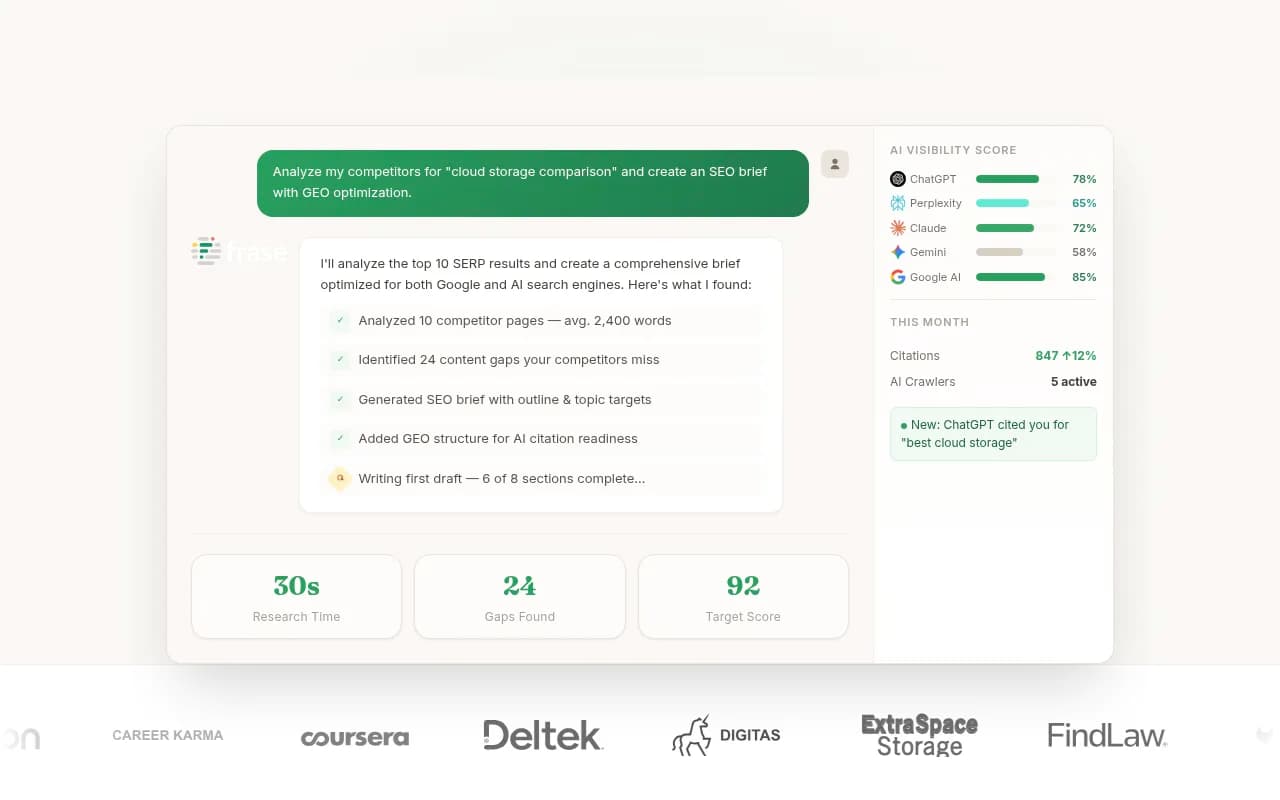
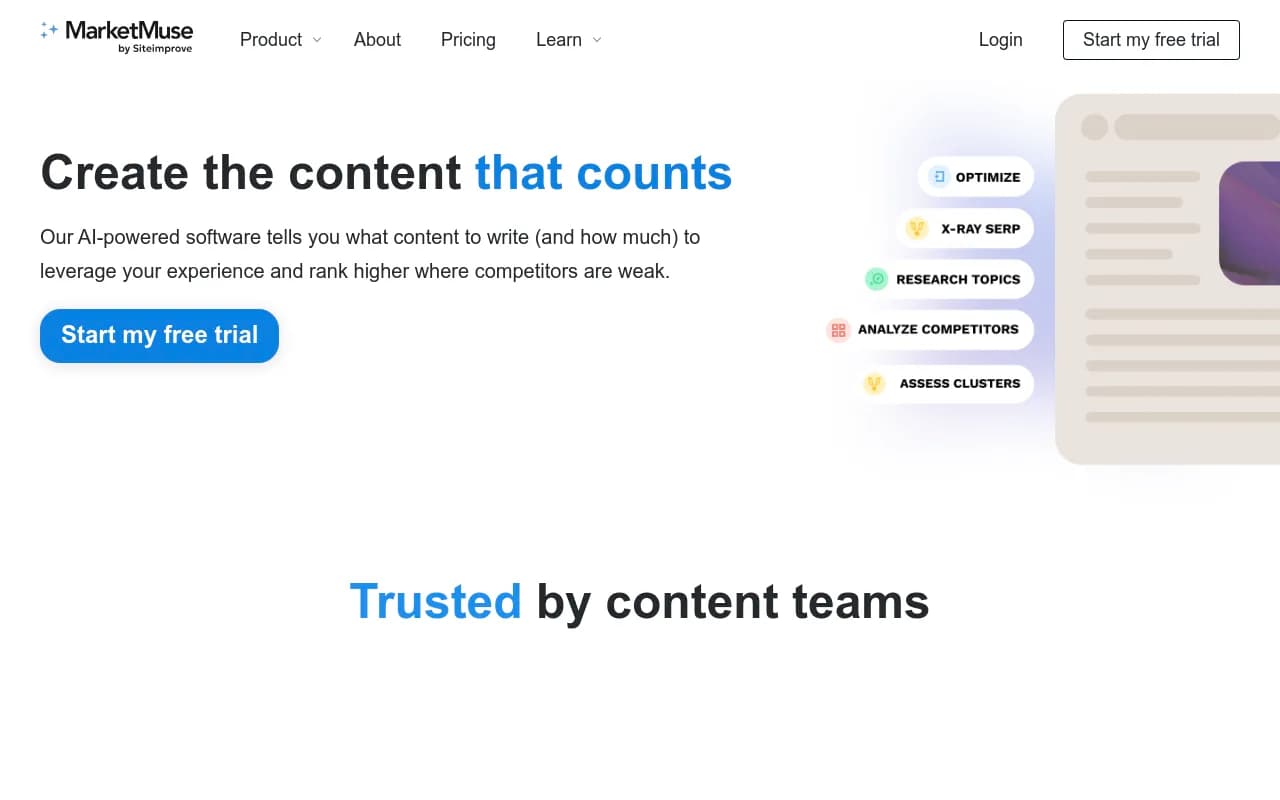
For content brief creation and on-page optimization once you've identified your target prompts, Frase and MarketMuse are solid options. Both help structure content around the topics and questions that matter for a given subject.
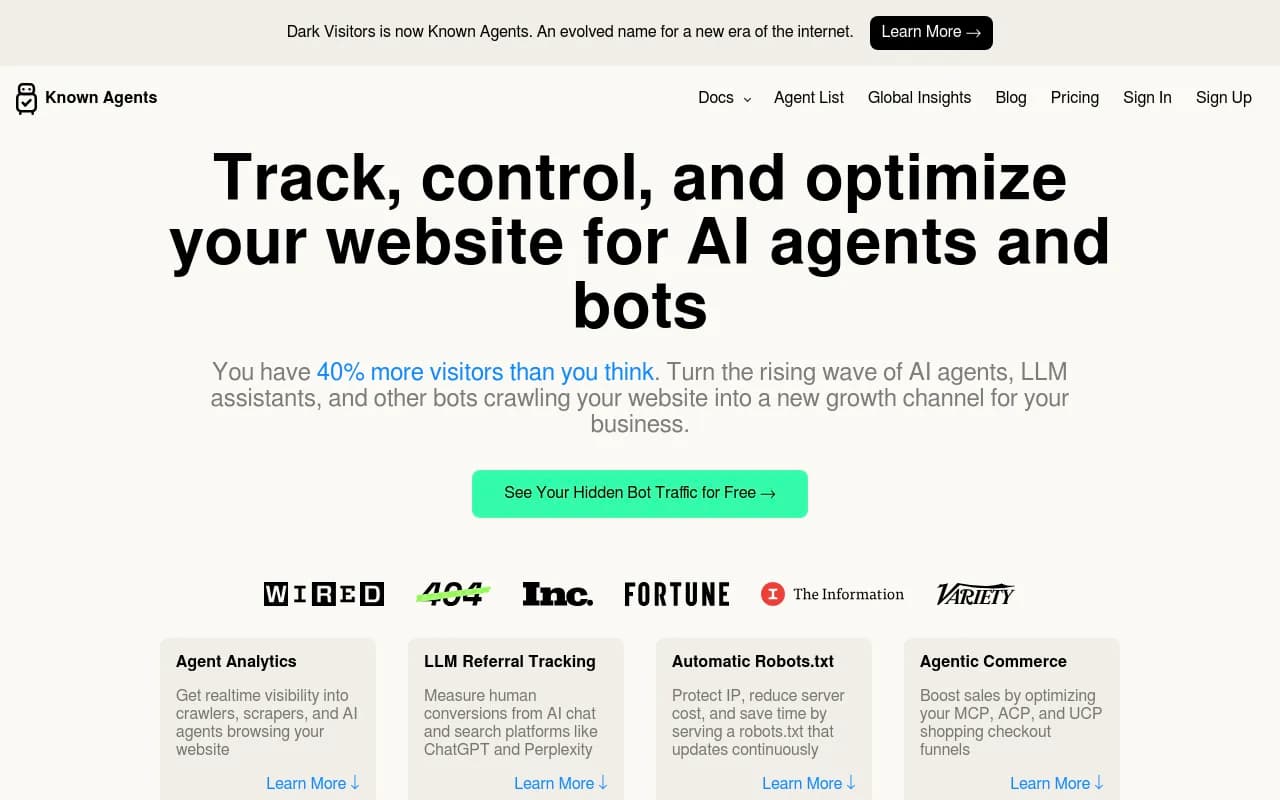
For tracking AI crawler activity on your site specifically — understanding which AI bots are visiting, how often, and which pages they're reading — DarkVisitors provides useful bot-level data.
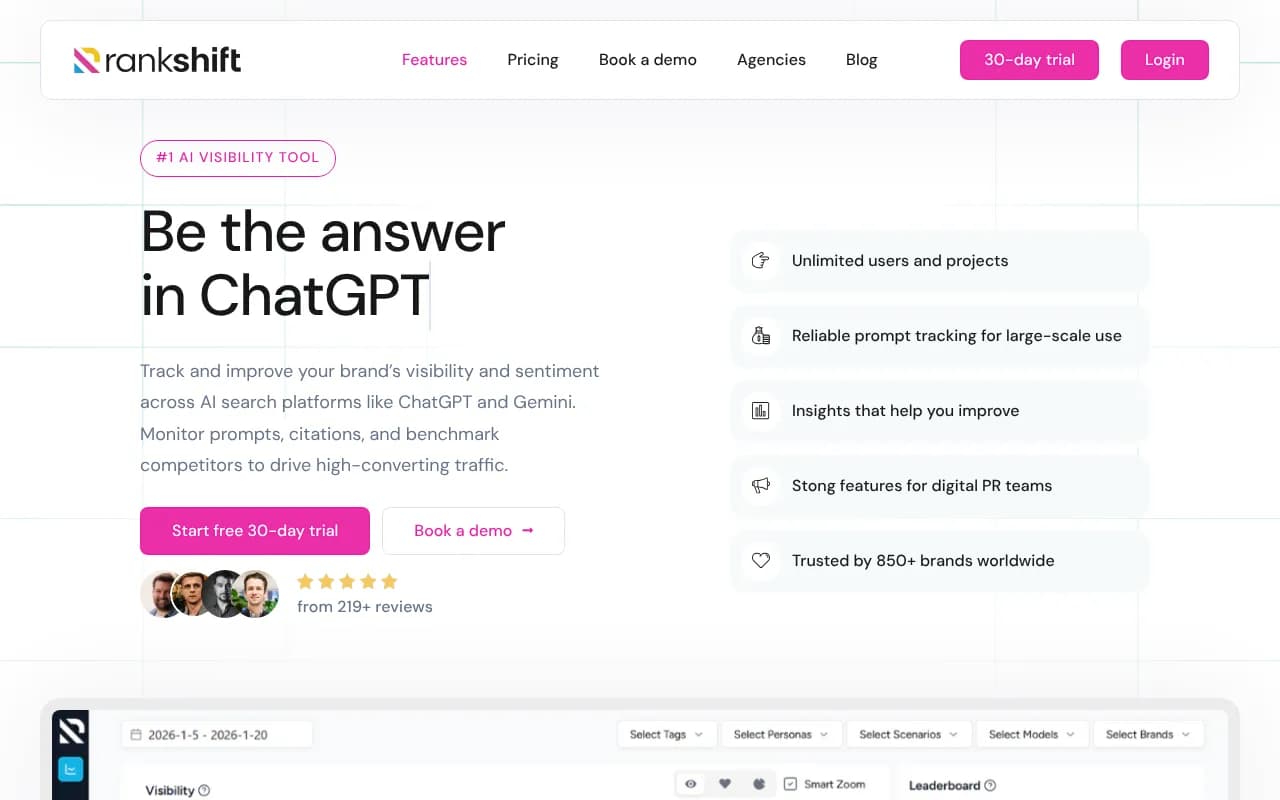
For teams that want a simpler, lower-cost entry point into AI visibility tracking before committing to a full platform, Rankshift and Rankscale are worth evaluating.
The honest picture in 2026
Most SEO teams are still running keyword research the way they did in 2022. That's not catastrophic — Google is still a massive channel. But the teams that are pulling ahead are the ones that have added AI search demand to their research process, not as a replacement for traditional keyword research but as a parallel track.
The practical starting point: pick one AI visibility platform, set up tracking for 30-50 prompts in your category, and run a competitor gap analysis. What you'll find is usually surprising — there are prompts where your competitors are consistently cited and you're completely absent, and there are prompts where nobody has strong coverage yet.
Those gaps are the 2026 equivalent of low-competition keywords. The difference is that filling them requires content engineered for AI citation, not just content optimized for Google ranking. That's a different skill, and the tools that help you build it are still relatively new. Getting familiar with them now is worth the time.