Key takeaways
- AI search engines like ChatGPT, Perplexity, and Google AI Overviews now shape product discovery before customers ever visit your website -- making AI visibility tracking essential for any product launch.
- The smartest launch teams set a pre-launch baseline: which prompts mention competitors, which don't mention you, and what content gaps exist.
- Post-launch, you need page-level citation tracking, crawler logs, and prompt volume data to know whether your new content is actually being picked up.
- Most tools only monitor. The ones worth paying for help you act on what they find -- through content gap analysis, content generation, and citation attribution.
- A tiered stack works best: a core GEO platform for deep tracking, supplemented by lighter tools for specific use cases like Reddit monitoring or shopping visibility.
Why product launches need an AI visibility strategy in 2026
A few years ago, a product launch checklist looked like this: press release, SEO-optimized landing page, paid ads, social posts. That checklist isn't wrong, but it's incomplete now.
When someone asks ChatGPT "what's the best project management tool for remote teams?" or Perplexity "which CRM is best for startups?", they're not clicking through ten blue links. They're reading a synthesized answer. And if your product isn't in that answer, you don't exist for that person in that moment.
This isn't a niche edge case. A growing share of product research now happens through AI chat interfaces. The brands that show up in those answers have a real advantage -- and most of them got there deliberately, not by accident.
The problem is that AI visibility doesn't behave like Google rankings. You can't just check a position number. AI models cite different sources for different phrasings of the same question. They update as their training data and retrieval systems change. And the gap between "we launched content" and "AI models are citing it" can be weeks or months, depending on how quickly crawlers index and incorporate your pages.
That's why tracking AI visibility before and after a product launch is its own discipline -- and why you need tools built for it.
Phase 1: Before the launch -- establishing your baseline
The biggest mistake launch teams make is treating AI visibility as a post-launch problem. By the time you're live, you've already missed the window to understand where you're starting from.
What to measure before launch
Before your product goes live, you want to answer three questions:
- Which prompts are your competitors already visible for that you're not?
- What does AI say about your category when your product isn't mentioned?
- Which content gaps on your site are leaving you invisible?
This is where Answer Gap Analysis becomes your most useful tool. You're not just checking whether your brand is mentioned -- you're mapping the entire prompt landscape for your category and identifying where competitors have a head start.
Promptwatch is built specifically for this kind of pre-launch intelligence. Its Answer Gap Analysis shows you the exact prompts where competitors are getting cited but you aren't, along with the specific content your site is missing. That's not just monitoring -- it's a content brief for your launch.

For teams that want a broader competitive picture before launch, a few other tools are worth knowing about.
Profound tracks brand visibility across AI search engines and gives you a structured view of how your category is being answered. It's particularly useful for enterprise teams that need to brief stakeholders on the AI visibility landscape before a launch.

AthenaHQ covers 8+ AI search engines and is good for teams that want a monitoring-first view of how AI models are currently framing your category.

Setting up prompt tracking
Before launch, you should define the prompts that matter for your product. These fall into a few categories:
- Category prompts: "best [category] tools", "top [category] software for [use case]"
- Problem prompts: "how do I [problem your product solves]"
- Comparison prompts: "[competitor] vs alternatives", "alternatives to [competitor]"
- Brand prompts: "[your brand name]" -- to see what AI already knows or says
Most tools let you set up custom prompt lists. The key is tracking these same prompts consistently so you have a real before/after comparison post-launch.
Prompt volume and difficulty data matters here too. Not all prompts are equal -- some are asked by thousands of people daily, others by a handful. Tools like Promptwatch include volume estimates and difficulty scores so you can prioritize which prompts to win first.
Phase 2: Launch day and the first few weeks
The period immediately after launch is when most teams get impatient. You've published your new product page, written supporting content, maybe put out a press release -- and then you check your AI visibility and nothing has changed.
That's normal. And it's exactly why you need crawler log data.
Understanding the crawl-to-citation gap
AI models don't cite content the moment it's published. There's a pipeline: a crawler has to discover the page, the model has to incorporate it into its knowledge or retrieval system, and then it has to start surfacing it in relevant answers. This can take days or weeks depending on the model and the page.
Without crawler log data, you're guessing. With it, you can see exactly when ChatGPT's crawler first hit your new product page, whether it returned, and whether there were errors that might have prevented proper indexing.
Promptwatch's AI Crawler Logs track exactly this -- which AI crawlers visited which pages, how often, and what errors they encountered. This is genuinely rare among GEO tools. Most competitors don't offer it at all.
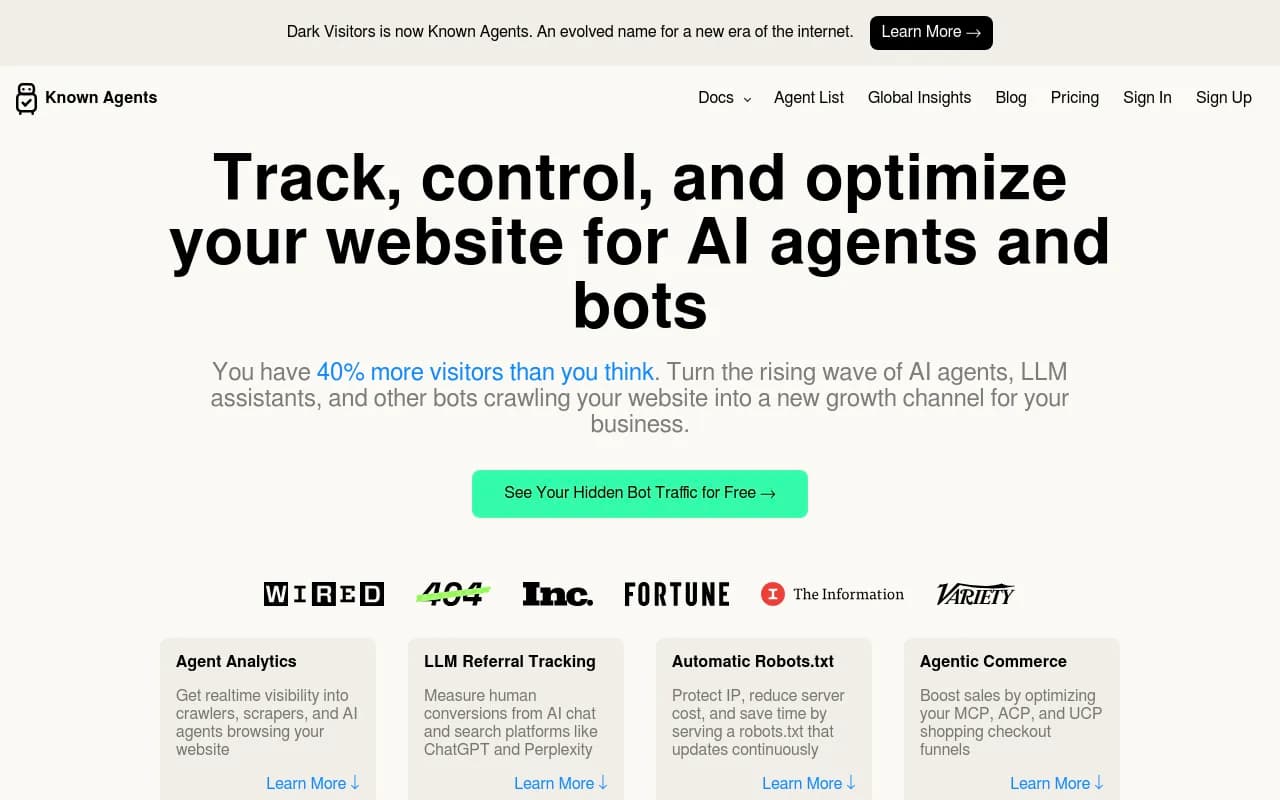
DarkVisitors is a free tool worth having in your stack specifically for crawler monitoring. It tracks AI agents and bots visiting your site and gives you a log of which AI systems are paying attention to your content.
Tracking citations in real time
Once your content is live, you want to know the moment an AI model starts citing it. Page-level citation tracking shows you which specific pages are being referenced, by which models, and how often.
This matters more than brand-level visibility scores during a launch. You need to know: is the new product landing page being cited? Is the comparison article working? Is the FAQ getting picked up?
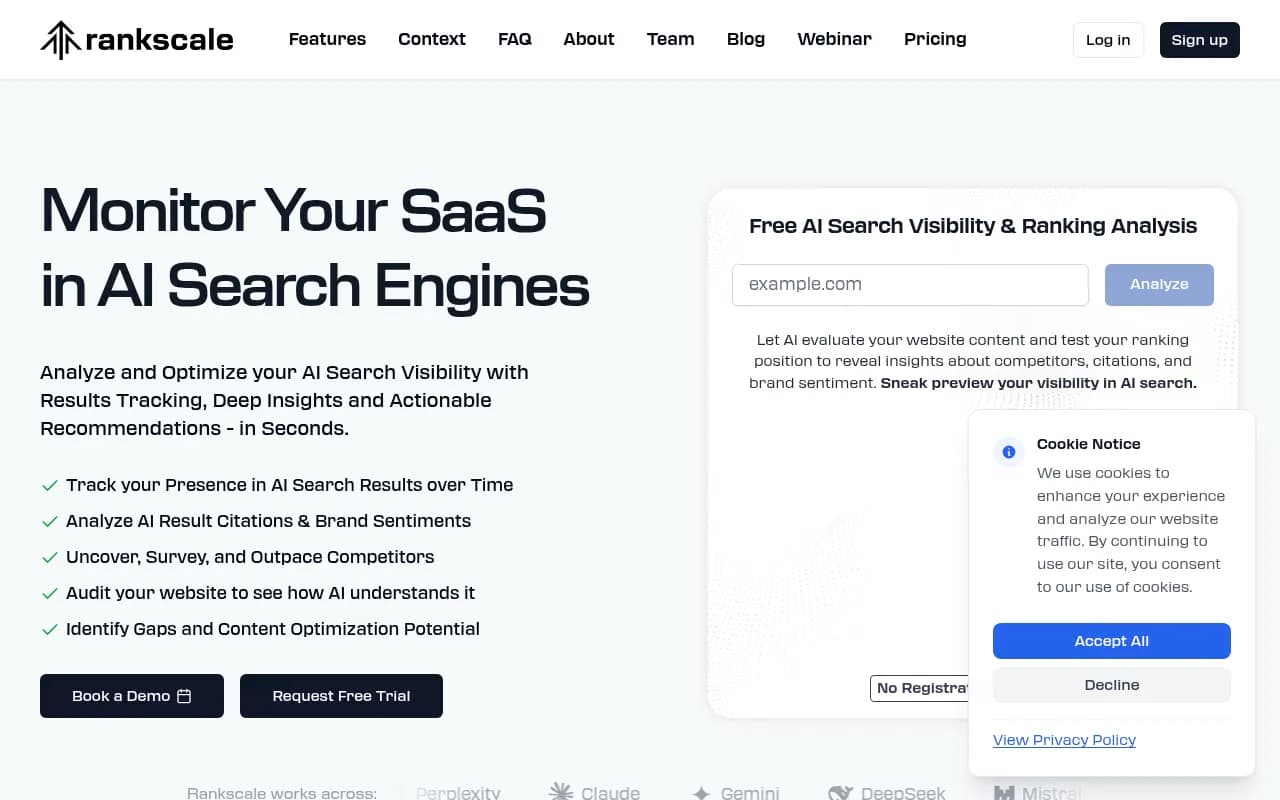
Rankscale offers AI search ranking and visibility tracking with page-level granularity, which is useful for monitoring specific launch assets.
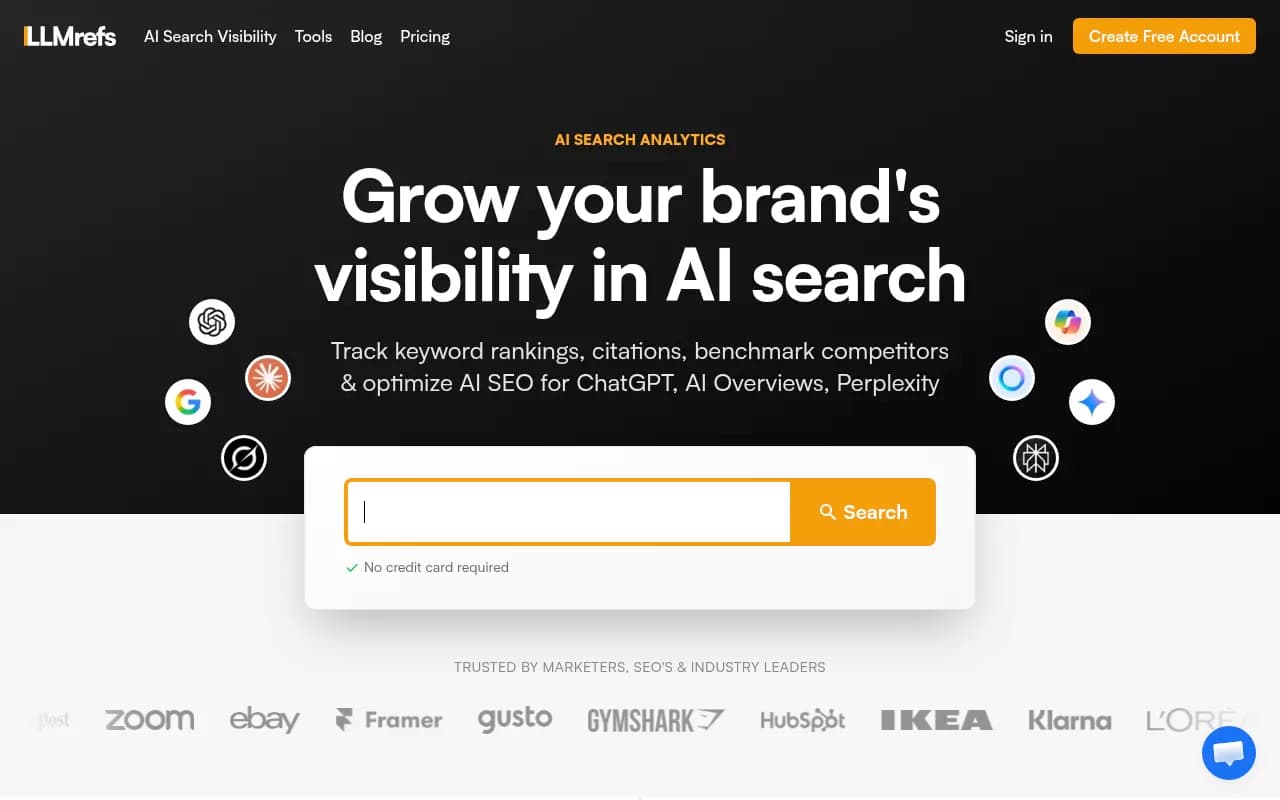
LLMrefs tracks your brand's visibility across ChatGPT, Perplexity, and other models with a focus on citation tracking -- good for teams that want a focused view of where citations are coming from.
Phase 3: Post-launch optimization
Two to four weeks after launch, you should have enough data to start optimizing. This is where the gap between monitoring tools and optimization platforms becomes most obvious.
A monitoring tool tells you: "Your visibility score is 23%. Competitors average 41%."
An optimization platform tells you: "Here are the 12 prompts where competitors are cited and you're not, here's the content gap on each, and here's a draft article that addresses it."
The second is what actually moves the number.
Content gap analysis and generation
The post-launch optimization loop works like this: find the prompts where you're still invisible, understand what content AI models want to see for those prompts, create it, and track whether citations follow.
Promptwatch's Content Agents do this end-to-end. They generate articles, listicles, and comparison pieces grounded in real prompt data, citation patterns, and competitor analysis. The output isn't generic SEO content -- it's specifically engineered to address the gaps AI models are exposing.
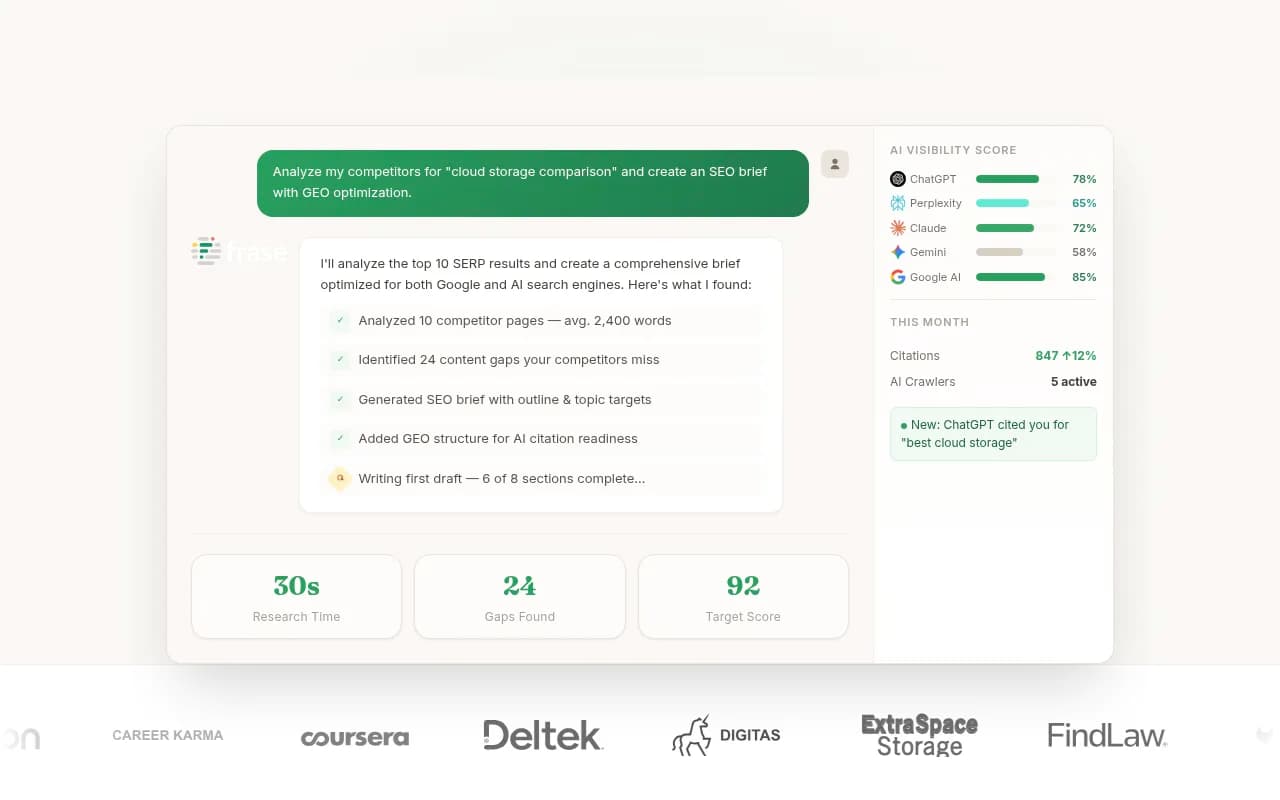
For teams that want content generation capabilities without the full GEO platform overhead, Frase is worth considering. It tracks where AI search cites your brand and helps you create content to close gaps.
Writesonic has also built out AI visibility tracking alongside its content generation features, making it a reasonable option for smaller teams that want both in one place.
Monitoring offsite citations
Your own website isn't the only thing AI models cite. They also pull from Reddit threads, YouTube videos, industry publications, and third-party review sites. Post-launch, you want to know which of these are helping or hurting your visibility.
This is an area most tools ignore entirely. Promptwatch tracks offsite citations -- Reddit posts, YouTube videos, external mentions -- so you can see which third-party content is driving AI visibility for your brand and which competitor mentions are outranking you in AI answers.
Otterly.AI is a lighter-weight monitoring tool that covers brand mentions across AI platforms. It's affordable and good for teams that just need basic visibility tracking without the full optimization stack.

Peec AI covers multi-language AI visibility tracking, which matters if your product launch is international.

Tool comparison: what each platform does (and doesn't do)
Here's an honest breakdown of the main tools across the dimensions that matter most for a product launch:
| Tool | Pre-launch gap analysis | Crawler logs | Page-level citation tracking | Content generation | Offsite citation tracking | Prompt volume data |
|---|---|---|---|---|---|---|
| Promptwatch | Yes | Yes | Yes | Yes (Content Agents) | Yes | Yes |
| Profound | Partial | No | Partial | No | No | No |
| AthenaHQ | No | No | No | No | No | No |
| Otterly.AI | No | No | No | No | No | No |
| Peec AI | No | No | No | No | No | No |
| Frase | Partial | No | Partial | Yes | No | No |
| Writesonic | No | No | Partial | Yes | No | No |
| Rankscale | No | No | Yes | No | No | No |
| LLMrefs | No | No | Yes | No | No | No |
| DarkVisitors | No | Yes | No | No | No | No |
The pattern is clear: most tools handle one or two parts of the launch tracking workflow. Only a full GEO platform handles the whole thing.
Building a practical launch stack
You don't need every tool on this list. Here's a practical stack based on team size and budget:
Lean team (startup, limited budget)
- Promptwatch Essential ($99/mo) for core AI visibility tracking, gap analysis, and content generation
- DarkVisitors (free) for crawler log monitoring
- Manual prompt testing across ChatGPT, Perplexity, and Gemini for qualitative checks
Mid-size marketing team
- Promptwatch Professional ($249/mo) for multi-site tracking, crawler logs, city/state-level data, and content agents
- Otterly.AI as a lightweight secondary monitor for quick daily checks
- Frase for additional content brief support
Enterprise / agency
- Promptwatch Business or Enterprise for full coverage across 5+ sites, 350+ prompts, and 30 articles/month
- Integration with existing analytics via Looker Studio or API
- Evertune for Fortune 500-level GEO strategy if you need white-glove support
Specific use cases worth calling out
E-commerce product launches
If you're launching a physical product and want to appear in ChatGPT's shopping recommendations, that's a separate tracking problem from general AI visibility. Promptwatch includes ChatGPT Shopping tracking specifically for this -- monitoring when your brand appears in product recommendation carousels, not just informational answers.
Azoma is worth looking at for enterprise e-commerce teams focused on AI shopping optimization across ChatGPT, Amazon Rufus, and similar platforms.
SaaS product launches
For SaaS, comparison prompts matter most. When someone asks "best alternatives to [competitor]" or "[your category] tools for [use case]", you want to be in that answer. Pre-launch, map these prompts. Post-launch, track whether your new comparison and alternative pages are getting cited.
AI Peekaboo is built specifically for SaaS companies monitoring AI visibility -- a focused tool if you don't need the full platform.
International launches
Multi-language and multi-region tracking is genuinely hard. Most tools default to English and US-based AI responses. If you're launching in multiple markets, you need a platform that can monitor AI responses in different languages and from different geographic contexts.
Promptwatch supports multi-language and multi-region monitoring with customizable personas. Peec AI is also specifically built for multi-language coverage and is worth considering as a supplement.
What good post-launch reporting looks like
After 30, 60, and 90 days post-launch, you should be able to answer:
- Did our visibility score improve for target prompts?
- Which new pages are being cited, and by which models?
- How long did it take from publish to first citation for each key asset?
- Which competitor prompts are we now appearing in that we weren't before?
- What's the traffic and revenue attribution from AI search?
The last point matters more than people expect. Visibility scores are useful, but connecting AI citations to actual site traffic and conversions is what gets budget approved for the next launch.
Promptwatch's traffic attribution connects AI visibility data to actual revenue -- which is the metric that closes the loop between GEO investment and business outcome.
The honest bottom line
Most AI visibility tools were built to answer one question: "Is my brand being mentioned?" That's useful, but it's not enough for a product launch where you need to move fast and show results.
The tools that actually help you improve visibility -- not just measure it -- are the ones worth building your launch stack around. Find the gaps before launch, track the crawl-to-citation pipeline during launch, and use real prompt data to generate content that closes the remaining gaps after launch.
That's the workflow. The tools above are how you execute it.