Key takeaways
- A single AI prompt fans out into 8-15 sub-queries, 95% of which show zero monthly search volume in traditional keyword tools -- but they still determine who gets cited in AI responses.
- Sub-query patterns shift seasonally, giving you a predictable signal for when to publish specific content types.
- Comparison, freshness, and pricing sub-queries appear in nearly every commercial fan-out tree -- and they spike at predictable times of year.
- The best publishing calendars in 2026 are built around sub-query timing, not keyword volume peaks.
- Tools that surface query fan-out data and prompt intelligence let you act on these patterns weeks before competitors spot them in traditional analytics.
What query fan-out actually is (and why it matters for timing)
When someone types a question into ChatGPT, Perplexity, or Google AI Mode, the model doesn't just run one retrieval. It quietly breaks that question into a cluster of related sub-queries -- sometimes 5, sometimes 20 -- and runs them all in parallel before composing an answer. This is query fan-out.
A prompt like "best project management software for remote teams" might fan out into sub-queries like:
- "project management software remote team reviews 2026"
- "Asana vs Monday.com for distributed teams"
- "project management tools free tier comparison"
- "project management software complaints Reddit"
- "best tools for async remote collaboration"
Each of those sub-queries pulls from different sources. The final answer the user sees is a synthesis of whatever the model found credible across all of them. If your content doesn't show up in the sub-queries, it doesn't make the final cut -- even if you rank perfectly for the head term.
Here's the part most people miss: those sub-queries aren't static. They shift with time, with news cycles, with buying seasons, and with how user intent changes throughout the year. That shift is your publishing calendar signal.
Why 95% of fan-out phrases are invisible to traditional tools
Research analyzing over 72,000 AI-generated queries found that a single prompt to ChatGPT or Gemini routinely triggers 8-10 parallel sub-queries before an answer is returned. The same research found that 95% of those fan-out phrases show zero monthly search volume in standard keyword tools.
That's not a flaw in the data. It's a structural difference between how humans type queries into Google and how AI models decompose intent. The sub-queries are engine-generated, not user-typed. They're hyper-specific, often combining a topic with a freshness signal ("2025 2026" appears in about 6% of all fan-outs), a price anchor ("free", "pricing", "cost"), or a risk qualifier ("pros and cons", "complaints", "limitations").
Traditional keyword research tools can't see this layer. They measure what users type. Fan-out tools measure what AI engines actually retrieve.
This matters for seasonal planning because the freshness and recency signals embedded in fan-out sub-queries are time-sensitive by design. An AI model evaluating a prompt in October will generate different sub-queries than the same model evaluating the same prompt in January -- because it's looking for different temporal signals.
How sub-query patterns shift seasonally
Fan-out trees don't just vary by industry -- they vary by time of year. Here's how that plays out in practice.
Freshness qualifiers spike at year boundaries
The "2025 2026" and "best [X] in 2026" sub-queries that appear in fan-out trees become far more common in Q4 and Q1. AI models are trying to time-stamp their answers, and they lean harder on freshness signals when the calendar year is turning. If you publish your "best [category] tools" roundup in November rather than February, you're positioned when the freshness sub-queries start spiking -- not after everyone else has already published.
Comparison sub-queries peak before purchase decisions
"X vs Y" queries appear in fan-out trees for almost every commercial parent query. But their frequency increases in the weeks before predictable buying seasons: before budget cycles close (October/November for B2B), before Black Friday (e-commerce), before academic year starts (EdTech), before tax season (financial tools). These comparison sub-queries are the AI model doing due diligence before recommending something. Your comparison content needs to exist before the engine goes looking for it.
Review and complaint sub-queries spike after product launches
When a major product update or competitor launch happens, fan-out trees for related queries immediately start generating sub-queries like "[product] complaints 2026", "[product] limitations", "[product] vs [alternative] after update". These are reactive seasonal patterns -- not calendar-based, but predictable if you're watching competitor release cycles.
Pricing sub-queries increase during economic uncertainty
"Free", "cost", "pricing", and "affordable" qualifiers appear more frequently in fan-out trees during periods when buyers are under budget pressure. In 2026, these signals have been consistently elevated across B2B SaaS categories since Q1. If your content doesn't address pricing directly, you're missing a sub-query that's actively being retrieved.
Mapping fan-out sub-query types to a publishing calendar
The practical application here is straightforward once you understand the pattern. You're not just tracking when search volume peaks -- you're tracking when specific sub-query types become more common in AI retrievals.
Here's a framework for thinking about it:
| Sub-query type | When it spikes | Content to publish | Lead time needed |
|---|---|---|---|
| Freshness ("best X in 2026") | Q4 + Q1 | Annual roundups, updated guides | 6-8 weeks before year turn |
| Comparison ("X vs Y") | Pre-buying season | Head-to-head comparisons, alternatives pages | 4-6 weeks before season |
| Pricing ("X cost", "X free") | Budget cycles, Q4 | Pricing breakdowns, free tier guides | Evergreen, refresh quarterly |
| Review/complaint ("X problems") | Post-launch, post-update | Honest reviews, limitation guides | Within 2 weeks of trigger event |
| How-to + recency ("how to X in 2026") | Year start, product updates | Tutorial content with date signals | 4-6 weeks before peak |
| Reddit/community signals | Ongoing, spikes with controversy | FAQ content, community-sourced answers | Reactive, within 1 week |
The lead time column matters. AI models don't cite content published yesterday. They need time to crawl it, index it, and build confidence in it. Publishing a "best tools for 2026" roundup on January 3rd means you missed the window. Publishing it in late November means you're already established when the freshness sub-queries start firing.
How to actually find seasonal sub-query patterns
There are a few ways to surface this data, ranging from manual to fully automated.
Manual method: prompt the models directly
The quickest way to see a fan-out tree is to ask an AI model to show you its work. In Google AI Mode, you can sometimes see the sub-queries it's running. In Perplexity, the sources panel gives you a proxy view of what was retrieved. In ChatGPT with web browsing enabled, you can watch the search queries it generates.
This is slow and non-systematic, but it's free and gives you a feel for how fan-out works before you invest in tooling.
Systematic method: track sub-query patterns over time
To actually spot seasonal patterns, you need to track the same parent prompts repeatedly over weeks and months. That's where dedicated tools become necessary. Platforms that monitor AI search behavior -- tracking which sub-queries appear, how often, and with what freshness signals -- give you the longitudinal data needed to see seasonality.
Promptwatch tracks query fan-outs as part of its Prompt Intelligence feature, showing you volume estimates, difficulty scores, and how one prompt branches into sub-queries. Because it monitors AI responses in real user interfaces (not just API outputs), the sub-query data reflects what actual users encounter -- which matters because freshness and recency signals behave differently in live interfaces.

For teams that want to cross-reference fan-out data with traditional search trends, combining a GEO platform with a tool like Semrush for seasonal keyword volume gives you both the AI-layer signal and the traditional demand curve.
Content brief method: build fan-out trees into your briefs
Once you've identified which sub-queries are seasonal, the next step is building content that covers the full fan-out tree of a parent query, not just the head term. Thomas Peham, CEO of OtterlyAI, put it well: "Stop briefing content as 'this page targets one keyword.' Brief it as 'this page covers the fan-out tree of the parent query.'"
That means your content brief for "best project management software for remote teams" should explicitly address the comparison sub-queries, the pricing sub-queries, the freshness signals, and the complaint/limitation angles -- all on the same page or in a tightly linked cluster.
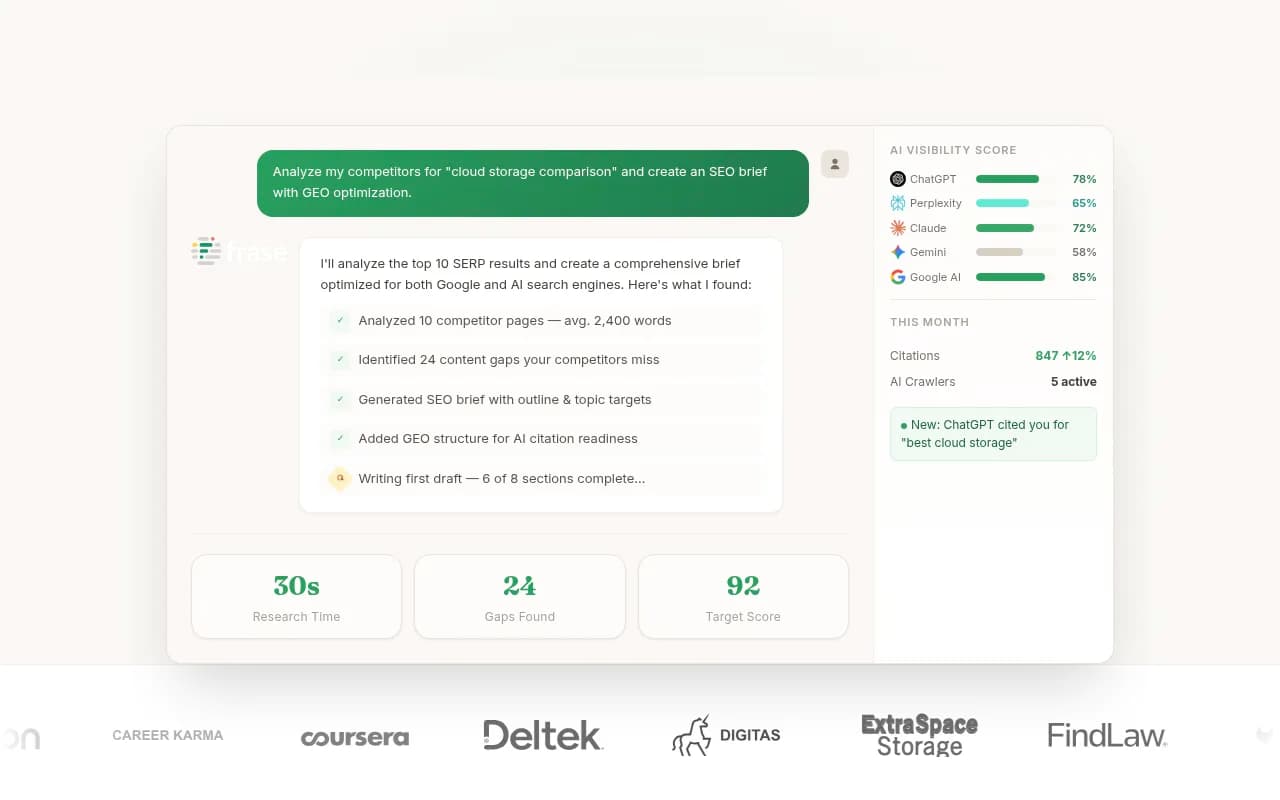
Tools like Frase and Clearscope help with content optimization, but they're working from traditional search data. For fan-out-aware briefs, you want something that's pulling from actual AI retrieval patterns.

Building a fan-out-aware publishing calendar: a practical workflow
Here's how to put this into practice without it becoming a full-time job.
Step 1: Identify your 10-15 highest-value parent prompts
These are the prompts your target customers are most likely to ask AI models. Not keywords -- prompts. "What's the best [category] tool for [use case]?" "How do I [solve problem] without [constraint]?" These are the starting points for fan-out trees.
Step 2: Run those prompts through a fan-out analysis tool quarterly
Fan-out trees change as AI models update their behavior. What the tree looks like in Q1 may be different in Q3. Running the analysis quarterly gives you a current picture of what sub-queries are being generated and which ones carry freshness signals.
Step 3: Map sub-query types to your calendar
Using the framework above, identify which sub-query types are likely to spike for your category and when. Layer that onto a 12-month calendar with appropriate lead times. Your Q4 freshness content should be in production by October. Your pre-budget-cycle comparison content should be live by September.
Step 4: Publish content that covers the full fan-out tree
Each piece of content should address multiple sub-queries from the fan-out tree, not just the head term. This doesn't mean stuffing everything into one page -- it means building a content cluster where the parent page and supporting pages together cover the full retrieval surface.
Step 5: Track which pages get cited and when
This is where most teams drop the ball. Publishing is only half the job. You need to know whether AI models are actually citing your new content, which models are picking it up first, and how long it takes from publish to citation. That feedback loop tells you whether your timing was right and whether your content is covering the right sub-queries.
Platforms with page-level citation tracking and crawler log data let you see exactly when AI crawlers hit your new content and when it moves from crawl to citation. That timeline data is what lets you refine your lead times over time.
Common mistakes when using fan-out data for seasonal planning
A few patterns come up repeatedly when teams first start working with fan-out data.
Treating fan-out trees as keyword lists. Sub-queries from a fan-out tree aren't keywords to target individually. They're signals about what the AI model needs to feel confident answering the parent prompt. The goal is to cover the intent landscape, not to create one page per sub-query.
Ignoring the "complaint" and "limitation" sub-queries. These feel uncomfortable to address, but they appear in almost every commercial fan-out tree. An AI model doing due diligence on a recommendation will look for risk signals. If the only content addressing your product's limitations is from competitors or Reddit threads, that's what gets cited. Publishing honest, balanced content about limitations gives you a chance to own that sub-query.
Publishing too late. The lead time issue is real. AI models need time to crawl, index, and build confidence in new content. A piece published two weeks before a seasonal peak is unlikely to be cited during that peak. Six to eight weeks is a more realistic minimum for content to establish citation credibility.
Re-running fan-out analysis only annually. AI models update their retrieval behavior frequently. A fan-out tree that was accurate in January may look quite different by July. Quarterly re-runs are the minimum to stay current.
Tools worth knowing for fan-out-based seasonal planning
The tooling landscape for this specific use case is still maturing. Here are the categories that matter:
For AI search visibility and prompt intelligence (the core of fan-out analysis):


For content creation once you've identified the sub-query gaps:
For traditional seasonal demand signals to layer alongside fan-out data:

The honest assessment: most tools in this space are monitoring dashboards that show you data but don't help you act on it. The ones worth investing in are the ones that connect the fan-out analysis to content creation and then track whether that content actually gets cited. That full loop -- find the sub-query gaps, create content that covers them, verify the citations -- is what turns fan-out data from an interesting insight into a publishing calendar that actually improves AI visibility.
The bottom line
Query fan-out is already determining which brands appear in AI answers. The seasonal dimension of fan-out -- the way sub-query types shift with buying cycles, year boundaries, and news events -- gives you a timing signal that traditional keyword seasonality tools can't see.
The teams winning in AI search in 2026 aren't just publishing more content. They're publishing the right content, covering the right sub-queries, at the right time in the buying cycle. That requires understanding what sub-queries AI models generate for your category's parent prompts, when those sub-queries spike, and how long it takes for new content to establish citation credibility.
Start with your 10-15 highest-value parent prompts. Map their fan-out trees. Build your calendar around sub-query timing, not keyword volume peaks. Then track whether it's working -- because the feedback loop is what makes the whole system improve over time.