Key takeaways
- Google Analytics tracks clicks from AI referrals but tells you almost nothing about why ChatGPT does or doesn't cite you -- visibility gaps are invisible in standard dashboards
- Most brands are optimizing for the wrong signals: traditional SEO metrics like keyword rankings and bounce rate don't translate to AI citation behavior
- Google Analytics added an "AI Assistant" channel in June 2026, which helps with traffic attribution but still doesn't explain citation gaps or content mismatches
- The 10 mistakes below are structural and content-level problems that require dedicated AI visibility tooling to diagnose properly
- Fixing these mistakes requires a different workflow: find the gaps, create content that answers AI prompts, then track citations -- not just clicks
Google Analytics is a great tool. It's just not built for this problem.
You can see that some traffic came from ChatGPT. You can see the sessions, the bounce rate, maybe a conversion or two. What you can't see is why ChatGPT cited your competitor instead of you for 40 prompts last week. You can't see which pages AI crawlers visited but decided weren't worth quoting. You can't see that your most important product category doesn't appear in a single AI-generated answer.
That's the gap. And most marketing teams are flying blind because they're looking at the wrong instrument panel.
Here are the 10 mistakes that are quietly killing your ChatGPT visibility -- none of which will trigger an alert in Google Analytics.
1. Treating AI referral traffic as the only signal that matters
Google Analytics recently added an "AI Assistant" channel to its default channel grouping. That's genuinely useful for attribution. But it creates a dangerous mental shortcut: if AI traffic is up, things must be going well.
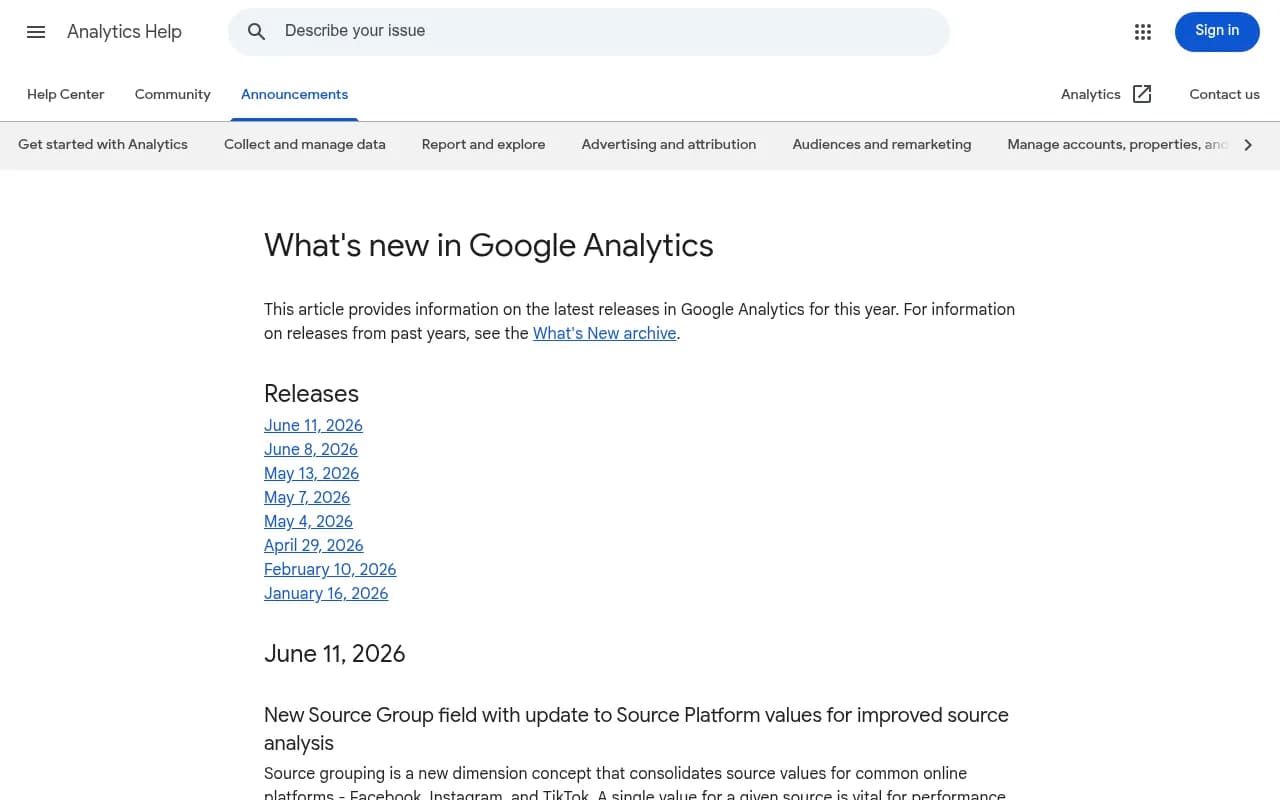
The problem is that AI referral traffic only measures the users who clicked through. ChatGPT often answers questions without sending anyone anywhere. If you're cited in a response but the user gets their answer and moves on, you get zero sessions in GA4 -- but you still got visibility. Conversely, if you're not being cited at all, you also get zero sessions. The metric looks identical in both cases.
Traffic is a downstream effect of citations. Citations are what you actually need to track.
2. Not knowing which prompts your competitors are winning
This is probably the most common and most damaging mistake. Your competitors are being cited in ChatGPT answers to questions your customers are asking right now. You have no idea which ones.
Google Analytics has no concept of "prompts." It doesn't know what question a user typed into ChatGPT before clicking your link (or not clicking it). It can't show you that a competitor ranks in 73% of AI responses for "best [your category] software" while you appear in 12%.
This is the core use case for dedicated AI visibility tools. Promptwatch tracks prompt-level visibility across ChatGPT, Perplexity, Gemini, and nine other AI models, and its Answer Gap Analysis shows you the specific prompts where competitors appear and you don't. That's the starting point for any real GEO strategy.

3. Publishing content that answers questions humans ask Google, not questions humans ask ChatGPT
The way people prompt AI is different from the way they search Google. Google queries tend to be short and fragmented ("best CRM software"). ChatGPT prompts are conversational and specific ("I'm a solo consultant running a services business, what CRM would actually work for me without being overkill?").
Content written for traditional SEO -- optimized for short-tail keywords, structured around search intent buckets -- often doesn't match the conversational, context-heavy prompts that AI models are fielding. ChatGPT pulls from content that directly answers the question as asked, not content that ranks well for a related keyword.
If you haven't audited your content against actual AI prompt patterns, you're probably missing a large chunk of relevant queries entirely.
4. Ignoring AI crawler behavior on your site
When ChatGPT or Perplexity crawls your site, they don't behave like Googlebot. They hit specific pages, sometimes repeatedly, sometimes not at all. They encounter errors. They may crawl a page but never cite it.
Google Analytics doesn't log crawler activity. It only fires when a real user loads a page with JavaScript enabled. So you have no visibility into whether AI crawlers are even reading your content, which pages they're ignoring, or whether they're hitting 404s on your most important pages.
Some platforms now offer AI crawler logs that show exactly which AI agents visited your site, which pages they read, and how often they return. Promptwatch's crawler log feature (available on Professional and Business plans) surfaces this data in real time. Without something like it, you're guessing whether your content is even being considered.
5. Assuming structured data and technical SEO are enough
There's a common assumption that if your technical SEO is solid -- schema markup, fast load times, clean crawlability -- AI models will naturally find and cite your content. This is partly true but mostly incomplete.
AI models don't just index pages. They evaluate whether a page actually answers a question well. A technically perfect page with thin, vague, or overly promotional content will get ignored. A messy page with genuinely useful, specific, authoritative information might get cited regularly.
The mistake is spending all your optimization effort on technical signals while neglecting the substance of what you're saying. ChatGPT doesn't care that your page loads in 1.2 seconds if it doesn't have a clear, direct answer to the question being asked.
6. Not tracking which specific pages are getting cited (vs. just visited)
Even if you know AI traffic is coming from ChatGPT, GA4 won't tell you which of your pages are being cited in AI responses. You might have 200 pages on your site. Three of them are responsible for 90% of your AI citations. The other 197 are invisible.
Without page-level citation tracking, you can't answer basic questions: Which content formats are working? Which topics are getting traction? Which pages should I update to improve citation rates?
This is a blind spot that matters more as AI search grows. Tools like Promptwatch track citations at the page level, showing you exactly which URLs are appearing in AI responses and how often.
7. Missing the offsite citation picture entirely
A significant portion of AI citations don't come from your own website at all. ChatGPT and other models pull from Reddit threads, YouTube videos, third-party review sites, industry publications, and listicles. If your brand is absent from those sources, you're missing a whole channel of AI visibility that GA4 will never show you.
This is especially true for brand-level queries. When someone asks ChatGPT "is [your brand] legit?" or "what do people think of [your brand]?", the answer is built from offsite sources. If Reddit has no threads about you, if you're not in any "best of" listicles, if no YouTubers have reviewed your product -- you're invisible for those prompts regardless of how good your website is.
Tracking offsite citations requires a different approach than website analytics. You need to know which external pages, communities, and platforms are influencing AI answers about your category.
8. Treating AI visibility as a one-time content project
A lot of teams do a GEO audit, publish some new content, and then move on. Three months later, they wonder why their AI visibility hasn't improved.
AI models update their training data and browsing behavior continuously. A competitor publishing a better answer to a prompt you were winning can displace you. A Reddit thread that goes viral can shift how ChatGPT frames your category. Your own content can go stale if it references outdated statistics or product details.
ChatGPT tends to favor content that reflects current thinking. Keeping pages fresh -- updating statistics, adding new perspectives, reflecting recent developments -- matters more than it did in traditional SEO, where a well-ranking page could hold its position for years without updates.
This isn't a one-time project. It's an ongoing cycle.
9. Not knowing your prompt difficulty before investing in content
Not all AI prompts are equally winnable. Some prompts are dominated by massive authoritative sites that have been cited thousands of times. Others are genuinely open -- no one has great content for them yet, and a well-written page could start getting cited quickly.
If you're creating content without any sense of prompt difficulty or competition, you're likely wasting effort on prompts you can't win while ignoring easier wins that could move your visibility numbers fast.
Traditional keyword difficulty scores from SEO tools don't translate to AI visibility. A low-competition keyword might correspond to a prompt that three major publications already own in ChatGPT. You need prompt-specific difficulty data to prioritize intelligently.
10. Confusing Google rankings with AI rankings
This is the most fundamental mistake, and it's getting more common as AI search grows.
A site can rank on page one of Google and be completely absent from ChatGPT responses. The reverse is also true -- Glenn Gabe of GSQi documented a case in 2025 where a YMYL site with essentially no Google visibility was getting substantial ChatGPT traffic. The two systems have different citation logic, different content preferences, and different authority signals.
If your entire visibility strategy is built around Google rankings, you have no idea what's happening in AI search. You might be losing ground in ChatGPT for months before it shows up as a traffic decline in GA4 -- and by then, competitors have built a significant head start.
What to actually do about this
The common thread across all 10 mistakes is the same: Google Analytics measures what happens after someone clicks. AI visibility problems happen before the click, in the citation decision the AI model makes when generating its response.
Fixing this requires a different workflow:
- Track which prompts you're visible for (and which ones you're not)
- Identify the content gaps -- what are competitors saying that you're not?
- Create content that directly answers the prompts you're missing
- Monitor citations at the page level to see what's working
- Repeat
That loop is what separates brands that grow in AI search from brands that just watch their traditional traffic slowly erode.
Tools worth knowing about
For dedicated AI visibility tracking, a few platforms are worth looking at depending on your needs and budget:
Promptwatch covers the full loop -- prompt tracking, answer gap analysis, content generation, crawler logs, and page-level citation tracking across 10+ AI models. It's the most complete option if you want to go beyond monitoring into actual optimization.
If you're looking for more focused tools, Otterly.AI is a solid entry-level monitoring option:

Profound has strong tracking capabilities for enterprise teams:

AthenaHQ is worth considering if you want brand-level AI monitoring:

For tracking AI-driven traffic attribution specifically, LLM Clicks focuses on connecting AI citations to actual clicks:
A comparison of what these tools actually cover
| Tool | Prompt tracking | Content gap analysis | Content generation | Crawler logs | Page-level citations | Offsite tracking |
|---|---|---|---|---|---|---|
| Promptwatch | Yes | Yes | Yes | Yes | Yes | Yes |
| Profound | Yes | Partial | No | No | Partial | No |
| AthenaHQ | Yes | No | No | No | No | No |
| Otterly.AI | Yes | No | No | No | No | No |
| LLM Clicks | Partial | No | No | No | Yes | No |
The gap between monitoring-only tools and optimization platforms is real. If you just want to know where you stand, the lighter tools work fine. If you want to actually move the needle, you need something that goes further.
The bottom line
Google Analytics is not broken. It's just not designed to answer the question "why isn't ChatGPT citing me?" That question requires different data: prompt-level visibility, citation tracking, crawler behavior, content gap analysis, and offsite monitoring.
The brands that figure this out in 2026 will have a meaningful advantage. AI search is still early enough that the gaps are winnable -- but not if you're looking at the wrong dashboard.