Key takeaways
- ChatGPT doesn't rank pages -- it recognizes entities. If AI models don't have a clear, consistent picture of what your brand is, they won't mention it.
- 80% of URLs ChatGPT cites don't rank in Google's top 100, meaning traditional SEO alone won't get you there.
- Entity authority is built through consistent brand signals, structured data, third-party mentions, and content that directly answers the questions AI models are trained on.
- Tracking your AI visibility is as important as building it -- you need to know which prompts you're winning and which you're losing to competitors.
- The full strategy covers: entity definition, schema markup, off-site authority, content structure, and ongoing measurement.
There's a stat that keeps coming up in marketing conversations right now: 80% of the URLs ChatGPT cites don't rank in Google's top 100. Read that again. The brands showing up in AI answers aren't necessarily the ones winning at traditional SEO. They're the ones AI models have learned to trust.
That's a fundamentally different game, and most brands haven't started playing it yet.
AI-referred traffic grew 527% in early 2026. ChatGPT handles over 2.5 billion messages a day, and a growing share of those are "what's the best tool for X" or "who are the leading providers of Y" queries. When a user asks ChatGPT for a recommendation, the AI's top pick becomes the user's top pick 74% of the time. In 88% of AI Mode sessions, users never leave the answer pane to check external sources.
If your brand isn't in the answer, you don't exist for that user.
This guide walks through exactly how to change that -- by building what's called entity authority.
What entity authority actually means
Traditional SEO thinks in keywords. You target a phrase, optimize a page, build links to it, and hope it ranks. AI models don't work that way. They think in entities: distinct, recognizable things with attributes, relationships, and context.
An entity is your brand as a concept. It has a name, a category, a founding date, a set of products or services, a reputation, and relationships to other entities (competitors, founders, industries, use cases). When ChatGPT knows all of that clearly and consistently, it can confidently include your brand in a relevant answer. When it doesn't, it either ignores you or hedges with "I don't have reliable information about that brand."
That second response is a death sentence in AI search.
Entity authority is the degree to which AI models have a clear, consistent, externally validated understanding of who your brand is and what it does. Building it isn't about gaming an algorithm -- it's about making your brand legible to machines that are trying to help users make decisions.
Step 1: Define your entity before anyone else does
The first mistake most brands make is inconsistency. Your website says one thing, your LinkedIn says another, your press releases use a third description. AI models are trying to build a coherent picture of your brand from hundreds of sources. Contradictory signals produce a blurry picture -- or no picture at all.
Start by creating what some practitioners call an "entity bible": a single document that defines your brand's canonical attributes.
This should include:
- Your exact legal and trading name (and how they relate, if different)
- Your founding date and location
- Your primary category and subcategory (e.g., "B2B SaaS / AI search visibility platform")
- A 1-sentence description that you use everywhere, verbatim
- Your core products or services with consistent naming
- Your target audience
- Key people associated with the brand (founders, executives)
- Your relationships to adjacent entities (industries, technologies, competitors)
Once you have this document, use it everywhere. Every page on your site. Every social profile. Every press release. Every guest post bio. Consistency is the signal.
Google's Knowledge Graph contains over 54 billion entities and 1.6 trillion facts. The LLMs trained on web data inherit a version of this graph. When your brand's attributes are consistent across the web, the model can consolidate them into a single, confident entity representation. When they're inconsistent, it can't.
Step 2: Implement schema markup that machines can actually read
Schema markup is the bridge between your content and the knowledge graphs that power AI models. Content with schema is 50% more likely to appear in AI answers, according to Semrush's 2026 structured data research.
The most important schema types for entity authority:
Organization schema is your foundation. It should include your name, URL, logo, founding date, description, social profiles, and contact information. Every site should have this.
Person schema for founders and key executives links real people to your brand entity. AI models trust brands more when they can connect them to verifiable humans with track records.
FAQ schema on your key pages puts your answers directly into a machine-readable format. When ChatGPT's web search mode crawls your site, structured FAQs are easy to extract and cite.
Product and Service schema tells AI models exactly what you offer, at what price points, for whom. This matters especially for ChatGPT Shopping and product recommendation queries.
BreadcrumbList and SiteNavigationElement schema helps AI crawlers understand your site's topical structure -- which pages are authoritative on which subjects.
One practical note: don't just add schema and forget it. AI crawlers return to pages repeatedly. Keep your schema accurate and up to date, especially pricing and availability data.
Step 3: Build off-site mentions from sources AI models trust
Here's the uncomfortable truth about entity authority: you can't build it entirely on your own website. AI models learn about brands primarily from third-party sources -- news articles, review sites, industry directories, Reddit discussions, YouTube videos, and expert roundups.
If the only place your brand is described is your own website, the model has one source. One source isn't enough to build confidence. It's like asking someone to trust a reference that only the applicant provided.
The off-site authority playbook for 2026 looks like this:
Get into the listicles and roundups
"Best [category] tools in 2026" articles are gold for entity authority. When five different publications list your brand in the same category with consistent descriptions, AI models start to see a pattern. That pattern becomes a signal.
Reach out to publications in your space. Offer to be included in roundups. Write guest posts that position you within your category. The goal isn't just traffic from these pieces -- it's the entity signal they create.
Earn mentions in credible news coverage
A mention in a credible industry publication does more for your entity authority than ten blog posts on your own site. Journalists and editors are trusted sources in AI training data. A single well-placed article that describes your brand accurately can do significant work.
PR isn't dead -- it's actually more valuable in the AI era than it was in the keyword era.
Show up in Reddit and YouTube
This one surprises people. Reddit threads and YouTube videos are heavily represented in AI training data and in real-time web search results. When someone asks ChatGPT about tools in your category, it's often pulling from Reddit discussions and YouTube reviews alongside traditional web pages.
Being mentioned positively in relevant subreddits, having your product reviewed on YouTube, and participating authentically in community discussions all contribute to your entity's off-site footprint.
Build your Wikipedia or Wikidata presence
If your brand is large enough to justify a Wikipedia page, get one. Wikipedia is one of the most trusted sources in AI training data. Even a Wikidata entry (which has a lower notability threshold) can help establish your entity in the knowledge graph.
Step 4: Structure your on-site content for extraction
ChatGPT doesn't read your content the way a human does. It's looking for extractable answers -- clear, self-contained responses to specific questions that it can pull into a generated answer without needing the surrounding context.
This means your content structure matters as much as your content quality.
Write answer-first
Lead with the answer, then provide the detail. If someone asks "what is [your brand]?", the first sentence of your About page should answer that question directly. Don't bury the lede in three paragraphs of brand history.
Use question-based headings
Structure your content around the questions your target audience actually asks AI models. "How does [your product] work?" "What's the difference between [your product] and [competitor]?" "Who is [your brand] best for?" These headings signal to AI models that this page answers these specific questions.
Create dedicated topic pages, not just blog posts
A single comprehensive page that covers everything about a topic is more useful to AI models than ten blog posts that each cover a slice. AI models prefer sources that can answer a question completely without requiring the user to visit multiple pages.
Keep your content factually dense and specific
Vague, generic content doesn't get cited. Specific, factual content does. Include numbers, dates, named examples, and concrete claims. AI models cite content that gives users something concrete to act on.
Step 5: Track which prompts you're winning and which you're losing
None of this works if you can't measure it. And measuring AI visibility is genuinely different from measuring traditional search rankings.
You need to know: which prompts is your brand appearing in? Which AI models are citing you? Which competitors are showing up for prompts where you're invisible? Which of your pages are being crawled by AI agents, and which are being cited?
This is where dedicated AI visibility tools become necessary. Promptwatch is built specifically for this -- it tracks your brand across 10 AI models (ChatGPT, Perplexity, Claude, Gemini, Grok, and more), shows you exactly which prompts competitors are visible for that you're not, and helps you generate content to close those gaps.

The measurement framework you want looks like this:
| What to track | Why it matters | How often |
|---|---|---|
| Brand mention rate by AI model | Baseline visibility across models | Weekly |
| Prompt-level citation data | Which specific queries trigger your brand | Weekly |
| Competitor visibility gaps | Prompts where competitors appear but you don't | Weekly |
| Page-level citation tracking | Which pages AI models are actually citing | Monthly |
| AI crawler activity | Which pages AI bots are crawling and how often | Ongoing |
| Off-site citation sources | Which third-party pages are driving AI mentions | Monthly |
Without this data, you're optimizing blind. You might be doing everything right on paper but still losing to a competitor who happened to get mentioned in a high-authority Reddit thread six months ago.
Step 6: Close the content gaps AI models are exposing
Once you're tracking, you'll start to see patterns. There are prompts in your category where AI models consistently recommend competitors but not you. Those gaps are your roadmap.
The reason you're missing from those answers is almost always one of three things:
- You don't have content that addresses that specific topic or question
- Your content exists but isn't structured in a way AI models can extract
- You don't have enough off-site authority for that specific topic
For each gap, the fix is different. A missing topic requires new content. Poor structure requires a rewrite. Thin off-site authority requires a PR or link-building push.
The key is being systematic about it. Don't just publish content randomly and hope AI models notice. Map your content against the prompts you want to rank for, identify what's missing, and fill the gaps with content that's specifically designed to answer those questions.
Tools like Promptwatch's Answer Gap Analysis show you exactly which prompts competitors are visible for that you're not -- down to the specific content your site is missing. That's a much more efficient starting point than guessing.
The comparison: entity authority vs. traditional SEO signals
It's worth being clear about where these two approaches overlap and where they diverge.
| Signal | Traditional SEO | Entity authority / AI search |
|---|---|---|
| Keyword optimization | High importance | Low importance |
| Backlink authority | High importance | Moderate importance |
| Brand mention frequency | Low importance | High importance |
| Schema markup | Moderate importance | High importance |
| Off-site entity consistency | Low importance | High importance |
| Content extractability | Low importance | High importance |
| Reddit/YouTube presence | Irrelevant | Significant |
| Wikipedia/Wikidata | Irrelevant | Significant |
| Page-level E-E-A-T signals | High importance | High importance |
| Technical crawlability | High importance | High importance |
The overlap is real -- E-E-A-T, technical health, and backlink authority still matter. But the weighting is different, and there are entirely new signals (entity consistency, off-site mentions, structured data) that traditional SEO largely ignores.
Tools worth knowing for AI visibility tracking
Beyond Promptwatch, there are several other tools in this space worth being aware of depending on your budget and needs.
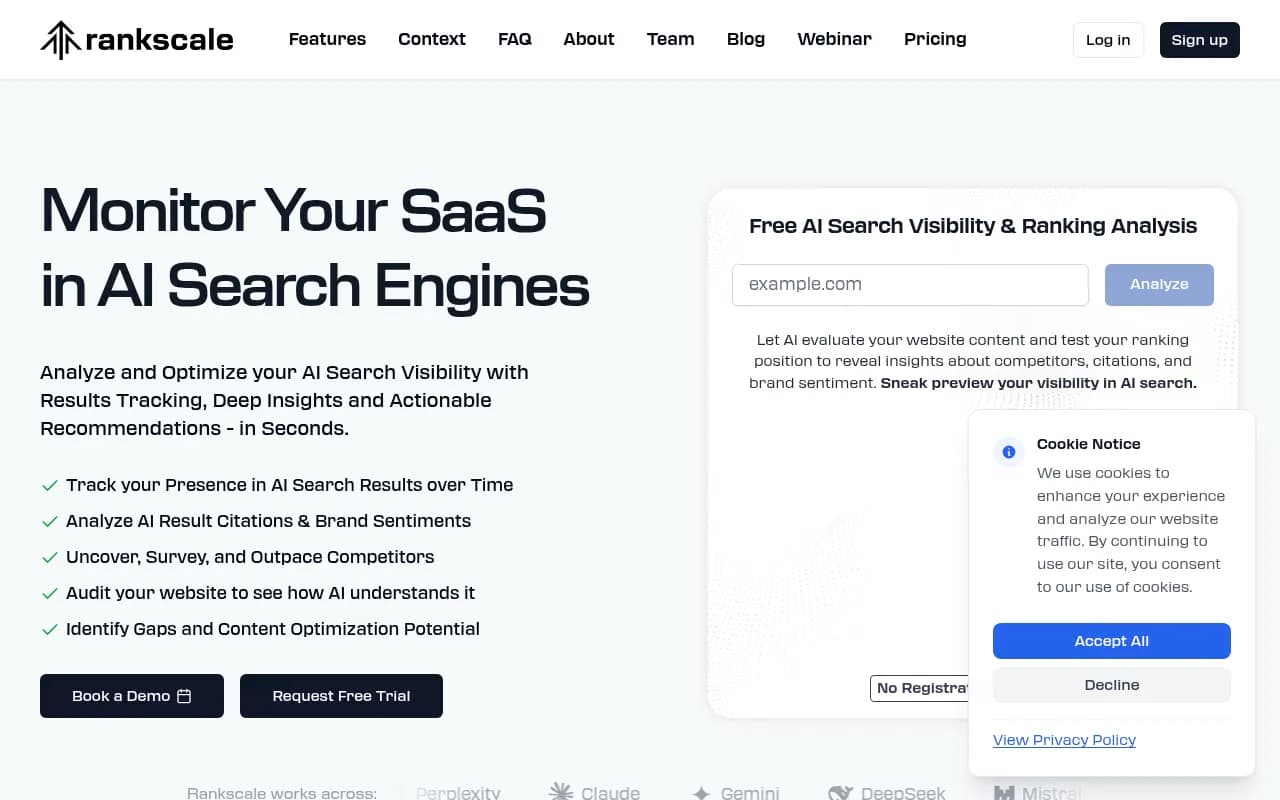
Rankscale tracks AI search rankings across models and gives you visibility scores by prompt category.
Profound is a solid monitoring platform with strong prompt tracking capabilities, particularly for enterprise brands.

Otterly.AI is a more affordable entry point for teams just starting to track AI visibility, though it's primarily monitoring without content optimization.

AthenaHQ offers good monitoring across multiple AI models, useful if you need breadth of coverage.

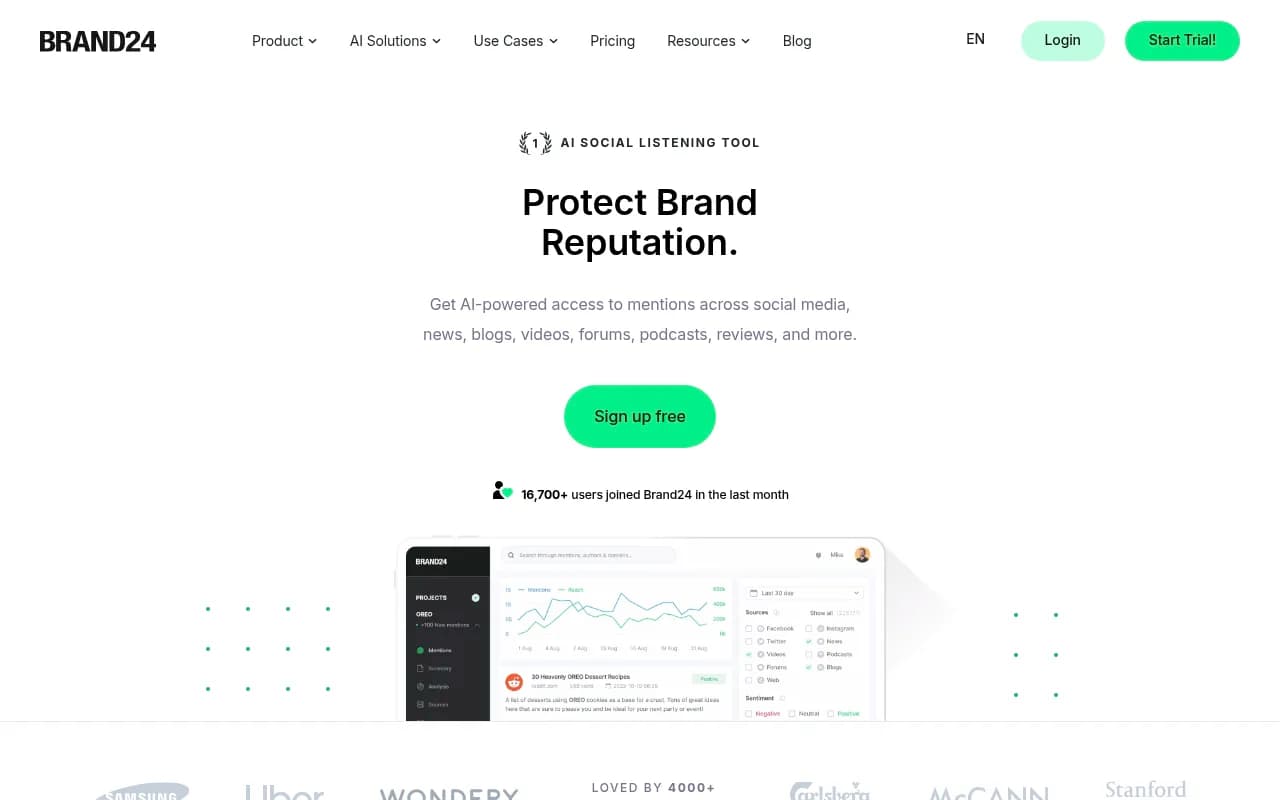
For teams that want to track brand mentions across the broader web (not just AI search), Brand24 covers 25M+ sources and can surface the off-site mentions that feed your entity authority.
What to prioritize if you're starting from zero
If your brand has no AI visibility right now, the order of operations matters. Don't try to do everything at once.
Start with your entity bible and schema markup. These are foundational and relatively quick to implement. Get your Organization schema live, make sure your brand description is consistent everywhere, and add FAQ schema to your most important pages.
Then focus on off-site authority. One well-placed article in a credible industry publication, or a mention in a popular "best tools" roundup, will do more for your entity authority in the short term than any amount of on-site optimization.
Then start tracking. You can't optimize what you can't measure. Get a baseline of where you stand across the AI models your audience uses, identify the biggest gaps, and start filling them systematically.
The brands that will dominate AI search in 2026 and beyond aren't the ones with the most keywords. They're the ones that AI models have learned to trust -- because they've done the work to become legible, consistent, and well-attested entities in the knowledge graph. That work starts now.