Key takeaways
- AI search measurement is fundamentally different from Google rank tracking -- the same prompt can return different results minutes apart, so you need statistical sampling, not one-off checks
- The core metrics that matter are: citation rate, share of model, sentiment in citations, citation position, page-level citation tracking, and traffic attribution from AI referrals
- Most monitoring tools show you data but stop there -- the brands seeing real results are closing the loop between measurement and content creation
- Tracking AI crawler logs (which pages bots actually read, how often, and what errors they hit) is an underused signal that predicts citation changes before they show up in visibility scores
- A 30%+ citation rate on your core prompts is a reasonable target; below 10% on high-intent queries is a problem worth fixing
You ran a prompt in ChatGPT. Your brand showed up. You screenshot it, sent it to your boss, and declared victory.
Then you ran the same prompt an hour later. Different answer. Your brand wasn't there.
This is the central problem with measuring ChatGPT visibility in 2026: the ground moves. Language models are probabilistic by design. Temperature settings, context windows, model updates, and retrieval augmentation all mean that any single query result is closer to a data point than a fact. One screenshot proves almost nothing.
That doesn't mean measurement is impossible. It means you need a different approach than what worked for Google. Here's the framework.
Why traditional rank tracking breaks down for AI search
Google's ranking system, for all its complexity, is deterministic enough that a keyword at position 4 today is probably at position 4 tomorrow. You can screenshot it, track it in a spreadsheet, and build a dashboard around it.
ChatGPT doesn't work that way. The same prompt, same model, same account can return meaningfully different answers across repeated queries. A November 2025 study from Search Engine Journal found that the strongest predictor of ChatGPT citations isn't keyword density or meta tags -- it's referring domains. Sites with 32,000+ referring domains see citation counts nearly double compared to lower-authority sites. That's a signal about authority and trust, not about whether you "optimized" a specific page for a specific phrase.
The implication: you can't measure ChatGPT visibility the way you measure Google rankings. You need to measure it statistically, across repeated queries, across multiple models, and over time.
The six metrics that actually tell you something
1. Citation rate
This is the percentage of times your brand or a specific page gets cited when a relevant prompt is run. If you run a prompt 20 times and your brand appears in 14 of those responses, your citation rate is 70%.
The industry benchmark to aim for on core queries is 30% or higher. Below 10% on high-intent prompts -- the ones where a customer is actively evaluating options -- is a real problem.
Citation rate is the headline metric, but it needs context. A 40% citation rate where your brand is mentioned negatively is worse than a 20% rate with positive framing.
2. Share of model
Share of model (sometimes called share of voice in AI) measures how often your brand appears relative to competitors across a defined prompt set. If you and three competitors are all tracked across 50 prompts, and your brand appears in 18 of them while the next competitor appears in 12, you have a 36% share of model for that prompt set.
This metric matters because absolute citation rate can look fine while you're quietly losing ground to a competitor who's improving faster. Share of model catches that.
3. Sentiment in citations
Not all citations are equal. ChatGPT might mention your brand as an example of what to avoid, or it might describe you in vague, uncommitted language while describing a competitor with specificity and enthusiasm. Tracking the sentiment and framing of citations -- not just whether they appear -- gives you a much clearer picture of how AI models actually perceive your brand.
This is harder to automate than a simple mention count, but it's worth doing manually on a sample basis each month.
4. Citation position
Where in the response does your brand appear? First mention in a list of recommendations carries more weight than a brief mention in a caveat paragraph. Some platforms track this automatically; others require you to log it manually.
5. Page-level citation tracking
Which specific pages on your site are being cited? This is where measurement connects to action. If ChatGPT consistently cites your pricing page but never your comparison guide, that tells you something about what content AI models find useful -- and where you should invest next.
Page-level tracking also reveals dead weight: pages you've invested in that AI models simply never touch.
6. AI traffic attribution
This is the metric most teams ignore, and it's the one that connects everything to revenue. LLM referral traffic (sessions arriving from ChatGPT, Perplexity, Claude, etc.) converts at roughly 4.4x the rate of traditional organic traffic, according to data from Superlines. That's not a small difference.
If you're not tracking AI referral traffic separately in your analytics, you're flying blind on ROI. Set up UTM parameters or use a platform that handles attribution automatically.
The non-determinism problem: how to measure something that keeps changing
Here's the honest version of how to handle AI's variability:
Run each prompt multiple times. A minimum of 10 runs per prompt per measurement period is a reasonable floor; 20-30 gives you more statistical confidence. Average the results. Track the average over time, not individual snapshots.
This means your "citation rate" for a given prompt is always a distribution, not a number. Your brand appeared in 14 out of 20 runs this week, and 11 out of 20 last week. That's a real signal. Your brand appeared once this week and once last week -- that's noise.
The practical implication: manual tracking in a spreadsheet is workable for a handful of prompts, but it becomes unsustainable fast. Most teams tracking more than 20-30 prompts need a dedicated tool.
Building your prompt set
Before you can track anything, you need to decide what to track. This is where most teams make their first mistake: they pick prompts that are too broad or too obviously branded.
A prompt like "what is [your brand]?" will almost always return a mention. It tells you nothing about whether you're winning in the moments that matter -- when someone is evaluating options, comparing products, or asking for a recommendation.
Build your prompt set around:
- Comparison queries ("best [category] tools for [use case]")
- Recommendation queries ("what should I use for [problem]?")
- Evaluation queries ("is [your brand] good for [specific need]?")
- Problem-first queries (describing a pain point without naming any brand)
Aim for 30-50 prompts that represent real customer intent. Weight them by importance -- a prompt that maps to high-value purchase decisions deserves more attention than one that maps to casual curiosity.
Tracking AI crawler activity: the leading indicator most teams miss
Citation rates are a lagging indicator. By the time your citation rate improves, the underlying cause happened weeks earlier. The leading indicator is AI crawler activity on your site.
When ChatGPT, Perplexity, or Claude crawl your pages, they're building the knowledge base that informs future citations. If their crawlers are hitting your site frequently, reading your pages without errors, and returning to check for updates -- that's a strong signal that citations are likely to follow.
Conversely, if crawlers are hitting your site and encountering 404s, slow load times, or content they can't parse, your citation rate will suffer even if your content is excellent.
AI crawler logs show you:
- Which pages AI bots are reading
- How often they return
- What errors they're encountering
- The timeline from crawl to citation
This is one of the more technically sophisticated things to track, and most basic monitoring tools don't offer it. Promptwatch is one of the few platforms that surfaces real-time AI crawler logs alongside citation data, which lets you connect crawl behavior to visibility changes.

The measurement stack: what you actually need
For small teams or early-stage tracking
A manual approach works if you're disciplined about it. Pick 15-20 prompts, run each one 10 times per week across ChatGPT and one other model (Perplexity is a good second choice), log the results in a spreadsheet, and calculate citation rates. Add a column for sentiment (positive / neutral / negative / not mentioned).
This takes about 2-3 hours per week and gives you a real baseline. It's not scalable, but it's honest.
For tracking AI referral traffic, Google Analytics 4 can segment by referrer. Set up a custom segment for known AI referral sources (chat.openai.com, perplexity.ai, claude.ai, etc.).
For teams tracking 30+ prompts or multiple competitors
Manual tracking breaks down here. The volume of queries needed for statistical reliability becomes unmanageable, and competitor comparison requires running the same prompts for multiple brands simultaneously.
This is where dedicated platforms earn their cost. The market has expanded significantly -- here are some of the tools worth knowing:



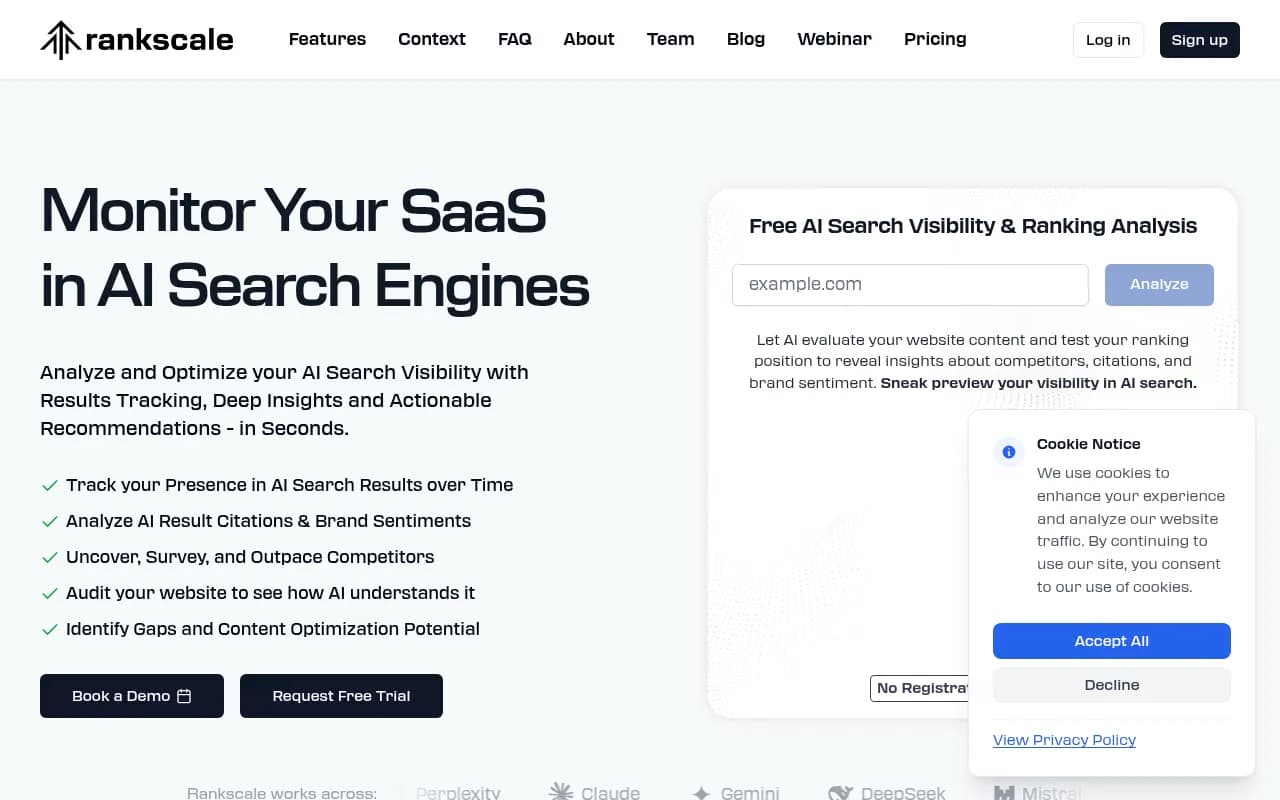
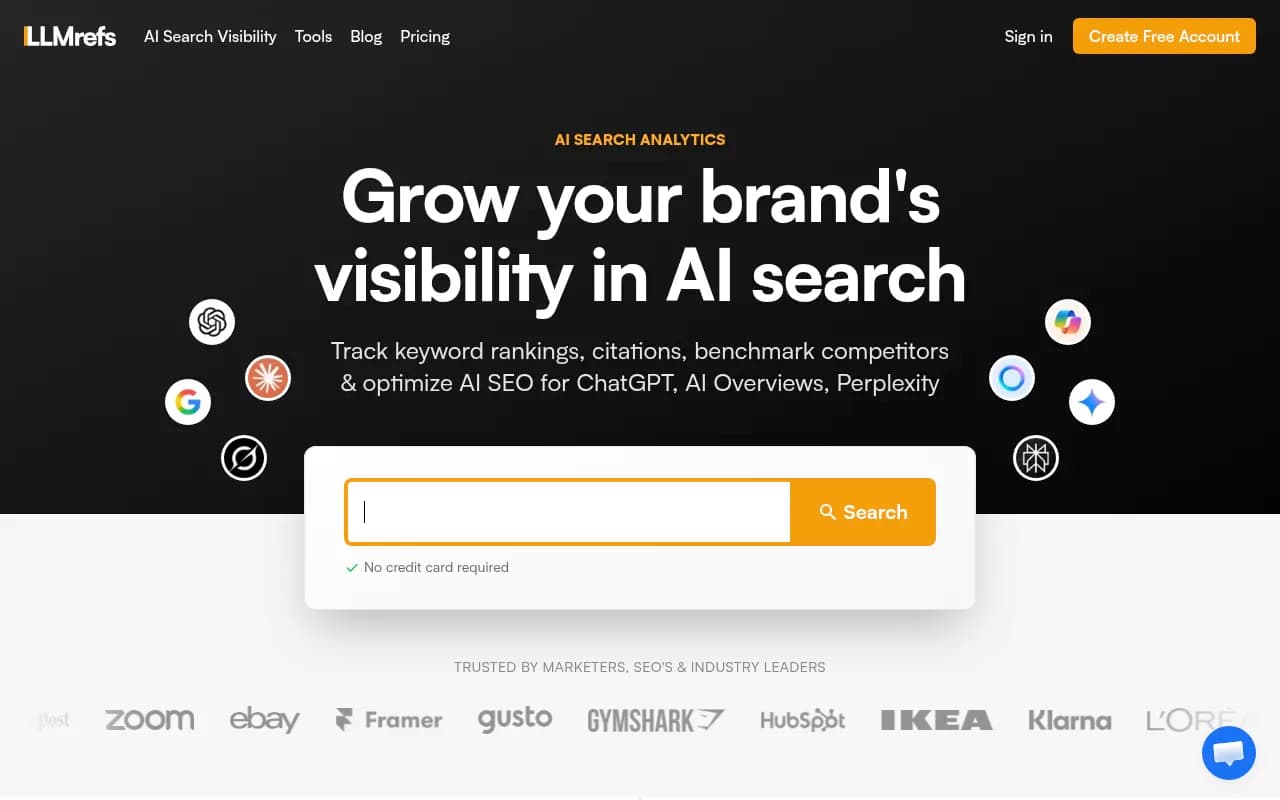
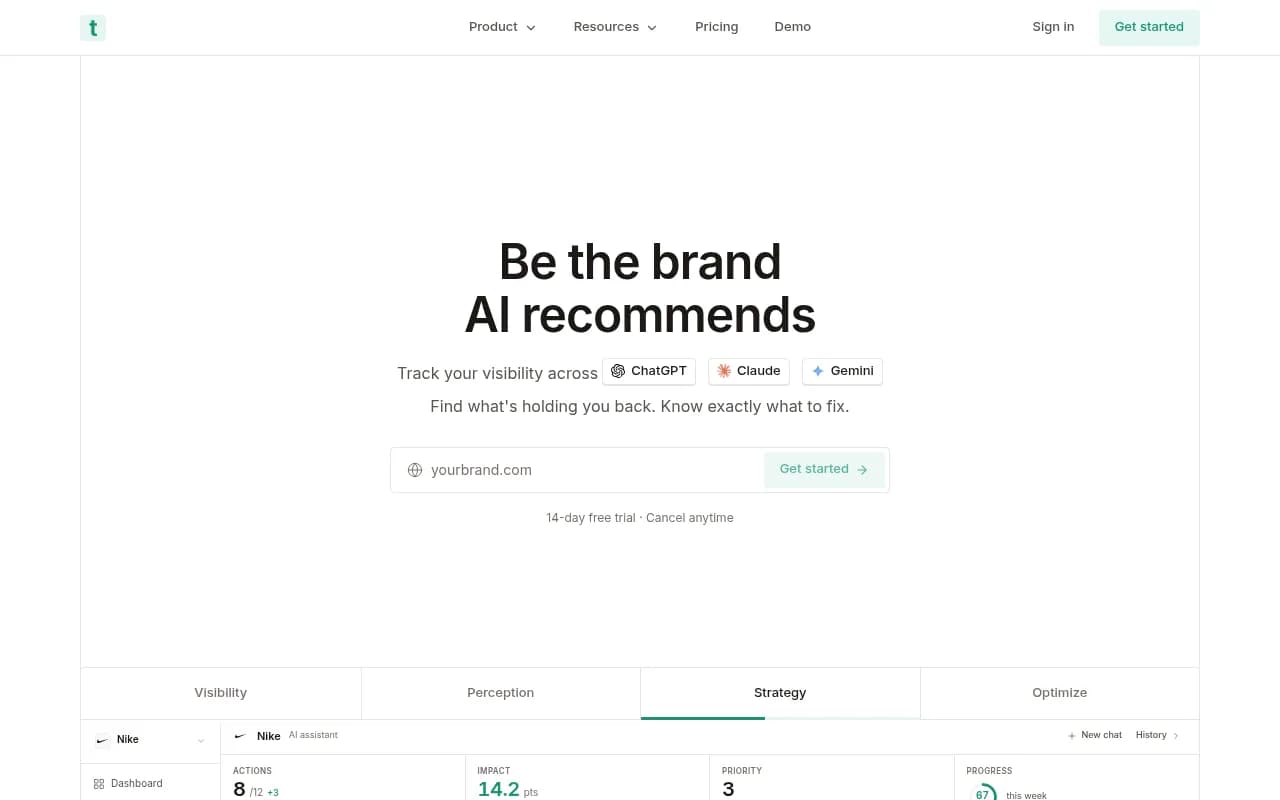
The honest comparison: most of these tools are monitoring dashboards. They show you citation rates, share of model, and sentiment trends. That's genuinely useful. But they stop at the data -- they don't help you figure out what to do about it.
The gap between "your citation rate dropped" and "here's the content you need to create to fix it" is where most teams get stuck.
Connecting measurement to action: the part most guides skip
Measurement without action is just expensive reporting. The reason to track ChatGPT visibility is to improve it -- and that requires closing the loop between what the data shows and what you do next.
The workflow that actually works looks like this:
- Your citation rate drops on a cluster of prompts related to a specific use case
- You investigate which competitor is now appearing in those responses
- You identify what content that competitor has that you don't (or what they've published recently)
- You create content that directly addresses the gap
- You track whether AI crawlers pick up the new content and whether citation rates recover
Step 3 is the hard part. It requires analyzing AI responses at scale -- not just whether you appear, but what the response says, what sources it cites, and what topics it covers that your site doesn't address.
This is what's sometimes called answer gap analysis: mapping the space between what AI models say about your category and what your site actually covers. The gaps are your content roadmap.
Platforms that go beyond monitoring to help with this step are worth paying more for. Promptwatch's Answer Gap Analysis, for instance, shows you the specific prompts where competitors are cited but you're not -- and its Content Agents can generate articles and briefs grounded in that gap data. Most monitoring-only tools leave you to figure that part out yourself.
A practical measurement cadence
Here's a cadence that works for most marketing teams:
Weekly:
- Pull citation rates for your core prompt set
- Check AI referral traffic in analytics
- Flag any prompts where citation rate dropped more than 10 percentage points
Monthly:
- Calculate share of model across your full competitor set
- Review sentiment trends -- are citations becoming more or less favorable?
- Audit page-level citation data -- which pages are being cited, which aren't?
- Check AI crawler logs for errors or crawl frequency changes
Quarterly:
- Reassess your prompt set -- are these still the right queries to track?
- Run a full answer gap analysis against top competitors
- Connect citation trends to revenue data -- is AI referral traffic growing? Converting?
- Decide what content to create or update based on the gaps
Comparison: measurement approaches by team size and maturity
| Approach | Prompts tracked | Time investment | Cost | Best for |
|---|---|---|---|---|
| Manual spreadsheet | 10-20 | 2-3 hrs/week | Free | Early-stage, budget-constrained |
| Basic monitoring tool | 50-150 | 30 min/week | $50-150/mo | Teams wanting automated data |
| Full GEO platform | 150-500+ | 1 hr/week | $150-600/mo | Teams connecting data to content action |
| Enterprise platform | Unlimited | Varies | Custom | Large brands, agencies, multi-site |
The average AI visibility tool costs around $337/month according to Rankability's market analysis. That's a wide range -- some tools start at $50/month for basic monitoring, while enterprise platforms run into the thousands. The question isn't just price; it's whether the platform helps you act on the data or just shows it to you.
The metrics that don't matter (or matter less than people think)
A few things that get tracked obsessively but are less useful than they appear:
Individual prompt screenshots. One screenshot of your brand appearing in ChatGPT proves nothing. It's a single data point from a probabilistic system. Treat it as anecdote, not evidence.
Total mention count without context. Being mentioned 200 times across AI responses sounds impressive until you realize 150 of those mentions are negative comparisons or caveats.
Ranking position as a stable metric. Unlike Google's blue links, there's no fixed "position 1" in an AI response. The concept of ranking position in AI search is useful as a rough proxy (first mention vs. buried mention) but shouldn't be treated with the same precision as traditional rank tracking.
Vanity prompts. Tracking "what is [your brand]?" will almost always return a positive result. It tells you nothing about competitive visibility.
What good measurement actually looks like
Good measurement in 2026 looks like this: you have a defined prompt set of 40-80 queries that map to real customer intent. You track citation rate, share of model, and sentiment across those prompts weekly. You know which pages on your site are being cited and which aren't. You have AI referral traffic segmented in your analytics and you're watching it grow. And when citation rates drop, you have a process for diagnosing why and creating content to fix it.
That's not a complicated system. But it requires consistency and the right tools -- and it requires treating measurement as the beginning of a workflow, not the end of one.
The brands winning in AI search right now aren't the ones with the fanciest dashboards. They're the ones who look at the data, identify the gaps, publish content that fills them, and then check whether it worked. Repeat.
That loop -- measure, identify, create, verify -- is the whole game.