Key takeaways
- Most AI visibility tools track mentions and citations but don't explain why AI models trust some sources over others -- that's the gap that matters most in 2026.
- Trust signals in AI search fall into three main categories: identity and entity consistency, content evidence and depth, and technical health (crawlability, structured data, schema).
- The platforms that go beyond monitoring -- surfacing which signals are weak, which competitors have stronger authority, and what content to create -- are the ones worth paying for.
- A full trust-and-authority workflow requires: prompt tracking, citation source analysis, crawler log visibility, content gap analysis, and offsite mention tracking. Few tools cover all five.
- Promptwatch is one of the few platforms that connects all five steps into a single workflow, from finding gaps to generating content to tracking whether AI models start citing you.
Here's something that frustrates almost every marketing team that starts tracking AI visibility: they can see that a competitor is being cited by ChatGPT or Perplexity, but the tool they're using can't tell them why. Is it because the competitor has better content? More backlinks? A stronger Wikipedia presence? More Reddit mentions? The tool just shows a number and leaves you guessing.
That gap -- between knowing you're invisible and understanding what's making you invisible -- is exactly what separates useful AI visibility platforms from expensive dashboards.
This guide focuses specifically on trust and authority signals: what they are, how AI models use them, and which platforms actually surface them in a way that lets you act.
What trust signals actually mean in AI search
When an AI model like ChatGPT or Perplexity generates an answer, it's not running a real-time Google search and picking the top result. It's drawing on training data, retrieval-augmented sources, and a set of implicit judgments about which sources are credible enough to cite.
Those judgments are shaped by signals that look a lot like traditional SEO authority -- but with some important differences.
The three categories of AI trust signals
Semrush's 2026 audit guide breaks AI trust signals into three clusters, which is a useful frame:
Identity and entity consistency -- Does your brand appear consistently across the web? Is your organization verifiable? Do your About page, LinkedIn, Wikipedia entry (if you have one), and structured data all agree on who you are and what you do? AI models are much more likely to cite brands that have a clear, consistent entity footprint.
Content evidence and depth -- Do you actually answer the questions AI models are being asked? This means having specific, detailed content on the topics where you want to be cited -- not thin pages, not keyword-stuffed articles, but genuine answers. AI models reward specificity. A 200-word FAQ answer rarely gets cited; a 1,500-word guide that actually explains something often does.
Technical health -- Can AI crawlers read your content? Is your structured data correct? Are your pages returning errors? This is often overlooked, but if an AI crawler hits a 403 or a JavaScript wall, it simply moves on to a competitor's page.
The tricky part is that most AI visibility tools only show you the output -- your citation count, your share of voice -- without showing you which of these three signal categories is letting you down.
The platforms worth knowing about
There's a wide range of tools in this space, from basic mention trackers to full GEO workflow platforms. Here's how they break down by what they actually surface about trust and authority.
Full-workflow platforms (monitoring + diagnosis + action)
These are the platforms that don't just show you data but help you understand why you're invisible and what to do about it.
Promptwatch is the most complete option here. It tracks AI responses across 10 models (ChatGPT, Perplexity, Claude, Gemini, Grok, DeepSeek, Copilot, Meta AI, Google AI Overviews, and Google AI Mode), but what makes it different is the action loop it's built around. Answer Gap Analysis shows you exactly which prompts competitors are being cited for that you're not -- and crucially, it shows you the specific content your site is missing. Then Content Agents generate articles, comparisons, and briefs grounded in that gap data. Then page-level tracking shows whether the new content is getting crawled and cited. The AI Crawler Logs feature is particularly relevant for trust signals: you can see which pages AI crawlers are hitting, which ones they're bouncing from, and when a page moves from "crawled" to "cited." That's the kind of diagnostic data that actually tells you something about why you're trusted or not.

Profound is another strong option, particularly for enterprise teams. It has solid prompt tracking and competitor comparison features, and it covers multiple AI models. The trust signal visibility isn't as granular as Promptwatch's crawler logs, but it's a capable platform for teams that need structured reporting.

Scrunch AI focuses on AI search monitoring with a clean interface and good competitor heatmap features. It's worth looking at if you want a clear visual comparison of where you stand vs competitors across different AI models.
Monitoring-focused platforms
These tools are good at showing you what's happening but don't go deep on why or what to do next.
Otterly.AI is one of the more affordable options for basic AI mention tracking. It covers the main AI models and gives you share-of-voice data. If you're just starting out and need to establish a baseline, it's a reasonable starting point -- but you'll hit its limits quickly once you want to understand trust signals.

Peec AI has strong multi-language support, which matters if you're tracking AI visibility across different markets. It's solid for monitoring but doesn't have content generation or crawler log features.

AthenaHQ covers 8+ AI search engines and has a clean dashboard. It's monitoring-focused, which means it's good for reporting but doesn't help you diagnose or fix trust signal gaps.

Rankscale takes an interesting angle -- it focuses on "referenceability," which is essentially asking whether AI systems can confidently use your content at all. That framing is closer to trust signal analysis than most monitoring tools get.
Brandlight tracks AI-powered brand visibility with a focus on sentiment and how AI models describe your brand, not just whether they mention you. Sentiment is an underrated trust signal -- if AI models are describing you in vague or qualified terms, that's worth knowing.
SE Ranking has added an AI visibility toolkit to its existing SEO platform. If you're already using SE Ranking for traditional SEO, the AI visibility features are a reasonable addition without switching tools entirely.
Semrush has built out AI visibility tracking as part of its broader platform. The trust signal audit guide they published is genuinely useful (linked in the research above), and their AI toolkit covers identity signals, content gaps, and technical health. The limitation is that Semrush uses fixed prompts rather than custom prompt tracking, so you're working with their prompt set rather than the actual questions your customers are asking.
Ahrefs Brand Radar is Ahrefs' entry into AI visibility tracking. It's useful if you're already in the Ahrefs ecosystem, but like Semrush, it uses fixed prompts and doesn't have AI traffic attribution.
Specialist and niche tools
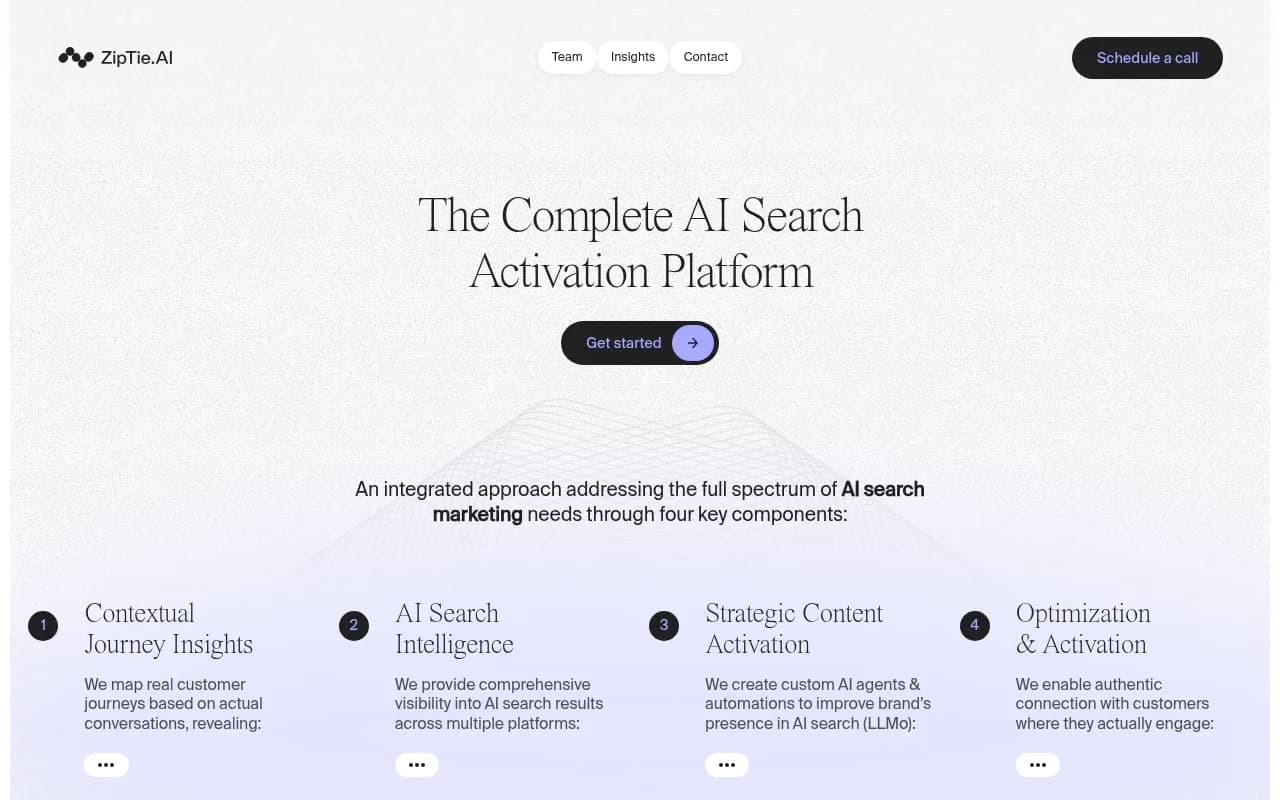
ZipTie focuses on deep analysis for AI search visibility -- it's worth looking at if you want more diagnostic depth than basic monitoring tools provide.
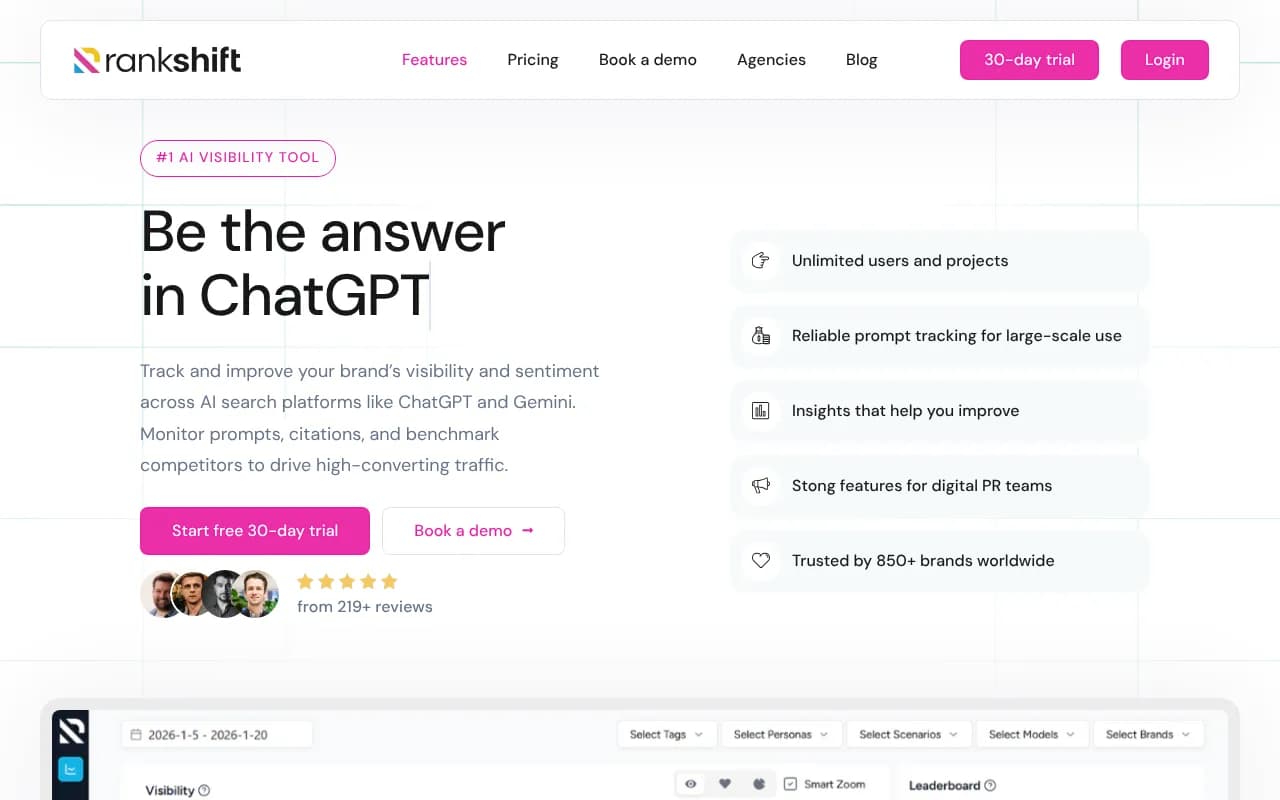
Rankshift is an LLM tracking tool with a GEO focus. Good for teams that want to track how their content is being used across different language models.
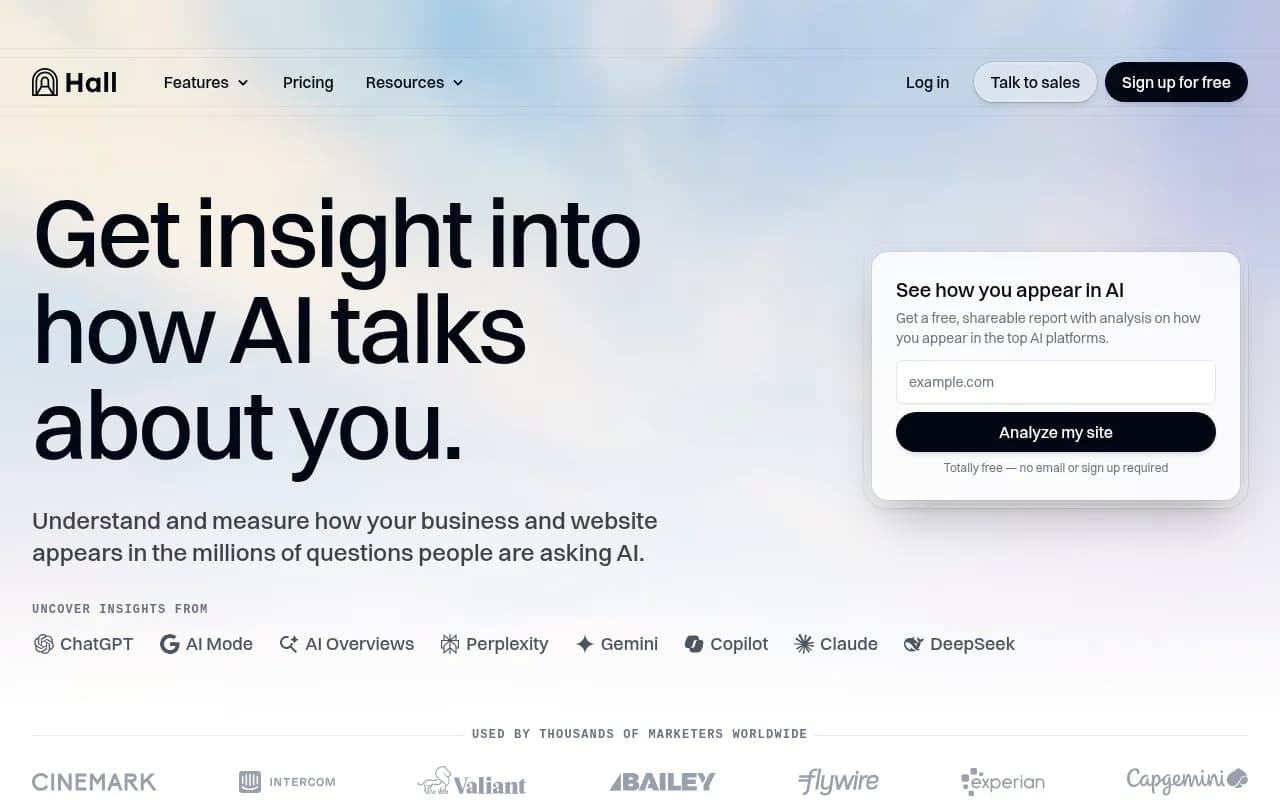
Hall AI specifically tracks how AI platforms cite and talk about your brand -- the "talk about" part is relevant for trust signals, since the framing and context of citations tells you something about perceived authority.
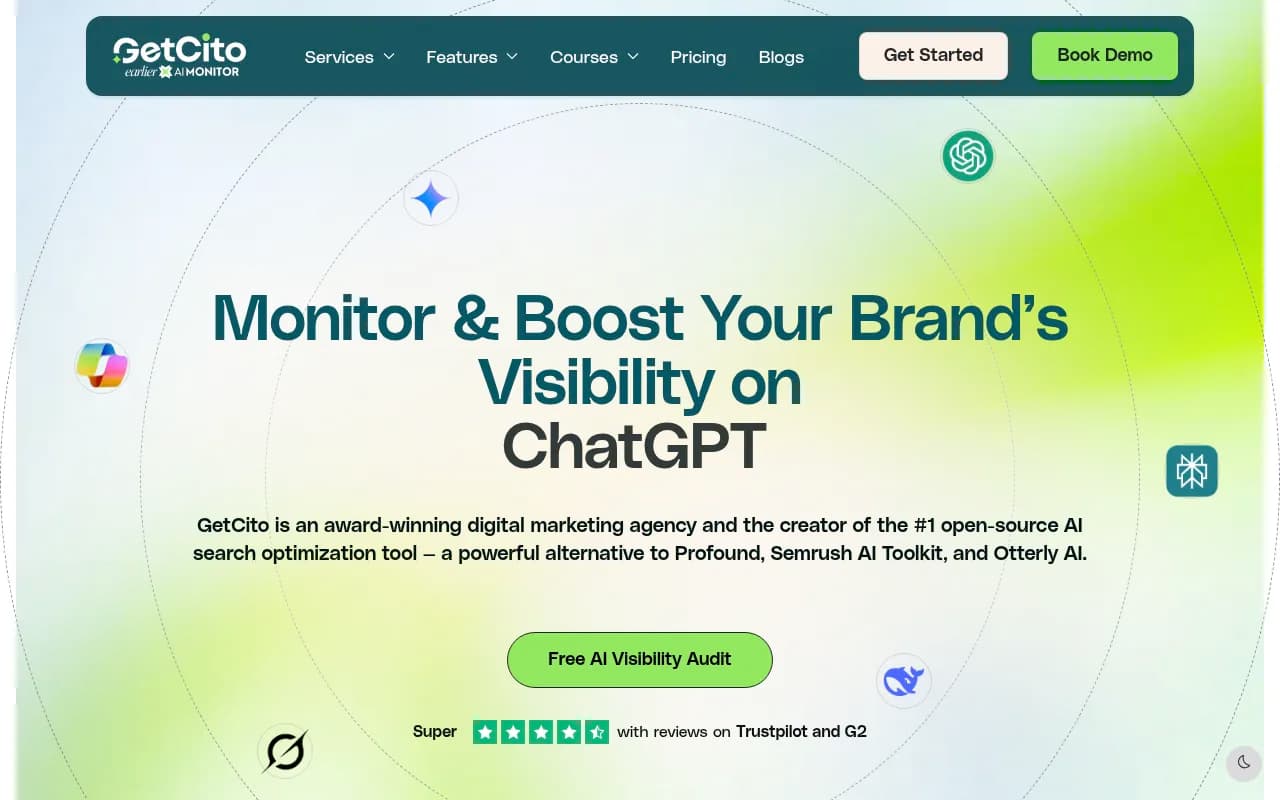
GetCito covers AI visibility tracking and optimization, with a focus on citation analysis.
LLMrefs tracks brand visibility across ChatGPT, Perplexity, and other models with a focus on citation patterns.
Feature comparison: what each platform type actually shows you
| Capability | Full-workflow (e.g. Promptwatch) | Mid-tier (e.g. Profound, Scrunch AI) | Monitoring-only (e.g. Otterly, Peec AI) |
|---|---|---|---|
| Citation tracking | Yes | Yes | Yes |
| Share of voice | Yes | Yes | Yes |
| Competitor gap analysis | Yes | Partial | Limited |
| Prompt volume / difficulty | Yes | Partial | No |
| AI crawler logs | Yes | No | No |
| Content gap analysis | Yes | Partial | No |
| Content generation | Yes | No | No |
| Offsite citation tracking | Yes | Partial | No |
| Reddit / YouTube insights | Yes | No | No |
| Traffic attribution | Yes | Partial | No |
| Multi-model coverage | 10 models | 5-8 models | 3-5 models |
| Trust signal diagnosis | Deep | Surface | Minimal |
The pattern is clear: the further right you go in that table, the more you're paying for a dashboard rather than a workflow.
What a trust signal audit actually looks like in practice
Let's say you're a B2B SaaS company and ChatGPT isn't citing you in responses about your category, even though you've been in the market for five years. Here's what a trust signal audit would actually involve:
Step 1: Check entity consistency
Search for your brand name across the web. Does your Wikipedia page (if you have one) match your About page? Does your LinkedIn description match your schema markup? Are there conflicting descriptions of what you do? AI models build entity graphs, and inconsistency creates uncertainty. Fix the inconsistencies first.
Step 2: Audit your content against actual prompts
This is where most teams underinvest. You need to know the specific prompts people are using when they ask AI models about your category -- not keyword research, but actual prompt patterns. Tools like Promptwatch surface prompt volumes and query fan-outs (how one prompt branches into sub-queries), which tells you exactly what content you need to create. If ChatGPT is being asked "what's the best [category] tool for [use case]" and you have no content that directly addresses that use case, you won't get cited.
Step 3: Check your technical crawlability
AI crawlers behave differently from Googlebot. Some are blocked by robots.txt rules that were never meant to block them. Some hit JavaScript rendering issues. Promptwatch's crawler logs show you exactly which pages AI crawlers are visiting, which ones they're skipping, and what errors they're encountering. Most other tools don't have this data at all.
Step 4: Analyze your citation sources
Which external pages, Reddit threads, YouTube videos, and third-party sites are AI models citing when they talk about your category? If your competitors are being cited because they're mentioned in a widely-cited industry report and you're not, that's an offsite authority gap -- and it's fixable. You can reach out to the report authors, contribute to the Reddit threads, or get featured in the listicles that AI models are pulling from.
Step 5: Track changes over time
Trust signals don't change overnight. You need to track whether your citation rate improves after you publish new content, fix technical issues, or build new offsite mentions. Page-level tracking in Promptwatch shows the timeline from publish to crawl to citation, which is the feedback loop you need to know whether your actions are working.
The offsite authority problem most teams ignore
Here's something that doesn't get enough attention: a significant portion of AI trust signals come from outside your website.
When Perplexity cites a source, it's often citing a third-party review, a Reddit thread, a YouTube video, or an industry publication -- not your own website. If those external sources don't mention you, or mention you negatively, that affects your AI visibility regardless of how good your own content is.
This is why offsite citation analysis matters. You need to know:
- Which third-party pages are AI models citing in your category?
- Are you mentioned on those pages?
- If not, how do you get there?
Most monitoring-only tools don't track this. Platforms like Promptwatch surface offsite citations -- Reddit posts, YouTube videos, external domains -- that are driving AI visibility for your competitors. That's the data that tells you where to invest in PR, content partnerships, and community engagement.
Pricing reality check
The price range in this space is wide.
Basic monitoring tools like Otterly.AI start around $19-49/month. Mid-tier platforms like Peec AI and AthenaHQ typically run $100-300/month. Full-workflow platforms like Promptwatch start at $99/month for the Essential plan (1 site, 50 prompts, 5 articles) and go to $249/month for Professional (2 sites, 150 prompts, 15 articles, crawler logs) and $579/month for Business (5 sites, 350 prompts, 30 articles).
The question isn't which tool is cheapest -- it's which tool gives you enough information to actually improve your AI visibility. A $49/month tool that shows you a citation count but can't tell you why you're not being cited isn't saving you money; it's just giving you less useful data.
How to choose the right platform for your situation
The right tool depends on what stage you're at:
If you're just starting out and need a baseline, a monitoring-only tool is fine. Otterly.AI or Peec AI will tell you where you stand without a big investment.
If you're past the baseline stage and want to understand why competitors are outranking you in AI responses, you need a platform with competitor gap analysis, prompt intelligence, and some form of content guidance. Profound or Scrunch AI get you partway there.
If you want a complete workflow -- find gaps, create content, track results -- Promptwatch is the most complete option available. The crawler logs alone are worth it for teams that are serious about diagnosing trust signal issues, because they show you exactly what AI models can and can't see on your site.
For enterprise teams with existing SEO infrastructure, Semrush's AI toolkit is a reasonable addition if you're already paying for the platform. Just know that the fixed-prompt limitation means you're not tracking the actual prompts your customers use.
The bottom line
AI search trust signals are real, they're measurable, and they're actionable -- but only if you're using a tool that surfaces them. Citation counts tell you where you are. Trust signal analysis tells you why you're there and what to change.
The platforms that are worth the investment in 2026 are the ones that close the loop: they show you the gap, help you create content that fills it, and track whether AI models start citing you as a result. That's a workflow, not just a dashboard.