Key takeaways
- Scrunch AI has been repositioning toward enterprise-only customers, leaving smaller teams and agencies without a clear path forward on their platform.
- The core gap users report isn't just pricing -- it's that Scrunch shows you where you're invisible in AI search but doesn't help you fix it.
- Several strong alternatives exist across different price points, from budget-friendly monitoring tools to full optimization platforms.
- If you're migrating, the most important thing to preserve is your prompt list, historical visibility data, and any competitor benchmarks you've built up.
- Promptwatch is worth serious consideration if you want a platform that goes beyond tracking into actual content optimization and gap analysis.
What's actually happening with Scrunch AI
Scrunch AI built a real reputation as one of the early movers in AI search visibility tracking. Multi-engine coverage across 10+ platforms including DeepSeek and Grok, solid prompt monitoring, citation tracking -- for a while it was one of the more complete options in a market that was still figuring itself out.
But the platform has been quietly repositioning. Pricing has escalated, team seats cost $25/user on top of base plans, and the roadmap has tilted toward enterprise features that smaller marketing teams and agencies don't need -- or can't afford. Users on r/SEO have noted that Scrunch "provides prompt and citation tracking but doesn't share prompt volume data," and the prompt trend feature is "too basic to be actionable."
The result: if you're not running a $1M+ marketing budget, Scrunch is increasingly not built for you. Some non-enterprise customers are being pushed toward plans that don't make financial sense for their scale, and others are simply finding the platform's limitations more painful as the GEO space matures.
This isn't a sudden shutdown in the traditional sense -- there's no single "we're closing" announcement. It's more of a slow squeeze: pricing goes up, features stay flat, and the product roadmap makes clear that smaller customers aren't the priority.
What you lose when you leave Scrunch
Before migrating, it's worth being honest about what Scrunch actually does well, so you know what to look for in a replacement.
Prompt monitoring across multiple AI engines. Scrunch tracks how AI models respond to specific prompts and whether your brand appears. This is the core feature. Any replacement needs to do this at minimum.
Citation tracking. Knowing which sources AI models are citing in their responses -- not just whether you appear -- is genuinely useful for understanding why competitors outrank you.
Multi-engine coverage. Scrunch covers a wide range of AI platforms. Some cheaper alternatives only track ChatGPT and Perplexity, which misses a lot.
Historical data. This is the painful one. If you've been tracking prompts for 6-12 months, you've built a baseline. Most platforms won't import Scrunch data, so you'll be starting from zero on trend analysis.
What you won't lose: Scrunch's optimization capabilities, because it doesn't really have them. The platform tells you where you're invisible but doesn't help you become visible. That's the gap that's driven most of the alternative searches.
The migration timeline: what to do before you lose access
Whether you're being pushed off a non-enterprise plan or proactively switching, here's a practical sequence:
1. Export everything you can (do this first)
Before your access changes, export:
- Your full prompt list (you spent time building this -- don't lose it)
- Any historical visibility scores or trend data
- Competitor benchmarks and share-of-voice snapshots
- Citation reports, especially if you've identified specific pages being cited
Most platforms export to CSV. Even if a new tool can't import it directly, having the raw data means you can manually recreate your prompt tracking setup faster.
2. Identify your actual use case
The GEO tool market has fragmented into roughly three categories, and you need to know which one you're actually in:
- Monitoring only: You want to track AI visibility scores and get alerts when things change
- Monitoring + competitive intelligence: You want to know what competitors are doing and why they're winning
- Full optimization: You want to find gaps, create content to fill them, and track whether it works
Scrunch sits in category two, with some category one limitations. If you're moving, this is a good moment to decide whether you want to stay in that lane or upgrade to something that actually helps you take action.
3. Run a parallel period if budget allows
If you can afford 30-60 days of overlap, run your new platform alongside Scrunch before canceling. This lets you validate that the new tool is tracking the same prompts correctly and gives you a clean handoff on historical context.
4. Rebuild your prompt library
Your prompt list is your most valuable asset from any AI visibility tool. Recreate it in your new platform as the first priority. Group prompts by intent (informational, comparison, transactional) and by competitor relevance.
The best alternatives to Scrunch AI in 2026
The market has matured significantly. Here's an honest look at the main options, organized by what they're actually good at.
Full optimization platforms (monitoring + content creation)
These go beyond tracking to help you actually improve your AI visibility.
Promptwatch is the most complete option in this category. It covers 10 AI models, tracks prompt volumes and difficulty scores, shows you which prompts competitors appear for that you don't (Answer Gap Analysis), and then helps you create content to fill those gaps through AI-powered Content Agents. The crawler logs feature is particularly useful -- you can see exactly which pages AI crawlers are reading, how often, and when a crawled page turns into an actual citation. That's a level of diagnostic depth Scrunch never offered.

Pricing runs from $99/month (Essential, 1 site, 50 prompts) to $579/month (Business, 5 sites, 350 prompts), with agency/enterprise tiers available. The gap between "we track your visibility" and "we help you improve it" is real, and Promptwatch is one of the few platforms that actually closes it.
Profound is another solid option in this tier, with strong enterprise features and good competitive intelligence. It's priced higher than Promptwatch and doesn't include content generation, but the data quality is good.

Monitoring-focused alternatives
If you genuinely just want tracking without the optimization layer, several tools do this well at lower price points.
Otterly.AI is probably the most popular budget-friendly option. Clean interface, covers the main AI engines, reasonable pricing. The limitation is exactly what you'd expect: it shows you data but doesn't help you act on it.

Peec AI is worth considering if you have multilingual needs. It's one of the few tools with solid multi-language tracking built in from the start, not bolted on.

AthenaHQ covers 8+ AI engines and has decent competitive tracking. Like most monitoring tools, it stops short of telling you what to actually do with the data.

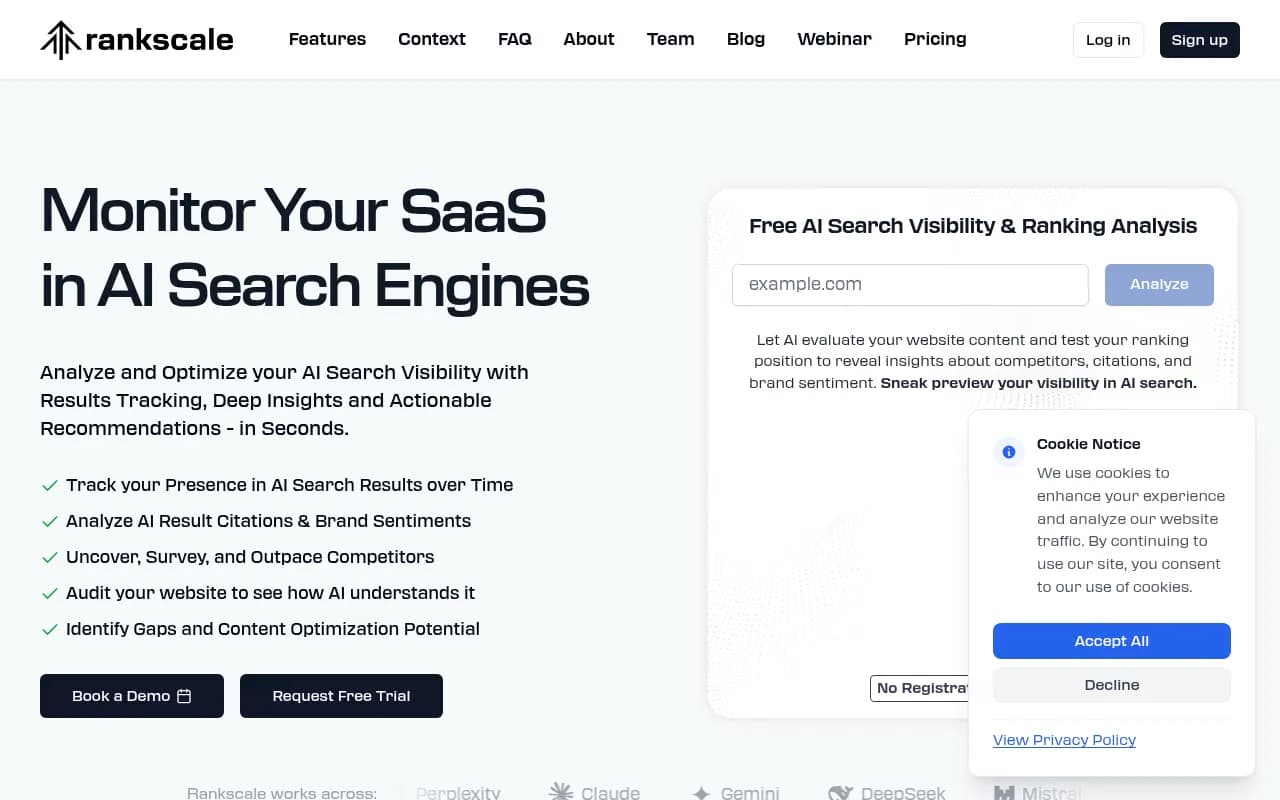
Rankscale is a newer entrant with a clean UI and competitive pricing. Good for teams that want straightforward rank tracking without a lot of complexity.
Agency-oriented tools
Search Party is built around agency workflows and white-label reporting. If you're an agency managing multiple clients, the reporting features are better than most. Prompt metrics are more limited than dedicated GEO platforms.
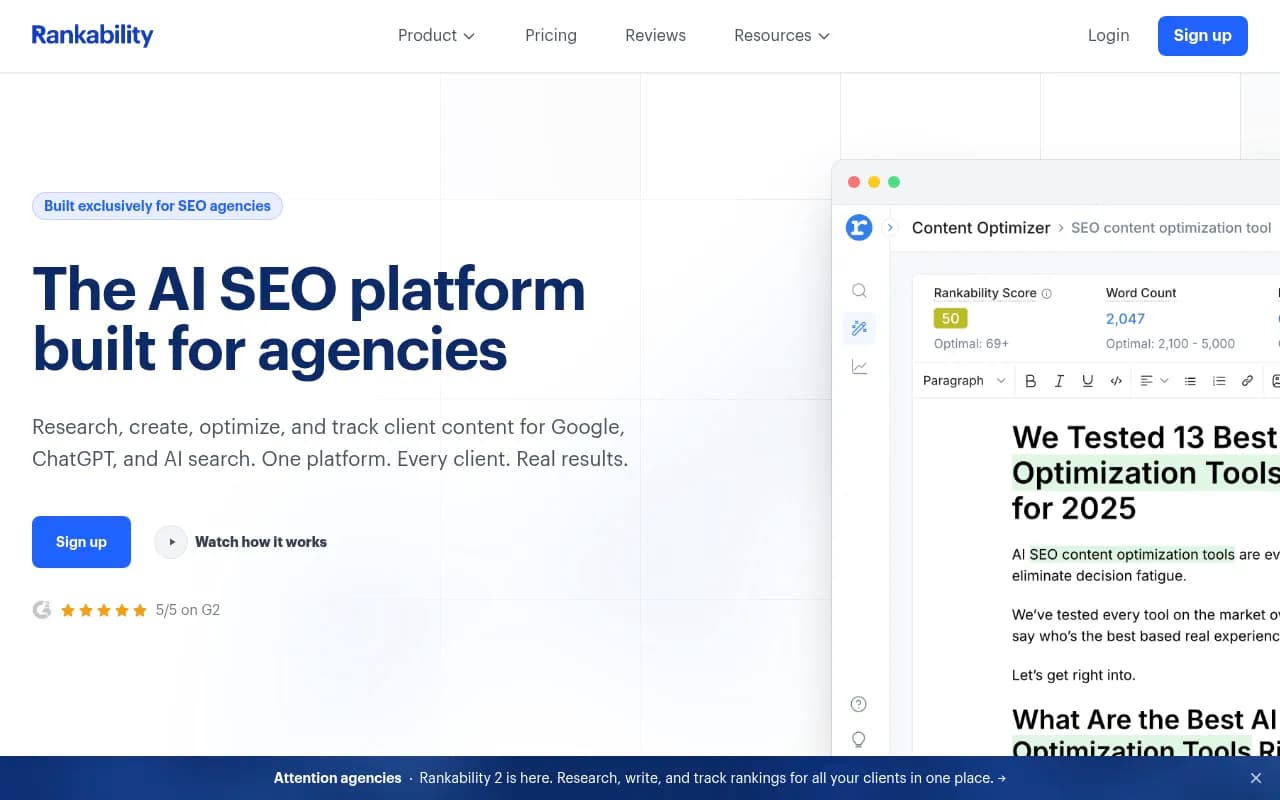
Rankability takes a similar agency-first approach with solid analytics and client management features.
Comparison table: Scrunch AI vs. top alternatives
| Tool | AI engines covered | Content optimization | Crawler logs | Prompt volume data | Starting price |
|---|---|---|---|---|---|
| Scrunch AI | 10+ | No | No | No | ~$300/mo |
| Promptwatch | 10 | Yes (Content Agents) | Yes | Yes | $99/mo |
| Profound | 8+ | No | No | Limited | ~$500/mo |
| Otterly.AI | 5-6 | No | No | No | ~$49/mo |
| Peec AI | 6+ | No | No | No | ~$79/mo |
| AthenaHQ | 8+ | No | No | No | ~$199/mo |
| Rankscale | 5+ | No | No | No | ~$99/mo |
| Search Party | 6+ | No | No | No | Custom |
Pricing estimates based on publicly available information as of June 2026. Verify current pricing directly with each vendor.
What to actually look for in a replacement
The GEO tool market is full of platforms that all look similar in demos. Here are the questions that separate genuinely useful tools from dashboards that just show you problems:
Does it track real user-facing responses or just API outputs? This matters more than most vendors admit. AI models can return different answers in their actual interfaces versus through API calls. Tools that only query APIs may be showing you data that doesn't match what your customers actually see.
Can you see prompt volume and difficulty? Knowing that you're invisible for a prompt is only useful if you know how many people are actually asking it. Without volume data, you're optimizing blind.
Does it show you why competitors are winning? "Competitor X appears for this prompt and you don't" is table stakes. The more useful question is: what content or citations are making them appear? Tools that answer this save you enormous amounts of guesswork.
Does it help you create content, or just identify gaps? Most platforms stop at gap identification. If your team has the bandwidth to take gap data and turn it into content independently, that's fine. If not, look for tools with built-in content generation that's grounded in the actual prompt and citation data.
Does it track what happens after you publish? Publishing content to improve AI visibility and then having no way to know if it worked is frustrating. Look for tools that connect the publish date to crawl events to citation appearances.
The broader context: why this is happening now
Scrunch's repositioning isn't happening in a vacuum. The AI search visibility market is consolidating. Fortune's reporting in June 2026 noted that companies are moving from a "free-for-all" AI deployment phase to tighter vendor selection -- fewer tools, higher expectations, more scrutiny on ROI.
That's good news for marketing teams, actually. It means the tools that survive will be the ones that can demonstrate real business impact, not just show pretty dashboards. The platforms that are winning right now are the ones that connect AI visibility to actual traffic and revenue -- not just citation counts.
The consolidation also means that some of the 40+ AI visibility tools that launched in 2024-2025 won't make it. Scrunch's move toward enterprise-only is one version of this story. Others will simply shut down. If you're evaluating alternatives, it's worth asking each vendor about their customer count, funding status, and roadmap -- not to be cynical, but because switching tools twice in 12 months is genuinely painful.
Making the final call
The right replacement depends on where you actually are:
If you're a small team or solo marketer on a tight budget, Otterly.AI or Peec AI will cover the basics without breaking the bank. You'll lose optimization features, but you'll have visibility data.
If you're a mid-size marketing team that wants to actually move the needle on AI visibility, Promptwatch is the most complete option at a reasonable price. The content generation and crawler log features are things Scrunch never offered, and the gap analysis actually tells you what to do next.
If you're an agency managing multiple clients, look at Search Party or Rankability for the workflow features, but be honest about whether you need deeper optimization capabilities for your clients.
If you're enterprise and price isn't the primary constraint, Profound is worth evaluating alongside Promptwatch -- both have strong data quality, and the right choice depends on whether you need content generation built in.
Whatever you choose, do the export first. Your prompt library and historical data are the hardest things to rebuild, and you don't want to lose them in the transition.