Key takeaways
- AI models like ChatGPT, Perplexity, and Gemini frequently cite Reddit, YouTube, review sites, and third-party blogs over brand-owned domains -- so tracking only your own site misses most of the picture.
- Offsite citation tracking requires a different capability set than standard AI visibility monitoring: you need source analysis, not just mention counting.
- A handful of platforms in 2026 have built genuine offsite citation tracking; most monitoring tools still don't cover it at all.
- The most useful platforms don't just show you where citations come from -- they help you act on that data by identifying where to publish, what to optimize, and which third-party channels to prioritize.
- Promptwatch is one of the few platforms that combines offsite citation analysis with content gap identification and AI content generation, closing the loop from "where am I missing?" to "here's what to publish."
Why offsite citations are the blind spot most teams ignore
Here's something that surprises a lot of marketing teams when they first dig into AI visibility data: your website is often not the primary source AI models use to talk about your brand.
When ChatGPT answers a question about the best project management tools, it's pulling from G2 reviews, Reddit discussions, YouTube comparisons, and industry blogs -- not your homepage. When Perplexity recommends a SaaS product, the citations it surfaces are frequently third-party review aggregators and community threads, not the vendor's own content.
This isn't a bug. It's how these models work. They're trained to synthesize what the broader web says about a topic, and they weight sources that appear authoritative and frequently referenced. A Reddit thread with 400 upvotes and 80 comments discussing your product category carries real weight. A YouTube video comparing five tools in your space might be cited in dozens of AI responses per day. Your carefully crafted product page might not appear at all.
The implication is uncomfortable but important: if you're only tracking your own domain's AI visibility, you're measuring a fraction of what actually determines how AI models talk about you.

What "offsite citation tracking" actually means
Before getting into specific tools, it's worth being precise about what this capability involves -- because vendors use the term loosely.
True offsite citation tracking means the platform can tell you:
- Which external domains (Reddit, YouTube, G2, Trustpilot, industry blogs, news sites) are being cited by AI models when answering prompts relevant to your brand or category
- How often those sources appear across different AI engines and prompt types
- Which specific pages or threads are driving citations -- not just the domain, but the URL
- How your brand is represented within those third-party citations (positive, neutral, mentioned alongside competitors)
What this is NOT: simply monitoring whether your brand name appears in AI responses. That's brand mention tracking, and most tools do it. Offsite citation tracking is about understanding the source ecosystem -- the web of third-party content that shapes how AI models perceive and represent your brand.
The platforms that actually do this well
Promptwatch
Promptwatch has built offsite citation analysis into its core tracking layer, which is rarer than it sounds. The platform tracks which external citations -- Reddit posts, YouTube videos, listicles, third-party review pages -- are driving AI visibility across ChatGPT, Perplexity, Claude, Gemini, Google AI Overviews, and seven other models.
What makes this genuinely useful is what happens after you see the data. Promptwatch's Answer Gap Analysis identifies which prompts competitors are visible for that you're not -- and then its Content Agents can generate content specifically designed to fill those gaps. If a Reddit thread is driving citations for a competitor, you can see that, understand why, and create content that targets the same angle.
The crawler log feature is also relevant here: real-time logs of AI crawlers hitting your site show which pages they're reading, how often they return, and when pages move from crawled to cited. That's a different kind of offsite intelligence -- understanding how AI discovery actually works, not just what gets cited.

Ahrefs Brand Radar
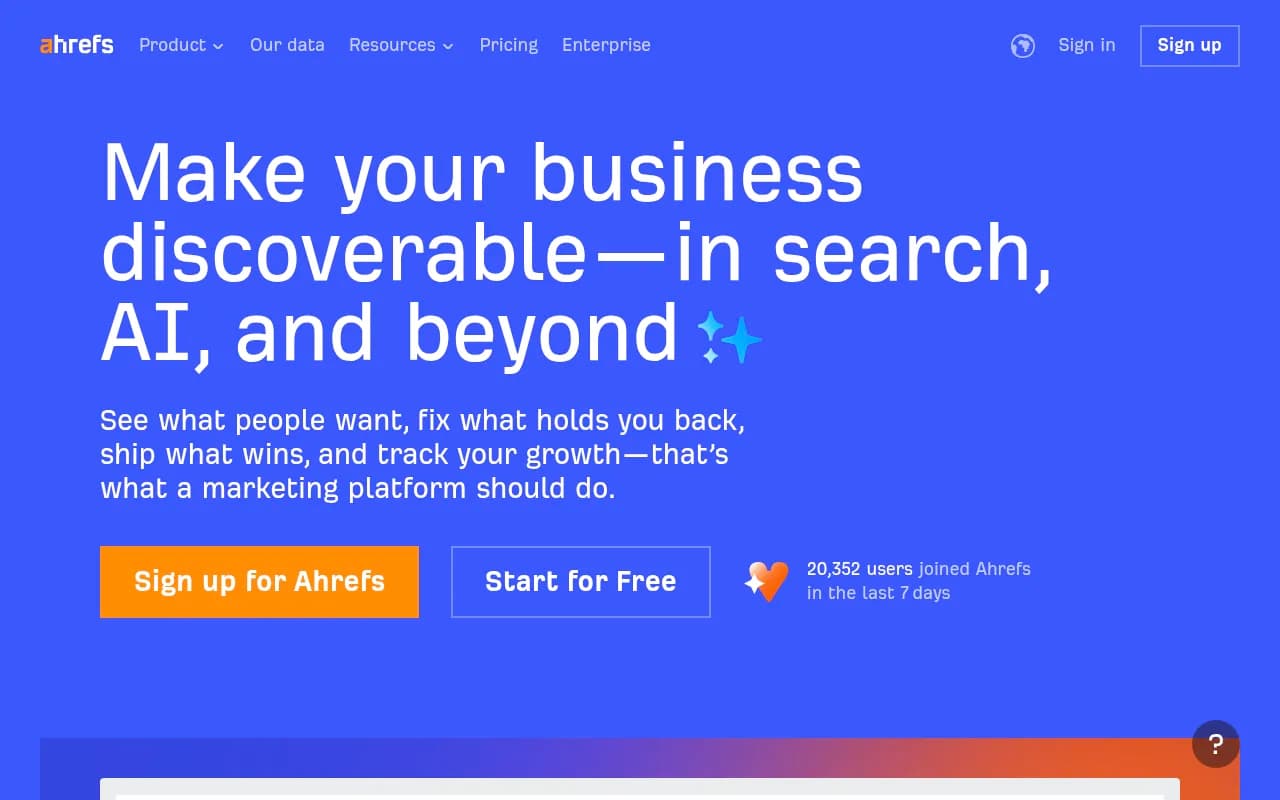
Ahrefs Brand Radar takes a data-quality-first approach that's worth understanding. Rather than constructing hypothetical prompts, it draws from 243M+ real "People Also Ask" queries -- meaning the prompts it tracks correspond to things people actually searched. For offsite citation analysis, this matters because you're seeing which sources AI models cite in response to real user intent, not fabricated scenarios.
The platform is particularly strong for teams already inside the Ahrefs ecosystem. Pricing starts at $50/mo for 2,500 checks, with a $699/mo tier covering all six AI indexes plus custom prompt checks.
Scrunch AI
Scrunch has built out citation source mapping as a distinct feature, letting teams see not just that they appeared in an AI response, but which third-party sources were cited alongside them or instead of them. It's one of the stronger options for understanding the competitive citation landscape -- who's winning citations in your category and from which sources.
Otterly.AI
Otterly is frequently mentioned alongside SE Visible as a solid citation tracking option, though as one YouTube review noted, most tools in this space "still treat AI visibility like a single metric rather than a breakdown by source type." Otterly is more affordable than enterprise options and covers the major AI engines, but its offsite source analysis is less granular than Promptwatch or Ahrefs Brand Radar.

SE Visible (by SE Ranking)
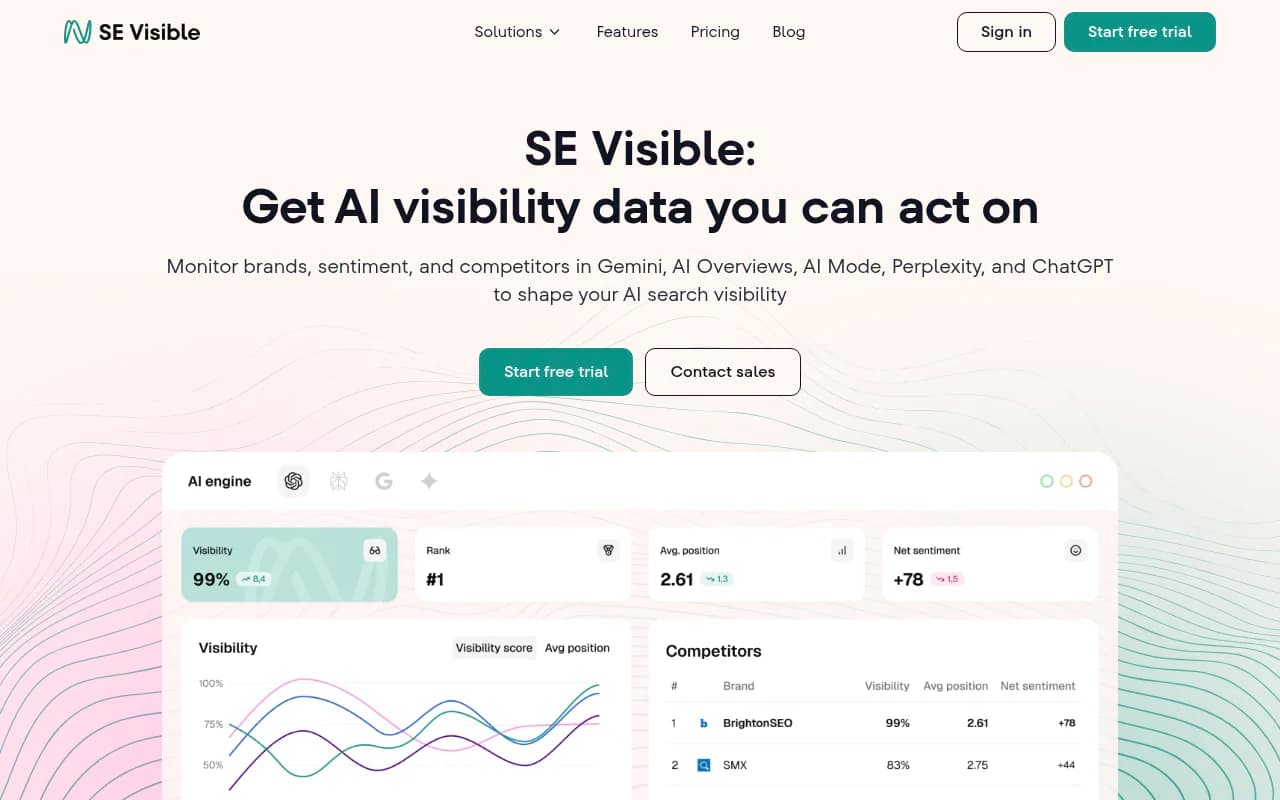
SE Visible gives you a clean visibility score across ChatGPT, Gemini, Perplexity, Google AI Mode, and Google AI Overviews. The citation tracking is solid for owned-domain monitoring, and SE Ranking's broader SEO data gives it useful context for understanding which content is performing. It's a good option for teams that want AI visibility baked into an existing SEO workflow.
Profound
Profound was one of the early movers in AI visibility tracking and still has some genuinely differentiated features -- particularly its Amazon Rufus shopping module and front-end response capture (which matters because user-facing AI answers can differ from API outputs). Its citation tracking covers the major models, though broader model coverage requires enterprise pricing. The Starter plan at $99/mo only covers ChatGPT; Perplexity and Google AIO require the $399/mo tier.

LLM Clicks
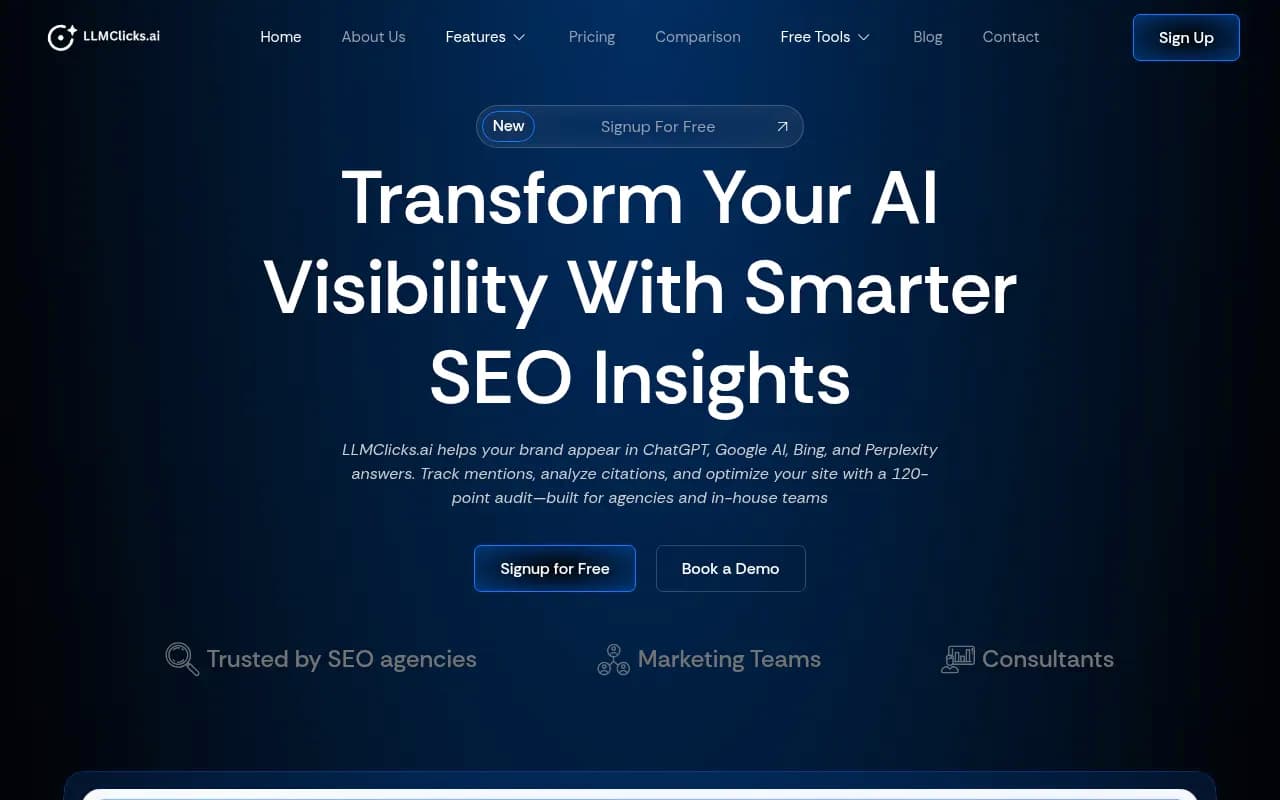
LLM Clicks is specifically focused on citation tracking for AI-powered search, making it one of the more targeted tools in this list. If your primary need is understanding which sources get cited and how often, rather than a full GEO platform, it's worth evaluating.
Rankshift
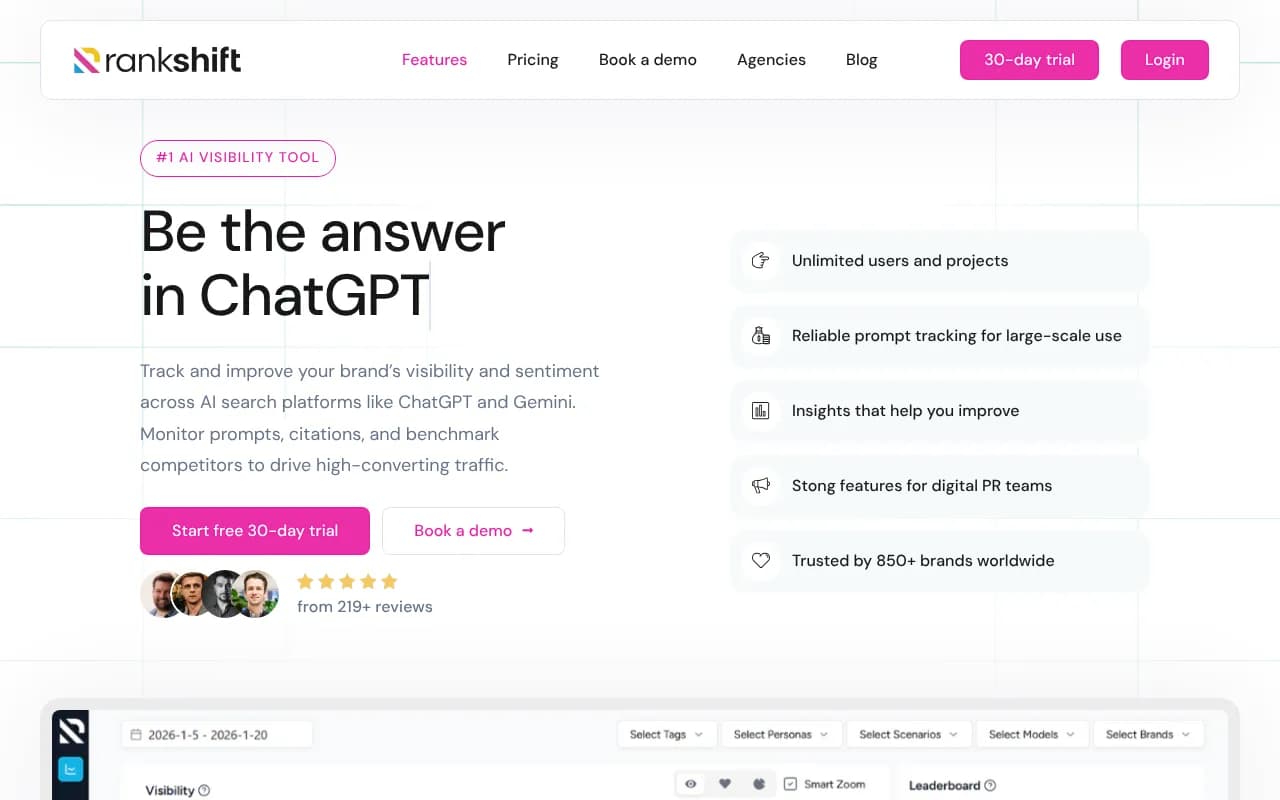
Rankshift has gotten positive attention from practitioners who want prompt-level data alongside citation source analysis. One Reddit user who tested multiple tools noted that "the prompt-level data is what actually makes it actionable" -- you can see not just that a source was cited, but which specific prompt triggered that citation. That granularity is useful for prioritizing content creation.
Comparison: offsite citation tracking capabilities
| Platform | Reddit tracking | YouTube tracking | Third-party domain analysis | Content gap action | Crawler logs |
|---|---|---|---|---|---|
| Promptwatch | Yes | Yes | Yes | Yes (Content Agents) | Yes |
| Ahrefs Brand Radar | Partial | Partial | Yes | No | No |
| Scrunch AI | Yes | Partial | Yes | No | No |
| Profound | Limited | No | Partial | No | No |
| Otterly.AI | No | No | Basic | No | No |
| SE Visible | No | No | Basic | No | No |
| LLM Clicks | Yes | Yes | Yes | No | No |
| Rankshift | Yes | Partial | Yes | Limited | No |
A few things stand out from this comparison. First, Reddit and YouTube tracking is genuinely rare -- most platforms focus on web pages and ignore community content entirely, even though Reddit is one of the most frequently cited sources in AI responses. Second, the gap between monitoring and action is wide: most tools show you citation data but leave you to figure out what to do with it.
How to think about Reddit and YouTube as citation channels
Reddit deserves special attention because it's disproportionately influential in AI responses. Models like ChatGPT and Perplexity have been trained on Reddit data and continue to surface Reddit threads in response to product, comparison, and recommendation queries. A thread from two years ago asking "what's the best tool for X" might be cited hundreds of times per day across AI engines.
The practical implication: if your brand isn't mentioned (or is mentioned negatively) in high-traffic Reddit threads in your category, that's a visibility problem that no amount of on-site content optimization will fix. You need to know which threads are being cited, what they say, and whether there are opportunities to participate in or create relevant discussions.
YouTube is similar but different. AI models cite YouTube videos when they're answering questions that benefit from visual or tutorial-style content. A comparison video covering five tools in your space, published by a channel with 50K subscribers, might generate more AI citations than your entire blog. Knowing which videos are being cited -- and which aren't featuring your brand -- tells you where to focus partnership or content efforts.
Most platforms in this space either ignore these channels entirely or surface them as an afterthought. The ones that track Reddit and YouTube citations as first-class data sources give you a meaningfully more complete picture.
What to look for when evaluating these platforms
Source-level granularity
Can the platform tell you the specific URL being cited, or just the domain? Domain-level data tells you "Reddit is important." URL-level data tells you "this specific thread about project management tools is being cited 40 times per day, and your brand isn't mentioned in it."
Multi-model coverage
Different AI engines cite different sources. Perplexity tends to cite news and review sites heavily. ChatGPT pulls from a broader range including Reddit and YouTube. Google AI Overviews prioritize structured content and authoritative domains. A platform that only tracks one or two models will give you a skewed picture of your citation landscape.
Prompt specificity
Generic visibility scores are almost useless for offsite citation work. You need to know which prompts are triggering which citations. "Best CRM for small business" and "CRM comparison" might surface completely different source sets, and you need that granularity to act on the data.
Actionability
This is where most platforms fall short. Showing you that a competitor is being cited via a G2 review page you're not on is useful. Helping you understand what content to create, where to publish it, and tracking whether that content gets picked up -- that's a different level of capability entirely.
The offsite citation workflow that actually works
If you're serious about improving your AI visibility through offsite channels, here's a practical workflow:
-
Map your current citation sources. Use a platform with genuine source analysis to understand which third-party domains, Reddit threads, and YouTube videos are currently driving AI citations in your category -- for you and for competitors.
-
Identify the gaps. Where are competitors being cited that you're not? Which Reddit threads, review pages, or YouTube videos mention them but not you? These are your priority targets.
-
Prioritize by prompt volume. Not all citation sources are equal. A Reddit thread cited in response to high-volume prompts matters more than one cited for niche queries. Tools with prompt volume data (like Promptwatch's Prompt Intelligence feature) let you prioritize based on actual traffic potential.
-
Act on the gaps. This might mean creating content that targets the same angles as high-citation Reddit threads, reaching out to YouTube creators for inclusion in comparison videos, ensuring your brand is listed on review aggregators that AI models frequently cite, or participating in community discussions where your category is being discussed.
-
Track the results. As you publish and optimize, monitor whether your new content starts getting crawled and cited. Page-level tracking that shows the timeline from publish to crawl to citation is the only way to know if your efforts are working.
A note on monitoring vs. optimization
The market for AI visibility tools has split into two camps, and it's worth being clear about which one you need.
Monitoring tools show you data. They tell you your visibility score, which prompts you appear in, and sometimes which sources are being cited. That's genuinely useful -- you can't improve what you can't measure.
Optimization platforms go further. They help you understand why you're not visible, what content to create, where to publish it, and whether it's working. The distinction matters because the monitoring-only approach leaves you with a dashboard full of data and no clear path to improving it.
For offsite citation work specifically, the optimization layer is where most of the value lives. Knowing that a competitor is winning citations via a Reddit thread is interesting. Having a system that helps you identify the content gap, generate a response, and track whether it gets picked up is what actually moves the needle.
Platforms like Promptwatch are built around this full loop. Most of the monitoring-only tools -- Otterly, Peec AI, and similar -- stop at step one.
Bottom line
Offsite citation tracking is not a nice-to-have feature in 2026 -- it's a core requirement for any brand that wants to understand and improve its AI search visibility. The AI models your customers are using are pulling from Reddit, YouTube, G2, industry blogs, and dozens of other third-party sources. If you're only tracking your own domain, you're measuring a small fraction of what actually shapes how AI talks about you.
The platforms that do this well are still a minority. Ahrefs Brand Radar brings real search data credibility. Scrunch and Rankshift offer solid source mapping. LLM Clicks focuses specifically on citation tracking. Promptwatch combines offsite citation analysis with content gap identification and content generation -- the only platform in this comparison that closes the full loop from "what am I missing" to "here's what to publish" to "here's whether it worked."
Whatever platform you choose, make sure it can tell you not just that you appeared in an AI response, but where that response came from -- and what you can do about it.