Key takeaways
- Otterly.AI is a solid entry-level AI visibility monitoring tool with a clean interface and accessible pricing, but most positive reviews share a common caveat: "great for seeing the data, but then what?"
- The most common complaint across reviews is the gap between insight and action -- Otterly shows you where you're invisible, but doesn't help you fix it.
- In April 2026, Otterly launched a "Recommendations" feature to address this gap, though it's still early and user feedback is limited.
- Users who outgrow Otterly tend to switch to platforms that combine monitoring with content generation, crawler logs, and traffic attribution.
- If you're a solo marketer or small team just getting started with AI search visibility, Otterly is a reasonable starting point. If you're running a serious GEO program, you'll likely hit its ceiling quickly.
There's a pattern that shows up across almost every Otterly.AI review written in 2026. Users like the tool. They find it easy to set up. The dashboards are clean. And then, somewhere around week three or four, they hit the same wall: I can see the data. Now what do I do about it?
That question -- first surfaced publicly by Otterly's own CEO Thomas Peham in a product announcement -- is the most honest thing anyone has said about the current state of AI visibility tools. And it's worth taking seriously when evaluating whether Otterly is the right fit for your team.
This guide pulls together what users are actually saying about Otterly.AI in 2026: the genuine strengths, the recurring frustrations, and the alternatives people are moving to when they need more.

What users like about Otterly.AI
It's genuinely easy to get started
The most consistent praise across reviews is that Otterly doesn't require a PhD to set up. You connect your brand, add your prompts, and within a few hours you're seeing how ChatGPT, Perplexity, and Google AI Overviews are (or aren't) mentioning you. For teams that have been flying blind on AI search visibility, that first dashboard view is genuinely useful.
A review on the Rankability blog from early 2026 put it plainly: "Otterly AI tackles that problem head-on, and early users say it's saving them serious time while surfacing clearer insights." That's a fair summary. The tool does what it says on the tin.
CMS Critic called it "utterly awesome for marketers" in a piece that highlighted its actionable insights into brand representation and citation data. That coverage is accurate for what the tool does in its monitoring capacity.
The citation data is real and useful
Otterly published a study in early 2026 analyzing over one million citations across ChatGPT, Perplexity, and Google AI Overviews. The findings were genuinely interesting: community platforms like Reddit and Quora capture 52.5% of citations versus 47.5% for brand domains, and 73% of sites have technical barriers blocking AI crawler access.
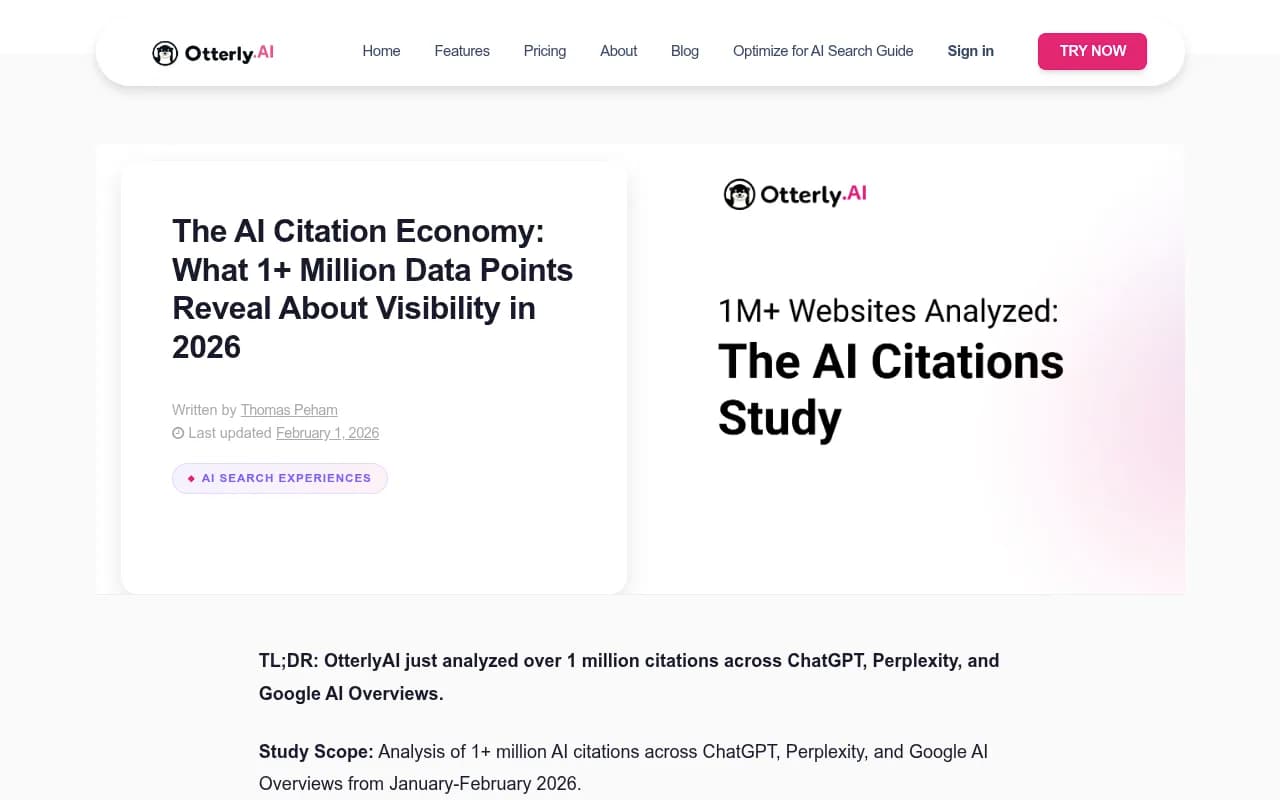
This kind of research shows that Otterly's team understands the space. And the platform does surface citation data that's hard to get elsewhere at its price point. Users who want to understand which domains AI models are pulling from in their category find this genuinely valuable.
Pricing is accessible
Otterly sits at the lower end of the GEO tool pricing spectrum. For solo marketers, small agencies, or brands just beginning to think about AI search visibility, the entry cost is low enough to justify a trial without a lengthy procurement process.
The recurring complaints
The insight-to-action gap
This is the big one. Across YouTube reviews, blog writeups, and community discussions, the same frustration surfaces: Otterly shows you the problem but leaves you to figure out the solution yourself.
You can see that a competitor is getting cited for a topic you should own. You can see which Reddit threads are influencing AI responses in your category. But Otterly doesn't tell you what content to create, doesn't generate that content, and doesn't help you track whether your changes are working at a page level.
To Otterly's credit, they acknowledged this directly. In April 2026, CEO Thomas Peham wrote: "Here's what we kept hearing from customers: 'I see the data. Now what do I do about it?' That's the gap." The new Recommendations feature is their answer -- it analyzes your brand report data and suggests specific next steps, from content to create to off-page signals to pursue.
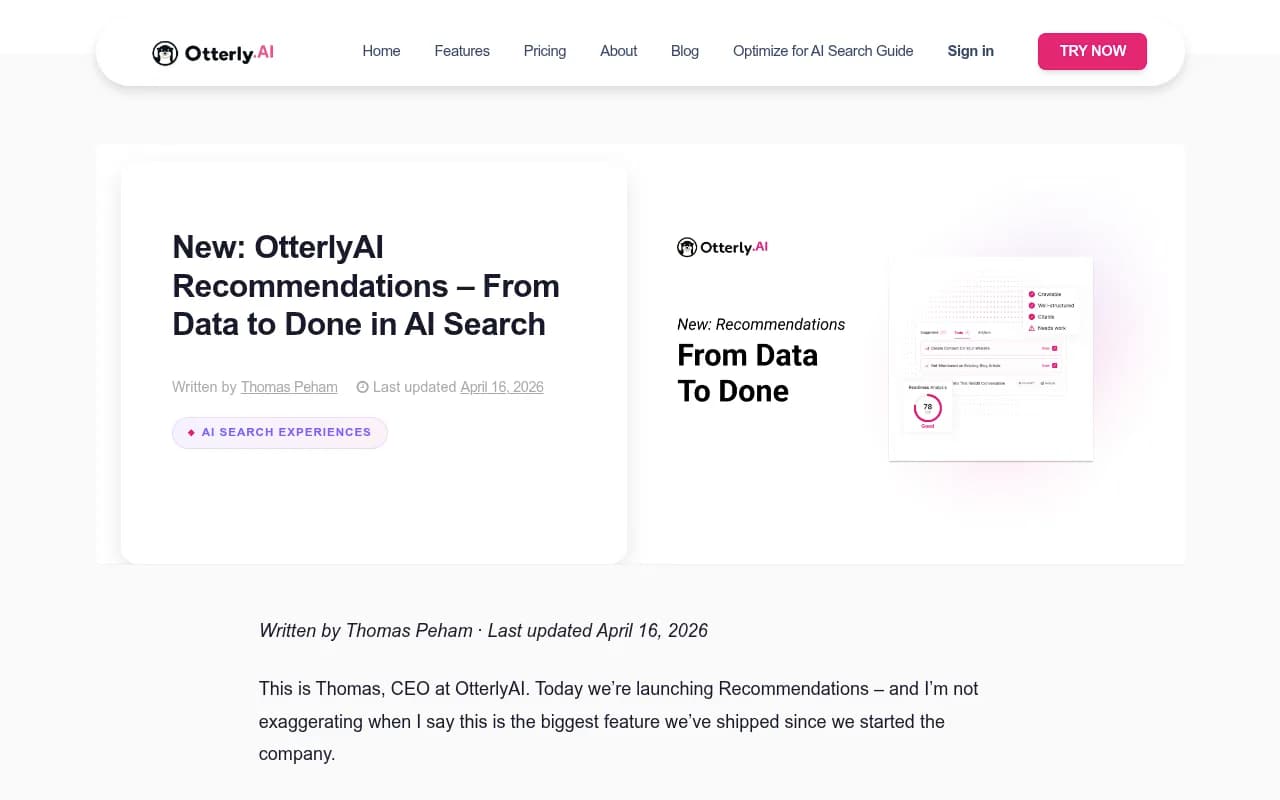
It's a meaningful step forward. But it's also brand new, and the workflow (Suggestions → To-Do → Archive) is still maturing. Users who need content generation, not just content suggestions, are still looking elsewhere.
No AI crawler logs
One capability that comes up repeatedly in comparisons is AI crawler log analysis -- the ability to see when ChatGPT, Claude, or Perplexity's crawlers are actually hitting your pages, which pages they read, and whether they're encountering errors. This matters because knowing a crawler visited your page is different from knowing your page is being cited.
Otterly doesn't offer this. For teams doing serious technical GEO work, that's a real gap.
Limited prompt intelligence
Otterly lets you track prompts, but it doesn't give you volume estimates or difficulty scores for those prompts. That means you're tracking visibility for prompts you've already thought of, without much guidance on which prompts are worth prioritizing or what the competitive landscape looks like for each one.
No traffic attribution
Knowing your brand is mentioned in AI responses is useful. Knowing that those mentions are driving actual website visits and revenue is what justifies the budget. Otterly doesn't connect AI visibility to traffic or conversions, which makes it harder to prove ROI to stakeholders who need more than citation counts.
Reddit and YouTube insights are surface-level
Otterly's citation research shows that community platforms dominate AI citations. But the platform's ability to surface and analyze specific Reddit threads or YouTube videos that are influencing AI responses in your category is limited. For brands where community content is a major factor in their AI visibility, this is a meaningful gap.
How Otterly compares to the alternatives
Here's a straightforward comparison of Otterly against the tools users most commonly evaluate alongside it or switch to:
| Feature | Otterly.AI | Peec.AI | AthenaHQ | Profound | Promptwatch |
|---|---|---|---|---|---|
| AI visibility monitoring | Yes | Yes | Yes | Yes | Yes |
| Prompt volume/difficulty scores | No | No | Limited | Yes | Yes |
| Content gap analysis | Limited (new) | No | No | Yes | Yes |
| AI content generation | No | No | No | No | Yes |
| AI crawler logs | No | No | No | No | Yes |
| Traffic attribution | No | No | No | Limited | Yes |
| Reddit/YouTube tracking | Limited | No | No | No | Yes |
| ChatGPT Shopping tracking | No | No | No | No | Yes |
| Pricing (entry) | Low | Low | Mid | High | $99/mo |
The pattern is clear: Otterly competes well on price and ease of use, but trails on depth of insight and action-taking capabilities.
What users switch to (and why)
When teams need content generation alongside monitoring
The most common switch is to platforms that don't just show you the gap but help you close it. Users who want to generate content grounded in real prompt data -- articles, comparisons, briefs -- rather than just seeing which topics they're missing tend to move to more complete platforms.
Promptwatch is the platform that comes up most in this context. It combines monitoring with content generation (Content Agents that write based on actual citation and prompt data), crawler log analysis, and traffic attribution. The pitch is that it's an optimization platform, not just a tracker -- find gaps, generate content, track results.

When agencies need multi-client reporting
Agencies running GEO programs for multiple clients often find Otterly's reporting too lightweight. Tools built with agency workflows in mind offer white-label reporting, multi-site management, and the kind of data exports that make client presentations easier.
When enterprise teams need depth
Larger marketing teams with dedicated SEO or GEO functions tend to need more than Otterly offers -- prompt difficulty scoring, competitor heatmaps, multi-language and multi-region tracking, and integrations with existing analytics stacks.


When teams want something simpler and cheaper
Not everyone switches up. Some users find Otterly is more than they need and move to lighter tools that do basic brand mention tracking in AI without the overhead.

The honest verdict on Otterly.AI in 2026
Otterly is a legitimate tool that does what it says. If you're a marketer who has never tracked AI search visibility before and wants to understand where your brand stands across ChatGPT, Perplexity, and Google AI Overviews, it's a reasonable place to start. The interface is clean, setup is fast, and the citation data is real.
The problems start when you need to act on what you're seeing. The new Recommendations feature is a genuine attempt to close the insight-to-action gap, but it's still early. There's no content generation, no crawler logs, no traffic attribution, and limited prompt intelligence. For teams running serious GEO programs, those aren't nice-to-haves -- they're the whole point.
The most honest framing is this: Otterly is a monitoring tool that's adding optimization features. Whether that's enough depends on where you are in your AI visibility journey. If you're just getting started, it might be. If you're already past the "what's happening?" question and into "how do we fix it?", you'll probably find yourself looking at other options within a few months.
The good news is the market has matured enough in 2026 that you have real choices. The question is whether you want a tool that shows you the problem or one that helps you solve it.