Key takeaways
- Hall AI is a solid entry-level AI visibility tracker, but it falls short for teams that need deep analytics, content optimization, or enterprise-grade features.
- The best alternatives vary significantly in what they actually track -- some cover 2-3 AI models, others cover 10+, and only a handful go beyond monitoring to help you fix visibility gaps.
- Prompt tracking accuracy depends on whether a platform queries AI models in real user interfaces (not just APIs), how frequently it refreshes data, and how many models it covers.
- If you need to act on the data -- not just see it -- look for platforms with content gap analysis and content generation built in, not just dashboards.
- Pricing ranges from free tiers to $500+/month for enterprise plans, so there's a realistic option for most team sizes.
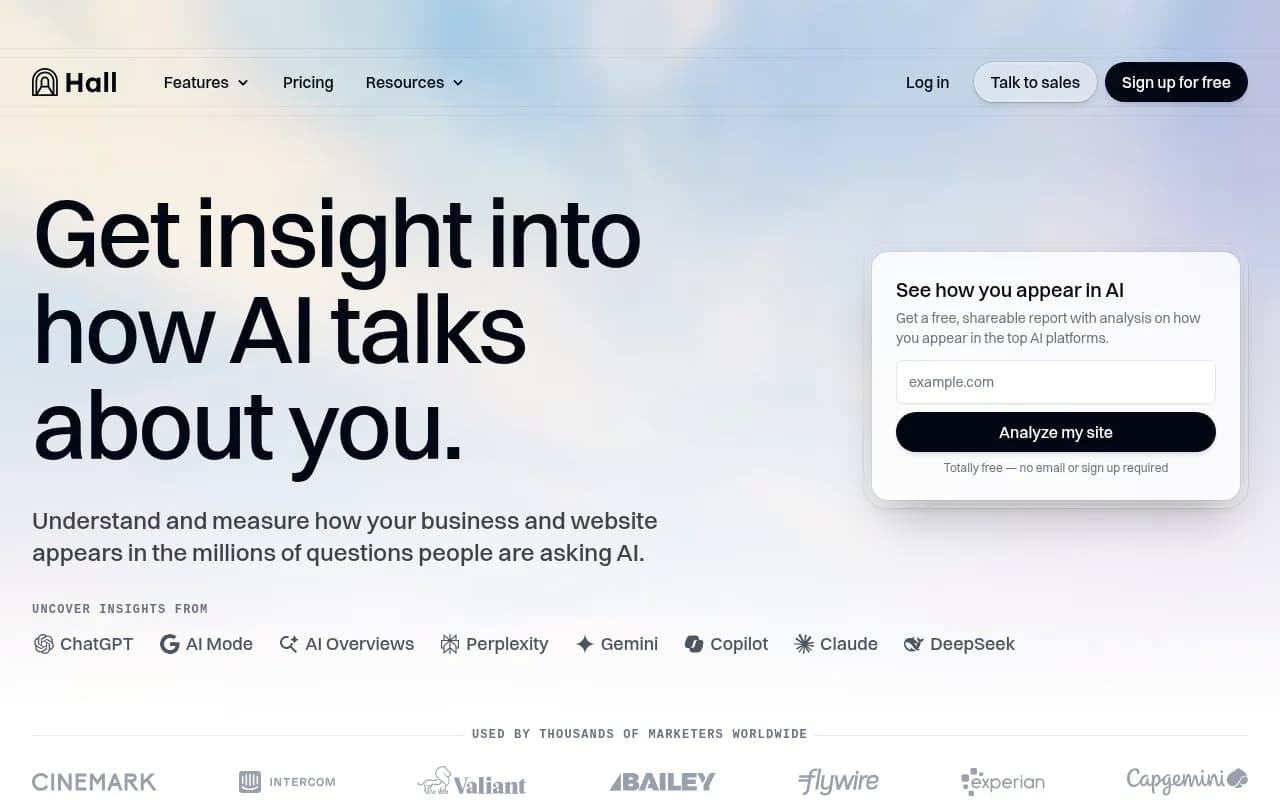
Hall AI entered the GEO space with a clear pitch: track how AI search engines mention your brand, measure your visibility across LLMs, and give you the data to improve. For a lot of teams, it worked well enough as a starting point. But "well enough" is doing a lot of work in that sentence.
The problems that push teams toward alternatives are pretty consistent. Hall's model coverage is limited. Its prompt refresh rates can lag. And when you find out you're invisible for a key prompt, Hall doesn't really tell you what to do next. You get the bad news without the prescription.
This guide ranks the best Hall AI alternatives by what actually matters in 2026: prompt tracking accuracy, AI model coverage, how fresh the data is, and whether the platform helps you close the gaps it finds.
What "prompt tracking accuracy" actually means
Before getting into the rankings, it's worth being precise about what we're measuring. Prompt tracking accuracy isn't just "does the platform check ChatGPT." It breaks down into a few distinct things:
- Model coverage: How many AI engines does it monitor? ChatGPT, Perplexity, Gemini, Claude, Grok, DeepSeek, Copilot, and Google AI Overviews all behave differently. A platform that only checks two or three is giving you a partial picture.
- Interface vs. API queries: AI models can return different answers in their consumer interfaces versus their APIs. Platforms that query the actual user-facing product catch what real users see. API-only tools sometimes miss shopping carousels, featured citations, and UI-specific formatting.
- Refresh frequency: AI model responses change. A platform that checks prompts weekly is already behind. Daily or near-real-time refresh matters for competitive markets.
- Prompt volume and customization: Can you track the specific prompts your customers actually use, or are you stuck with a fixed list the platform chose?
- Citation-level detail: Does it show you which page on your site got cited, or just whether your brand appeared?
With that framework in mind, here's how the main alternatives compare.
The alternatives, ranked
1. Promptwatch -- best for teams that need to act, not just monitor
Promptwatch is the platform that most directly addresses Hall's core limitation. Hall shows you where you're invisible. Promptwatch shows you where you're invisible and then helps you fix it.
The tracking side is comprehensive: 10 AI models covered (ChatGPT, Perplexity, Google AI Overviews, Google AI Mode, Claude, Gemini, Meta/Llama, DeepSeek, Grok, Copilot), with queries run against real user interfaces rather than just APIs. That distinction matters -- consumer-facing responses include shopping carousels, featured citations, and UI elements that API queries miss entirely.
What separates Promptwatch from every monitoring-only alternative is the action loop. Answer Gap Analysis shows you the specific prompts where competitors appear and you don't. Content Agents then generate articles, listicles, and briefs grounded in that gap data -- not generic SEO filler, but content built around the exact questions AI models are already answering without you. Then page-level tracking shows you when those new pages start getting cited and by which models.
The AI Crawler Logs feature is something most competitors don't have at all: real-time logs of when ChatGPT, Claude, Perplexity, and other AI crawlers visit your pages, which pages they read, what errors they hit, and when a crawled page moves to an actual citation.
Pricing starts at $99/month for the Essential plan (1 site, 50 prompts, 5 articles), $249/month for Professional (2 sites, 150 prompts, crawler logs), and $579/month for Business (5 sites, 350 prompts, 30 articles). Free trial available.

2. Profound -- best for enterprise analytics
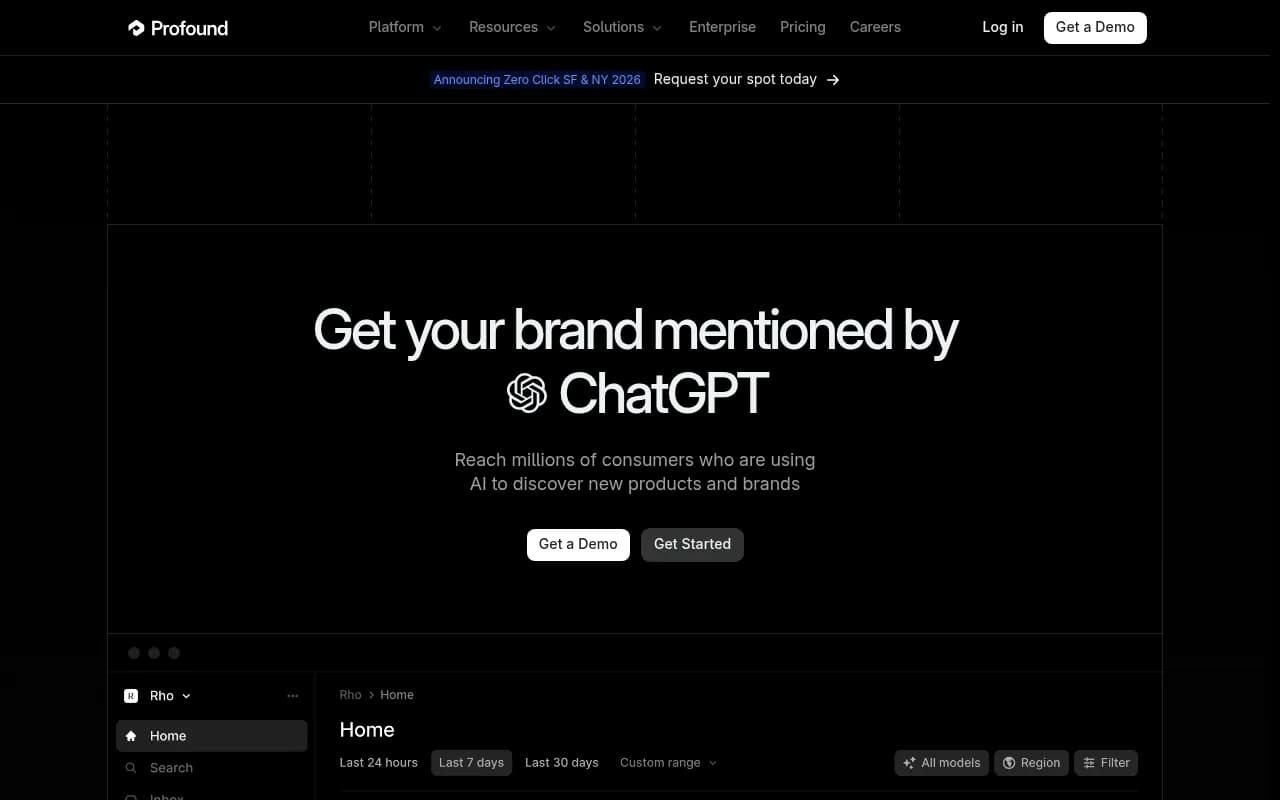
Profound targets larger organizations that need structured reporting and stakeholder-ready dashboards. Its analytics are genuinely strong, and it covers the major AI models with solid prompt customization.
Where it falls short relative to Promptwatch is on the action side -- Profound is primarily a monitoring and analytics platform. It'll tell you your visibility score and how it's trending, but content generation and gap-closing workflows aren't core to what it does. For enterprise teams that have separate content teams to act on the data, that's fine. For leaner teams, it's a gap.
Pricing is on the higher end of the market, which makes it harder to justify for mid-market companies.
3. Peec AI -- best for multi-language and cross-engine reporting
Peec AI has genuinely good multi-language support, which matters if you're tracking AI visibility across markets. Its cross-engine reporting is clean and exportable, making it a reasonable choice for agencies that need to show clients data across ChatGPT, Perplexity, and Gemini in a single view.
The limitation is that Peec AI is a monitoring tool. There's no content generation, no gap analysis that produces actionable briefs, and no crawler log data. You get the visibility picture; you figure out what to do with it yourself.

4. AthenaHQ -- best for GEO strategy teams
AthenaHQ covers 8+ AI search engines and has a reasonably strong GEO strategy layer. It's more opinionated than some competitors about how to approach AI optimization, which some teams find useful and others find constraining.
Like most alternatives in this space, it's monitoring-focused. Content optimization capabilities exist but are limited compared to platforms built around the full optimization loop.

5. Scrunch AI -- best for brand narrative monitoring
Scrunch AI focuses on how AI models talk about your brand -- the sentiment, the framing, the narrative. If your primary concern is brand safety and reputation in AI responses rather than citation volume, Scrunch is worth a look.
It's less suited to teams whose main goal is increasing the number of prompts they appear in. The coverage is solid but the workflow is oriented around brand monitoring rather than visibility growth.
6. Otterly.AI -- best budget entry point
Otterly.AI is the most accessible option in the market on price. If you're a small team or solo marketer who just wants to start tracking AI visibility without committing to a serious budget, Otterly gives you the basics.
The trade-off is depth. Prompt customization is limited, model coverage is narrower than the leading platforms, and there's no content generation or gap analysis. It's a starter tool, not a growth platform.

7. SE Ranking AI Visibility Tracker -- best for existing SE Ranking users
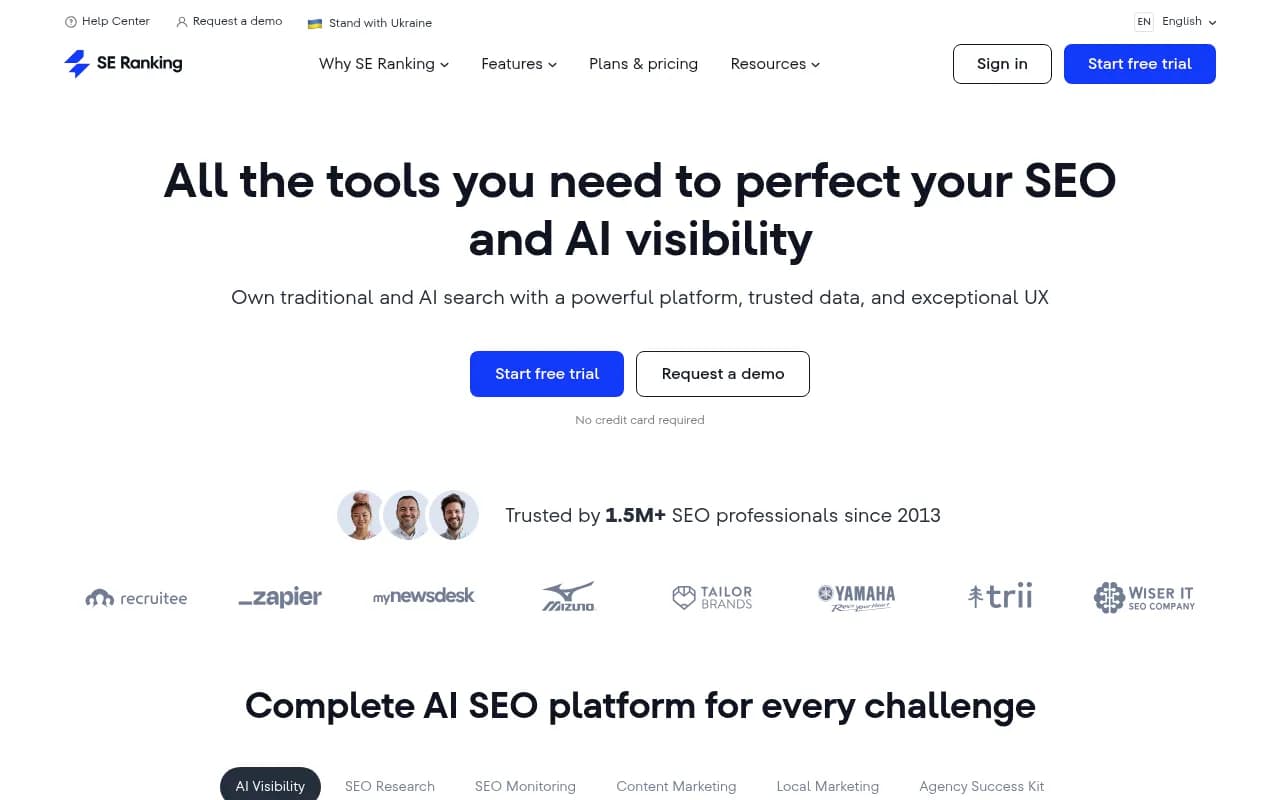
If your team already lives in SE Ranking for traditional SEO, the AI Visibility Tracker is a natural extension. It adds LLM monitoring to a workflow you're already in, which reduces friction.
As a standalone AI visibility tool, it's not the strongest option -- the prompt tracking is less customizable and the model coverage is narrower than dedicated platforms. But as an add-on to an existing SE Ranking subscription, it makes sense.
8. Radarkit -- solid for agencies and content teams
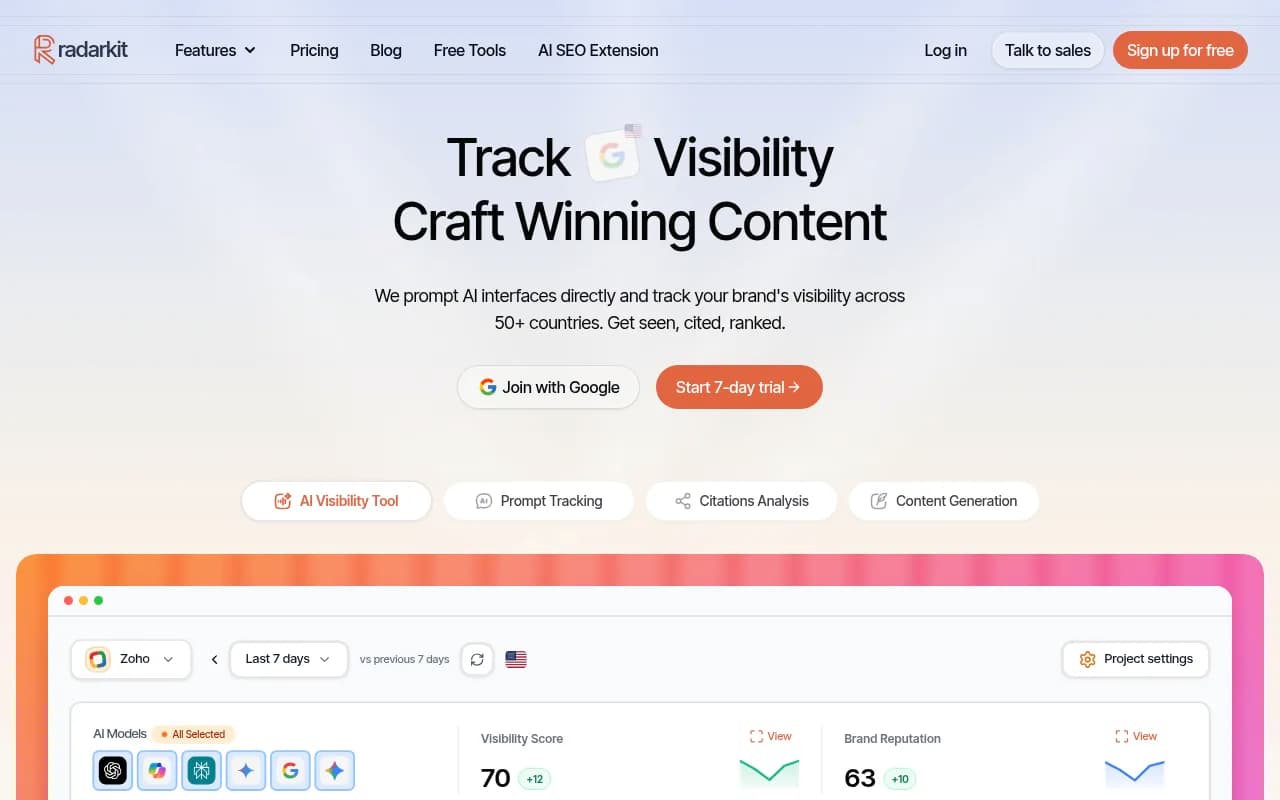
Radarkit positions itself as an agency-friendly AI visibility tracker with decent prompt customization and multi-client reporting. The interface is clean and the data is reasonably actionable.
It doesn't have content generation or crawler logs, but it's a more complete monitoring product than some of the budget options. Worth considering for agencies that want a dedicated AI visibility tool without the price tag of enterprise platforms.
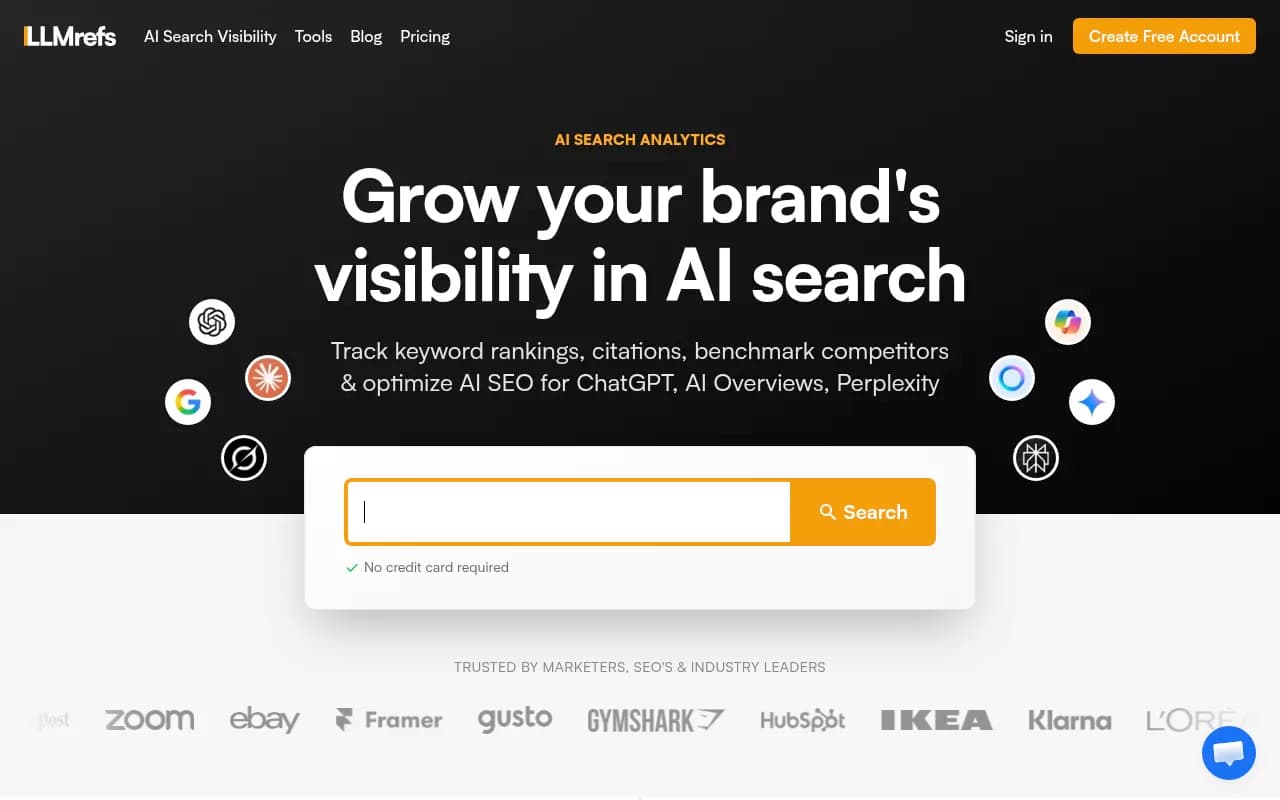
9. LLMrefs -- best for keyword-first workflows
LLMrefs approaches AI visibility from an SEO keyword perspective, which makes it intuitive for teams that already think in terms of keyword rankings. You can track which prompts you appear in and how that maps to your existing keyword strategy.
The keyword-centric framing is both its strength and its limitation. AI search doesn't always map neatly to keyword intent, and LLMrefs can feel like it's forcing AI tracking into an SEO-shaped box. But for teams transitioning from traditional SEO to GEO, that familiarity is actually useful.
Feature comparison table
| Platform | AI models covered | Real UI queries | Content generation | Crawler logs | Prompt customization | Starting price |
|---|---|---|---|---|---|---|
| Promptwatch | 10 | Yes | Yes (Content Agents) | Yes | Yes | $99/mo |
| Profound | 6+ | Partial | No | No | Yes | $$$+ |
| Peec AI | 5+ | Partial | No | No | Yes | $$ |
| AthenaHQ | 8+ | Yes | Limited | No | Yes | $$$ |
| Scrunch AI | 5+ | Partial | No | No | Limited | $$ |
| Otterly.AI | 3-4 | No (API) | No | No | Limited | $ |
| SE Ranking | 4+ | Partial | No | No | Limited | $ (add-on) |
| Radarkit | 5+ | Partial | No | No | Yes | $$ |
| LLMrefs | 4+ | No (API) | No | No | Yes | $ |
| Hall AI | 4+ | Partial | No | No | Limited | $$ |
The monitoring-only problem
Something worth naming directly: most of these platforms are monitoring dashboards. They show you numbers. They don't help you move the numbers.
That's fine if you have a large content team that can take a visibility gap report and immediately know what to write. Most teams don't work that way. They see that a competitor appears in 40% of prompts about their category and they appear in 12%, and then they're stuck. What do you write? Which prompts do you target first? What angle does the content need to take?
The platforms that answer those questions -- not just the "what's happening" but the "what do I do about it" -- are the ones worth paying for in 2026. That's a short list.
How to choose based on your situation
The right choice depends more on your team's situation than on feature checklists.
If you're a small team or solo marketer just getting started with AI visibility tracking, Otterly.AI or LLMrefs give you a low-cost way to understand the basics before committing to a larger platform.
If you're an agency managing multiple clients, Radarkit or Peec AI offer reasonable multi-client reporting without enterprise pricing.
If you need to track AI visibility across multiple languages and markets, Peec AI's multi-language support is genuinely useful.
If you're at an enterprise with a dedicated analytics team and separate content resources, Profound's reporting depth makes sense.
If you need to actually improve your AI visibility -- not just measure it -- and you want a platform that closes the loop from gap identification to content creation to citation tracking, Promptwatch is the only platform in this list that does all three in one workflow.
What Hall AI does well (and where it stops)
Hall AI isn't a bad product. For teams that are just starting to think about AI search visibility, it's a reasonable entry point. The interface is clean, the setup is quick, and it gives you a baseline understanding of where your brand appears in AI-generated responses.
The ceiling is the problem. As teams get more sophisticated about GEO -- asking questions like "which specific pages are being cited?", "what prompts are my competitors winning that I'm not?", "how do I create content that actually gets cited?" -- Hall doesn't have good answers. It's built to show you the current state, not to help you change it.
That gap is exactly what the alternatives in this guide are trying to fill, with varying degrees of success.
Final take
The AI visibility tracking market in 2026 has a lot of platforms that do roughly the same thing: query a few LLMs, show you whether your brand appeared, give you a score. Hall AI is one of them. Most of the alternatives are too.
The meaningful differentiation is between platforms that stop at measurement and platforms that help you act. If you're evaluating Hall alternatives, that's the question to ask in every demo: "After you show me the gap, what does your platform actually do to help me close it?"
The answer will tell you everything you need to know.