Key takeaways
- Most AEO tools launched in 2025 are monitoring dashboards -- they show you where you're invisible but don't help you fix it
- The tools that delivered real ROI combined tracking with content gap analysis and some form of optimization workflow
- ChatGPT traffic is converting significantly better than Google for many B2B brands, making AI visibility a revenue question, not just an SEO vanity metric
- Crawler log access and page-level citation tracking separated the serious platforms from the dashboards
- Budget allocation should follow the monitor-create-track loop: tools that only do step one are hard to justify at scale
2025 was the year AEO went from "interesting experiment" to "budget line item." Google's AI Overviews started eating the top of the SERP. ChatGPT Search became a real traffic source. Perplexity carved out a loyal user base. And suddenly every marketing team had the same uncomfortable question: why aren't we showing up?
The tool market responded fast -- maybe too fast. By mid-2025, there were dozens of platforms claiming to "optimize for AI search." Some were genuinely useful. A lot were dashboards dressed up as strategy tools. A few were outright vaporware with nice landing pages.
This guide is a year-end verdict. What actually worked? What was worth the spend? And what should you look for heading into 2026?
Why 2025 was the year AEO became real
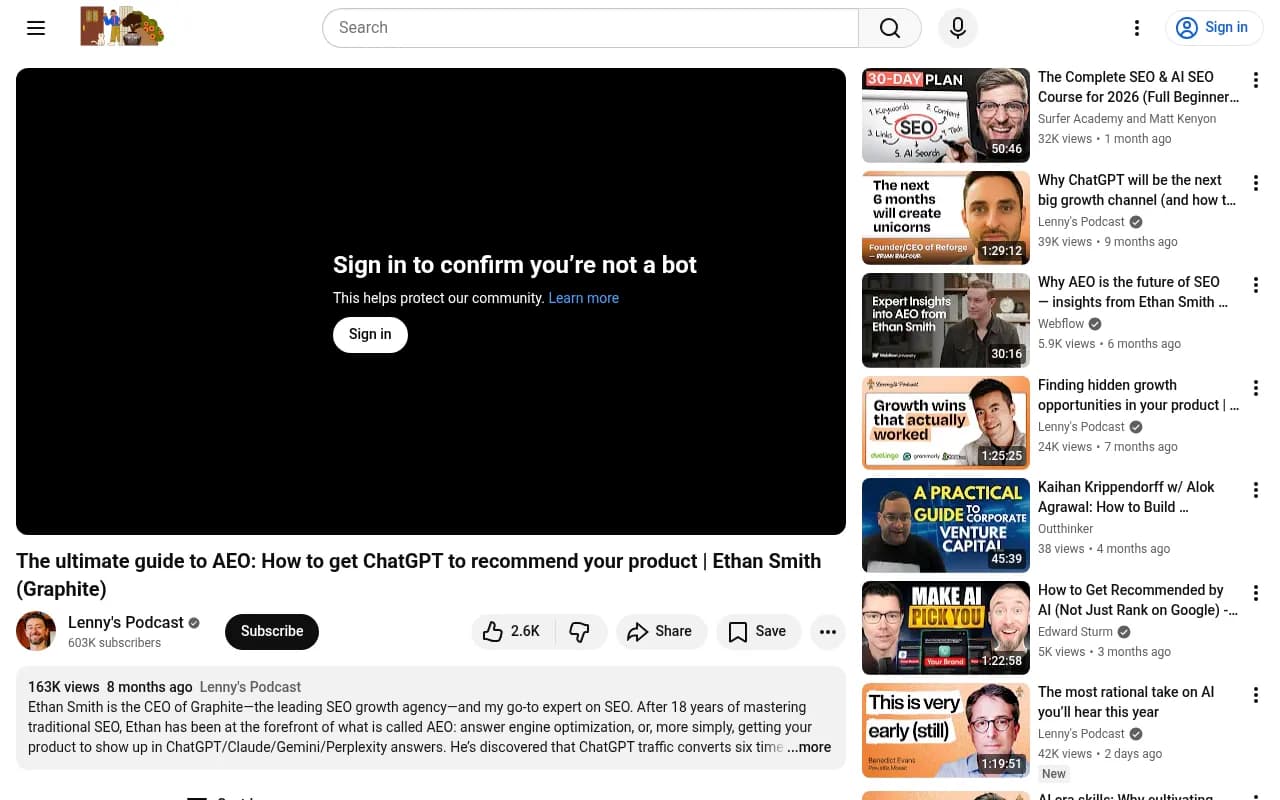
The interest in AEO didn't just grow in 2025 -- it exploded. According to Graphite's research, since January 2025 there's been a significant spike in LLM usage and a corresponding wave of VC money flowing into AEO platforms.
But the more important signal came from conversion data. Teams tracking AI referral traffic started noticing something striking: visitors arriving from ChatGPT were converting at dramatically higher rates than Google organic traffic. For B2B companies with long sales cycles, that's not a small thing. It changes how you think about where to invest.
The reason makes intuitive sense: someone who asks ChatGPT "what's the best project management tool for a 50-person engineering team" and gets your product recommended has already been pre-qualified by the AI. They're not browsing -- they're evaluating. That's a fundamentally different kind of visitor.
So the stakes for AEO aren't abstract. They're tied to pipeline.
The core problem with most 2025 AEO tools
Here's the honest assessment: most tools that launched or matured in 2025 are monitoring products. They show you a dashboard. They tell you how often your brand appears in AI responses. They let you compare yourself to competitors.
That's useful. But it's not optimization.
The gap between "I can see I'm invisible" and "I know what to do about it" is where most tools fall short. You get a score. You get a heatmap. You get a list of prompts where competitors appear and you don't. Then... nothing. You're left to figure out the content strategy yourself.
The tools that delivered real results in 2025 were the ones that closed this loop -- that took the monitoring data and connected it to actual content creation and technical fixes.
What to look for in an AEO tool: the honest criteria
Before getting into specific tools, here's the framework that separates genuinely useful platforms from dashboard theater.
Monitoring depth (not just breadth)
Tracking 10 AI models sounds impressive. But the question is how they track. Tools that query APIs directly often get different results than what users actually see in ChatGPT or Perplexity's interface. Real user-interface monitoring matters because AI models sometimes behave differently when accessed through their consumer products versus their APIs -- especially for shopping recommendations and local results.
Also look for: page-level citation tracking (which specific URLs are being cited, not just your domain), prompt volume estimates (so you know which queries are worth targeting), and multi-region/multi-language support if you operate internationally.
Gap analysis that's actually actionable
The best tools don't just show you where competitors appear -- they show you why. What content do they have that you don't? What questions are AI models answering from their site that yours can't address? This is the difference between a gap report and a gap analysis.
Content creation or optimization support
If a tool can identify the gap but can't help you close it, you're paying for awareness without action. In 2025, the platforms that earned their keep were the ones that could generate content briefs, draft articles, or at minimum give you specific structural guidance on what to write.
Crawler log access
This one is underrated. Knowing that AI crawlers have visited your site is different from knowing which pages they read, whether they encountered errors, and how often they return. Crawler log integration -- whether through Cloudflare, Vercel, server logs, or a tracking snippet -- gives you a feedback loop that pure monitoring tools can't provide.
Traffic attribution
Can the tool connect AI visibility to actual website traffic and conversions? This is the hardest problem to solve and most tools don't attempt it. But for justifying budget, it's essential.
The tools that delivered in 2025
Full-stack platforms (monitor + optimize)
These are the tools that moved beyond dashboards and built actual optimization workflows.
Promptwatch emerged as the most complete end-to-end platform in this category. The core value is what they call the action loop: find gaps (Answer Gap Analysis shows exactly which prompts competitors rank for and you don't), create content (Content Agents generate articles and briefs grounded in real prompt data and citation analysis), then track results (page-level tracking shows which pages get cited, by which models, and how often). The crawler log integration is genuinely differentiated -- you can see AI agents hitting your site in real time, identify crawl errors, and track the timeline from publish to first citation. For teams that need to show ROI, the traffic attribution connecting AI visibility to revenue is the feature that makes budget conversations easier.

Profound built a solid platform with strong answer engine insights and agent analytics. Their prompt volume data is useful for prioritization, and the shopping tracking for ChatGPT is a feature not many competitors have matched. It's positioned more toward enterprise and tends to come with a higher price point.

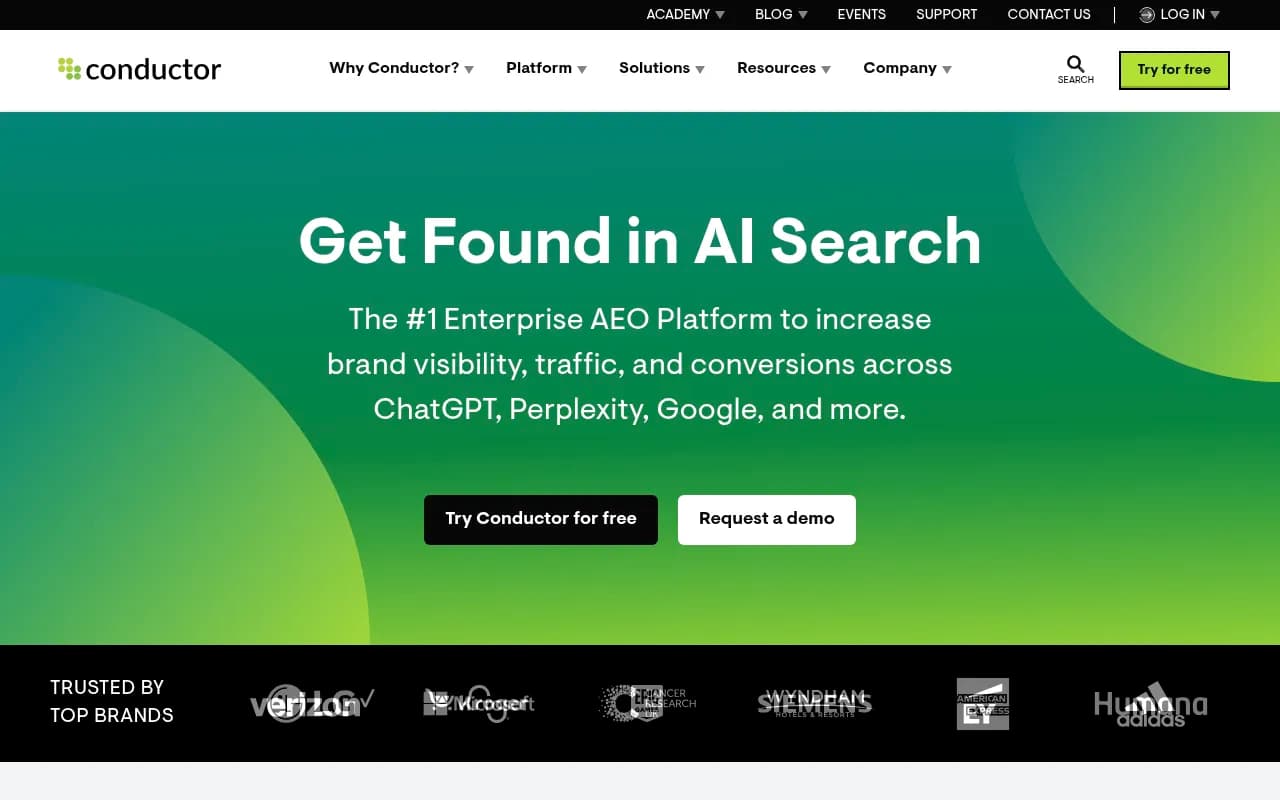
Conductor has been around long enough to have real credibility, and their 2025 updates added meaningful AI visibility tracking on top of their existing SEO infrastructure. If you're already a Conductor customer, the AI features are worth activating. As a standalone AEO purchase, the value depends heavily on how much you use the broader platform.
Monitoring-focused tools (solid but limited)
These tools do monitoring well. They're worth considering if you have a separate content workflow and just need reliable data.
Otterly.AI is one of the more affordable options for teams that want to start tracking AI visibility without a major commitment. The interface is clean and the setup is fast. It doesn't have content generation or crawler logs, but for early-stage monitoring it's a reasonable starting point.

Peec AI stands out for multi-language tracking, which matters more than most tools acknowledge. If you're running campaigns across European markets or targeting non-English speakers, Peec's language support is genuinely useful.

AthenaHQ covers 8+ AI search engines and has a clean competitive comparison view. It's monitoring-focused, which means you'll need to bring your own content strategy, but the data quality is solid.

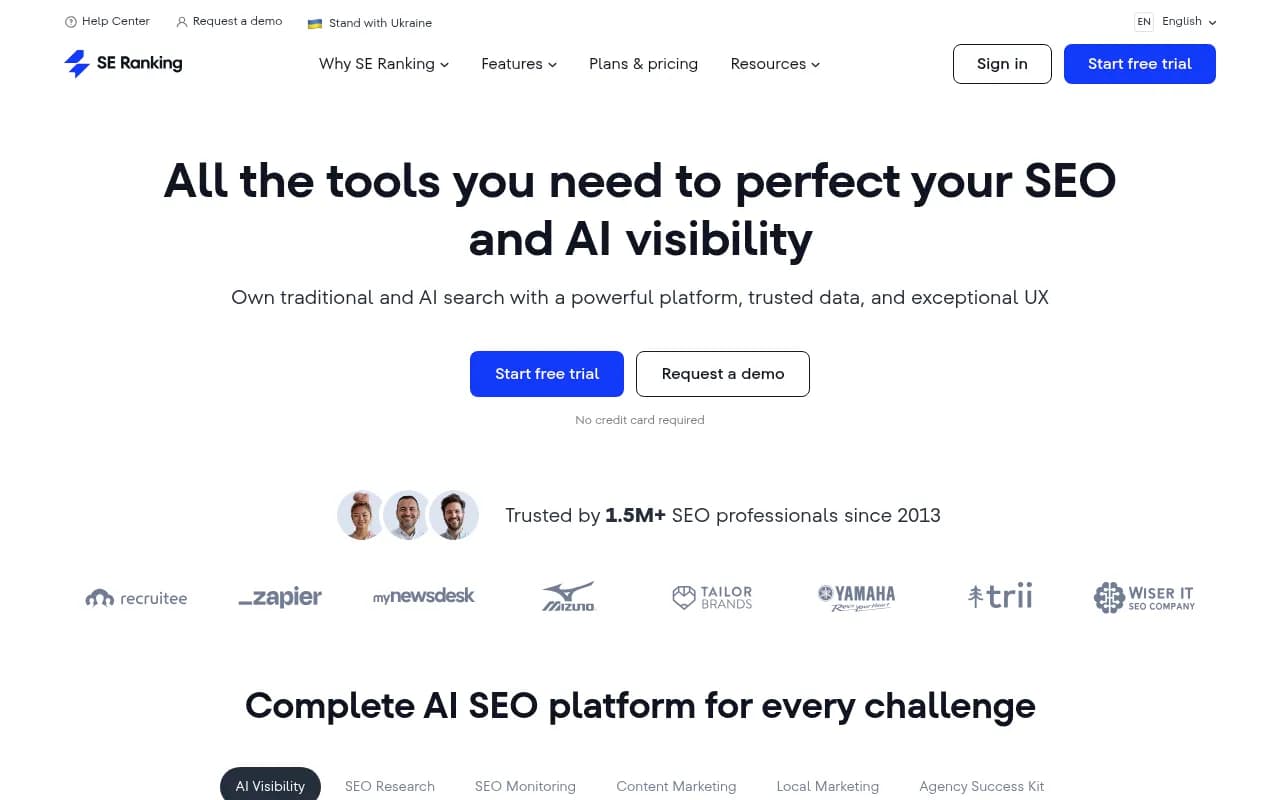
SE Ranking added an AI visibility toolkit to their existing SEO platform in 2025. For teams already paying for SE Ranking's keyword and audit tools, the AI tracking is a reasonable add-on. As a standalone AEO tool, it's less compelling.
Niche tools worth knowing about
Scrunch AI is worth a look for brands that care specifically about how AI models describe them qualitatively -- not just whether they appear, but what they say. The sentiment and narrative tracking is more developed than most competitors.
Rankshift focuses on LLM tracking with a GEO lens. Smaller team, more focused product. Good for agencies running GEO campaigns who want clean reporting without enterprise overhead.
Ahrefs Brand Radar is worth mentioning because Ahrefs has the trust and the data infrastructure. But the Brand Radar product uses fixed prompts, which limits how useful it is for brands with specific or niche positioning. No AI traffic attribution either. It's a starting point, not a complete solution.
Semrush added AI visibility features, but the fixed prompt approach is a real limitation. If you're already in the Semrush ecosystem, it's worth checking what's available. If you're evaluating from scratch, the purpose-built AEO tools are generally more capable.
Head-to-head comparison
| Tool | Monitoring | Gap analysis | Content generation | Crawler logs | Traffic attribution | Price range |
|---|---|---|---|---|---|---|
| Promptwatch | 10 models | Yes | Yes (Content Agents) | Yes | Yes | $99-$579/mo |
| Profound | Strong | Partial | Limited | Yes | Partial | Higher |
| Conductor | Strong | Partial | No | No | Partial | Enterprise |
| Otterly.AI | Basic | No | No | No | No | Low |
| Peec AI | Multi-language | No | No | No | No | Low-mid |
| AthenaHQ | 8+ models | No | No | No | No | Mid |
| SE Ranking | Add-on | No | No | No | No | Mid (bundled) |
| Ahrefs Brand Radar | Fixed prompts | No | No | No | No | Bundled |
| Semrush | Fixed prompts | No | No | No | No | Bundled |
What didn't work (and why)
A few patterns showed up repeatedly in tools that underdelivered.
Fixed prompt sets are the biggest red flag. If a tool only tracks a pre-defined list of queries, you're not getting a real picture of your AI visibility. You're getting a picture of your visibility for those specific prompts. For brands with any kind of niche positioning, this is a serious limitation.
API-only monitoring misses real user behavior. AI models can return different results through their consumer interfaces than through their APIs, especially for product recommendations and shopping features. Tools that only query APIs are measuring something slightly different from what your actual customers see.
No content guidance means you're paying for awareness without a path to action. Knowing you're invisible is only useful if you know what to do about it. Tools that stop at the dashboard level require you to build the entire optimization workflow yourself.
Vague citation metrics that report domain-level visibility without page-level detail make it impossible to know which content is working. You need to know that your /pricing page is being cited by Perplexity for "best X for Y" queries -- not just that your domain appeared somewhere.
How to structure your AEO tool budget in 2026
The honest answer is that you probably don't need five tools. You need one that covers the full loop.
If you're a marketing team or agency managing AI visibility seriously, the math is straightforward: a platform that can identify content gaps, help you create content to fill them, and then track whether that content gets cited is worth more than three separate monitoring tools that each show you a different slice of the same problem.
The teams that got the most out of their AEO spend in 2025 treated it like a content channel, not a reporting function. They used gap analysis to build a content calendar, published systematically, and tracked citation rates the way they'd track keyword rankings. That's the workflow that produced measurable results.
For smaller teams or those just starting out: pick one monitoring tool, get a baseline, and use the gap data to prioritize your first 10-15 pieces of AI-optimized content. You don't need enterprise infrastructure to start. You need a clear picture of where you're missing and a plan to fill the gaps.
The bottom line
AEO tools in 2025 ranged from genuinely transformative to expensive dashboards. The ones worth the money shared a common trait: they helped you do something, not just see something.
Going into 2026, the category is maturing fast. More tools are adding content features. Crawler log access is becoming a baseline expectation rather than a differentiator. Traffic attribution -- still rare -- will become the next battleground.
The brands that invested in the full optimization loop in 2025 are already compounding their advantage. AI models favor content that consistently answers questions well, and the brands that started building that content library earlier will be harder to displace. The window to get ahead of competitors who are still treating AEO as a monitoring exercise is narrowing, but it's still open.