Key takeaways
- Most AI visibility platforms stop at monitoring -- they show you gap data but don't help you do anything with it
- Only a handful of tools in 2026 close the loop between "you're missing here" and "here's what to write"
- The best platforms combine prompt-level gap analysis with content brief generation grounded in real citation data
- Automated briefs are only useful if they're built on actual AI search behavior, not generic keyword data
- Promptwatch is the only platform rated "Leader" across all GEO categories in a 2026 comparison of 12 platforms, and it's one of the few that goes from gap detection to brief generation to tracking results
The problem with most AI visibility tools
Here's the situation most marketing teams find themselves in: they've signed up for an AI visibility tool, they can see their brand is barely mentioned in ChatGPT or Perplexity responses, and they have a dashboard full of gap data. Then what?
Most tools stop there. You get a list of prompts your competitors rank for and you don't. You see which topics AI models cite your rivals on. And then you're left to figure out what to actually write, on your own, with no connection between the gap data and your content workflow.
This is the core problem with monitoring-only platforms. Visibility data without a path to action is just a more sophisticated way of feeling bad about your situation.
The tools worth paying attention to in 2026 are the ones that close this loop -- that take the gap analysis and turn it into something a writer or content team can actually use: a brief, a draft, a set of structured instructions grounded in what AI models are actually looking for.

What "automated content briefs" actually means in this context
Before comparing platforms, it's worth being precise about what we mean. A content brief in traditional SEO is a document that tells a writer what to cover, which keywords to target, what structure to use, and who the audience is. That's useful, but it's built on search volume data.
An AI-search-native content brief is different. It should be built on:
- Which prompts AI models are answering where your brand isn't cited
- What sources and pages AI models are currently citing for those prompts
- What topics, angles, and questions are missing from your existing content
- Which competitors are getting cited and why
The best tools in 2026 generate briefs that are grounded in this kind of data -- not just keyword difficulty scores. That's a meaningful distinction, because a brief that tells you "write a 1,500-word article about project management software" is very different from one that says "AI models are citing three competitors for the prompt 'best project management software for remote teams' and none of them cover async communication workflows -- that's the gap."
The platforms that actually do this
Promptwatch
Promptwatch is built around what it calls the "action loop": find gaps, create content, track results. The gap-finding piece is Answer Gap Analysis, which shows exactly which prompts competitors are visible for and you're not. The content creation piece is where it separates from most competitors -- Content Agents generate articles, listicles, comparisons, and briefs grounded in real prompt data, citation data, prompt volumes, persona targeting, and competitor analysis.
The briefs aren't generic. They're built on what AI models are actually citing, which pages are getting referenced, and what's missing from your site. You can upload brand guidelines, knowledge base files, and competitor research, and the agent incorporates all of it. The result is writing instructions that are directly tied to the gaps AI models have exposed.
Promptwatch also tracks the results: page-level tracking shows which pages get cited after you publish, and agent analytics shows the timeline from publish to crawl to citation. That full loop -- gap to brief to content to citation -- is what makes it an optimization platform rather than a tracker.

Profound
Profound has built out a content workflow that sits on top of its visibility monitoring. The platform lets you generate briefs and drafts using prebuilt workflows, which is genuinely useful for agencies managing multiple clients. The agent templates mean you're not starting from scratch each time -- you pick a workflow (article, comparison, listicle), feed in the gap data, and get a structured output.
What Profound does well is the agency use case: multi-client management, white-label reporting, and a workflow that scales. The content generation is tied to its answer engine insights, so briefs are informed by what's actually happening in AI responses.

Frase
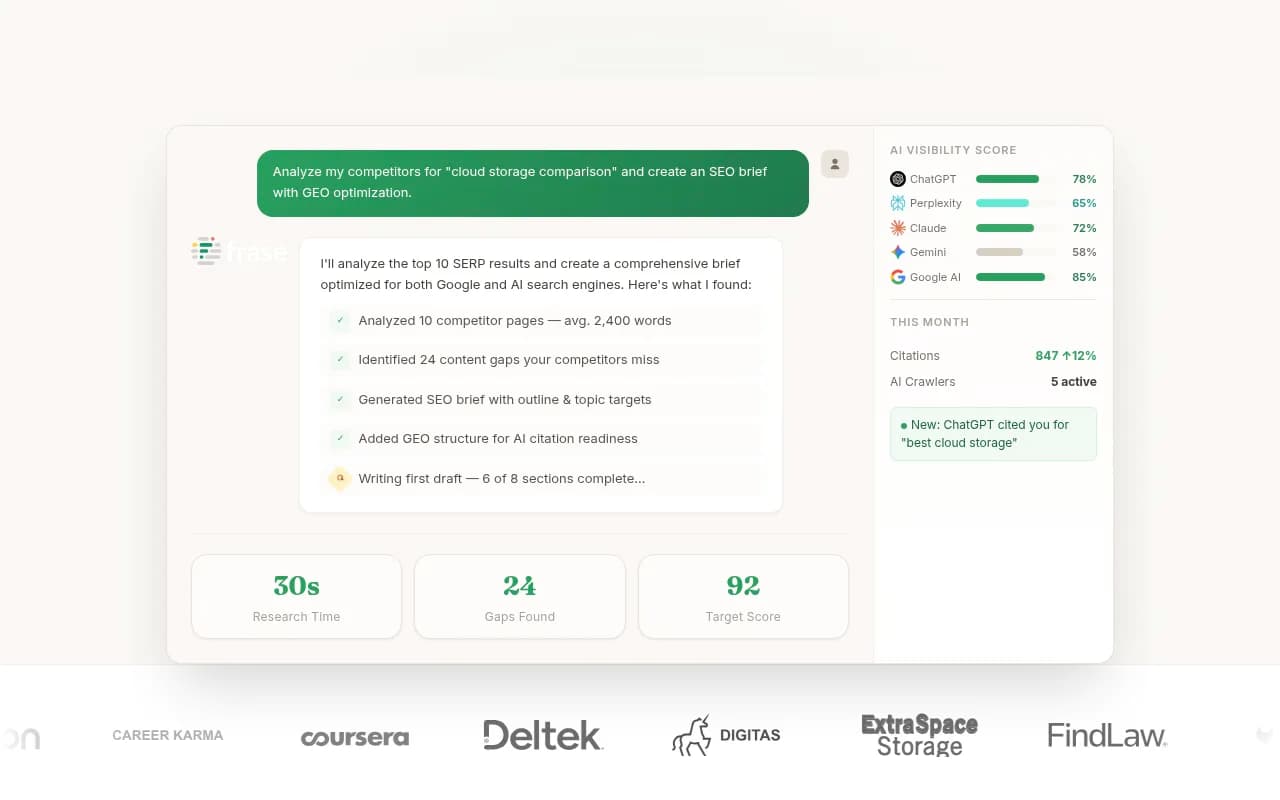
Frase has been doing AI-assisted content briefs for a few years now, and in 2026 it's one of the most complete pipelines for content teams. A recent evaluation ranked it highest among AI SEO agents for the number of pipeline stages it automates -- from research through brief generation through draft writing through optimization.
The difference from pure GEO platforms is that Frase is primarily built around traditional search, not AI search citations. Its briefs are strong for Google rankings, but they don't pull from AI citation data the way Promptwatch or Profound do. If your primary concern is AI search visibility specifically, Frase is a partial solution -- excellent for the writing workflow, less precise on the AI-search-specific gap analysis.
Relixir
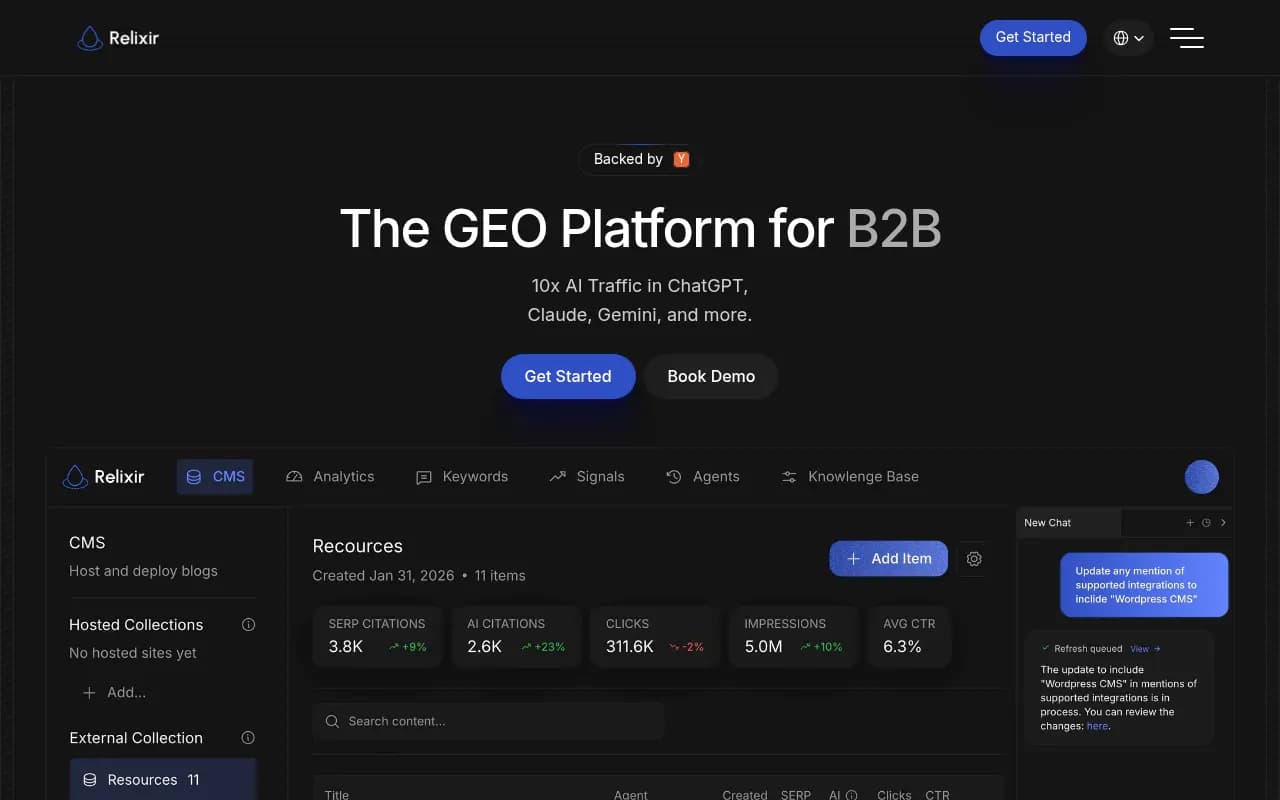
Relixir positions itself as an all-in-one GEO platform with an AI-native CMS. The idea is that content creation and AI visibility optimization happen in the same environment -- you're not exporting a brief to a separate writing tool, you're building and publishing directly in a system that's designed around AI search. For teams that want a tighter integration between gap analysis and publishing, this is worth evaluating.
Whitebox
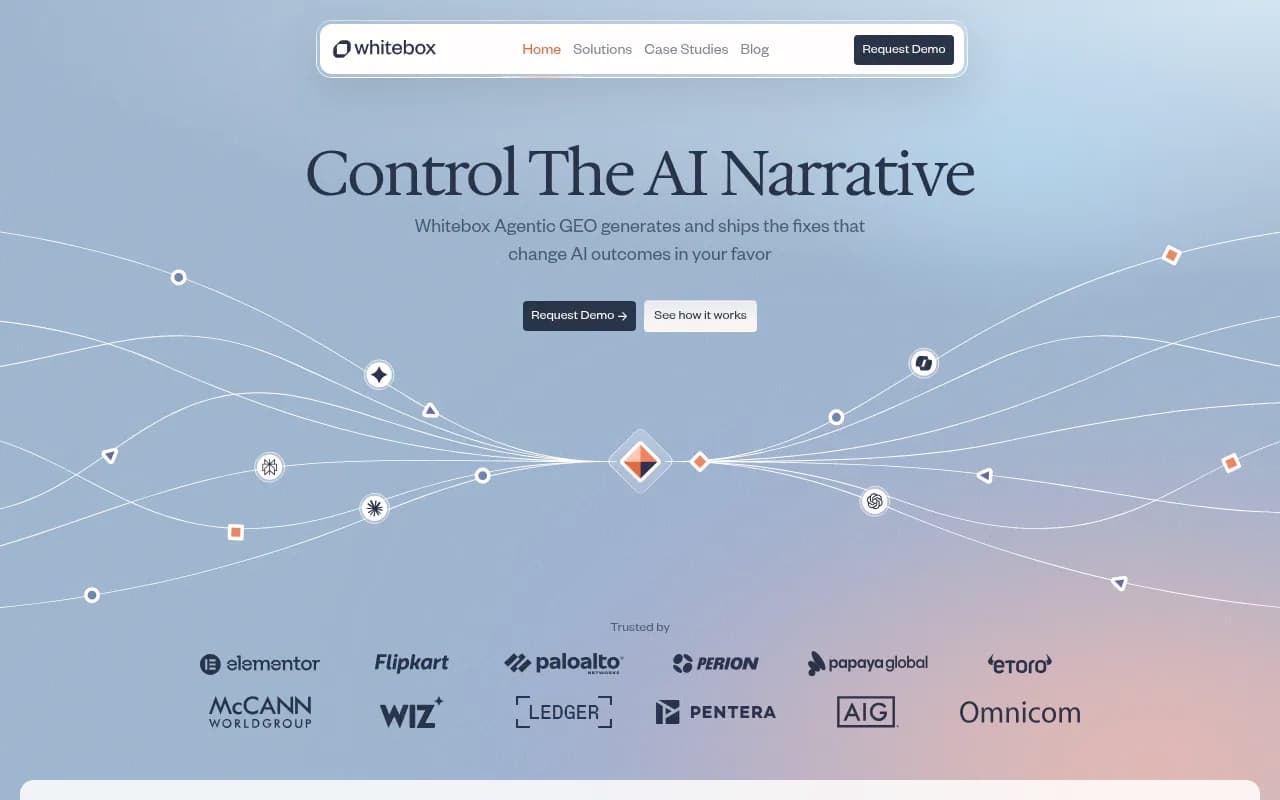
Whitebox takes a more automated approach -- it's described as an agentic GEO platform that generates and ships AI narrative fixes automatically. Rather than producing a brief for a human writer, it identifies gaps and deploys content changes autonomously. This is either very appealing or slightly alarming depending on how much control your team wants over what gets published. For teams comfortable with agentic workflows, it's a genuinely different approach to the problem.
Atomic AGI
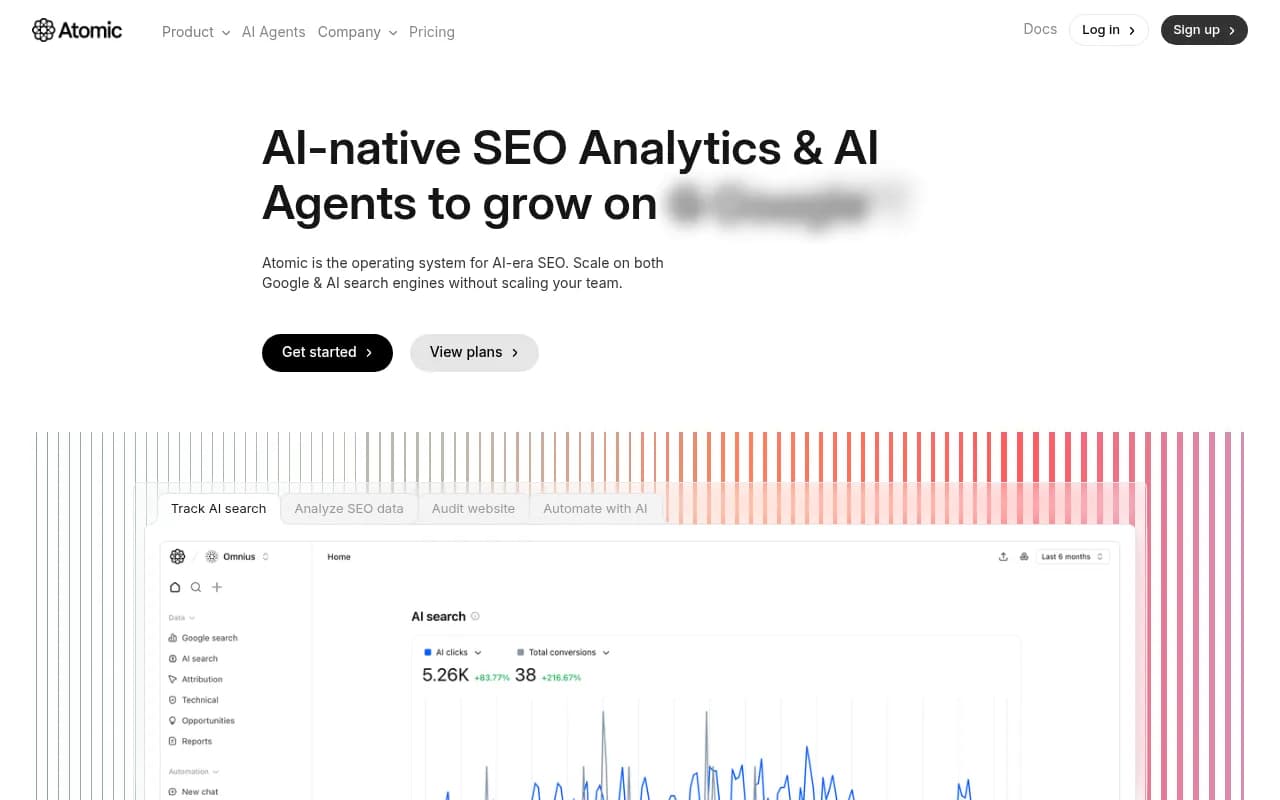
Atomic AGI combines Google and LLM tracking with automated content generation. It's worth mentioning for teams that need to optimize across both traditional search and AI search simultaneously -- the platform tracks both and generates content recommendations that account for both ranking environments.
Surfer SEO
Surfer is primarily a traditional SEO content optimization tool, but it's included here because its content editor and brief generation are genuinely good, and it's been adding AI search features. If your team already uses Surfer for on-page optimization, the brief generation workflow is mature and well-integrated. Just don't expect AI-citation-specific gap analysis -- that's not what Surfer is built for.
How these platforms compare
| Platform | AI citation gap analysis | Brief generation | Draft writing | Tracks results post-publish | AI crawler logs |
|---|---|---|---|---|---|
| Promptwatch | Yes | Yes | Yes | Yes | Yes |
| Profound | Yes | Yes | Yes | Partial | No |
| Frase | Partial | Yes | Yes | No | No |
| Relixir | Yes | Yes | Yes | Partial | No |
| Whitebox | Yes | Automated | Automated | Yes | No |
| Atomic AGI | Yes | Yes | Partial | Yes | No |
| Surfer SEO | No | Yes | Yes | No | No |
The table makes the gap obvious: most platforms do one or two things well. Promptwatch is the only one that covers all five columns, which is why it's rated as the only "Leader" across all GEO categories in a 2026 comparison of 12 platforms.
What to look for when evaluating these tools
The brief has to be grounded in AI citation data, not just keywords
This is the most important thing to check. Ask the vendor: where does the brief data come from? If the answer is "keyword research" or "SERP analysis," the brief is built for Google, not for ChatGPT or Perplexity. A brief that's genuinely useful for AI search visibility needs to be built on what AI models are actually citing -- which pages, which sources, which angles.
Prompt volume and difficulty matter
Not all gaps are worth filling. A platform that shows you 200 prompts where competitors are visible and you're not is only useful if it also tells you which of those prompts have meaningful volume and which are winnable. Prompt difficulty scoring and volume estimates help you prioritize instead of guessing.
The brief should include competitor context
Knowing you're not cited for a prompt is useful. Knowing that your competitor is cited because they have a specific page covering a specific angle -- and that page is missing from your site -- is actionable. Good briefs include this context.
Track what happens after you publish
This is where most platforms fall short. If you generate a brief, write the content, and publish it, you should be able to see whether AI models start citing that page. Without post-publish tracking, you're flying blind on whether your content strategy is working. Tools like Promptwatch and Whitebox have this; most monitoring-only platforms don't.
Watch out for briefs that are just SEO briefs with a GEO label
Some platforms have added "AI visibility" features to traditional SEO brief generators without fundamentally changing what the brief contains. The tell is whether the brief references specific AI model behavior, citation patterns, and prompt data -- or whether it's just a keyword-stuffed outline with a new name.
The monitoring-only trap
It's worth being direct about this: a lot of platforms in the AI visibility space are monitoring dashboards that have added a "content recommendations" tab without building a real brief generation workflow. The recommendations are often generic ("create more content about topic X") without the specificity that makes a brief useful.

The platforms to be skeptical of are the ones that show you gap data and then offer a list of suggested topics without telling you: what angle to take, what the AI models are currently citing for that prompt, what your competitor covered that you haven't, and what format the content should take. That's not a brief -- it's a topic list.
Platforms like Otterly.AI, Peec.ai, and AthenaHQ are solid for monitoring, but they stop before the brief generation step. That's fine if you have a content team that can take gap data and turn it into briefs independently. But if you want the platform to do that translation work, you need something with a real content workflow built in.



Practical recommendations by use case
For marketing teams that want a full loop from gap to published content
Promptwatch is the most complete option. The combination of Answer Gap Analysis, Content Agents, and post-publish tracking means you're not stitching together multiple tools. The briefs are grounded in real AI citation data, and you can see the results.
For agencies managing multiple clients
Profound's prebuilt workflow templates and multi-client management make it a strong choice for agencies. The brief generation is solid, and the agency-specific features (white-label reporting, client workspaces) are genuinely useful.
For content teams that already have a strong SEO workflow
Frase is the most mature content pipeline tool in this list. If your team is already comfortable with Frase for Google SEO and you want to add AI search optimization on top, the combination of Frase (for writing workflow) and a dedicated GEO monitoring tool (like Promptwatch) covers both bases.
For teams comfortable with agentic automation
Whitebox's autonomous approach is worth exploring if you want the platform to handle gap detection and content deployment without manual brief review at every step. Just make sure your editorial standards can accommodate that level of automation.
The bottom line
The AI search visibility space in 2026 has a clear split: tools that monitor and tools that act. The monitoring tools are useful for understanding where you stand. The action tools are useful for changing where you stand.
If you're evaluating platforms specifically for their ability to turn gap data into content briefs, the questions to ask are: where does the brief data come from, how specific is the output, and can you track whether the content you create actually gets cited? Most platforms answer one of those questions well. A few answer all three.
The gap between "we know where we're invisible" and "we've published content that fixed it" is where most teams get stuck. The platforms in this guide are the ones that have built workflows to close that gap -- with varying degrees of completeness, automation, and AI-search specificity.