Key takeaways
- Most AI visibility tools are monitoring dashboards. They show you data but don't help you act on it.
- The tools worth paying for in 2026 close the full loop: find gaps, generate content, track improvement.
- Promptwatch is the only platform rated "Leader" across all categories in a 2026 comparison of 12 GEO platforms -- and the only one with crawler logs, ChatGPT Shopping tracking, and built-in content generation in one workflow.
- Enterprise teams with big budgets should look at Profound or Scrunch for deep reporting. Teams that want to actually move the needle need an optimization platform, not just a tracker.
- Free trials exist for most tools on this list. Test two or three before committing.
Why tracking alone isn't enough anymore
Here's the uncomfortable truth about most AI visibility tools: they're dashboards dressed up as strategy. You pay $300/month, get a score, see that a competitor outranks you on 40 prompts, and then... what? The tool shrugs. You're on your own.
That was fine in 2024 when the category was new and just knowing your AI visibility score felt like progress. In 2026, it's not enough. About 68% of Google searches ended without a click in early 2026, according to SparkToro's analysis of Similarweb clickstream data. ChatGPT hit roughly 900 million weekly active users in February 2026 (per TechCrunch). Google's AI Overviews reach an estimated 2 billion-plus people monthly. When the AI answer IS the destination, being cited inside it isn't a nice-to-have -- it's the whole game.
So the question isn't "which tool shows me my AI visibility score?" It's "which tool actually helps me improve it?"
That's the lens I'm using to evaluate every platform in this guide. Some tools here are excellent monitors. A few are genuine optimization platforms. The difference matters enormously for your budget and your results.
How to read this guide
I've split the tools into two honest categories:
- "Full optimization loop" -- tools that help you find gaps AND fix them
- "Strong monitoring" -- tools that give you excellent data but leave content creation to you
Neither category is bad. But you should know which one you're buying before you sign up.
The full comparison at a glance
| Tool | Monitors AI engines | Content generation | Crawler logs | Prompt volume data | ChatGPT Shopping | Best for |
|---|---|---|---|---|---|---|
| Promptwatch | 10+ | Yes (Content Agents) | Yes | Yes | Yes | Full optimization loop |
| Profound | 10+ | No | No | Limited | No | Enterprise monitoring |
| Scrunch | Multiple | No | No | No | No | Agency reporting |
| Otterly.AI | Multiple | No | No | No | No | Budget monitoring |
| Peec AI | Multiple | No | No | No | No | Multi-language tracking |
| SE Ranking | 4 | No | No | No | No | SEO teams adding AI |
| AthenaHQ | 8+ | No | No | No | No | Monitoring-focused |
| Writesonic | Multiple | Yes | No | No | No | Content-first teams |
| Semrush | Multiple | Limited | No | No | No | Existing Semrush users |
1. Promptwatch -- the full optimization loop
Promptwatch is the tool I'd recommend first to any marketing team that wants to actually move the needle, not just measure it. The core difference from everything else on this list: it's built around an action loop, not a reporting dashboard.

Here's how that loop works in practice. The Answer Gap Analysis shows you exactly which prompts your competitors appear for that you don't -- not in the abstract, but with the specific content your site is missing. Then Content Agents generate articles, listicles, and comparison pages grounded in real prompt data, citation patterns, and competitor analysis. Then page-level tracking shows you when those new pages get crawled, cited, and how often. You can watch visibility scores move as AI models start picking up your content.
That cycle -- find gaps, generate content, track results -- is what separates an optimization platform from a tracker. Most tools on this list only do step one.
A few specifics worth knowing: Promptwatch monitors 10 AI models including ChatGPT, Perplexity, Claude, Gemini, Google AI Overviews, Grok, DeepSeek, Copilot, Meta AI, and Mistral. It tracks real user-facing responses, not just API outputs (which can differ significantly). The AI Crawler Logs feature shows you which pages AI bots are reading, what errors they hit, and how often they return -- something almost no competitor offers. And it's the only platform in this category with ChatGPT Shopping tracking, which matters a lot for e-commerce brands.
Pricing starts at $99/month for the Essential plan (1 site, 50 prompts, 5 articles). Professional is $249/month and adds crawler logs, city/state tracking, and 15 articles. Business is $579/month for 5 sites. A free trial is available.
In a 2026 comparison of 12 GEO platforms, Promptwatch was the only one rated "Leader" across all categories. That's not a marketing claim -- it's a meaningful gap when you look at what the others are missing.
2. Profound -- the enterprise monitoring standard
If your job is to report AI visibility to a C-suite or board, Profound is probably the strongest dedicated monitoring platform available. It tracks 10+ AI engines, has 400M+ prompt insights in its database, and the "why did we appear?" analysis is genuinely useful for understanding citation patterns.

What Profound doesn't do: generate content, show you crawler logs, or help you close the gaps it finds. It's a premium data layer, not an optimization tool. That's fine if you have a content team that can act on the insights independently. If you don't, you'll pay enterprise prices for a dashboard that tells you what's wrong without helping you fix it.
Pricing is on the higher end -- expect to pay significantly more than most tools here. Best suited for enterprise marketing teams and agencies that need governance, advanced reporting, and deep "why" analysis.
3. Scrunch -- best for agency reporting
Scrunch positions itself as an "AI visibility command center," and that's a fair description. It covers multiple major AI engines in one dashboard, tracks competitor visibility alongside your own, and produces clean week-over-week reports that are easy to share with clients or stakeholders.
The honest limitation: several user reviews note it's stronger at monitoring than at prescriptive optimization. It shows you what's happening more than what to do next. For agencies that need a consistent visibility narrative for clients -- and have their own content teams to act on the data -- Scrunch works well. Entry pricing starts around $300/month.
4. Otterly.AI -- affordable monitoring for smaller teams
Otterly.AI is one of the more accessible options in this space, both in price and simplicity. It tracks AI visibility across major platforms and gives you a clear picture of where your brand appears (and doesn't).

The gap: no crawler logs, no visitor analytics, no content generation. It's a monitoring-only tool, which is fine if you're just starting to measure AI visibility and want something lightweight. If you're ready to act on what you find, you'll quickly outgrow it.
5. Peec AI -- multi-language tracking
Peec AI's standout feature is multi-language and multi-region monitoring. If your brand operates across multiple markets and needs to track AI visibility in different languages, Peec is one of the few tools built for that use case.

Like Otterly.AI, it's a monitoring platform -- solid data, no content generation or optimization tools. Good for international brands that need geographic breadth in their tracking.
6. SE Ranking -- for SEO teams adding AI visibility
SE Ranking's AI visibility tracker covers ChatGPT, Gemini, Google AI Mode, and Perplexity. It offers brand visibility scoring, sentiment analysis, and integrates with SE Ranking's broader SEO toolkit. If your team is already using SE Ranking for traditional SEO, adding AI visibility tracking here makes sense -- it's one less platform to manage.
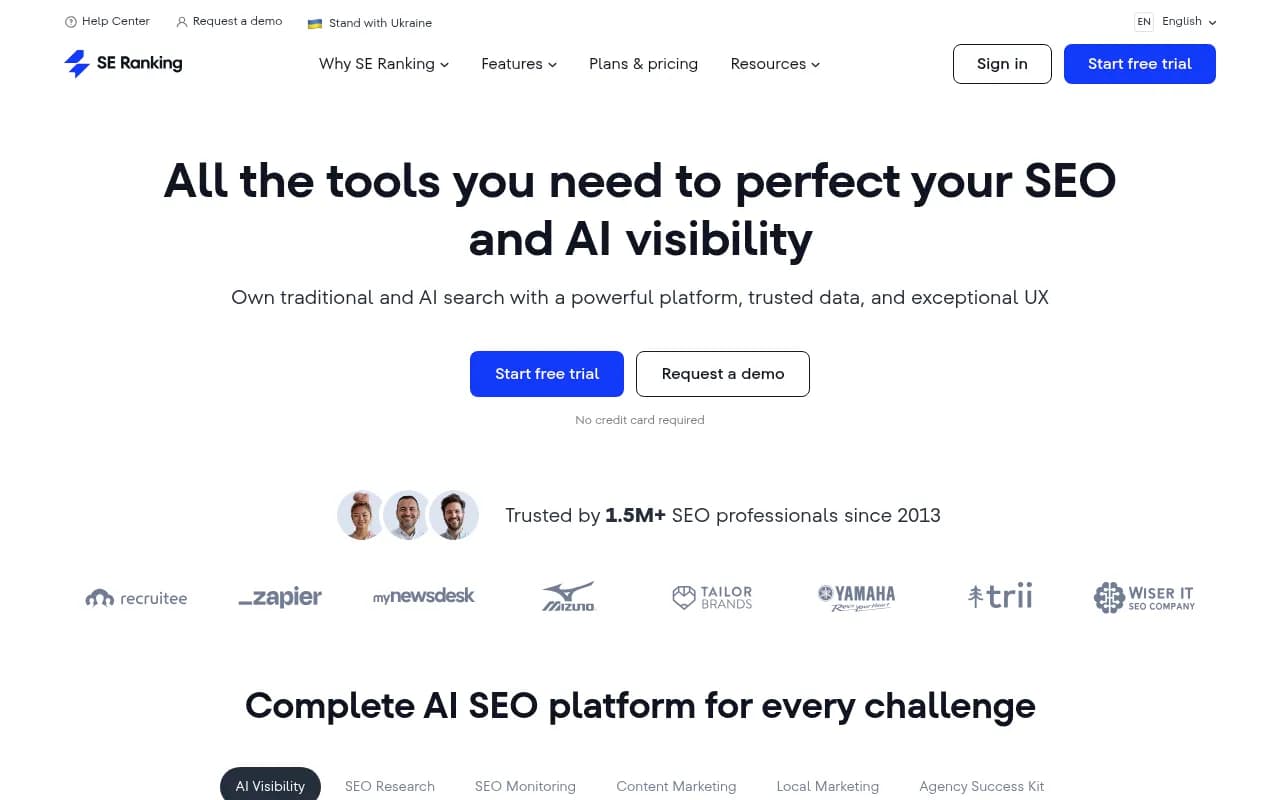
The coverage is narrower than dedicated AI visibility tools (4 engines vs. 10+), and there's no content generation. But for teams that want AI visibility data alongside their existing rank tracking and site audit workflows, it's a practical choice.
7. AthenaHQ -- monitoring with a clean interface
AthenaHQ tracks 8+ AI search engines and has a reputation for a clean, usable interface. It's monitoring-focused -- you get visibility scores, competitor comparisons, and prompt tracking without a lot of noise.

What it lacks: content optimization and generation capabilities. AthenaHQ will tell you where you're invisible; it won't help you become visible. For teams that want a dedicated monitoring tool with good UX, it's worth a look.
8. Writesonic -- content-first approach
Writesonic takes a different angle than most tools here. It's primarily a content generation platform that has added AI search visibility tracking. If content creation is your main bottleneck -- and you need a tool that can both monitor visibility and help you produce content at scale -- Writesonic is one of the few options that combines both.
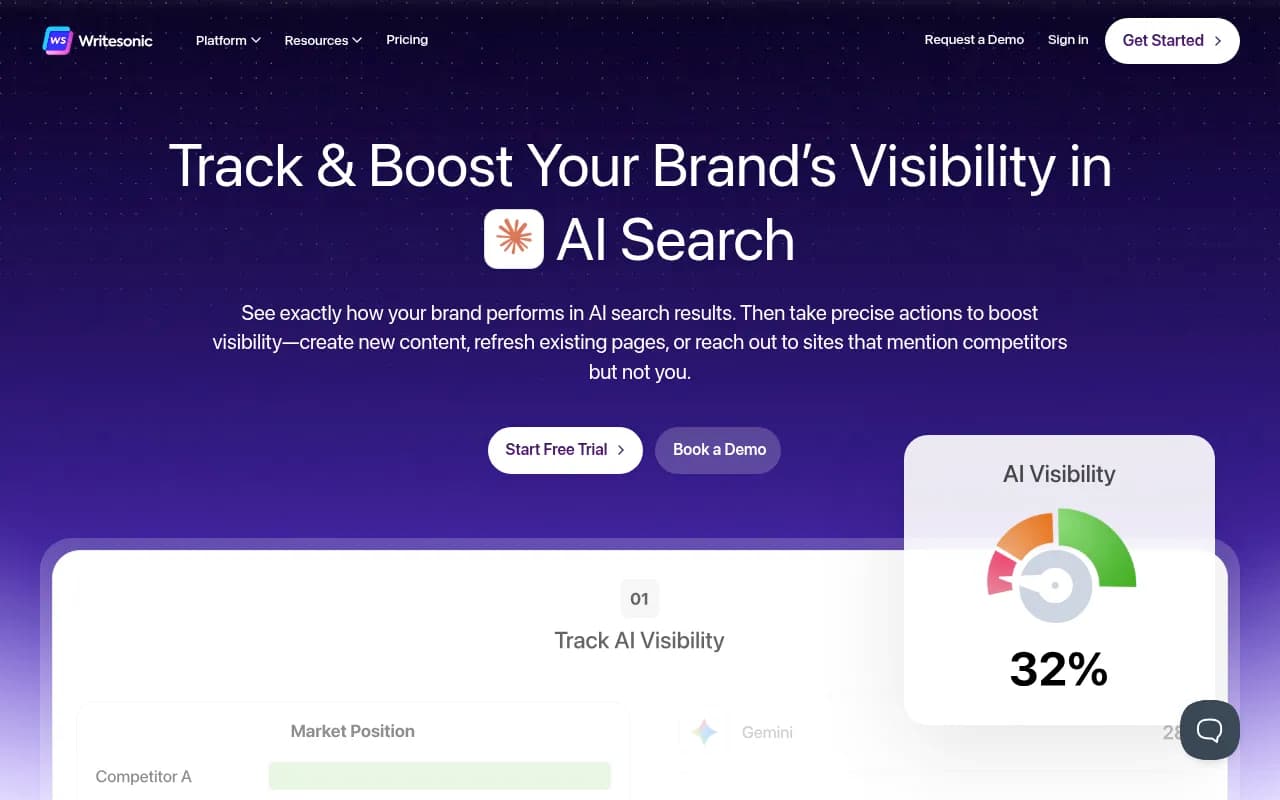
The trade-off: the tracking side is less deep than dedicated monitoring platforms. Prompt volume data, crawler logs, and ChatGPT Shopping tracking aren't there. But for content teams that want to move fast and don't need enterprise-grade analytics, it's a reasonable middle ground.
9. Semrush -- for teams already in the ecosystem
Semrush has added AI visibility features to its existing platform, making it a natural choice for teams already standardized on Semrush for SEO. The AI Toolkit covers multiple engines and integrates with keyword research, site audits, and content tools you're probably already using.
The honest limitation: Semrush uses fixed prompts rather than dynamic prompt tracking, and there's no AI traffic attribution connecting visibility to actual revenue. It's a solid addition to an existing Semrush workflow, but it's not a replacement for a dedicated AI visibility platform if that's your primary focus.
Tools worth watching
A few other platforms are worth knowing about, depending on your specific situation:
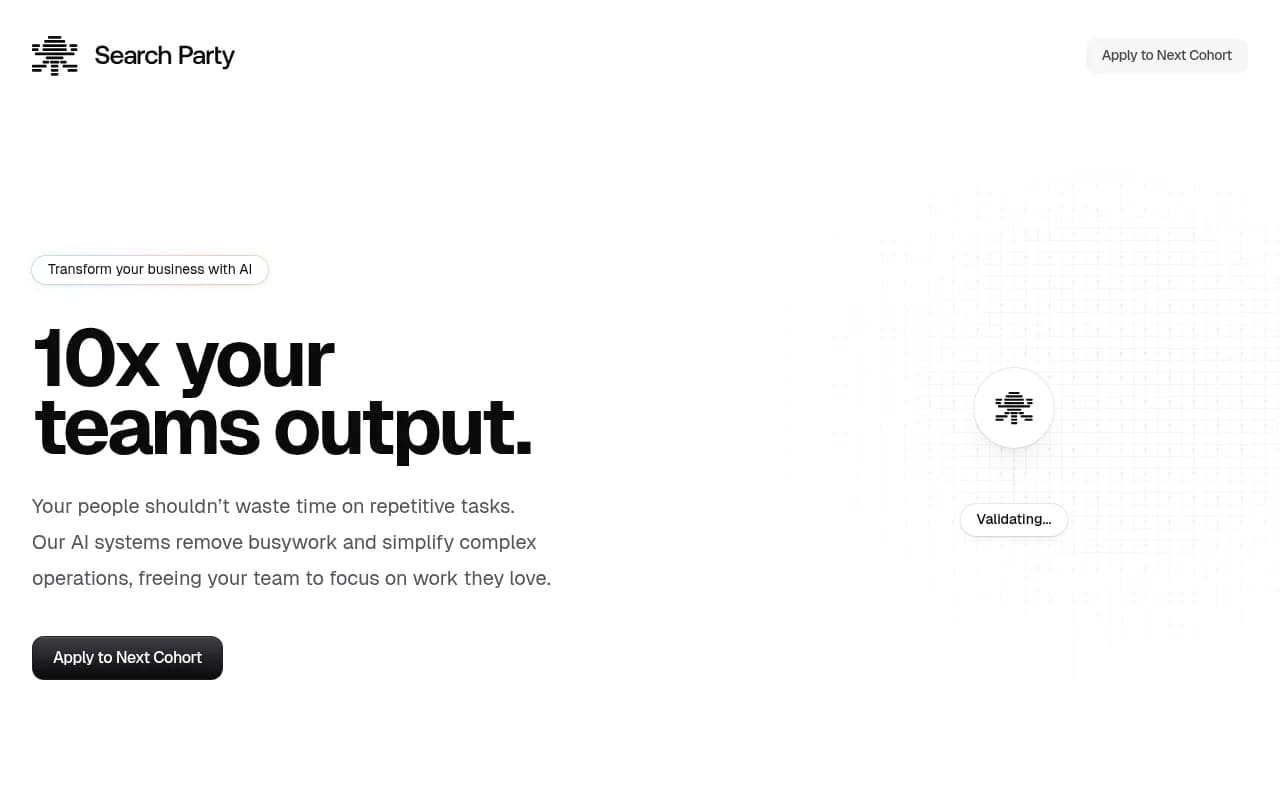
For agencies tracking multiple clients: Search Party has a strong agency-oriented workflow, though prompt metrics and content gap analysis are limited.
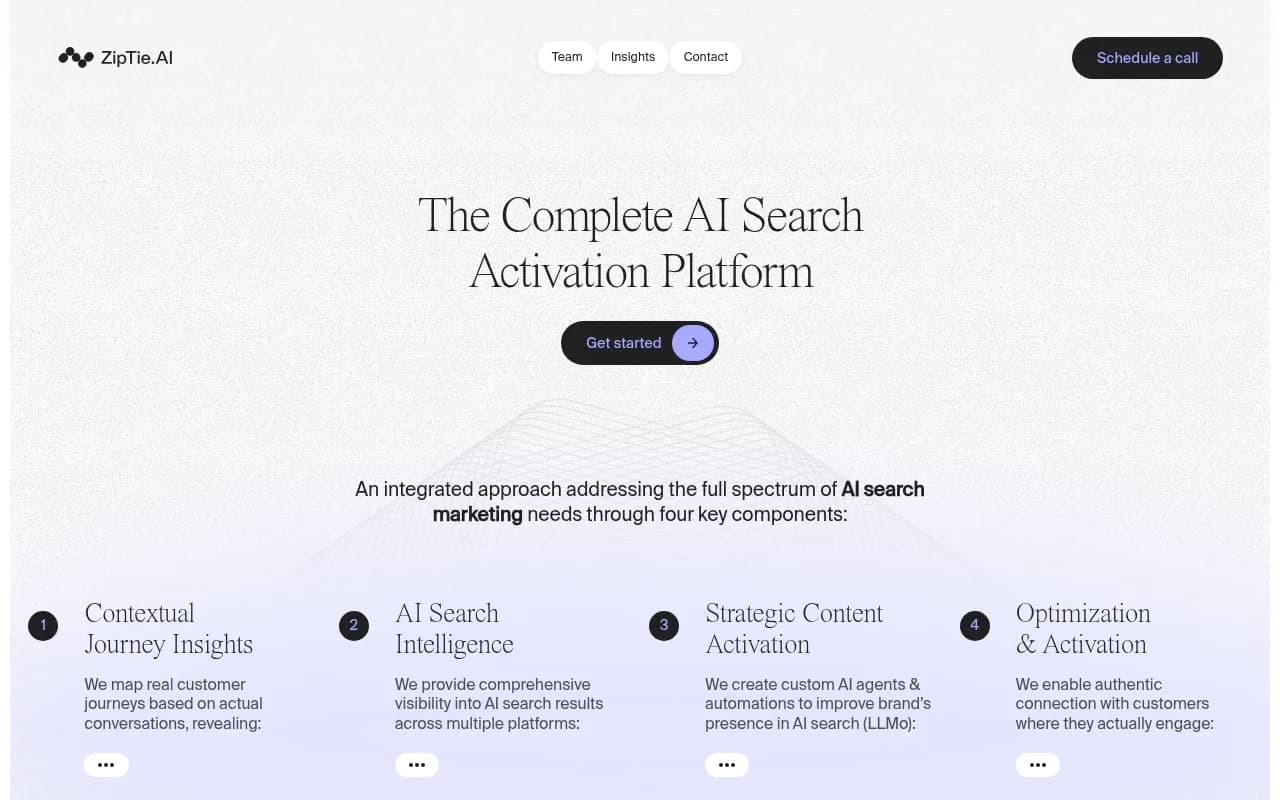
For deep citation analysis: ZipTie offers detailed analysis of which sources AI models are citing, useful for understanding where to publish and what to optimize.
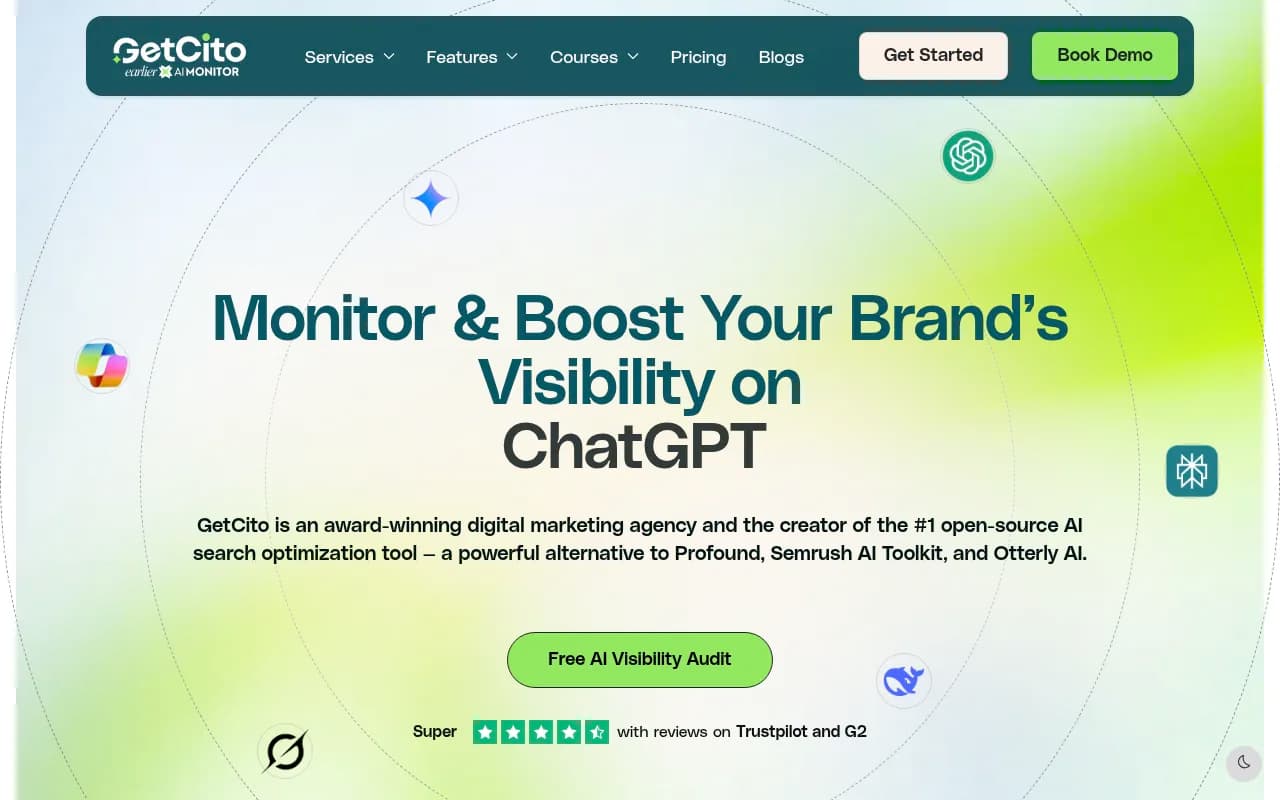
For brand mention tracking alongside AI visibility: GetCito combines AI visibility tracking with broader brand monitoring.
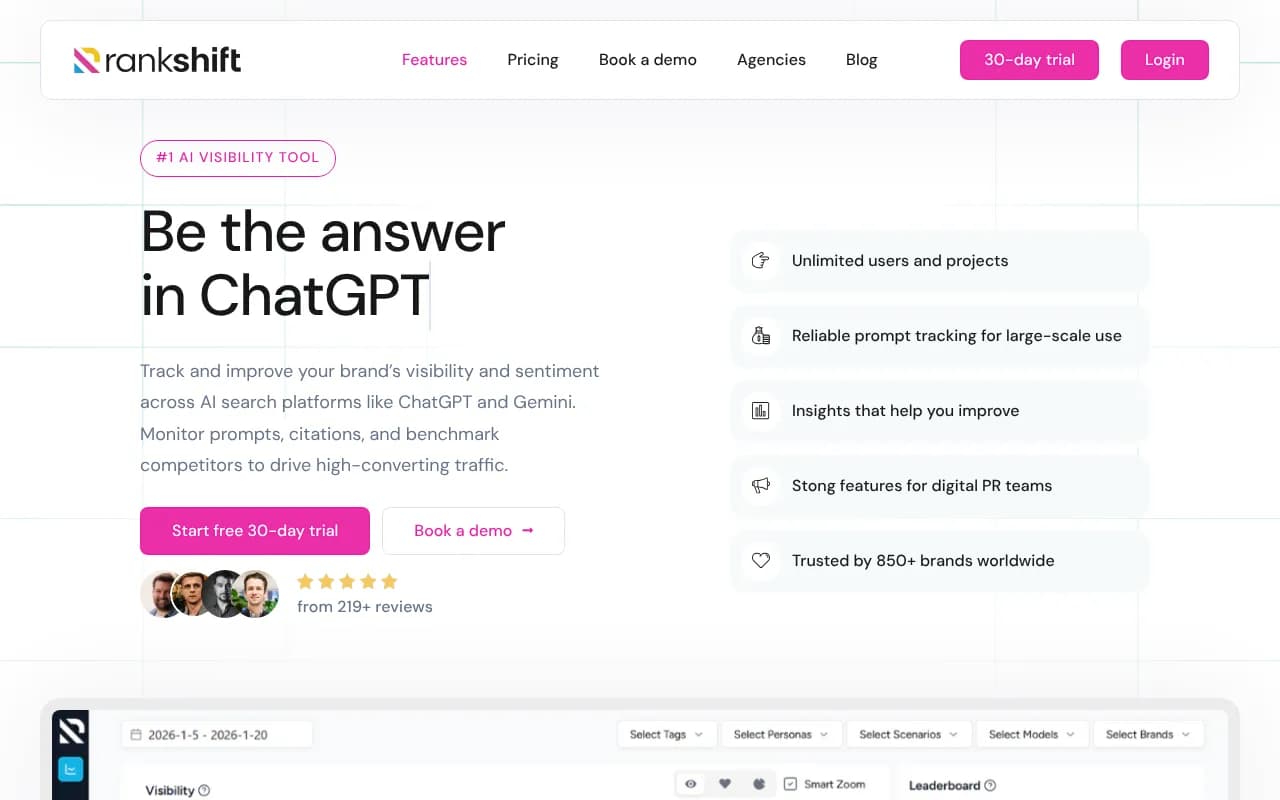
For budget-conscious teams: Rankshift is a lightweight LLM tracking tool that covers the basics without a large price tag.
What to look for when choosing
The single most important question to ask any AI visibility vendor: "After you show me where I'm invisible, what does your platform do to help me fix it?"
If the answer is "we show you the data and you take it from there," you're buying a monitoring tool. That might be exactly what you need -- but know what you're getting.
Beyond that, a few things worth checking:
- How many AI engines does it actually monitor? Four is very different from ten.
- Does it track real user-facing responses or just API outputs? These can differ.
- Is there prompt volume data? Knowing a gap exists is less useful than knowing how many people are searching for it.
- Does it show you which of your pages AI bots are crawling, and what errors they hit?
- Can it connect AI visibility to actual traffic and revenue?
Most tools answer "no" to most of those questions. The ones that answer "yes" to all of them are genuinely rare.
The bottom line
The AI visibility tool market in 2026 is full of monitoring dashboards that charge optimization-platform prices. Most will show you a score, a competitor comparison, and a list of prompts you're missing -- then leave you to figure out what to do next.
The tools that stand out are the ones that close the loop: they find the gap, help you create content that fills it, and track whether that content actually starts getting cited. That's a much harder product to build, which is why so few tools do it well.
If you're serious about AI search visibility as a growth channel -- not just a metric to report -- start with a platform that treats optimization as the goal, not monitoring. The data is only useful if you can act on it.