Key takeaways
- AI search now reaches billions of users monthly: ChatGPT hit 900 million weekly users in early 2026, Google AI Overviews reaches 2.5 billion people monthly, and around 68% of Google searches end without a click.
- Most platforms only monitor where you appear. The ones that actually move the needle also help you fix gaps through content creation, competitor analysis, and crawler diagnostics.
- The biggest differentiator in 2026 is the "action loop": find gaps, create content that answers them, track whether AI models start citing you.
- Reddit accounts for a surprisingly large share of AI citations -- platforms that ignore it are missing a real signal.
- Pricing ranges from free tiers to enterprise contracts, so there's a viable option at almost every budget.
Why AI search visibility suddenly matters so much
A year ago, most marketing teams treated AI visibility as a curiosity. Now it's a competitive pressure point. When someone asks ChatGPT "what's the best project management software for remote teams" or "which accounting firm handles mid-market M&A," the answer names specific brands. If yours isn't one of them, you've lost that moment entirely -- and unlike a Google ranking, you can't even see it happening without the right tools.
The numbers make this concrete. About 93% of Google AI Mode searches end without a click, according to Semrush research. Gartner projected a 25% decline in traditional search volume by 2026 due to AI chatbots. You can rank number one organically while the AI answer above you recommends a competitor. Position is no longer the same as presence.
This is what makes the platform you choose genuinely consequential. A monitoring-only tool tells you you're invisible. A full optimization platform tells you why, then helps you do something about it.
The core problem with most platforms: they stop at monitoring
Browse the category and you'll notice a pattern. Most tools show you a dashboard with your "AI visibility score," a list of prompts where you appear or don't, and maybe a competitor comparison. Then they stop.
That's useful data. But it doesn't answer the question that actually matters: what do I do now?
The platforms worth paying for in competitive markets are the ones that close the loop. They identify which prompts your competitors rank for that you don't, surface the specific content gaps driving that difference, and either generate content to fill those gaps or give you a detailed brief to do it yourself. Then they track whether the new content gets crawled and cited.
That cycle -- find gaps, create content, verify results -- is what separates optimization platforms from dashboards.
The top platforms, ranked by what they actually do
Full optimization platforms (monitor + act)
Promptwatch is the most complete platform in this category. It covers 10 AI models (ChatGPT, Perplexity, Claude, Gemini, Google AI Overviews, Google AI Mode, Grok, DeepSeek, Copilot, and Meta AI), tracks over 4.5 billion citations and prompts, and is used by 1,480+ brands including Booking.com and Center Parcs.
What separates it from most competitors is the action layer. Answer Gap Analysis shows you exactly which prompts competitors are visible for that you're not -- not as a vague category, but as specific questions with specific content gaps. Content Agents then generate articles, listicles, and comparisons grounded in that prompt data. And AI Crawler Logs show you in real time which pages AI crawlers are reading, what errors they hit, and when a page moves from crawled to cited. Most platforms don't have this at all.
Promptwatch also tracks Reddit and YouTube as citation sources, monitors ChatGPT Shopping recommendations, and supports multi-language, multi-region tracking with persona customization. Pricing starts at $99/month for one site and 50 prompts.

AthenaHQ covers AI visibility, citations, competitors, sentiment, and content opportunities. It's a solid mid-tier option for teams that want structured monitoring with some content guidance, though it's more monitoring-focused than Promptwatch.

Profound tracks and optimizes brand visibility across AI search engines with a strong data layer. It's well-regarded for enterprise teams, though it comes at a higher price point and lacks Reddit tracking and ChatGPT Shopping monitoring.

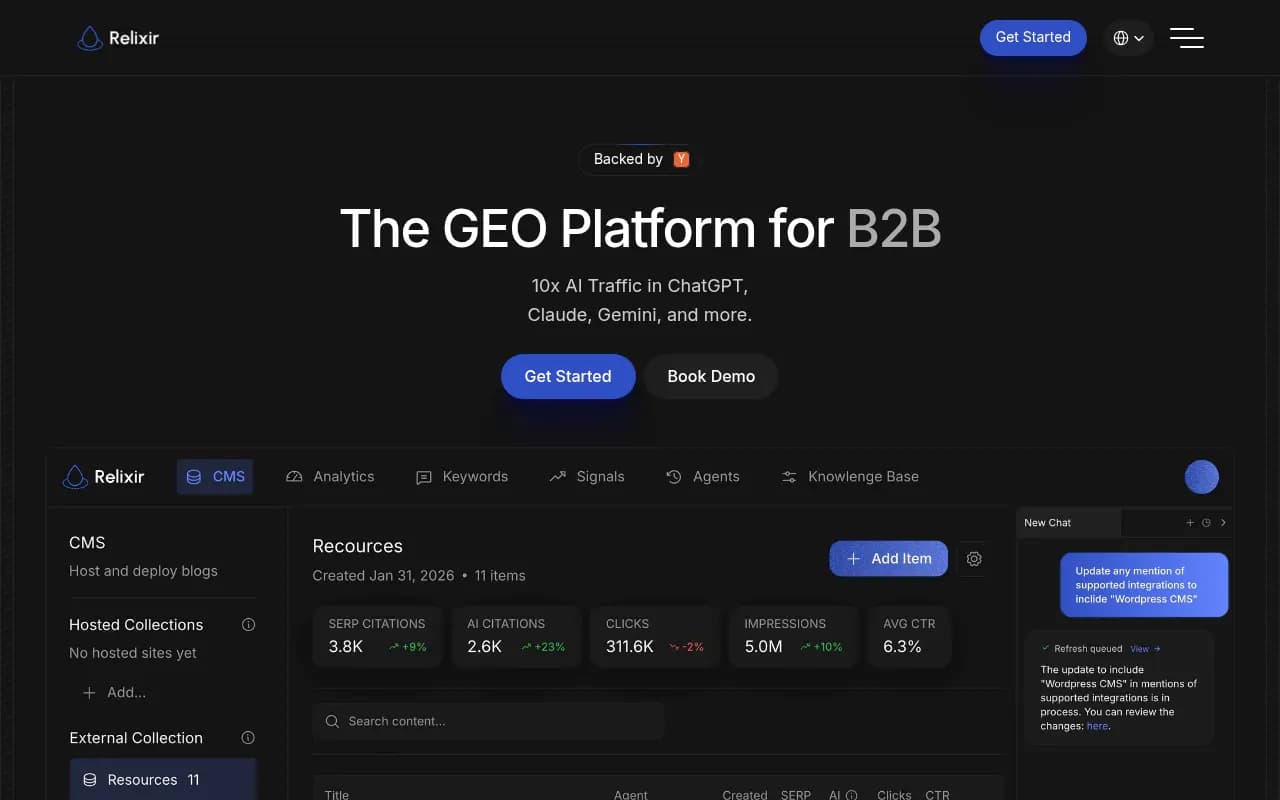
Relixir takes an interesting angle with an AI-native CMS and autonomous content capabilities built into the GEO workflow. Worth evaluating if content production is your primary bottleneck.
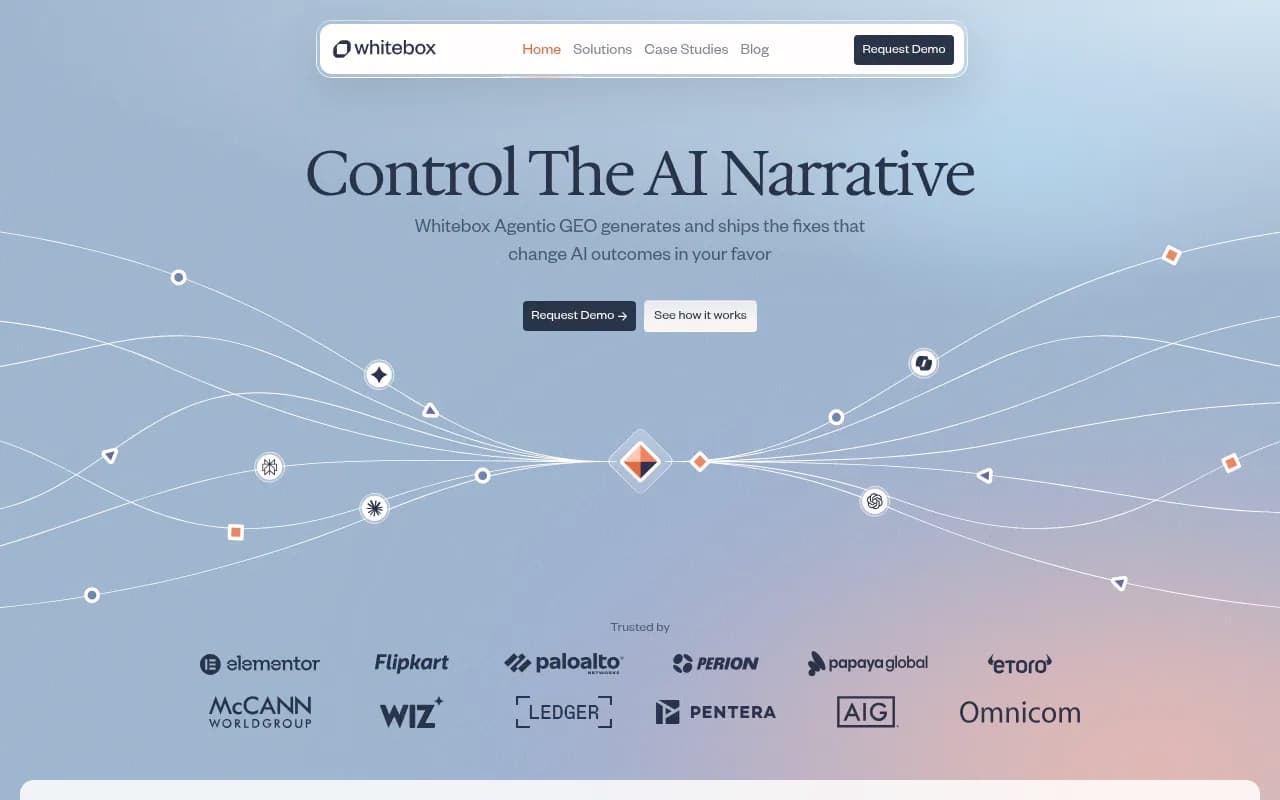
Whitebox is an agentic GEO platform that generates and ships AI narrative fixes automatically -- a good fit for teams that want more automation in the content correction loop.
Monitoring-focused platforms (strong tracking, limited action)
Otterly.AI is consistently mentioned as the cleanest citation tracker in the category. If you want a clear read on where you appear across AI engines without a lot of complexity, it delivers. The limitation is that it won't help you fix what it finds.

Peec AI is built specifically for prompt-level tracking across multiple languages. It's a specialist tool -- good depth on the monitoring side, especially for international brands.

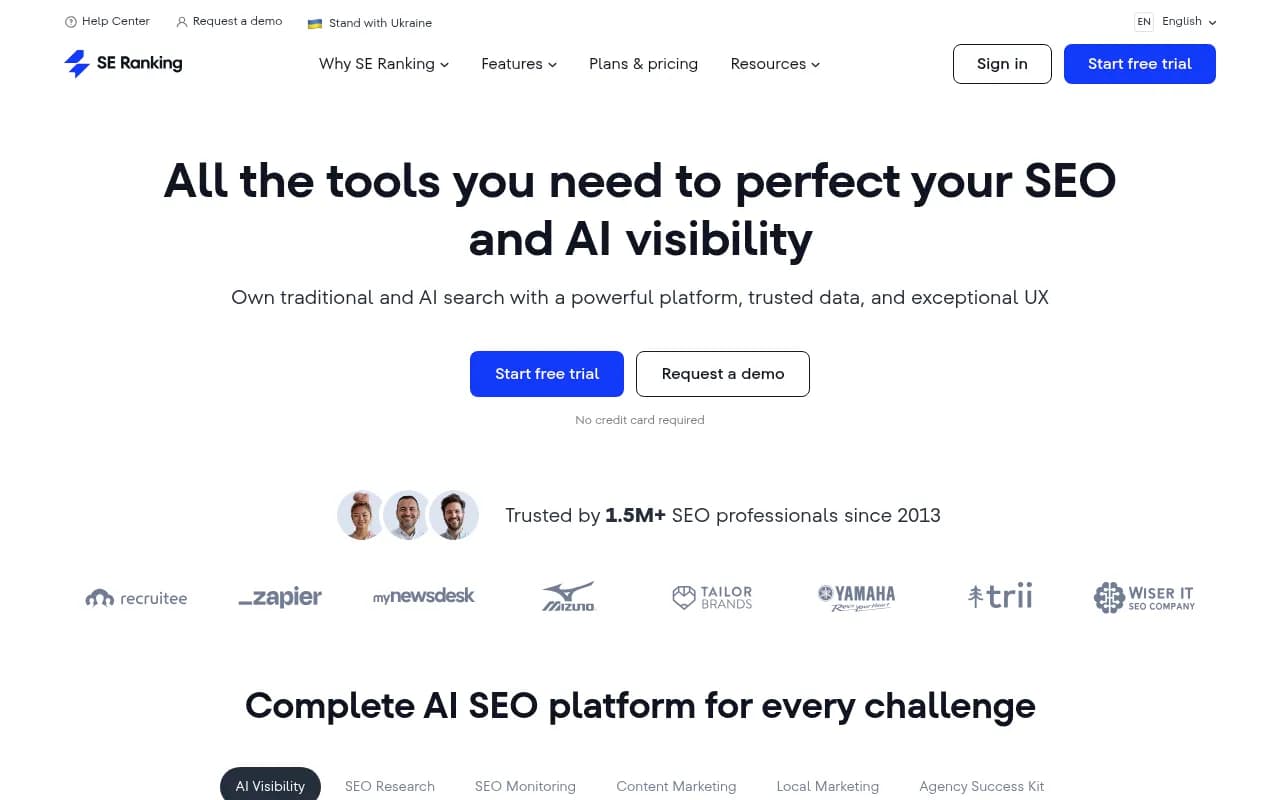
SE Ranking has added an AI visibility toolkit to its established SEO platform, which makes it a reasonable option for teams already in that ecosystem.
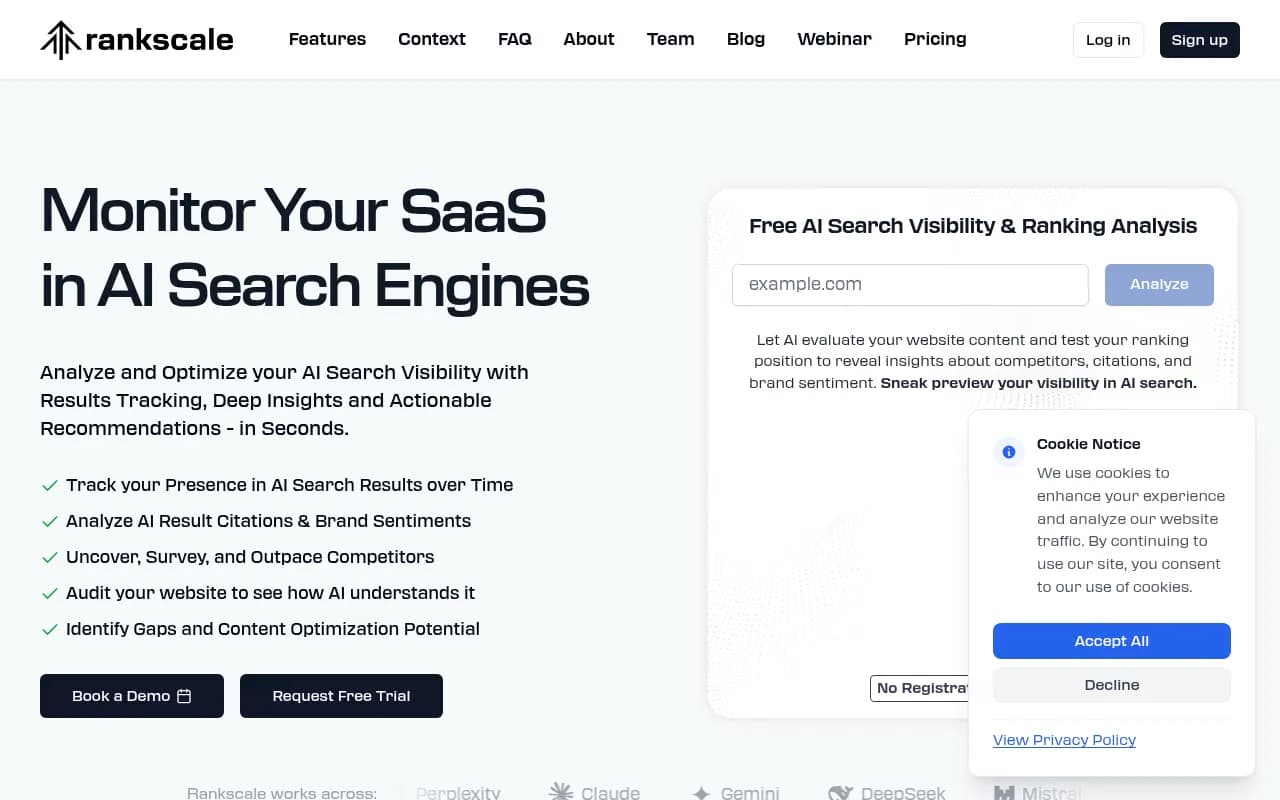
Rankscale covers AI search ranking and visibility with a clean interface. Useful for teams that want rank-style tracking applied to AI search.
Scrunch AI focuses on AI search visibility monitoring for modern brands. Solid for monitoring, but limited on the optimization side.
Hall AI tracks how AI platforms cite and discuss your brand. Good for brand sentiment and citation monitoring.
Traditional SEO platforms with AI add-ons
Semrush added AI visibility tracking to its existing toolkit. If you're already a Semrush user, the add-on gives you basic AI monitoring without switching platforms. The limitation is that Semrush uses fixed prompts rather than dynamic prompt tracking, which misses how real users actually query AI engines.
Ahrefs Brand Radar monitors brand mentions in AI search results. Like Semrush, it's better as a supplement for existing Ahrefs users than as a standalone AI visibility solution. Fixed prompts and no AI traffic attribution are real gaps.
BrightEdge is strong for enterprise SEO teams optimizing content at scale. Its AI Catalyst product adds AI search optimization, though it's more focused on your own content than on the broader citation graph.
seoClarity is an enterprise SEO platform with AI search visibility tracking built in. Good for large teams with complex reporting needs.
Niche and emerging tools worth knowing
Gauge focuses on strategic competitive intelligence for AI visibility -- useful if competitive benchmarking is your primary need.
Conductor offers AI visibility tracking with persona customization, which is genuinely useful for B2B brands where buyer persona matters.
Qwairy positions itself as a GEO strategy and optimization platform with a focus on actionable recommendations.
Rankshift is an LLM tracking tool built specifically for GEO and AI visibility, with a clean focus on the tracking layer.
LLMrefs tracks brand visibility across ChatGPT, Perplexity, and other major AI engines. A lighter-weight option for smaller teams.
Trakkr.ai covers brand visibility across ChatGPT, Claude, Perplexity, and more. Worth evaluating for teams that want straightforward multi-model tracking.
Platform comparison table
| Platform | AI models covered | Content generation | Crawler logs | Reddit tracking | ChatGPT Shopping | Starting price |
|---|---|---|---|---|---|---|
| Promptwatch | 10 | Yes (Content Agents) | Yes | Yes | Yes | $99/mo |
| AthenaHQ | 8+ | Limited | No | No | No | Custom |
| Profound | Multiple | No | No | No | No | Custom (higher) |
| Otterly.AI | Multiple | No | No | No | No | Lower tier |
| Peec AI | Multiple | No | No | No | No | Mid-tier |
| Semrush AI | Multiple | No | No | No | No | Add-on to existing |
| Ahrefs Brand Radar | Multiple | No | No | No | No | Add-on to existing |
| BrightEdge | Multiple | Limited | No | No | No | Enterprise |
| Relixir | Multiple | Yes (AI CMS) | No | No | No | Custom |
| Whitebox | Multiple | Yes (agentic) | No | No | No | Custom |
What to actually look for when choosing
Platform coverage
The AI search landscape is fragmented. ChatGPT, Perplexity, Google AI Overviews, Claude, Gemini, Grok, DeepSeek, Copilot -- they don't all cite the same sources or behave the same way. A platform that only monitors two or three of these is giving you a partial picture. In competitive markets, that gap matters.
Real prompt data vs. fixed prompts
Some platforms let you define custom prompts that match how your actual customers search. Others use fixed prompt sets. The difference is significant: fixed prompts tell you how you perform on someone else's questions. Custom prompts tell you how you perform on the questions your buyers are actually asking.
The action layer
This is the most important question to ask any vendor: what happens after I see the data? If the answer is "you can export it and take it to your content team," that's a monitoring tool. If the answer is "we show you the specific content gaps and generate briefs or articles to fill them," that's an optimization platform.
Crawler and indexing visibility
AI models can't cite content they haven't crawled. Knowing whether your pages are being crawled, how often, and whether crawlers are hitting errors is genuinely useful information -- and most platforms don't surface it at all. Promptwatch's AI Crawler Logs are one of the few implementations of this that actually work in practice.
Reddit and off-site citations
Reddit is a major source for AI citations. Some analyses put it at 40% of all AI citations. A platform that only monitors your own website is missing a huge part of the picture. Off-site citation tracking -- Reddit threads, YouTube videos, third-party listicles -- tells you where AI models are actually learning about your category.
Attribution to revenue
Visibility scores are nice. Revenue impact is better. The most mature platforms connect AI citation data to actual traffic and pipeline, so you can justify the investment and prioritize the prompts that drive real business outcomes.
How competitive markets change the calculus
In low-competition categories, basic monitoring might be enough. You appear or you don't, and the stakes are relatively low.
In competitive markets -- SaaS, financial services, travel, healthcare, e-commerce -- every citation is a customer touchpoint that either goes to you or a competitor. The AI answer for "best CRM for mid-market sales teams" or "top travel insurance for frequent flyers" is effectively a recommendation engine running at scale. Being cited consistently in those answers is worth real revenue. Being absent consistently is a real loss.
That's why the monitoring-vs-optimization distinction matters more in competitive markets. You can't afford to just watch the data. You need to act on it faster than your competitors do.
The platforms that support that speed -- gap analysis, content generation, crawler diagnostics, citation tracking -- are the ones worth investing in when the stakes are high.
A practical approach to getting started
If you're evaluating platforms for a competitive market, here's a reasonable sequence:
- Start with a free trial of a full-stack platform (Promptwatch has one) to see your current visibility baseline across multiple AI models.
- Run an answer gap analysis to identify which prompts competitors are winning that you're not.
- Prioritize gaps by prompt volume and business relevance -- not every gap is worth closing.
- Create content specifically targeting those gaps, using either the platform's content generation tools or your own team with platform-generated briefs.
- Monitor crawler logs to confirm AI engines are discovering the new content.
- Track citation changes over the following weeks to measure impact.
This isn't a one-time project. AI models update their training data and citation patterns continuously, so the gap analysis needs to run on a regular cadence. The teams winning at AI visibility in 2026 are treating it like SEO -- a continuous process, not a one-off audit.
The bottom line
The AI search visibility category has matured fast. There are now dozens of platforms, ranging from lightweight citation trackers to full optimization suites. The right choice depends on your competitive situation, your team's capacity to act on data, and how much of the optimization work you want the platform to handle.
For most teams in competitive markets, the monitoring-only tools will leave you frustrated -- you'll know you're invisible but won't have a clear path to fixing it. The platforms that close the loop between data and action are where the real value is in 2026.