Key takeaways
- Brandlight is a dedicated AI visibility platform built for enterprise brands, with Fortune 500 clients and a $30M Series A behind it. Its strength is depth: sentiment analysis, citation tracking, and a multi-brand command center.
- Conductor is an enterprise SEO platform that added AI search tracking. It covers more ground (traditional SEO, content, analytics) but AI visibility is one module among many, not the core product.
- G2 reviewers who compare the two say Conductor is slower to deliver ROI and more expensive, but rates higher on support.
- Both platforms are monitoring-focused. Neither gives you a clear path from "you're invisible here" to "here's the content that fixes it."
- If you need an optimization loop -- not just a dashboard -- platforms like Promptwatch close the gap by combining tracking with content generation and gap analysis.
Picking an enterprise marketing platform in 2026 is harder than it looks. The category has splintered: traditional SEO suites are bolting on AI tracking, while dedicated AI visibility tools are racing to add enough features to justify enterprise contracts. Brandlight.ai and Conductor sit on opposite ends of that spectrum, and the right choice depends heavily on what problem you're actually trying to solve.
This guide breaks down both platforms honestly -- what they do well, where they fall short, and who each one is actually built for.
What Brandlight.ai is
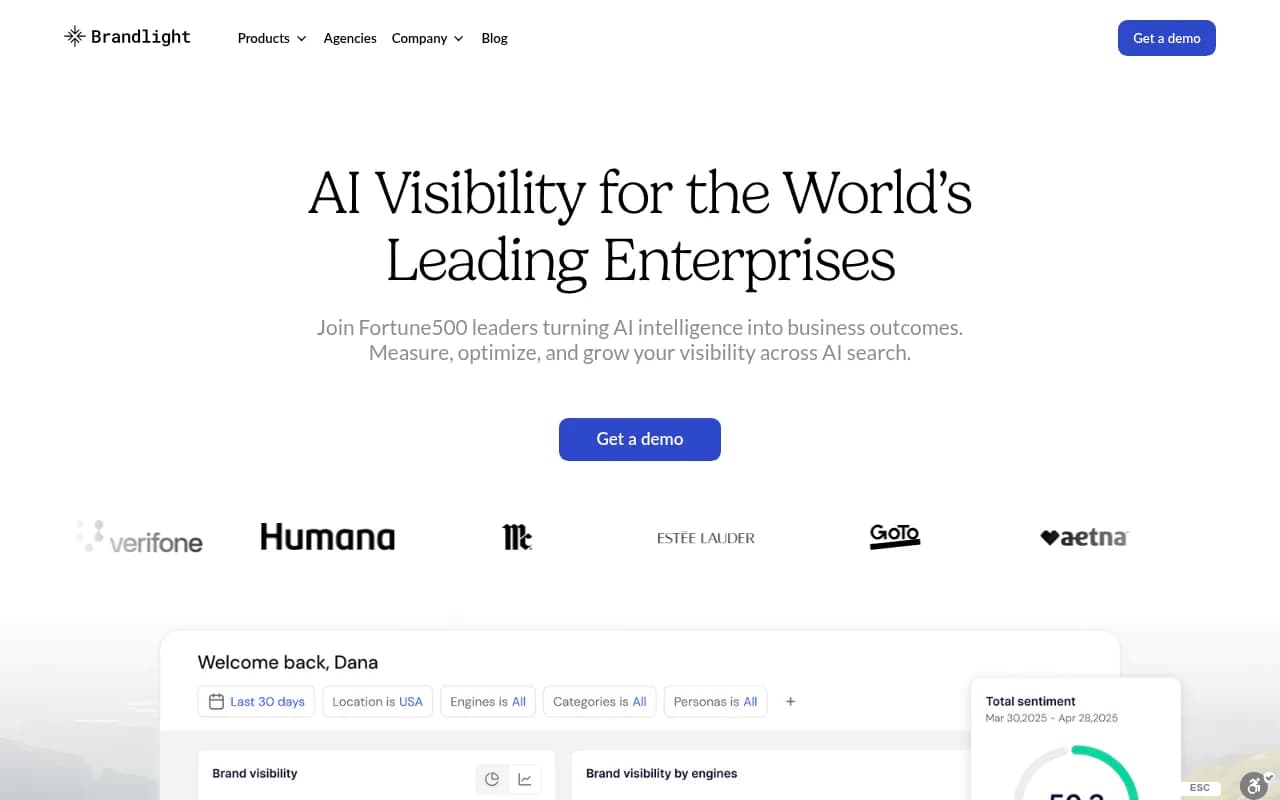
Brandlight launched as a purpose-built AI visibility platform for large brands. After raising a $30M Series A, it counts Humana, Kimberly-Clark, Aetna, and Charter Communications among its clients. The pitch is straightforward: as more consumers use ChatGPT, Gemini, and Perplexity instead of Google, your brand's presence in those AI responses matters as much as your search rankings did five years ago.
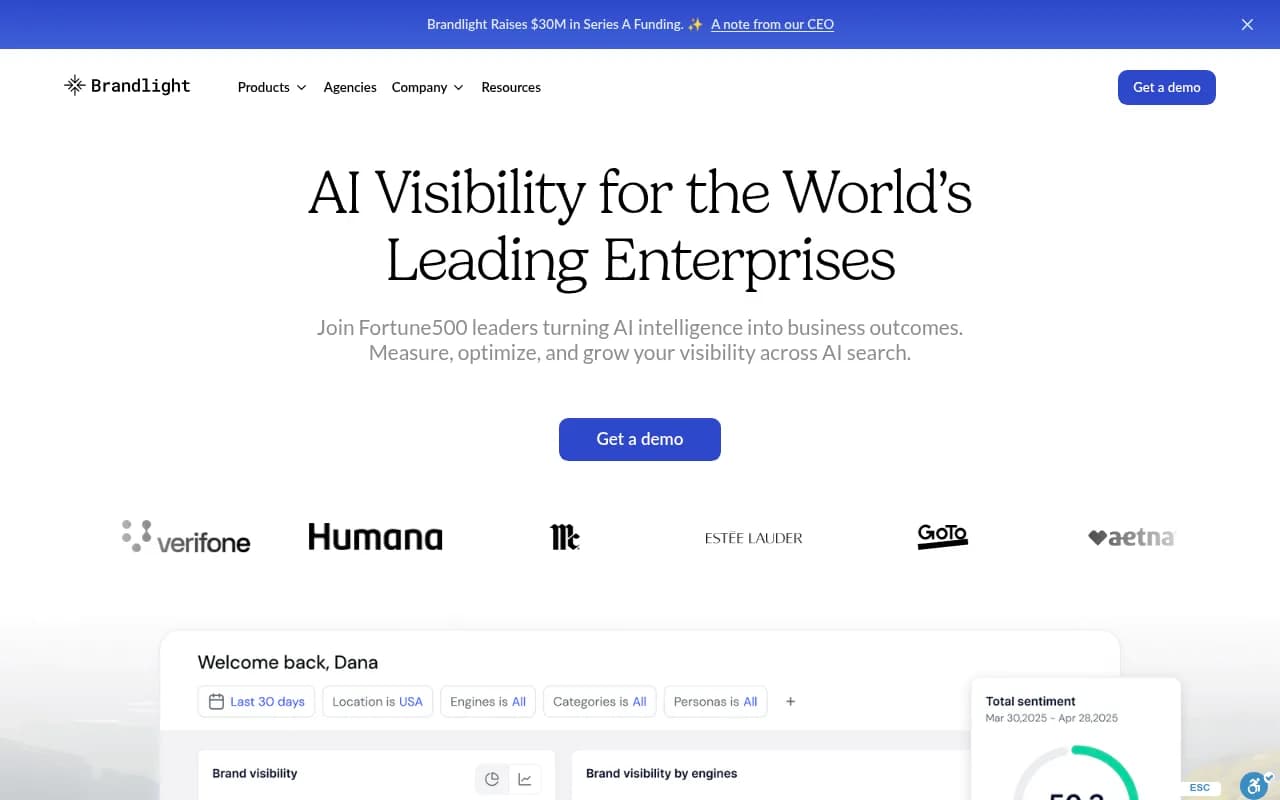
The platform tracks whether AI systems mention your brand, what sentiment accompanies those mentions, and which sources influence how AI portrays you. It monitors across ChatGPT, Gemini, Perplexity, Copilot, and Grok. Enterprise users get a multi-brand command center, technical health audits, and citation analysis showing which third-party pages are shaping AI responses about them.
Pricing is not published. Entry-level access reportedly starts around $199/month, but enterprise contracts run $4,000 to $15,000 per month. There's no self-serve option -- you go through a sales call.
What Brandlight does well
- Sentiment tracking alongside mention tracking (most tools only count mentions)
- Citation source analysis showing which external pages influence AI responses
- Multi-brand management for large organizations with multiple product lines
- Technical health audits that flag indexing issues affecting AI discoverability
- Clean, executive-ready dashboards that CMOs can actually read
Where Brandlight falls short
The platform is built for monitoring. It tells you where you stand and how you compare to competitors, but it doesn't generate content to close the gaps it finds. If ChatGPT isn't recommending your brand for a category you should own, Brandlight shows you that -- then leaves you to figure out what to do about it.
The pricing model also creates friction. Mandatory sales calls and enterprise-only contracts make it inaccessible for growing brands that aren't yet at Fortune 500 scale.
What Conductor is
Conductor is a different animal. It started as an enterprise SEO platform and has been expanding into AI search tracking as the category has grown. The core product covers organic search performance, content optimization, keyword research, and competitive intelligence -- all the things a large SEO team needs. AI visibility tracking was added more recently as an extension of that existing infrastructure.
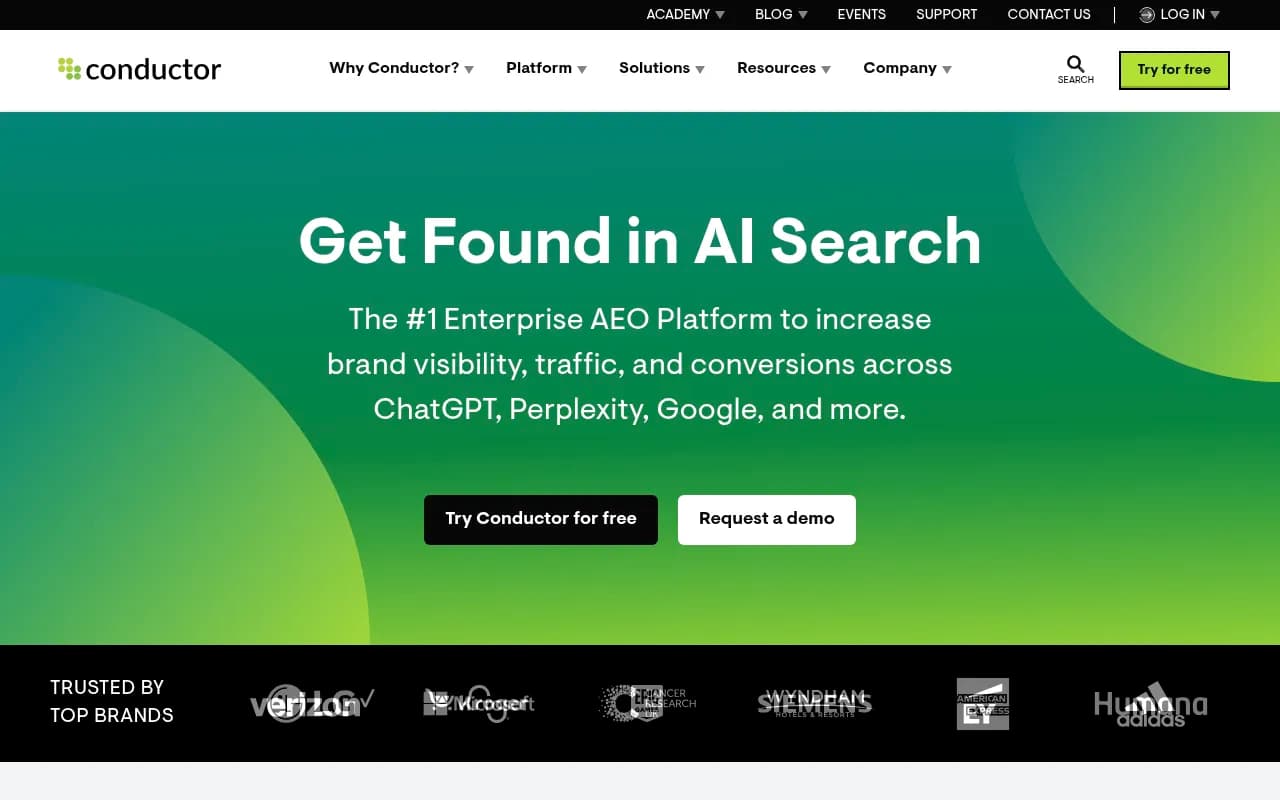
According to G2 review data, Conductor monitors AI mentions and share of voice across major AI models and has expanded into answer engine optimization (AEO). But AI visibility is one feature set within a broader platform, not the organizing principle of the product.
What Conductor does well
- Broad SEO coverage: keyword tracking, content scoring, technical audits, and organic performance in one place
- Established enterprise integrations and workflow tools that SEO teams already know
- Strong customer support (G2 reviewers specifically call this out)
- AI visibility tracking that sits alongside traditional search data, useful for teams that want a single platform
Where Conductor falls short
G2 reviewers who compare Conductor to Brandlight say Conductor is slower to deliver ROI. That makes sense: it's a bigger platform with more moving parts, and AI visibility is not its primary focus. If your main goal is understanding and improving AI search presence, you're paying for a lot of Conductor's functionality that you won't use.
It's also more expensive than Brandlight in most configurations, which is a meaningful consideration when the AI visibility features are less specialized.
Head-to-head comparison
| Feature | Brandlight.ai | Conductor |
|---|---|---|
| Primary focus | AI visibility (dedicated) | Enterprise SEO + AI tracking |
| AI models monitored | ChatGPT, Gemini, Perplexity, Copilot, Grok | Major AI models (expanding) |
| Sentiment analysis | Yes | Limited |
| Citation source tracking | Yes | Partial |
| Multi-brand management | Yes | Yes |
| Traditional SEO tools | No | Yes (core product) |
| Content generation | No | Limited |
| Self-serve pricing | No | No |
| Pricing transparency | Opaque ($199-$15K+/mo) | Opaque (enterprise) |
| G2 support rating | Good | Better (per reviewers) |
| ROI speed | Faster (per G2 reviewers) | Slower (per G2 reviewers) |
| Best for | Fortune 500 AI visibility focus | Large SEO teams adding AI tracking |
The monitoring gap both platforms share
Here's the honest problem with both tools: they're dashboards. Good dashboards, with real data and serious enterprise infrastructure -- but dashboards nonetheless.
When you discover that a competitor is getting cited by ChatGPT for prompts you should be winning, both Brandlight and Conductor will show you that gap. What they won't do is help you close it. There's no content generation, no answer gap analysis that maps your existing pages against AI responses, no workflow that takes you from "we're invisible here" to "here's the article that fixes it."
That's a real limitation in 2026, when the category has matured enough that monitoring alone isn't a strategy.
Platforms that go further on the optimization side -- like Promptwatch, which combines tracking with content gap analysis, AI content generation, and crawler log monitoring -- are worth evaluating if your goal is actually improving visibility rather than just measuring it.

Who should choose Brandlight
Brandlight makes sense if:
- You're a large enterprise brand (Fortune 500 or similar scale) with budget for an enterprise contract
- AI visibility is your primary concern, and you don't need traditional SEO tools bundled in
- You have in-house AI strategists who can act on monitoring data without needing the platform to generate content
- Sentiment and citation source analysis are important to your reporting
It's probably not the right fit if you're a mid-market brand, an agency managing multiple clients at different price points, or a team that needs the platform to do more than track.
Who should choose Conductor
Conductor makes sense if:
- You already have a large SEO team that uses Conductor's traditional search tools
- You want AI visibility tracking added to an existing workflow rather than a standalone platform
- Strong customer support and enterprise integrations matter more than AI-specific depth
- You're willing to accept slower ROI in exchange for a single platform covering both traditional and AI search
The tradeoff is real: you get breadth, but you sacrifice depth on the AI visibility side.
Alternatives worth considering
If neither platform fits your situation, the AI visibility space has expanded significantly. Here are a few worth looking at depending on your needs.
For teams that want monitoring plus content optimization in one loop:
For enterprise brands that want AI visibility with a strong data foundation:

For brands focused specifically on tracking citations and mentions across LLMs:

For agencies managing multiple clients who need flexible pricing:

For teams that want AI visibility data alongside traditional SEO in a more accessible package:
A note on pricing reality
Both Brandlight and Conductor operate on enterprise sales models, which means the price you pay depends heavily on negotiation, contract length, and how many brands or users you need. The numbers floating around publicly ($199/month entry for Brandlight, enterprise-tier pricing for Conductor) are starting points, not ceilings.
If budget is a real constraint, it's worth knowing that the AI visibility space now has credible options at much lower price points. Promptwatch's Professional plan, for example, runs $249/month with self-serve access, crawler logs, and content generation included. That's a different product category than what Brandlight or Conductor offer at the enterprise tier, but for many teams it's a more practical starting point.
The bottom line
Brandlight and Conductor are both serious platforms built for large organizations. The choice between them comes down to focus: Brandlight is the better tool if AI visibility is your primary concern and you have the budget for a dedicated platform. Conductor is the better choice if you need AI tracking as part of a broader SEO suite and already have the team to use it.
What neither platform does particularly well is help you act on what they find. In a category where the gap between "we know we're invisible" and "we fixed it" is still wide open, that's worth factoring into your evaluation.