Key takeaways
- Goodie covers the basics of AI brand monitoring but lacks content optimization, crawler logs, and deep multi-model coverage that growing brands need.
- The best alternatives in 2026 range from budget-friendly monitoring tools (Otterly.AI, Peec AI) to full-stack GEO platforms (Promptwatch, Profound) that help you fix visibility gaps, not just find them.
- LLM coverage varies wildly across tools -- some track 3 models, others track 10+. Make sure the platform covers the engines your buyers actually use.
- If you want to move beyond monitoring and actually improve your AI visibility, look for platforms with content gap analysis, content generation, and citation-level tracking.
Goodie (higoodie.com) does what it says on the tin: it monitors your brand across AI search engines and gives you a snapshot of how often you're mentioned. For a lot of teams, that's a useful starting point. But "starting point" is the key phrase.
The AI search visibility category has moved fast in 2026. The tools that launched in 2024 as simple monitoring dashboards have either grown into full optimization platforms or been left behind. Goodie sits somewhere in the middle -- functional, but limited on LLM coverage, missing content optimization features, and light on the kind of actionable data that helps you actually move the needle.
If you've hit those limits, or you're evaluating tools before committing, here are 10 alternatives worth looking at seriously.
What to look for in a Goodie alternative
Before jumping into the list, it's worth being clear about what actually matters when comparing these tools. The marketing copy across every AI visibility platform is nearly identical -- "track your brand in ChatGPT, Perplexity, and Gemini" -- so you need to look past the homepage.
The questions that separate good tools from great ones:
- How many AI models does it actually track, and at which pricing tier?
- Does it track real user-facing responses (not just API outputs)?
- Can it tell you why you're not being cited, not just that you're not?
- Does it help you create content to fix the gaps, or just report them?
- Does it have crawler logs so you can see when AI bots visit your site?
- Does it support multi-language and multi-region monitoring?
With those criteria in mind, here's the comparison.
Comparison table
| Tool | AI models tracked | Starting price | Content generation | Crawler logs | Best for |
|---|---|---|---|---|---|
| Promptwatch | 10+ | $99/mo | Yes | Yes | End-to-end GEO optimization |
| Profound | Up to 10 | $99/mo | No | No | Enterprise prompt research |
| Peec AI | Up to 10 | ~$87/mo | No | No | Flexible model selection |
| Otterly.AI | 4 (base) | $29/mo | No | No | Budget monitoring |
| SE Visible | 5 | $99/mo | No | No | Multi-brand, multi-country |
| AthenaHQ | 8 | $295/mo | No | No | Enterprise brand/PR teams |
| Scrunch AI | 3 | ~$95/mo | No | No | Reputation monitoring |
| Nightwatch | 4 | $32/mo + add-on | No | No | SEO + AI in one tool |
| Writesonic | 5 | Custom | Yes | No | Content teams |
| AIClicks | 10+ | $59/mo | No | No | Agencies tracking UI responses |
1. Promptwatch
Promptwatch is the most complete alternative on this list -- and the one most directly built around fixing AI visibility problems rather than just reporting them.

Most tools in this category show you a dashboard. Promptwatch shows you a dashboard and then tells you what to do about it. The core workflow is: find the prompts where competitors are visible but you're not (Answer Gap Analysis), generate content engineered to fill those gaps (Content Agents), and then track whether that content starts getting cited. That loop -- find gaps, create content, measure results -- is what separates it from monitoring-only tools.
On coverage, it tracks 10 AI models including ChatGPT, Claude, Gemini, Google AI Overviews, Google AI Mode, Perplexity, Grok, DeepSeek, Copilot, and Meta AI. It also tracks real user-facing responses rather than API outputs, which matters because what ChatGPT shows a user in its interface can differ from what the API returns.
A few features that are genuinely hard to find elsewhere: AI Crawler Logs (real-time logs of when ChatGPT, Claude, and Perplexity bots crawl your pages, what errors they hit, and how often they return), ChatGPT Shopping tracking, Reddit and YouTube citation analysis, and prompt volume/difficulty scoring so you can prioritize the prompts worth winning.
Pricing starts at $99/month for one site and 50 prompts. The Professional plan at $249/month adds crawler logs, city/state tracking, and 150 prompts. Business at $579/month covers five sites and 350 prompts. A free trial is available.
For teams that want to actually improve their AI visibility rather than just watch it, Promptwatch is the strongest option in 2026.
2. Profound

Profound is the other platform that gets taken seriously at the enterprise level. It covers up to 10 AI platforms (ChatGPT, Perplexity, Gemini, AI Mode, and others) and has genuinely strong prompt research capabilities -- real prompt volume data, not estimates.
Where it falls short compared to Promptwatch: no content generation, no crawler logs, no Reddit/YouTube tracking, and pricing starts at $99/month but scales steeply toward enterprise tiers. It's a research and monitoring tool, not an optimization platform. If you have a data team that can act on the insights independently, Profound gives you excellent raw material. If you need the platform to help you act on it, you'll hit a wall.
Best for: Enterprise brands with dedicated data or SEO teams who need deep prompt intelligence and can handle the optimization work themselves.
3. Peec AI

Peec AI takes a prompt-centric approach that works well for B2B SaaS teams. The dashboard is organized around prompts rather than brand mentions, which makes it easier to think about visibility from the buyer's perspective -- "what are people actually asking?" rather than "how often do they mention us?"
It covers up to 10 models depending on the plan, starts around $87/month, and has a free trial. Multi-language support is solid. The main limitation is that it's monitoring-only -- no content generation, no crawler logs, no gap analysis that tells you what to write. You get good data; you figure out what to do with it.
Best for: B2B SaaS teams that want a clean, prompt-focused monitoring dashboard without a lot of extra complexity.
4. Otterly.AI

Otterly.AI is the cheapest credible option in this space at $29/month. It tracks four AI models on the base plan (ChatGPT, Perplexity, Gemini, and one other), with add-ons available for additional engines. The interface is clean and the setup is fast -- you can be tracking prompts within minutes.
The tradeoff is obvious: at $29/month, you're not getting content optimization, crawler logs, or deep competitive analysis. It's a monitoring tool, and a basic one. But if you're a solo founder, freelancer, or small team that just wants to know whether your brand is showing up in AI answers, Otterly is a reasonable place to start.
Best for: Individuals and small teams who want basic AI brand monitoring without a significant budget commitment.
5. SE Visible
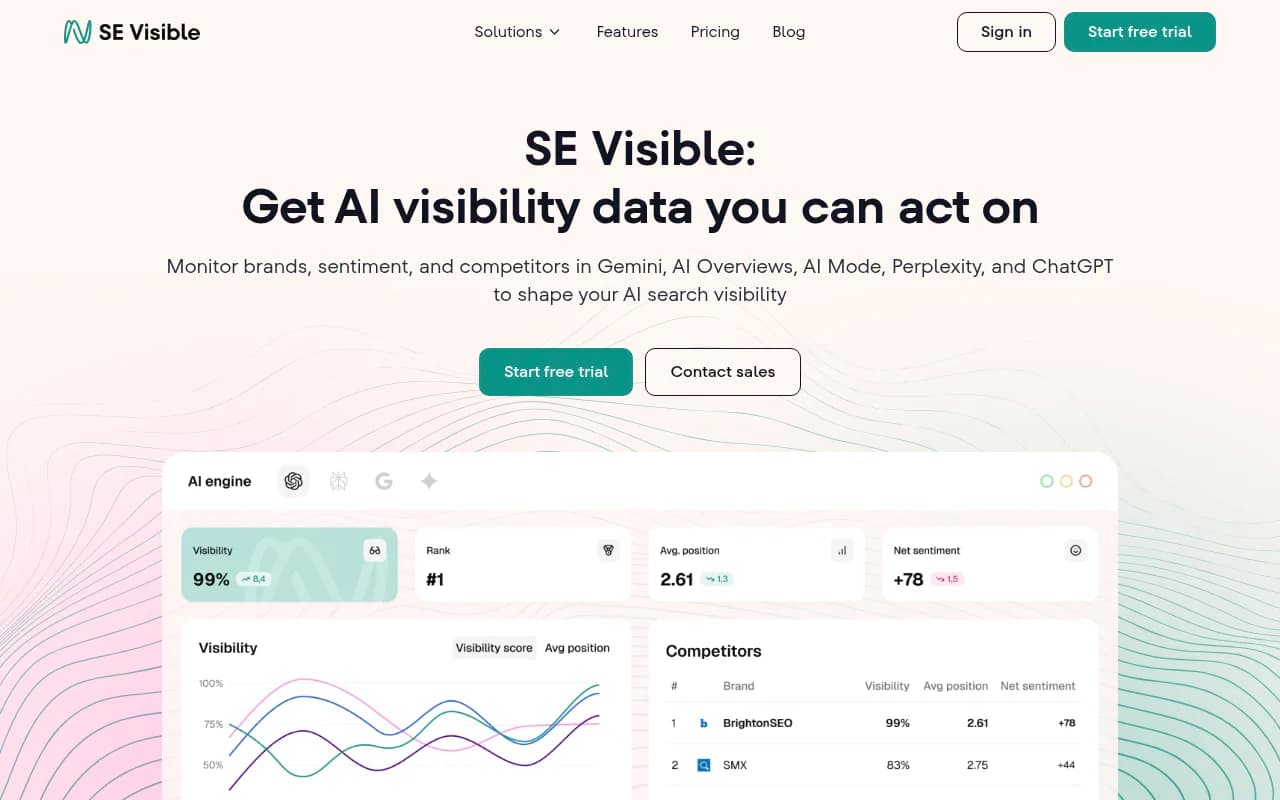
SE Visible is SE Ranking's dedicated AI visibility module. It tracks five AI engines and handles multi-brand, multi-country setups well -- useful if you're an agency managing multiple clients or a brand operating across several markets.
Starting at $99/month, it's priced similarly to Promptwatch's entry tier but offers less in terms of actionability. No content generation, no crawler logs. The main appeal is the integration with SE Ranking's broader SEO toolkit if you're already using that platform.
Best for: SE Ranking users who want to add AI visibility tracking without switching platforms.
6. AthenaHQ

AthenaHQ covers eight AI search engines and has particularly strong narrative positioning analysis -- it doesn't just tell you whether you're mentioned, but examines how you're described and whether the AI's characterization of your brand matches what you want it to say.
That's genuinely useful for PR and brand teams managing reputation. The downside is the price: $295/month with no free trial. And like most enterprise-leaning tools, it's monitoring-focused. You get excellent intelligence about your brand narrative; you don't get help fixing it.
Best for: Enterprise PR and brand teams where narrative accuracy matters as much as mention frequency.
7. Scrunch AI
Scrunch AI covers three AI models and focuses heavily on reputation monitoring -- specifically hallucination detection, which flags when AI models say something factually wrong about your brand. That's a real problem (AI models do hallucinate brand information), and having automated alerts for it is valuable.
The coverage is narrow compared to most alternatives here, and at around $95/month you're paying a similar price to tools that track many more models. But if hallucination detection is your primary concern, Scrunch AI addresses it more directly than most.
Best for: Brands with active reputation concerns who specifically need hallucination monitoring.
8. Nightwatch
Nightwatch is primarily an SEO rank tracking tool that added AI search monitoring as an add-on. The base plan starts at $32/month, but the AI monitoring add-on costs an additional $99/month, so the real entry price for AI visibility is $131/month.
It covers four AI models and integrates with traditional SEO metrics, which is useful if you want to track both Google rankings and AI visibility in one place. The AI features are less mature than dedicated platforms -- it's more of a convenience add-on than a serious AI visibility tool.
Best for: Existing Nightwatch users who want basic AI monitoring without adding another tool to their stack.
9. Writesonic
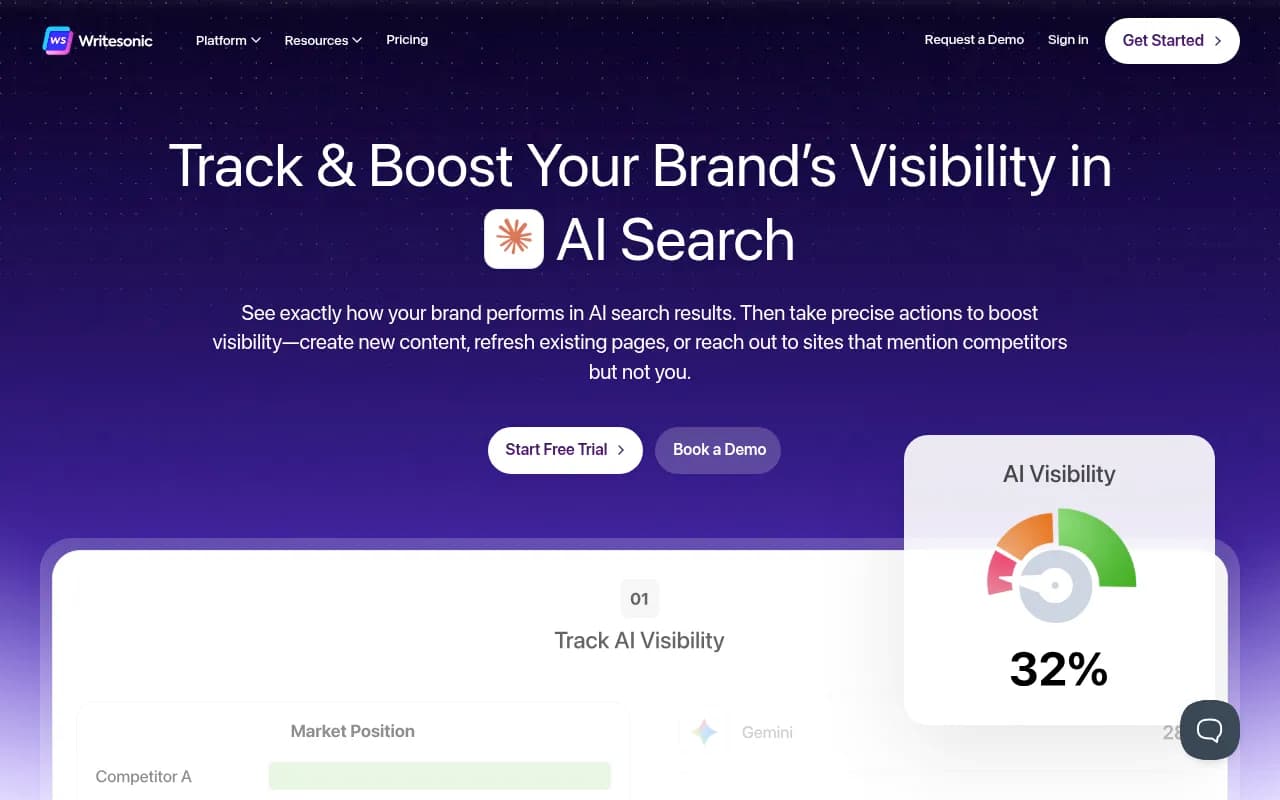
Writesonic is primarily known as an AI writing tool, but it has added AI search visibility tracking that covers ChatGPT, Gemini, Claude, Perplexity, and Google AI Mode. The combination of monitoring and content generation in one platform is the appeal -- similar in concept to Promptwatch's approach, though less specialized on the visibility side.
Pricing is custom/enterprise-oriented for the visibility features. If you're already using Writesonic for content and want to add AI visibility tracking without a separate platform, it's worth evaluating. If you're starting fresh and AI visibility is the primary goal, more specialized tools will serve you better.
Best for: Content teams already using Writesonic who want to add AI visibility tracking to their existing workflow.
10. AIClicks
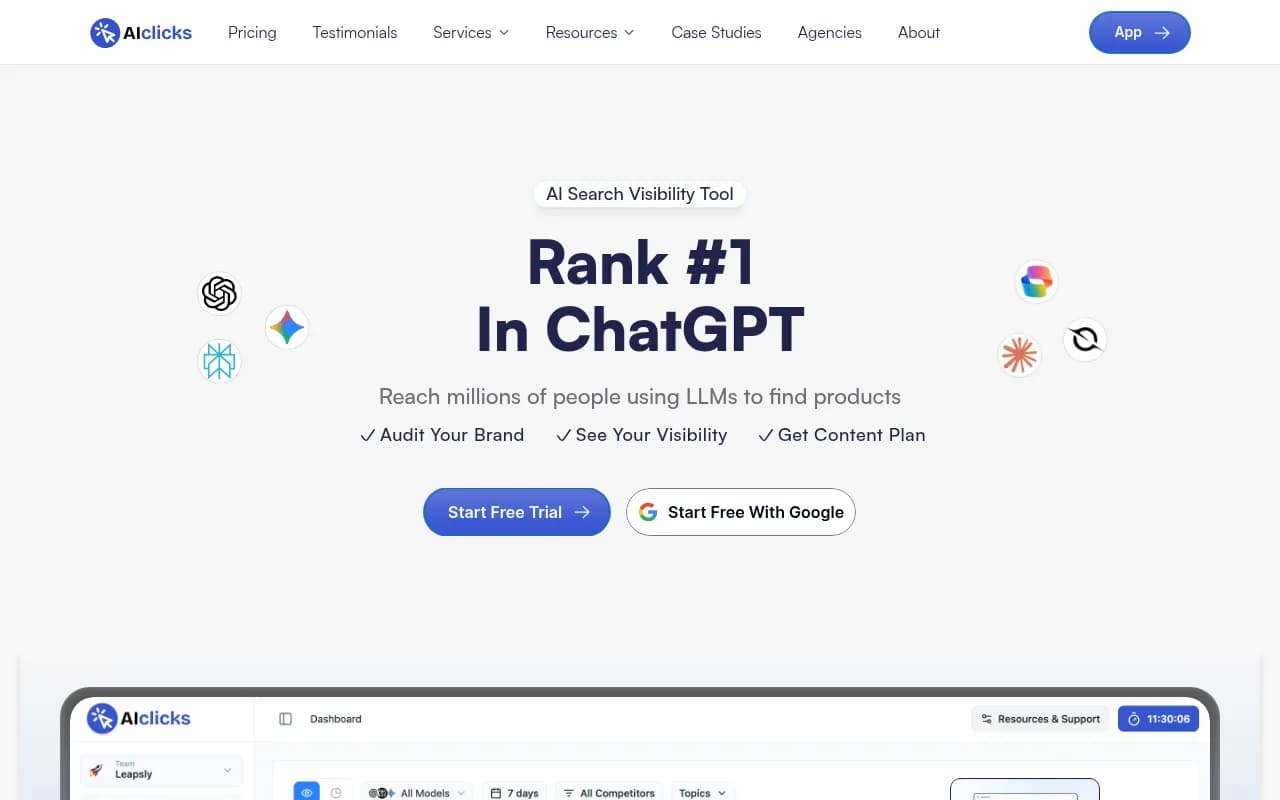
AIClicks tracks 10+ AI models and takes a different technical approach from most tools: it scrapes actual user-interface responses rather than using APIs. This matters because the answers users see in ChatGPT's interface can differ from what the API returns -- shopping recommendations, citations, and featured sources sometimes appear only in the UI.
Starting at $59/month with a free trial, it's reasonably priced for the coverage it offers. The main limitation is that it's monitoring-focused -- you get data about where you appear and where you don't, but no content generation or optimization guidance.
Best for: SEO and content agencies that need broad LLM coverage and want UI-scraped (rather than API-based) response data.
How these tools compare on LLM coverage
LLM coverage is the most important spec to check, and it's also the most commonly misrepresented. Many tools advertise broad coverage but only deliver it on expensive enterprise tiers. Here's a realistic picture:
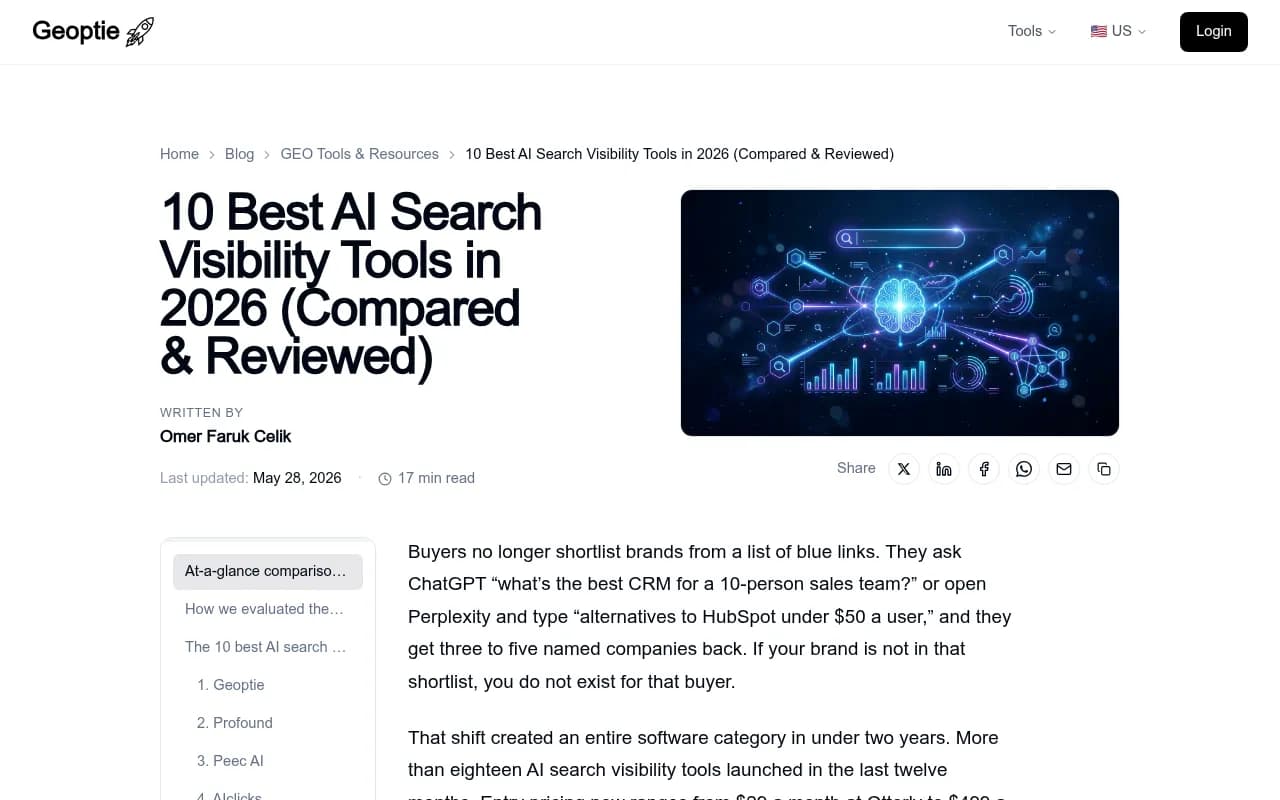
The four AI engines that matter most for brand visibility in 2026 are ChatGPT, Google Gemini (including AI Overviews and AI Mode), Perplexity, and Claude. Any tool you choose should cover at least these four. Beyond that, Grok, DeepSeek, Copilot, and Meta AI are growing in relevance -- particularly Grok for certain audiences and DeepSeek in Asian markets.
Tools that cover 8-10 models at accessible price points: Promptwatch, AIClicks, Peec AI (higher tiers), Profound (higher tiers).
Tools that cover 4-5 models: Otterly.AI, Nightwatch, SE Visible, Semrush AI Toolkit.
Tools that cover 3 models: Scrunch AI.
Monitoring vs. optimization: the real divide
The most important distinction in this category isn't price or LLM coverage -- it's whether the tool helps you act on what it finds.
Most tools in this space are monitoring dashboards. They show you your share of voice, your mention rate, your sentiment score. That data is useful. But it doesn't tell you what content to create, which prompts to target, or why a competitor is getting cited when you're not.
The tools that go beyond monitoring -- Promptwatch most comprehensively, Writesonic to a lesser degree -- add content gap analysis (which prompts are you missing?), content generation (here's the article that would fill that gap), and result tracking (did publishing that content improve your citations?).
If you're just starting out and want to understand your current AI visibility, a monitoring-only tool is fine. If you've been monitoring for a while and you're ready to actually improve your numbers, you need a platform that closes the loop.
Which alternative should you choose?
The right answer depends on where you are and what you need:
- You want the most complete platform with content optimization and crawler logs: Promptwatch
- You need enterprise-grade prompt research and have a team to act on it: Profound
- You want broad LLM coverage at a mid-range price: AIClicks or Peec AI
- You're on a tight budget and just want basic monitoring: Otterly.AI
- You're already in the SE Ranking ecosystem: SE Visible
- Brand narrative and hallucination monitoring are your priority: AthenaHQ or Scrunch AI
- You want SEO + AI visibility in one tool: Nightwatch
Goodie is a reasonable starting point, but if you've outgrown it -- or you're looking for a platform that helps you fix your AI visibility rather than just measure it -- the options above cover the full range of what's available in 2026.