Key takeaways
- A real AI Overview tracker for a single small business costs somewhere between about $20 and $99 a month in 2026. Sticker price tells you little. Prompt caps, engine add-ons, and refresh rates decide what you actually get.
- Otterly.AI (from $29) is the cheapest sensible start, but its entry plan covers 15 prompts. Rankscale (from EUR 20) is cheaper still but bills in credits.
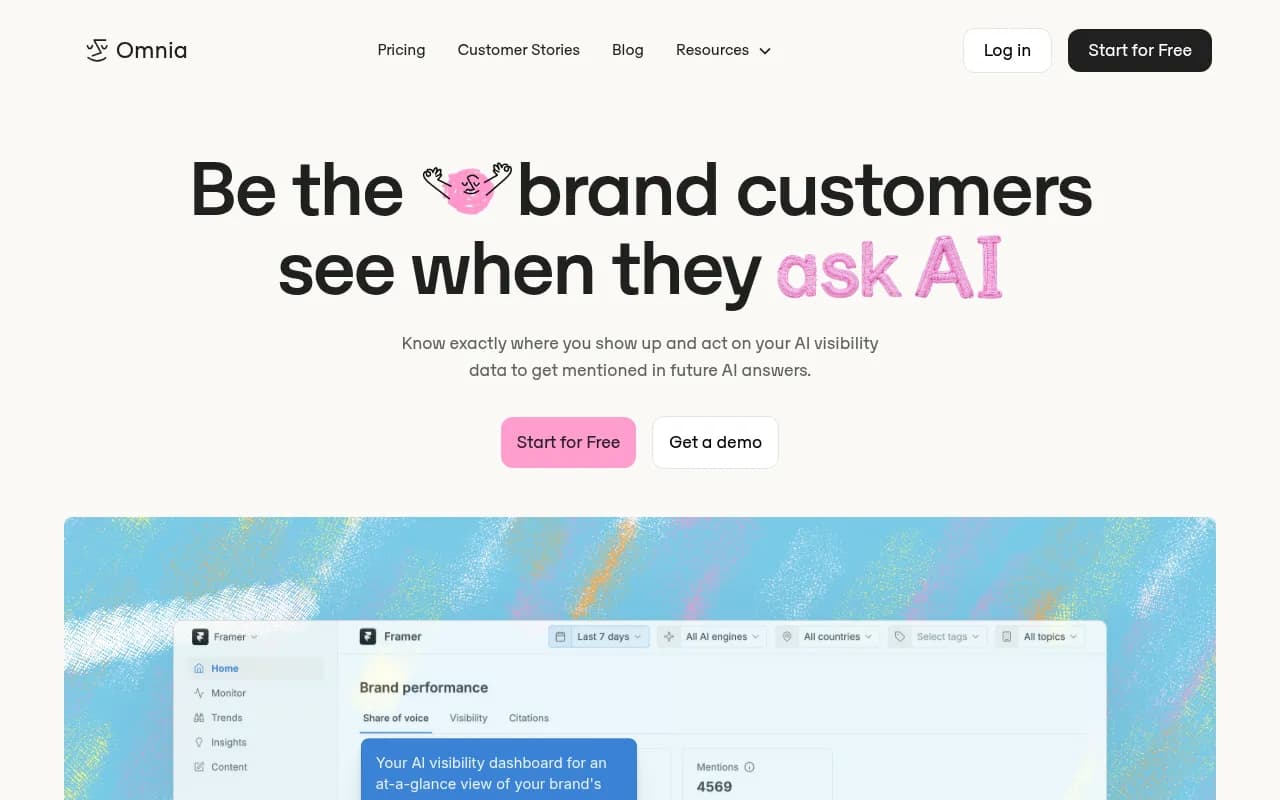
- At $95 to $99, you get broader engine coverage: Promptwatch, Peec AI, Semrush, Rankscale, and Omnia all sit near the top of the budget.
- Google AI Overviews cite YouTube, Facebook, and Instagram far more than ChatGPT does, so a useful tracker shows URL-level citations, not just a visibility score.
- Check every vendor's pricing page before buying. Plans, prompt caps, and add-on prices change often.
What an AI Overview rank tracker actually does
Traditional rank trackers give you a position. AI Overviews do not work that way. The overview is assembled on the fly, the cited sources shift by query, location, device, and time, and sometimes the overview does not appear at all. Google Search Console does not break out which URLs get cited in AI-generated answers, which is why purpose-built trackers exist.
A decent tracker runs a set of prompts or keywords on a schedule and records three things: whether an AI Overview appeared, whether your brand was named or cited, and which URLs and competitors were cited instead. The last one matters most. Without URL-level citations you know you are missing but not why.
If you want a quick baseline before paying anyone, several vendors offer free one-off checks, including Promptwatch's Free AI Visibility Report and Geoptie's free AI rank tracker. Run one, see where you stand, then decide whether a monthly plan is worth it.
Why the AI Overviews source mix matters for a small business
Before picking a tool, it helps to know what AI Overviews cite. Promptwatch's data shows the mix is shifting in ways that favor small businesses with a decent online footprint.
- In the Google AI Overview citation share report for June 2026, YouTube held 4.16% of citations, Reddit 2.72%, and google.com 2.30%. google.com's share rose about sixfold between January and June. That report treats Google Business Profile, Merchant Center, and a YouTube channel as core assets for small businesses. Note that June was a partial month, so momentum may be overstated.
- In Promptwatch's AI Overviews content-type data for July 2026, listicles averaged 18.0% of citations and product pages about 16%. Product pages were the most cited format every day from July 28, and they have nearly doubled since January.
- In the social media citations report for Sep 28 to Oct 4, 2026, AI Overviews drew 12.2% of citations from social platforms: YouTube 4.28%, Facebook 2.38%, Reddit 2.15%, and Instagram 1.61%. ChatGPT drew just 0.46%.
So what does that mean for buying a tracker? Pick one that shows you which pages, videos, and profiles get cited, not just a brand-mention count. A shop that only watches whether its name appears will miss that a competitor's YouTube video is eating the citation slot.
What to compare before you pay
Sticker price is the least informative number on a pricing page. Here is what I would check, in this order.
Prompt cap
Fifteen prompts sounds fine until you realize a business with four services and three locations burns through that in a week. Count your real buyer questions first.
Engines included versus add-ons
A $29 plan can climb past $70 once you add the engines you need. Some plans include Google AI Overviews and AI Mode in the base price, some charge extra. Confirm AI Overviews are included, since that is the point of this guide.
Refresh rate
The plan with the most prompts may only refresh weekly. Daily data is better for catching volatile overviews. Weekly is fine for a slow-moving local business.
Pricing model
Flat plans are predictable. Credit systems are cheap on paper but make you do arithmetic: ten prompts across six engines cost six times what they would on one.
Seats, brands, and domains
Some plans are per domain, some come with one seat. If you have two brands or a freelancer helping, check this.
Whether it helps you act
Most entry plans stop at monitoring. That is okay if you already have a content person. If you do not, look for audits, recommendations, or content tools included in the price.
Quick comparison table
Prices are monthly billing in USD unless noted, drawn from vendor and comparison-blog research. I could not verify every one on the vendors' own pricing pages, so confirm before buying.
| Tool | Starting price | Prompt allowance | AI Overviews | Best for |
|---|---|---|---|---|
| Rankscale | From EUR 20 (credits) | Credit pool | Yes | Hands-on users comfortable managing credits |
| Otterly.AI | $29 | 15 prompts | Yes | Solo owners testing the waters |
| Nightwatch | From EUR 79 (annual) | Plan-based | Yes, with classic rankings | People who still want Google rank tracking |
| LLMrefs | $79 | 500 prompts, weekly data | Yes | Keyword-minded teams fine with weekly refresh |
| Promptwatch | $95 (Essential) | 50 prompts | Yes | Owners who want to fix gaps, not just see them |
| Peec AI | $95 | Flat plan, extra models paid | Yes | Multi-language sentiment tracking |
| Semrush AI Visibility | $99 per domain | 25 daily prompts, $60 per 50 extra | Yes | Existing Semrush users |
| Omnia | $99 | Plan-based, add-ons available | Yes | Teams wanting URL-level citation evidence |
The cheapest ways in: under $50
Otterly.AI
Otterly.AI starts at $29 a month with a free trial. It is the tool most small-business roundups recommend as the first purchase, and the logic holds: pick your 15 most valuable buyer questions, track them, and see what happens. The ceiling arrives fast, though. If you have several services or locations, you will feel the 15-prompt limit within a month, and engine add-ons raise the real price.

Rankscale
Rankscale starts from EUR 20 a month, which makes it the cheapest route into multi-engine tracking. The catch is the credit system. Credits burn per engine per prompt, so a modest prompt list across many engines drains the pool quickly. Estimate your usage before month two, not after.
Localo
Localo, at roughly $39 a month on annual billing, is not an AI answer tracker. It manages your Google Business Profile: Maps positions, posts, reviews. Given that Google-owned surfaces are gaining share in AI Overviews, it is a reasonable companion tool, just do not buy it expecting to see what an AI Overview says.
The $79 to $99 band: where coverage fills out
Nightwatch
Nightwatch started as a Google rank tracker and now checks ChatGPT, Gemini, Claude, Perplexity, and Google AI answers alongside classic rankings. AI tracking starts at EUR 79 a month on annual billing, with unlimited seats and a 14-day trial. Its older keyword-tracking tiers have separate, lower prices, so do not confuse the two products. If you want one tool for both traditional and AI rankings, it is a sensible pick.
LLMrefs
LLMrefs is the high-volume option: 500 prompts for $79 a month, with weekly data. For a keyword-led SEO workflow that does not need daily snapshots, that is a lot of coverage for the money.
Promptwatch
Promptwatch Essential is $95 a month for one project, 50 prompts, all AI models (including Google AI Overviews and AI Mode), and 500 Agent Credits. Where it differs from most trackers at this price is what comes with it: a weekly site audit, IP-verified AI crawler logs, visitor analytics for AI-referred traffic, and content gap analysis that shows which prompts you have no page for. For a small business without a dedicated SEO person, that gap analysis is the useful part, since it turns a visibility number into a to-do list. There is a 7-day free trial on monthly Essential, and the free Explore plan tracks ChatGPT only if you want to poke around first.
The tradeoff: it is a single-seat plan with a 50-prompt cap, and the automated Content Agent starts on the Business tier. Confirm current details at promptwatch.com/pricing.

Peec AI
Peec AI is $95 a month with a flat structure and extra models paid separately. It is strong on multi-language tracking and sentiment, which suits a business serving more than one market. Check which models are in the base plan.

Semrush AI Visibility Toolkit
Semrush's toolkit is $99 a month per domain, with 25 daily prompts and $60 per extra 50. It makes sense if you already live inside Semrush. If you do not, the prompt economics are less attractive than the alternatives above, and there is no free trial for the standalone product.
Omnia
Omnia, at $99 a month with add-ons, leans into evidence: timestamped SERP snapshots, URL-level citation extraction, and country-level presence. That auditable approach is exactly what the Promptwatch source-mix data suggests you need, because it shows which URL earned the citation.
Other budget options worth a look
The catalog has a long tail of low-cost trackers aimed at small teams. A few to check against your own needs:
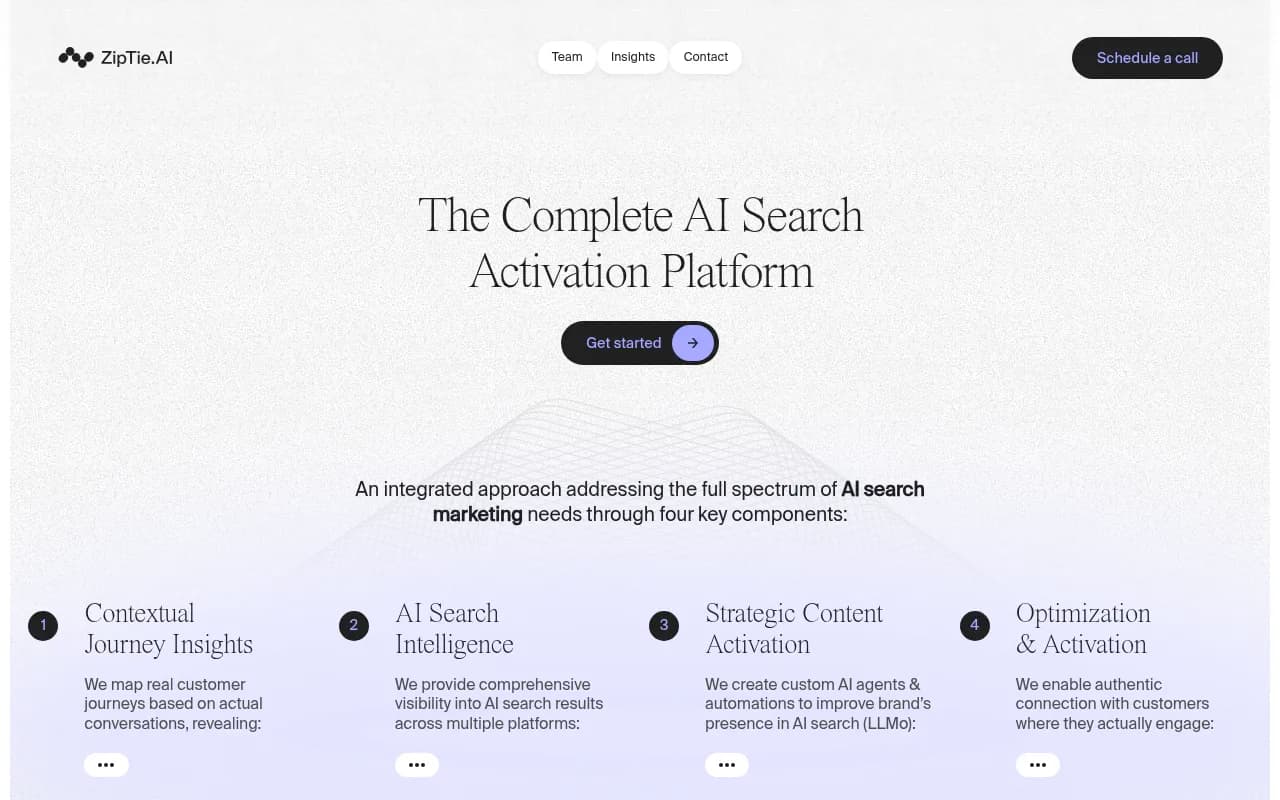
- ZipTie, a usage-based configurator starting around $42.75 a month, covering ChatGPT, Google AI Overviews, and Perplexity. It suits technical SEOs who like to configure everything.
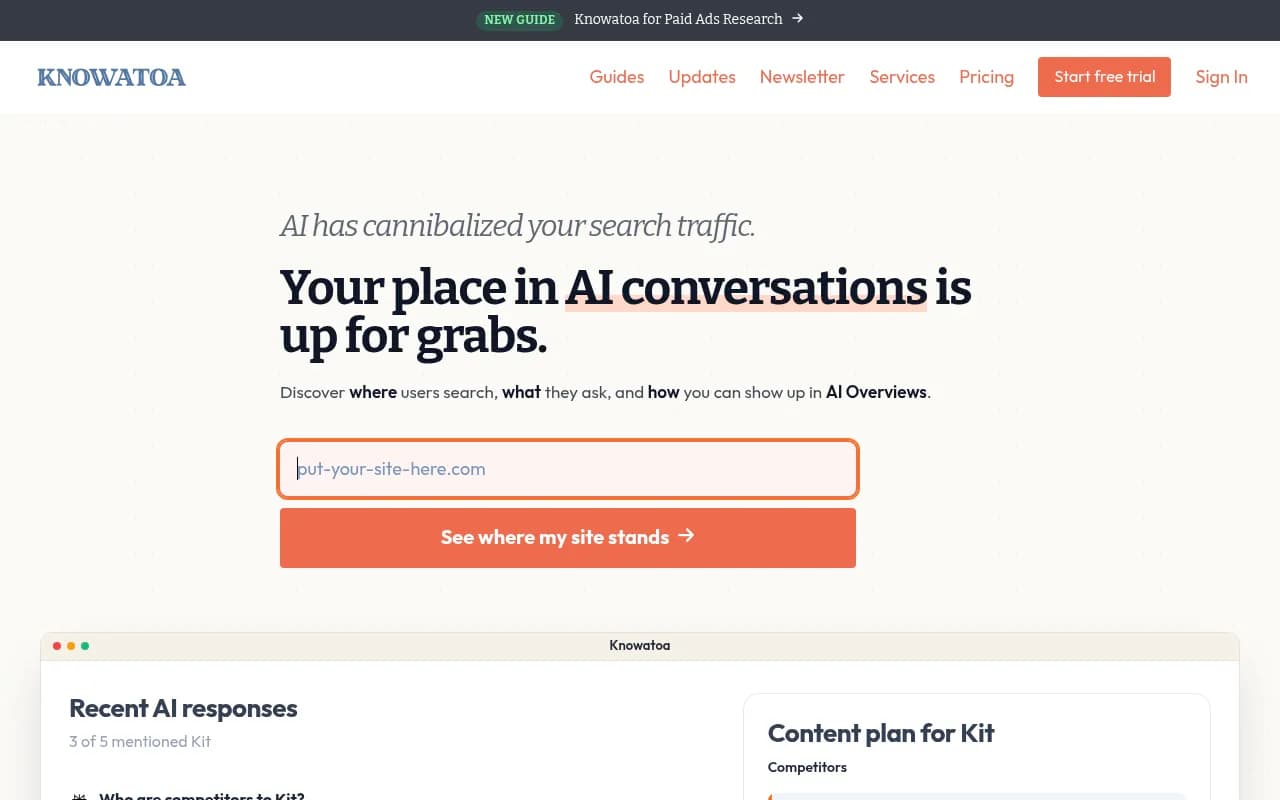
- Knowatoa, focused specifically on AI Overviews and AI Mode monitoring.
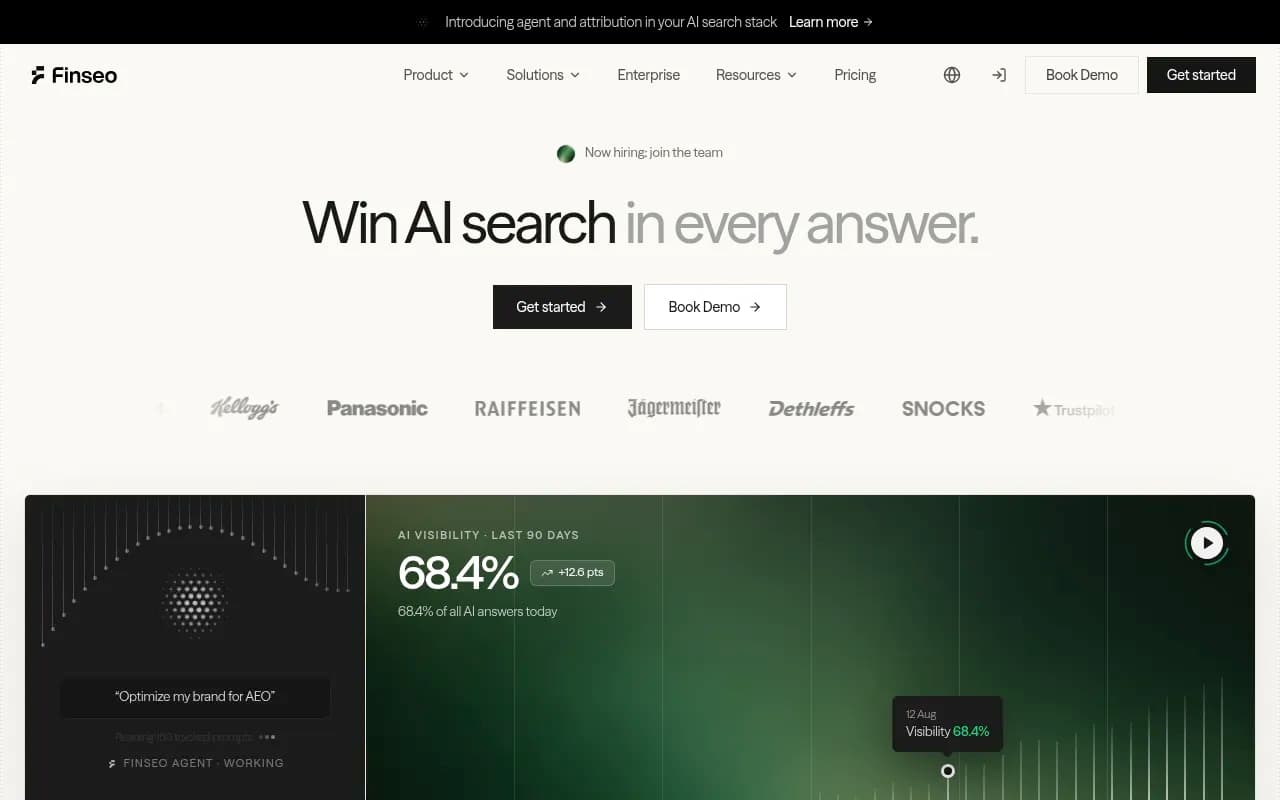
- Finseo, another Google AI Mode and AI Overviews tracker.
- BrandAxis and Atyla, both pitched at small teams on lower budgets.
For more options, the directory at ai-rank-tools.com lists AI rank trackers across price points, and bestgeosoftware.com covers broader GEO software.
Which one should you buy? A practical decision path
You have never tracked AI visibility
Start with a free one-off scan, then Otterly.AI at $29. Track 15 questions a customer would actually type. If after a month you are hitting the cap, move up.
You run a local or multi-location business
Look for tools that support location targeting, and pair tracking with a well-maintained Google Business Profile. The AI Overviews data points to Google-owned and social surfaces as growing citation sources, so keep your Business Profile, Facebook, and Instagram complete and current.
You already pay for Semrush or a rank tracker
Check the add-on first. Semrush's toolkit and Nightwatch both let you stay in one login. Just check the per-prompt costs against a standalone tool.
You do not have anyone to act on the data
Pay a little more for a plan that tells you what to fix. Monitoring-only plans produce charts that sit unread. A tool with audits, content gap analysis, or built-in content tools earns its price by saving you a freelancer's hour.
You want to track many prompts cheaply
LLMrefs (500 prompts at $79) or Rankscale credits give you volume, at the cost of weekly refresh or credit arithmetic.
Mistakes that waste a small budget
- Buying on the headline price. A $29 plan that needs $40 of engine add-ons is a $69 plan.
- Tracking too many vague prompts. Fifteen specific buyer questions beat 100 generic ones.
- Ignoring citations. A brand-mention score without URLs cannot tell you what to change.
- Checking once. AI Overviews vary by query, location, device, and time, so one snapshot proves little. Look at trends over weeks.
- Forgetting the pages themselves. If your product and service pages are thin, no tracker will fix that. Given that product pages are now about 16% of AI Overview citations, they deserve real attention.
A simple setup for your first month
- List 15 to 25 questions a customer would ask before buying, including "near me" and comparison phrasing.
- Run a free scan to get a baseline.
- Pick one paid tracker and load the prompts. Confirm AI Overviews are included in the base price.
- Note who gets cited for each prompt. Look at the source types: a YouTube video, a Facebook page, a directory, a competitor's product page.
- Fix the cheapest gaps first: a missing Google Business Profile field, a thin service page, a missing video.
- Review monthly. Cancel or upgrade based on whether you used the data.
The bottom line
For most small businesses, Otterly.AI is the lowest-risk first purchase, and the $95 to $99 tier (Promptwatch, Peec AI, Semrush, Omnia) is where you stop being limited by prompt caps and engine add-ons. If you want to fix what the tracker shows you, favor the plans with audits and content gap analysis. And before you pay for anything, verify the current price and prompt allowance on the vendor's own page, since these numbers move.