Key takeaways
- Answer Engine Optimization (AEO) is now a real acquisition channel -- AI models like ChatGPT, Perplexity, and Gemini are actively sending traffic to brands they cite, and startups that ignore this are handing visibility to competitors.
- Most enterprise AEO platforms cost $500-$2,000+/month. But there are solid options starting at $39-$99/month that cover the basics a startup actually needs.
- The most important thing to track first: which prompts your competitors are getting cited for that you aren't. That gap is your content roadmap.
- For early-stage startups, a lightweight monitoring tool plus a content optimization workflow beats an expensive all-in-one suite you'll use 10% of.
- Tools like Promptwatch are worth knowing about once you're ready to move from monitoring into actually fixing your visibility -- it's one of the few platforms that closes the loop between tracking gaps and generating content to fill them.
Why startups can't afford to ignore AEO in 2026
A year ago, "AI search visibility" was a thing enterprise marketing teams talked about in strategy decks. Now it's showing up in Google Analytics as a real traffic source -- and for some categories, LLM referrals are growing faster than organic search.
The shift is simple: when someone asks ChatGPT "what's the best project management tool for remote teams" or Perplexity "which CRM is best for B2B SaaS startups," those models don't show ten blue links. They name two or three brands. If yours isn't one of them, that potential customer never finds you.
For startups, this is both a threat and an opportunity. You probably can't outspend Salesforce on traditional SEO. But AI models don't just rank by domain authority -- they cite sources that actually answer questions well. A well-structured, specific, genuinely useful piece of content on your site can get cited by ChatGPT even if your domain is six months old.
The catch: you need to know which prompts matter, whether you're showing up, and what to do when you're not. That's what AEO tools are for.
What AEO tools actually do (and what to look for)
Before spending money, it helps to know what you're buying. AEO tools generally fall into a few categories:
- Monitoring tools -- track whether your brand gets mentioned in AI responses to specific prompts. Think of these like rank trackers, but for ChatGPT instead of Google.
- Citation analysis tools -- show you which sources AI models are citing, so you know what content is influencing responses in your category.
- Content optimization tools -- help you structure and write content that AI models are more likely to cite.
- Full-stack platforms -- combine monitoring, gap analysis, content generation, and traffic attribution in one place.
For most startups, the honest answer is: start with monitoring, layer in content optimization once you know what to write, and only invest in a full-stack platform when you have the volume and budget to justify it.
Key things to evaluate before picking a tool:
- Which AI models does it track? (ChatGPT and Perplexity are table stakes; Google AI Overviews matters a lot for SEO-adjacent use cases)
- Does it show competitor visibility, not just your own?
- Can it identify content gaps -- prompts you're not showing up for but should be?
- Is there any content creation or optimization built in, or is it purely a dashboard?
- What's the actual pricing, and does it scale with your prompt volume?
The startup budget reality
Most enterprise AEO platforms -- BrightEdge, Conductor, Bluefish, Evertune -- are built for Fortune 500 marketing teams with five-figure monthly budgets. That's not where startups live.
The good news: the AEO tool market has expanded fast in 2026, and there are now legitimate options at every price point. Here's a rough breakdown of what you can expect at different budget levels:
| Budget tier | Monthly cost | What you get | Best for |
|---|---|---|---|
| Free / freemium | $0 | Basic brand mention checks, limited prompts | Pre-revenue validation |
| Starter | $39-$99/mo | Monitoring across 3-5 AI models, basic competitor tracking | Seed-stage startups |
| Growth | $99-$249/mo | Multi-model tracking, content gap analysis, some optimization | Series A, growing teams |
| Scale | $249-$579/mo | Full-stack: monitoring + content generation + traffic attribution | Series B+, marketing teams |
| Enterprise | $1,000+/mo | Custom prompts, multi-region, API, dedicated support | Large brands and agencies |
The sweet spot for most startups is the $99-$249/month range -- enough to get real data without burning runway on features you won't use for 12 months.
Best AEO tools for startups in 2026
Lightweight monitoring tools (best for early-stage)
If you're pre-Series A and just need to know whether you're showing up in AI responses, these tools get the job done without requiring a procurement process.
Otterly.AI is one of the most accessible entry points. It monitors your brand across ChatGPT, Perplexity, and a handful of other models, gives you a share-of-voice view against competitors, and doesn't require a sales call to get started. It's monitoring-focused -- don't expect content recommendations -- but for validating whether AEO is even a channel worth investing in, it's a reasonable starting point.

Peec AI is worth a look if you're in a market that spans multiple languages or regions. It handles multi-language tracking well, which most tools in this price range don't. The interface is clean and the setup is fast.

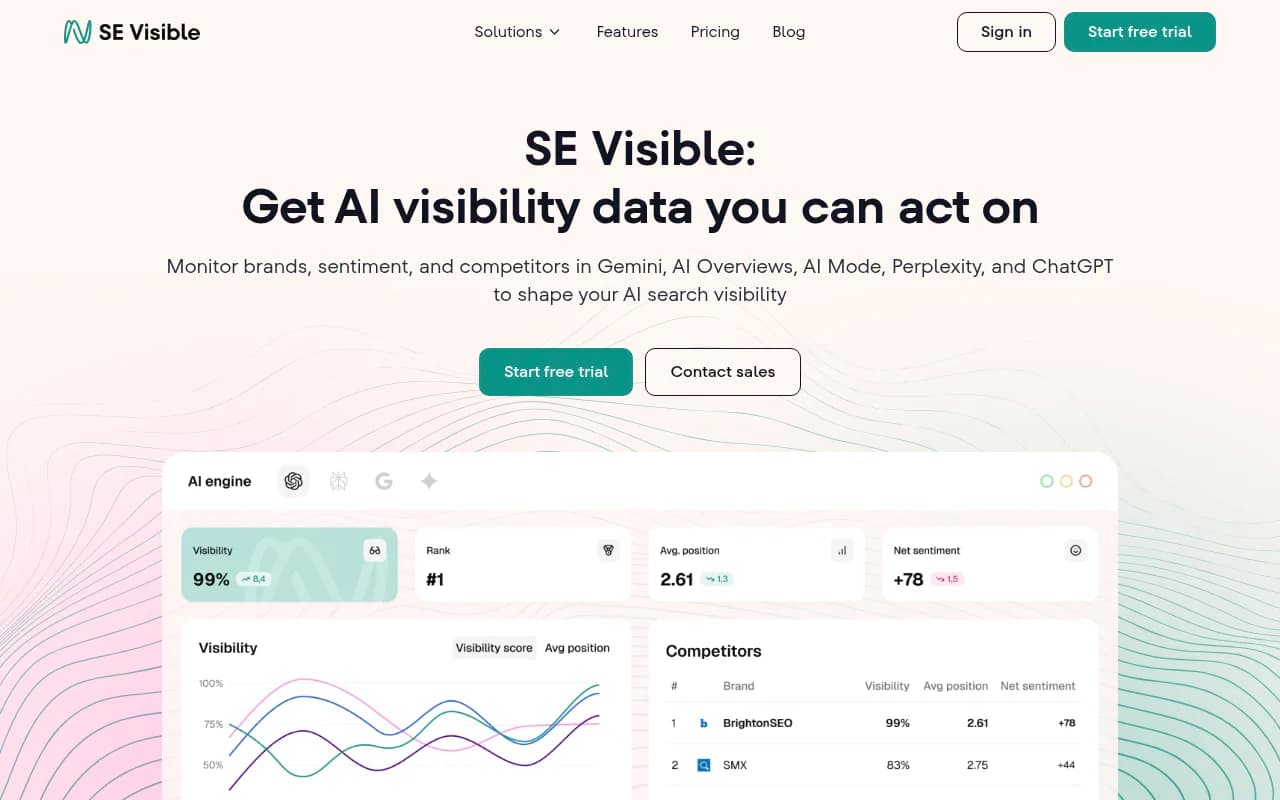
SE Visible (from SE Ranking) sits at $99/month and tracks AI Overviews, AI Mode, Gemini, ChatGPT, and Perplexity. The competitor intelligence features are solid for the price -- you can see which brands are getting cited in your category and start building a picture of what content is driving those citations.
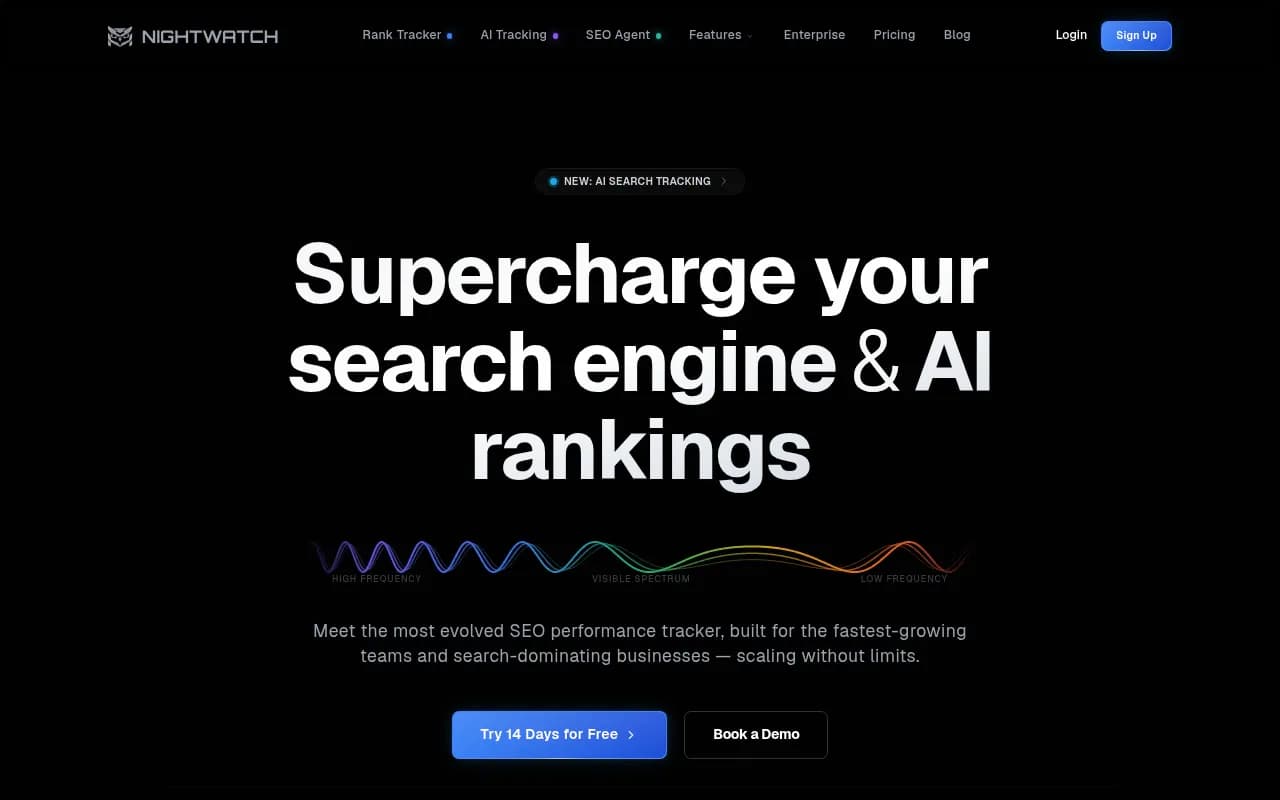
Nightwatch takes an interesting approach: it's primarily a traditional rank tracker that added AI visibility as a module. If you're already paying for rank tracking, the AI add-on ($99/month on top of the base plan) might be more efficient than buying a separate AEO tool. The zip-code level tracking is genuinely useful for local or regional businesses.
Mid-tier tools with content optimization (best for growth-stage)
Once you know you're not showing up where you should be, the next question is: what do I do about it? These tools start to answer that.
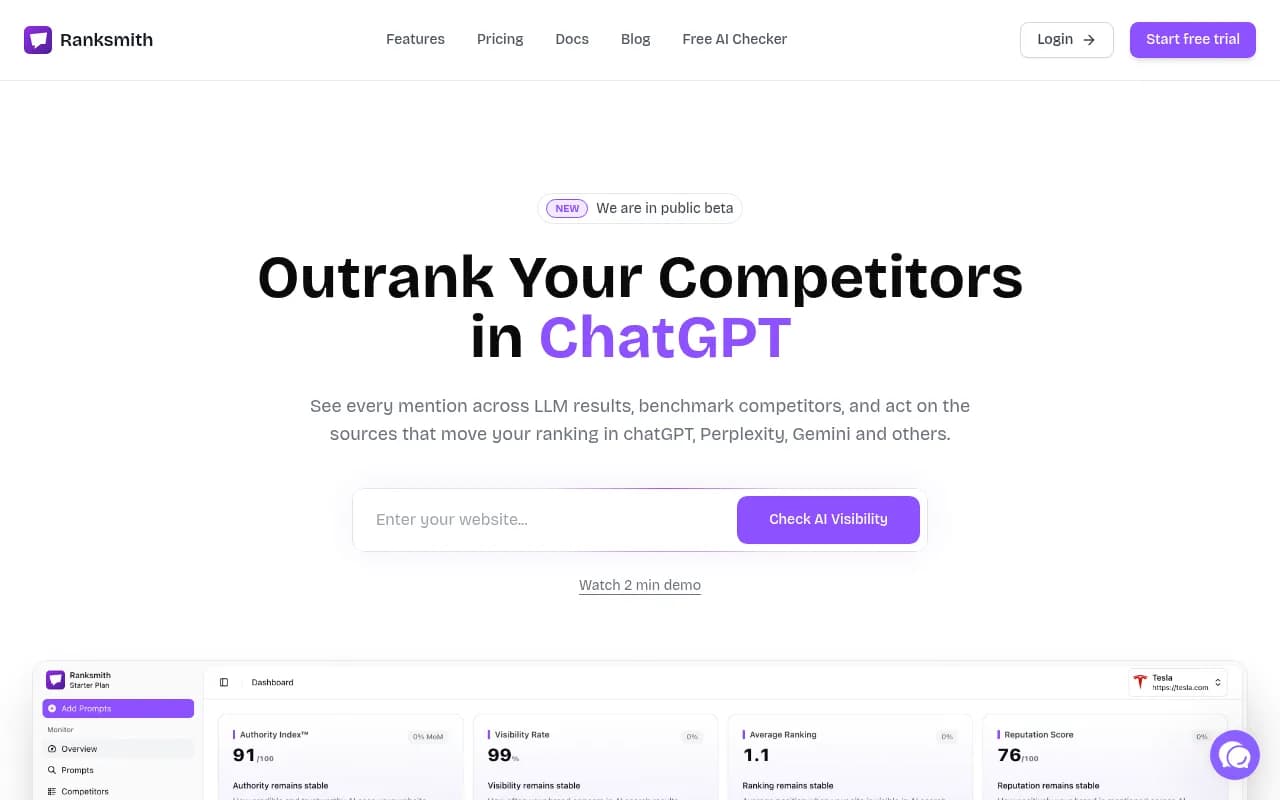
Ranksmith gives you actionable recommendations alongside visibility data -- not just "you're not showing up for this prompt" but some guidance on what to fix. It's positioned for teams that want insights they can act on without needing a dedicated GEO strategist.
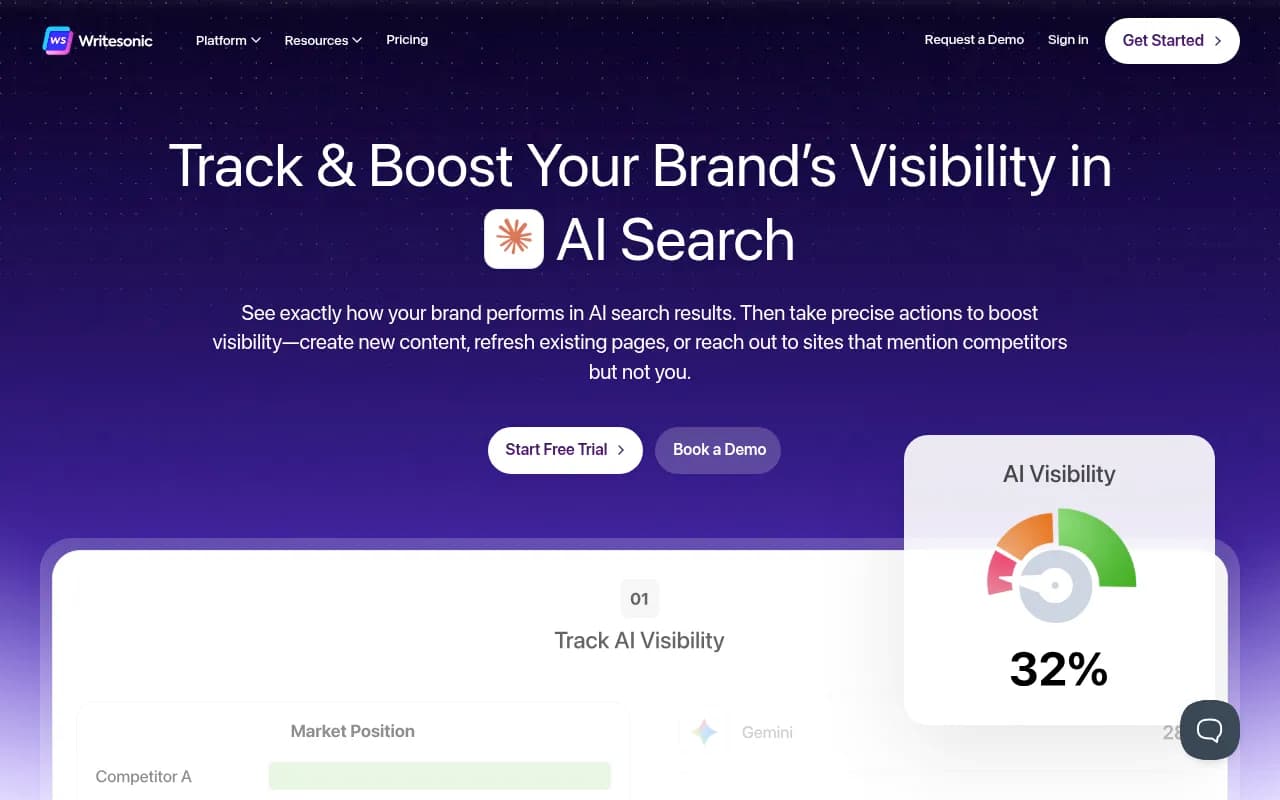
Writesonic has expanded well beyond its original AI writing roots. Its GEO workflow now combines visibility tracking with citation analysis and in-platform content optimization. At $199/month it's not cheap for a startup, but if your team is already using it for content creation, the AEO features are a meaningful add-on rather than a separate line item.
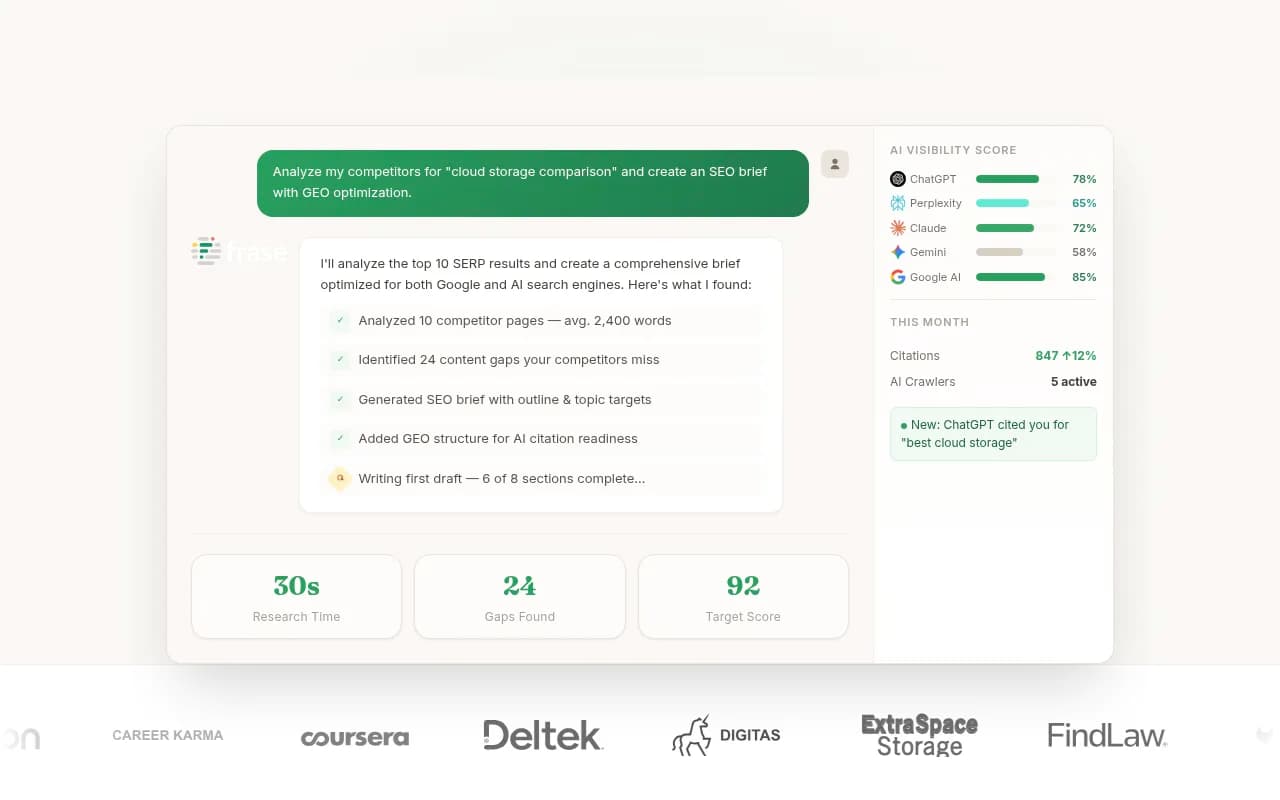
Frase is worth mentioning here -- it's primarily a content optimization tool, but it's been building out AEO-specific features around structuring content for AI citation. If your bottleneck is content quality rather than tracking, Frase is a more focused (and often cheaper) option than a full AEO platform.
AthenaHQ monitors across 8+ AI search engines and has a cleaner interface than many competitors at this price point. It's monitoring-focused, but the depth of data -- sentiment scoring, source tracking, competitor heatmaps -- is above average for a mid-tier tool.

Full-stack platforms (best when you're ready to scale)
These tools go beyond tracking to help you actually improve your visibility. They're more expensive, but they're also the ones that can demonstrate ROI -- because they connect content changes to visibility improvements to traffic.
Promptwatch is the platform I'd point most growth-stage startups toward when they're ready to move from "we should track this" to "we need to systematically improve this." It's built around a specific workflow: find the prompts your competitors are visible for that you're not (Answer Gap Analysis), generate content designed to get cited (AI writing agent trained on 880M+ citations), and then track whether your visibility actually improves. Most tools stop at step one.

The pricing starts at $99/month for a single site with 50 prompts, which is accessible. The $249/month Professional plan adds crawler logs -- real-time data on which AI bots are crawling your site and which pages they're reading -- which is genuinely useful for diagnosing why you're not getting cited even when you have relevant content.
Profound is the other full-stack option worth knowing about. It has strong enterprise traction and a well-regarded research hub (their AEO Report is one of the better public datasets on AI search behavior). Pricing is higher and it's more geared toward larger marketing teams, but if you're at Series B and building out a dedicated GEO function, it's worth evaluating.

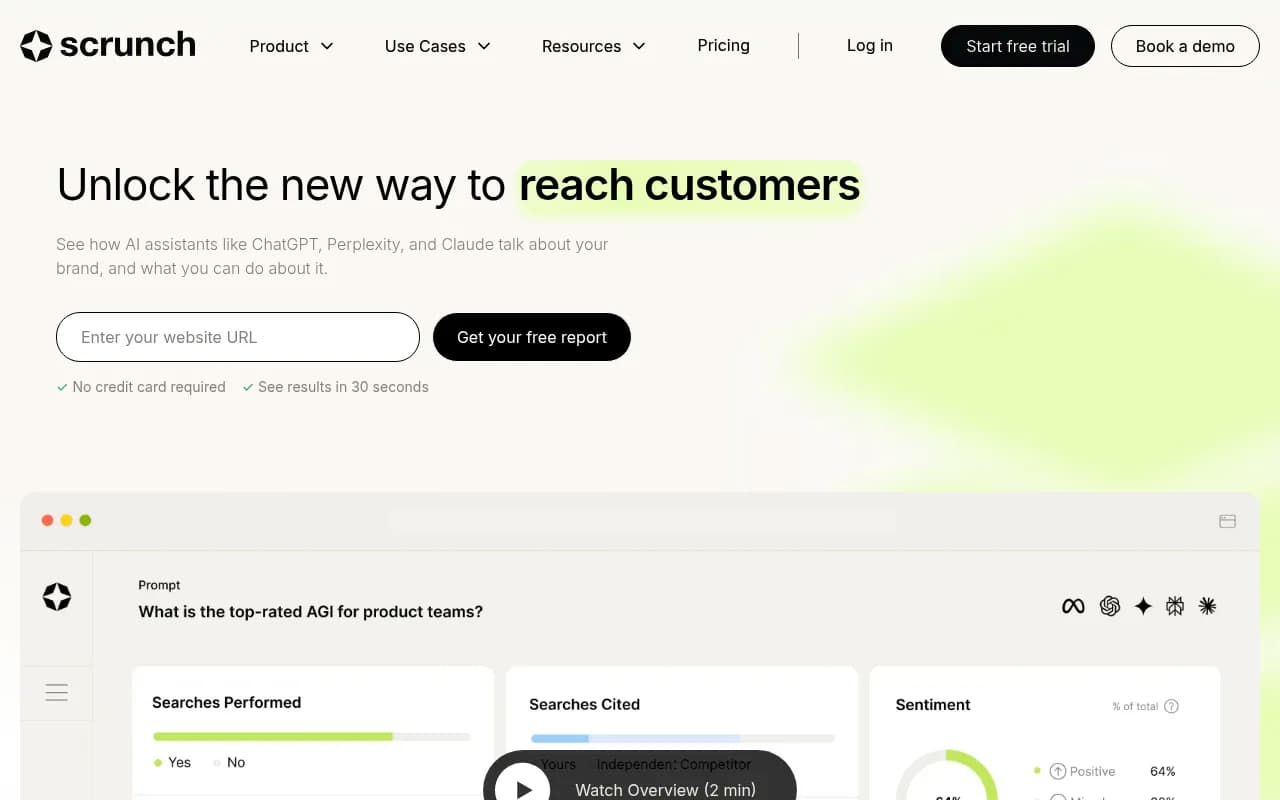
Scrunch rounds out the full-stack tier. It's one of the tools that shows up consistently in practitioner comparisons, with solid monitoring and some optimization features. Less content-generation-focused than Promptwatch, but strong on the analytics side.
Head-to-head comparison
Here's how the main options stack up across the dimensions that matter most for startups:
| Tool | Starting price | AI models tracked | Content gap analysis | Content generation | Crawler logs | Best for |
|---|---|---|---|---|---|---|
| Otterly.AI | ~$49/mo | 4-5 | No | No | No | Early monitoring |
| Peec AI | ~$49/mo | 5+ | Basic | No | No | Multi-language brands |
| SE Visible | $99/mo | 5 | Basic | No | No | Brand + competitor tracking |
| Nightwatch | $39/mo + $99 add-on | 5 | No | No | No | SEO teams adding AEO |
| AthenaHQ | ~$99/mo | 8+ | Limited | No | No | Monitoring depth |
| Ranksmith | ~$99/mo | 5+ | Yes | No | No | Actionable insights |
| Writesonic | $199/mo | 6 | Yes | Yes | No | Content-first teams |
| Promptwatch | $99-$249/mo | 10+ | Yes | Yes | Yes (Pro+) | Full optimization loop |
| Profound | Custom/high | 6+ | Yes | Yes | No | Enterprise/Series B+ |
How to pick the right tool for your stage
If you're pre-revenue or very early stage: Don't spend money yet. Manually check a handful of prompts in ChatGPT and Perplexity. See if your competitors are showing up and you're not. If the answer is yes and it's in a category that matters to you, then it's worth investing in a monitoring tool.
If you're seed-stage with a small marketing budget: Start with SE Visible or Otterly.AI. Get a baseline on your visibility, identify 5-10 prompts where competitors are winning, and use that to inform your content roadmap. You don't need a full platform yet.
If you're Series A with a content team: This is where it starts to make sense to invest in a tool that helps you act on the data, not just collect it. Promptwatch at $99-$249/month gives you gap analysis and content generation in one place. Writesonic is a reasonable alternative if you're already using it for content.
If you're Series B+ with dedicated marketing resources: Evaluate Profound or Promptwatch's Business tier. At this stage, traffic attribution matters -- you want to connect AI visibility improvements to actual revenue, not just citation counts.
A practical starting workflow for startups
Here's a simple process that doesn't require a big tool investment to get started:
-
List 10-20 prompts your ideal customer might ask an AI model when looking for a solution like yours. Think "what's the best [category] tool for [use case]" style questions.
-
Check them manually in ChatGPT, Perplexity, and Google AI Overviews. Note which competitors show up and which sources they cite.
-
Identify the pattern in cited content -- is it comparison pages? Specific feature explanations? Third-party reviews? That tells you what format to prioritize.
-
Create or update content to directly answer those prompts. Specific, structured, genuinely useful content outperforms generic SEO filler in AI citations.
-
Set up monitoring so you know when your visibility changes. Even a basic tool like Otterly.AI or SE Visible will tell you if your new content starts getting cited.
-
Expand from there. Once you've validated the channel, tools like Promptwatch can help you scale the gap analysis and content creation systematically.
The manual process works at small scale. It breaks down when you're tracking 50+ prompts across multiple AI models -- that's when the investment in a proper tool pays off.
What most AEO tools won't tell you
A few honest caveats worth knowing before you spend money:
AI model responses are non-deterministic. The same prompt can produce different answers on different days, or even in different sessions. Good AEO tools account for this by running prompts multiple times and averaging results -- but cheaper tools often don't, which means the data can be noisy.
Citation doesn't always mean traffic. Getting cited by ChatGPT is valuable, but not all citations come with a clickable link. Perplexity tends to link sources more consistently than ChatGPT. Google AI Overviews sometimes cite without linking. Understanding which citations actually drive traffic requires attribution tracking, which most basic monitoring tools don't offer.
Content quality still matters more than optimization tricks. There's no magic schema markup or keyword density that forces AI models to cite you. The models cite content that actually answers questions well. The best AEO strategy is still: write genuinely useful, specific, well-structured content that directly addresses what your customers are asking.
The bottom line
AEO is a real channel in 2026, and startups that get serious about it now have a genuine advantage -- the space is less competitive than traditional SEO, and the cost of entry is lower than most people assume.
Start with monitoring to validate the opportunity. Move to gap analysis once you know where you're losing. Invest in content generation and attribution when you're ready to scale. You don't need an enterprise budget to get started -- you need a clear process and the right tool for your current stage.