
Key takeaways
- Switching GEO platforms is mostly a data and prompt-library problem, not a software problem. Export your prompts, competitors, topics and historical scores before you cancel anything.
- Do not copy your prompt library over unchanged. ChatGPT's search behavior shifted several times in 2026, so a library built last quarter is probably stale.
- Run the old and new tools side by side for 2 to 4 weeks. Scores will not match, because tools collect data differently (real interfaces versus APIs) and score differently.
- Decide what you actually need: monitoring only, monitoring plus recommendations, or monitoring plus someone (or something) doing the work. Most switchers leave because the tool reports problems and leaves the fixing to them.
- Pricing in this category is a moving target. Several sources disagree on current AthenaHQ and Profound prices, so confirm everything on the vendors' own pricing pages.
Why teams switch
Nobody migrates a tracking tool for fun. The reasons I see most often are fairly mundane.
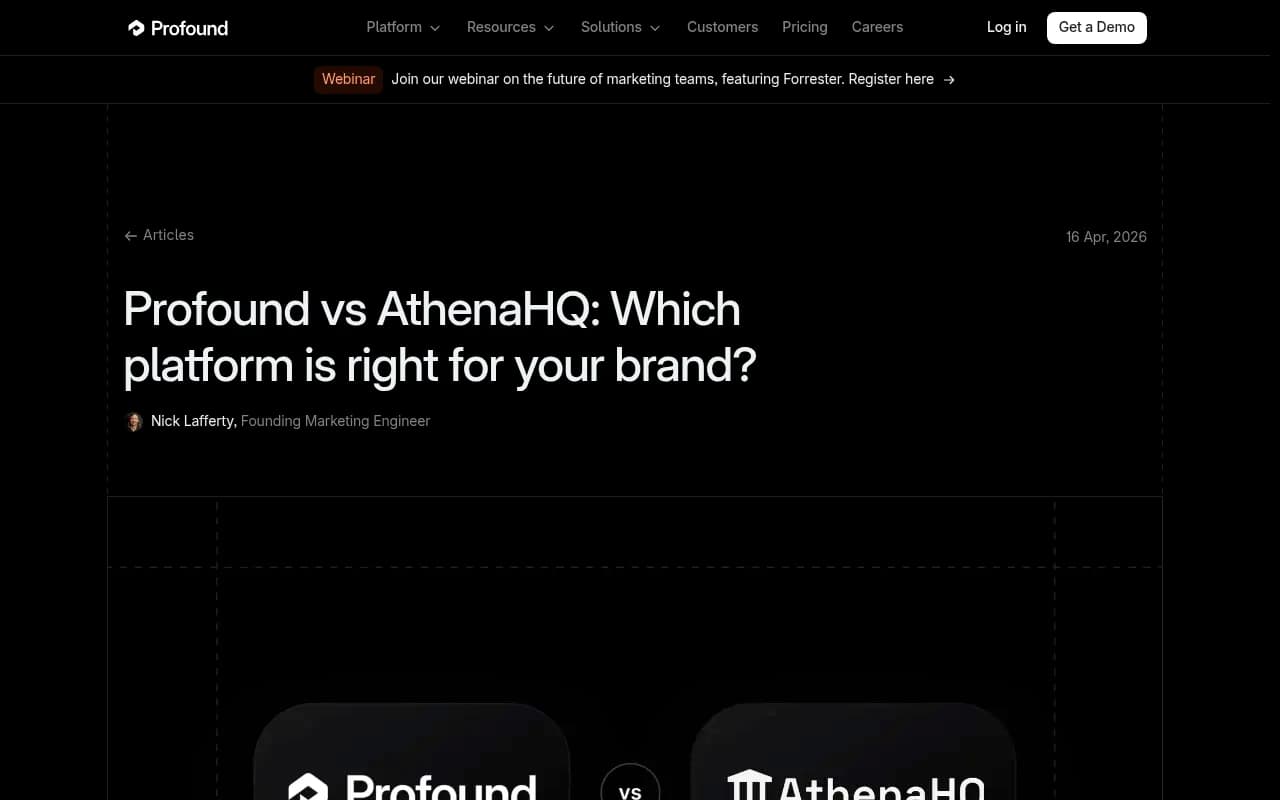
The first is cost versus capacity. Profound is the best-funded platform in the category, and one 2026 roundup notes that smaller companies can end up paying for capacity they cannot use. AthenaHQ goes the other way: its credit-based metering means you need to map your real monthly prompt volume against the allowance before you commit, or you hit a wall mid-month.
The second is the gap between insight and action. Scrunch's category guide frames tools along four stages: observe, understand, act, deliver. Both AthenaHQ and Profound score well on the first three, according to that guide, but a dashboard that tells you where you are invisible is not the same as a tool that fixes it. If your team has no spare writers or developers, the report just becomes another thing to read on Mondays.
The third is data trust. Profound says it builds on 2B+ real user prompts refreshed weekly. AthenaHQ uses its own Query Volume Estimation Model, and its public detail on dataset size and validation is thin. Neither of those facts makes a tool bad, but if your CFO asks where the numbers come from, you want a clean answer.
The fourth is plain procurement: contract renewal, a new budget owner, or an agency taking over reporting for several clients.
What you are actually leaving (and what you might miss)
Before picking a replacement, write down what the current tool does well. Switchers often forget this until a month in.
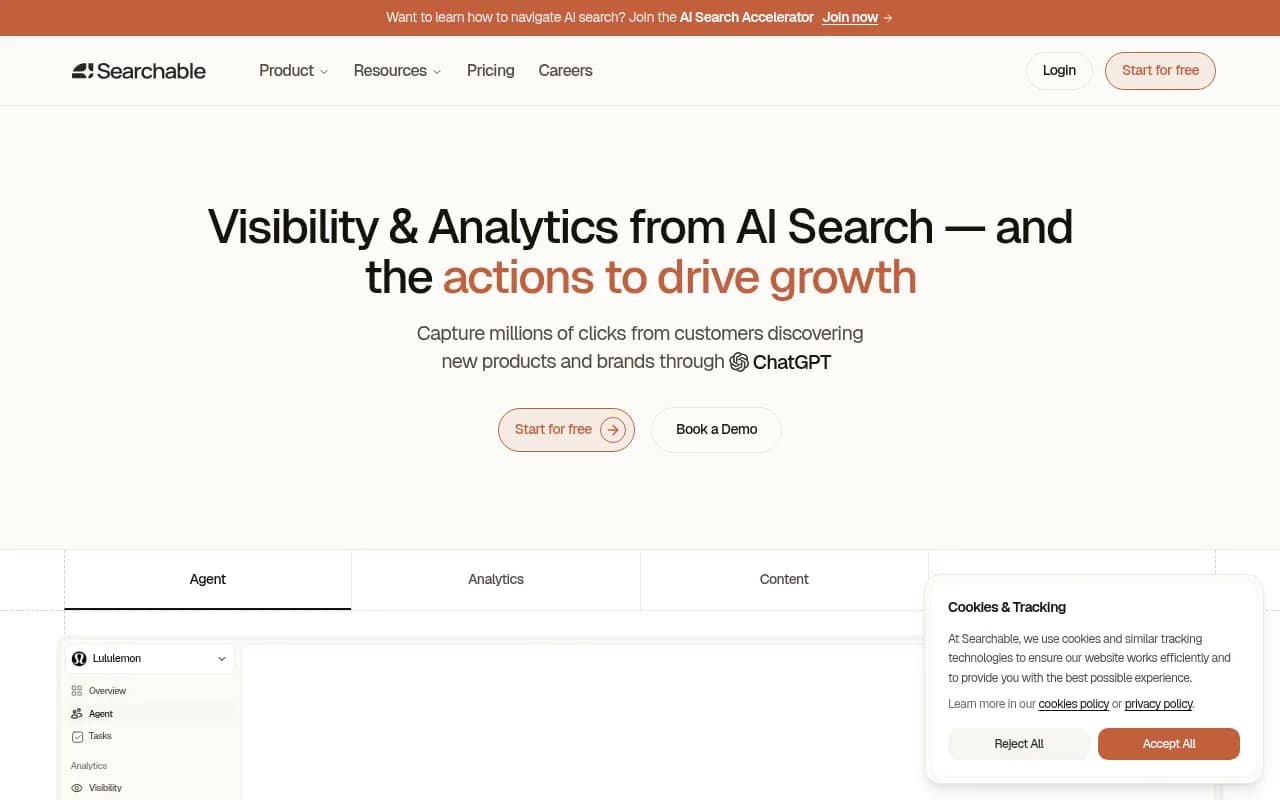
| Searchable | AthenaHQ | Profound | |
|---|---|---|---|
| Positioning | AI search visibility with monitoring and content tools | Monitoring and recommendations, with a growing set of optimization agents | Agentic marketing platform with an AI Marketer that proposes and runs projects |
| Typical buyer | Smaller teams | Mid-market, teams wanting prioritized actions | Enterprise teams with a data or content team |
| Entry pricing (verify) | Check vendor | Free Essential tier; Starter reported at $245 to $295/mo depending on source | Reported free trial plus custom pricing, or $99 and $399 tiers depending on source |
| Self-serve | Check vendor | Yes, card on file | Reported demo-led |
| Known strength | Content tools | Action queue, onboarding speed | Prompt volumes, funding, data depth |
Treat the pricing row as unverified. The sources I looked at disagree: AthenaHQ shows up at $295/mo monthly, $245/mo annual, and even $95/mo annual on one comparison site. Profound is listed with $99 and $399 tiers on Scrunch's guide, but as free trial plus contact-sales on others. Go to Profound's pricing and AthenaHQ's plans and take screenshots for your records.


Step 1: Audit and export before you touch anything
This is the step people skip, and it is the one you cannot redo after cancellation. I did not find reliable public documentation on each vendor's export options, so ask support directly and do not assume anything exists.
Export or screenshot, at minimum:
- Your full prompt list, with topic, tag, country, language and persona assignments
- Competitor lists and any brand aliases or exclusion rules
- Historical visibility, share of voice, position and sentiment by month
- Top cited domains and cited URLs for your own site
- Any recommendations or actions you marked as done, so you do not redo them
- Report templates and scheduled report recipients
Also check your contract. Annual plans often auto-renew, and cancellation windows are sometimes 30 days. Put the date in a calendar now. I did not research contract terms for these vendors, so read your own agreement.
A practical trick: pull a one-page baseline for your top 20 prompts (visibility, position, top cited sources) and save it as a PDF. You will want it when the new tool shows different numbers and someone asks whether things got worse.
Step 2: Rebuild the prompt library instead of copying it
It is tempting to paste your 300 prompts into the new tool and call it done. Resist that.
Promptwatch Data shows how unstable the ground is. In Promptwatch's ChatGPT query fanout report, the average was 2.15 searches per response in early December, about 1.84 by early March, and exactly 1.0 per response in April. Average query length fell from about 117 characters to roughly 53. And on August 8, 2026, ChatGPT started using the site: operator at scale, per Promptwatch's site: operator report, with such queries jumping from about 0.4% to about 17% of fanout queries overnight. If your prompt library was designed around last year's behavior, it is probably measuring a world that no longer exists.
So use the migration as a cleanup:
- Delete prompts nobody has looked at in six months.
- Split the rest into three sets: organic (no brand named), competitor comparison, and brand-specific. Promptwatch's unique domains report shows why. For Sep 28 to Oct 4, 2026, 52.5% of organic prompt responses cited 10 or more domains, against only 21.3% for brand-specific ones. Mixing the sets blurs your averages.
- Add prompts based on real demand. A prompt-volume or Search Console source beats guessing.
- Assign personas for your two or three real buyer types.
- Keep markets separate. Most tools fix language and location per monitor or project, so decide up front.
If you are moving to a tool with query fan-out data, look at the exact web searches the AI runs for your key prompts and write a few of your own headings to match. That is where the practical wins come from.
Step 3: Understand why the numbers will not match
This is the part that causes the most panic. You run the same prompt in the old and new tool and visibility differs by 15 points. Is something broken?
Usually not. The causes are boring:
- Data source. Some platforms query model APIs. Others capture the real user interface of ChatGPT, Google AI Overviews, Perplexity and others. User-facing answers, citations and shopping results can differ from API output. I could not verify how Searchable, AthenaHQ or Profound collect data, so ask each one. Promptwatch collects from real AI interfaces.
- Scoring formulas. One tool counts a mention, another weights placement and depth. Visibility Score, share of voice and sentiment are not standardized.
- Sampling and timing. AI answers vary run to run. Daily tracking versus weekly tracking changes the picture.
- Location and personalization settings.
The fix is a short overlap period. Run both tools on the same 30 to 50 prompts for two to four weeks and compare direction, not absolute values. If both say your position improved against a competitor, trust that. If they disagree on direction, dig into individual responses.
The citation picture also moved. Promptwatch's November 2026 ChatGPT citation share data shows Reddit at 0.23% of ChatGPT citations, down from 3.71% in June, with review sites like G2, Gartner, BBB, Capterra and Trustpilot holding 5 of the top 10 spots. The top 20 popular sites together earn under 2% of citations, with the rest spread across hundreds of thousands of domains. If your old dashboard still tells a Reddit-heavy story, the new tool's source reports should look different, and that is correct.
Step 4: Choose your destination by job, not by feature count
The category now has hundreds of entries, and our GEO software directory at bestgeosoftware.com is a good place to browse the long tail. For a switch from one of these three, I would sort candidates into four buckets.
| Bucket | What it means | Example tools |
|---|---|---|
| Monitor, act and publish in one loop | Tracking plus content creation, CMS publishing and measurement of results | Promptwatch, Relixir, GEOforge |
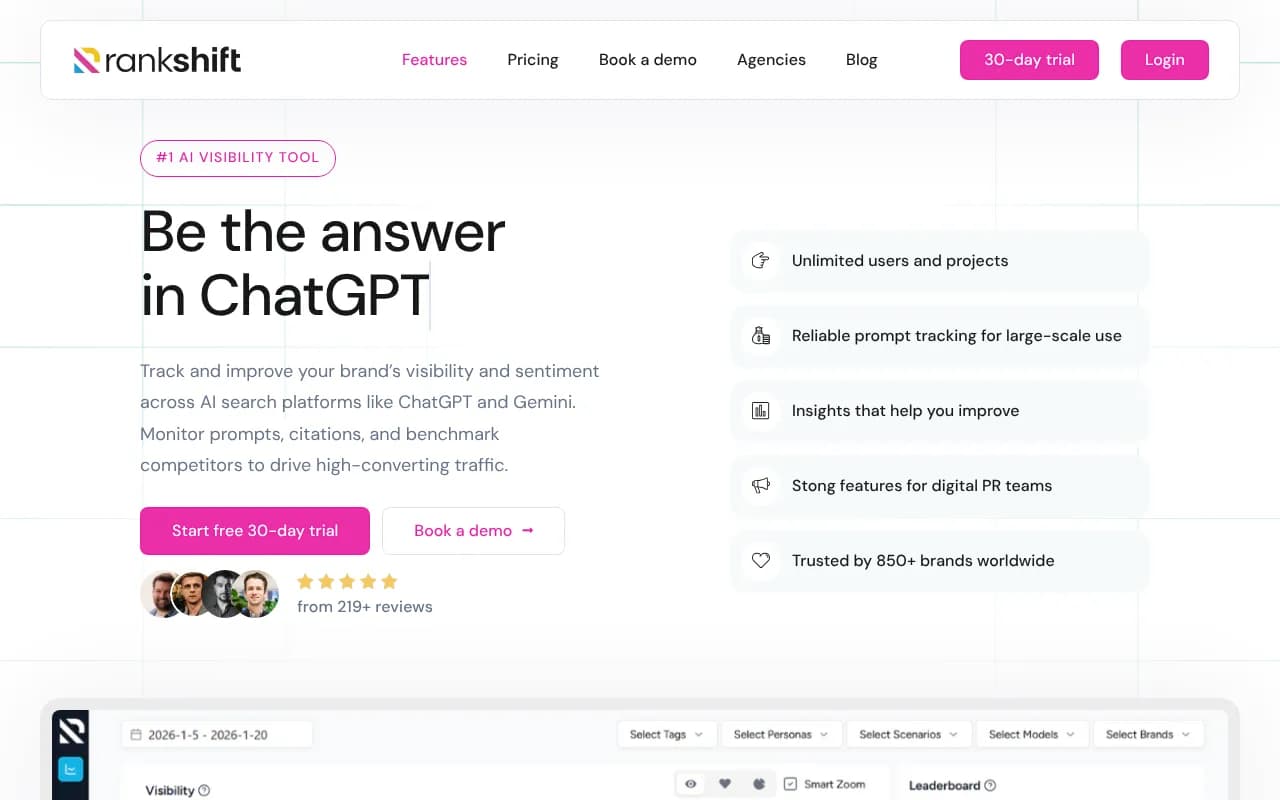
| Monitoring-focused trackers | Cheaper, lighter, you handle execution | Peec AI, Otterly.AI, Rankshift, Qwairy |
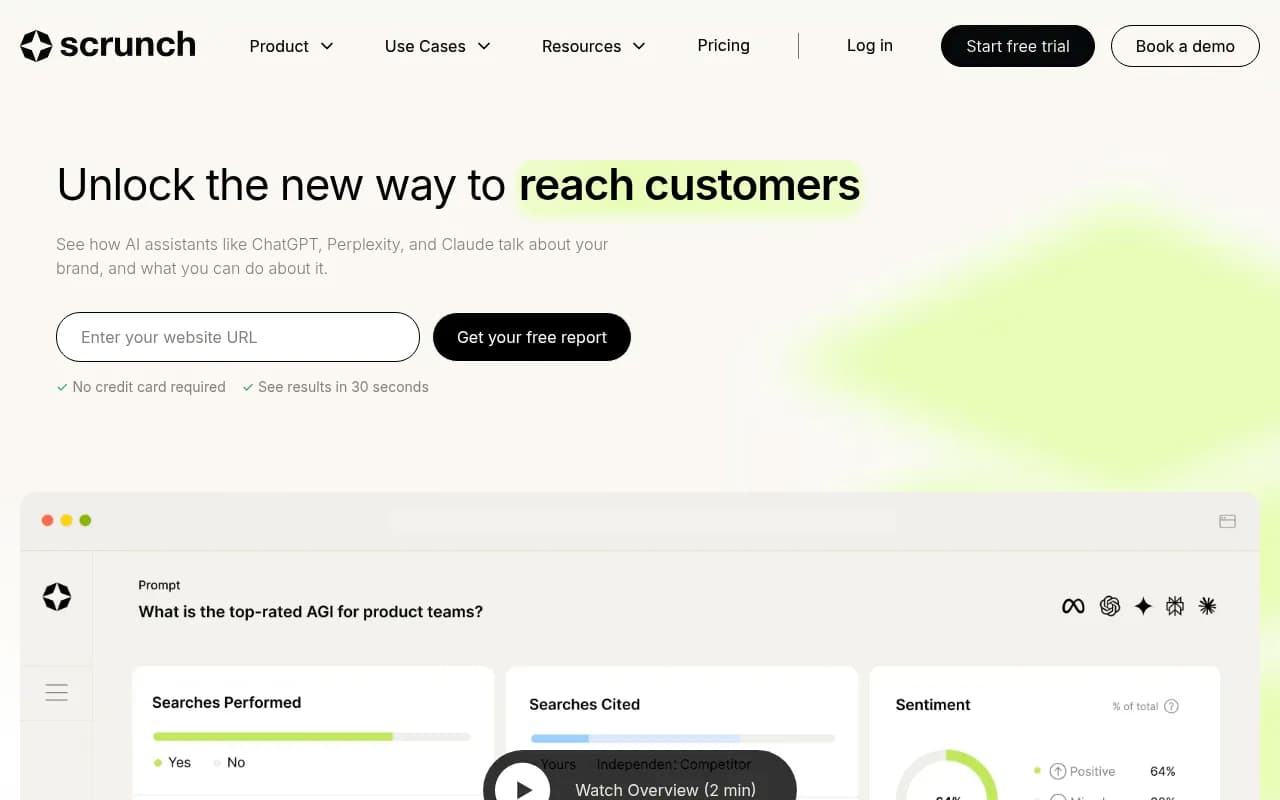
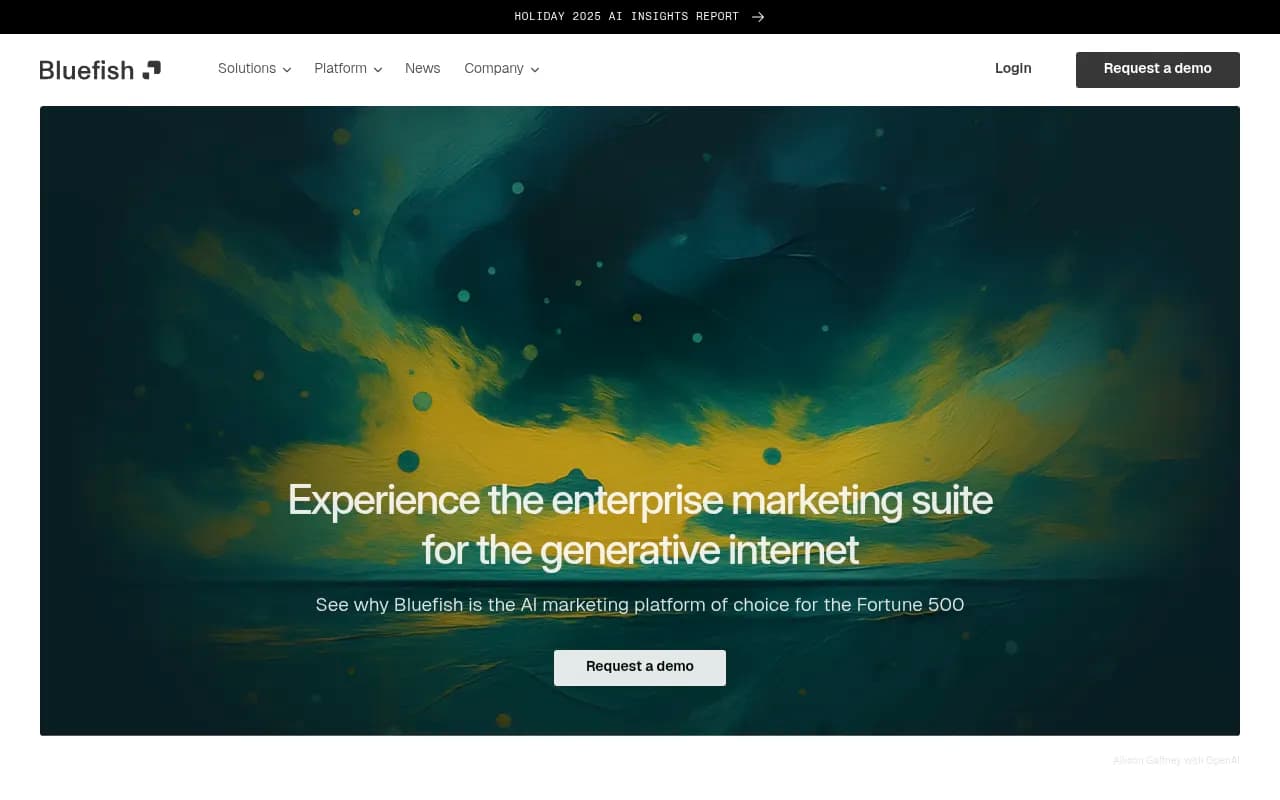
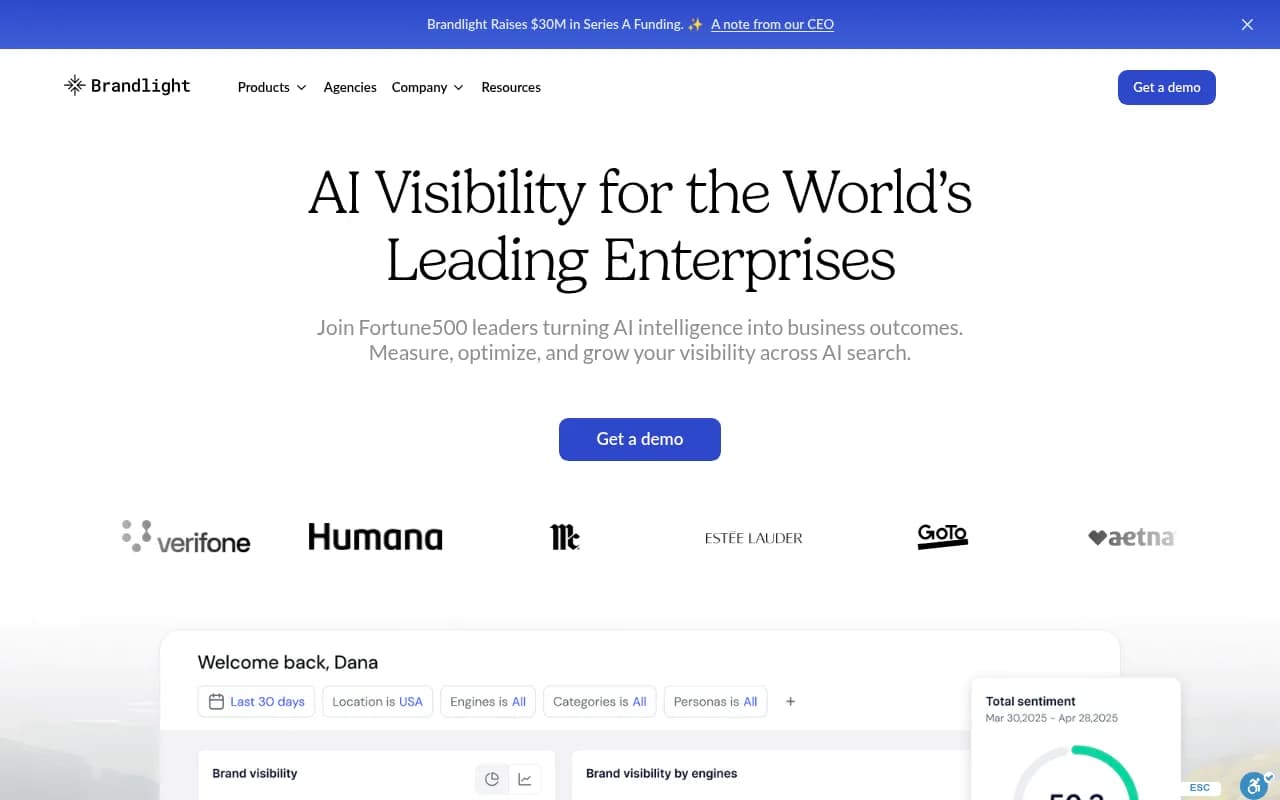
| Enterprise suites | Heavier procurement, broader marketing stack | Scrunch, Bluefish, Brandlight, BrightEdge |
| SEO suites with AI add-ons | Fixed prompt sets, AI as one module | Semrush, Ahrefs Brand Radar, SE Ranking |
If you left because the tool only reported
This is the most common complaint, so it gets the most space here. Promptwatch is built as a closed loop: monitor how AI answers about you, trace which pages and third-party sources get cited, act through content gap analysis, the Action Board and a Content Agent that writes and publishes to WordPress, Webflow or Framer, then measure whether the new page was crawled, cited and clicked. IP-verified AI crawler logs and visitor analytics sit in the same product, which matters when you need to tell an access problem from a content problem.

For a migration specifically, a few things help. Prompt volumes and difficulty scores make the rebuild in Step 2 less guesswork. Brand Narrative is on every plan and pulls the individual claims AI makes about you, which gives you a fresh baseline to compare against your old sentiment numbers. The Content Agent starts on the Business plan. Pricing runs from Essential at $95/mo to Professional at $245/mo and Business at $579/mo, with agency plans from $199/mo, and there is a 7-day free trial on monthly billing; confirm current numbers at promptwatch.com/pricing. If you are coming from Profound or AthenaHQ, the head-to-head pages are worth a skim: Promptwatch vs Profound and Promptwatch vs AthenaHQ.
A caveat: if you only need a weekly visibility number for a board slide, you do not need an end-to-end platform, and a lighter tracker will do.
If you left because of price
Look at Peec AI, Otterly.AI and Rankshift. They are monitoring-first, so you give up crawler logs, visitor analytics and content generation, but the monthly bill is smaller. Just check response limits, since cost per tracked response is what actually matters.


If you left for enterprise reasons
Scrunch pitches enterprise visibility with agent-experience features such as agent pages and agent traffic analysis. Bluefish and Brandlight target Fortune 500 brand work. Expect demos, security reviews and custom quotes. Ask about SSO, audit logs and certifications early, because those questions delay deals more than features do.
If you are an agency
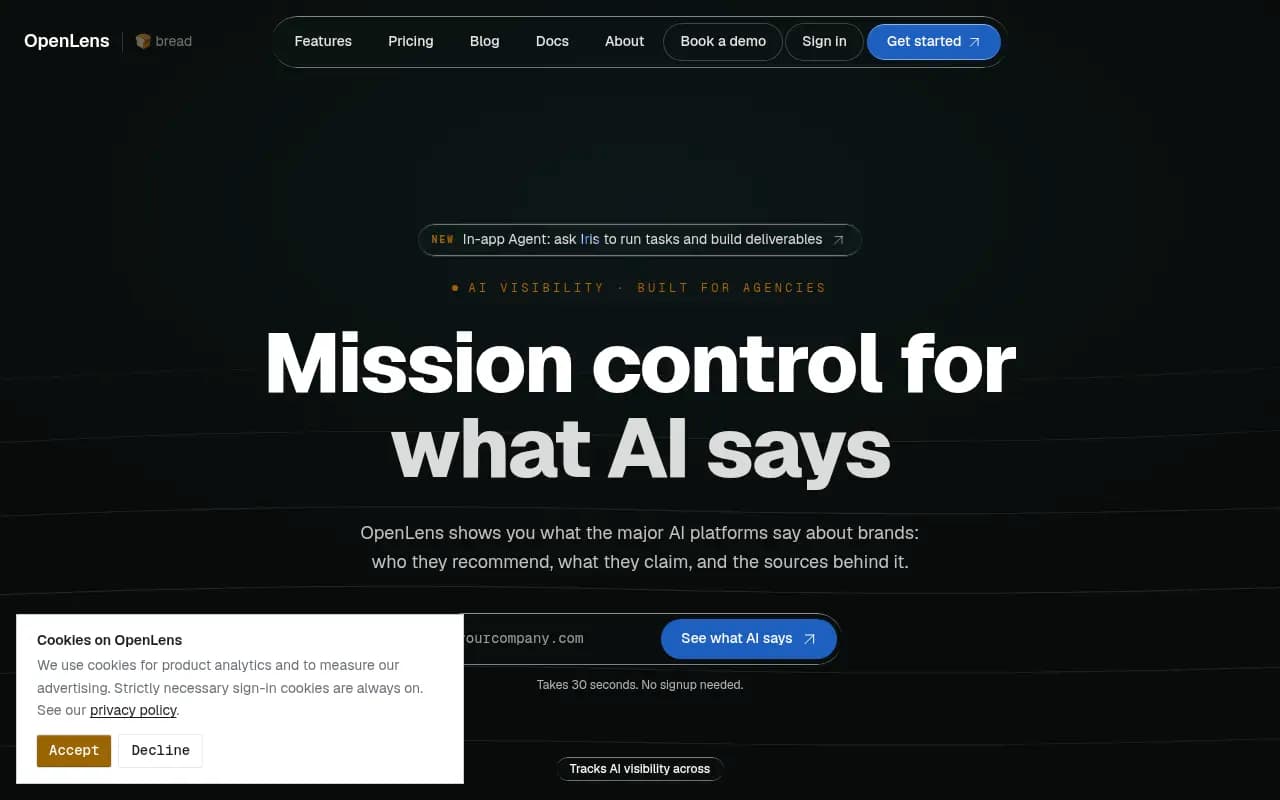
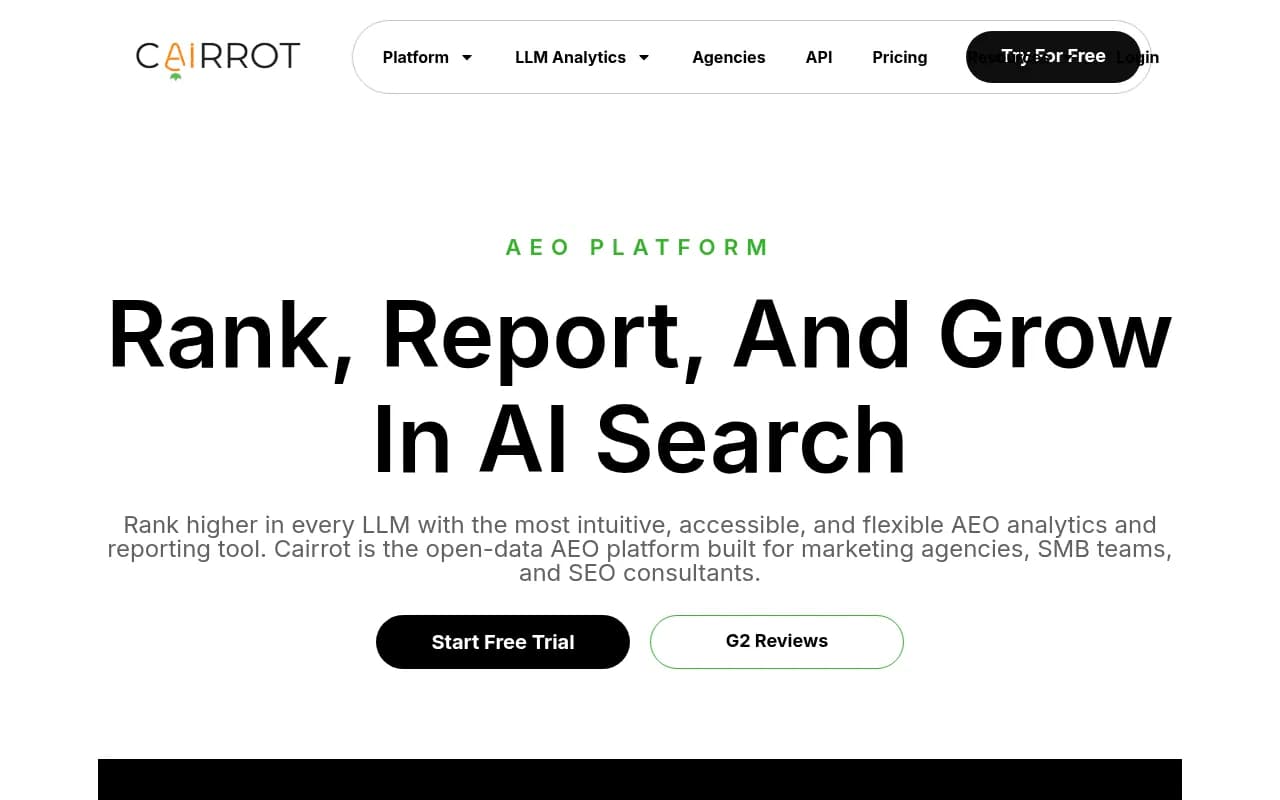
Agencies have different needs: unlimited projects, pitch reports, white-label output. Look for plans that let you generate prospect-ready visibility reports quickly. Promptwatch's agency plans (Kick-off, Growth, Scale) include AI Visibility Reports for pitching, and tools like OpenLens and Cairrot are built for agencies too. If you are weighing whether to hire help rather than buy another login, 1001 SEO Media runs GEO programs for brands and uses Promptwatch as its visibility platform.
Step 5: Run a two-week proof of concept
Do not decide from a demo. Set a simple test with pass/fail criteria.
- Load the same 30 to 50 prompts into your shortlist (two tools maximum).
- Check that every engine you care about is covered, in the right countries and languages.
- Pick five prompts where you know the real answer. Compare what each tool recorded against what you see by hand in the live AI interface.
- Test the citation reports: do the cited URLs and domains look plausible?
- Try the output side. Can it produce a prioritized to-do list? Can it draft and publish a page? Can it show whether that page was crawled?
- Time how long it takes to build the report your boss actually reads.
Scrutinize free tiers carefully. Some free plans cover a single engine, which tells you little about multi-engine performance. A free trial on the paid tier is a better test than a capped free plan.
Step 6: Cut over cleanly
Once a winner is clear:
- Rebuild dashboards and scheduled reports first, since stakeholders notice those before anything else.
- Move integrations: Search Console, Slack, CMS connections, and any crawler-log setup at your CDN or host.
- Tell the team which numbers changed definition. Add a line to every report for the first quarter: "Metrics collected with [new tool] from [date]; not directly comparable with earlier data."
- Keep the baseline PDF from Step 1 and, ideally, a CSV of old results.
- Cancel the old plan only after you confirm the cancellation window and the data you saved. Do it in writing.
One more tip: re-run the migration checklist six months later. The AI search world moves fast enough that the right tool today may not be the right tool next year.
Common mistakes
Copying prompts blindly, comparing raw scores across tools, cancelling before exporting, picking on feature count instead of the job you need done, and trusting a comparison article from a vendor without checking the other side. Profound and AthenaHQ both publish comparisons that conclude in their own favor (AthenaHQ's page claims better value at $295/month versus Profound's $499/month, while Profound's says the opposite on capability). Read both, then test.
Quick decision guide
| If this is your situation | Shortlist |
|---|---|
| You want the tool to help write and publish, then measure the result | Promptwatch, Relixir, GEOforge |
| You want cheap tracking only | Peec AI, Otterly.AI, Rankshift |
| You need enterprise procurement and a big vendor | Scrunch, Bluefish, BrightEdge |
| You already live in an SEO suite | Semrush, Ahrefs Brand Radar, SE Ranking |
| You manage many clients | Promptwatch agency plans, OpenLens, Cairrot |
More options are listed in the AI rank tracking directory, and Promptwatch's 2026 platform comparison lays out the capability gaps side by side.
FAQ
How long does a GEO platform migration take?
Plan on four to six weeks end to end: one week to export and plan, one to rebuild prompts, two to four weeks of parallel running, then cutover.
Can I import my old prompts directly?
Some tools accept CSV uploads, but you should clean and reclassify them first. A prompt library from last quarter may not reflect how ChatGPT searches now.
Why does my visibility score drop after switching?
Usually scoring and collection differences, not real decline. Compare direction over a few weeks of overlap.
Should I switch if my tool still works?
Only if you can name the job it fails at: cost, trust in the data, or the lack of action. If you cannot, stay put and revisit at renewal.