Key takeaways
- The GEO tool market has exploded in 2026, but most platforms only cover monitoring — they show you data without helping you act on it.
- The 8 capabilities that actually matter are: AI monitoring, content gap analysis, content generation, crawler logs, traffic attribution, prompt intelligence, competitor benchmarking, and multi-model coverage.
- Most tools score well on 2-3 capabilities but fall short across the full stack. Only a handful come close to covering all eight.
- Promptwatch is the only platform rated as a "Leader" across all eight categories in our 2026 comparison — largely because it closes the loop between finding gaps and fixing them.
- Your choice should depend on your team's maturity: monitoring-only tools work fine for early-stage tracking, but brands serious about growing AI visibility need optimization capabilities too.
AI-referred sessions jumped 527% year-over-year in the first half of 2025, according to Previsible's 2025 AI Traffic Report. That number has only grown since. If your brand isn't showing up in ChatGPT, Perplexity, Claude, or Google AI Overviews, you're losing ground to competitors who are — and most of them are using dedicated GEO tools to get there.
The problem is that the GEO tool market has become genuinely confusing. There are now dozens of platforms, many with overlapping names and similar-sounding feature sets. Some are full optimization platforms. Some are basic dashboards. Some are traditional SEO tools that bolted on an "AI monitoring" tab and called it a day.
This guide cuts through that noise. We scored 25 platforms across 8 capabilities that actually move the needle — not just "does it track AI mentions" but the full stack from discovery to content creation to revenue attribution.
The 8 capabilities we scored
Before the matrix, here's what each capability means and why it matters.
1. AI monitoring (breadth of models)
Does the tool track responses from ChatGPT, Claude, Perplexity, Gemini, Grok, DeepSeek, Copilot, and Google AI Overviews? Or just one or two? More models = more complete picture of your AI visibility.
2. Content gap analysis
Can the tool show you which prompts your competitors rank for that you don't? This is the difference between knowing you're invisible and knowing why — and what to do about it.
3. AI content generation
Does the platform help you create content optimized for AI citation, not just flag what's missing? This is where most tools stop short.
4. Crawler log analysis
Can you see which AI crawlers (GPTBot, ClaudeBot, PerplexityBot, etc.) are visiting your site, which pages they're reading, and how often? This is essential for diagnosing indexing issues.
5. Traffic attribution
Can you connect AI visibility to actual website traffic and revenue — via a code snippet, Google Search Console integration, or server log analysis? Without this, you're optimizing blind.
6. Prompt intelligence
Does the tool give you volume estimates, difficulty scores, and query fan-outs for individual prompts? This lets you prioritize high-value, winnable opportunities instead of guessing.
7. Competitor benchmarking
Can you compare your AI visibility against specific competitors across different models and prompt categories? Heatmaps, share-of-voice charts, and side-by-side comparisons all count here.
8. Multi-language / multi-region support
Can you monitor AI responses in different languages and countries, with customizable personas? Critical for any brand operating outside a single market.
The GEO tool matrix: 25 platforms scored
Scores are on a 1-5 scale. A "5" means the capability is fully built out and reliable. A "1" means it's absent or barely functional. Scores reflect publicly available information, user reports, and hands-on testing as of March 2026.
| Platform | AI monitoring | Content gap | Content gen | Crawler logs | Traffic attribution | Prompt intelligence | Competitor benchmarking | Multi-language |
|---|---|---|---|---|---|---|---|---|
| Promptwatch | 5 | 5 | 5 | 5 | 5 | 5 | 5 | 5 |
| Profound | 4 | 3 | 2 | 2 | 2 | 3 | 4 | 3 |
| AthenaHQ | 4 | 3 | 1 | 1 | 2 | 3 | 4 | 3 |
| Scrunch AI | 4 | 2 | 1 | 1 | 1 | 2 | 3 | 2 |
| Otterly.AI | 3 | 2 | 1 | 1 | 1 | 2 | 3 | 2 |
| Peec AI | 3 | 2 | 1 | 1 | 1 | 2 | 3 | 4 |
| Search Party | 3 | 2 | 2 | 1 | 2 | 2 | 3 | 2 |
| Bluefish | 4 | 3 | 2 | 1 | 2 | 3 | 4 | 3 |
| Semrush | 3 | 2 | 3 | 1 | 2 | 2 | 3 | 3 |
| Ahrefs Brand Radar | 3 | 2 | 2 | 1 | 1 | 2 | 3 | 2 |
| SE Ranking | 3 | 2 | 3 | 1 | 2 | 2 | 3 | 3 |
| Conductor | 3 | 2 | 2 | 1 | 2 | 2 | 3 | 3 |
| BrightEdge | 4 | 3 | 2 | 2 | 3 | 3 | 4 | 3 |
| Rankscale | 3 | 2 | 1 | 1 | 1 | 2 | 3 | 2 |
| Writesonic | 2 | 2 | 4 | 1 | 1 | 2 | 2 | 3 |
| Surfer SEO | 1 | 2 | 4 | 1 | 1 | 2 | 2 | 2 |
| Frase | 2 | 2 | 4 | 1 | 1 | 2 | 2 | 2 |
| Brandlight | 3 | 2 | 1 | 1 | 1 | 2 | 3 | 2 |
| Searchable | 3 | 2 | 2 | 1 | 2 | 2 | 3 | 2 |
| Evertune | 4 | 3 | 1 | 1 | 2 | 3 | 4 | 3 |
| GeoGen | 3 | 2 | 2 | 1 | 1 | 2 | 2 | 2 |
| Rankshift | 3 | 2 | 1 | 1 | 1 | 2 | 3 | 2 |
| LLM Pulse | 3 | 1 | 1 | 1 | 1 | 2 | 2 | 2 |
| Peasy | 2 | 1 | 1 | 1 | 1 | 1 | 2 | 2 |
| Omnia | 3 | 2 | 1 | 1 | 1 | 2 | 3 | 2 |
What the scores reveal
A few patterns jump out immediately.
Most platforms cluster around 2-3 on content gap analysis and score 1 on crawler logs and traffic attribution. That's not a coincidence — those capabilities require infrastructure investment that monitoring-first tools haven't prioritized. It's easier to build a dashboard that queries AI models and shows you a mention count than it is to build a full attribution pipeline.
The content generation category splits the market in two. Tools like Writesonic, Surfer SEO, and Frase score well here because writing assistance is their core product — but their AI monitoring is weak. Pure GEO trackers go the other direction: strong on monitoring, nothing on generation. Very few tools do both.
Promptwatch is the outlier. It's the only platform in this comparison that scores 5 across all eight categories, which reflects a deliberate product decision to build the full optimization loop rather than just a monitoring dashboard.

Tier breakdown: how to think about these tools
Tier 1: Full-stack optimization platforms
These tools cover most or all of the 8 capabilities. They're built for teams that want to not just track AI visibility but actively improve it.
Promptwatch sits alone at the top here. The combination of Answer Gap Analysis, built-in AI content generation grounded in 880M+ citations, crawler logs, and traffic attribution (via code snippet, GSC, or server logs) is genuinely different from what anyone else offers. It monitors 10 AI models including ChatGPT, Claude, Perplexity, Gemini, Grok, DeepSeek, Copilot, and Google AI Overviews — and it connects that data to actual revenue.
BrightEdge is the enterprise alternative with solid monitoring and some attribution capabilities, though it's priced for large organizations and lacks the content generation depth of Promptwatch.
Tier 2: Strong monitoring with partial optimization
These platforms do a good job of tracking AI visibility and competitor benchmarking, but stop short of helping you fix what they find.
Profound has a clean interface and reasonable prompt tracking. It's a solid choice for teams that want visibility data without the complexity of a full platform — but you'll need separate tools for content creation and attribution.

AthenaHQ covers 8+ AI engines and has decent competitor benchmarking. It's monitoring-focused by design, which is fine if that's all you need.
Bluefish positions itself as an enterprise platform and has reasonable depth on monitoring and competitor analysis. It lacks crawler logs and content generation, which limits its usefulness as a standalone optimization tool.
Evertune is worth mentioning for enterprise brands — it has good monitoring breadth and competitor tracking, though it's light on the optimization side.
Tier 3: Lightweight monitoring tools
These are simpler, often cheaper tools that do one thing reasonably well: tell you whether your brand shows up in AI responses.
Otterly.AI is one of the most accessible entry points to GEO monitoring. It's affordable and easy to set up, but it's essentially a mention checker — no gap analysis, no content tools, no attribution.

Peec AI has a notable strength in multi-language tracking, making it more useful for non-English markets than most competitors. Still monitoring-only.

Scrunch AI covers the basics of AI visibility monitoring. It's fine for a first look but won't scale with a serious GEO program.
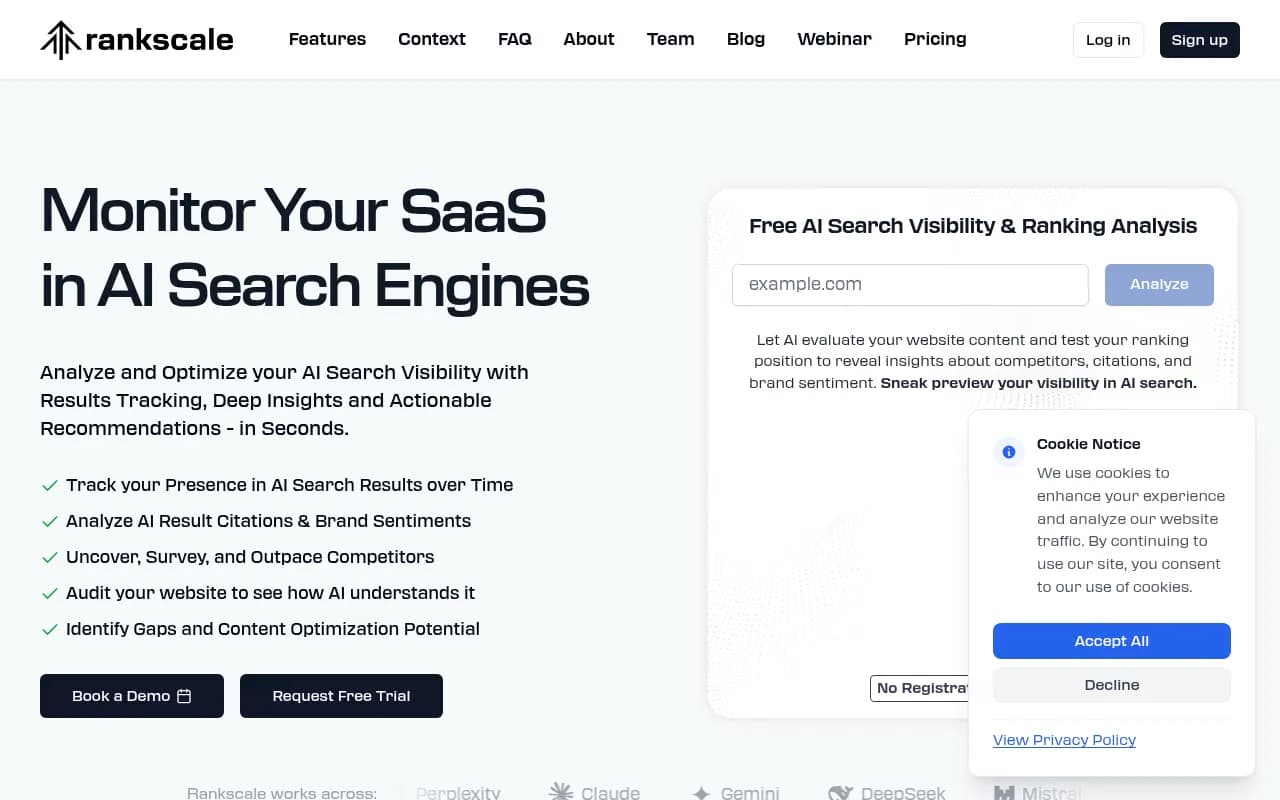
Rankscale is a clean, focused rank tracker for AI search. Good for teams that just want to know where they stand.
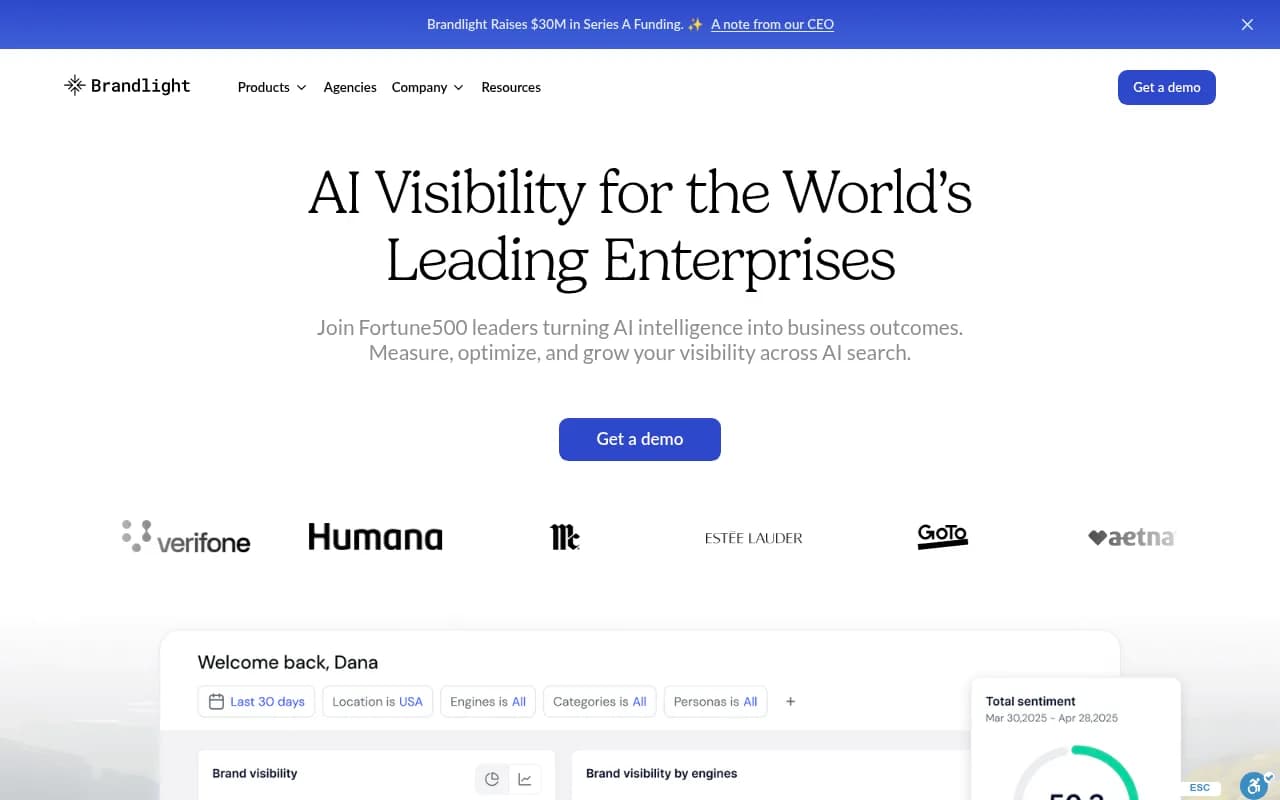
Brandlight covers brand visibility tracking with a reasonable interface. Limited depth on the optimization side.
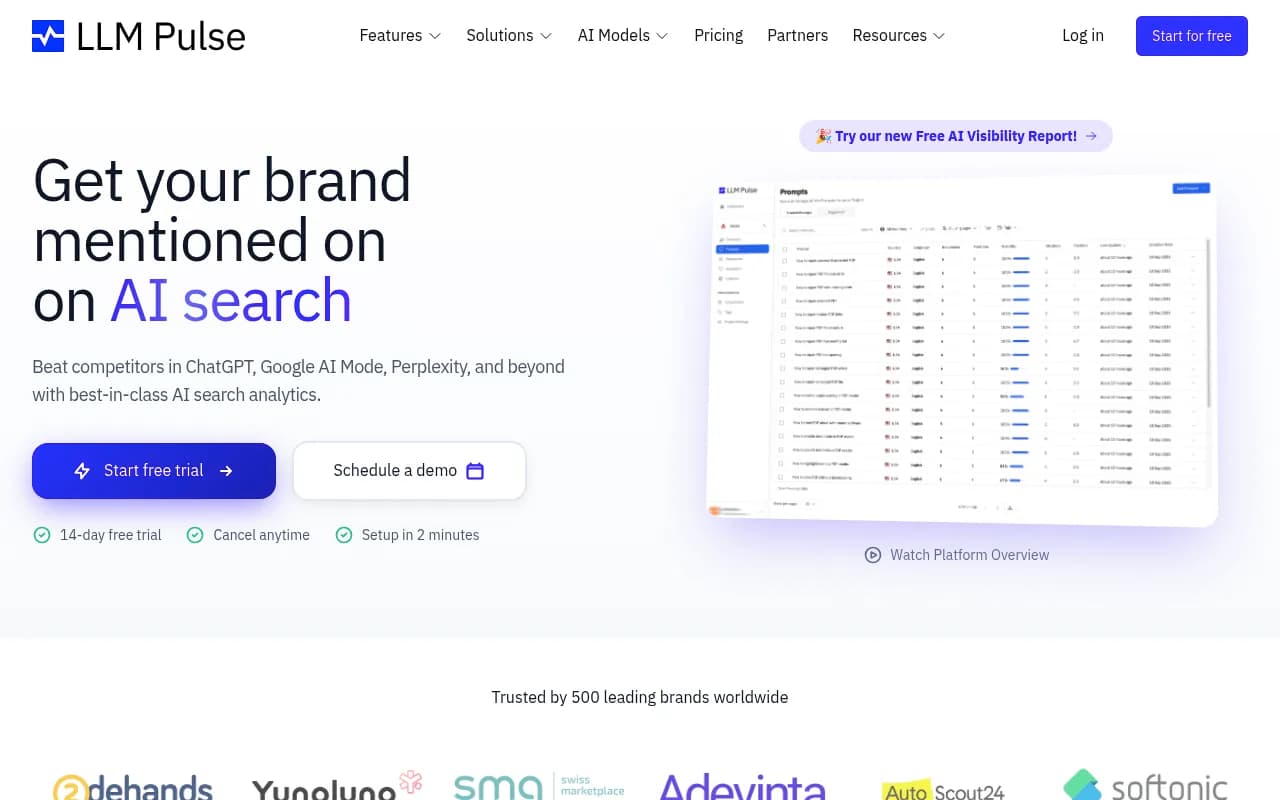
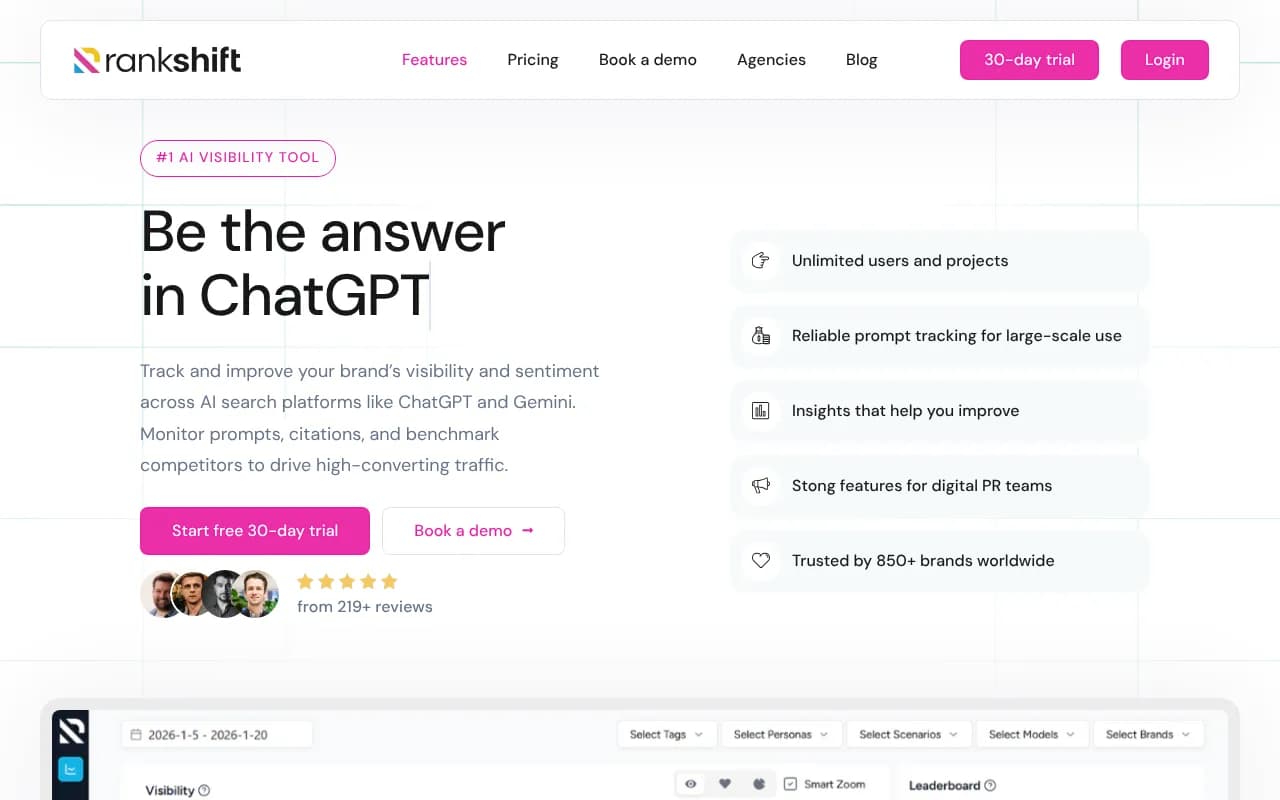
LLM Pulse and Rankshift are in the same category — functional monitoring, limited everything else.
Tier 4: Traditional SEO tools with AI add-ons
These are established SEO platforms that have added AI monitoring features. They're useful if you're already paying for them, but they weren't built for GEO and it shows.
Semrush has added AI Overviews tracking and some brand monitoring, but it uses fixed prompts rather than custom prompt sets, and there's no AI traffic attribution. If you're already a Semrush customer, the AI features are a useful bonus.
Ahrefs Brand Radar is similar — fixed prompts, no traffic attribution, no content generation for AI. Useful as a supplementary signal.
SE Ranking has added an AI visibility toolkit that's more developed than most traditional SEO tools. Worth considering if you want an all-in-one SEO + basic GEO setup.
Surfer SEO and Frase are strong content optimization tools that can help you write content that performs in AI search — but they don't monitor AI responses or track your visibility over time.
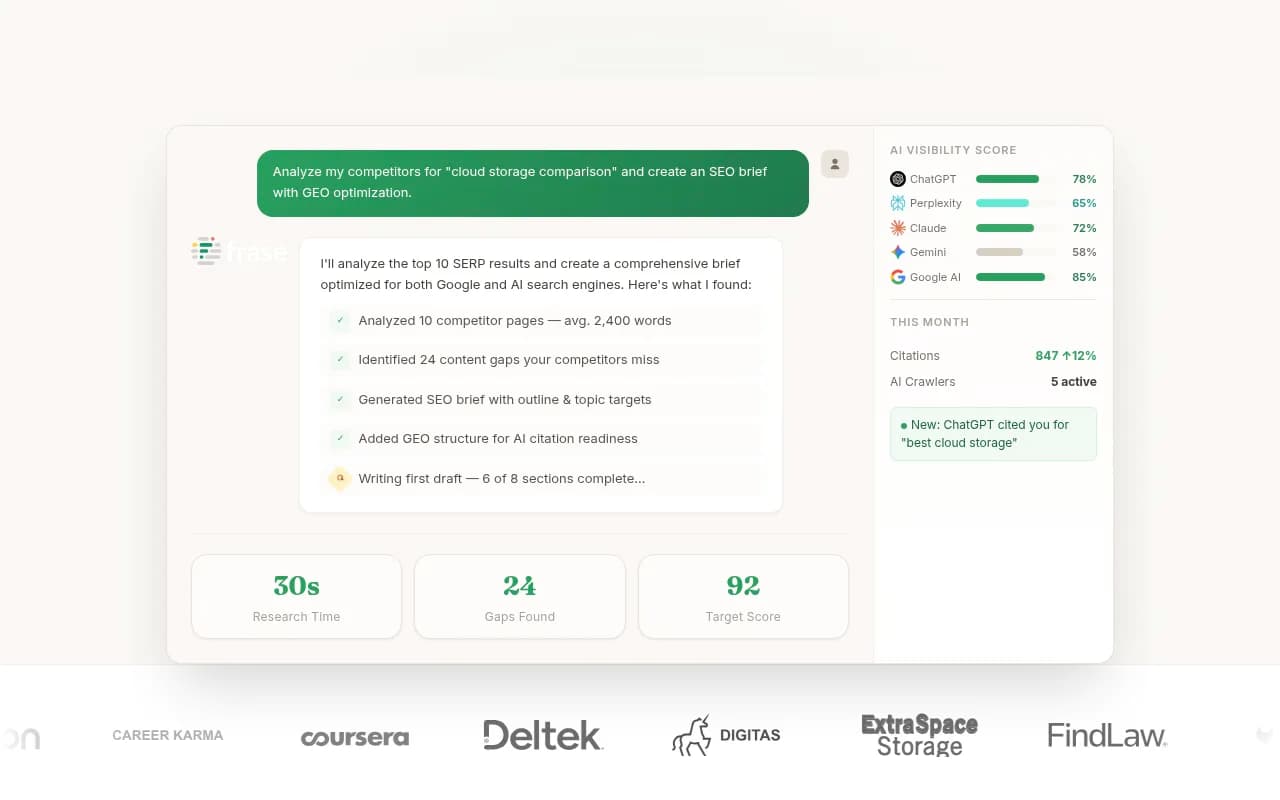
Writesonic has moved into AI search visibility monitoring alongside its content generation features. The monitoring is still maturing, but the content creation side is genuinely useful.
The capability gaps that matter most
The crawler log gap
Only a handful of platforms in this comparison offer any visibility into AI crawler behavior. This is a significant blind spot. If GPTBot or ClaudeBot is hitting your site and encountering errors, blocked pages, or slow load times, you won't know — and your AI visibility will suffer for reasons that have nothing to do with your content quality. Promptwatch's crawler log feature shows you exactly which AI bots are visiting, which pages they're reading, and what errors they encounter.
The attribution gap
Most GEO tools can tell you that your brand appeared in 47 AI responses last week. Very few can tell you whether any of those appearances led to a website visit, a lead, or a sale. Without attribution, you're optimizing for a metric that may or may not connect to business outcomes. This is the capability gap that separates tools built for marketers from tools built for analysts.
The content generation gap
Finding gaps is only useful if you can act on them. The majority of monitoring-only tools leave you with a list of prompts you're not ranking for and no clear path to fixing that. The platforms that include content generation — especially generation grounded in real citation data rather than generic SEO prompts — are meaningfully more useful for teams that want to grow their AI visibility, not just measure it.
How to choose: a decision framework
The right tool depends on where your team is in the GEO journey.
If you're just starting out and want to understand your current AI visibility before committing to a full platform, a lightweight monitoring tool like Otterly.AI or Peec AI is a reasonable starting point. They're cheap, quick to set up, and give you a baseline.
If you're an established SEO team that wants to add AI visibility to your existing workflow without switching tools, Semrush or SE Ranking's AI features may be enough — especially if you're already paying for those platforms.
If you're a marketing or SEO team that wants to actively grow AI visibility — not just track it — you need a platform that covers the full loop: gap analysis, content generation, and attribution. That's a short list, and Promptwatch is the most complete option available in 2026.
If you're an agency managing multiple clients, look for multi-site support, white-label reporting, and API access. Promptwatch's agency and enterprise tiers cover this. Search Party is worth evaluating too, though it's more of a managed service than a self-serve platform.
Pricing reality check
Here's a rough pricing comparison for the main tiers of the market:
| Platform | Entry price | What you get |
|---|---|---|
| Promptwatch | $99/mo | 1 site, 50 prompts, 5 articles, 10 AI models |
| Otterly.AI | ~$49/mo | Basic monitoring, limited models |
| Peec AI | ~$49/mo | Monitoring, multi-language |
| Profound | ~$149/mo | Monitoring + basic analytics |
| AthenaHQ | ~$199/mo | Monitoring + competitor tracking |
| Semrush (AI features) | $140/mo+ | AI monitoring as add-on to SEO suite |
| BrightEdge | Enterprise only | Full enterprise suite |
| Bluefish | Enterprise only | Enterprise monitoring |
The monitoring-only tools are cheaper at entry level, but they don't include content generation or attribution — so you'll likely end up paying for additional tools to fill those gaps. When you add those up, the all-in-one platforms often work out cheaper in practice.
The bottom line
The GEO tool market in 2026 is mature enough that you don't need to build your own tracking infrastructure, but immature enough that most platforms are still monitoring dashboards rather than optimization engines.
If you want to understand your AI visibility, most tools on this list will get you there. If you want to improve it — systematically, measurably, with content that actually gets cited — the options narrow considerably.
The platforms worth serious evaluation for teams that want the full stack are Promptwatch (best overall), BrightEdge (best for large enterprise), and Profound or AthenaHQ (best for monitoring-focused teams that don't need content generation). Everything else is either a niche tool, a traditional SEO platform with AI features bolted on, or a lightweight tracker that works fine as a starting point but won't scale.
Pick based on where you are now and where you want to be in six months. The gap between "we track our AI mentions" and "we systematically grow our AI visibility" is exactly the gap between the tiers in this matrix.