Key takeaways
- AEO tools fall into distinct categories: monitoring-only dashboards, content optimization tools, and full-loop platforms that do both. Knowing which you need saves a lot of wasted budget.
- Ranking on Google and getting cited by AI are now largely separate problems. A 2025 Ahrefs study found only 12% of URLs cited by ChatGPT, Gemini, and Copilot also rank in Google's top 10 for the same prompt.
- The most valuable tools in 2026 close the loop: they show you where you're invisible, help you create content to fix it, and track whether that content gets cited.
- Content teams specifically need tools that integrate into their workflow -- prompt research, brief generation, writing, and publishing -- not just a dashboard that shows a score.
- Most tools on this list have free trials. Start with one that matches your team's biggest bottleneck right now.
The phrase "answer engine optimization" didn't exist in most marketing team vocabularies two years ago. Now it's the thing everyone is scrambling to figure out, because the traffic math has changed. AI search isn't just growing -- it's pulling clicks away from traditional results in ways that don't show up cleanly in Google Search Console.
The problem is that the AEO tool market has exploded to match the panic, and a lot of what's out there is monitoring-only dashboards dressed up as optimization platforms. They'll show you a score. They won't help you improve it.
This guide is specifically for content teams. That means the tools below are evaluated on whether they actually help you go from "we're not being cited for this topic" to "we published something that gets cited." That's the workflow that matters.
What makes an AEO tool actually useful for content teams
Before the list, it's worth being clear about what we're evaluating. A content team's AEO workflow has roughly four stages:
- Prompt research -- finding which questions and prompts your audience is asking AI engines, and which ones you have a realistic chance of being cited for
- Gap analysis -- identifying where competitors are getting cited but you aren't, and understanding why
- Content creation -- writing or rewriting pages to match what AI models want to cite (structured answers, clear authority signals, the right schema)
- Tracking -- measuring whether your new or updated content is actually getting cited, and by which models
Tools that only do step 4 are monitoring tools. They're useful, but they're not AEO platforms in any meaningful sense. The best tools on this list cover at least steps 1 and 4, and the standout ones cover all four.
The 8 best AEO tools for content teams in 2026
1. Promptwatch -- best for closing the full loop
Promptwatch is the tool that most directly maps to the four-stage content workflow above. It's built around what they call the "action loop": find gaps, generate content, track results.
The prompt research side is genuinely strong. You get volume estimates and difficulty scores for individual prompts, plus query fan-outs that show how a single prompt branches into related sub-queries. That's useful for content planning in a way that a simple "are we mentioned?" dashboard isn't. You can see which prompts are high-volume and winnable before you spend time writing anything.
The gap analysis (Answer Gap Analysis) shows you the specific prompts where competitors are getting cited and you aren't -- and crucially, it tells you what content is missing rather than just that something is missing. The built-in AI writing agent then generates articles, listicles, and comparisons grounded in citation data from over 880 million citations analyzed. That's not generic AI writing -- it's content engineered around what AI models actually cite.
On the tracking side, Promptwatch monitors 10 AI models: ChatGPT, Perplexity, Google AI Overviews, Google AI Mode, Claude, Gemini, Meta/Llama, DeepSeek, Grok, and Mistral. Page-level tracking shows which specific pages are being cited and by which models. The AI crawler logs feature -- which most competitors lack entirely -- shows you which AI crawlers are hitting your site, which pages they're reading, and any errors they're encountering.
For content teams that want to connect visibility to revenue, there's traffic attribution via a code snippet, Google Search Console integration, or server log analysis.
Pricing starts at $99/month (Essential: 1 site, 50 prompts, 5 articles), $249/month (Professional: 2 sites, 150 prompts, 15 articles, crawler logs), and $579/month (Business: 5 sites, 350 prompts, 30 articles). Free trial available.

2. Frase -- best for SEO-to-AEO content workflows
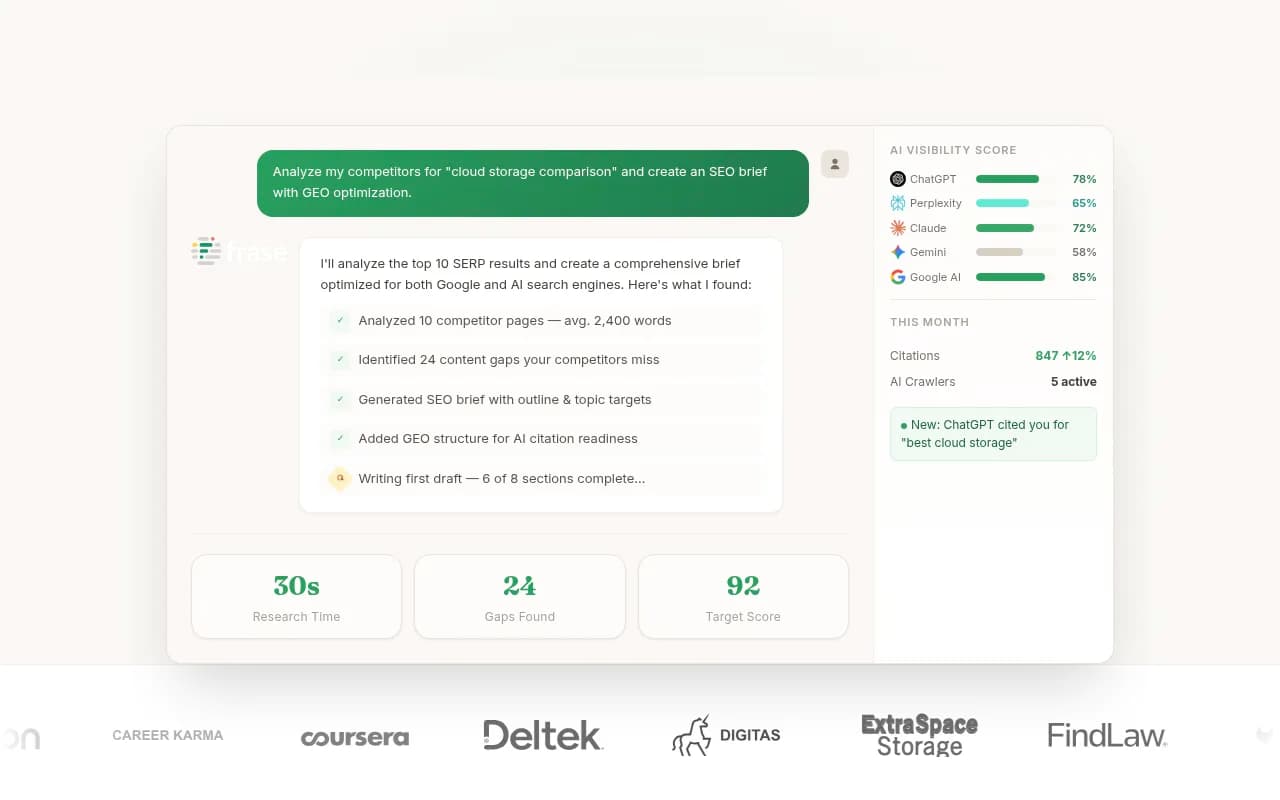
Frase has been a content optimization tool for years, and in 2026 it's made a serious push into AEO territory. The core strength is the research-to-draft pipeline: you start with a topic, Frase pulls together what AI engines are surfacing for related queries, and you build a brief and draft from there.
What Frase does well is the content side of AEO. The brief builder is fast, the editor gives you real-time optimization signals, and the platform has added citation tracking across major AI engines. The "detect decay" feature -- which flags when pages that were previously cited stop appearing -- is genuinely useful for content teams managing large libraries.
Where Frase is weaker is on the monitoring depth. It doesn't have the prompt volume data or the competitor heatmaps that more specialized AEO platforms offer. Think of it as a content team's primary writing tool that has added solid AEO awareness, rather than a full AEO platform that also does content.
3. Semrush -- best for teams already in the Semrush ecosystem
Semrush has added AI visibility tracking to its platform, and if your team is already paying for Semrush, it's worth knowing what's there. The AI Overview tracking is decent, the keyword data is still best-in-class for traditional SEO, and the ContentShake AI tool helps with writing.
The honest limitation: Semrush's AEO features use fixed prompts rather than custom prompt sets, which means you're tracking what Semrush decides to track rather than the specific questions your audience is actually asking. There's also no AI traffic attribution, which makes it hard to connect AI visibility to actual business outcomes.
For teams that need one tool for both traditional SEO and a basic read on AI visibility, Semrush makes sense. For teams where AEO is a primary focus, you'll hit the ceiling quickly.
The ContentShake AI add-on is worth a separate mention for content creation:
4. Nightwatch -- best for connecting traditional SEO with AI visibility
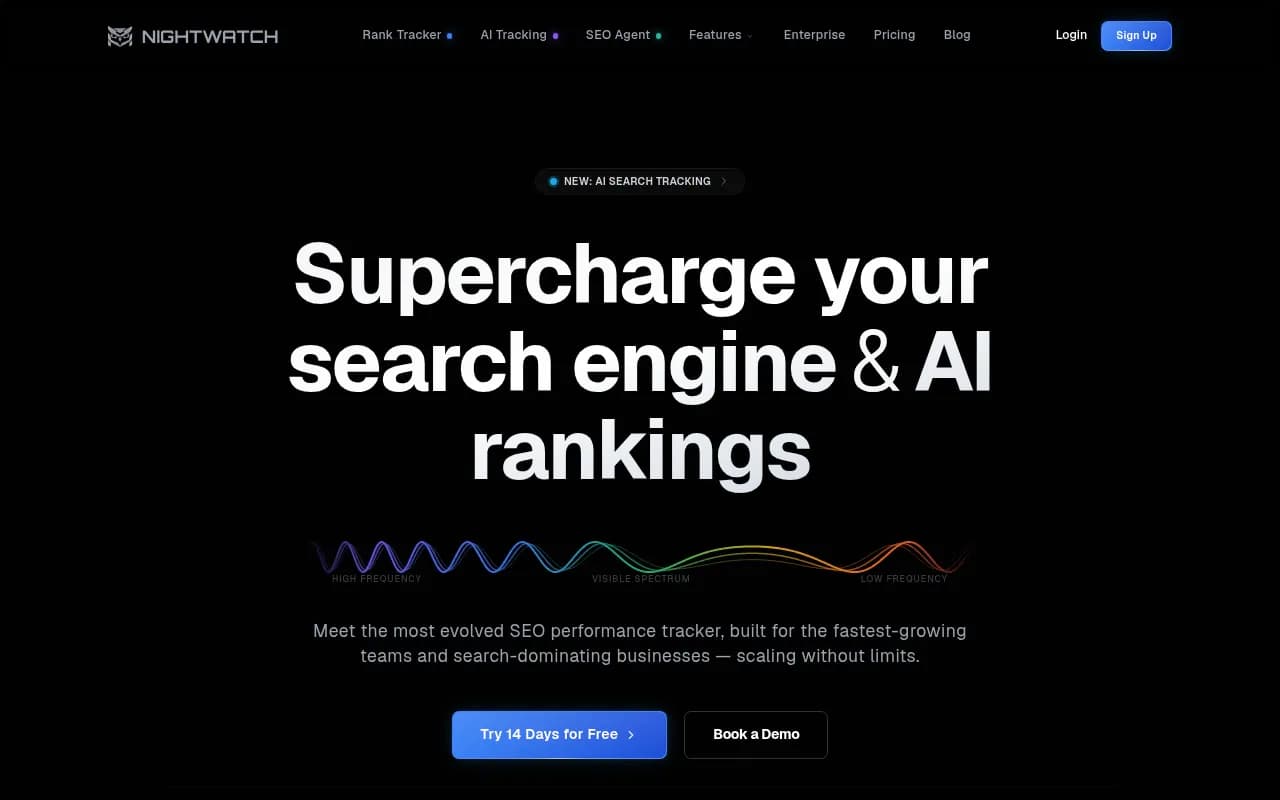
Nightwatch has built a reputation for clean, accurate rank tracking, and its AI search monitoring layer is one of the more thoughtful implementations in the mid-market. The interface is genuinely easy to use, which matters for content teams that don't have a dedicated SEO analyst.
The AI visibility tracking covers the major models, and the reporting is clear enough that you can share it with stakeholders who don't live in SEO tools. Where Nightwatch stands out is in how it surfaces the relationship between traditional rankings and AI citations -- useful for teams trying to understand whether their existing SEO work is translating into AI visibility or not.
It's primarily a tracking tool rather than an optimization platform, so pair it with a content creation tool if you need the full workflow.
5. Otterly.AI -- best entry point for smaller teams and solo marketers
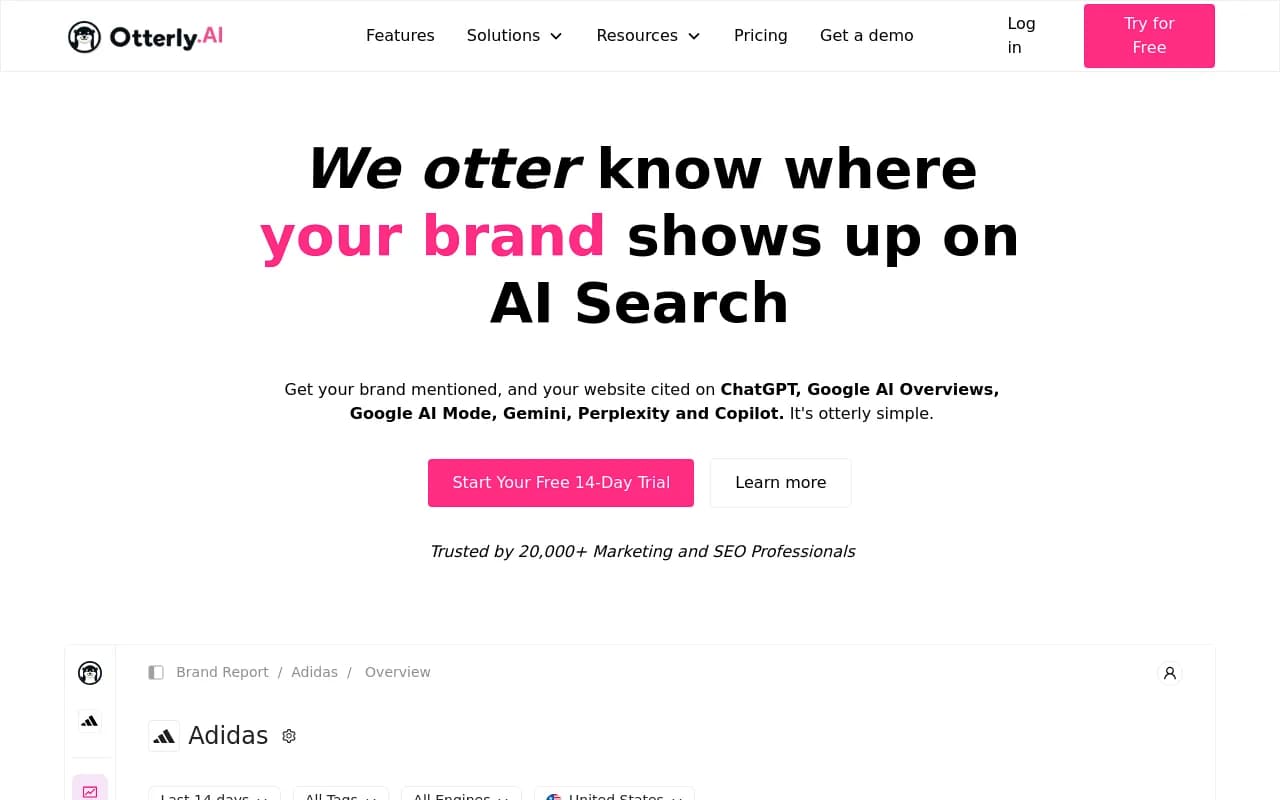
Otterly.AI is the most accessible entry point in the AEO category, starting at $29/month for 15 prompts across four AI models. For a small content team or a solo marketer who just needs to know whether they're showing up in AI responses, it's a reasonable starting point.
The interface is clean, setup is fast, and the monitoring covers the essentials. The limitations are real though: no content generation, no crawler logs, no prompt volume data, and no traffic attribution. It's a monitoring dashboard, not an optimization platform.
That's fine if monitoring is what you need right now. If you're trying to actually improve your AI visibility, you'll outgrow it quickly.
6. AthenaHQ -- best for teams focused on brand monitoring across AI engines
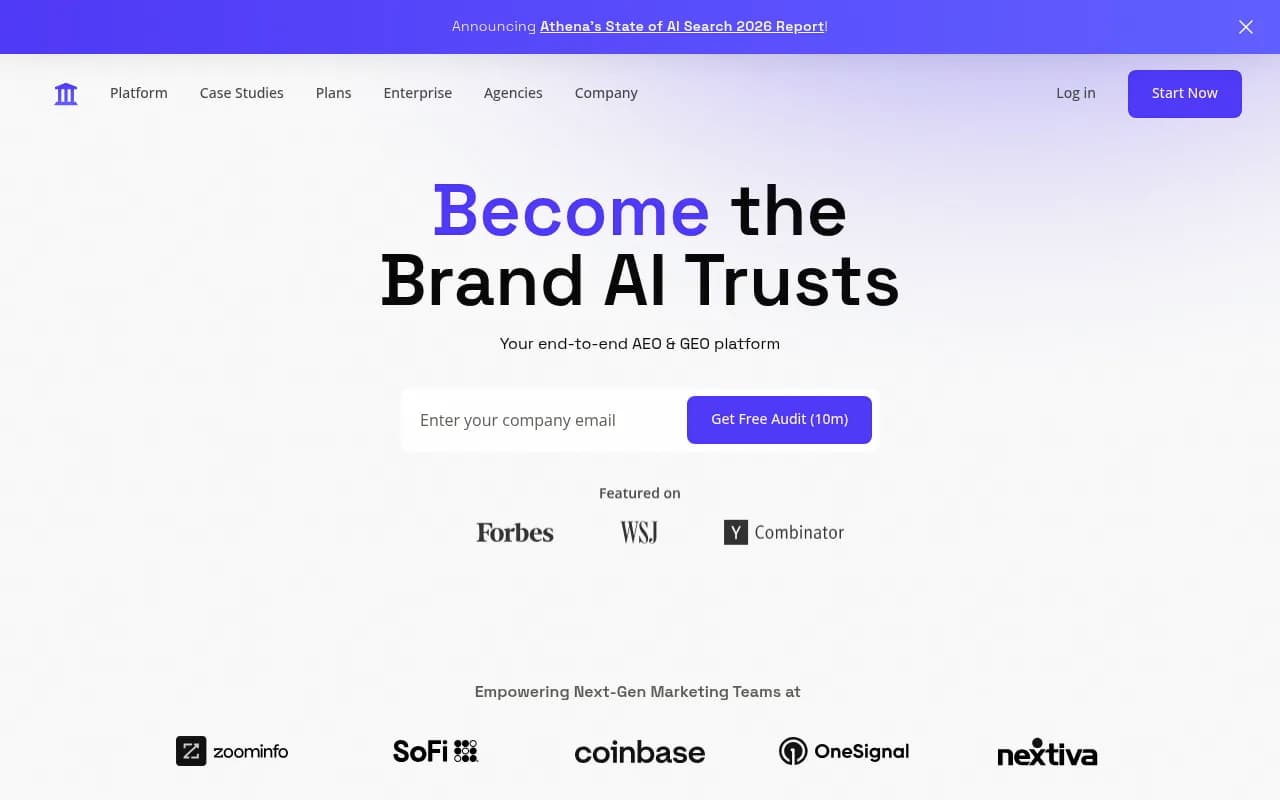
AthenaHQ covers 8+ AI search engines and has a clean interface for tracking how your brand is being discussed and cited. The competitive comparison features are solid -- you can see how your visibility stacks up against named competitors across different models.
The gap in AthenaHQ's offering is on the action side. It's a monitoring and analysis tool, and a good one, but it doesn't help you create content to address what it finds. For content teams, that means using it alongside a separate writing tool.
7. Profound -- best for enterprise teams with complex reporting needs
Profound is positioned at the higher end of the market, and the feature set reflects that. The AI visibility tracking is deep, the competitive analysis is detailed, and the reporting is built for teams that need to present to senior stakeholders.
The trade-offs: pricing is higher than most alternatives, there's no Reddit or YouTube tracking (both of which influence AI citations more than most people realize), and there's no ChatGPT Shopping monitoring. For a large enterprise team where budget isn't the constraint and reporting quality is the priority, it's a strong option.

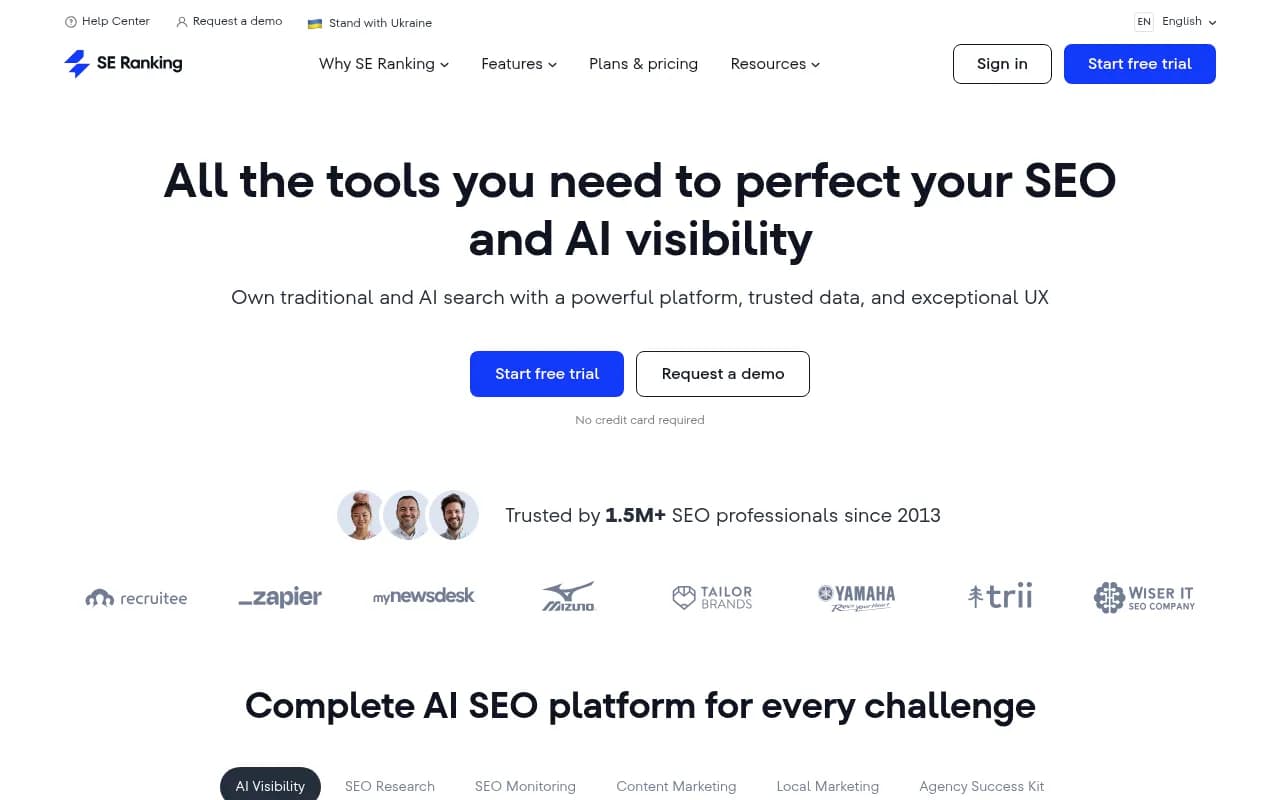
8. SE Ranking -- best all-in-one for mid-market teams
SE Ranking has quietly built one of the more complete mid-market SEO platforms, and its AI visibility toolkit is worth attention. You get rank tracking, site auditing, content optimization, and AI Overview monitoring in one place at a price point that's accessible for teams that can't justify enterprise pricing.
The AI visibility features aren't as deep as dedicated AEO platforms, but for a team that needs solid traditional SEO plus a reasonable read on AI visibility without managing multiple tools, SE Ranking hits a good balance.
How these tools compare
Here's a direct comparison across the dimensions that matter most for content teams:
| Tool | Prompt research | Gap analysis | Content generation | AI model coverage | Crawler logs | Traffic attribution | Starting price |
|---|---|---|---|---|---|---|---|
| Promptwatch | Yes (volume + difficulty) | Yes | Yes (AI writing agent) | 10 models | Yes | Yes | $99/mo |
| Frase | Partial | Partial | Yes (strong) | Limited | No | No | $15/mo |
| Semrush | No (fixed prompts) | No | Yes (ContentShake) | Limited | No | No | $139/mo |
| Nightwatch | No | No | No | Major models | No | No | $39/mo |
| Otterly.AI | No | No | No | 4 models | No | No | $29/mo |
| AthenaHQ | No | Partial | No | 8+ models | No | No | Custom |
| Profound | Partial | Partial | No | Major models | No | No | Custom |
| SE Ranking | No | No | Partial | Limited | No | No | $52/mo |
A few things jump out from this table. First, content generation is rarer than you'd expect -- most tools stop at tracking. Second, crawler logs (which tell you how AI bots are actually crawling your site) are almost exclusively a Promptwatch feature. Third, traffic attribution -- connecting AI visibility to actual clicks and revenue -- is largely absent from the market outside of Promptwatch.
How to choose the right tool for your team
The right answer depends on where your biggest bottleneck is right now.
If you don't know whether you're being cited at all, start with a monitoring tool. Otterly.AI or Nightwatch will answer that question quickly and cheaply. Once you know the answer, you'll know whether you need to invest in a more complete platform.
If you know you're not being cited and need to fix it, you need a tool that covers at least prompt research and content creation. Frase is the most accessible option here. Promptwatch is the more complete one if you also want to track competitors and measure results.
If you're managing AEO across multiple sites or for clients, you need something with multi-site support and reporting that scales. Promptwatch's Professional and Business tiers are built for this. SE Ranking is a more budget-friendly option if you're willing to accept less depth on the AI-specific features.
If you're at an enterprise with complex stakeholder reporting needs, Profound or BrightEdge are worth evaluating alongside Promptwatch.
One thing worth saying plainly: the tools that only monitor are useful as a starting point, but they don't solve the problem. Knowing you're invisible in AI search doesn't make you visible. The tools that help you create content that gets cited are the ones that actually move the needle.
A note on the content creation side
Most AEO guides focus entirely on the tracking and monitoring side, but for content teams, the writing is where the work actually happens. A few additional tools are worth knowing about for the content production stage specifically:
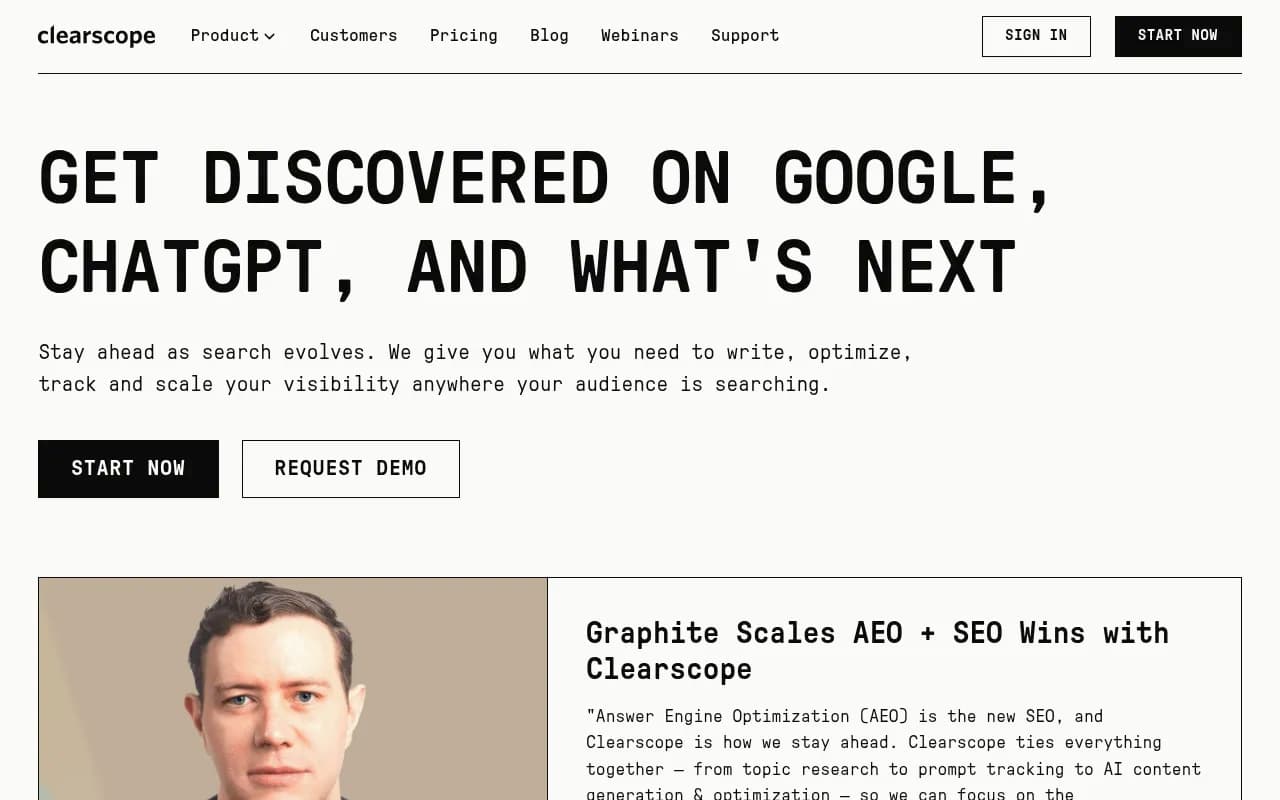
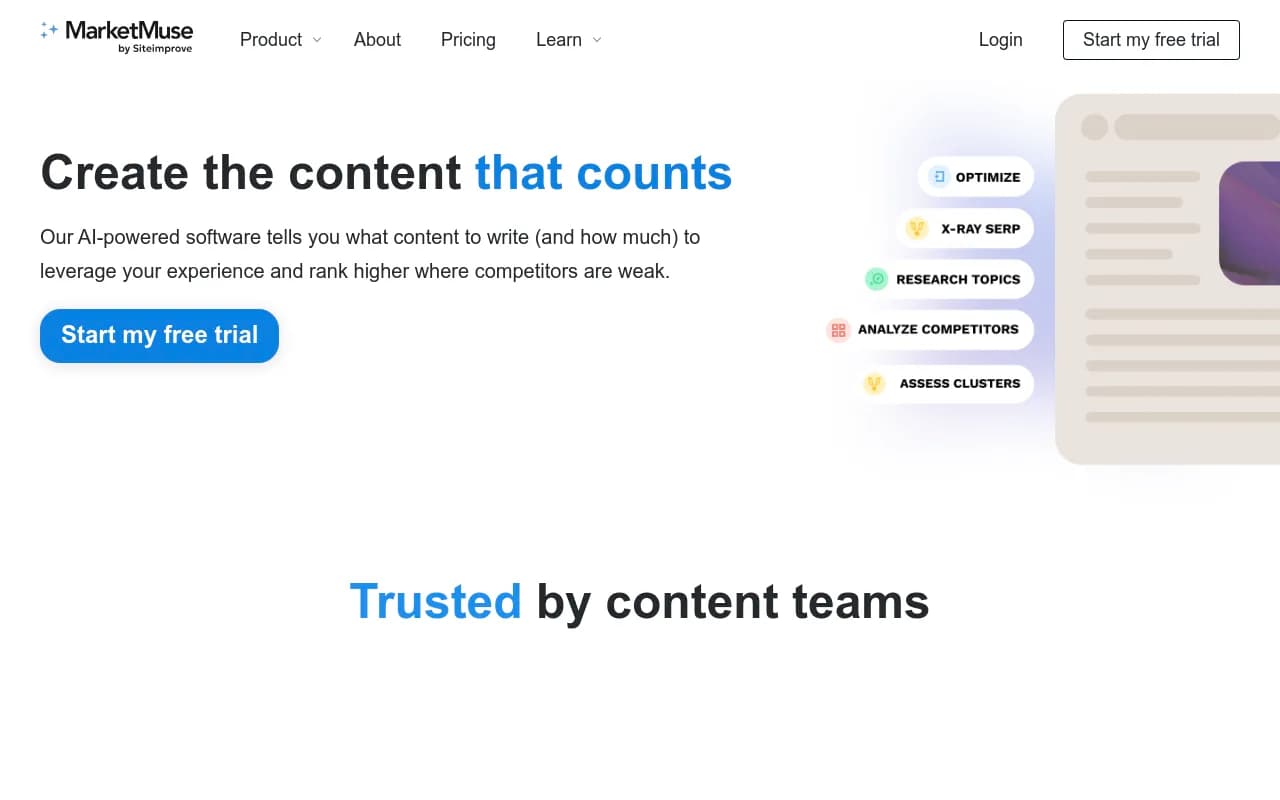
For content briefs and optimization, Clearscope and MarketMuse both have strong semantic analysis that helps you write content that covers a topic thoroughly -- which is exactly what AI models look for when deciding what to cite.
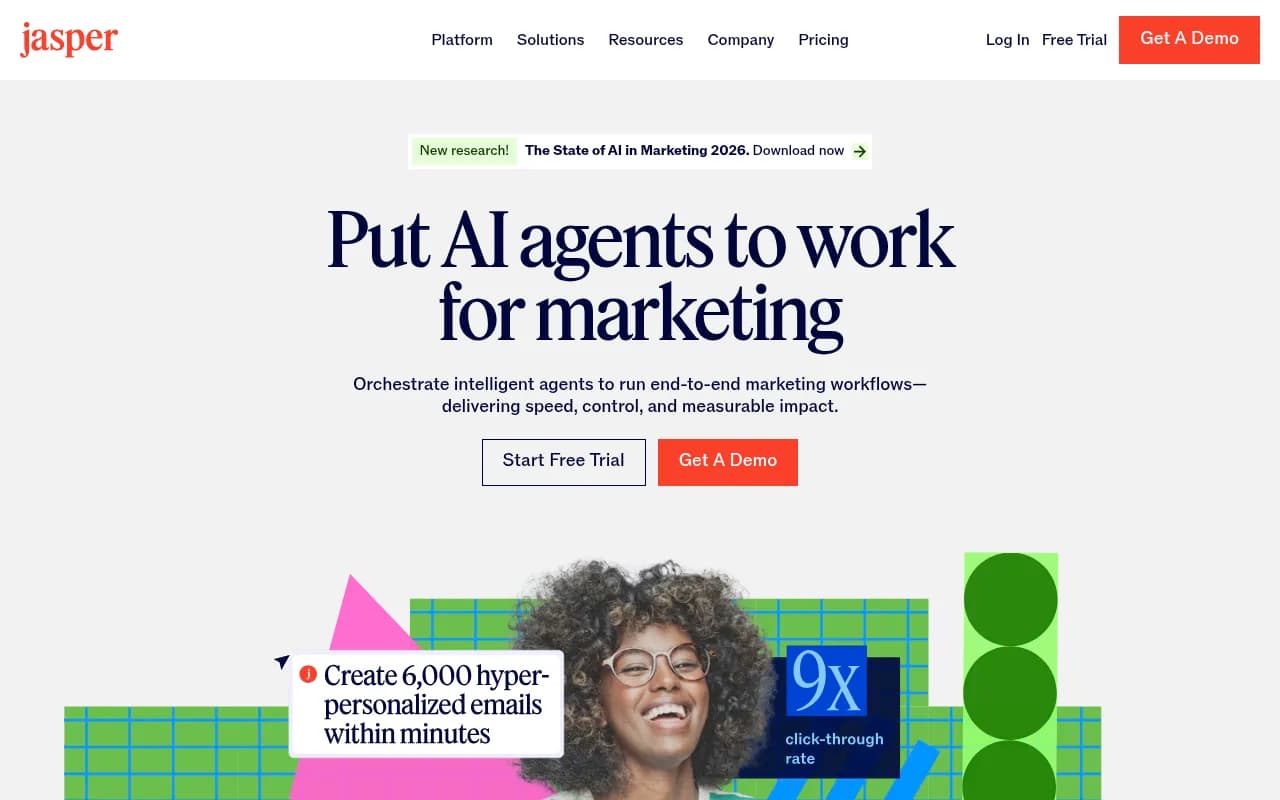
For high-volume content production, Jasper and Writesonic have both added AEO-specific features in 2026, though neither replaces a dedicated AEO platform for tracking and gap analysis.
For teams that want to understand what's being cited in their niche before writing anything, the citation and source analysis in Promptwatch -- which shows which specific pages, Reddit threads, and YouTube videos AI models are pulling from -- is one of the most practically useful features in the category. It tells you where to publish, not just what to write.
The bottom line
AEO tools in 2026 range from simple dashboards that tell you whether you're mentioned in AI responses to full platforms that help you find gaps, create content to fill them, and track whether that content gets cited. For content teams, the latter is what actually matters.
The monitoring-only tools have their place -- they're cheap, fast to set up, and useful for getting a baseline read on your AI visibility. But if improving that visibility is the goal, you need a tool that connects the data to action. That's the gap most of the market hasn't closed yet, and it's the most important thing to look for when evaluating your options.