Key takeaways
- Most GEO platforms stop at monitoring -- they show you visibility gaps but don't help you close them
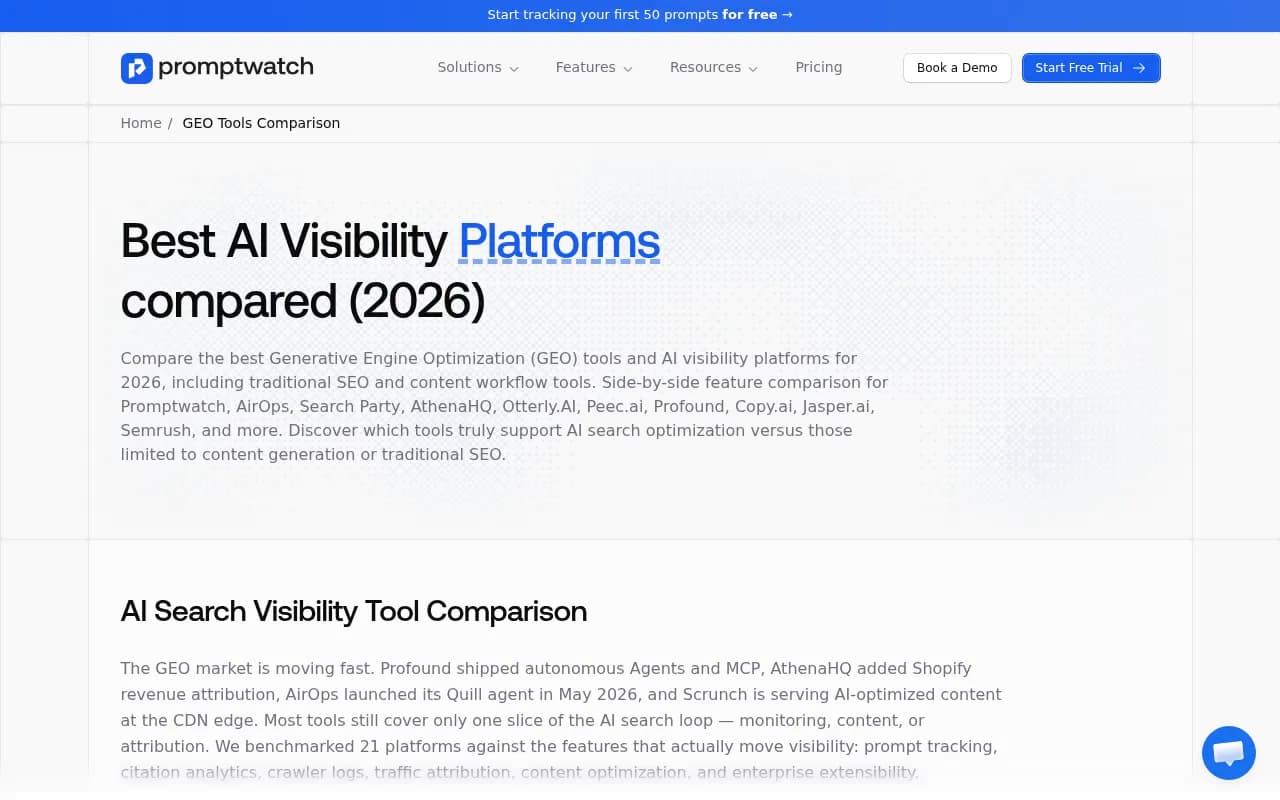
- Promptwatch is the only platform in this comparison that covers the full loop: gap discovery, content generation, crawler logs, and revenue attribution in one place
- Relixir and Whitebox both lean into automation but differ significantly in how they handle content quality and oversight
- Qwairy focuses on strategy and prompt intelligence, with limited native content generation
- The right choice depends on whether you need a full optimization platform or a more specialized tool for a specific part of the workflow
The GEO market in 2026 is crowded with monitoring dashboards. You can track your brand mentions across ChatGPT, Perplexity, Gemini, and a dozen other AI engines without breaking a sweat. What's harder to find is a platform that actually helps you do something about what you find.
That gap -- between "here's where you're invisible" and "here's the published content that fixes it" -- is where these four platforms compete most directly. Qwairy, Promptwatch, Relixir, and Whitebox each take a different approach to automating the path from insight to action. This guide breaks down exactly how far each one goes.
What "gap to published content" actually means
Before comparing tools, it's worth being precise about what we're evaluating. The workflow has four distinct stages:
- Identify which prompts AI models are answering without citing you (gap discovery)
- Understand what content would close those gaps (content intelligence)
- Generate or brief that content (content creation)
- Publish it and track whether it gets cited (attribution and feedback)
A monitoring-only tool handles stage one. A full GEO platform handles all four. Most tools in 2026 sit somewhere in the middle -- strong on discovery, weak on execution.
Promptwatch: the full loop in one platform
Promptwatch is the most complete platform in this comparison. It's built around the idea that visibility data is only useful if it tells you what to do next -- and then helps you do it.

The gap discovery side is thorough. Answer Gap Analysis shows you exactly which prompts competitors are getting cited for that you're not. You see the specific topics and questions AI models want to answer but can't find on your site. Prompt Intelligence adds volume estimates and difficulty scores, so you can prioritize the gaps worth closing rather than chasing everything at once.
Where Promptwatch separates itself is what happens after discovery. Content Agents generate articles, listicles, comparisons, and briefs grounded in real prompt data, citation patterns, and competitor analysis. This isn't generic AI writing -- it's content engineered around the specific gaps the platform identified. You can feed in brand guidelines, upload knowledge-base files, and include screenshots. The output is designed to be cited, not just read.
The feedback loop closes through AI Crawler Logs (Agent Analytics), which show you in real time when AI crawlers like ChatGPT and Perplexity hit your pages, which pages they read, and when those pages move from crawl to citation. Page-level tracking shows exactly which of your pages are being cited, by which models, and how often. Traffic attribution connects that visibility to actual revenue.
A few other capabilities worth noting: Reddit and YouTube insights surface third-party discussions that influence AI recommendations, ChatGPT Shopping tracking monitors product appearances in AI shopping results, and multi-language/multi-region support covers international markets. The platform monitors 10 AI models including ChatGPT, Perplexity, Google AI Overviews, Claude, Gemini, Grok, DeepSeek, and Copilot.
Pricing starts at $99/month (Essential: 1 site, 50 prompts, 5 articles), $249/month (Professional: 2 sites, 150 prompts, 15 articles, crawler logs), and $579/month (Business: 5 sites, 350 prompts, 30 articles). A free trial is available.
Qwairy: strong on strategy, lighter on execution
Qwairy positions itself as a GEO strategy and optimization platform. It's genuinely good at the strategic layer -- prompt research, competitive analysis, and understanding where your brand stands across AI engines.

The prompt intelligence is solid. Qwairy helps you map out which queries are driving AI citations in your category, identify where competitors are winning, and build a prioritized list of gaps to target. For teams that want to think carefully about GEO strategy before creating content, this is useful.
The limitation is what comes after the strategy. Qwairy doesn't have native content generation agents in the same way Promptwatch does. You get the brief and the direction, but the actual content creation happens elsewhere -- which adds friction and breaks the workflow. For teams with strong in-house writers or existing content workflows, that's manageable. For teams that want a single platform to take them from gap to published page, it's a gap.
Qwairy also doesn't have the crawler log infrastructure that Promptwatch offers, so the feedback loop between publishing and citation tracking is less tight.
Relixir: AI-native CMS with autonomous content
Relixir takes a different angle. It's built around an AI-native CMS and autonomous content generation -- the pitch is that it can identify gaps and ship content with minimal human intervention.
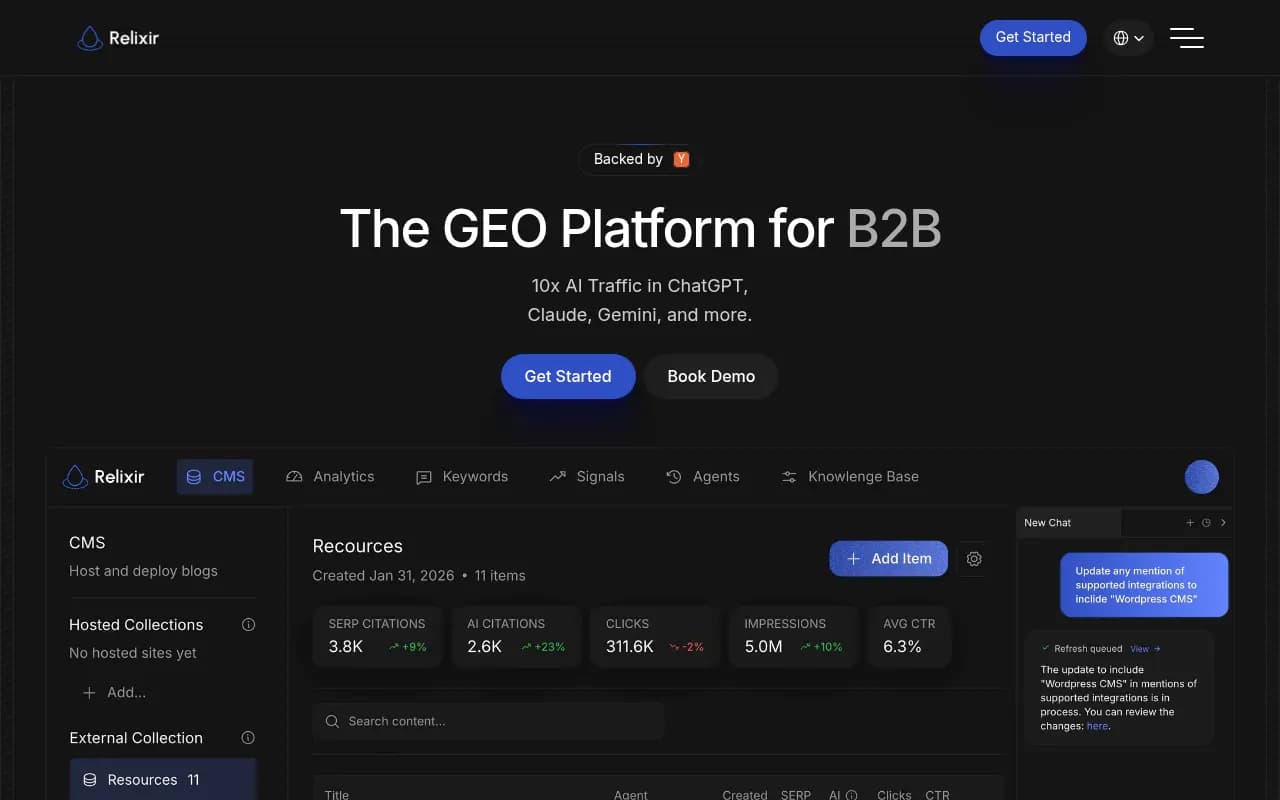
That autonomy is genuinely useful for teams with high content volume targets. Relixir can generate and publish content at scale, which matters if you're trying to close dozens of gaps quickly. The platform is designed to handle the full sequence from detection to publication.
The tradeoff is control. Autonomous content generation at scale raises real questions about brand voice, accuracy, and quality oversight. Relixir has controls for this, but teams with strict brand guidelines or complex subject matter will need to invest time in configuration and review workflows. The more specialized your content needs, the more supervision the automation requires.
On the monitoring side, Relixir covers the major AI engines and provides citation tracking. It's a capable platform, but the depth of prompt intelligence and the breadth of citation analytics don't quite match what Promptwatch offers -- particularly around Reddit/YouTube insights and ChatGPT Shopping data.
Whitebox: agentic GEO with automatic narrative fixes
Whitebox is the most aggressive automation play in this group. It's an agentic GEO platform that doesn't just identify narrative gaps -- it generates and ships fixes automatically.
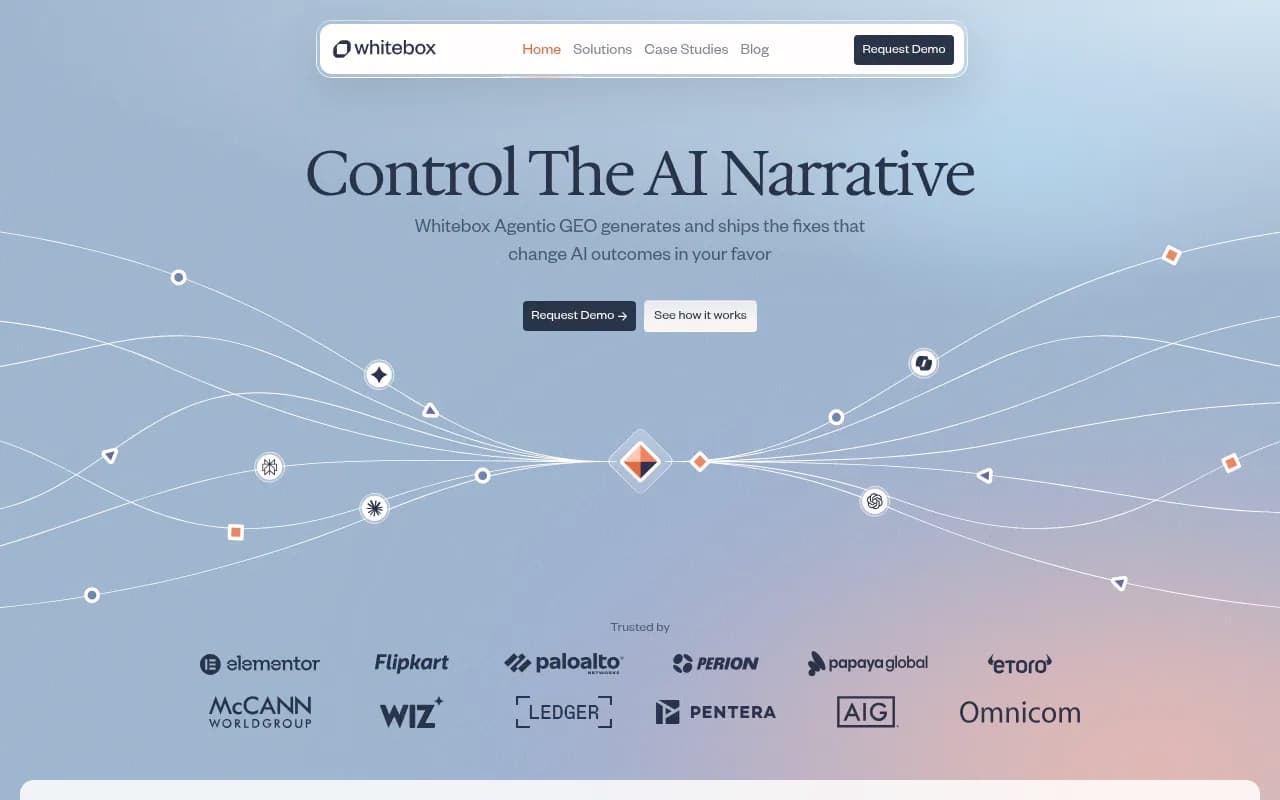
The "agentic" framing is meaningful here. Whitebox monitors how AI models describe your brand, detects when those descriptions are inaccurate, incomplete, or unfavorable, and then automatically generates content designed to correct the narrative. This is a different use case than pure gap-closing -- it's closer to reputation management meets GEO.
For brands that have specific narrative problems (AI models consistently describing them incorrectly, missing key differentiators, or favoring competitors in direct comparisons), Whitebox's automation is genuinely valuable. It moves faster than any human-in-the-loop workflow.
The limitation is that Whitebox's automation is optimized for narrative correction rather than broad content strategy. If you want to systematically close hundreds of topical gaps across a content program, the platform is less suited to that than Promptwatch or even Relixir. It's a sharp tool for a specific problem.
Head-to-head feature comparison
| Feature | Promptwatch | Qwairy | Relixir | Whitebox |
|---|---|---|---|---|
| Prompt gap analysis | Yes | Yes | Yes | Partial |
| Prompt volume + difficulty scoring | Yes | Yes | Limited | No |
| AI content generation | Yes (Content Agents) | No (briefs only) | Yes (autonomous) | Yes (narrative fixes) |
| Content publishes to your site | Yes | No | Yes | Yes |
| AI crawler logs | Yes | No | No | No |
| Page-level citation tracking | Yes | No | Partial | No |
| Traffic/revenue attribution | Yes | No | Limited | No |
| Reddit + YouTube insights | Yes | No | No | No |
| ChatGPT Shopping tracking | Yes | No | No | No |
| Multi-language/region | Yes | Limited | Limited | No |
| Number of AI models monitored | 10 | 5+ | 5+ | 4+ |
| Free trial | Yes | Yes | Yes | Yes |
| Starting price | $99/mo | Custom | Custom | Custom |
Which platform is right for which team?
The honest answer is that these platforms aren't really competing for the same buyer.
Promptwatch is the right choice if you want a single platform that takes you from gap discovery all the way to published content, crawler-confirmed indexing, and revenue attribution. It's the most complete option in this comparison and the only one with the full feedback loop. Teams that have been frustrated by monitoring-only tools -- seeing the data but not knowing what to do with it -- will find the most value here.
Qwairy works well for teams that want strong strategic intelligence and are comfortable handling content creation separately. If you have a content team that just needs better direction on what to write, Qwairy's prompt research is genuinely useful. It's not a full-stack solution, but it's a solid strategy layer.
Relixir fits teams with high content volume needs and tolerance for autonomous publishing. If you need to close 50 gaps in 30 days and you have the review process to catch quality issues, the automation is valuable. Just go in with realistic expectations about the oversight required.
Whitebox is the right call when you have a specific narrative problem -- AI models are saying something wrong or incomplete about your brand, and you need it fixed fast. It's more focused than the others, which is a feature if that's your actual problem.
The monitoring trap
One thing worth saying plainly: the GEO market is full of platforms that will show you impressive dashboards of where you're invisible. That data is genuinely useful for about 20 minutes. After that, the question is always "so what do I do about it?"
Most platforms don't have a good answer. They hand you a list of gaps and leave you to figure out the content strategy, briefing, writing, publishing, and tracking yourself. That's not optimization -- it's reporting.
The platforms in this comparison all make some claim to going beyond monitoring. But the depth of that claim varies significantly. Promptwatch has built the most complete path from gap to citation, with the crawler logs and attribution data to prove it's working. The others have meaningful strengths in specific parts of the workflow.
A few other tools worth knowing
If none of the four above is quite the right fit, a few other platforms are worth a look depending on your specific needs.
Scrunch has strong monitoring breadth and clean reporting for teams that primarily need visibility tracking across many AI surfaces.
Profound is the enterprise choice when you need deep governance, advanced attribution, and a platform built for large organizations with complex approval workflows.

AthenaHQ covers monitoring across 8+ AI engines and has added Shopify revenue attribution, making it worth considering for e-commerce teams.

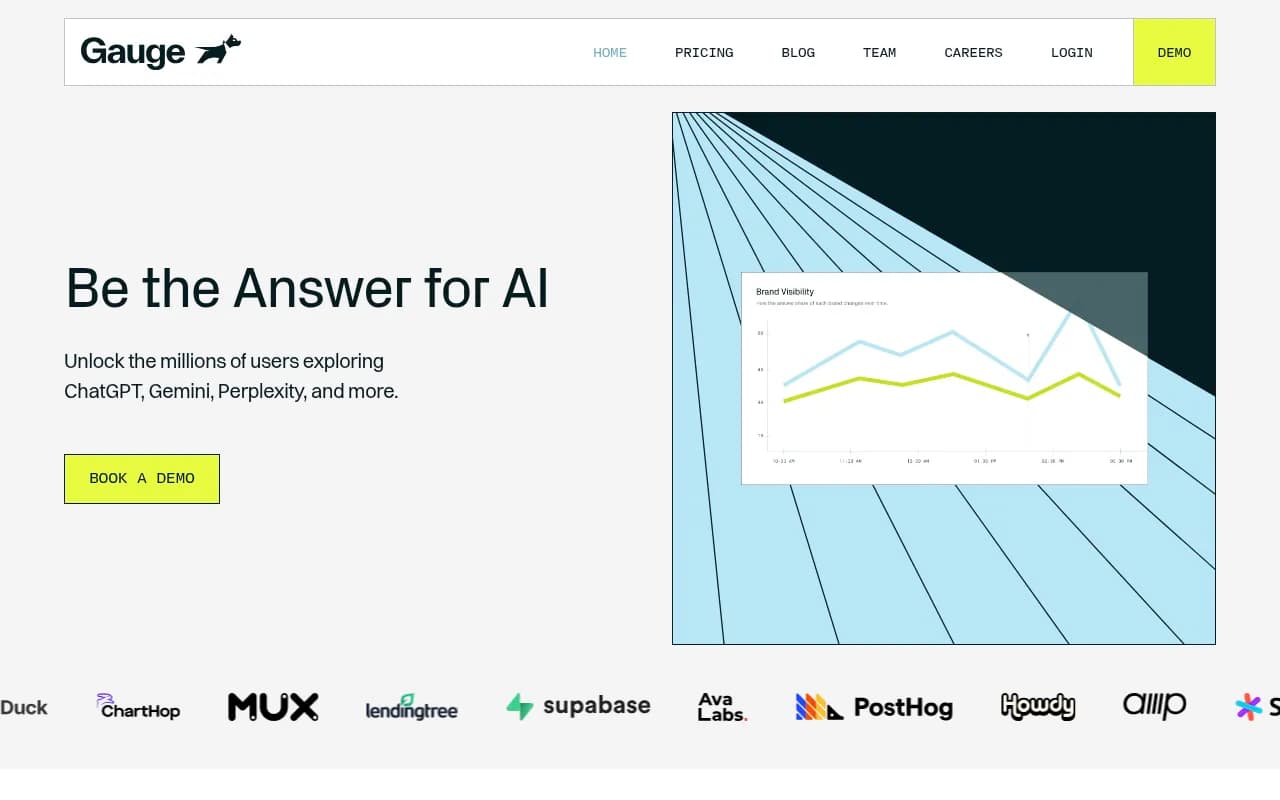
Gauge is worth a look for teams that want strategic competitive intelligence alongside content execution.
Bottom line
The GEO platforms that will matter in 2026 are the ones that close the loop -- from finding the gap to publishing the content to proving it worked. Promptwatch does that more completely than any other platform in this comparison. Qwairy, Relixir, and Whitebox each have genuine strengths, but they cover different parts of the workflow rather than the whole thing.
If you're evaluating GEO tools right now, the most useful question to ask any vendor is: "After you show me a gap, what exactly happens next?" The answer tells you everything about whether you're buying a monitoring tool or an optimization platform.