Key takeaways
- A prompt tracker answers "was my brand mentioned?" A full-stack platform also answers why, what to change, and whether the change worked.
- "Closing the loop" means four things: measure, diagnose, act, verify. Most tools do the first and stop.
- Engines behave differently (ChatGPT cites about 5 sources per answer, AI Overviews and Perplexity about 10), so per-engine reporting matters.
- Crawler logs and AI-referred traffic data are the clearest dividing line between categories.
- Monitoring-only tools are a fine choice if you already have a content team and just need a scoreboard.
Why this split matters now
In 2026 the GEO tool market has more entrants than anyone can keep straight. Most roundups rank them like a beauty contest. I think that framing hides the one question that decides whether your money is well spent: when the dashboard shows a problem, what happens next?
If the answer is "you export a CSV and brief a writer," you bought a prompt tracker. If the answer is "the platform shows the crawl error, drafts the missing page, publishes it, and tells you whether it got cited," you bought something closer to a full-stack platform. Both are legitimate purchases. They are just different products with different prices and different owners inside your company.
A caveat on sources. I reviewed several 2026 roundups (Botric, AIclicks, OptimizeGEO, Otterly, a Profound employee's list, and others). Nearly every one is written by a vendor that ranks itself first or near it. The consistent signal across them is the monitoring versus execution split, so that is what this guide is built around. I have no independent testing data on all 22 tools, and I will not pretend otherwise.
What a prompt tracker does
A prompt tracker runs a fixed set of questions against AI engines on a schedule and records what comes back: whether your brand appeared, where, with what sentiment, and which competitors showed up beside you. Good ones also record the cited URLs.
That is useful. It gives you a baseline, a trend line, and something to show a CMO. It does not tell you why a page is not cited. It does not know whether GPTBot could even reach that page.
Typical monitoring-focused tools include:



Otterly is cheap and simple, Peec is easy for agencies to roll out across clients, and Rankscale is closer to an analyst's tool with API access. AthenaHQ sits in between: it tells you what to fix but does not generate the fix, according to the Botric roundup.
Where trackers are genuinely enough
- You have an in-house content team or agency and need an independent scoreboard.
- Your budget is tight and you want 15 to 50 prompts watched daily.
- You are in the first month of a GEO program and need to learn which prompts matter before spending on execution.
I would not look down on that. A cheap tracker plus a good writer beats an expensive platform nobody logs into.
What closing the loop actually requires
Here is the test I would apply to any vendor. Four stages, and a tool earns the "full-stack" label only if it covers all of them.
- Measure. Visibility, share of voice, position, sentiment, per engine and per country.
- Diagnose. Why you are or are not cited. This needs crawler logs, site audits, and citation analysis, not just mention counts.
- Act. Content gap analysis, drafting, refreshing live pages, publishing to your CMS.
- Verify. Did the new page get crawled, cited, and clicked? Did AI-referred visitors convert?
Most tools in the market are strong at stage one, thin at two, and absent at four. Stage four is the rarest. A Profound executive's own list uses "loop closure" as an evaluation criterion for exactly this reason: can the tool show what happened after you hit publish?
Why diagnosis needs crawler data
Promptwatch's own data on AI crawler traffic shows how uneven the picture is. In its IP-verified logs, OpenAI made up 79.8% of AI crawler requests in the week of Aug 31 to Sept 6, 2026, down from 94.8% in early June. The mix is shifting, and Promptwatch's AI crawler traffic report suggests comparing your own logs against it. A provider that is a big share of the market but near zero in your logs may be blocked by your robots.txt, CDN, or WAF.
A prompt tracker cannot tell you that. It sees the answer, not the fetch. If a page is invisible because ClaudeBot hits a 403, no amount of prompt monitoring reveals the cause.
Why per-engine reporting matters
Citation slots differ by engine. According to Promptwatch's average sources per response data, ChatGPT cites about 5 sources per web-search answer, Google AI Overviews about 10, and Perplexity almost exactly 10 every day. Copilot swung from under 2 to nearly 17 within weeks before settling low. A blended "visibility score" across engines hides all of that. Prefer tools that report per engine, and treat Copilot on monthly trends only.
The full-stack category
The tools below claim to cover some or all of measure, diagnose, act, and verify. Depth varies a lot, so I have noted what each is known for from the roundups I read, not from my own testing.
Promptwatch
Promptwatch is the platform I would put at the end-to-end extreme. It tracks real user interfaces of ChatGPT, Google AI Overviews, AI Mode, Gemini, Perplexity, Copilot and others, then adds IP-verified crawler logs, visitor analytics for AI-referred traffic, weekly site audits, content gap analysis, and a Content Agent that drafts and publishes to WordPress, Webflow, or Framer. Published pages are tracked through crawls, citations, and clicks, and underperformers return as actions on an Action Board. That last step is the verify stage most others lack.

Pricing starts at $95/mo (Essential), with Professional at $245/mo and Business at $579/mo. The automated Content Agent is a Business and Enterprise feature. Confirm current numbers at promptwatch.com/pricing. Note that Botric's roundup quotes slightly different article allowances than Promptwatch's current plan details, a reminder that vendor-authored pricing summaries drift.
One honest limitation: it is not a classic SERP rank tracker, and agency plans exclude the Content Agent. If you only want a scoreboard, it is more than you need.
Profound

Profound is the enterprise heavyweight. Its Prompt Volumes data, deep competitive benchmarking, and SOC 2 Type II governance are real strengths. It has added agents and agent analytics. Roundups from rival vendors describe it as observation-first, and its price point sits well above most trackers.
Scrunch
Scrunch layers persona-based query simulation, page audits, and citation-quality scoring on top of tracking, and is aimed at mid-market teams that also want to see how AI agents parse their site.
Writesonic, Surfer SEO, and Semrush
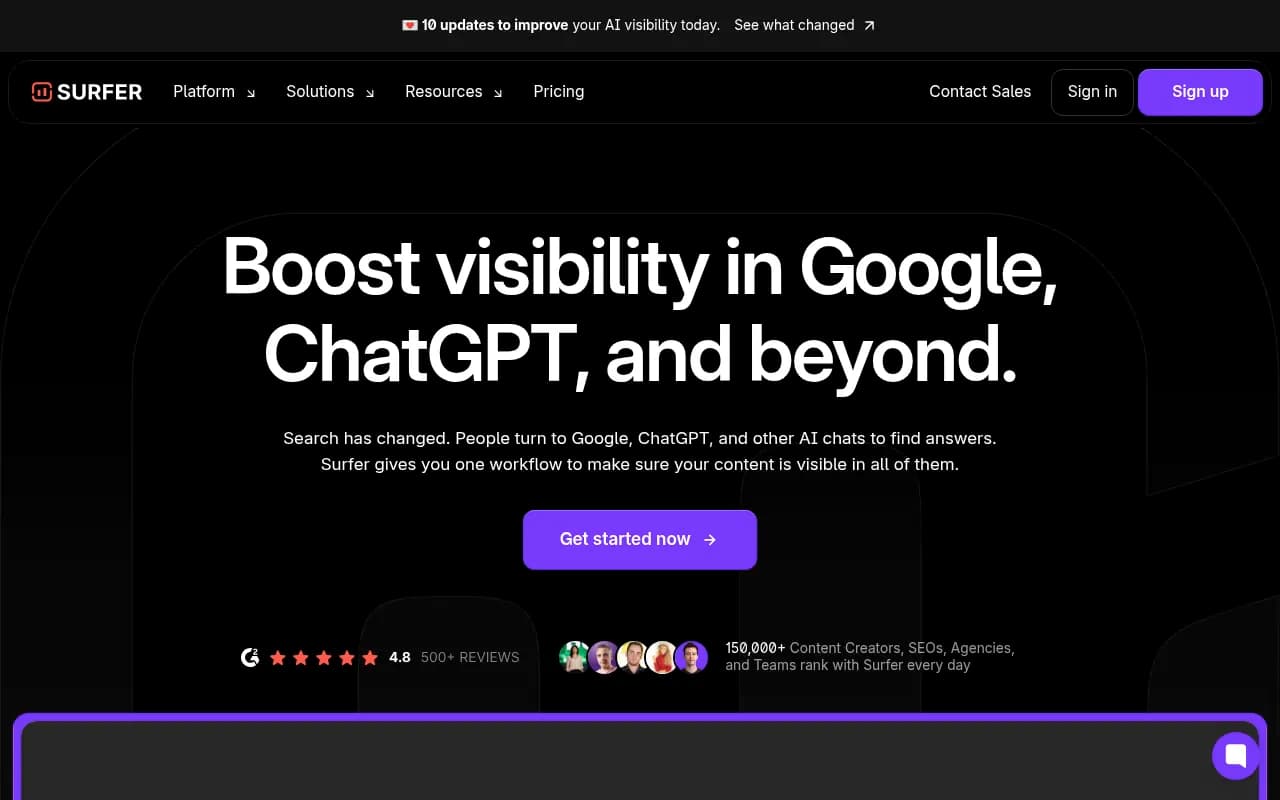
These came from the other direction. Writesonic and Surfer began as content tools and bolted on tracking. Semrush and Ahrefs Brand Radar are SEO suites adding AI visibility modules. You get convenience if you already live in those products. You usually get shallower AI-specific data, with fixed or limited prompt sets and no crawler-level diagnosis.
Others with execution layers
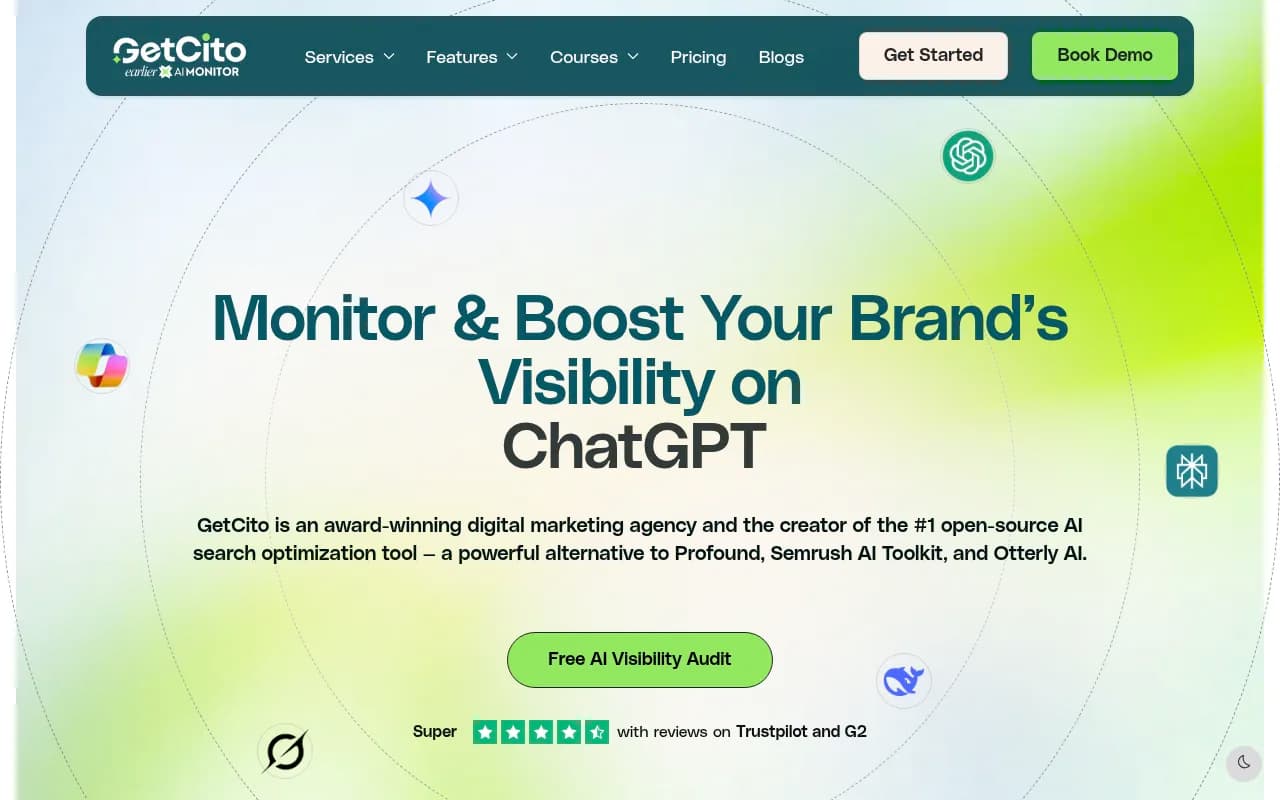
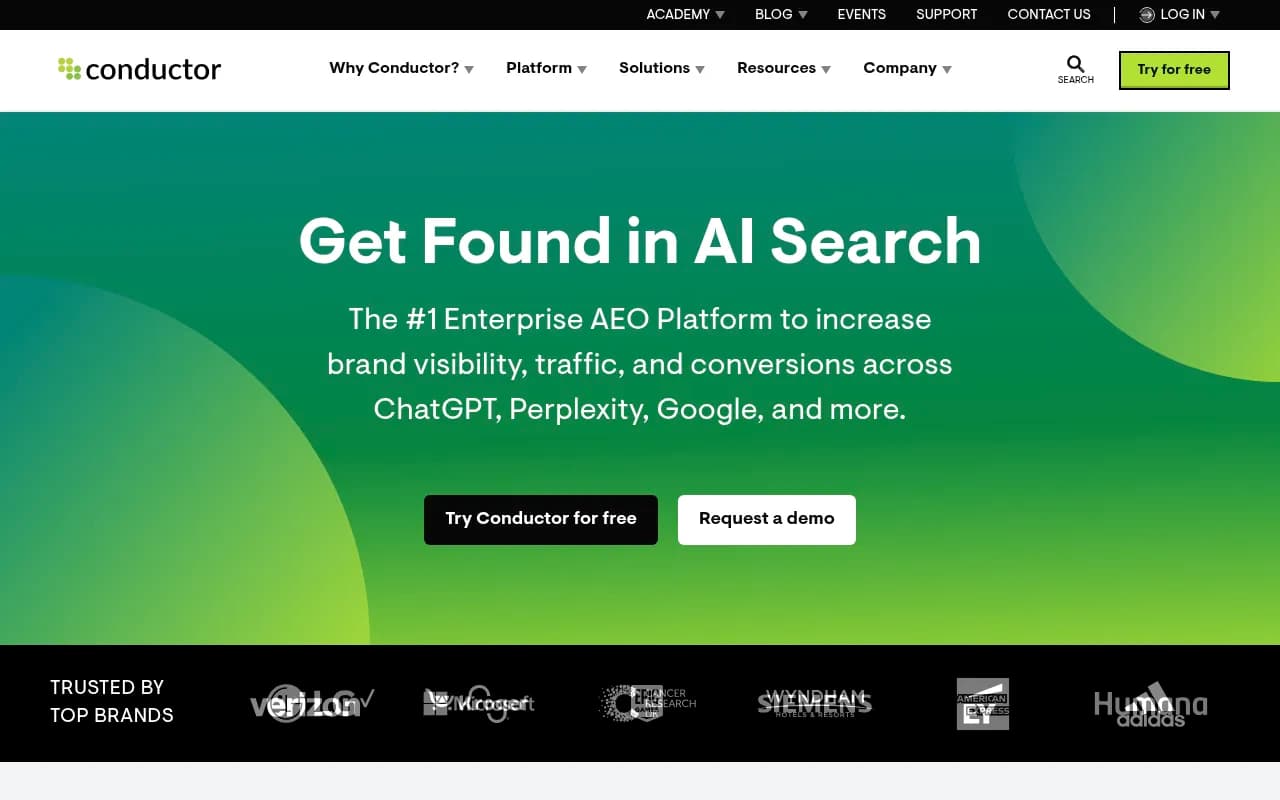
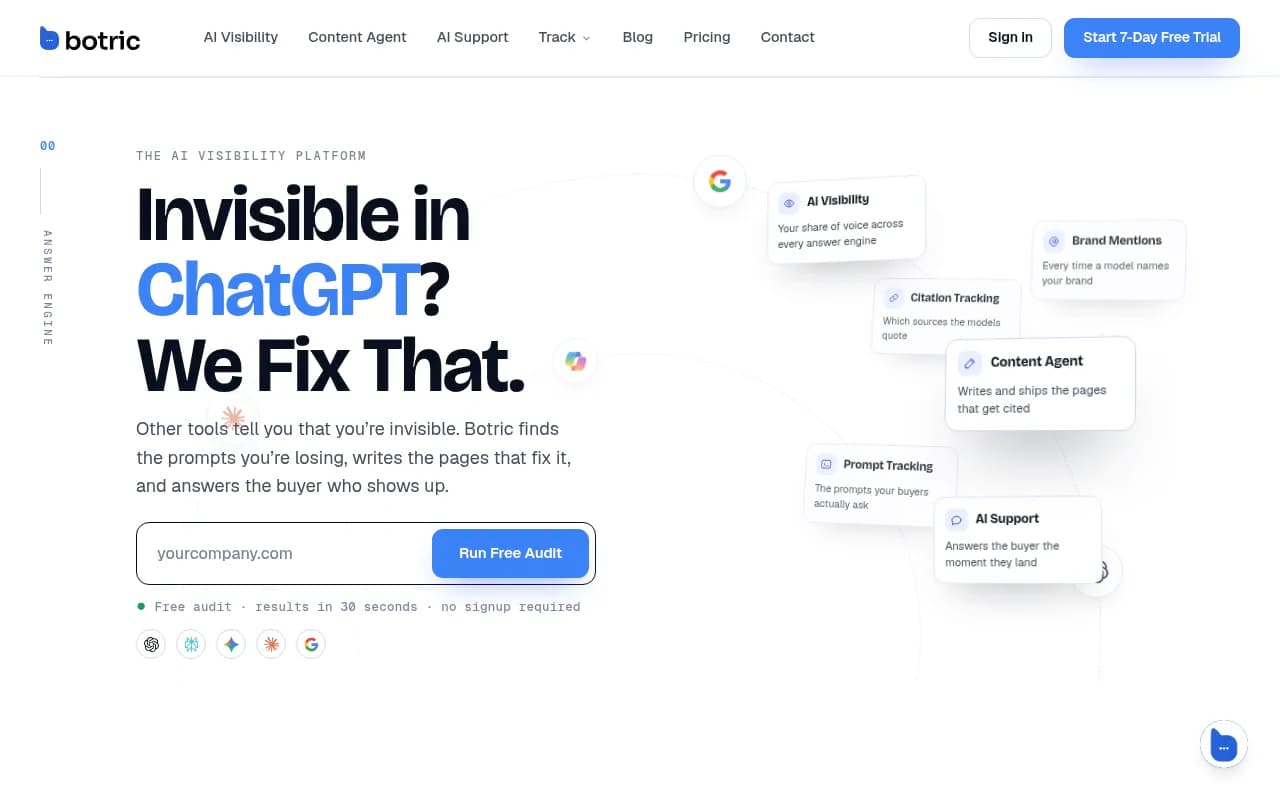
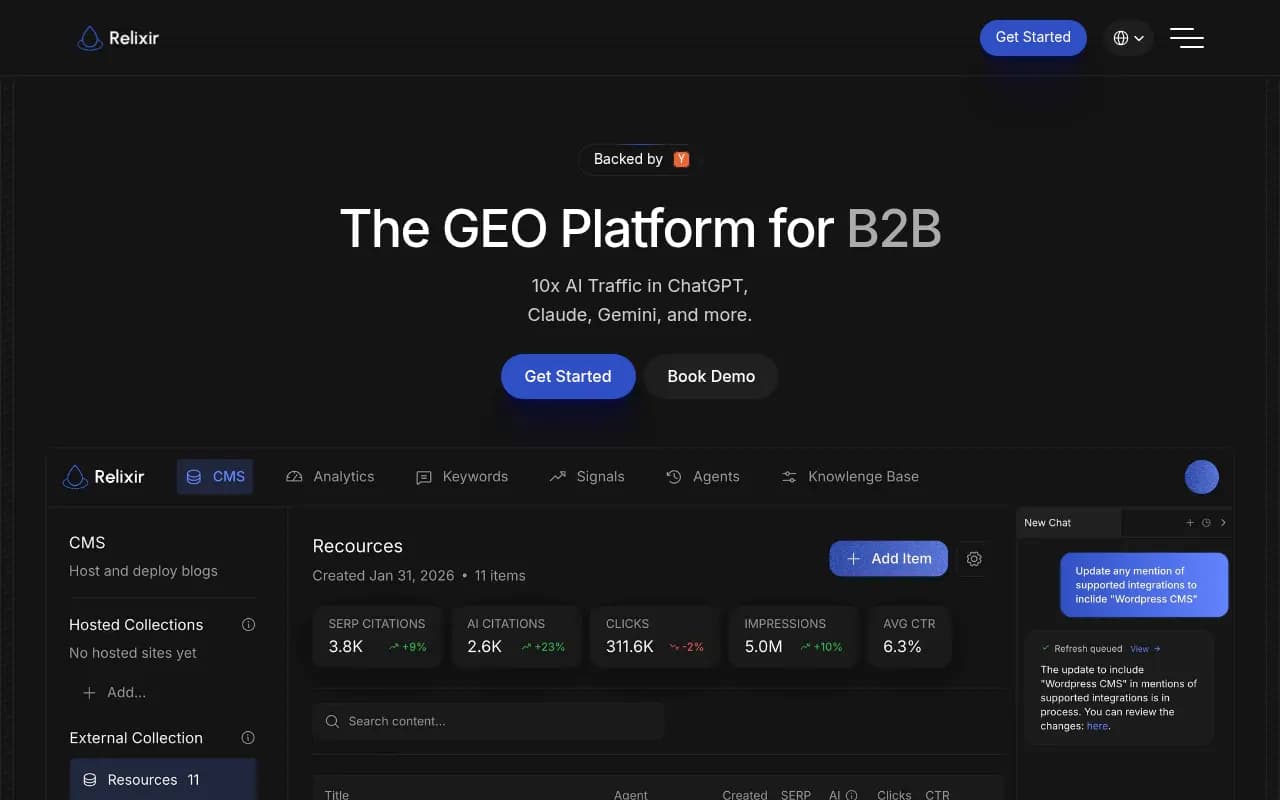
GetCito pairs data with managed human services. Conductor adds persona customization. Botric combines tracking and content generation at lower price points, though note it authored one of the roundups I drew from. Relixir takes an AI-native CMS approach. For a wider list, the GEO software directory at bestgeosoftware.com is a decent place to browse.
Comparison table
| Tool type | Examples | Measure | Diagnose (crawlers, audits) | Act (content, publishing) | Verify (traffic, citations of new pages) |
|---|---|---|---|---|---|
| Basic prompt tracker | Otterly, Peec, Rankscale | Yes | Little or none | No | No |
| Monitoring plus recommendations | AthenaHQ, LLM Pulse | Yes | Partial | Advice only | Limited |
| Enterprise analytics | Profound | Yes, deep | Agent analytics | Growing | Partial |
| Content tool with tracking | Writesonic, Surfer | Yes | Limited | Yes | Limited |
| SEO suite add-on | Semrush, Ahrefs Brand Radar | Basic | Traditional SEO only | Traditional | Mostly no |
| End-to-end platform | Promptwatch | Yes, real UI data | IP-verified crawler logs, site audits | Content Agent, CMS publishing | Visitor analytics, page tracking |
Treat the table as a starting hypothesis. Vendors change feature sets monthly, so verify on a trial.
A different definition of "loop": revenue attribution
One roundup I read argues the real loop is business impact, not content. Its pick, LeadJourney, ties AI referrals to CRM pipeline through to Closed Won. The point is fair: counting mentions gives you a metric, not a budget case. If you need revenue proof, check whether a tool measures AI-referred visits and conversions, or whether you will wire that up yourself with an attribution tool.
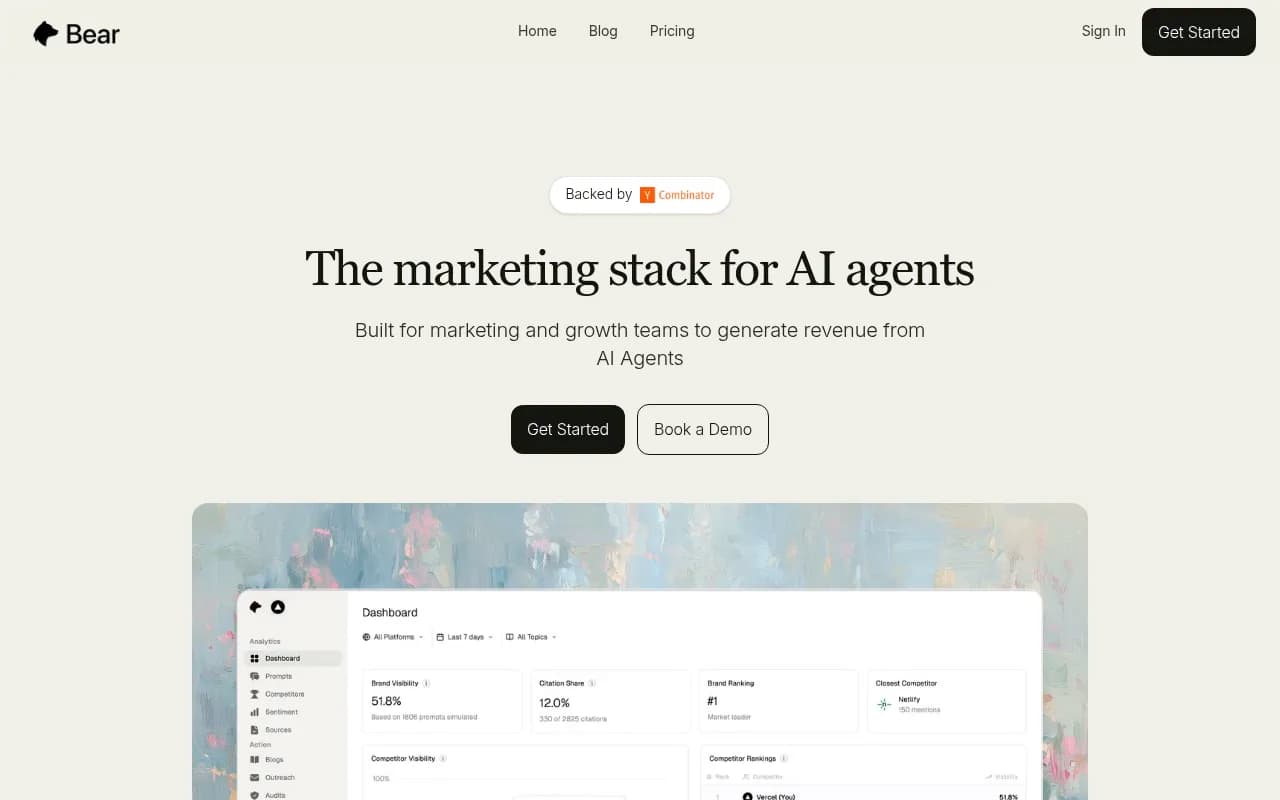
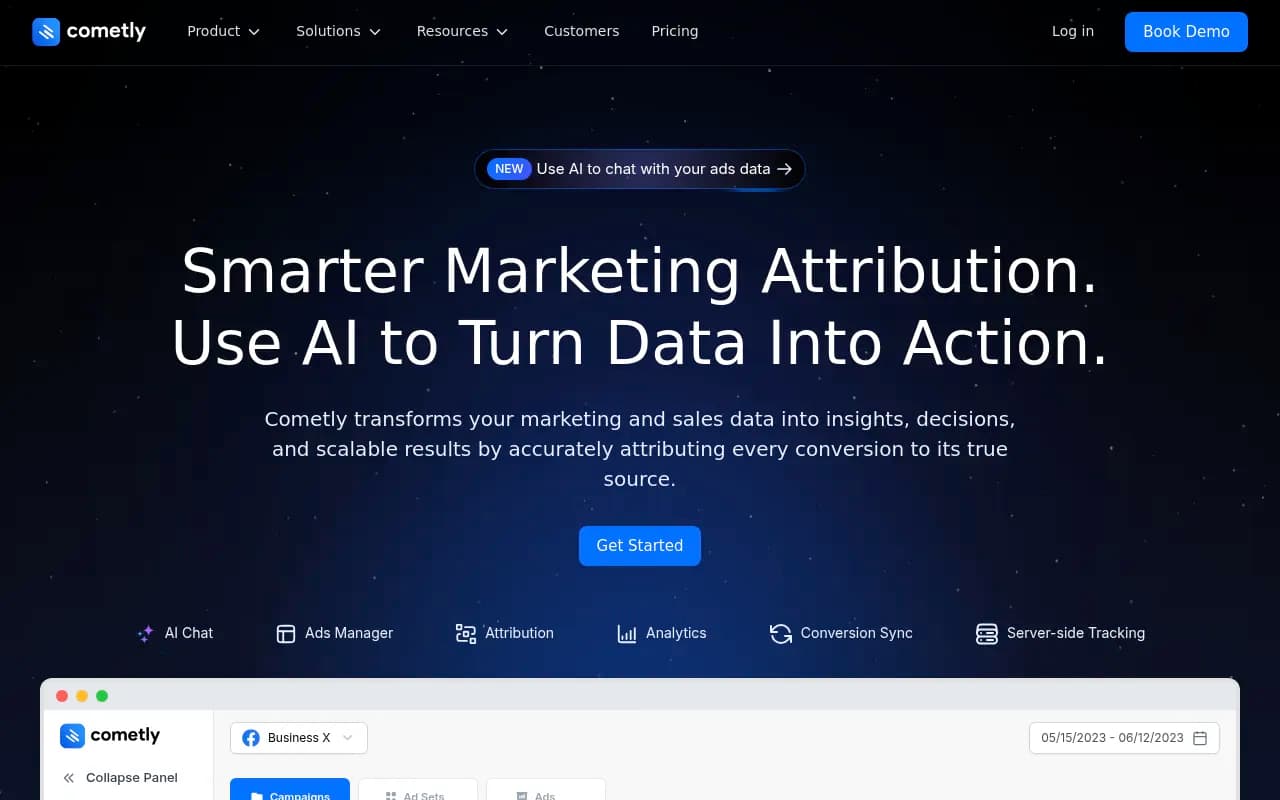
Bear AI and Cometly both pitch AI-traffic-to-revenue measurement, and are worth a look if your analytics stack is the weak link.
How to choose
Ask who does the work
If you have writers, developers, and an SEO lead who will act on findings, buy the best monitor you can afford. If your team is thin, execution features are what you are really paying for.
Check the pricing page for verbs
Botric's roundup offers a good heuristic. If "content" or "generation" appears as a feature, it is more than a tracker. If you only see "tracking" and "alerts," plan to hire a writer. I would add: look for the words "crawler logs" and "traffic." If those are missing, the tool cannot verify anything.
Compare cost per response, not headline price
Prompt caps vary wildly. One roundup lists a $29 plan with 15 prompts versus a $99 plan with 50. Divide the monthly price by tracked responses. Promptwatch's Essential works out to roughly 1.6 cents per tracked response based on 6,000 responses at $95.
Confirm the data source
UI-scraped data and API outputs can differ. User-facing answers, citations, and shopping results often do not match what an API returns. Ask each vendor which one they use.
Run a 14-day test
Pick 30 prompts you care about. Run them in two tools. Then try to use the output: could you act on it in an afternoon? That tells you more than any listicle, including this one.
A staged path that works
- Month 1: Start with a free or cheap tracker to find your prompts and baseline.
- Month 2 to 3: Add crawler logs and a site audit. Fix access problems before writing anything new.
- Month 3 onward: Move to content gap analysis and publishing, and measure AI-referred conversions.
You can also skip stages 1 and 2 by starting with an end-to-end platform, which is the faster path if you can afford it. For ranking-style comparisons of trackers specifically, ai-rank-tools.com lists many of them side by side.
Bottom line
Prompt trackers tell you where you stand. Full-stack platforms tell you why, change it, and check the result. Pay for the second only if someone will use it, and judge any vendor, including the ones above, by whether it can show you a page that was published, crawled, cited, and clicked.
If agency help is more your speed than software, 1001 SEO Media runs GEO programs on top of this kind of tooling.