Key takeaways
- Under $200 a month you can track a real prompt set across ChatGPT, Gemini, Perplexity and Google's AI surfaces. You cannot get everything, and the headline price usually hides add-ons.
- Compare responses per month, refresh frequency and which engines are included, not just the prompt count. A 50-prompt plan can mean 4,500 or 6,000 responses depending on the vendor.
- Otterly's cheap tier looks great until you add AI Mode, Gemini and Claude. Covering all seven engines on its $189 plan reportedly lands near $416.
- Product pages are the most cited content type in ChatGPT (22.4% of citations, Sep 28 to Oct 4, 2026), so an ecommerce tracker is only useful if it points you at product page and feed fixes.
- No tool attributes an order to a specific prompt. Use trackers to find gaps, then use ecommerce analytics to measure sales.
Why ecommerce stores need a different checklist
A SaaS company tracks whether its brand gets named. A store has a messier problem. Shoppers ask ChatGPT for "running shoes under $120" or "CeraVe alternatives under $30," and the answer is a short list of products, often with cards, prices and retailer links. If your product isn't in that list, you were never considered, and your analytics will not show you the loss.
Pew Research looked at about 70,000 Google searches and found an 8% click rate when an AI summary appeared, versus 15% without one. GA4 records nothing for the shopper who never reaches your site. That is the gap these tools fill.
Triple Whale's August 2026 buyer's guide makes a point worth repeating: look for catalog imports, pricing and availability, retailer links, product feeds and shopping-results data. I would add a caveat. At under $200 a month, almost nobody gives you all of that. Most budget trackers are prompt monitors. The ecommerce-specific layer (product-level tracking, feed rewriting) tends to sit in separate, pricier tools.
What the data says about how shoppers get answered
Two Promptwatch Data findings should shape which prompts you track.
First, ChatGPT's citation share by content type (Sep 28 to Oct 4, 2026): product pages are 22.4% of classified citations, landing pages 16.8%, listicles 13.6% and reviews just 1.7%. For commercial prompts, product pages climb to 26.0%, and product pages, landing pages, listicles and comparisons together make up almost 70%. For branded prompts, reviews rise to 5.6%, about three times their overall share.
Second, ChatGPT shopping feature usage: product cards show up on only a low single-digit percentage of web-search responses, and the rate jumps in steps, which suggests OpenAI keeps tuning it. That page is dated November 2025, so treat the exact rate as stale. The pattern still holds: shopping cards concentrate on commercial and transactional prompts.
What that means for your tracker setup: don't fill your 50 prompts with branded vanity queries. Spend most of them on commercial and transactional shopper questions, and record which brands and which page types get cited.
The shortlist: trackers under $200 a month
Prices below come from vendor pages and third-party roundups checked in late 2026. They change fast. Profound, for one, dropped its self-serve plans in September 2026 and is now trial or Enterprise only. Confirm everything on the vendor's pricing page before you buy.
Promptwatch Essential ($95/month)
Promptwatch is an end-to-end AI visibility platform, and the Essential plan is its entry point: 1 project, 50 prompts, 6,000 responses a month, daily tracking, and every supported AI model included. It also includes Agent Chat, Brand Narrative, content gap analysis, visitor analytics, site health audits, and API and MCP access, with unlimited team seats.

The ecommerce angle: Promptwatch tracks the real interfaces of ChatGPT, Google AI Overviews, AI Mode, Gemini, Perplexity and Copilot, and its ChatGPT Shopping insights sit on the Business plan ($579), so they are outside this budget. At Essential you get the monitoring, the citation and source data, and the gap analysis to know which pages to fix. Be honest about the limits too: Essential has no AI crawler logs (those start at Professional, $245) and no AEO articles.
If you want to see how you look before paying, there is a 7-day free trial on monthly billing and a free AI visibility report. Verify current pricing at promptwatch.com/pricing.
Peec AI Starter (about $95 or EUR 85/month)
Peec is a clean, well-liked tracker with unlimited users and 50 prompts on Starter. Per Promptwatch's comparison page (a vendor-authored source, so read it with that in mind), Starter covers 3 of 6 engines with 4,500 responses, and extra models cost roughly $30 to $35 a month each. Crawl insights are on every plan, which is a genuine plus at this price.

Otterly.AI (from $29/month, but read the fine print)
Otterly Lite is the cheapest of the well-known names: $29 a month for 15 prompts. AI Mode and Gemini cost $9 each on Lite, Claude is $29. The trap is the next tier. On Standard ($189), reports say AI Mode and Gemini jump to $59 each and Claude to $109, so all seven engines reach about $416. Agent Analytics also starts at $189. Great for a small, focused test. Do the math before assuming it stays cheap.

Semrush AI Visibility Toolkit ($99/month)
If you already live in Semrush, the toolkit is $99 for one domain and 25 prompts, with roughly 3,000 responses and four engines. Extra prompts cost about $60 a month per 50, and each extra domain is another $99. It is handy for teams that want everything in one login, but the prompt count is thin for a store with a real catalog.
SE Visible and SE Ranking
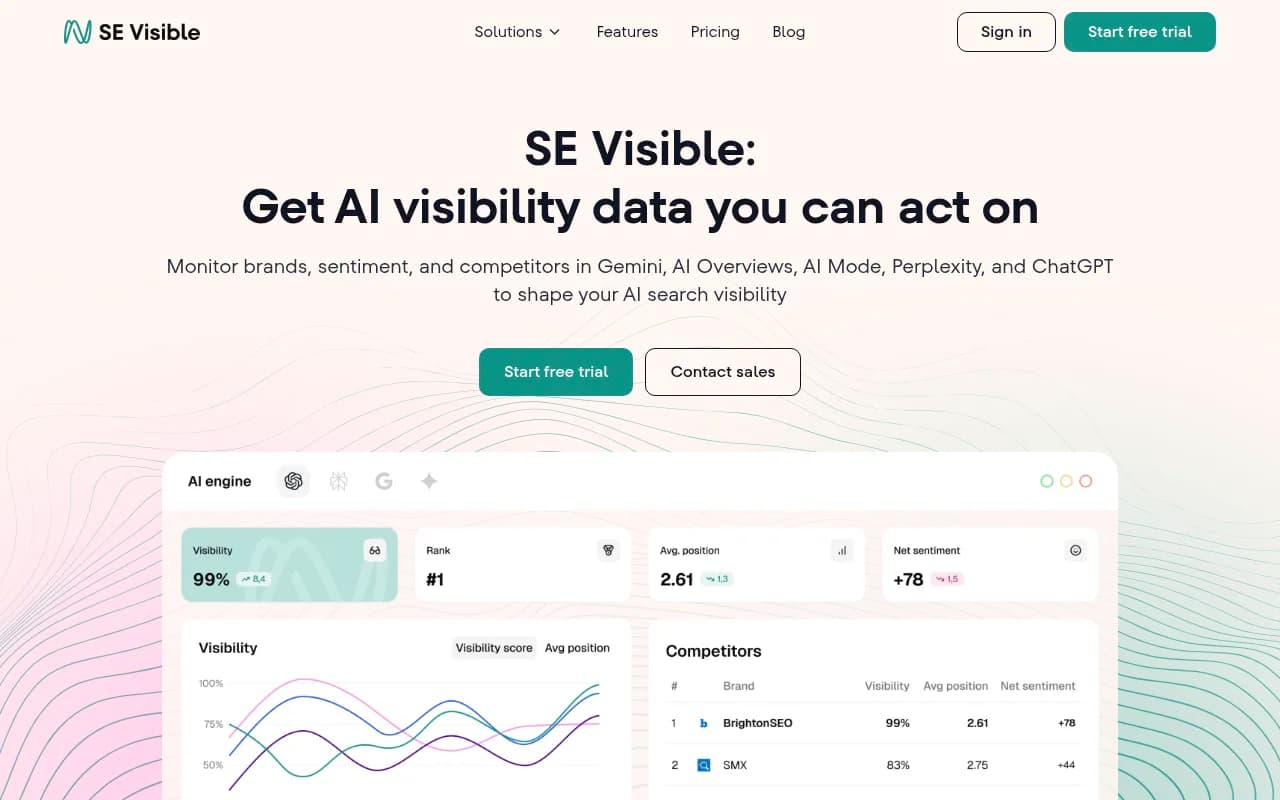
SE Visible Basic is $99 for 200 prompts, about $0.50 per prompt, which is one of the best prompt-count deals here. SE Ranking's AI Search add-on is $71.20 a month for 200 prompts on top of a base plan from around $65, so roughly $136 combined.
Ahrefs Brand Radar (custom prompts from $50, index from $199)
Brand Radar's custom-prompt packages start at $50 a month, while the AI Visibility Index is $199. If you already pay for Ahrefs, the add-on route is cheap. Promptwatch's comparison puts the full cost with a base plan near $328, so it only fits the budget as a bolt-on.
Rankshift, LLM Pulse, Qwairy and Searchable
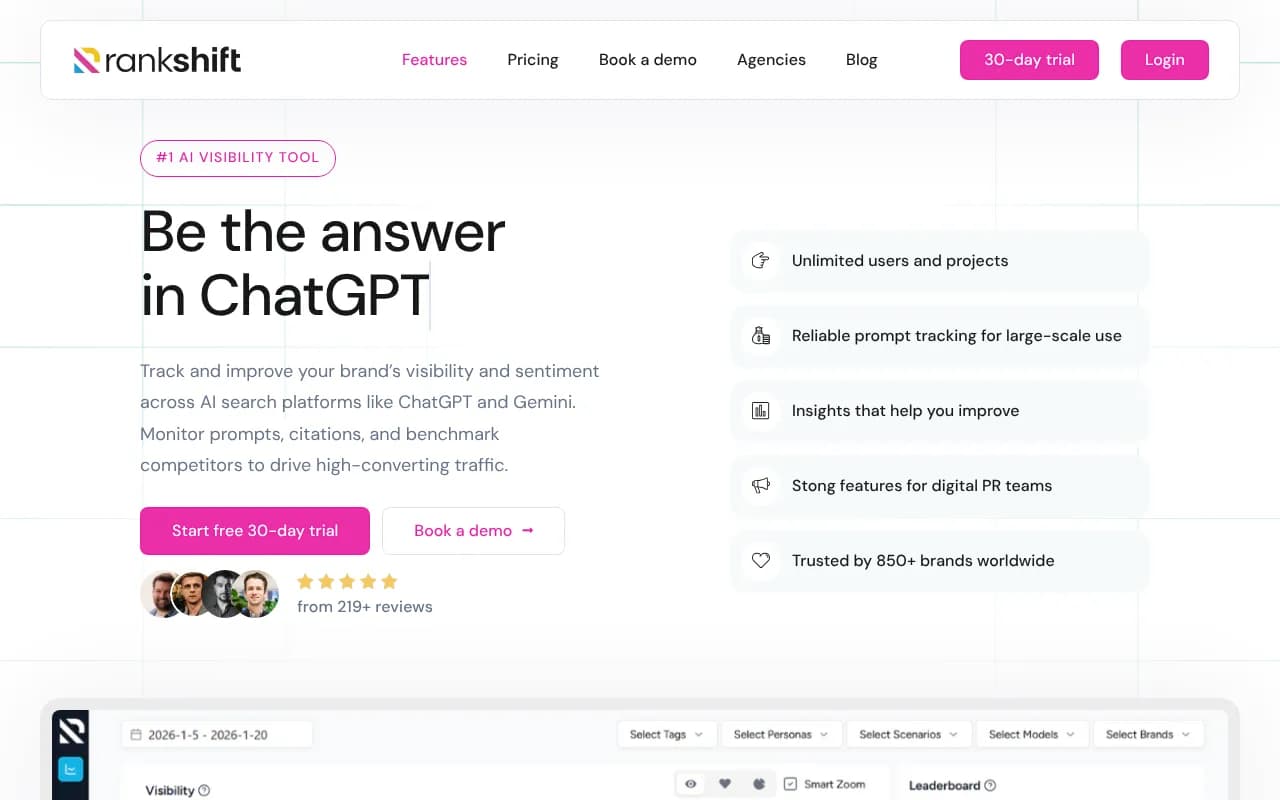
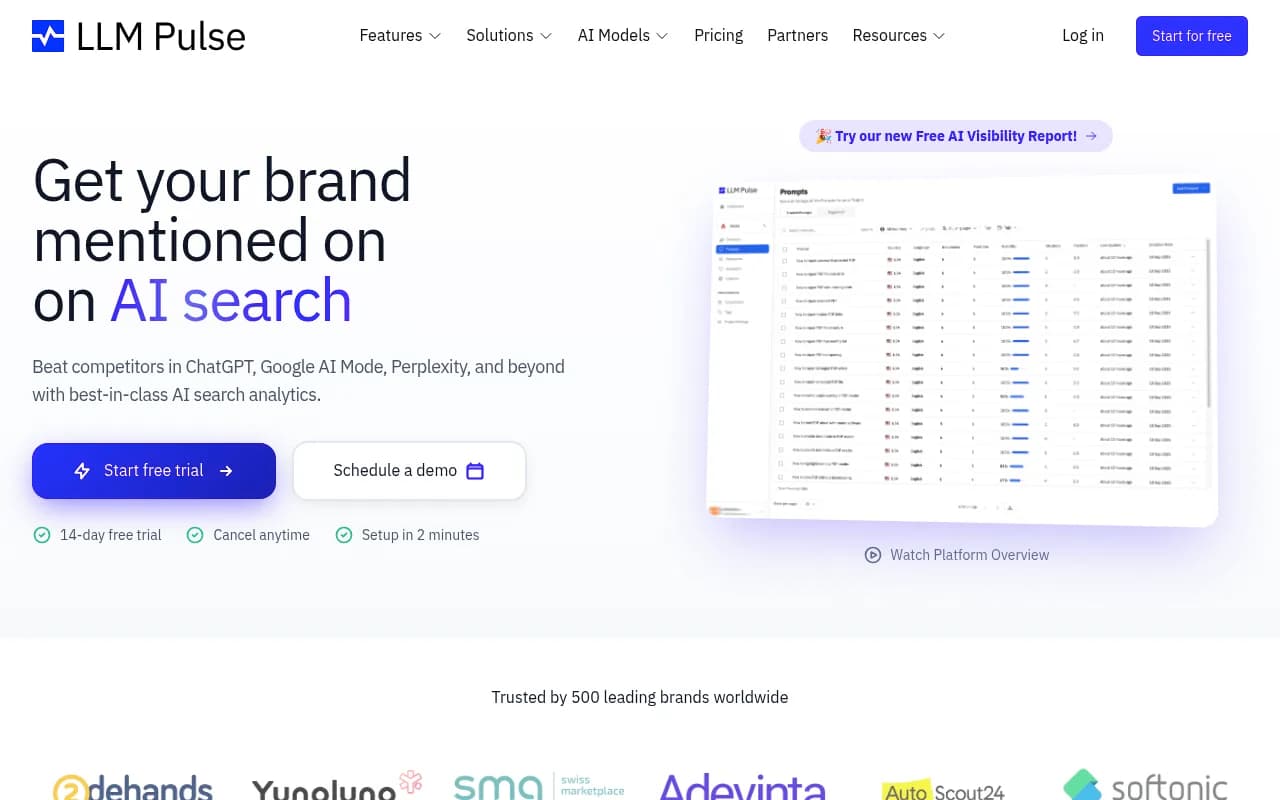
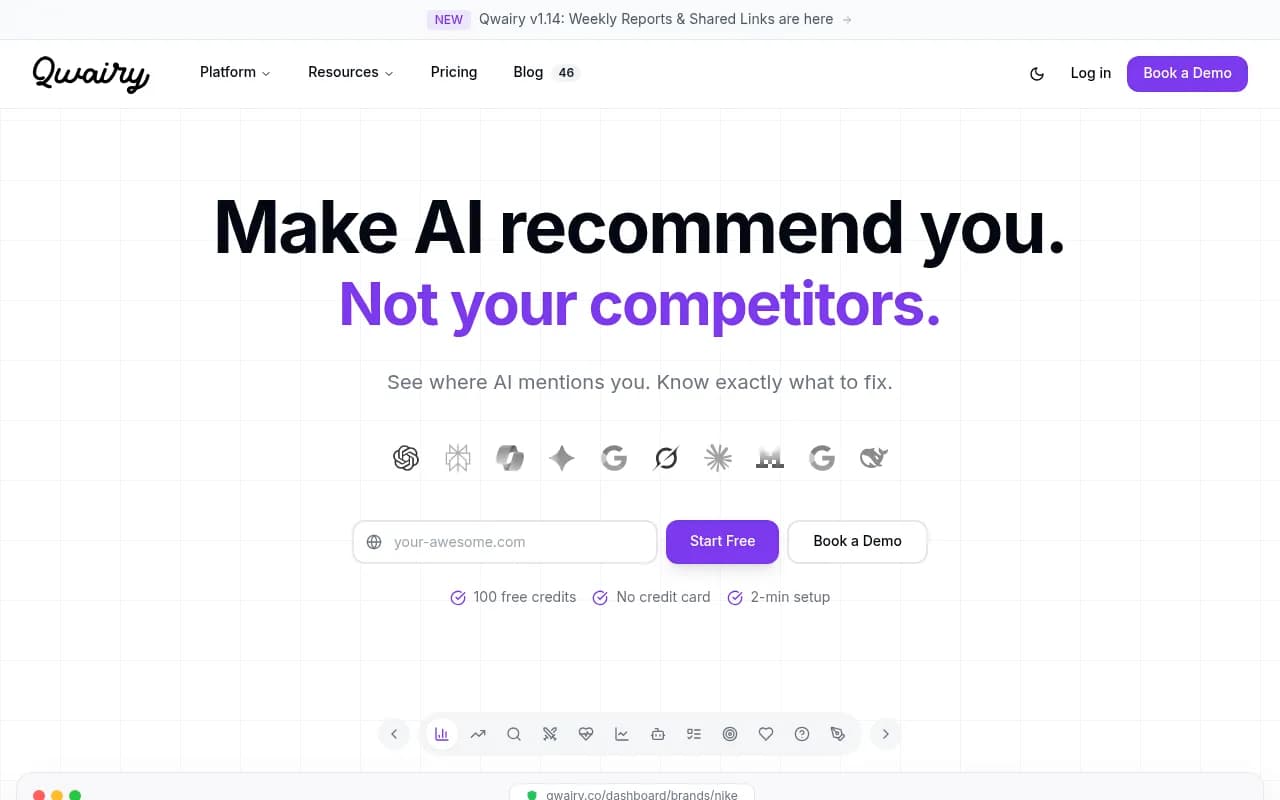
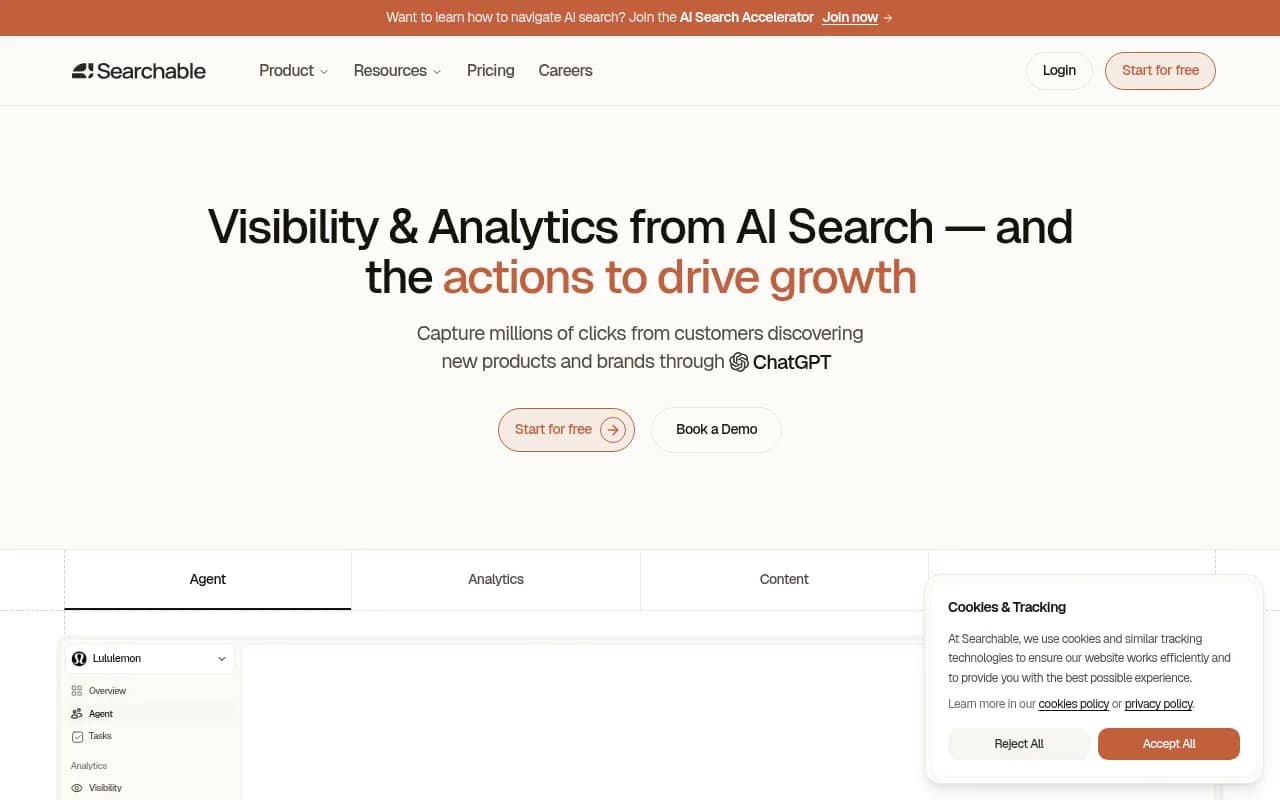
Rankshift Starter is $92 for 150 prompts and 9,500 responses across 8 engines, credit-based. LLM Pulse Starter is $60 for 50 prompts but tracks weekly. Qwairy Starter is $86 for 100 prompts across 10+ engines, but it is credit-based and premium models cost 2 to 20 credits per answer, so the 1,300 responses can vanish quickly. Searchable Pro is $125 for 100 prompts on 3 daily engines, with Claude, Copilot and Grok extra and API access only on a $400 plan.
The very cheap end
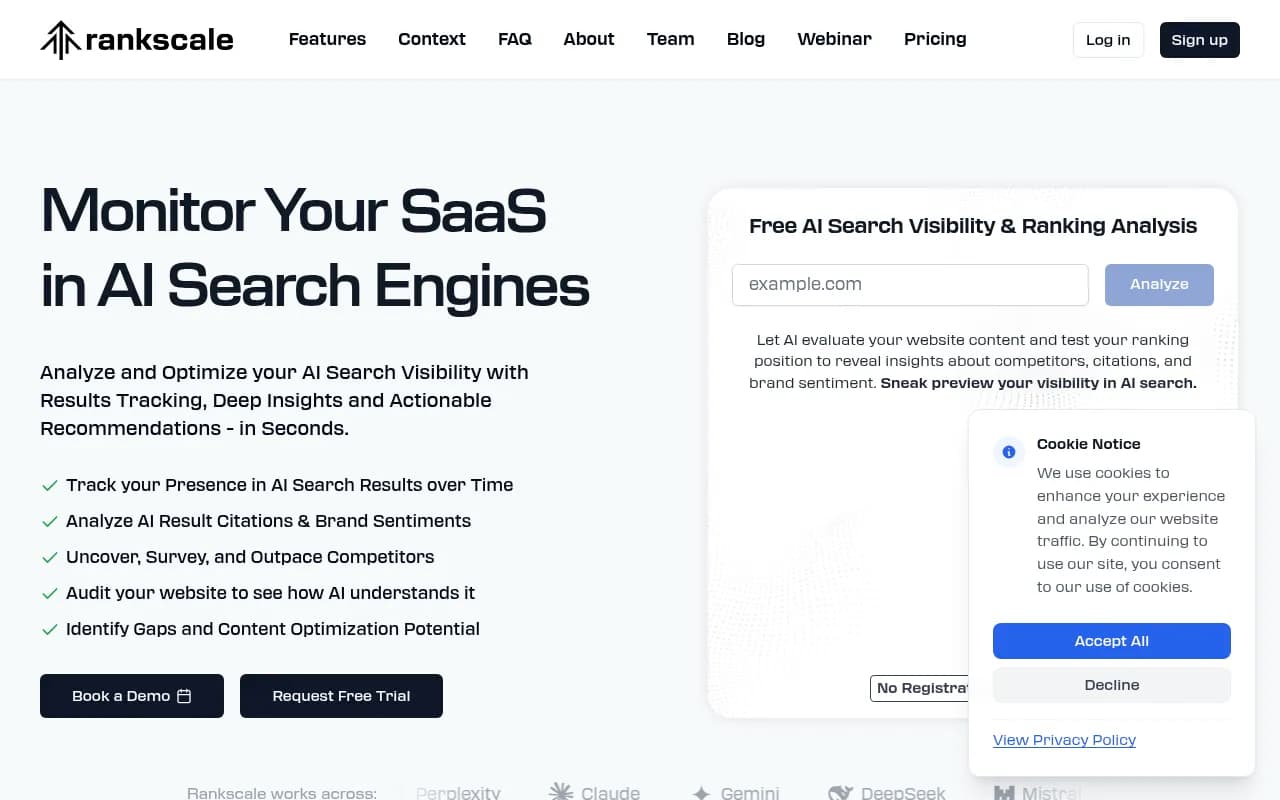
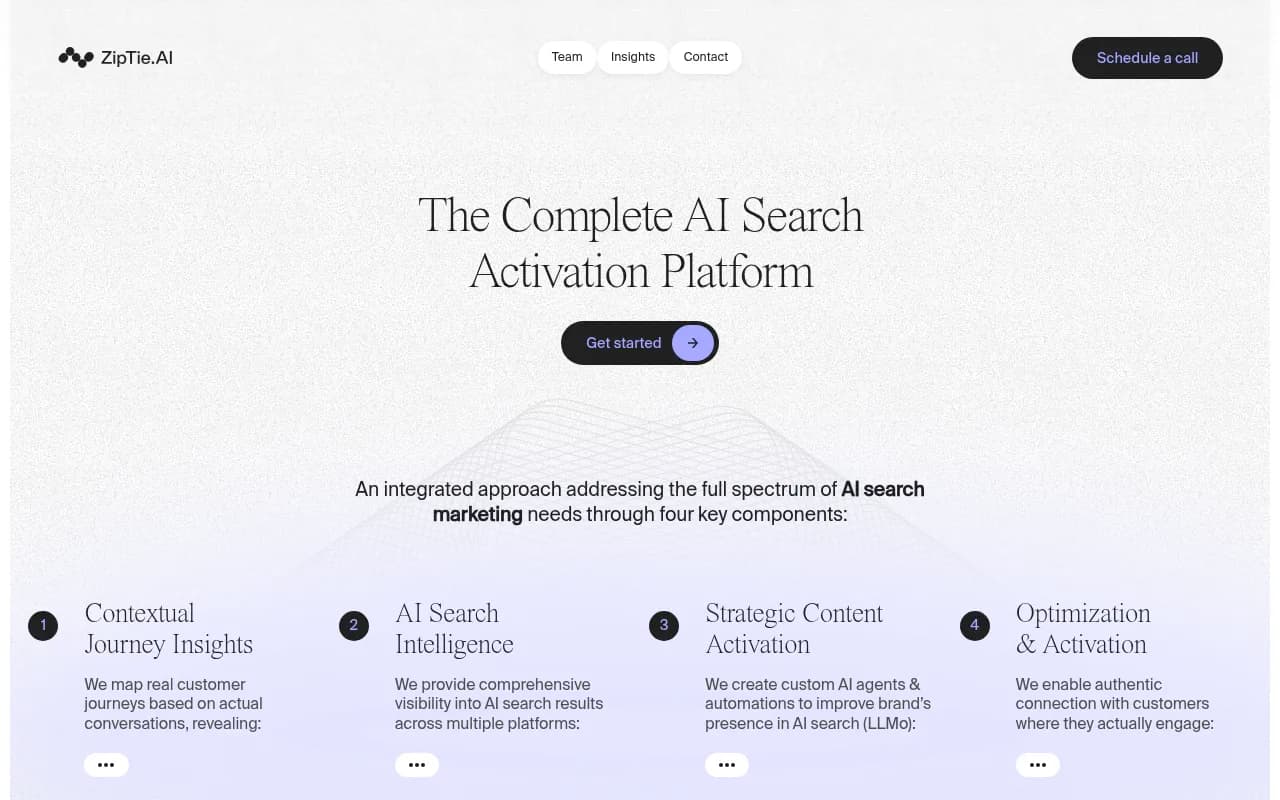
Rankscale starts around $17 a month on yearly billing, ZipTie around $25.65, and Lumirank has a free plan with 10 prompts on 2 engines (Starter is $29 for 25 prompts, Pro $99 for 100 prompts on 6 engines). ZipTie offers unlimited seats and white-label reports, with API and MCP access as a $10 add-on. These are fine for a small store that wants a first look.
Ecommerce-specific names worth a look
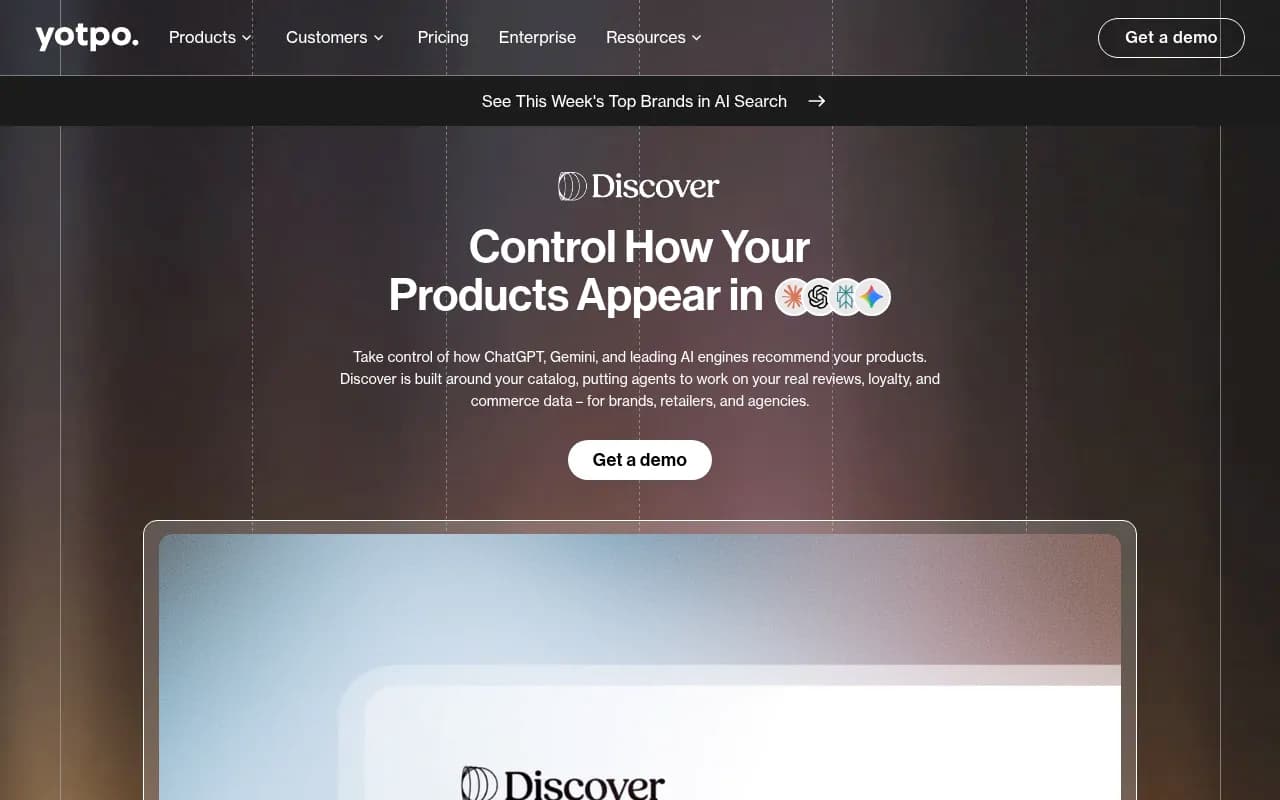
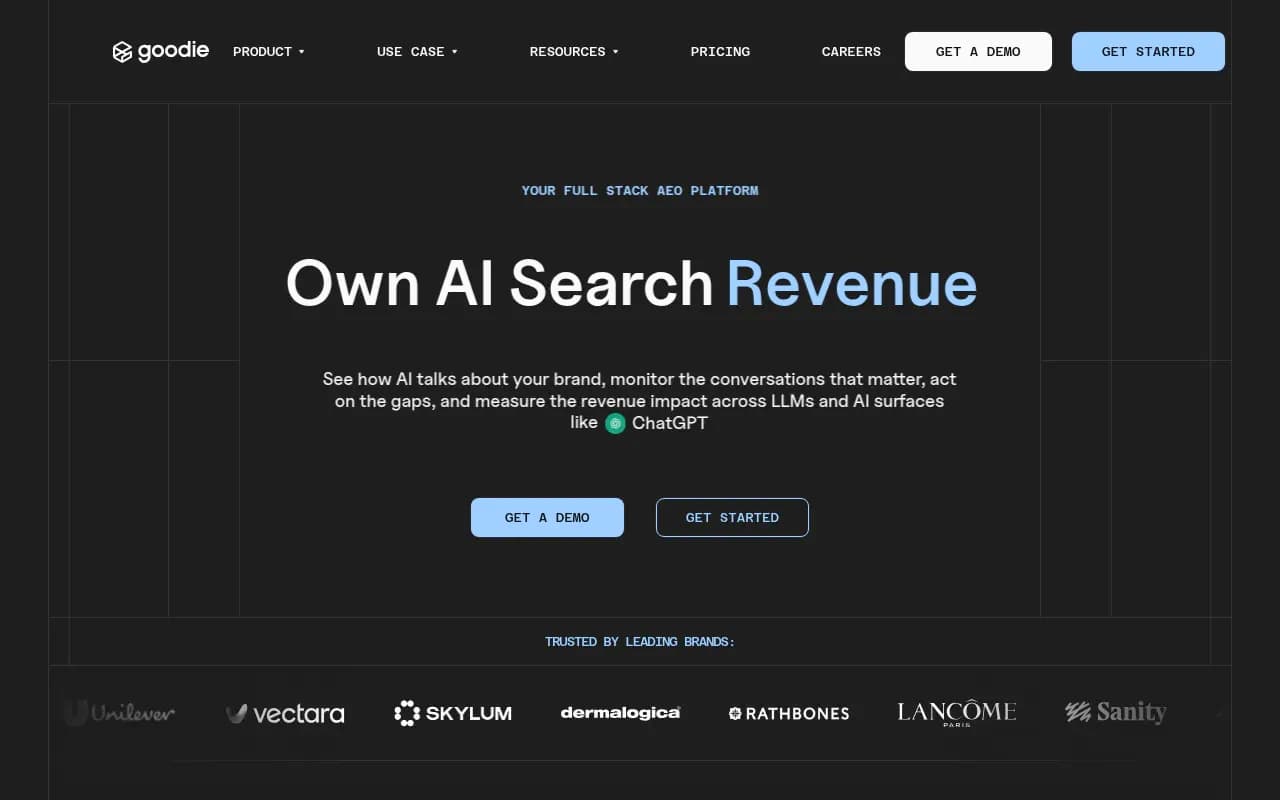
A few tools in our catalog target shopping directly: Yotpo Discover (product discovery for ecommerce), Goodie AI (agentic commerce optimization), Azoma (enterprise AI shopping optimization) and Ranketta (product-feed rewriting). I haven't verified their pricing, and Azoma in particular is aimed at larger brands, so treat them as step-two tools after you have baseline monitoring.
Side-by-side comparison
| Tool and plan | Price/mo | Prompts | Engines | Watch out for |
|---|---|---|---|---|
| Promptwatch Essential | $95 | 50 (6,000 responses) | All supported models | No crawler logs below $245 |
| Peec Starter | ~$95 | 50 (4,500 responses) | 3 of 6 | Extra models ~$30-35 each |
| Otterly Lite | $29 | 15 | 4 | Engine add-ons, no API |
| Semrush AI toolkit | $99 | 25 | 4 | Per domain, extra prompts $60/50 |
| SE Visible Basic | $99 | 200 | Multi-engine | Check engine list |
| Rankshift Starter | $92 | 150 (9,500 responses) | 8 | Credit-based |
| LLM Pulse Starter | $60 | 50 | 5 | Weekly tracking |
| Qwairy Starter | $86 | 100 (1,300 responses) | 10+ | 2-20 credits per premium answer |
| Searchable Pro | $125 | 100 (9,000 responses) | 3, daily | Extras and $400 API tier |
| Lumirank Pro | $99 | 100 | 6 | Newer vendor |
Over $200 on the same comparison: Scrunch Core ($250), AthenaHQ Starter ($295) and Ahrefs Brand Radar with a base plan (~$328).
One sourcing note. The responses-per-month figures come from Promptwatch's own comparison page, and Promptwatch is in that table. The prices match third-party sources, but treat the cost-per-response rankings as vendor-authored. Promptwatch's full table is at promptwatch.com.
The five pricing traps
- Headline price is not total price. Engines sold as add-ons (Otterly, Peec, Searchable) can double the bill.
- Credit-based plans hide the real cost. Qwairy charges 2 to 20 credits for a single premium answer.
- Prompt counts are not comparable. Ask how many responses you get per month and how often they refresh: daily, weekly or every 72 hours.
- Entry tiers skip the useful stuff. Crawler logs, API access and Agent Analytics usually start at the second or third tier.
- Prices move. Profound's self-serve plans disappeared in late September 2026 and GetMint's price changed. Screenshot the pricing page the day you buy.
How to choose for a store
If you have under 100 products
Start with a 50-prompt plan. Pick 30 to 40 commercial prompts that mirror how your buyers ask ("best X under $Y," "X vs Y," "X for sensitive skin"), plus a handful of branded ones. Promptwatch Essential or Peec Starter both fit here. Check that the tool shows you which sources get cited, because that tells you where to get listed.
If you have a large catalog
Prompt count matters more. SE Visible's 200 prompts for $99, Rankshift's 150 for $92, or SE Ranking's 200-prompt add-on give you room to cover categories. The trade-off is usually thinner optimization tooling, so budget time for the fixes yourself.
If you already pay for an SEO suite
Check the add-on first. Ahrefs custom prompts from $50 or Semrush at $99 might be enough and avoid another login. Just keep in mind the SEO suites generally give you fixed prompt sets and shallower AI-specific data.
What to do with the data
Tracking alone does not move anything. Here is the order I would work in.
- Fix product page basics: complete Product schema, accurate price and availability, and a clean merchant feed. This is the same advice Promptwatch gives for ChatGPT shopping.
- Make product pages easy to compare, with clear specs and pricing. Comparisons are 7.9% of commercial citations.
- Get into the roundups. Listicles are 13.6% of ChatGPT citations overall, so find the "best of" pages your tracker shows AI citing and pitch them.
- Collect reviews on trusted third-party sites, since reviews matter most on branded prompts.
- Check content freshness. In Promptwatch's half-life data, landing pages and docs stayed cited longest while news lost half its pages within 36 days.
- Pair the tracker with ecommerce analytics. Triple Whale makes the point clearly: visibility is not revenue attribution.
AmICited argues that around 90% of the work that earns an AI citation is ordinary SEO (crawlability, structure, schema, depth, internal linking, freshness, speed). That is a vendor claim, but it matches what I see. A tracker is a diagnostic. Your site is the treatment.
AmICited's own Starter plan (EUR 50 a month, 200 prompts, 10 competitors, Search Console, Bing and GA4 reporting) has no daily prompt scheduling and no ecommerce connector, and it ranks itself first in its own roundup. Useful reading, but weigh it as a vendor page.
Honest caveats
- I did not verify the true ecommerce-specific trackers (product-level or shopping-card tracking) beyond what vendors claim, and I did not check every vendor's live pricing page.
- No tool can tie an order to a specific prompt. Treat any "revenue by prompt" chart as inference.
- If your stores sell across many countries, check that the tool supports per-country and per-language monitors, because answers vary by market.
For more options, the GEO software directory at bestgeosoftware.com lists many trackers beyond this shortlist.
Bottom line
For most small stores, a $95 to $125 plan with daily tracking and the major engines included covers what you need: Promptwatch Essential or Peec Starter if you want a focused 50 prompts, SE Visible or Rankshift if you need volume. Skip anything where the engines you care about are add-ons until you have priced the full stack. Run the free trial or free report first, set up 30 commercial prompts, and see which pages the AI cites in your category. That list of cited sources is the most useful thing a $100 tracker will ever give you.