Key takeaways
- The category has split into three groups: standalone prompt trackers, SEO suites with an AI tab, and platforms that track, fix, and measure in one loop. Buyers should decide which group they need before comparing features.
- AI search is big and fragmenting. Per the Deepak Gupta roundup of Alphabet and OpenAI statements, ChatGPT reached 1 billion weekly users in August 2026 and Google AI Mode passed 1 billion monthly users. Those are secondary citations, so check them against the primary sources.
- Citation behavior changes fast. ChatGPT nearly stopped citing social media (0.46% of citations, Sep 28 to Oct 4, 2026), while Google AI Overviews gets 12.2% from social. A tool that only reports a single blended score will hide this.
- I could not verify which vendors have shut down or merged this year, so treat any "survivor list" with suspicion, including this one. What you can evaluate is whether a tool does more than count mentions.
- Ask every vendor about real-interface data, crawler logs, traffic attribution, and what happens after the dashboard tells you that you are invisible.
What the shakeout actually looks like
Let me be upfront about something. A clean story of "these vendors died, these won" would be satisfying, and I don't have the evidence for it. Our research for this guide did not turn up verified shutdowns or acquisitions, so I won't invent them. What the tools catalog does show is a market with hundreds of listed products in the AI visibility category alone, many of them near-identical dashboards that track a list of prompts across ChatGPT, Perplexity, and Gemini.
That sameness is the real story. When a few hundred tools do roughly the same thing, the shakeout isn't mostly about who closes. It is about who becomes irrelevant to buyers. Three things are pushing that along.
- Monitoring is a commodity. Once every tool reports a visibility score, the score stops being a reason to buy.
- Incumbents absorbed the basics. Semrush, Ahrefs, SE Ranking, seoClarity, BrightEdge, Conductor, and others now ship AI tracking inside suites people already pay for.
- Buyers now ask what happens next. A dashboard that says you are invisible is only half a product.
The broader AI market backs up the pressure. The State of AI Report 2026 describes the frontier as a three-lab race between Anthropic, OpenAI, and Google, and Menlo Ventures' consumer report says adoption barely grew in 2026 while spend tripled. Fewer, bigger surfaces with more paying users means the engines you need to track are consolidating even as the tool market stays fragmented.
The audience side: where people are actually searching
The figures below come from the Deepak Gupta roundup, which cites Alphabet, OpenAI, and Similarweb. I haven't independently verified them, and the user counts overlap heavily, so don't add them together.
- ChatGPT reached 1 billion weekly active users in August 2026 (OpenAI, announced August 6).
- Google AI Overviews reaches more than 2.5 billion monthly users (Google, May 2026).
- Google AI Mode passed 1 billion monthly users, and the Gemini app reached 950 million (Alphabet Q2 2026 remarks).
- Similarweb has ChatGPT's share of generative AI site visits falling from about 76% to roughly 53% between June 2025 and May 2026, with Gemini rising to about 27 to 28% and Claude to about 9%.
The practical read: ChatGPT is still the biggest single surface, but it is no longer the only one worth tracking. A tool that covers one or two engines is a bet that the market stays concentrated, and the Similarweb numbers say it isn't.
On the buyer side, G2 research quoted by a B2B marketing blog says half of software buyers now start in an AI chatbot. That is one more vendor-reported statistic, so weigh it accordingly. Still, it matches what most B2B teams tell me: the first shortlist forms before anyone opens Google.
What changed in how AI engines pick sources
This is where I think most 2026 tool buying goes wrong. People pick a tracker, watch a number, and assume the engines behave the same way everywhere. They don't, and they change month to month. Promptwatch Data shows how fast:
- ChatGPT now cites social platforms almost never. All seven tracked platforms made up 0.46% of its citations from Sep 28 to Oct 4, 2026, and Reddit's share collapsed on August 14, 2026. See Promptwatch's social citation data and the Reddit drop report.
- Google AI Overviews takes 12.2% of its citations from social, with YouTube leading at 4.28%. Perplexity sits at 2.7%.
- Product pages are ChatGPT's most cited content type at 22.4%, landing pages 16.8%, and listicles 13.6% (content type report). For commercial prompts, those top formats plus comparisons add up to almost 70%.
- News pages lose half their citations in about 36 days, while landing pages and docs last longest (content half-life).
- ChatGPT began using the site: operator at scale on August 8, 2026, which changes how fan-out queries find your pages (site: operator report).
- In IP-verified crawler data, OpenAI's share of AI crawler requests fell from 94.8% to 79.8% between June and early September 2026 (AI crawler traffic), and Meta-WebIndexer grew to nearly 38% of tracked requests by August 9 (Meta report).
If your tool can't break results out by engine, country, prompt type, and source type, you will read these shifts as noise. A Reddit strategy that worked in July was dead weight for ChatGPT by mid-August. Only engine-level data would have told you.
The three tiers of AI search tools
Tier 1: standalone prompt trackers
These answer one question: was my brand mentioned? Many are cheap and some are good. Examples in the catalog include Otterly.AI, Peec AI, Rankscale, Airefs, and a long tail of budget options.


They fit small teams that need a baseline and have someone to act on the findings. Their weakness is the part after the chart. Most lack crawler logs and traffic attribution, and none of the cheap ones will write the missing page for you.
Tier 2: SEO suites with AI features
Semrush, Ahrefs Brand Radar, SE Ranking, seoClarity, BrightEdge, and Conductor add AI tracking to a workflow your team already uses.
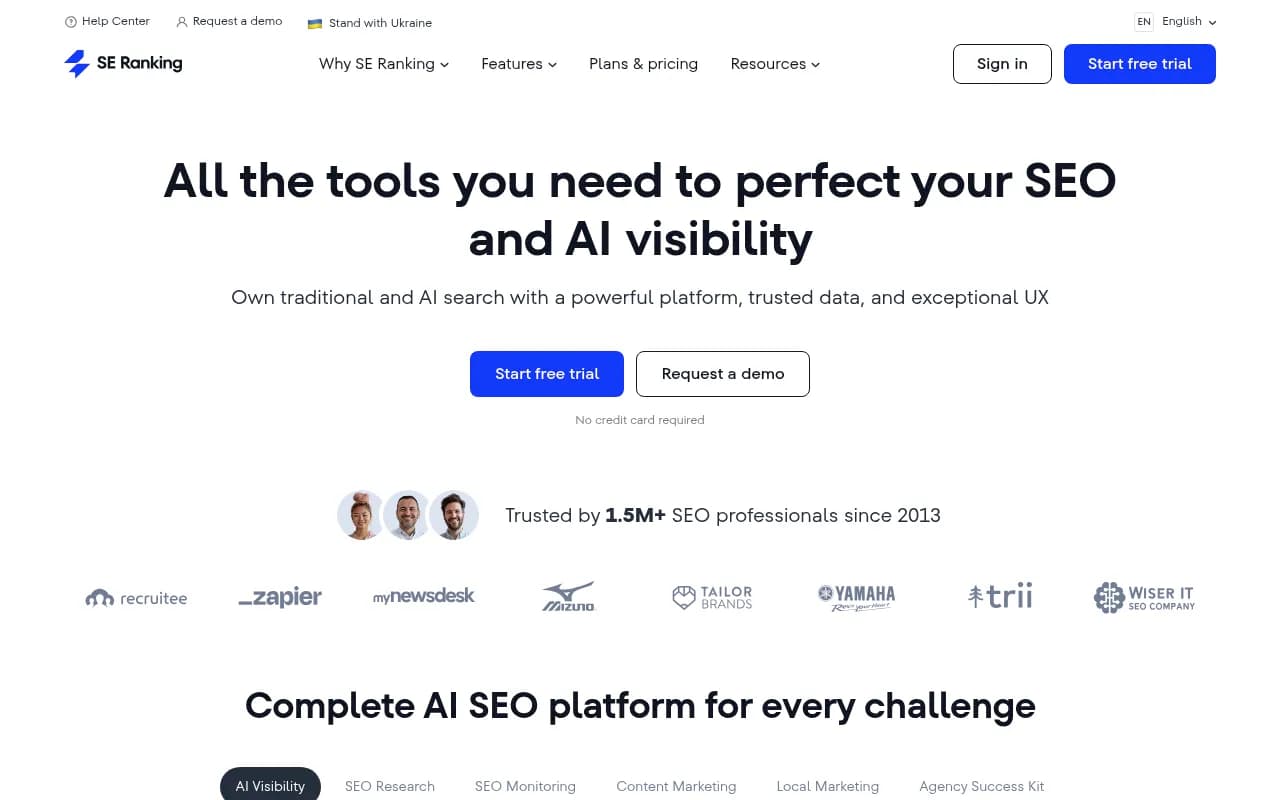
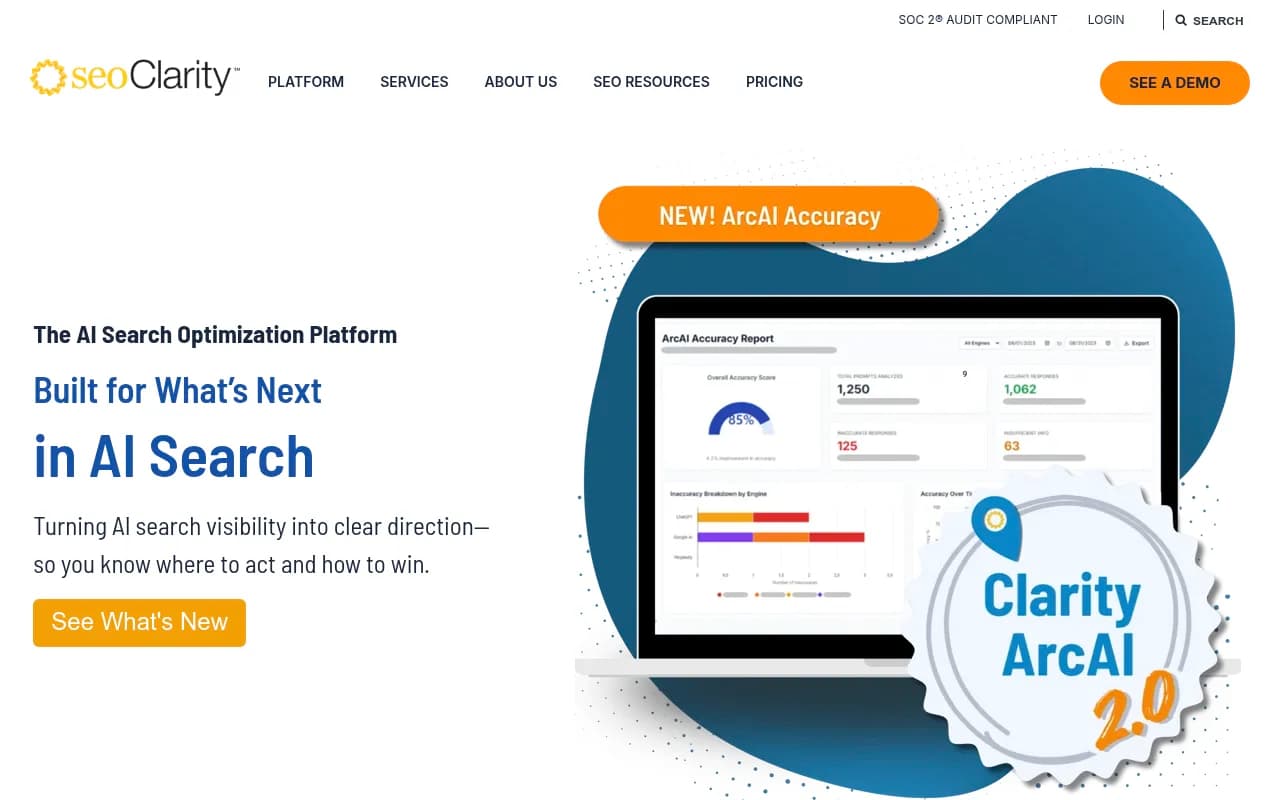
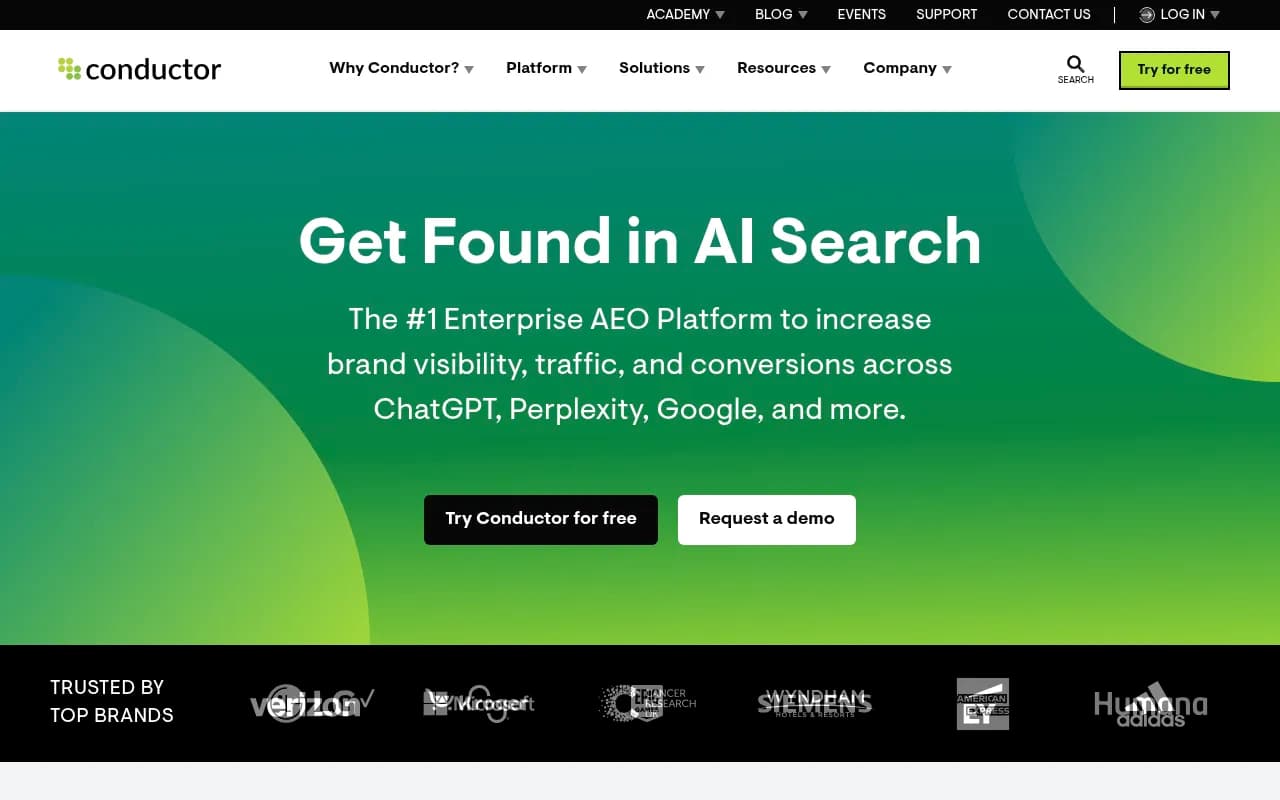
The appeal is one login and one invoice. The trade-off is typically fixed prompt sets and shallower AI-specific data. If you only need AI visibility as a secondary KPI inside a larger SEO program, this is a sensible place to stay.
Tier 3: platforms that track, fix, and measure
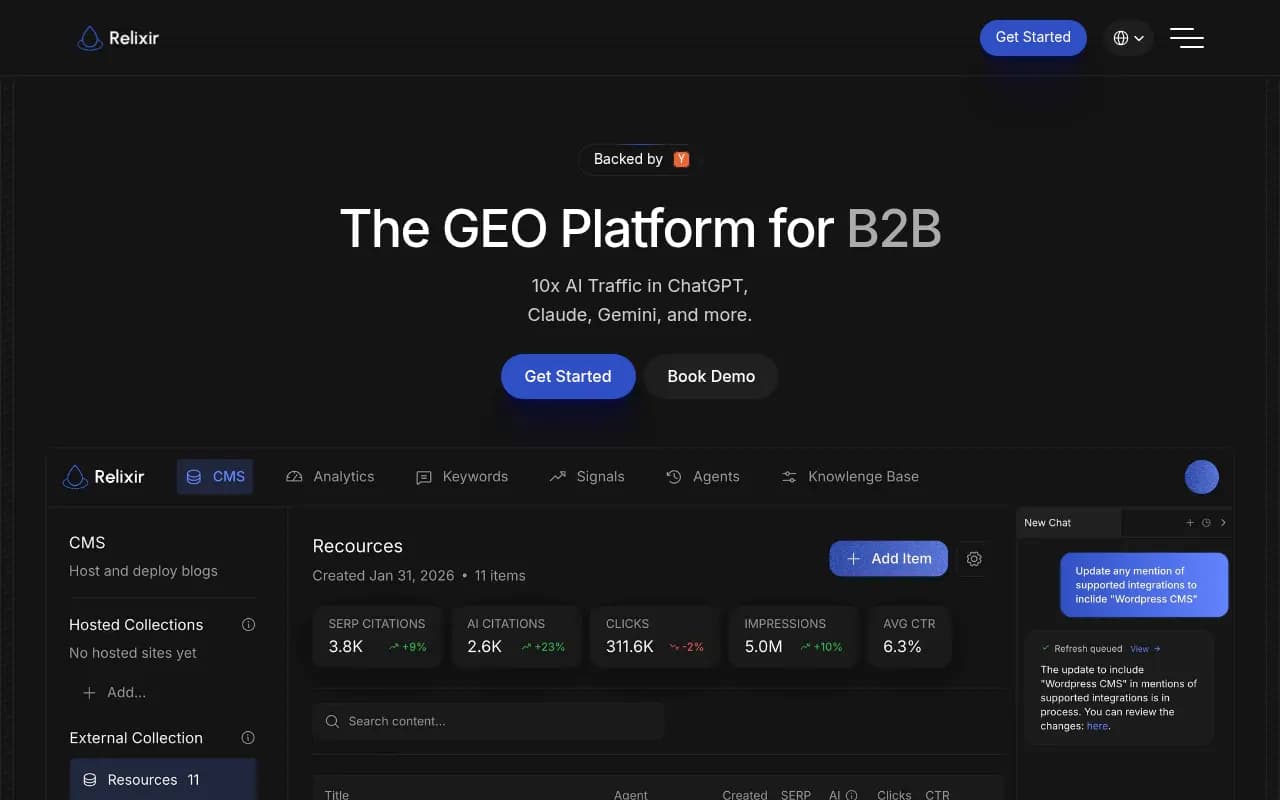
This is the group I'd watch. The pitch is a closed loop: find the gap, ship content or fixes, and verify the result. Names here include Promptwatch, Profound, Scrunch, AthenaHQ, Relixir, Whitebox, Nuwtonic, GEOforge, and bydefault, with enterprise options like Adobe LLM Optimizer and Evertune.


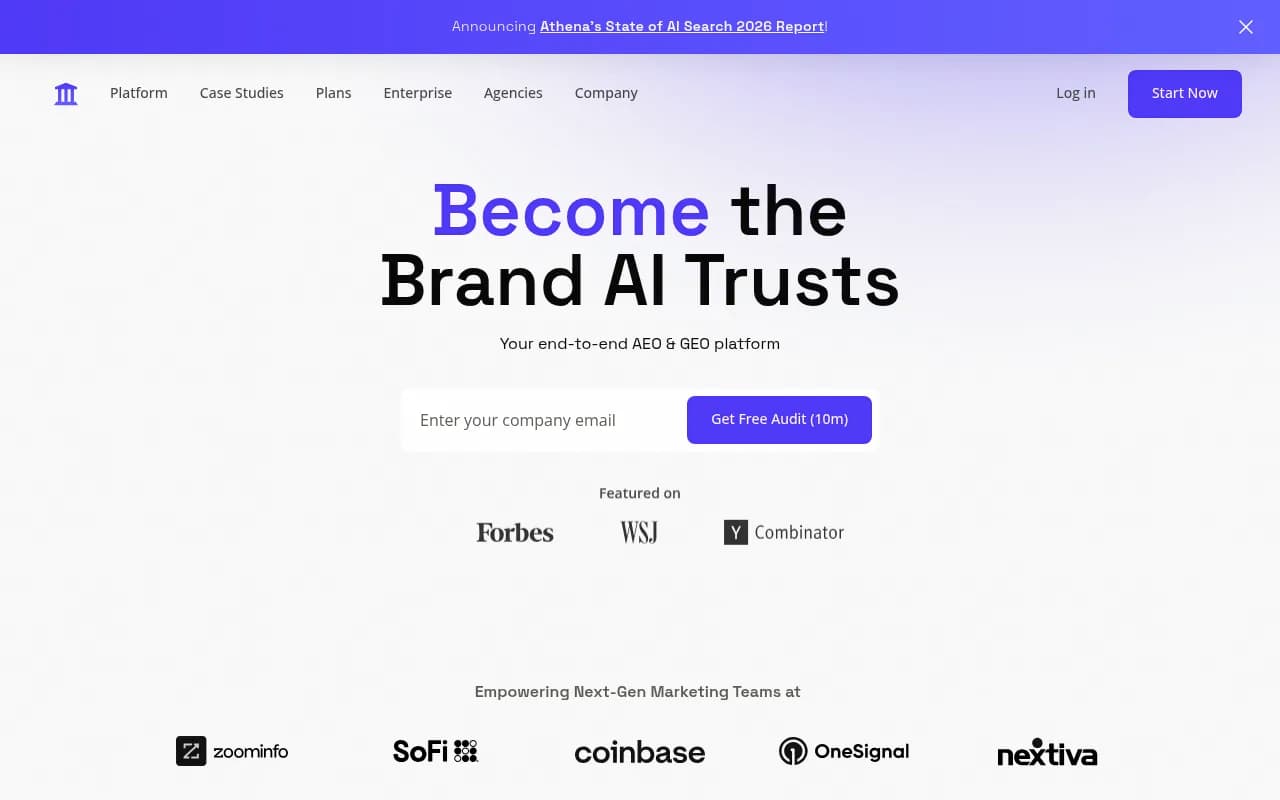
Claims in this tier vary a lot. Some "agentic" products amount to a report with a generated recommendation list. Ask to see a published page, the crawler log showing a bot fetched it, and the citation that followed.
Comparison: what to check across tiers
| Capability | Prompt trackers | SEO suites | Closed-loop platforms |
|---|---|---|---|
| Mention and visibility tracking | Yes | Yes, often fixed prompt sets | Yes |
| Real interface data vs API only | Varies | Usually limited | Varies, ask directly |
| AI crawler logs | Rare | Rare | Some |
| AI traffic attribution | Rare | Partial | Some |
| Content creation and publishing | No | Limited | Yes, in the better ones |
| Typical buyer | Small team, baseline | Existing suite customer | Teams that need results |
| Price pressure | Lowest | Add-on to suite | Highest, but varies |
Treat this as a framework rather than a verdict on any specific vendor. Features move quickly, and I haven't audited pricing for every tool in the catalog.
Where Promptwatch fits
Full disclosure: 1001 SEO Media publishes this site and uses Promptwatch for its own GEO work, so weigh my opinion with that in mind. With that said, it is the clearest example of a Tier 3 product I know of. It monitors ChatGPT, Gemini, Perplexity, Google AI Overviews, AI Mode, Copilot, Meta AI, and others through their real interfaces, traces which pages get cited, and then acts on gaps through the Action Board, the Content Agent, and publishing to WordPress, Webflow, or Framer. IP-verified AI crawler logs show whether bots read a page, and visitor analytics show whether it earns traffic.
Pricing at the time of writing: Essential $95/mo, Professional $245/mo, Business $579/mo (the first plan with the Content Agent and faster-than-daily tracking), and agency plans from $199/mo. Confirm current numbers at promptwatch.com/pricing. There is a 7-day free trial on monthly billing and a free AI visibility report if you want a look before paying anything.
If you want a head-to-head, Promptwatch publishes a 2026 platform comparison and pages like Promptwatch vs Profound, which are naturally written from its own point of view.
What buyers should expect over the next year
Prices will separate by what the tool does
Tracking will keep getting cheaper because it is a commodity. Money will go to tools that publish, fix, and attribute. Expect budget trackers around the low end and a clear premium for anything that ships content.
Your data will be noisier than vendors admit
Responses vary by country, language, persona, and time of day. A single weekly visibility number is a rough guide. Look for tools that run prompts daily or more often, and let you split by market. Promptwatch, for example, runs daily on every plan and offers faster cadence on Business and above.
Traffic attribution is getting harder
Per the product notes we work from, ChatGPT stopped sending a referrer on October 8, 2026, so AI visits can land in your analytics as direct traffic. Tools with their own visitor analytics or UTM handling will have an edge. Check how any vendor deals with this before you trust its "AI traffic" chart.
Citation formats keep moving
Product pages and landing pages lead ChatGPT citations today, and listicles were the fastest-growing format in July before how-tos gained in August. Build for formats, not just keywords, and refresh older pages. News-style content decays within weeks.
How to buy without regret
- Define the job. Reporting for a client deck is a different purchase than driving pipeline from AI search.
- Run a two-week trial on your real prompts, in your real countries. Skip the vendor's demo brand.
- Ask where the data comes from: real interface scraping, API calls, or both. Answers differ between them.
- Ask for crawler visibility. If a major provider shows near zero in your logs, you are likely blocked in robots.txt, CDN, or WAF rules. Promptwatch's own free Agentic Readiness Check is a quick first test.
- Test the action path. Pick one gap, have the tool help you fix it, and see if the citation appears.
- Check export and API access. You will want your data when you switch tools, and some of you will switch.
If you're still building a shortlist, the directories at bestgeosoftware.com and ai-rank-tools.com list a much wider field than I can cover here.
Agency or in-house?
Some teams buy software and still lack the hours to act on it. In that case an agency that combines technical SEO, content, and GEO may be a better buy than another dashboard. 1001 SEO Media does this work, with no long-term contracts and monthly reporting. The right choice depends on whether your bottleneck is data or execution.
Bottom line
I can't hand you a verified list of tools that died in 2026, and I'd distrust anyone who does without sources. What I can say is that the market is sorting by usefulness. Tools that stop at a score are being squeezed from below by cheap trackers and from the side by SEO suites. The ones worth paying for connect monitoring to publishing and to measured traffic. Pick the tier that matches your actual bottleneck, test on your own prompts, and re-evaluate in six months, because the engines will have changed again by then.