Key takeaways
- A rebrand creates two distinct AI visibility problems: your old brand name stops accumulating citations, and your new name starts from zero with no recognition in LLM training data or real-time indexes.
- Before you flip the switch, you need a complete baseline snapshot of every prompt, citation, and page-level mention tied to your old brand identity.
- Domain changes require updating your tracking configuration in every AI monitoring tool you use -- redirects alone don't automatically transfer AI citation credit.
- The fastest path back to visibility is publishing content that explicitly connects your old brand to your new one, so AI models can associate the two entities.
- Tools like Promptwatch track crawler logs and citation timelines, which is especially useful during a rebrand because you can see exactly when AI engines re-crawl your new domain and start citing it.
Rebrands are exciting until you realize what they do to your AI search visibility. You've spent months -- maybe years -- building up citation authority in ChatGPT, Perplexity, and Google AI Overviews. Your old brand name gets mentioned in responses. Your pages get crawled and cited. Then you change the name, move the domain, and watch all of that quietly disappear.
The problem isn't just that AI models don't know your new name yet. It's that most teams don't realize how much visibility they had until it's gone. And unlike traditional SEO, where you can track rank drops in near real-time, AI visibility degradation is slower and harder to see without the right monitoring in place.
This guide walks through exactly what to do before, during, and after a rebrand to keep your AI visibility intact -- or at least recover it as fast as possible.
Why rebrands are particularly disruptive for AI visibility
Traditional search engines handle domain migrations reasonably well. You set up 301 redirects, submit a change of address in Search Console, and Google transfers most of your link equity over a few months. It's painful but predictable.
AI search engines work differently. They don't just index URLs -- they build associations between entities, brand names, topics, and sources. When ChatGPT or Perplexity recommends a brand, it's drawing on a combination of training data, real-time web crawling, and citation patterns from trusted sources. A domain redirect doesn't automatically tell an LLM that "NewBrand" is the same entity as "OldBrand."
There are three specific disruptions to plan for:
Entity confusion. AI models learn about brands through repeated exposure across many sources. Your old brand name has that accumulated recognition. Your new name doesn't. For a period after the rebrand, AI models may still recommend the old name, or worse, fail to recommend either.
Citation gaps. Any third-party content -- review sites, Reddit threads, industry articles, YouTube videos -- that cites your old brand name or links to your old domain won't automatically update. Those citations continue pointing to an entity that no longer exists in its original form.
Crawler re-indexing lag. AI crawlers need to re-discover and re-read your content under the new domain. Depending on the platform, this can take anywhere from days to several weeks. During that window, your pages may not be cited even if the content is identical.
Step 1: Build a complete baseline before you rebrand
The single most important thing you can do is capture a detailed snapshot of your AI visibility before anything changes. This becomes your benchmark for measuring recovery.
Your baseline should include:
- Which prompts currently surface your brand in AI responses
- Which of your pages are being cited, and by which AI models
- Your share of voice versus competitors across your key prompt set
- Any offsite citations -- Reddit threads, review pages, listicles -- that mention your brand
- Your current AI crawler activity (which bots are hitting which pages, how often)
Don't rely on memory or rough estimates here. You need actual data, because "we were doing well before the rebrand" is not a useful recovery target.
Promptwatch is well-suited for this because it tracks page-level citations, crawler logs, and prompt-level visibility in one place. You can export a full snapshot of which pages are being cited by which AI models before you make any changes.

Other tools worth using for baseline capture:


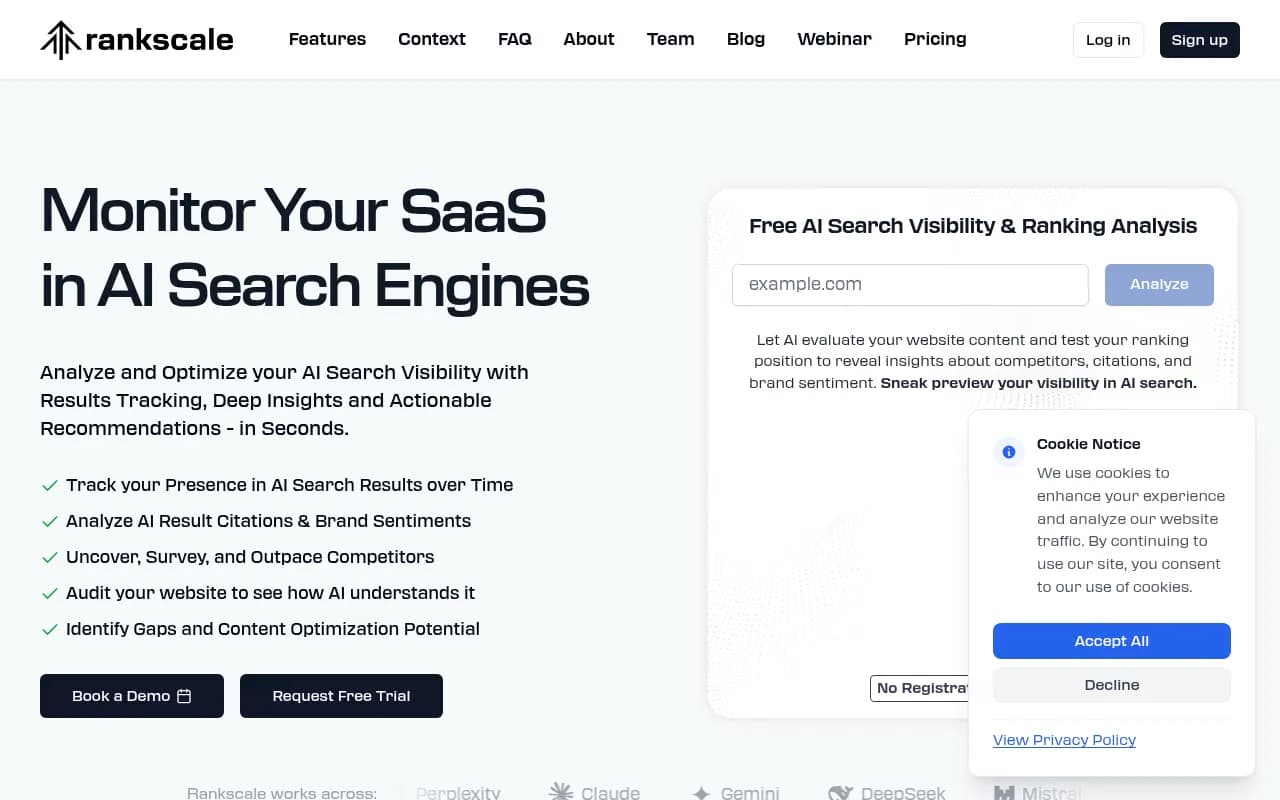
Once you have the baseline, document it somewhere your whole team can access -- a shared spreadsheet, Notion doc, or your project management tool. You'll be comparing against it for months.
Step 2: Set up parallel tracking for your new brand identity
Before the rebrand goes live, configure your monitoring tools to track your new brand name and new domain alongside the old ones. Don't wait until launch day to set this up.
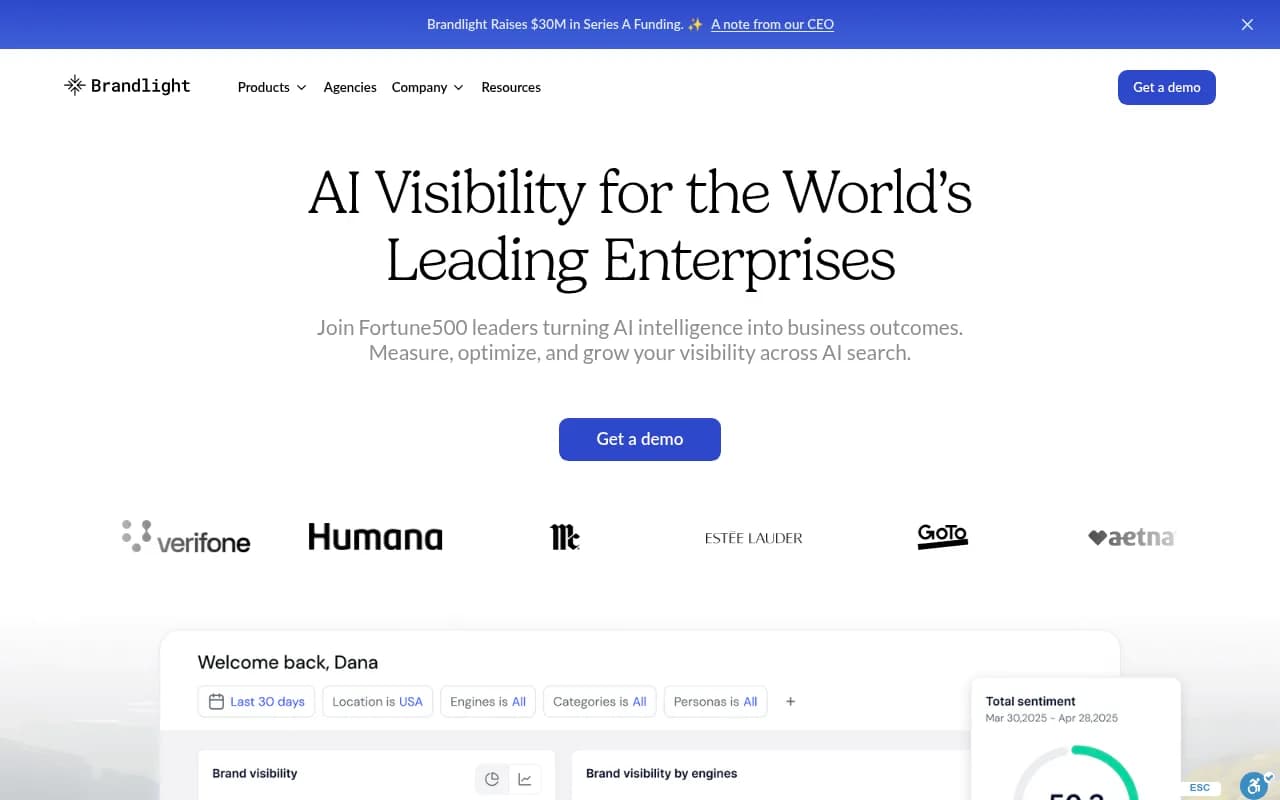
Most AI visibility platforms let you track multiple brand names and domains. Use this to run both in parallel:
- Keep your old brand name in your prompt set to monitor how quickly AI models stop recommending it
- Add your new brand name to track when it starts appearing in responses
- Add your new domain to track when AI crawlers start visiting it and when pages move from crawled to cited
The gap between those two curves -- old brand declining, new brand rising -- is your visibility recovery window. The goal is to close it as fast as possible.


Updating your prompt set
Your existing prompts were written with your old brand name in mind. After the rebrand, you need to update them to reflect how customers will actually search for your new brand. This means:
- Replacing old brand name references in existing prompts
- Adding new prompts that reflect your new positioning or product names
- Keeping a small set of old-brand prompts running for 3-6 months to track the decline curve
Don't delete your old prompt data. Archive it. You'll want to compare pre- and post-rebrand visibility side by side.
Step 3: Handle the domain migration properly for AI crawlers
A 301 redirect is necessary but not sufficient. AI crawlers behave differently from Googlebot, and some don't follow redirects the same way. Here's what to do on the technical side:
Update your sitemap immediately. Submit a new sitemap under your new domain as soon as it goes live. AI crawlers that support sitemap discovery will find your new pages faster.
Check your robots.txt. Make sure you haven't accidentally blocked AI crawlers on the new domain. It sounds obvious, but it happens during rushed migrations.
Set up crawler log monitoring on the new domain. This is where most teams drop the ball. They set up redirects and assume everything transfers. But without crawler logs, you have no visibility into whether AI bots are actually visiting your new domain, which pages they're reading, and whether they're encountering errors.
Promptwatch's AI Crawler Logs feature shows you exactly which AI agents (ChatGPT, Claude, Perplexity, etc.) are hitting your pages, how often, and whether they're running into 404s or redirect chains. During a domain migration, this is invaluable -- you can see the moment crawlers start discovering your new domain and fix any technical issues before they delay citation recovery.
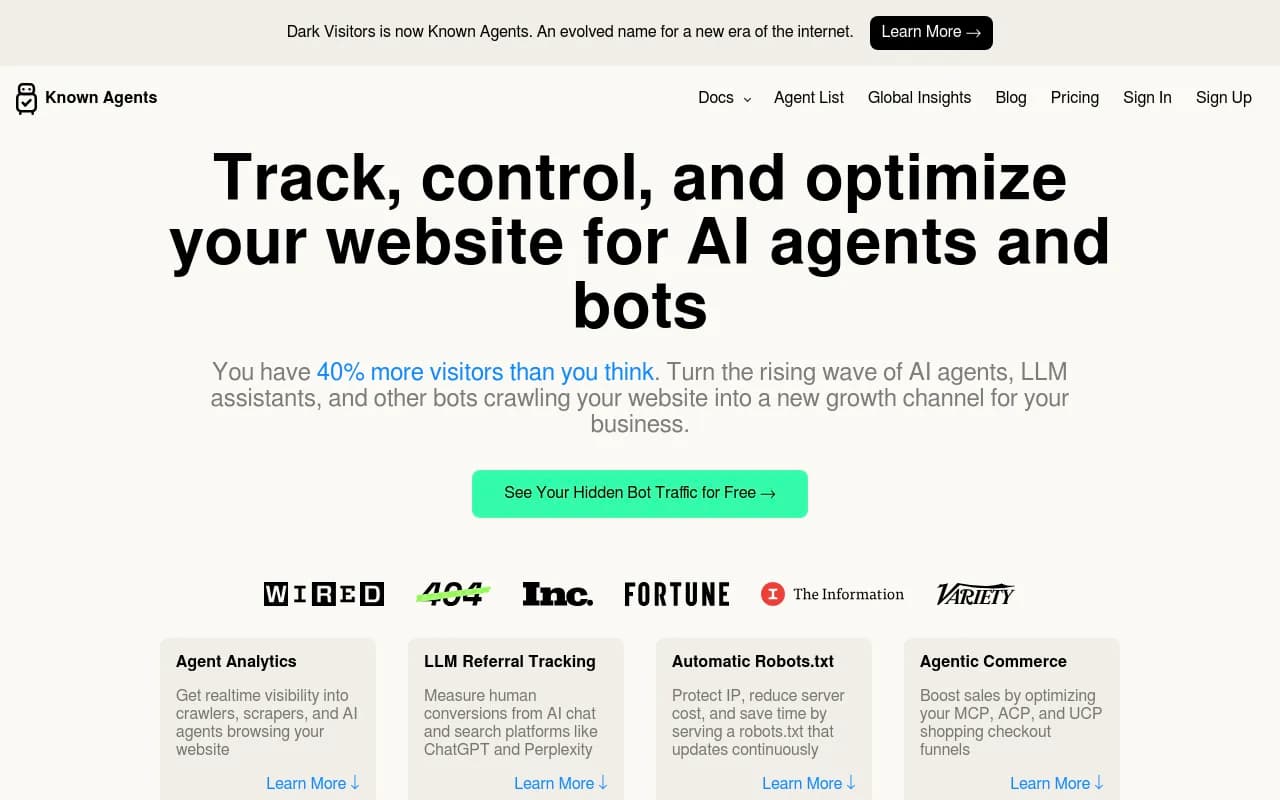
DarkVisitors is also worth checking here -- it tracks AI agent activity and can help you verify that major crawlers are finding your new domain.
Avoid redirect chains. If your old domain redirected to a staging domain at some point during the migration, and that staging domain now redirects to the new live domain, you have a chain. AI crawlers handle these inconsistently. Clean it up.
Step 4: Publish entity-bridging content
This is the most underrated step in a rebrand migration. AI models learn about brand entities through content. If you want them to understand that NewBrand is the same company as OldBrand, you need to publish content that explicitly makes that connection.
This isn't just an announcement post. It's a deliberate content strategy:
A rebrand announcement page that clearly states "OldBrand is now NewBrand" and explains the reason for the change. This page should live on your new domain and be linked from your homepage. It gives AI models a direct, citable source for the entity relationship.
Updated "About" and company pages that reference your history under the old name. Don't scrub the old name entirely -- AI models need that continuity to connect the two entities.
Press coverage and third-party mentions. Reach out to publications that have covered your brand and ask them to update their articles or add a note about the rebrand. Each updated citation reinforces the entity connection in AI training data and real-time indexes.
Reddit and community posts. AI models like Perplexity and ChatGPT pull heavily from Reddit. A well-placed post in a relevant subreddit explaining the rebrand -- written naturally, not as a press release -- can meaningfully accelerate AI recognition of your new brand name.
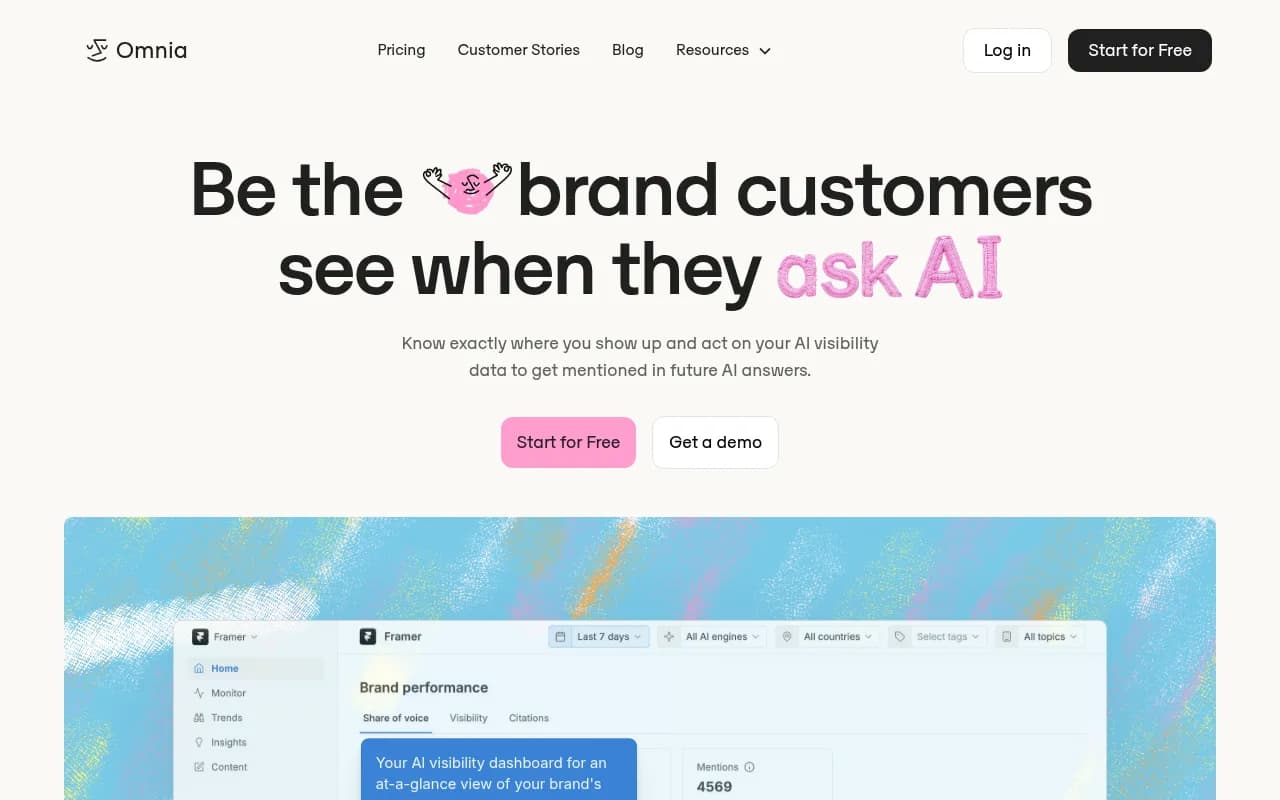
Omnia's share of voice tracking is useful here because it shows you how often your new brand name appears in AI responses relative to competitors. Watching that number climb over the weeks after your rebrand gives you a concrete measure of whether your entity-bridging content is working.
Step 5: Audit and update offsite citations
Your own website is only part of the picture. AI models cite external sources heavily -- review sites, comparison pages, industry directories, YouTube videos, and yes, Reddit threads. After a rebrand, many of these will still reference your old name and old domain.
Make a list of your most important offsite citations. These are the pages that AI models were citing before the rebrand. You can find them in your AI visibility tool's citation analysis, or by manually checking which sources appear in AI responses for your key prompts.
For each one:
- Contact the site owner and request an update to reflect your new brand name and domain
- If the page can't be updated, consider whether you can create a newer, better version on your own site that AI models will prefer to cite
- For Reddit threads and forum posts, you can add a comment clarifying the rebrand
This is tedious work, but it matters. A Perplexity response that recommends "OldBrand" and links to a dead page is actively harmful to your new brand's visibility.
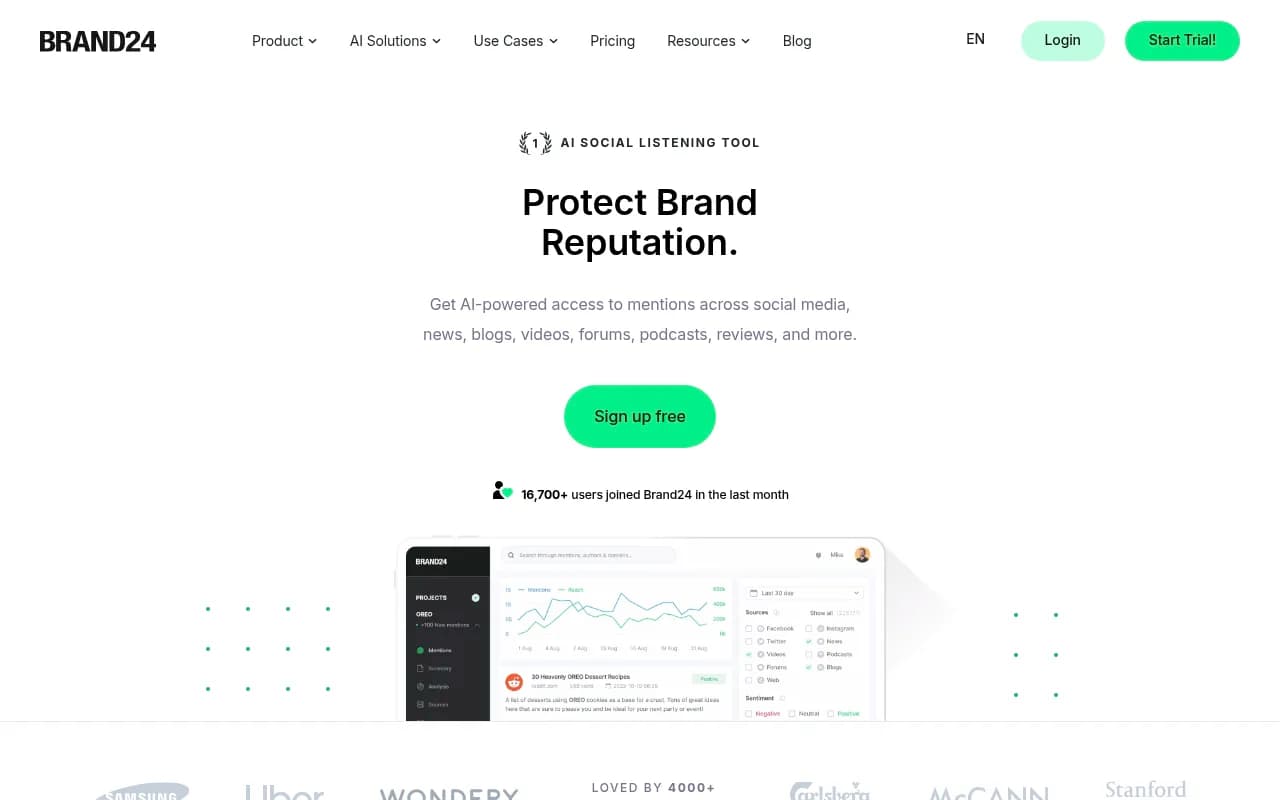
Brand24 is useful for finding mentions of your old brand name across the web after the rebrand. Set up an alert for your old name and use it to track down citations that still need updating.
Awario does similar work and covers a broad range of sources including news sites and blogs.
Step 6: Monitor the recovery timeline
Once the rebrand is live and your content strategy is running, you need to track recovery systematically. Set up a weekly review cadence covering:
| Metric | What to track | Target |
|---|---|---|
| New brand mention rate | % of tracked prompts where new name appears | Matches or exceeds old brand baseline |
| Old brand mention rate | % of prompts still surfacing old name | Declining to near-zero over 3-6 months |
| Page-level citations | Which new domain pages are being cited | Growing week-over-week |
| AI crawler activity | How often bots visit new domain | Consistent crawl frequency established |
| Offsite citation updates | % of key external citations updated | 80%+ within 60 days |
| Share of voice | New brand vs competitors | Recovering toward pre-rebrand levels |
Don't expect overnight results. AI model training data updates on different schedules for different platforms. Perplexity and Google AI Overviews tend to pick up new information faster because they do more real-time web retrieval. ChatGPT's base model updates less frequently, though its browsing-enabled responses can surface new content quickly.
A realistic recovery timeline for most rebrands:
- Week 1-2: AI crawlers start discovering new domain
- Week 2-4: First citations of new domain pages appear in Perplexity and Google AI Overviews
- Month 1-2: New brand name starts appearing in AI responses for high-priority prompts
- Month 3-6: Full visibility recovery, old brand mentions declining to negligible levels
Step 7: Don't forget internal tools and integrations
One thing teams consistently overlook: the monitoring tools themselves need to be updated. After a rebrand, check every platform in your AI visibility stack:
- Update brand name keywords in all monitoring tools
- Update domain tracking to point to the new domain
- Update any API integrations or Looker Studio dashboards that pull brand-specific data
- Update personas and prompt templates that reference your old brand name
- Archive (don't delete) historical data under the old brand configuration
If you're using a platform with website integrations -- like a Cloudflare worker, Vercel integration, or tracking snippet -- make sure these are deployed on the new domain, not just the old one.
Comparison: AI visibility tools for rebrand monitoring
Not every tool handles the rebrand scenario equally well. Here's how the major options compare on the capabilities that matter most during a migration:
| Tool | Crawler logs | Page-level citations | Multi-brand tracking | Offsite citation analysis | Content gap analysis |
|---|---|---|---|---|---|
| Promptwatch | Yes | Yes | Yes | Yes | Yes |
| Profound | Partial | Yes | Yes | No | Limited |
| Otterly.AI | No | No | Yes | No | No |
| Peec AI | No | No | Yes | No | No |
| AthenaHQ | No | Yes | Yes | No | No |
| Rankscale | No | Yes | Yes | No | No |
| Brand24 | No | No | Yes (web mentions) | Yes | No |
For a rebrand specifically, crawler logs and page-level citation tracking are the two capabilities you can't do without. They're the only way to know whether AI engines are actually finding and citing your new domain -- rather than just assuming the redirects worked.
A note on brand name changes vs. domain-only changes
Everything above applies to both scenarios, but they have different risk profiles.
A domain-only change (same brand name, new URL) is primarily a technical migration problem. The entity is already established in AI models -- they know who you are. The challenge is getting them to find your content at the new address. Crawler logs and redirect hygiene are your main levers.
A brand name change is a harder problem. You're asking AI models to learn a new entity from scratch and connect it to an established one. This requires more content work, more offsite citation outreach, and more patience. Expect a longer recovery window -- 4-6 months is realistic for full recognition of a new brand name across all major AI platforms.
If you're doing both simultaneously (new name and new domain), plan for the longer timeline and invest heavily in entity-bridging content from day one.
Practical checklist
Before the rebrand goes live:
- Export full AI visibility baseline (prompts, citations, crawler data, share of voice)
- Configure parallel tracking for new brand name and new domain
- Prepare entity-bridging content (rebrand announcement, updated About page)
- Audit top offsite citations and prepare outreach list
On launch day:
- Deploy tracking snippet / crawler log integration on new domain
- Submit new sitemap
- Verify robots.txt allows AI crawlers
- Publish rebrand announcement page
- Set up old brand name alerts in Brand24 or Awario
First 30 days:
- Monitor crawler logs daily for errors or missing crawl activity
- Track first citations of new domain pages
- Execute offsite citation outreach
- Publish additional entity-bridging content if AI recognition is slow
Ongoing (months 1-6):
- Weekly review of new vs. old brand mention rates
- Monthly share of voice comparison vs. competitors
- Continue offsite citation updates
- Use answer gap analysis to find new prompts to target under new brand identity
Rebrands are one of the few events that can genuinely reset your AI visibility to zero. But with the right monitoring in place before the change, a solid technical migration, and a deliberate content strategy that helps AI models connect your old and new identities, recovery is faster than most teams expect. The teams that struggle are the ones who treat it as a pure technical migration and skip the content work. The ones who recover quickly treat it as a content and monitoring challenge from day one.