Key takeaways
- AI search engines like ChatGPT, Perplexity, and Google AI Overviews now drive meaningful traffic -- and they cite specific competitors, not just "the best-ranking sites"
- You can identify which competitors are stealing your AI visibility by running prompt-level gap analysis, not just traditional keyword research
- Google AI Overviews now appear on 50-65% of commercial queries and reduce organic clicks by 25-60% for affected pages
- The fix isn't just monitoring -- it's finding the specific content gaps AI models see in your site and filling them
- A combination of AI visibility tracking tools and deliberate content strategy is what actually moves the needle
Your Google Analytics is showing a slow bleed. Traffic down 15%, then 22%, then 30%. Your rankings in Google look mostly fine. No manual penalty. No algorithm update you can point to. The technical audit comes back clean.
What's happening is that the traffic is going somewhere -- it's just not going to your competitors' organic listings anymore. It's going into AI-generated answers. ChatGPT recommends a competitor when someone asks for the best tool in your category. Perplexity cites a rival's blog post. Google AI Overviews synthesizes an answer from three sources, and you're not one of them.
This is the defining search problem of 2026, and most teams are still trying to solve it with 2022 tools.
Why traditional competitor analysis misses this entirely
Classic SEO competitor analysis tells you who ranks for your keywords. That's still useful. But AI search doesn't work like keyword ranking. When someone asks ChatGPT "what's the best project management tool for remote teams," ChatGPT doesn't pull the #1 organic result. It synthesizes an answer from content it found credible, well-structured, and authoritative across its training and retrieval pipeline.
The competitor stealing your AI traffic might not even outrank you in Google. They might have a weaker domain authority. But they wrote a piece that directly answers the question an AI model wants to answer, and you didn't.
This is why the gap you need to find isn't a keyword gap -- it's a prompt gap.
Step 1: Diagnose whether AI search is actually the problem
Before you can fix anything, confirm the source of the drop. A few ways to do this:
In Google Search Console, pull CTR data for your top pages and compare year-over-year for the same date ranges. If impressions are holding but clicks are falling, that's a strong signal that AI Overviews are absorbing the clicks. The query is still happening -- people just aren't clicking through.
Check your referral traffic sources. In 2026, tools like Promptwatch can show you actual AI crawler activity on your site -- which pages ChatGPT, Perplexity, and Claude are visiting, how often, and whether they're encountering errors. If AI crawlers are hitting your site but you're not getting cited, that's a content quality or structure problem, not a crawlability problem.

Look at which query types are dropping. Informational queries ("how to X", "what is Y", "best Z for W") are hit hardest by AI Overviews. Transactional queries with high commercial intent are more protected -- for now. If your informational content traffic has collapsed but your product pages are fine, AI Overviews are almost certainly the culprit.
Step 2: Map which competitors are being cited instead of you
This is the core of the problem. You need to know specifically who is getting cited in AI responses for the prompts that matter to your business.
The manual approach: open ChatGPT, Perplexity, Claude, and Google, and start asking the questions your customers ask. Write down which brands, domains, and specific pages get mentioned. This takes time but gives you a real feel for the competitive landscape in AI search.
The systematic approach: use an AI visibility tracking platform to run this at scale. Tools like Promptwatch let you track hundreds of prompts across multiple AI models simultaneously, showing you exactly which competitors appear in responses and how often. The "Answer Gap Analysis" feature is particularly useful here -- it shows you the specific prompts where competitors are visible but you're not.



The data you're looking for:
- Which competitors appear most frequently in AI responses for your target prompts
- Which specific pages of theirs are being cited (not just domains)
- Which AI models favor which competitors (ChatGPT and Perplexity often have different citation patterns)
- How your mention rate compares to competitors across different query types
Step 3: Understand why they're being cited
Knowing who is winning isn't enough. You need to know why. A few patterns show up repeatedly:
They have content that directly answers the question. AI models are remarkably literal. If someone asks "what are the best CRM tools for small law firms" and your competitor wrote a post titled "Best CRM Tools for Small Law Firms" with a structured comparison, they'll get cited. If your content is a generic "CRM for small businesses" post that doesn't mention legal specifically, you won't.
Their content is well-structured for AI parsing. Headers, bullet points, numbered lists, clear definitions, and FAQ sections all make it easier for AI models to extract and synthesize information. Long walls of prose are harder to cite.
They have external validation. AI models in 2026 weight external signals heavily. Reviews on G2, Reddit discussions, mentions in industry reports, and citations from authoritative domains all signal credibility. A competitor with 200 G2 reviews and active Reddit threads will often beat a competitor with better content but no external presence.
They've published more recently. For rapidly evolving topics, recency matters. If your competitor published a comprehensive guide in Q1 2026 and your equivalent piece is from 2023, the newer content often wins.
Step 4: Run a prompt gap analysis
This is where you turn diagnosis into action. A prompt gap analysis answers: "What questions are my competitors being cited for that I have no content addressing?"
You can do this manually by listing every prompt where a competitor appears in AI responses and then checking whether you have content that answers that question. It's tedious but effective for a focused audit.
At scale, Promptwatch's Answer Gap Analysis automates this. It shows you the specific prompts where competitors are visible, maps them to content gaps on your site, and prioritizes them by prompt volume and difficulty. You're not guessing what to write -- you're looking at a list of specific questions AI models want answered that your site currently can't answer.
A few categories of prompts to prioritize:
- Comparison prompts ("X vs Y", "alternatives to X") -- these drive high-intent traffic and are heavily cited in AI responses
- "Best for" prompts ("best X for [specific use case]") -- highly specific, less competitive, and very frequently cited
- How-to prompts in your category -- informational but often the entry point for purchase decisions
- Problem-framing prompts ("why is my X not working", "how do I fix Y") -- often overlooked but can establish authority
Step 5: Create content engineered for AI citation
Writing for AI citation is different from writing for keyword ranking, though there's significant overlap. The key differences:
Write to answer a specific question, not to rank for a keyword. The prompt "what's the best email marketing tool for e-commerce brands under $500/month" is a question. Your content should answer it directly, with a clear recommendation, supporting reasoning, and structured comparison data.
Use clear entity signals. AI models build knowledge graphs. If your content clearly establishes what your brand is, what category it belongs to, what problems it solves, and how it compares to named alternatives, you're giving AI models the structured information they need to cite you accurately.
Get your content cited externally. Publish on platforms AI models trust: industry publications, Reddit (seriously -- AI models cite Reddit heavily), LinkedIn articles from credible authors, and YouTube. A piece of content that lives only on your own domain has fewer citation signals than one that's discussed and referenced across multiple platforms.
Update existing content. If you have a post that used to rank well but has dropped, don't just leave it. Update it with current data, add a structured FAQ section, and make sure it directly addresses the most common prompts in your category.
Step 6: Track the results and close the loop
Most teams do the analysis, create some content, and then... don't know if it worked. This is a mistake.
AI visibility tracking needs to be ongoing, not a one-time audit. You need to see whether your new content is getting cited, which AI models are picking it up first, and whether citation rates are translating into actual traffic.
Page-level tracking is important here. It's not enough to know your overall "AI visibility score" went up. You want to know that the specific article you published about CRM tools for law firms is now being cited by Perplexity 12 times per week, and that those citations are driving 340 visits per month.
Traffic attribution closes the loop completely. If you can connect AI citations to actual sessions and conversions -- through a tracking snippet, Google Search Console integration, or server log analysis -- you can calculate ROI on your AI content strategy. That's what makes it a repeatable business process rather than a one-time experiment.
Tools comparison: what to use for each stage
| Stage | What you need | Tools to consider |
|---|---|---|
| Diagnosing the problem | AI crawler logs, GSC CTR analysis | Promptwatch, Google Search Console |
| Mapping competitor citations | Prompt-level tracking across AI models | Promptwatch, AthenaHQ, Profound |
| Prompt gap analysis | Answer gap / content gap features | Promptwatch, Semrush, Ahrefs Brand Radar |
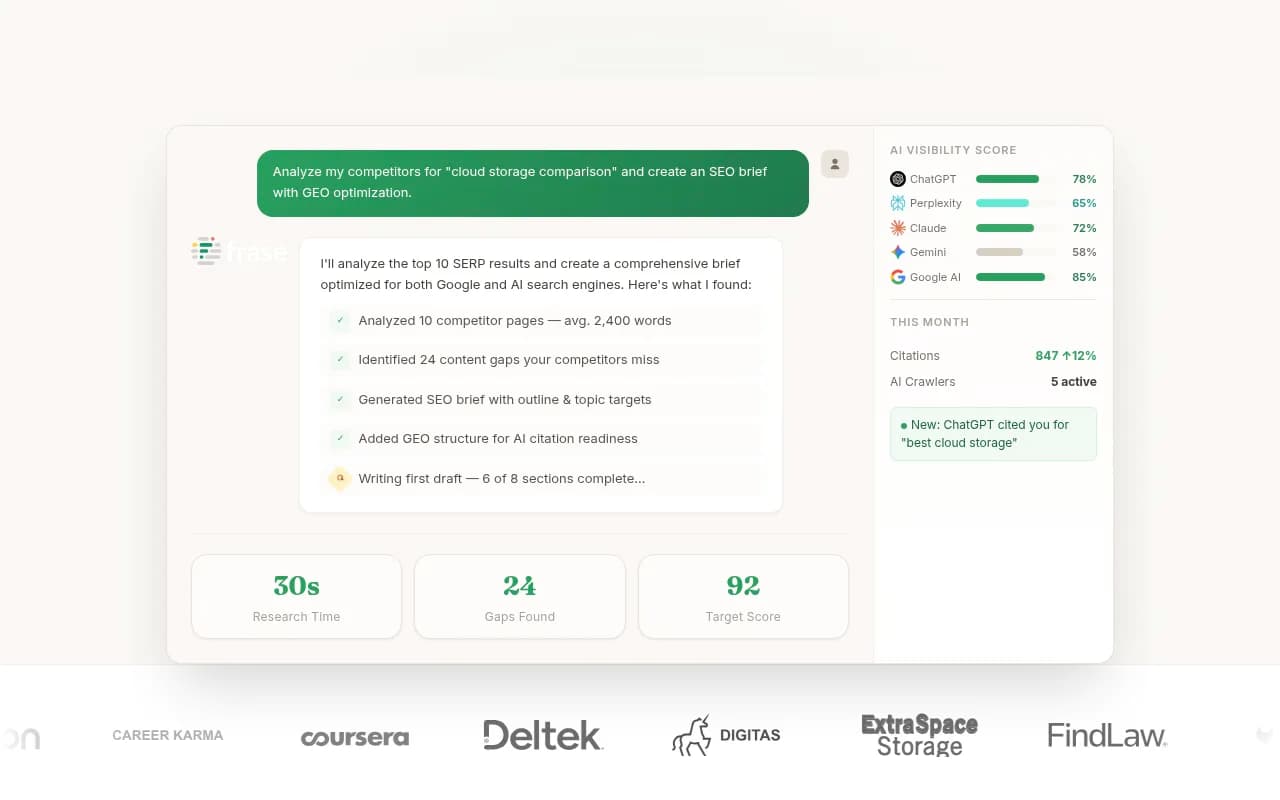
| Content creation | AI writing grounded in citation data | Promptwatch, Surfer SEO, Frase |
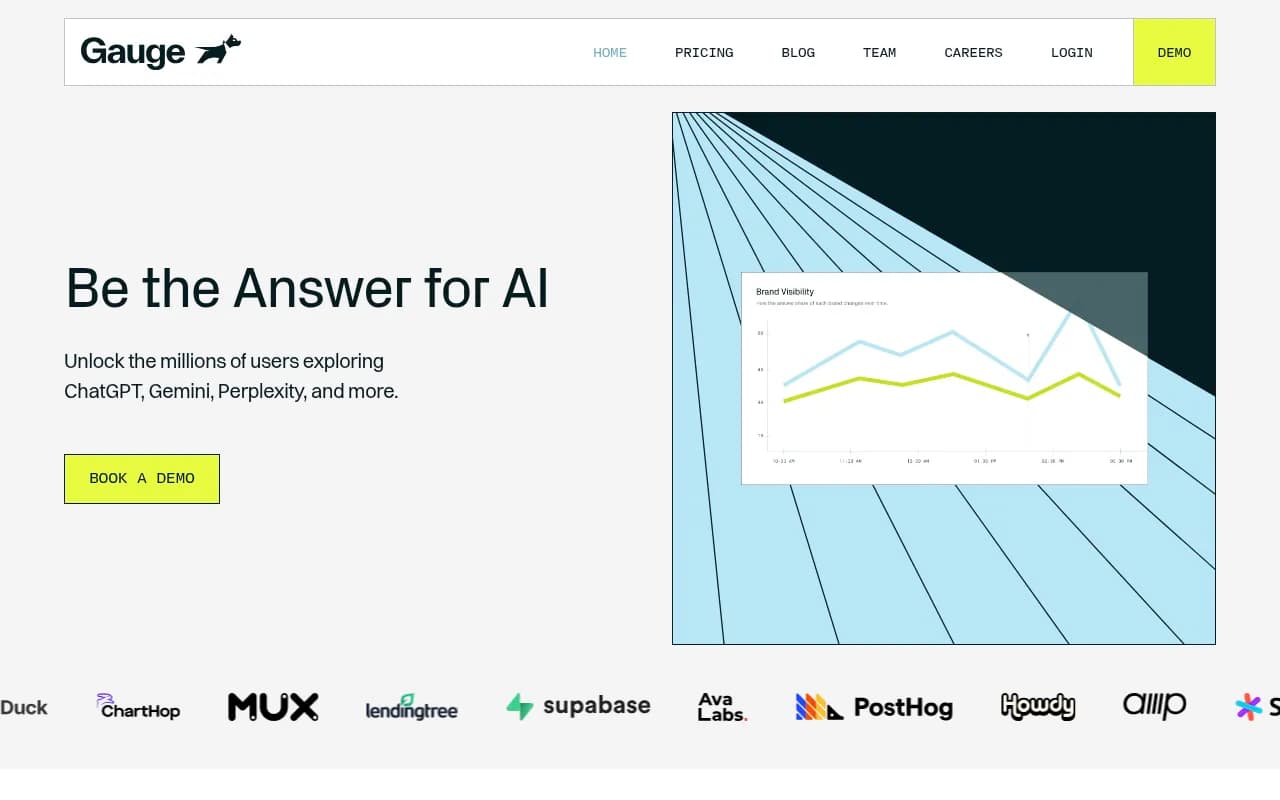
| Tracking results | Page-level AI citation tracking | Promptwatch, Rankscale, Gauge |
| Traffic attribution | AI referral analytics | Promptwatch, SE Ranking |
The honest reality is that most monitoring-only tools (Otterly.AI, Peec.ai, basic AthenaHQ) will show you the problem but leave you to figure out the fix yourself. Promptwatch is built around the full cycle: find the gaps, generate content that addresses them, track whether it worked. For teams that want to move fast, that end-to-end workflow matters.
What not to do
A few approaches that look reasonable but don't work well:
Don't just republish competitor content with minor edits. AI models are good at recognizing derivative content. You need a distinct point of view, original data, or a more specific angle.
Don't ignore Google AI Overviews in favor of ChatGPT. Google AI Overviews appear on 50%+ of commercial queries and have the largest traffic impact of any AI search feature right now. It's the most urgent problem for most businesses.
Don't treat this as a one-time project. The competitive landscape in AI search shifts faster than traditional SEO. A competitor can publish a well-optimized piece and start appearing in AI responses within weeks. You need ongoing monitoring, not a quarterly audit.
Don't optimize only for your brand name. Most AI search traffic comes from category-level and problem-level prompts, not branded queries. If you're only tracking "mentions of [your brand]," you're missing most of the opportunity.
The competitive reality
The businesses winning in AI search right now aren't necessarily the biggest or the ones with the most backlinks. They're the ones that figured out the prompt gap problem first and started publishing content that directly answers the questions AI models are being asked.
That's actually good news if you're behind. The gap is closeable. But it requires a different kind of analysis than traditional SEO -- one that starts with prompts, maps to citations, and ends with content that's built to be cited rather than just ranked.
Start by running a prompt audit for your 20 most important queries. See who's appearing. See what they wrote. Then write something better, more specific, and more directly useful. That's the playbook.