Key takeaways
- AEO (Answer Engine Optimization) is the practice of structuring content so AI platforms like ChatGPT, Perplexity, and Google AI Overviews cite it in their responses -- it's fundamentally different from ranking in traditional search.
- The shift is already happening: ChatGPT handles over 2 billion queries daily, AI-referred sessions to websites grew 527% year-over-year through mid-2025, and Gartner projects traditional search volume will drop 25% by end of 2026.
- Getting cited requires four things working together: topical authority, content clarity, technical structure, and credibility signals.
- Measurement matters as much as execution -- you need to track citation frequency and brand visibility scores across specific AI models, not just Google rankings.
- The brands winning in AI search right now are publishing content that directly answers questions, not content optimized purely for keyword density.
Why AEO is different from everything you've done before
Traditional SEO is a ranking game. You optimize a page, it climbs the SERP, people click the blue link. The feedback loop is clean: rankings go up, traffic goes up.
AEO doesn't work like that. When someone asks ChatGPT "what's the best project management software for remote teams," ChatGPT doesn't return a ranked list of URLs. It synthesizes an answer from dozens of sources and either cites your brand or it doesn't. You're not competing for position 1 -- you're competing to be included at all.
That's a harder problem, and it requires a different approach.
The numbers make the urgency clear. ChatGPT now handles over 2 billion queries daily. AI-referred sessions to websites grew 527% year-over-year through mid-2025, according to Position Digital. Google's AI Overviews appear in roughly 30% of all U.S. searches -- and in business and technology categories, that number exceeds 33%. Meanwhile, over 60% of all searches now end without a single click to any website. McKinsey research found that 44% of AI search users consider AI their primary source of insight, compared to just 31% who still lean on traditional search.
If your brand isn't being cited in AI responses, you're invisible to a growing chunk of your potential customers. And unlike traditional SEO, where you can at least see where you rank, most teams have no idea whether AI engines are mentioning them at all.
This guide fixes that. Here's how to build an AEO strategy from scratch.
Step 1: Understand how answer engines decide what to cite
Before you optimize anything, you need to understand the selection process. AI answer engines don't crawl and index the way Google does. They work in two stages:
The first stage is training. Large language models learn from massive datasets of web content, books, and other text. This gives them a base understanding of which brands, concepts, and sources are authoritative on which topics. If your brand has been consistently publishing high-quality content on a topic for years, you may already have some presence in the model's training data.
The second stage is retrieval-augmented generation (RAG). Most modern AI search tools -- Perplexity, Google AI Overviews, ChatGPT with web search enabled -- don't rely purely on training data. They actively retrieve current web content at query time, then synthesize it into an answer. This is where your content strategy has the most immediate leverage.
For a source to get cited, it generally needs to clear three bars:
- The content must be findable and crawlable by AI bots
- It must directly and clearly answer the question being asked
- It must appear authoritative and trustworthy on the topic
Most brands fail on one or more of these. The good news is all three are fixable.
Step 2: Audit your current AI visibility
You can't improve what you can't measure. Before building your strategy, run a baseline audit to understand where you stand.
The manual version: open ChatGPT, Perplexity, and Google AI Overviews. Search for the 10-15 questions your target customers are most likely to ask. Note whether your brand gets mentioned, whether competitors get mentioned, and what sources are being cited.
This is tedious but revealing. Most teams discover they're invisible for queries they assumed they owned.
The faster version: use a dedicated AI visibility tool. Platforms like Promptwatch track your brand's citation frequency across 10+ AI models simultaneously, show you which competitors are being cited for prompts you're missing, and surface the specific content gaps causing those misses.

For teams that want to start simpler, tools like Otterly.AI and Peec AI offer basic monitoring at lower price points.


Whatever approach you take, document your baseline. You want to know: which prompts mention you, which don't, and who's winning the ones you're losing.
Step 3: Map the prompts that matter
Not all AI queries are equal. Some are high-volume and highly competitive. Others are niche but convert well. You need to know which prompts your target customers are actually using -- and which of those are winnable.
Start by thinking in terms of query types:
- Comparison queries: "X vs Y", "best tools for Z"
- Recommendation queries: "what should I use for X", "top Y for Z"
- How-to queries: "how do I X", "steps to Y"
- Definition queries: "what is X", "explain Y"
For each category, brainstorm the specific prompts relevant to your business. A B2B SaaS company selling project management software might target prompts like "best project management tools for engineering teams," "Asana vs Monday vs Notion for remote teams," and "how to manage sprint planning with a distributed team."
Once you have a list, prioritize by two factors: relevance (how closely does this prompt relate to your product or service?) and winnability (are the current citations from sources you could realistically compete with?).
Tools like Promptwatch provide prompt volume estimates and difficulty scores to help with this prioritization. Without that data, you're guessing.
Step 4: Build topical authority through content depth
The single biggest driver of AI citation is topical authority. AI engines are more likely to cite sources that have demonstrated deep, consistent expertise on a subject -- not just one good article.
What topical authority looks like in practice:
- Multiple pieces of content covering different angles of the same topic
- Content that answers follow-up questions, not just the top-level query
- Internal linking that connects related pieces into a coherent topic cluster
- Consistent publishing over time, not sporadic bursts
If you're starting from scratch on a topic, the fastest path to authority is building a content hub: one comprehensive pillar page that covers the topic broadly, supported by several more specific pieces that go deep on subtopics. The pillar page links to the subtopic pages and vice versa.
For example, if you're trying to get cited for queries about "remote team management," your hub might look like:
- Pillar: The complete guide to managing remote teams
- Subtopic: How to run effective async standups
- Subtopic: Remote team communication tools compared
- Subtopic: How to build culture on a distributed team
- Subtopic: Managing performance reviews remotely
Each piece should be genuinely useful and specific. Generic content that could have been written by anyone about anything doesn't get cited. Specific, opinionated, data-backed content does.
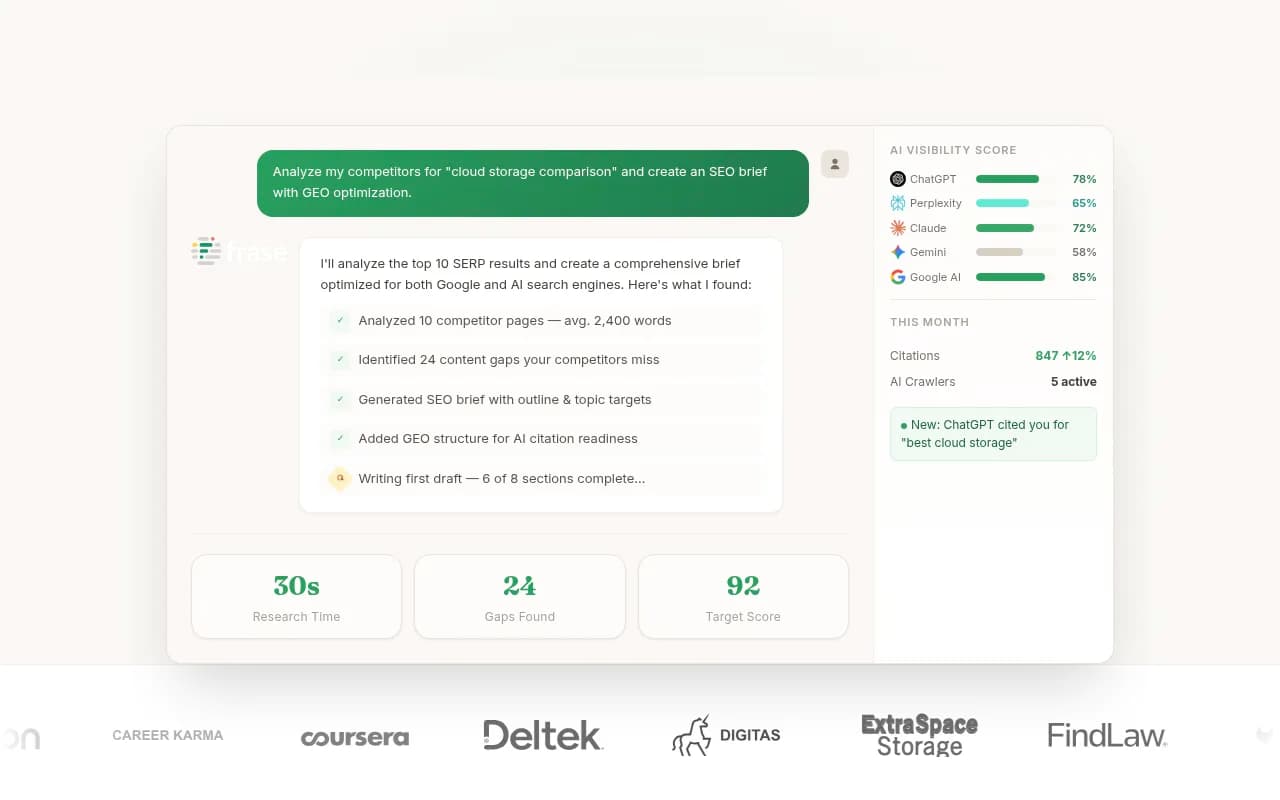
For content creation and optimization, tools like Frase and Clearscope can help you identify what topics to cover and how thoroughly.
Step 5: Optimize content structure for AI readability
Even great content won't get cited if AI engines can't parse it easily. Structure matters more in AEO than in traditional SEO.
Write direct answers, not buried conclusions
AI engines are looking for content that directly answers questions. If someone asks "how long does it take to implement Salesforce," your content should answer that question in the first paragraph -- not after three paragraphs of context-setting.
A useful pattern: lead with the direct answer, then provide the supporting explanation. This mirrors how AI engines construct their own responses, which makes your content easier to extract and cite.
Use question-based headings
Structure your content around the questions your audience is asking. Instead of a heading like "Implementation Timeline," use "How long does Salesforce implementation take?" This directly matches the query format and makes it easier for AI to identify your content as relevant.
Keep paragraphs short and scannable
Long, dense paragraphs are harder for AI to parse and extract from. Aim for paragraphs of 2-4 sentences. Use bullet lists for multi-part answers. Use numbered lists for sequential processes.
Add structured data
Schema markup (FAQ schema, HowTo schema, Article schema) explicitly tells AI crawlers what your content is about and how it's structured. It's not a magic bullet, but it removes ambiguity. If you have FAQ content, mark it up with FAQ schema. If you have step-by-step guides, use HowTo schema.
Make sure AI bots can crawl you
Check your robots.txt file. Some sites accidentally block AI crawlers like GPTBot (OpenAI), ClaudeBot (Anthropic), and PerplexityBot. If you're blocking these, you're invisible to them by default.
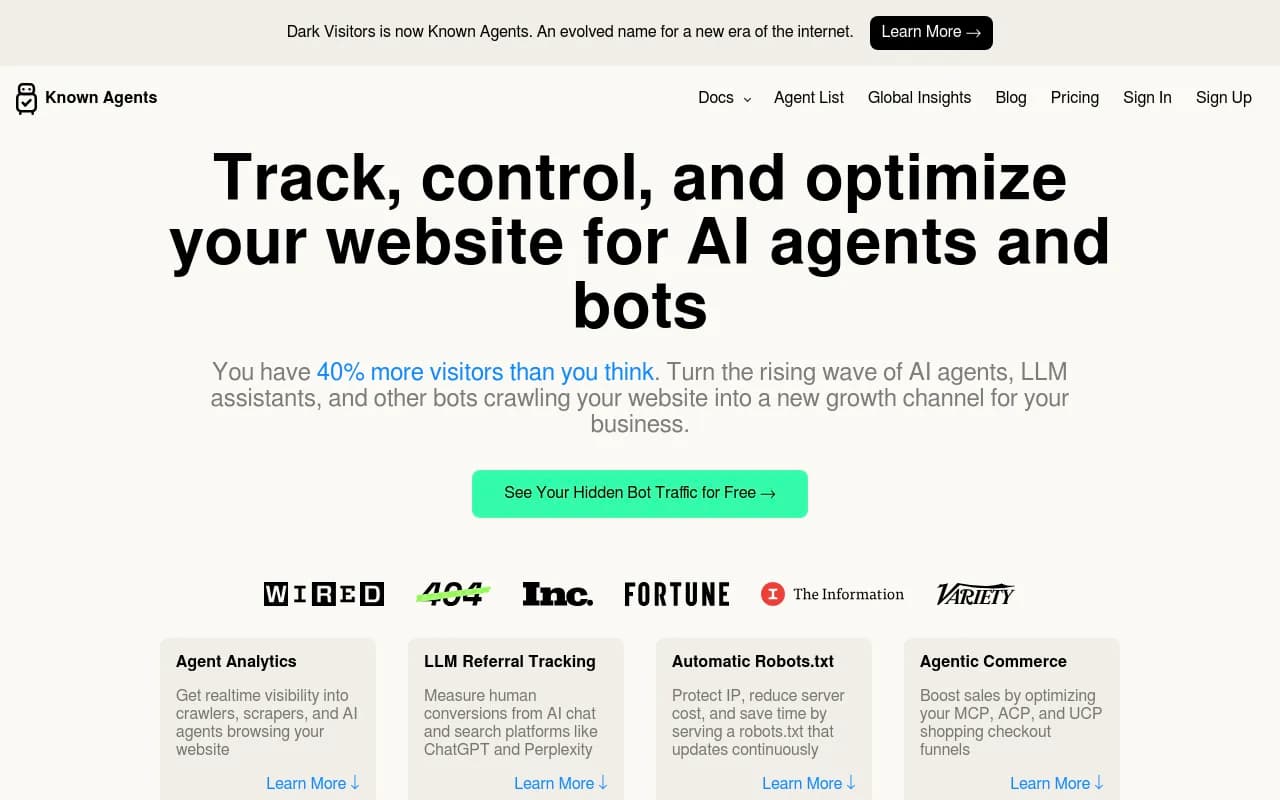
You can monitor which AI crawlers are visiting your site -- and which pages they're reading -- with tools like Promptwatch's crawler log feature or DarkVisitors.
Step 6: Build credibility signals
AI engines don't just look at your content in isolation. They look at signals that indicate whether your brand is trustworthy and authoritative. This is where a lot of AEO strategies fall short -- teams focus entirely on content and ignore the credibility layer.
Key credibility signals include:
Third-party mentions and citations. When other authoritative websites, publications, and communities reference your brand, AI engines pick that up. This includes press coverage, industry reports, analyst mentions, and links from high-authority domains.
Consistent entity information. Your brand name, description, and key facts should be consistent across your website, Wikipedia (if applicable), LinkedIn, Crunchbase, and other reference sources. Inconsistency creates ambiguity that makes AI engines less confident about citing you.
Reviews and community presence. AI engines increasingly pull from Reddit, G2, Capterra, and other community platforms. A brand with strong, authentic reviews and active community discussions is more likely to be cited than one with no third-party presence.
Author credibility. Content attributed to named experts with verifiable credentials gets more weight than anonymous content. Add author bios, link to author profiles, and use structured data to establish authorship.
This is also where Reddit and YouTube matter more than most teams realize. AI engines actively pull from these platforms when constructing answers. If your brand or your category is being discussed on relevant subreddits or in YouTube tutorials, that content influences what AI says about you.
Step 7: Track, measure, and iterate
AEO without measurement is just content marketing with extra steps. You need to close the loop between what you publish and whether it's getting cited.
The core metrics to track:
| Metric | What it tells you | How to track it |
|---|---|---|
| Citation frequency | How often your brand appears in AI responses | AI visibility tools |
| Brand visibility score | % of relevant AI responses that mention you | AI visibility tools |
| Prompt coverage | Which target prompts you're cited for vs. missing | AI visibility tools |
| Competitor citation rate | How often competitors appear for your target prompts | AI visibility tools |
| AI-referred traffic | Sessions coming from AI platforms | GA4, GSC, server logs |
| Citation sentiment | Whether mentions are positive, neutral, or negative | AI visibility tools |
The challenge with AEO measurement is that most traditional analytics tools weren't built for it. Google Analytics 4 can show you referral traffic from AI platforms, but it doesn't tell you which prompts drove that traffic or whether you were cited favorably.
Dedicated AI visibility platforms handle this better. Promptwatch, for example, tracks citation frequency across 10 AI models, shows page-level data on which specific pages are being cited, and connects visibility to actual traffic through GSC integration and server log analysis. That last part matters -- knowing you're being cited is useful, but knowing whether citations are driving revenue is what justifies the investment.
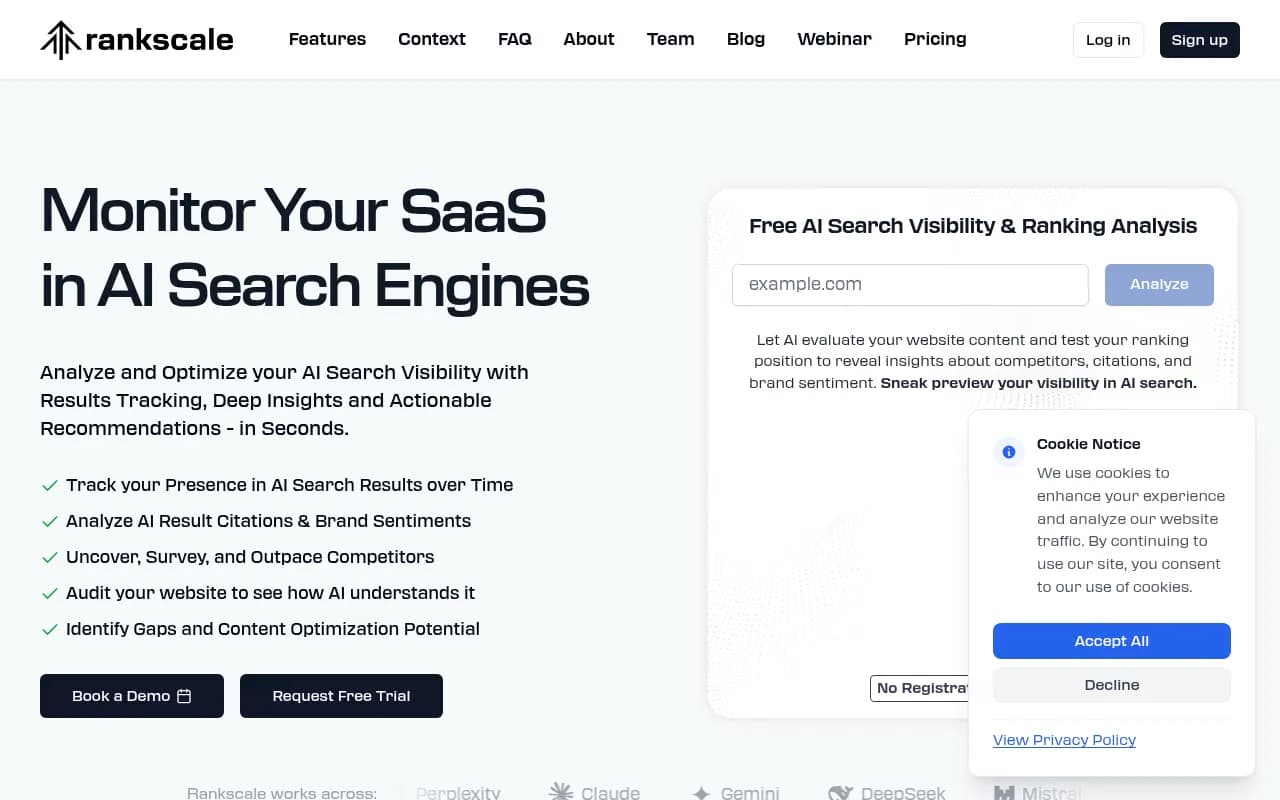
Other tools worth knowing about in this space:


Set a cadence for reviewing your AEO metrics. Monthly is the minimum. Weekly is better, especially when you're actively publishing new content. Look for patterns: which content types get cited most? Which AI models cite you most? Which competitor is winning the prompts you're losing, and what does their content look like?
Step 8: Create content specifically engineered for AI citation
Once you understand which prompts you're missing and why, you can create content specifically designed to fill those gaps. This is different from general content marketing -- you're not just writing about topics you care about, you're writing content that answers specific questions AI engines are being asked.
A few formats that consistently get cited:
Comparison content. "X vs Y" and "best tools for Z" queries are among the most common in AI search. Comprehensive, balanced comparison articles that cover multiple options tend to get cited heavily because they directly answer recommendation queries.
Data-backed research. Original data, surveys, and research reports get cited because they're unique and authoritative. If you can publish original research on topics relevant to your industry, you're creating content that no one else has.
Definitional and explainer content. "What is X" queries are common, and well-structured explainer content gets cited frequently. The key is being specific and accurate, not just comprehensive.
Step-by-step guides. Procedural content that walks through a process clearly tends to get cited for how-to queries. The structure matters: numbered steps, clear headings, direct language.
When writing any of this content, keep the AI extraction question in mind: if an AI engine wanted to pull a single paragraph from this article to answer a specific question, which paragraph would it be? Make sure that paragraph exists and is clearly written.
Common mistakes that kill AEO performance
A few patterns consistently prevent brands from getting cited, even when their content is good:
Blocking AI crawlers. Check your robots.txt. If you're blocking GPTBot, ClaudeBot, or PerplexityBot, fix it immediately.
Thin content on high-value topics. A 500-word overview of a topic you want to be cited for isn't enough. If competitors have 2,000-word, data-backed guides and you have a brief blog post, you'll lose.
No third-party credibility signals. Content that lives only on your own website, with no external references, reviews, or mentions, looks less authoritative to AI engines. Build your presence beyond your own domain.
Inconsistent brand information. If your company description on LinkedIn says one thing and your website says another, that inconsistency reduces AI confidence in citing you.
Optimizing only for Google. Traditional SEO and AEO overlap significantly, but they're not identical. Content optimized purely for keyword density and backlinks may not be structured in a way that AI engines can easily extract and cite.
Not measuring at all. This is the most common mistake. Teams publish content and assume it's working because traffic is up. Without tracking citation frequency specifically, you have no idea whether your AEO efforts are having any effect.
Putting it all together: a 90-day AEO roadmap
If you're starting from scratch, here's a realistic 90-day plan:
Days 1-15: Audit and baseline
- Run manual prompt tests across ChatGPT, Perplexity, and Google AI Overviews
- Set up an AI visibility tracking tool to establish baseline metrics
- Audit your robots.txt for AI crawler blocks
- Check your schema markup implementation
Days 16-30: Strategy and prioritization
- Map your target prompts by relevance and winnability
- Identify your top 3-5 content gaps (prompts where competitors are cited but you're not)
- Audit your existing content for AEO-readiness (structure, directness, depth)
- Identify credibility gaps (missing reviews, inconsistent entity information, no third-party mentions)
Days 31-60: Content creation
- Publish your first 3-5 pieces of AEO-optimized content targeting your highest-priority prompt gaps
- Update existing high-value pages to improve structure and directness
- Add FAQ schema to relevant pages
- Start building third-party presence (submit to directories, pursue press mentions, engage in relevant communities)
Days 61-90: Measure and iterate
- Review citation metrics for new content
- Identify which pieces are getting cited and why
- Adjust your content approach based on what's working
- Plan the next content sprint based on remaining prompt gaps
AEO is not a one-time project. The brands that win in AI search are the ones that treat it as an ongoing discipline -- publishing consistently, measuring rigorously, and iterating based on what the data shows.
The shift from traditional search to AI-mediated discovery is already well underway. The question isn't whether to build an AEO strategy. It's how fast you can get one running before your competitors do.