Key takeaways
- Otterly.AI covers only 6 AI platforms, misses Claude, Grok, DeepSeek, Meta AI, and Mistral, and has no analytics integrations with GA4 or Google Search Console
- Most Otterly alternatives fall into two camps: monitoring-only tools that give you more data, and action-oriented platforms that help you actually fix your visibility gaps
- The biggest limitation isn't what Otterly tracks -- it's what it doesn't help you do with the data
- If you want to move from tracking to optimizing, look for platforms with content gap analysis, AI writing tools, and traffic attribution built in
- Promptwatch is the only platform in this space rated as a "Leader" across all GEO categories in 2026, covering 10+ AI models with a full action loop from gap analysis to content generation to traffic attribution
Otterly.AI has done something genuinely useful: it made AI visibility monitoring accessible. At $29/month with no credit card required for a trial, it's the easiest entry point into tracking how your brand appears in ChatGPT, Perplexity, and Google AI Overviews. For teams just waking up to the fact that AI search is a real channel, it's a reasonable first step.
But "first step" is the key phrase. Once you start taking AI visibility seriously, Otterly's limitations become hard to ignore.
It covers 6 AI platforms. Claude, Grok, DeepSeek, Meta AI, and Mistral aren't tracked at any tier. There are no integrations with GA4, Google Search Console, or any CRM. The pricing jumps are steep: $29/month to $189/month to $989/month. And critically, Otterly shows you what's happening but doesn't help you change it. There's no content gap analysis, no AI writing tools, no crawler logs, no traffic attribution.
That last point is what separates the tools in this guide from Otterly. Some of them are better monitors. Others are full optimization platforms. The right choice depends on what stage you're at and what you actually need to do next.
Here are 10 alternatives worth considering in 2026.
Why teams outgrow Otterly.AI
Before getting into the alternatives, it's worth being specific about what's missing -- because different limitations drive different needs.
The platform coverage gap is real. If your customers are using Claude or Grok (and increasingly they are), you're flying blind. Otterly's 6-platform limit isn't a minor inconvenience; it's a structural blind spot.
The analytics gap matters for proving ROI. You can see that your brand appeared in 40% of relevant AI responses, but you can't connect that to actual website traffic or revenue. No GA4 integration, no GSC connection, no attribution.
The action gap is the most important one. Monitoring tells you where you stand. It doesn't tell you what to write, which topics to cover, or how to close the gap between you and a competitor who's getting cited more. Otterly doesn't have content tools, and it doesn't have the citation data infrastructure to build them.
If any of those gaps are causing friction for your team, here's what to look at instead.
The 10 best Otterly.AI alternatives in 2026
1. Promptwatch — best for teams that want to actually fix their AI visibility

Promptwatch is the most complete platform in this space, and the only one rated as a "Leader" across all GEO categories in a 2026 comparison of 12 platforms. The core difference from Otterly (and most competitors) is that it's built around an action loop rather than a monitoring dashboard.
The sequence works like this: Answer Gap Analysis shows you exactly which prompts competitors rank for that you don't. The built-in AI writing agent then generates articles, listicles, and comparisons grounded in real citation data -- 880M+ citations analyzed -- to fill those gaps. Page-level tracking then shows which of your pages are being cited, by which AI models, and how often. Traffic attribution (via code snippet, GSC integration, or server log analysis) closes the loop by connecting AI visibility to actual revenue.
Beyond that core loop, Promptwatch covers 10 AI models including ChatGPT, Claude, Perplexity, Gemini, Grok, DeepSeek, Meta AI, Copilot, Google AI Overviews, and Google AI Mode. It has real-time AI crawler logs showing which pages ChatGPT and Perplexity are reading on your site. It tracks Reddit and YouTube discussions that influence AI recommendations -- a channel most competitors ignore entirely. And it has ChatGPT Shopping tracking for brands that appear in product recommendation carousels.
Pricing starts at $99/month (Essential: 1 site, 50 prompts, 5 articles), $249/month (Professional: 2 sites, 150 prompts, crawler logs), and $579/month (Business: 5 sites, 350 prompts, 30 articles). Free trial available.
The honest caveat: if you just want basic monitoring and aren't ready to act on the data, Promptwatch has more horsepower than you need. But if you're past the "let's see what's happening" phase and want to actually move the needle, nothing else in this category comes close.
2. Profound — best for enterprise brands with compliance requirements

Profound is the G2 Winter 2026 Leader in AI visibility and covers 10+ AI platforms. It's built for larger organizations that need audit trails, compliance documentation, and structured reporting alongside their visibility data. The prompt volume data is genuinely useful for prioritizing which queries to target.
The tradeoff is price. Profound starts at $99/month but scales quickly for enterprise use cases, and it's primarily a monitoring and analytics platform -- content optimization tools are limited compared to Promptwatch. If your main need is thorough enterprise-grade tracking with strong data governance, it's worth a look.
3. Peec AI — best for multi-language and international monitoring

Peec AI covers 115+ languages with UI scraping accuracy, which makes it genuinely useful for brands operating across multiple markets. It starts at $89/month and has documented enterprise outcomes. The multi-language depth is better than most competitors in this space.
The limitation is that it's still primarily a monitoring tool. You get good data on how your brand appears across languages and regions, but the platform doesn't help you act on that data with content tools or gap analysis.
4. Nightwatch — best for teams that want AI tracking alongside traditional SEO
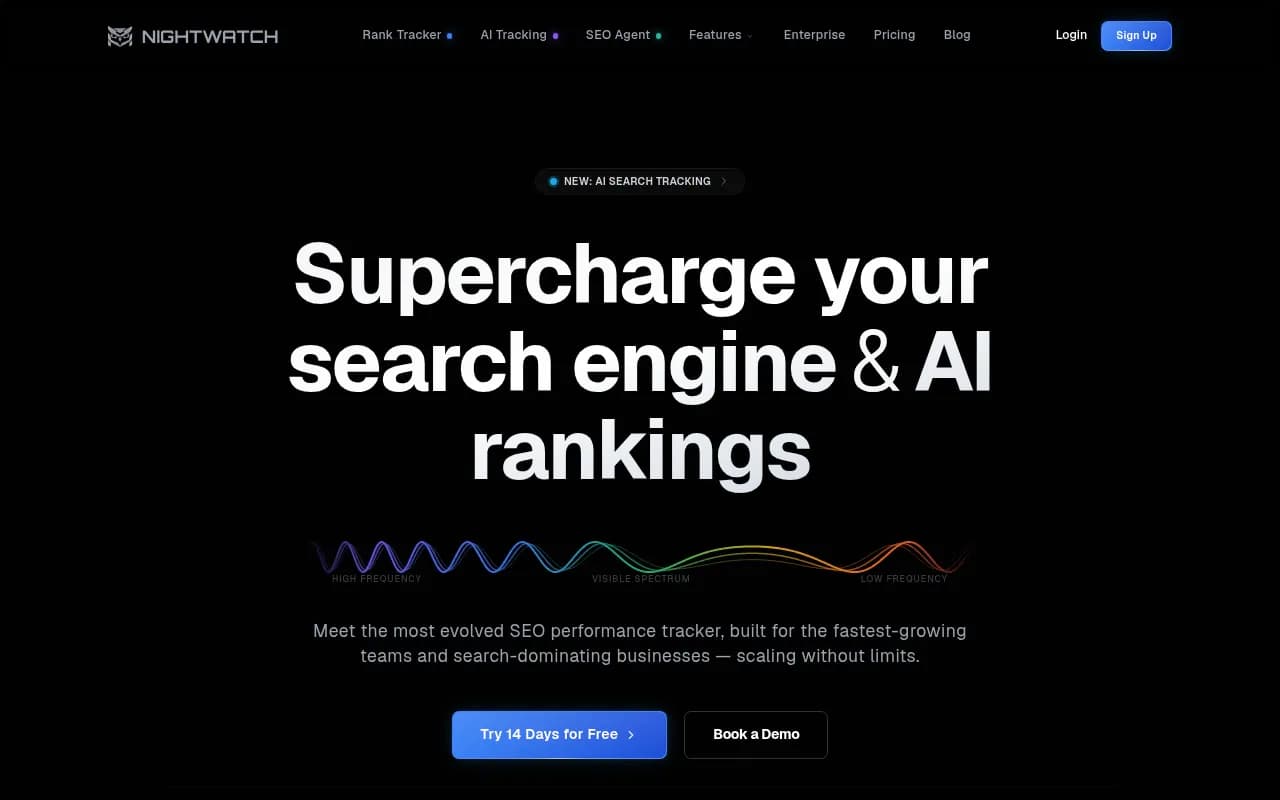
Nightwatch has built AI tracking on top of an established rank tracking foundation. If your team is already using it for traditional SEO and wants to add AI visibility monitoring without switching platforms, that's a reasonable path. It tracks ChatGPT, Perplexity, Google AI Overviews, and a handful of other models.
The AI tracking functionality is solid but not as deep as dedicated GEO platforms. It won't give you content gap analysis or citation-level data, but it does give you a unified view of traditional rankings and AI visibility in one place.
5. AthenaHQ — best for structured brand monitoring across 8+ AI engines

AthenaHQ covers 8+ AI search engines and has a clean interface for tracking brand mentions and share of voice. It's a monitoring-focused platform, which means it's good at showing you the data but doesn't have optimization or content generation tools built in.
For teams that want thorough monitoring without the complexity of a full optimization platform, AthenaHQ is a reasonable choice. Just go in knowing you'll need separate tools for the "now what" part.
6. Scrunch AI — best for brand narrative monitoring
Scrunch AI focuses on how AI models describe and characterize your brand, not just whether they mention you. That's a useful distinction -- you might be getting cited frequently but with inaccurate or unflattering descriptions. Scrunch surfaces those narrative issues.
It's a more specialized tool than most on this list. The monitoring capabilities are solid, but like most competitors, it stops at showing you the problem rather than helping you fix it.
7. Airefs — best for startups and small teams on a tight budget
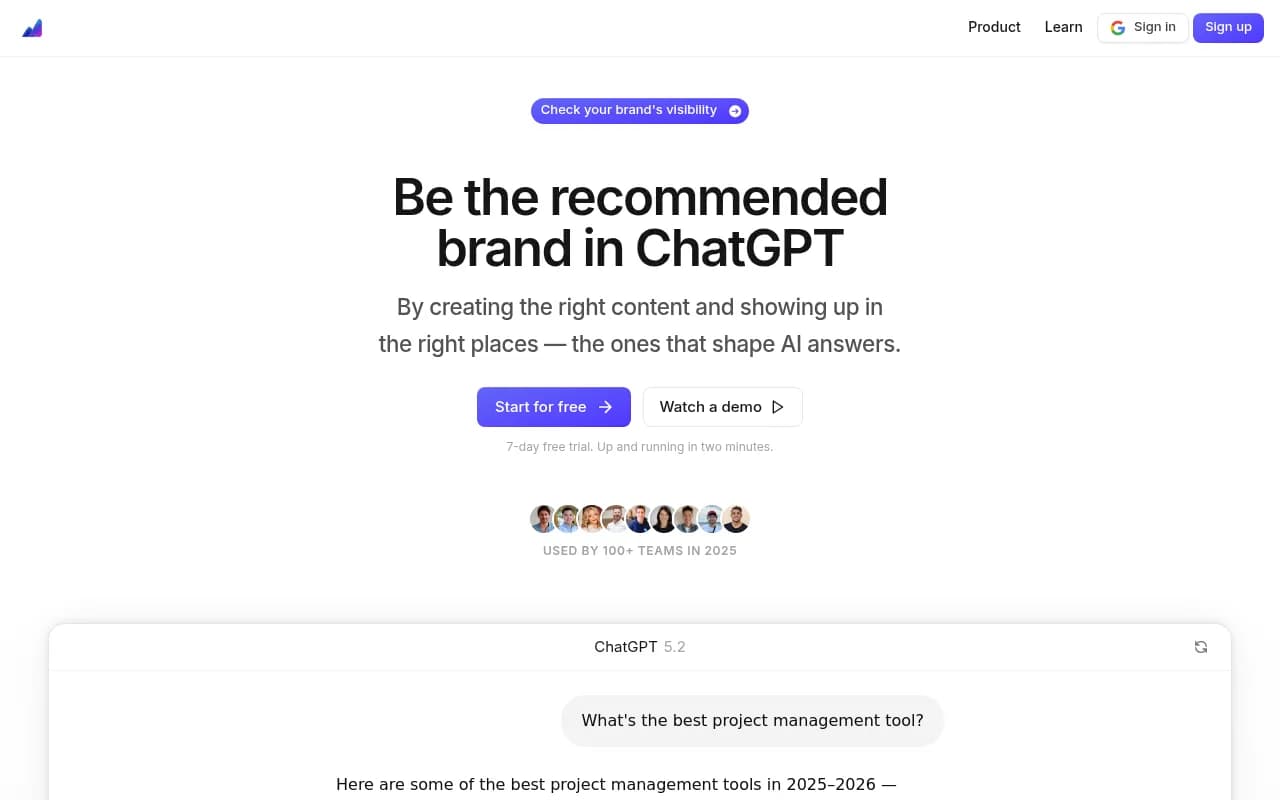
Airefs starts at $24/month, which makes it the most affordable option with meaningful Reddit monitoring built in. It tracks ChatGPT by default with other LLMs available on request, and it has a done-for-you option that Otterly doesn't offer.
For a startup that wants to start tracking AI visibility without a significant budget commitment, Airefs is worth trying. The coverage is narrower than most alternatives here, but the price point is hard to argue with at early stage.
8. SE Ranking — best for teams wanting an all-in-one SEO and AI visibility platform
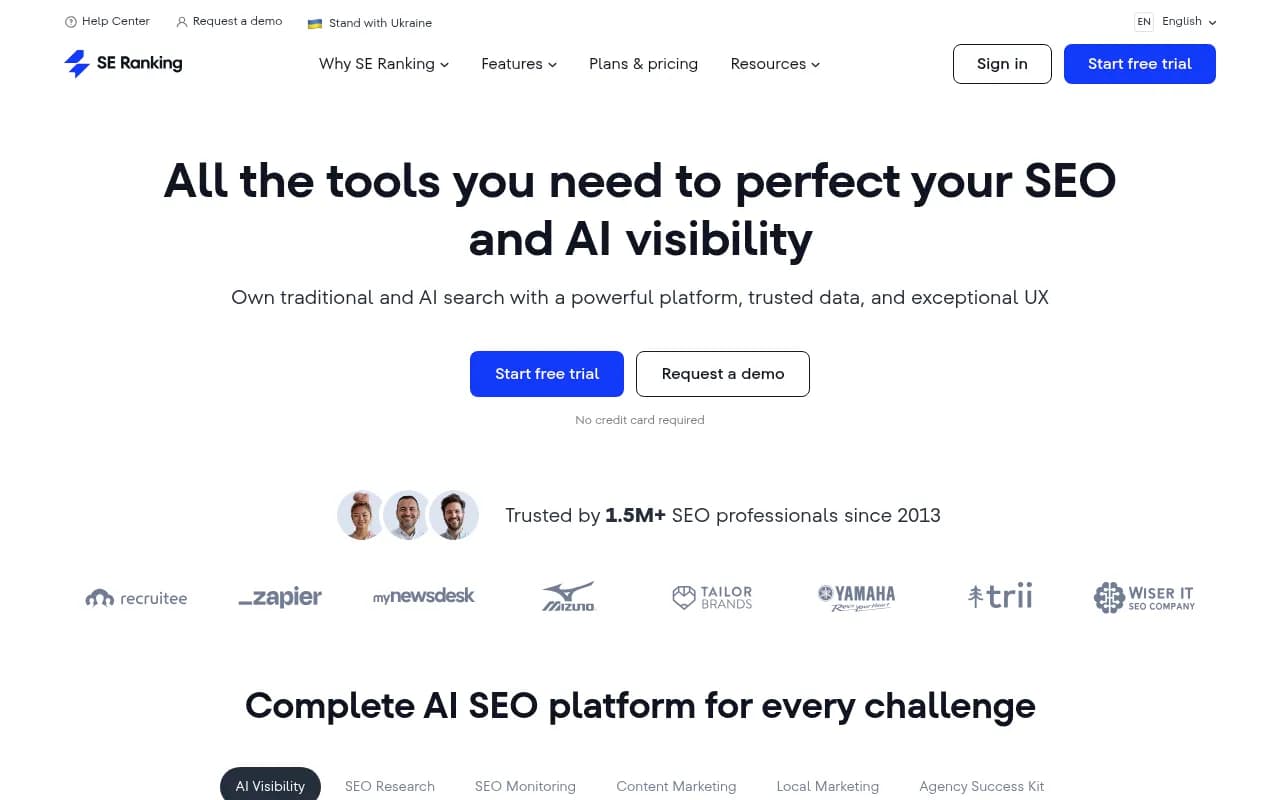
SE Ranking has added an AI visibility toolkit to its existing all-in-one SEO platform. If you're already paying for an SEO platform and want AI tracking included rather than running a separate tool, SE Ranking is one of the more practical options.
The AI visibility features aren't as deep as dedicated GEO platforms, but the integration with keyword research, rank tracking, and site auditing makes it a convenient choice for teams that want everything in one place.
9. Gauge — best for competitive intelligence and strategic positioning
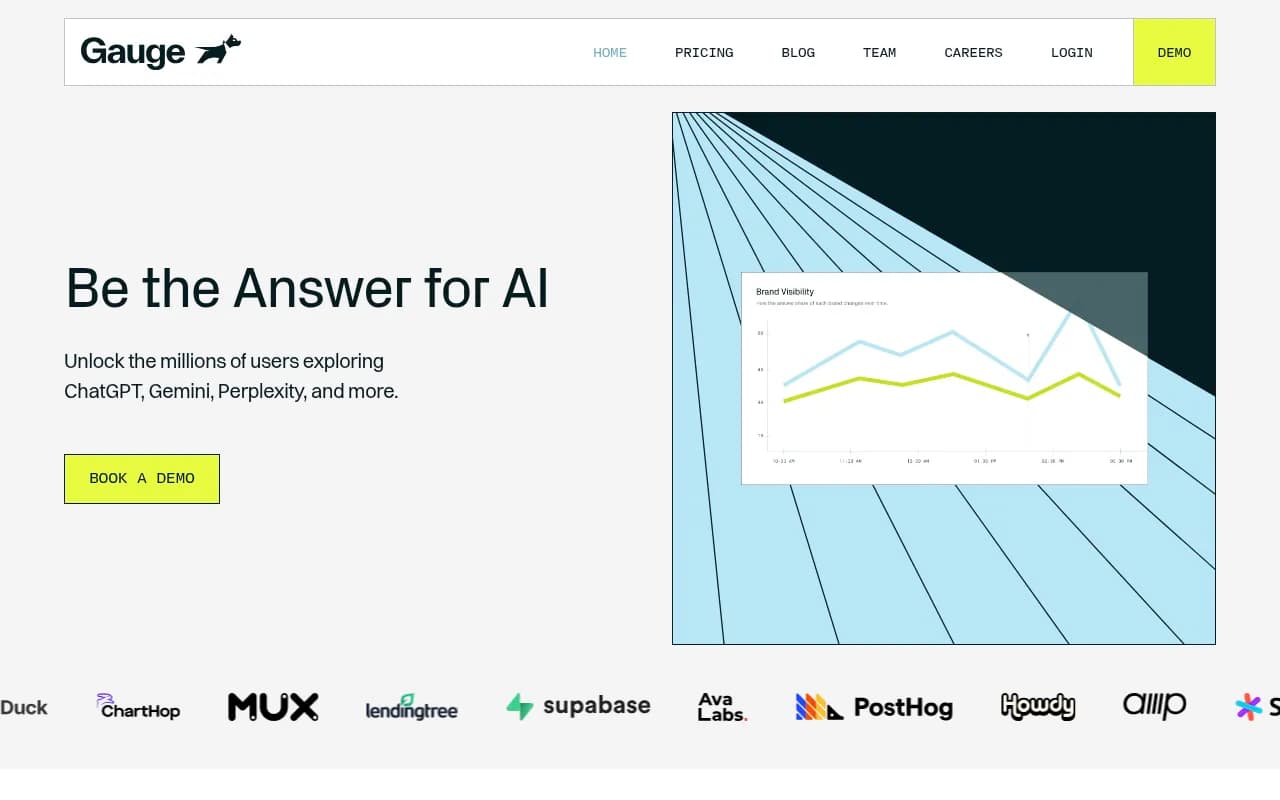
Gauge is built around competitive intelligence for AI visibility -- understanding not just where you appear but how you compare to competitors across different AI models and query types. The ProductRank AI feature is specifically designed for tracking product recommendations in AI responses.
It's a solid choice for teams where competitive benchmarking is the primary use case. The strategic intelligence layer is more developed than most monitoring tools, though content optimization tools are limited.
10. LLM Pulse — best for teams focused specifically on LLM response tracking
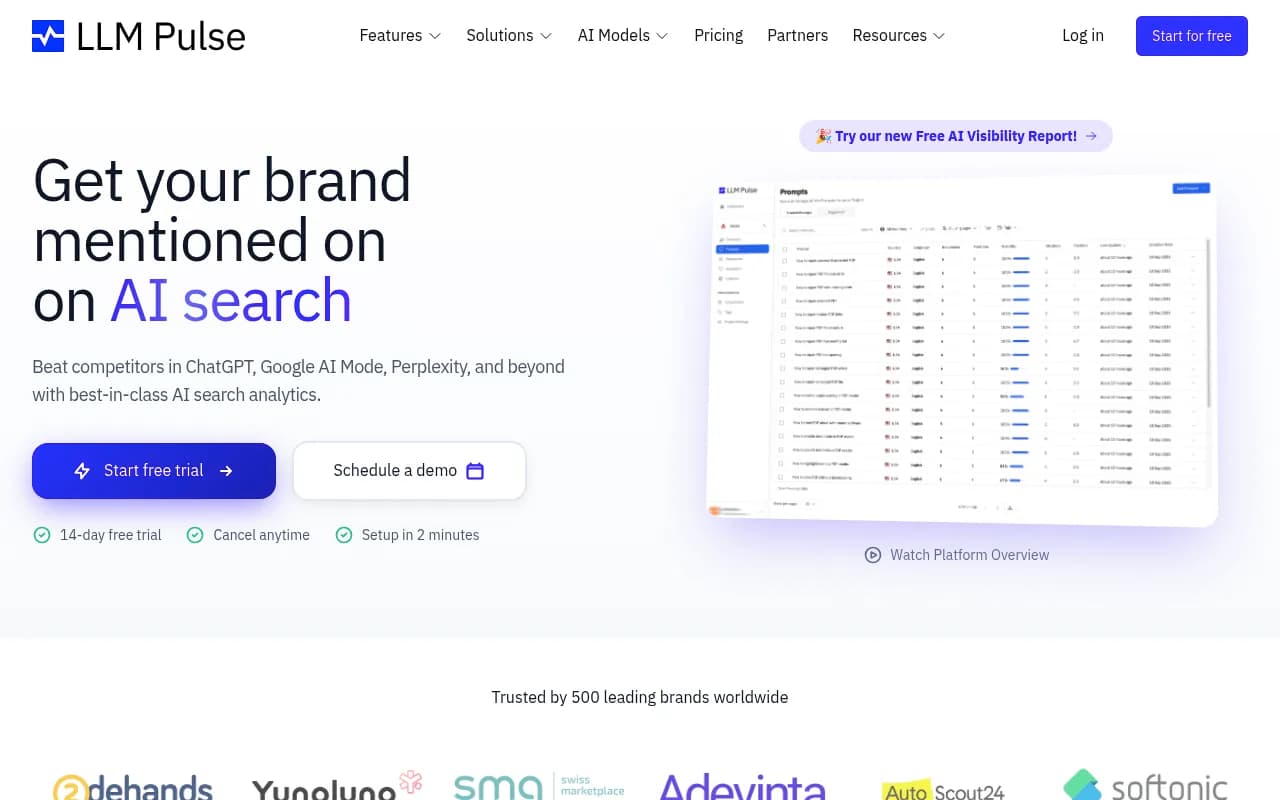
LLM Pulse focuses on tracking how large language models respond to prompts about your brand, with detailed response analysis and sentiment tracking. It's a more specialized tool that goes deep on LLM-specific monitoring rather than trying to cover every angle.
For teams that want granular data on exactly what different AI models say about their brand and how that changes over time, LLM Pulse is worth evaluating.
How these tools compare
Here's a side-by-side view of the key dimensions that matter when choosing an Otterly alternative:
| Platform | Starting price | AI models covered | Content generation | Traffic attribution | Crawler logs | Reddit/YouTube tracking | Best for |
|---|---|---|---|---|---|---|---|
| Promptwatch | $99/mo | 10+ | Yes (AI writing agent) | Yes (GSC, snippet, logs) | Yes | Yes | Full optimization loop |
| Profound | $99/mo | 10+ | No | Limited | No | No | Enterprise monitoring |
| Peec AI | $89/mo | 8+ | No | No | No | No | Multi-language brands |
| Nightwatch | Custom | 5-6 | No | No | No | No | SEO + AI combined |
| AthenaHQ | Custom | 8+ | No | No | No | No | Structured monitoring |
| Scrunch AI | Custom | 6+ | No | No | No | No | Brand narrative |
| Airefs | $24/mo | 2-3 | Limited | No | No | Yes (Reddit) | Budget-conscious teams |
| SE Ranking | $65/mo | 4-5 | No | No | No | No | All-in-one SEO teams |
| Gauge | Custom | 6+ | No | No | No | No | Competitive intelligence |
| LLM Pulse | Custom | 6+ | No | No | No | No | LLM response analysis |
| Otterly.AI | $29/mo | 6 | No | No | No | No | Beginners |
What to look for when choosing an Otterly alternative
The monitoring vs. optimization distinction is the most important factor. Most tools in this space -- including several on this list -- are monitoring dashboards. They show you data. That's useful, but it's not sufficient if you want to actually improve your AI visibility.
A few questions worth asking before committing to a platform:
Does it cover the AI models your customers actually use? Claude and Grok have significant user bases. If a platform doesn't track them, you have a real blind spot.
Can it connect AI visibility to revenue? Seeing your "share of AI voice" is interesting. Knowing whether that translates to website traffic and conversions is what justifies the budget. Look for GA4 integration, GSC connection, or server log analysis.
Does it help you create content, or just identify gaps? Gap analysis is valuable. But if the platform shows you 50 prompts your competitors rank for and you don't, you still need to write the content. Platforms with built-in AI writing tools grounded in citation data save a significant amount of work.
Does it track the sources AI models cite? Understanding which pages, Reddit threads, and YouTube videos AI models pull from when answering questions about your category tells you where to publish and what to optimize -- not just whether you're appearing.
For teams that are serious about AI search as a channel, the monitoring-only approach is a starting point, not a destination. The platforms that help you close the loop between data and action are worth the higher price point.
The bottom line
Otterly.AI is a reasonable entry point, and its $29/month price tag makes it easy to justify for teams just getting started. But if you're past the "let's see what's happening" phase, its limitations -- 6 platforms, no analytics integrations, no content tools, steep pricing jumps -- become real constraints.
The alternatives in this guide range from budget-friendly monitoring tools (Airefs) to enterprise-grade tracking platforms (Profound) to full optimization platforms (Promptwatch). The right choice depends on what you actually need to do next.
If the goal is to understand your AI visibility, most of these tools will get you there. If the goal is to improve it, look for platforms that go beyond the dashboard and give you the tools to act.