Key takeaways
- Agencies need a different GEO platform than in-house teams: multi-client workspaces, white-label reports, per-client pricing that doesn't explode, and proof that work moved a number.
- Monitoring-only trackers answer "was my client mentioned?" Platforms that add crawler logs, traffic attribution, and content execution answer "what do we do next, and did it work?"
- B2B SaaS has its own citation pattern: docs and help centers, vendor pages, and review sites like G2 and Capterra carry the weight, so the platform needs to show citation sources, not just mention counts.
- Promptwatch is the most complete option for agencies. Rankability, Cairrot, OpenLens, and Peec AI are worth a look at the lighter end, and Profound or Semrush One at the enterprise or suite end.
- Don't sell a single AI visibility score. Track Visibility, Share of Voice, and citations over time, per engine.
What agencies serving B2B SaaS actually need from a GEO platform
Most GEO platform reviews are written for a single brand with a single dashboard. Agencies have a different problem. You have eight or fifteen SaaS clients, each with its own competitor set, its own ICP, its own buying committee, and its own retainer that has to justify itself every month.
The research on GEO agencies shows how the market sells this work. Listicles from Powered by Search, Pepper, and Omniscient Digital put specialist GEO engagements at roughly $3,000 to $10,000 per month, though those figures are self-reported by competing agencies and most providers quote custom. That is the price your clients are comparing you against. Your tooling cost has to fit inside that margin, and your reporting has to look at least as credible as theirs.
So the evaluation criteria shift. In my experience these are the ones that matter:
- Multi-client structure. Separate projects or workspaces, ideally with unlimited or cheap additional projects, and seats for your whole team.
- White-label reporting. Scheduled PDFs, a client portal, Looker Studio connectors. If you're copy-pasting screenshots into slides, the tool isn't doing its job.
- Real interface data. AI answers in the actual ChatGPT or AI Overviews UI can differ from API output. Clients notice when the tool says they rank and their own manual check says otherwise.
- Citation source visibility. For B2B SaaS, knowing which pages and third-party sources get cited matters more than a mention count.
- Pipeline-level proof. Visitor analytics or crawler logs that connect AI activity to site traffic and conversions. Mentions alone don't survive a CFO review.
- Execution support. Content gap analysis, briefs, or publishing, so insight turns into deliverables.
- Honest metrics. Be wary of a single score. Ask the same question of a model a thousand times and the answers vary, so trends in Share of Voice and Visibility beat a one-off number.
How B2B SaaS citations differ from other verticals
Before picking a tool, know what you are trying to move. Promptwatch Data's ChatGPT software citation report covers organic software prompts from Sep 28 to Oct 4, 2026. A few findings shape how you should configure any platform:
- GitHub (1.2%), Microsoft's Learn docs (0.98%), and G2 (0.73%) lead, followed by AWS docs, Google Cloud docs, Gartner, and Capterra.
- By source type, docs and help centers earn the largest share (2.64%), then vendor sites (2.01%), then review sites and analysts (1.57%).
- Vendor pages and docs together earn about 3x the share of review sites and analysts.
The practical read for your SaaS clients: publish crawlable docs and help pages, keep G2 and Capterra profiles current, and maintain a public GitHub presence if the product has a developer angle. Your platform should let you verify each of those, which means showing cited URLs and source types per prompt, not just a brand mention yes/no.
Other Promptwatch Data reports help set expectations by engine. In the average sources per response report, ChatGPT cites about 5 sources per web-search answer, while Google AI Overviews and Perplexity sit around 10. Measure each engine separately, because one engine's citations don't predict another's. Also check that Bing indexes your clients' key pages, since Copilot runs on Microsoft's search stack.
And Promptwatch's content-type data shows product pages as the most cited type in ChatGPT (22.4% of citations, Sep 28 to Oct 4, 2026), followed by landing pages and listicles. For SaaS, that means feature and product pages deserve as much attention as the blog.
Comparison of GEO platforms for agencies
Pricing changes often, so confirm everything on the vendor's own page before you build a proposal around it. Where I list prices, they come from vendor information I have; where I don't, I say so.
| Platform | Type | Agency fit | Best for |
|---|---|---|---|
| Promptwatch | End-to-end GEO platform | Agency plans with unlimited projects, white-label portal, 10 seats | Agencies that want to monitor, fix, and prove results |
| Profound | Enterprise monitoring | Strong tracking, higher price points | Large enterprise accounts |
| Rankability | Agency-focused analytics | Built with agencies in mind | Agencies wanting a simple reporting layer |
| Cairrot | LLM tracking for agencies | Agency-oriented | Small agencies starting GEO |
| OpenLens | AI visibility for agencies | Agency-oriented | Agencies testing multi-client tracking |
| Peec AI | Prompt tracker | Multi-language tracking | Lean monitoring, international clients |
| Otterly.AI | Prompt tracker | Affordable monitoring | Budget-conscious teams |
| Semrush One | SEO suite with AI visibility | Existing Semrush shops | Agencies already living in Semrush |
| Scrunch | Monitoring | Strong feature set | Brand-led programs |
| AthenaHQ | Monitoring | Multi-engine tracking | Teams that mostly want tracking |
Promptwatch
Promptwatch is the one I would put first for agencies, and it's the platform 1001 SEO Media uses for its own GEO work. It tracks ChatGPT, Google AI Overviews, Google AI Mode, Gemini, Perplexity, Copilot, Claude, and others through the real user interfaces, in each country and language, so the answers match what a client sees when they check by hand.

What separates it from a tracker is the loop after the data. IP-verified AI crawler logs show whether GPTBot, ClaudeBot, PerplexityBot and others can actually read a client's docs and product pages. Visitor analytics tie AI platforms to real traffic and conversions. Content gap analysis, the Content Agent (which plans, writes, and publishes to WordPress, Webflow, or Framer), and the Action Board turn findings into a prioritized to-do list. Then published pages are tracked through crawls, citations, and clicks, and underperformers come back as new actions.
For B2B SaaS specifically, a few things matter:
- Citation Trends classify every citation by content type and source type, so you can see whether a client is winning on docs, review sites, or neither.
- Reddit, YouTube, and LinkedIn citation reports cover channels most trackers ignore.
- Prompt volumes, difficulty scores, and query fan-outs help you choose which prompts deserve a retainer's worth of effort.
- Page Tracker lets you watch a competitor's pricing or comparison page and see which prompts cite it.
- A hosted MCP server and REST API let you automate weekly reporting. TreeHouse (Pararius) used the MCP to automate reporting while growing AI search to roughly 25% of organic conversions.
Agency pricing (USD per month, verify at promptwatch.com/pricing): Kick-off at $199 (10,000 responses), Growth at $399 (25,000 responses), and Scale at $799 (65,000 responses, the most popular). All include unlimited projects, pitch projects, and prompts, 10 seats, all models, state and city tracking, Ads Radar, crawler logs, and visitor analytics. Annual billing gives 12 months for the price of 10, and monthly Kick-off and Growth have a 7-day free trial. Monks is a public example of an agency using the Answer Gap Report and Visibility Score to build content roadmaps for enterprise clients.
The honest caveat: it is a deeper platform than a plain tracker, so onboarding takes a little longer. If a client only wants a monthly mention count, you will be paying for capability you don't use.
Profound
Profound is a strong enterprise monitoring product. It tends to come with higher price points, and it lacks things like Reddit tracking and agentic execution, so agencies that need to deliver fixes rather than reports will want to pair it with other tools. It is a reasonable pick when a single large client insists on it.

Rankability, Cairrot, and OpenLens
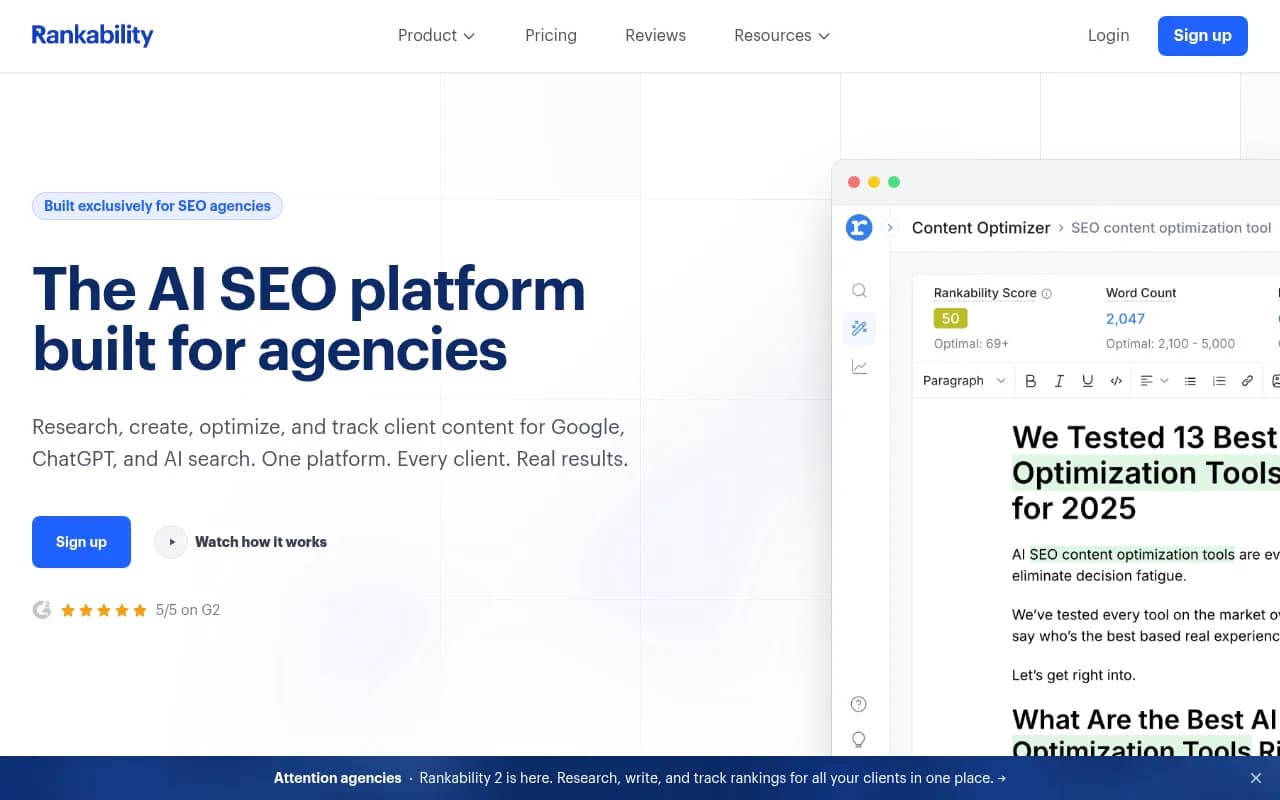
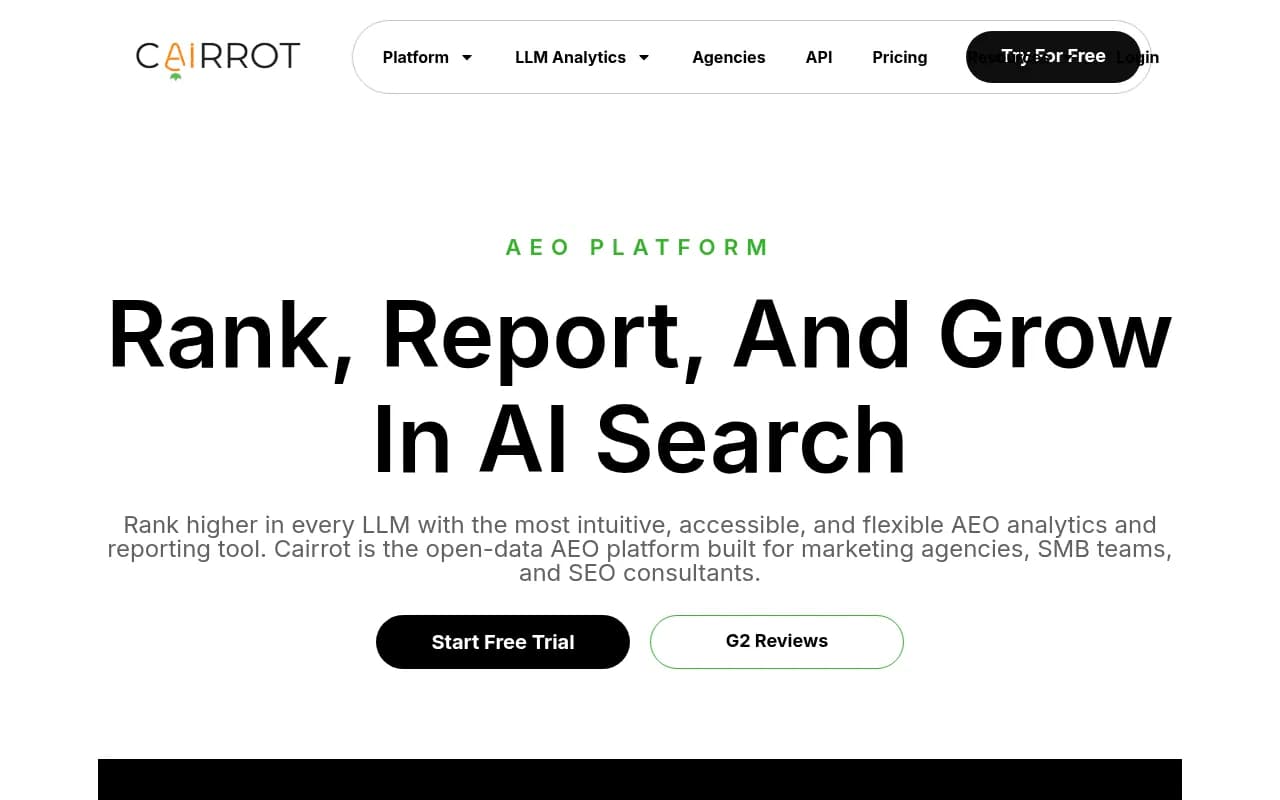
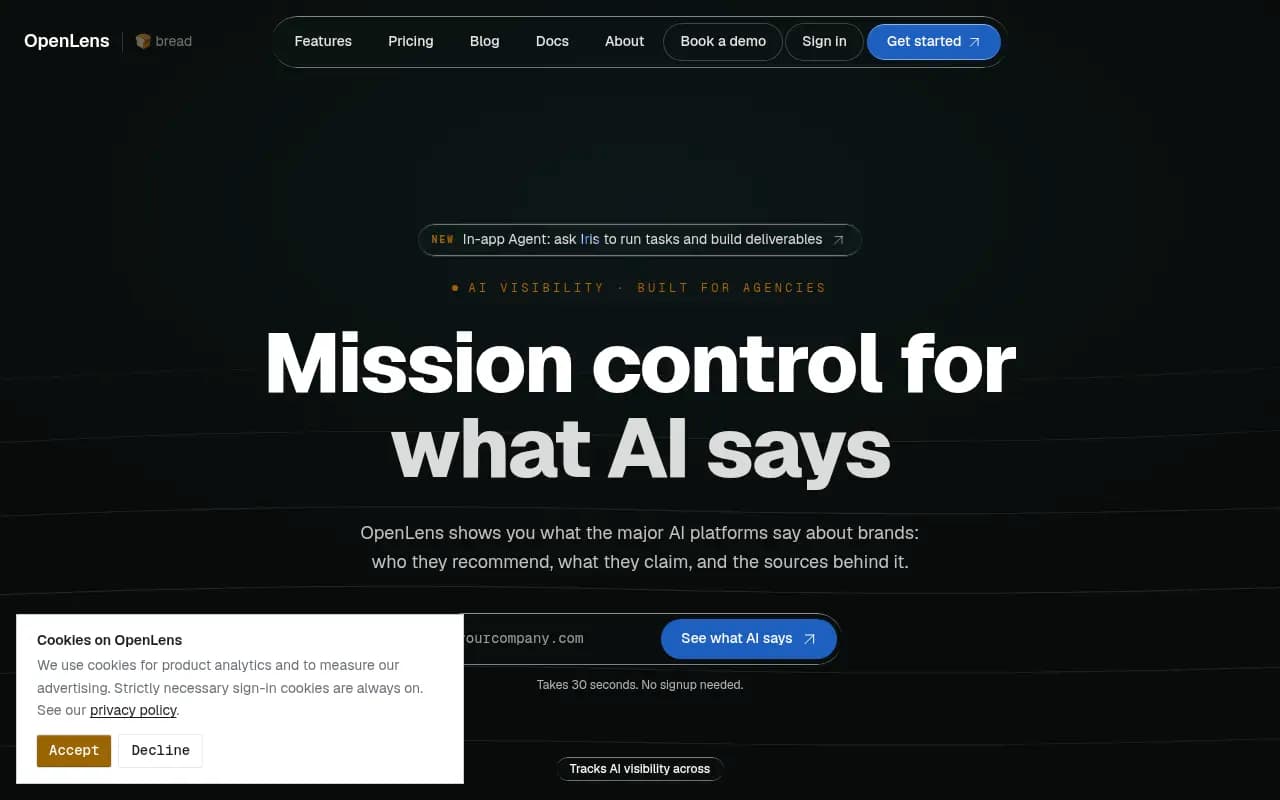
Three tools are explicitly pitched at agencies. Rankability describes itself as an agency-focused AI visibility analytics platform, Cairrot as LLM visibility tracking built for marketing agencies, and OpenLens as AI visibility tracking built for agencies. I haven't verified their pricing or white-label depth, so treat them as shortlist candidates and test the reporting output before committing.
Peec AI and Otterly.AI
Both are lean prompt trackers. Peec AI is useful for multi-language tracking, which helps if your SaaS clients sell in several European markets. Otterly.AI is an affordable way to start monitoring. Neither gives you crawler logs, visitor analytics, or content generation, so you will need other tools for the work that comes after the report.


Semrush One and Ahrefs Brand Radar
If your agency already runs on Semrush or Ahrefs, adding their AI visibility modules is the path of least resistance. The trade-off is that traditional SEO suites bolt AI tracking on, usually with fixed prompt sets and shallower AI-specific data.

Others worth knowing
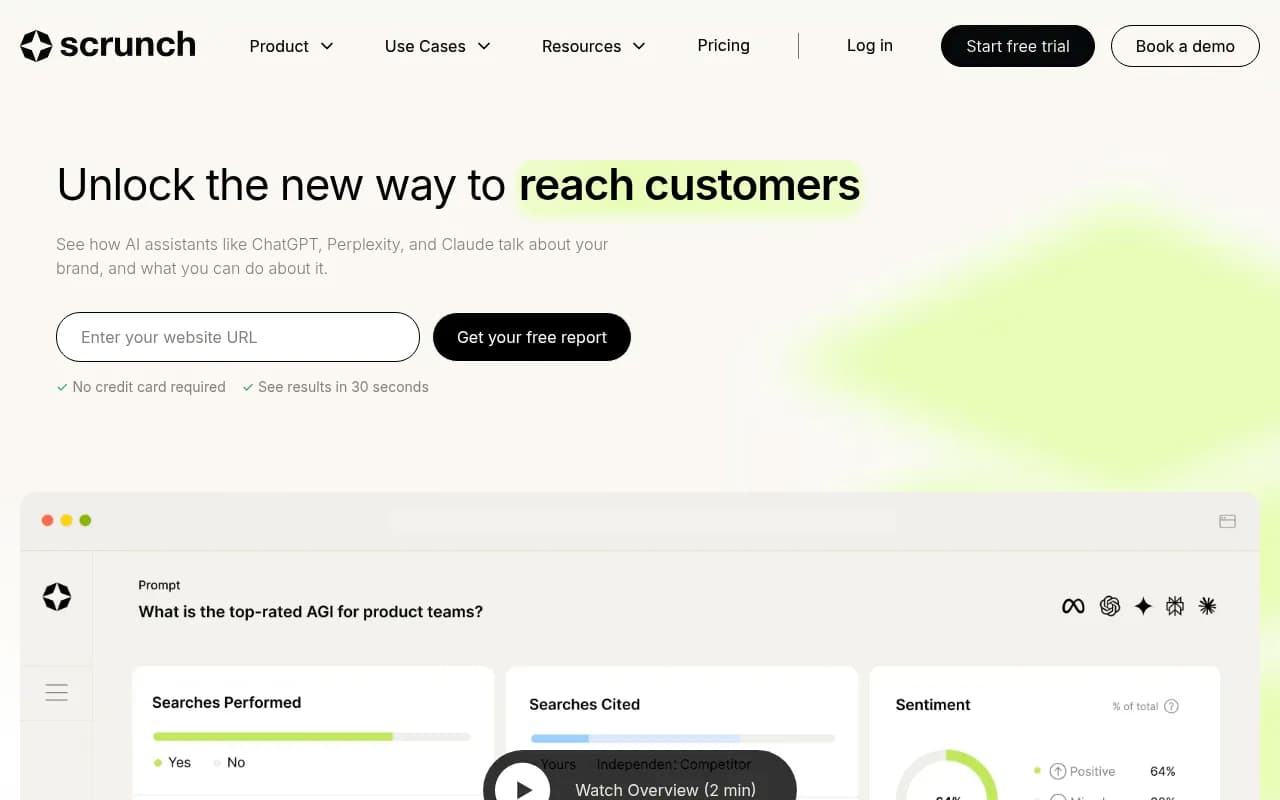
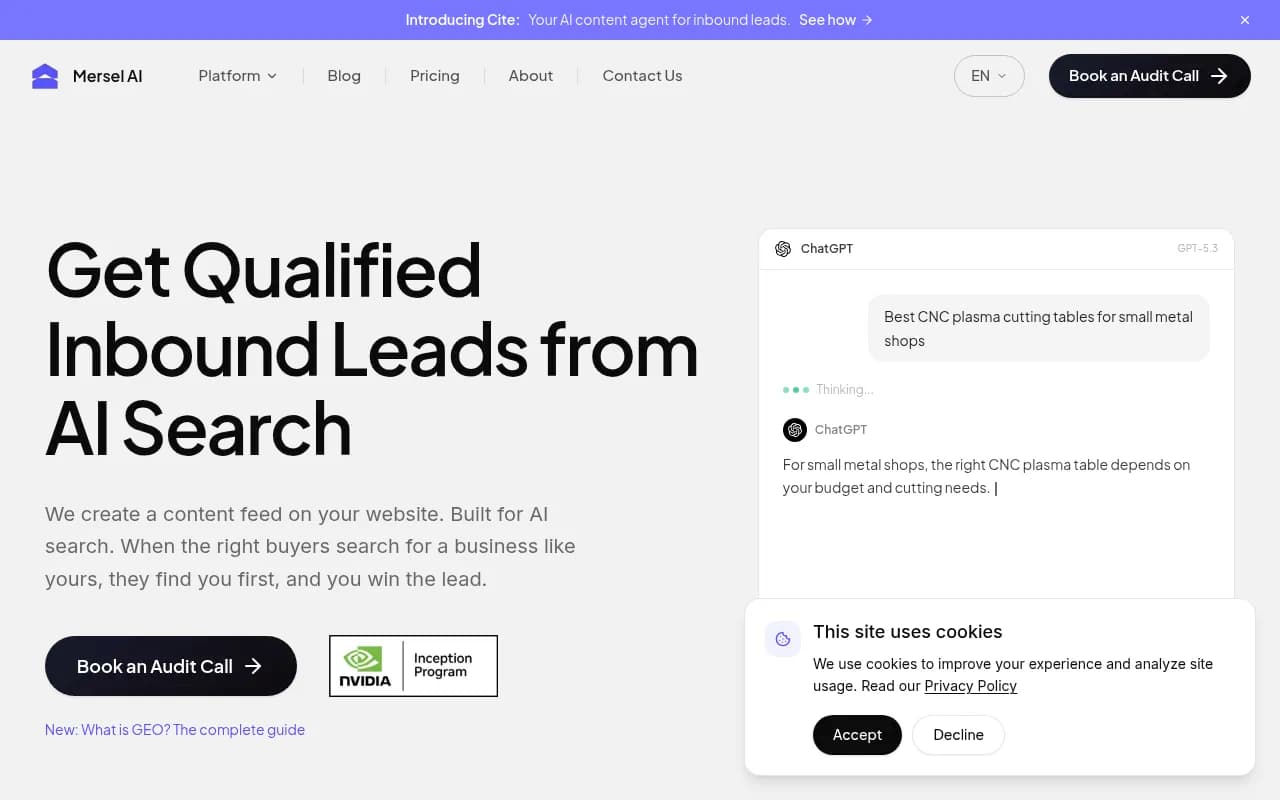
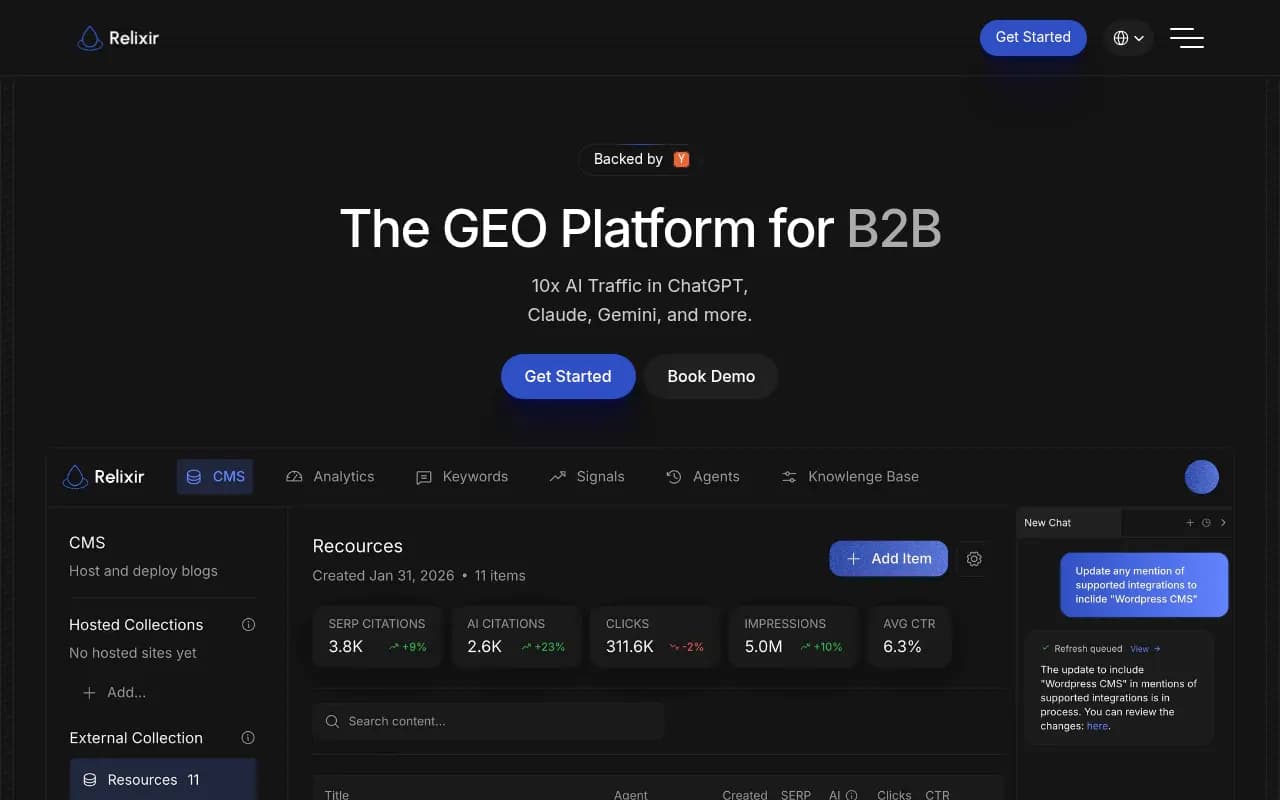
AthenaHQ and Scrunch are monitoring-focused. Relixir pitches an AI-native CMS with autonomous content, and Mersel AI describes itself as GEO infrastructure for B2B companies. For a wider scan of the category, the GEO software directory lists far more options than any single article can cover.

Monitoring versus optimization: the split that matters for retainers
Here is the simplest way to sort the market. A prompt tracker answers one question: was the brand mentioned? An optimization platform answers a second one: why, and what changes it?
For an agency this split decides margin. If your tool only monitors, every insight costs analyst hours to turn into a deliverable. If it surfaces content gaps, drafts briefs, and tracks whether a published page got crawled and cited, those hours shrink and your reports can show cause and effect.
| Capability | Tracker-only tools | Optimization platforms |
|---|---|---|
| Mention and Share of Voice tracking | Yes | Yes |
| Citation source reporting | Sometimes | Yes, often with content and source types |
| AI crawler logs | Rarely | Promptwatch includes IP-verified logs |
| AI traffic and conversions | Rarely | Visitor analytics |
| Content gap analysis and briefs | No | Yes |
| Publishing to CMS | No | Promptwatch publishes to WordPress, Webflow, Framer |
| Verifying a fix worked | Manual | Page-level tracking |
Setting up a B2B SaaS client in a GEO platform
A workable first-month setup looks like this.
Build the prompt set around the buying journey
B2B SaaS buyers ask category questions ("best X for mid-market finance teams"), comparison questions ("A vs B"), and integration or use-case questions. Mix all three, and add persona variants for the roles on the buying committee, such as a security reviewer, a department head, and a practitioner. Use prompt volume and difficulty data where your platform has it, so you aren't tracking vanity prompts nobody types.
Check crawl access before you write anything
A surprising number of SaaS sites block AI crawlers by accident, through robots.txt rules, bot protection, or JavaScript-rendered docs. Crawler logs tell you in a day whether the bots reach pricing, docs, and comparison pages. TreeHouse fixed crawler access before anything else, then published proprietary data, and it paid off.
Map where citations come from
Pull the cited sources for the client's top prompts and sort them into vendor docs, review sites, community threads, and publications. Then compare with competitors. If competitors dominate G2 category pages and your client has thin profiles, that is a faster win than another blog post.
Report on a small set of metrics
I'd use Visibility, Share of Voice, citation rank, and AI-referred sessions and conversions, tracked weekly and reported monthly. Read them together: low Share of Voice is a coverage problem, late position in the answer is a prominence problem, and mentions without self-citations point to a content or crawlability problem.
One caution on social sources. In Promptwatch Data's October 2026 social media report, ChatGPT got just 0.46% of its citations from social platforms (Sep 28 to Oct 4), while Google AI Overviews got 12.2%. Reddit's share of ChatGPT citations also fell from about 4% to 0.5% on August 14, 2026. Don't promise a SaaS client a ChatGPT win from Reddit seeding. It may still help in AI Overviews.
Questions to ask before you buy
- Does pricing scale per client, per prompt, or per response, and what happens when you add your tenth client?
- Is the data pulled from the real user interface or from the API?
- Can clients get a branded portal or scheduled PDF without your logo problem?
- Can you export raw data, or connect to Looker Studio, Slack, or an API?
- Does it show what AI crawlers actually did on the client's site?
- Can it tie AI activity to traffic and conversions, or only to mentions?
- If it generates content, does that content use the client's brand facts and tone, or generic output?
A fair note on agency competition: the GEO agency market is crowded. Pepper's own list, published with a disclosure that Pepper is on it, warns that a rebranded SEO deck is the most common thing sold as GEO right now. Your differentiation is a method you can show with data. The platform is where that data lives.
Agency or platform: what to hand to whom
Some B2B SaaS companies will ask whether they should hire an agency at all. The useful framing is how much execution to delegate and who stays accountable for the number. If a client wants a partner running the program end to end, a specialist like 1001 SEO Media combines technical SEO, content, digital PR, and GEO, and works from the same Promptwatch data described above. If you are the agency, your platform choice should make that accountability easy to demonstrate.
Recommendations by agency type
| Agency situation | Suggested starting point |
|---|---|
| 5+ SaaS clients, retainers tied to pipeline | Promptwatch Scale or Growth |
| Just launching a GEO offering, 1-3 clients | Promptwatch Kick-off, or a lean tracker like Peec AI or Otterly.AI |
| Already deep in Semrush or Ahrefs | Add Semrush One or Brand Radar, then layer crawler and traffic data on top |
| One large enterprise client demanding a named vendor | Profound or an enterprise suite |
| Agency-specific reporting experiments | Trial Rankability, Cairrot, or OpenLens side by side |
Whatever you choose, run a trial on one real client for two weeks. Check whether the numbers match what you see by hand in ChatGPT and AI Overviews, whether the report is something you would send without editing, and whether the platform tells you what to do next. For a broader scan of options, the AI rank tracking directory is a good place to compare trackers beyond this shortlist.
Bottom line
Pick for the work after the report. Tracking is table stakes and nearly every tool does it. For B2B SaaS clients, the winning platform shows which docs, vendor pages, and review sites get cited, confirms that AI crawlers can read the site, and connects visibility to traffic. On those criteria Promptwatch is the strongest agency option, with a trial-first approach to anything else on the shortlist.