Key takeaways
- Most GEO tools track brand mentions at the domain level. Large retailers need product-level and category-level visibility, plus coverage of shopping surfaces like ChatGPT Shopping, Amazon Rufus and Walmart Sparky.
- Product pages are the most cited content type in ChatGPT (22.4% of citations, Sep 28 to Oct 4, 2026), so catalog data quality is a GEO problem, not only a merchandising one.
- Commerce-specific platforms (Azoma, Goodie AI, Nudge, Yotpo Discover) go deep on SKUs and marketplaces. Broader platforms like Promptwatch, Profound and BrightEdge go deep on citations, crawlers and content.
- Judge tools on five things: completeness of product data, context, citations, correctness, and whether the tool helps you fix problems rather than just report them.
- Pricing at enterprise level is mostly custom. Treat any public starting price you see in roundups as unverified and confirm with the vendor.
Why enterprise ecommerce needs a different kind of GEO tool
Most GEO advice is written for SaaS companies and publishers. An online store has a different problem. You have thousands or millions of SKUs, listings spread across your own site and third-party marketplaces, feeds that drift out of date, and AI shopping assistants that quietly decide which five products to show.
The assistants are everywhere now. Amazon has Rufus and Alexa, Walmart has Sparky, Google has AI Mode, and ChatGPT attaches product cards to some responses. A product these agents can't read, or misread, gets left out before the shopper ever compares it. The Ecomtent roundup makes the same point: many tools sold as GEO platforms were built to monitor a handful of web chatbots for B2B brands, and they never touch the retail shopping assistants or the product data those assistants rely on.
So the evaluation question changes. It isn't "Was my brand mentioned in ChatGPT?" It is "Did my hero products make the shortlist, what did the AI say about them, and what do I change on Monday?"
What the data says about how AI cites commerce content
Before picking a tool, it helps to know what the engines actually reward. Promptwatch Data's content type report (Sep 28 to Oct 4, 2026) breaks down ChatGPT citations:
| Content type | Share of ChatGPT citations |
|---|---|
| Product pages | 22.4% |
| Landing pages | 16.8% |
| Listicles | 13.6% |
| How-to guides | 8.7% |
| Documentation | 7.5% |
| General articles | 6.1% |
| Comparisons | 5.9% |
| News | 5.7% |
| FAQ pages | 3.3% |
| Reviews | 1.7% |
For commercial prompts the skew is stronger. Product pages take 26.0% and landing pages 20.6%, and those two plus listicles and comparisons make up almost 70% of commercial citations. On branded prompts, reviews climb to 5.6%, more than three times their share across all prompts.
Three practical conclusions for a retailer. First, ChatGPT quotes specs, prices and positioning straight off product pages, so incomplete or inconsistent pages hurt you directly. Second, "best of" roundups matter, so you want your products listed in the ones AI already cites. Third, reviews on trusted sites matter most when someone asks about your brand by name.
Shopping features are a separate lever. Promptwatch's ChatGPT shopping usage data shows product cards attach to only a low single-digit percentage of web-search responses, and the rate moves in steps, which looks like OpenAI tuning when cards appear. They concentrate on commercial and transactional prompts. The catalog-readiness basics are boring but effective: complete Product schema, accurate price and availability, and a clean merchant feed.
And ads are arriving. Promptwatch's ChatGPT ads report found ads in an average of 20.1% of web-search responses between May 20 and Aug 17, 2026, with a daily peak of 43.9%. For a large retailer bidding against marketplaces, knowing who wins the slots on your prompts is now part of the job.
How to evaluate an enterprise GEO tool: the 5 Cs
Azoma developed a framework called the 5 Cs of Agentic Commerce with the Digital Shelf Institute. It is vendor-authored, so read it with that in mind, but it is a useful checklist because each pillar maps to a distinct capability and few tools cover more than one or two:
- Completeness: are product attributes fully populated across every shopping agent's structured data input?
- Context: do listings answer the questions shoppers actually ask AI agents, rather than only carrying keywords?
- Citations: is your brand well positioned across earned media, listicles, brand.com and social, which AI synthesizes from?
- Correctness: are AI agents representing your specs and brand voice accurately?
The source cuts off before the fifth C, so I'll leave it there rather than guess. Even four is enough to sort the market. Monitoring tools mostly answer Citations and Correctness. Catalog-focused tools answer Completeness and Context. Almost nobody does all four well.
On top of the 5 Cs, add the questions procurement will ask: SKU-level or only domain-level reporting, which retail assistants are covered, whether the tool can see AI crawler activity on your site, how it connects visibility to revenue, API and export access, security certifications, and whether it executes fixes or only reports.
Quick comparison of the main options
| Tool | Strongest at | Retail assistant coverage | Pricing |
|---|---|---|---|
| Azoma | Marketplace-heavy brands, product content at catalog scale | ChatGPT, Rufus, Alexa+, Sparky and other major LLMs | Custom |
| Goodie AI | SKU-level attribution and agentic commerce optimization | 12+ engines including Amazon Rufus | Custom |
| Promptwatch | End-to-end loop: tracking, crawler logs, content, traffic | ChatGPT Shopping, Alexa product results, AI Overviews, AI Mode and more | From $95/mo, Business $579/mo, Enterprise custom |
| Profound | Enterprise monitoring and analytics depth | 10+ engines, ChatGPT Shopping tracking | Verify with vendor |
| Scrunch | Agent-facing experience layer and citation audits | Major assistants | Verify with vendor |
| BrightEdge | Automated execution on Google AI surfaces | Google-centric | Custom |
| Yotpo Discover | Product discovery built for ecommerce | Ecommerce-focused | Custom |
| Evertune | Statistical rigor for Fortune 500 brands | Major LLMs | Custom |
Coverage claims come from vendor material and third-party roundups, so check them against a live demo on your own catalog.
Commerce-native platforms
Azoma
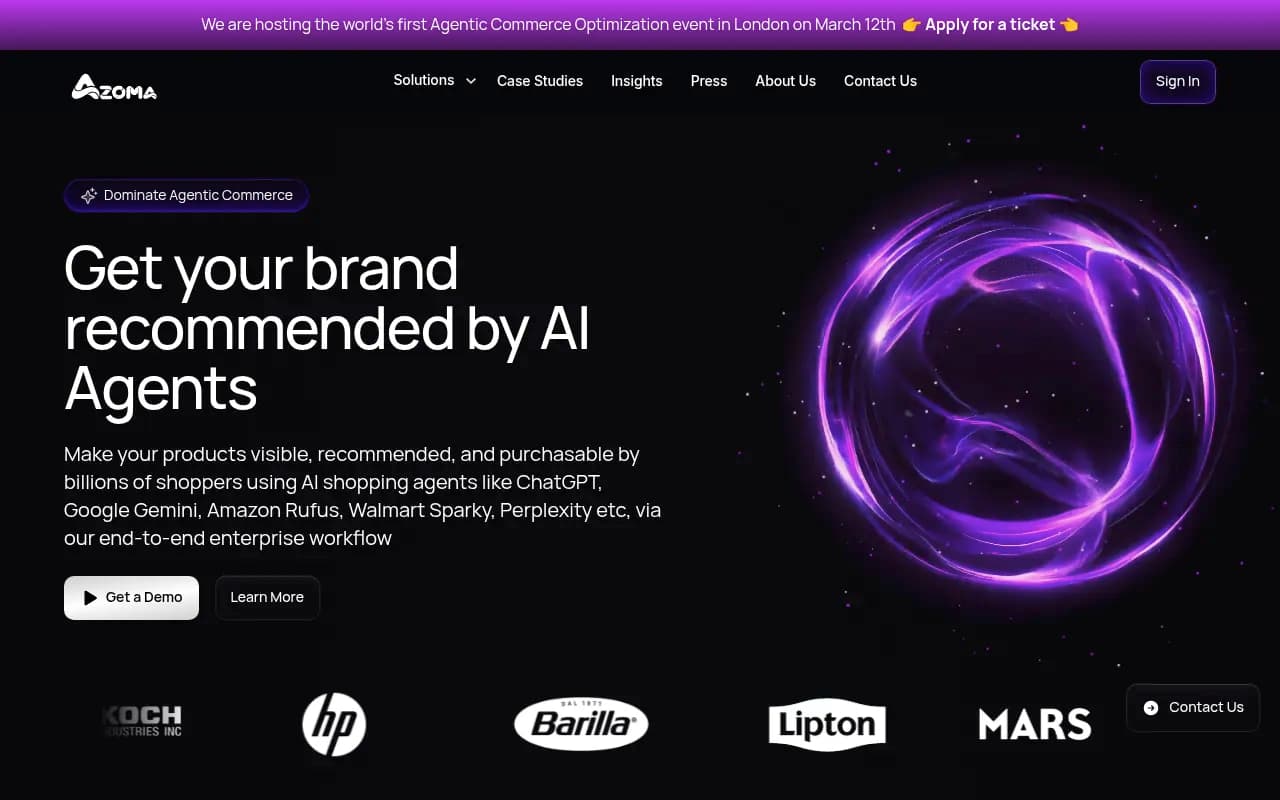
Azoma is the name that comes up most often for marketplace-heavy retail and CPG. It positions itself around GEO plus what it calls Agentic Commerce Optimization, and the research notes that it tracks Amazon Alexa+ and Walmart Sparky alongside the major generative engines, with Seller Central and Shopify integrations. If your revenue sits on Amazon and Walmart, that coverage matters more than another ChatGPT mention counter.
The trade-off is scope. A commerce-first tool will go deep on listings and shopping agents, and you may still want a broader platform for crawler logs and web citations.
Goodie AI
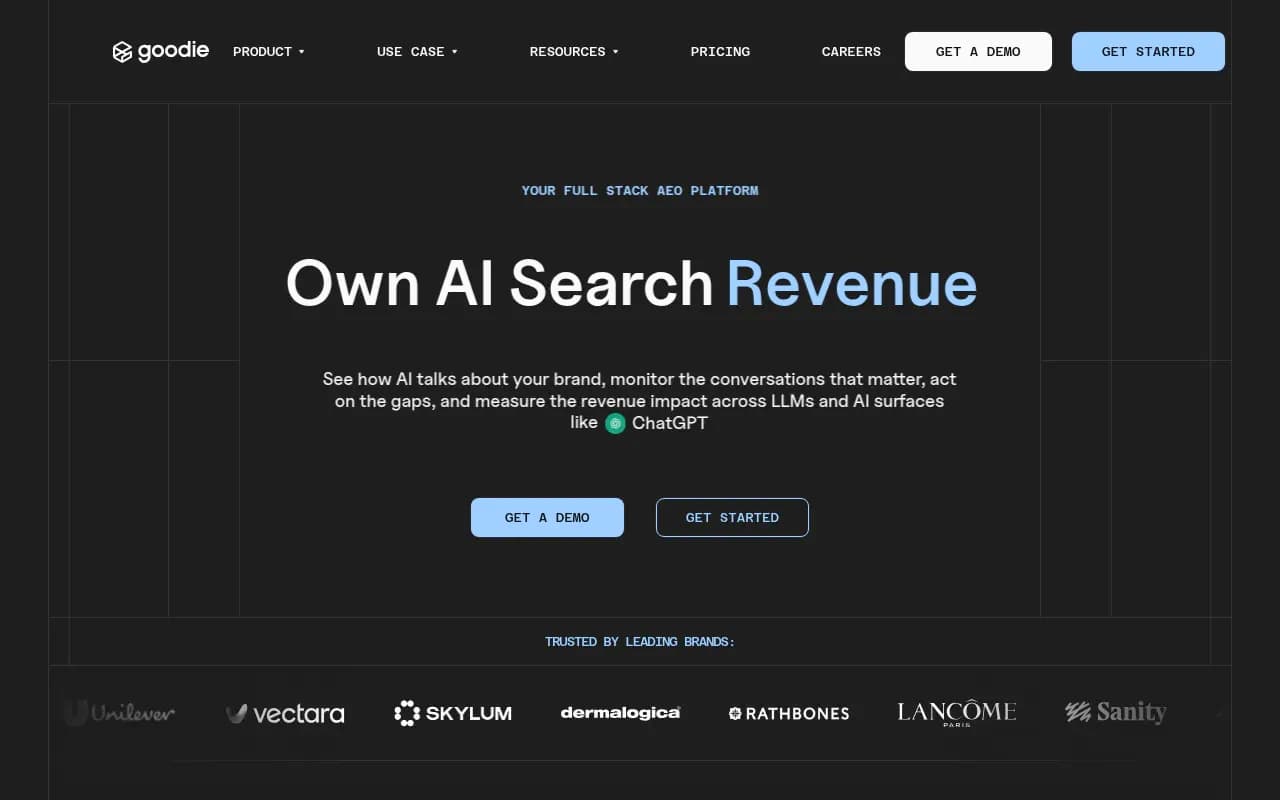
Goodie is pitched at enterprise consumer brands juggling thousands of SKUs across marketplaces. The aiclicks review calls it the rare tool that researches, tracks, fixes and attributes product visibility in one loop, with SKU-level attribution and coverage of 12+ engines including Amazon Rufus. Those are vendor-adjacent claims, so ask for a pilot on a slice of your catalog.
Nudge and Yotpo Discover
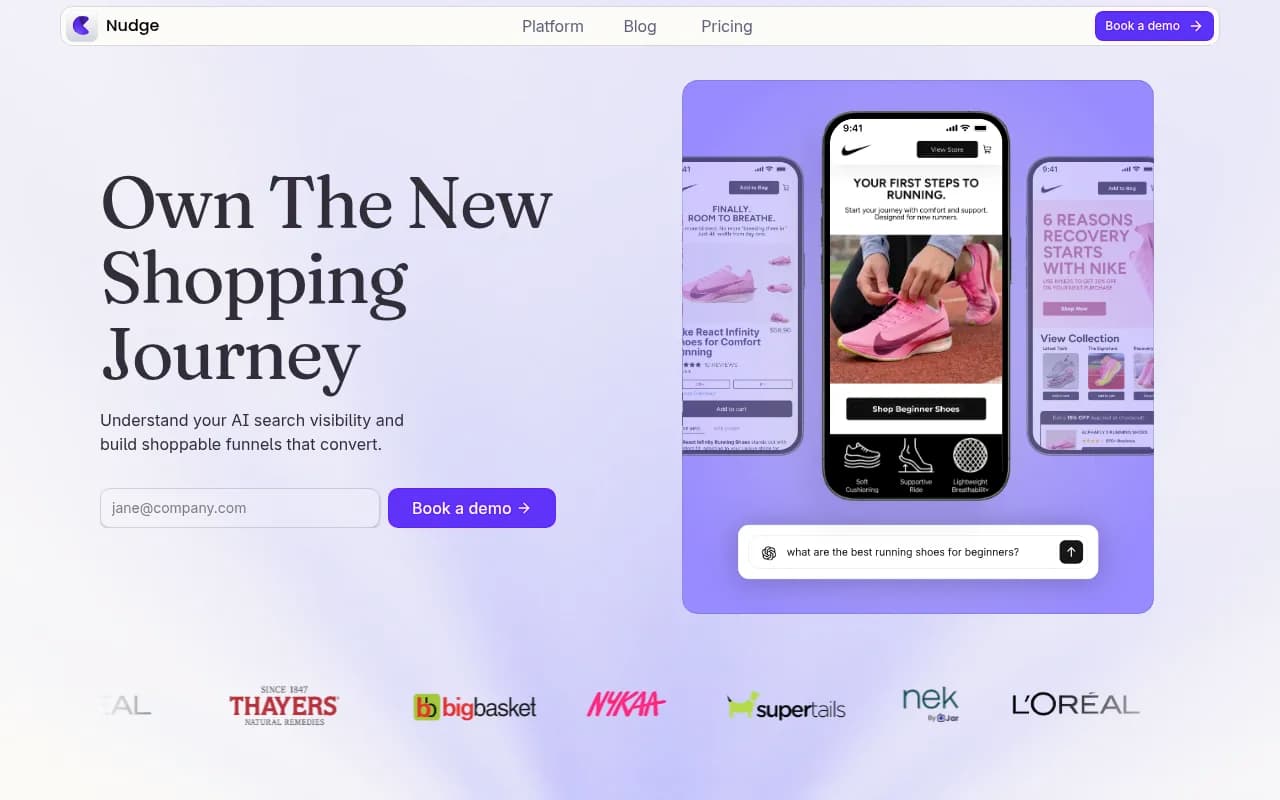
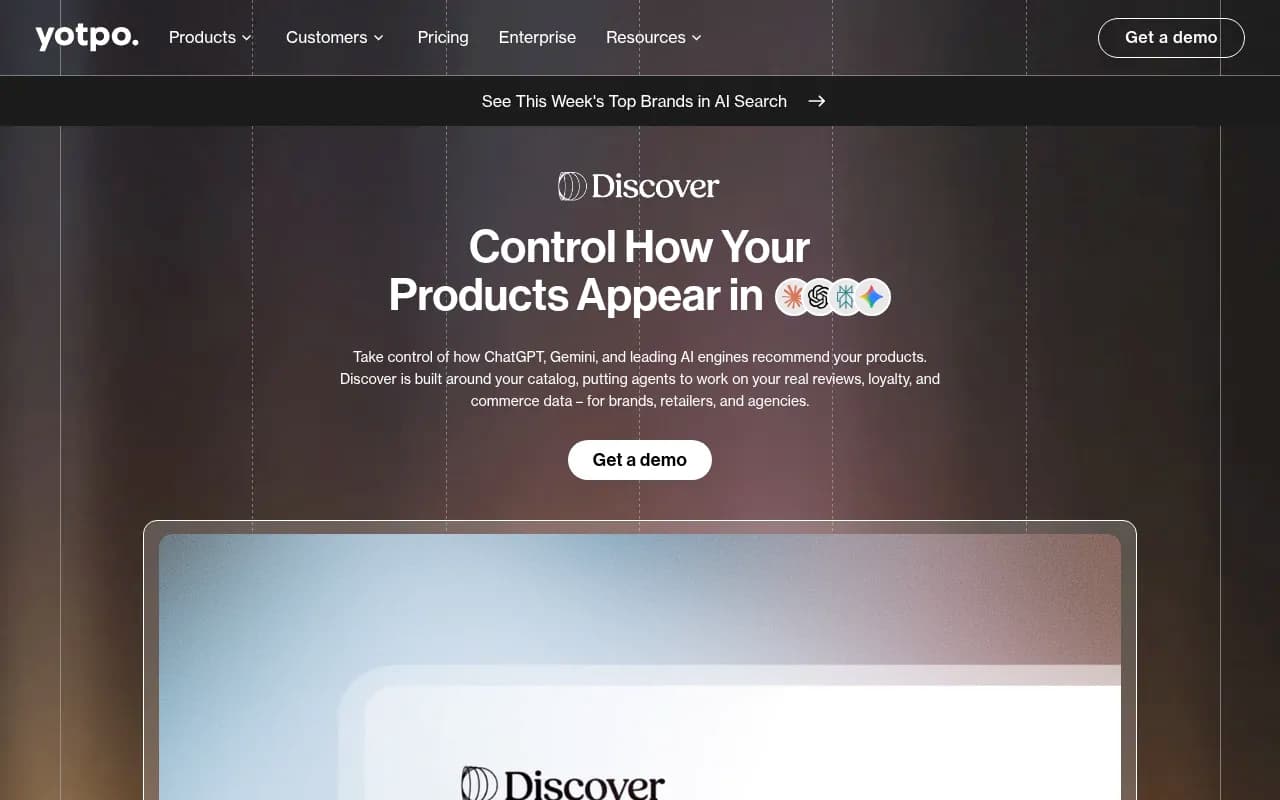
Nudge describes itself as an AI discovery and conversion platform for commerce brands, and Yotpo Discover is built around ecommerce product discovery. Both are worth a look if you want to tie reviews and on-site discovery to AI visibility rather than treating them as separate projects.
Broader enterprise platforms that handle the whole loop
Promptwatch
For a large retailer, the harder problem usually isn't seeing a score. It is finding out why a product page isn't cited and getting a fix shipped. Promptwatch is built around that loop. It monitors real ChatGPT, AI Overviews, AI Mode, Gemini, Perplexity, Copilot and Alexa interfaces by country and language, traces which of your pages get cited, then acts through the Action Board and Content Agent, and measures the result with IP-verified AI crawler logs and visitor analytics.

The retail-specific pieces are ChatGPT Shopping insights (which products ChatGPT recommends, which competitors it picks instead, and how your uploaded catalog performs, plus Alexa product results) and Ads Radar, which shows which advertisers bid on your prompts, their ad copy and landing pages. Both sit on the Business plan and above. Local GEO targeting at exact coordinates helps multi-location retailers who care about "near me" queries.
Crawler logs are the quiet advantage. If AI bots hit errors on your product pages, no amount of content work helps, and most monitoring tools can't tell you that. AI crawler logs separate an access problem from a content problem. TreeHouse, the company behind Pararius, grew AI search to roughly 25% of organic conversions by fixing crawler access and publishing proprietary data, per its case study.
Pricing is public: Essential $95/mo, Professional $245/mo, Business $579/mo, with Enterprise custom, so check promptwatch.com/pricing. Enterprise teams will also care that it is ISO/IEC 27001 certified and GDPR compliant. The honest limitation: it is not a catalog feed manager, so pair it with whatever tool owns your product data. There is a 7-day free trial on monthly billing, and a free AI visibility report if you want a baseline first.
Profound
Profound is the biggest name in the category by funding. The nogood roundup reports over $155 million raised, including a $96 million Series C at a $1 billion valuation in February 2026, and roughly 700 enterprise customers including Target and Walmart. It has the deepest prompt-demand data layer, and the aiclicks review says it now closes the loop with agents that build and publish. The same review notes the platform rewards a dedicated team. See Promptwatch vs Profound for a head-to-head.

Scrunch
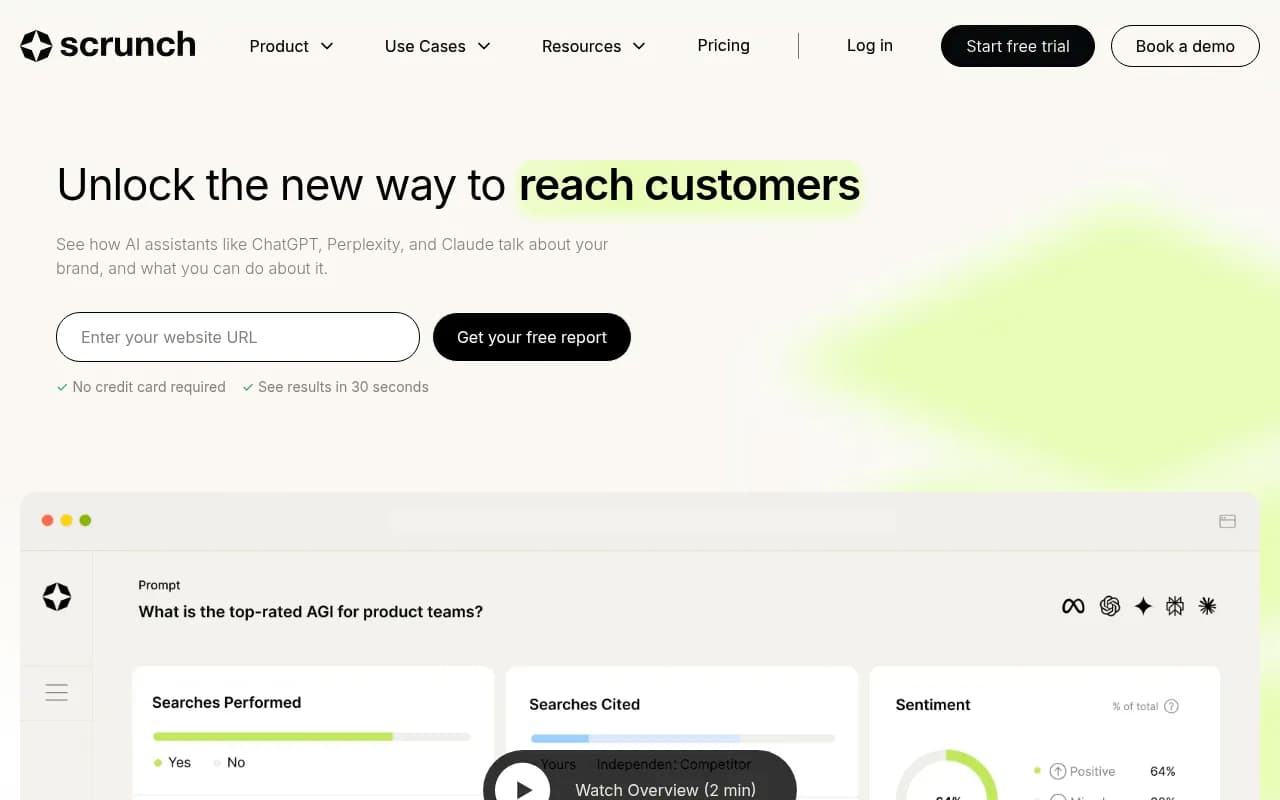
Scrunch's angle is how agents see your store. Its Agent Experience Platform builds LLM-friendly versions of pages and audits citations. It reportedly serves 500+ brands including Lenovo. Worth a look when your front-end is heavy JavaScript and AI crawlers struggle to read it.
BrightEdge and seoClarity
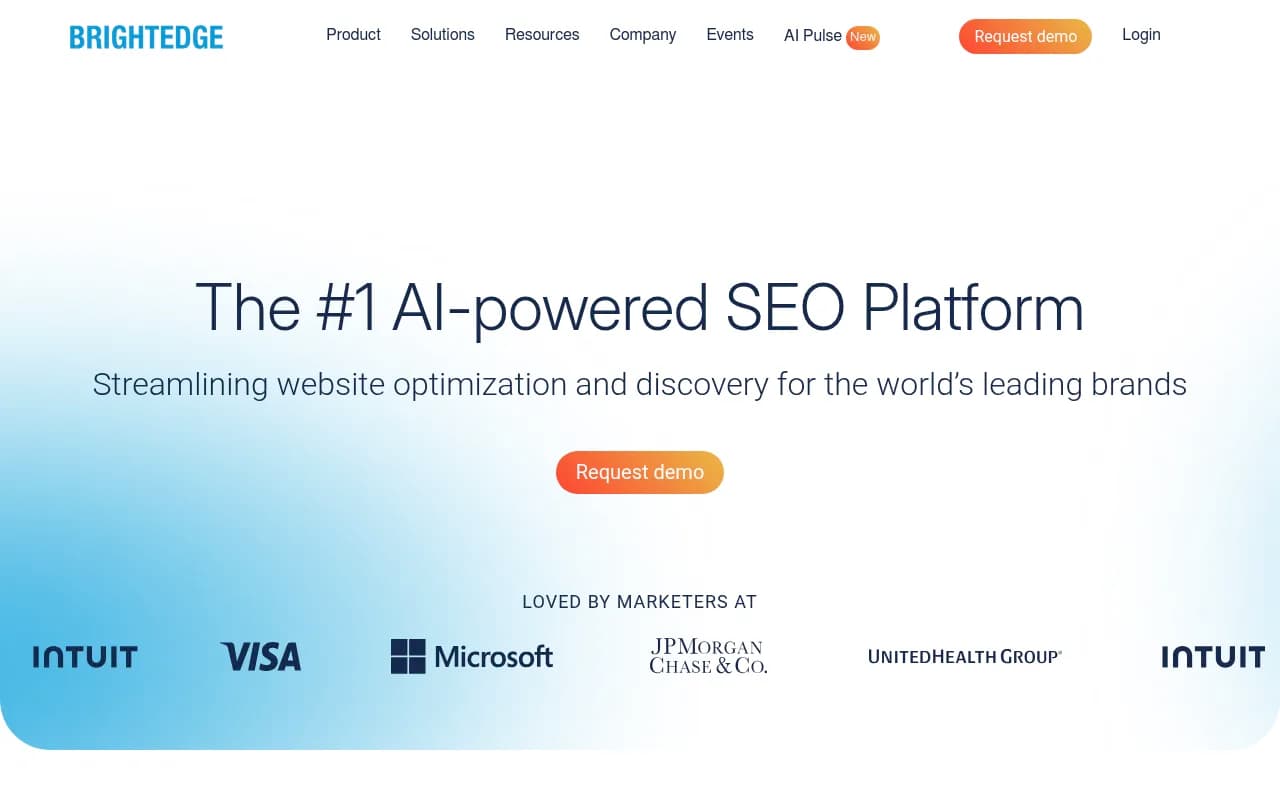
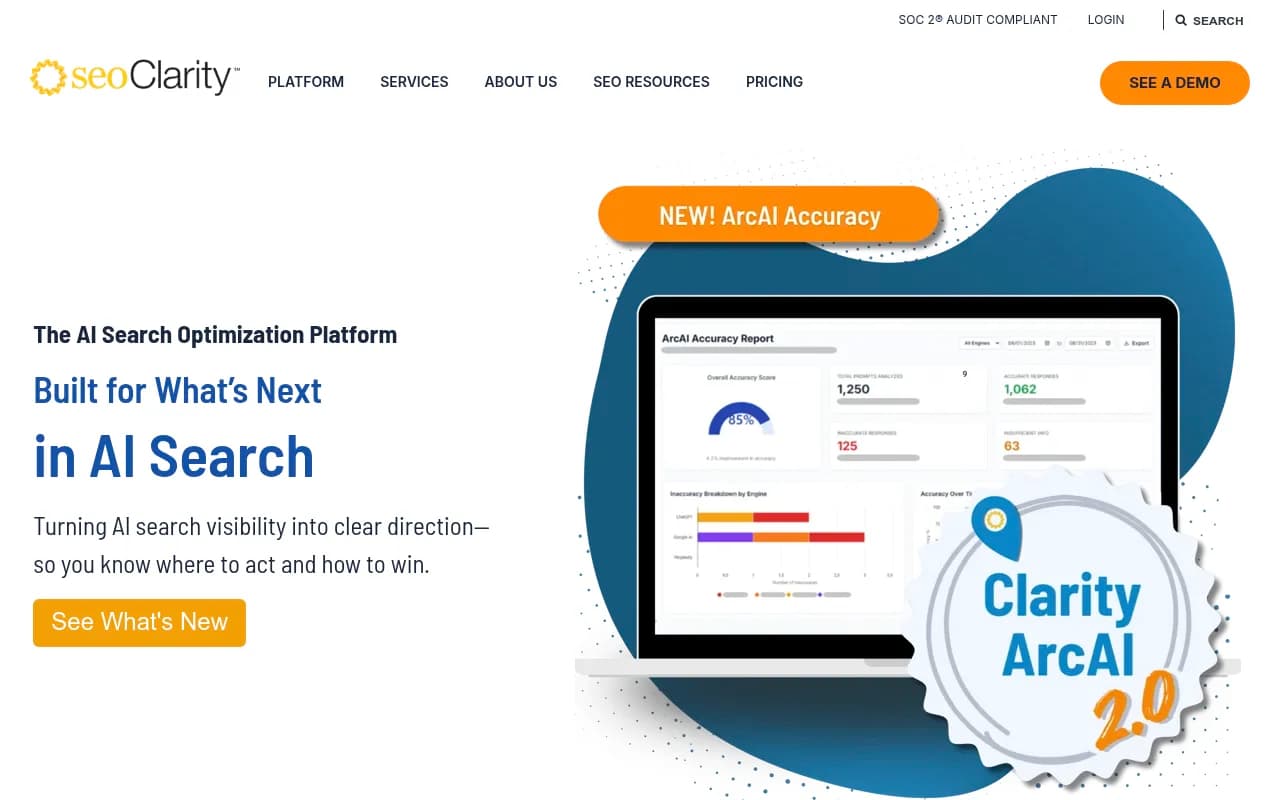
If your team already lives in an enterprise SEO suite, BrightEdge is the pick when automated execution on Google's AI surfaces matters most. seoClarity and Botify sit in a similar lane, adding AI visibility on top of large-site crawling.
Evertune and Adobe
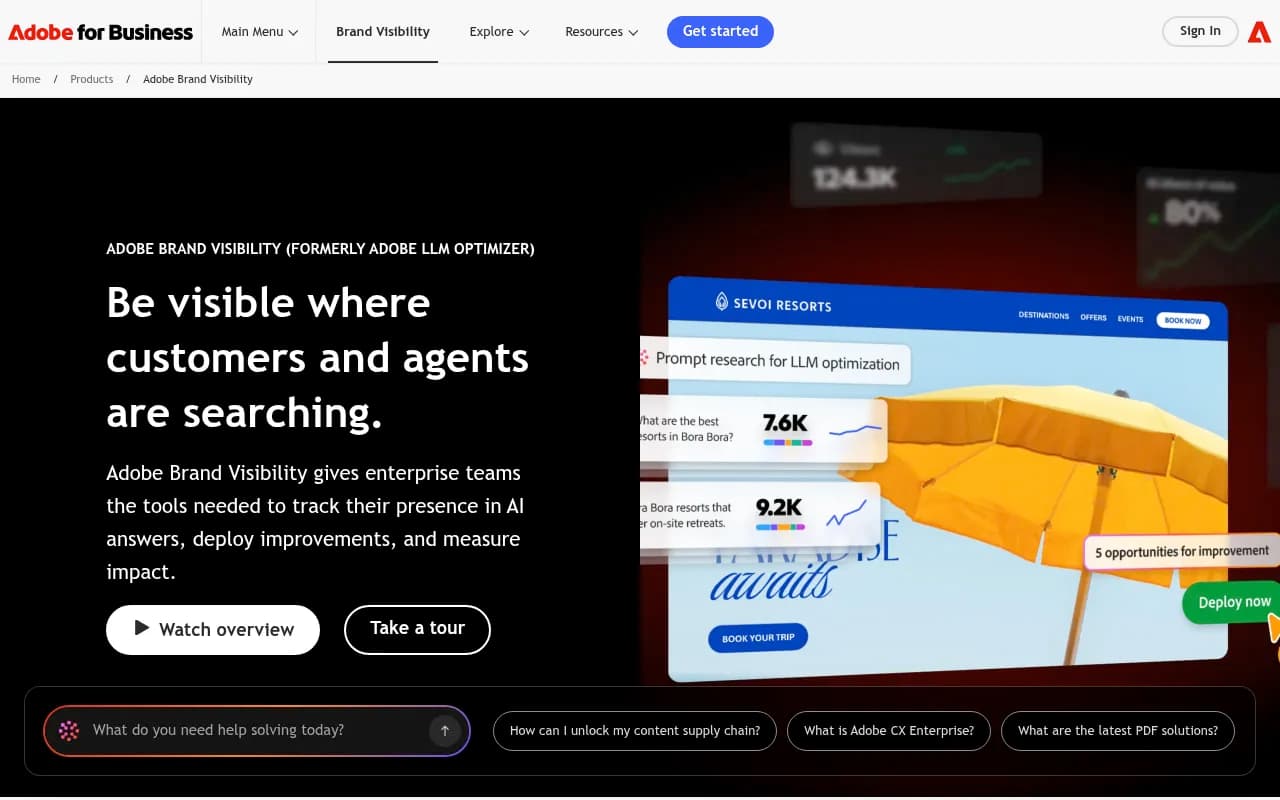
Evertune brings the most statistical rigor, sampling answers at volume to reduce noise, which Fortune 500 brand teams like. Adobe's LLM Optimizer and Brand Visibility make sense if you already run Experience Cloud.
Lighter monitoring tools
Peec AI, Otterly.AI and similar trackers are clean and affordable for tracking mentions across ChatGPT, Gemini and Perplexity. For an enterprise retailer they tend to run out of road: no crawler logs, no SKU-level view, no execution. They are fine for a regional team that needs a quick baseline.


For a wider list, the GEO software directory at bestgeosoftware.com covers more options by category.
How to choose: three common retailer profiles
| Your situation | Start with | Add if needed |
|---|---|---|
| Marketplace-first CPG, revenue on Amazon and Walmart | Azoma or Goodie AI | Promptwatch for web citations and crawler logs |
| Own-site-first large retailer, heavy content operation | Promptwatch | Scrunch for rendering problems |
| Enterprise SEO team already on a suite | BrightEdge, seoClarity or Botify | Promptwatch for AI-specific citation and crawler depth |
A rollout plan that works
Pick 50 to 100 hero products across two or three categories rather than the whole catalog. Run shopper-style prompts, including commercial comparisons and branded ones, across the engines that matter for your channel mix.
Check crawler access first. Then audit product pages for complete specs, Product schema, price and availability. Look at who gets cited in the roundups for your category and where your reviews live. Publish fixes, then measure whether the pages get crawled, cited and clicked. Repeat monthly. Content half-life matters here: Promptwatch's half-life report found landing pages and docs stay cited longest while news loses half its pages within 36 days, so evergreen product and category content is the better investment.
One caution on numbers. Yotpo's roundup claims ChatGPT ecommerce traffic converts 31% higher than traditional organic search, and Adobe reported AI-driven traffic to US retail sites growing up to 693.4% year over year in the 2025 holiday season. Both are third-party figures. Use them as directional, and measure your own AI referral conversion instead.
Questions to ask in vendor demos
- Can you show SKU-level results for my products, not just domain mentions?
- Which retail assistants do you query through the real interface, and which through an API?
- Do you provide IP-verified AI crawler logs?
- How do you handle a monitor in a specific country, language or city?
- What happens after you find a gap? Who writes, who publishes, and how do you verify it worked?
- What does enterprise pricing include at my prompt volume?
If an agency would help run this, a team like 1001 SEO Media handles GEO programs alongside technical SEO. Otherwise, use the shortlist above, run a two-week pilot on a slice of your catalog, and pick the tool that tells you what to change, not just what your score is.