Key takeaways
- BrightEdge and Conductor are enterprise SEO suites that added AI visibility. Brandlight is a pure-play enterprise AEO vendor. The real decision is suite versus dedicated platform, not which logo you like.
- BrightEdge says AI Catalyst is included in all BrightEdge SEO Platform subscriptions. That bundling is the main reason to pick it if you already run BrightEdge.
- Conductor pitches AgentStack (native LLM apps and AEO agents) and sells hard on unified workflows. Brandlight leans on brand-level oversight, entity consistency and a services-assisted AEO team.
- None of the three publishes pricing that I could verify, so budget conversations start with a sales call. Plenty of teams run a suite for classic SEO and add a dedicated AI layer on top.
- If you want crawler logs, traffic attribution and content that gets written and published, not only reported, look at a dedicated platform such as Promptwatch alongside any of these.
The real question behind this comparison
People search for "Brandlight vs Conductor vs BrightEdge" as if the three were interchangeable. They are not. Two of them are SEO suites with 10+ years of keyword, rank and content workflows underneath. One is a newer vendor built around AI answers from day one.
So the useful framing is this: do you want AI visibility as an extra tab in a suite you already own, as a specialist enterprise tool, or as the core of a platform that tracks, explains and fixes? Each answer leads somewhere different.
A caveat on sourcing. Pricing was not verified for any of these three, and I did not test Conductor's features first-hand. Much of the competitive material online is written by rival vendors, so I flag whose claim is whose below.
Quick comparison
| BrightEdge AI Catalyst | Conductor | Brandlight | |
|---|---|---|---|
| Origin | Enterprise SEO platform (18+ years per a competitor's article) | Enterprise SEO and content platform | AI visibility / AEO vendor for enterprise brands |
| How AI visibility is sold | Bundled into SEO Platform subscriptions | Part of the suite, with AgentStack AEO agents | Standalone platform plus services |
| Strongest angle | One workflow for SEO and AI search, deep Google data | Unified insights, customer success, AEO guidance | Brand entity consistency, content briefs, AI ads, PR outreach |
| Engines named publicly | ChatGPT, AI Overviews, AI Mode, Gemini, Perplexity | Nine in docs, fewer on marketing pages | Claude, ChatGPT, Gemini, Grok shown on homepage |
| Public pricing | Not found | Not found | Not found, walkthrough flow |
| Best for | Teams already on BrightEdge | Teams wanting one suite for content, technical and AEO | Brand and comms leaders who want oversight and a hands-on team |
BrightEdge AI Catalyst
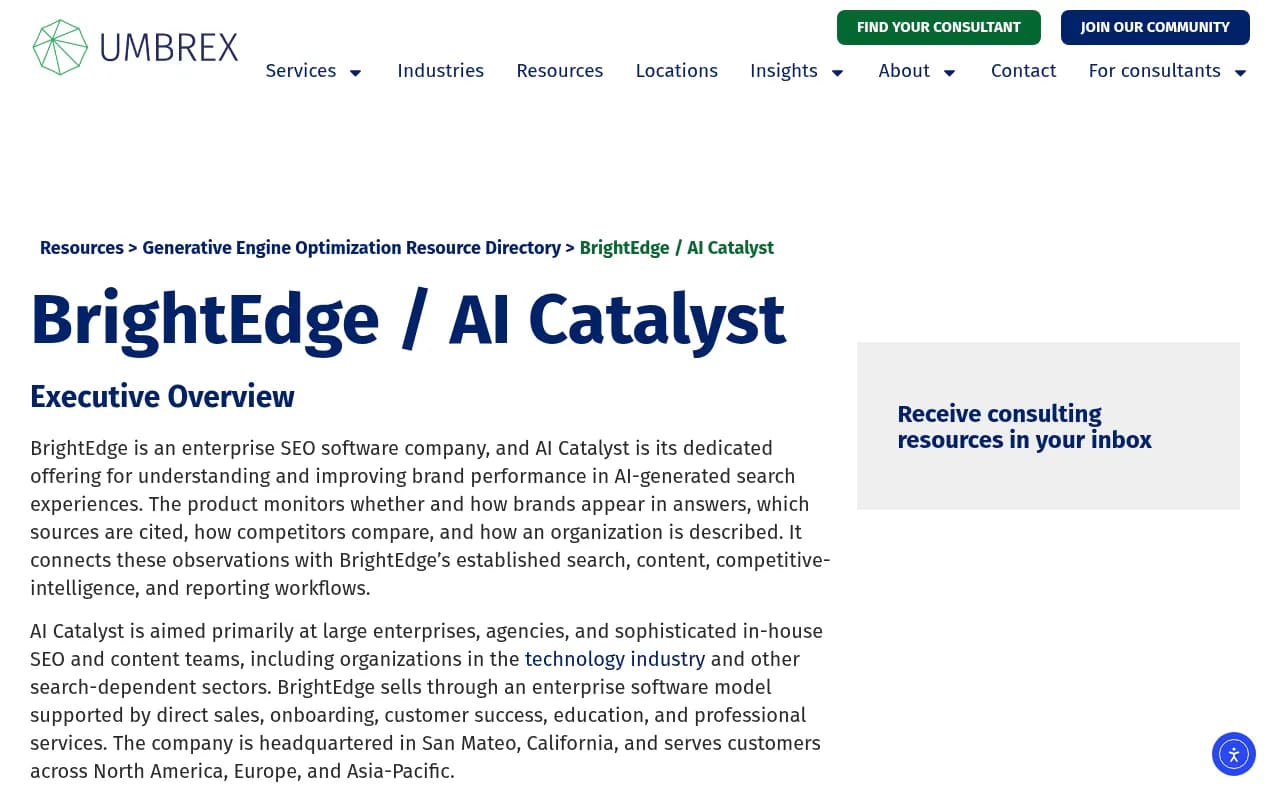
BrightEdge is the incumbent. San Mateo-based, enterprise sales model, onboarding and customer success attached. Umbrex's GEO profile describes AI Catalyst as sitting between pure-play AI-visibility trackers and broad enterprise SEO suites: it measures AI-answer exposure and supplies optimization intelligence, but it does not control the models or guarantee mentions, citations or revenue.
What it does well
The integration story is the whole pitch. BrightEdge says you run SEO and AI search from the same data, reporting, integrations, security and governance. If your team already lives in BrightEdge for rankings and share of voice, adding AI visibility without a second login or a second procurement cycle is attractive. A Reddit tester who spent nine months on AI visibility tools put it bluntly: for existing BrightEdge users the AI features integrate seamlessly, but it is not a standalone solution.
SeoClarity's 2026 roundup also notes Agent Edge, launched in August 2026, which BrightEdge says serves agent-ready content to AI agents and monitors their visits. That is a more interesting move than a dashboard, though I have not seen independent results.
Where it gets friction
Profound's competing article describes real onboarding overhead, which makes sense for a platform stacked with keyword research, rank tracking, auditing and content tools. Conductor's own comparison page claims BrightEdge data updates monthly rather than in real time. That is Conductor talking about a competitor, so verify it in a trial before you rely on it. Also note coverage: Profound's table lists five engines for AI Catalyst, fewer than some dedicated platforms.
Conductor
Conductor sells itself as the unified option: keywords, technical health, content guidance and AI search in one view. Its 2026 AEO play is AgentStack, a set of native LLM apps and AEO agents, according to Spike AI's comparison. Umbrex calls it a close suite-level rival to BrightEdge, and says the buying decision often turns on existing adoption, workflow design, data coverage, services, integrations and the depth of each vendor's AI-answer methodology.
What stands out
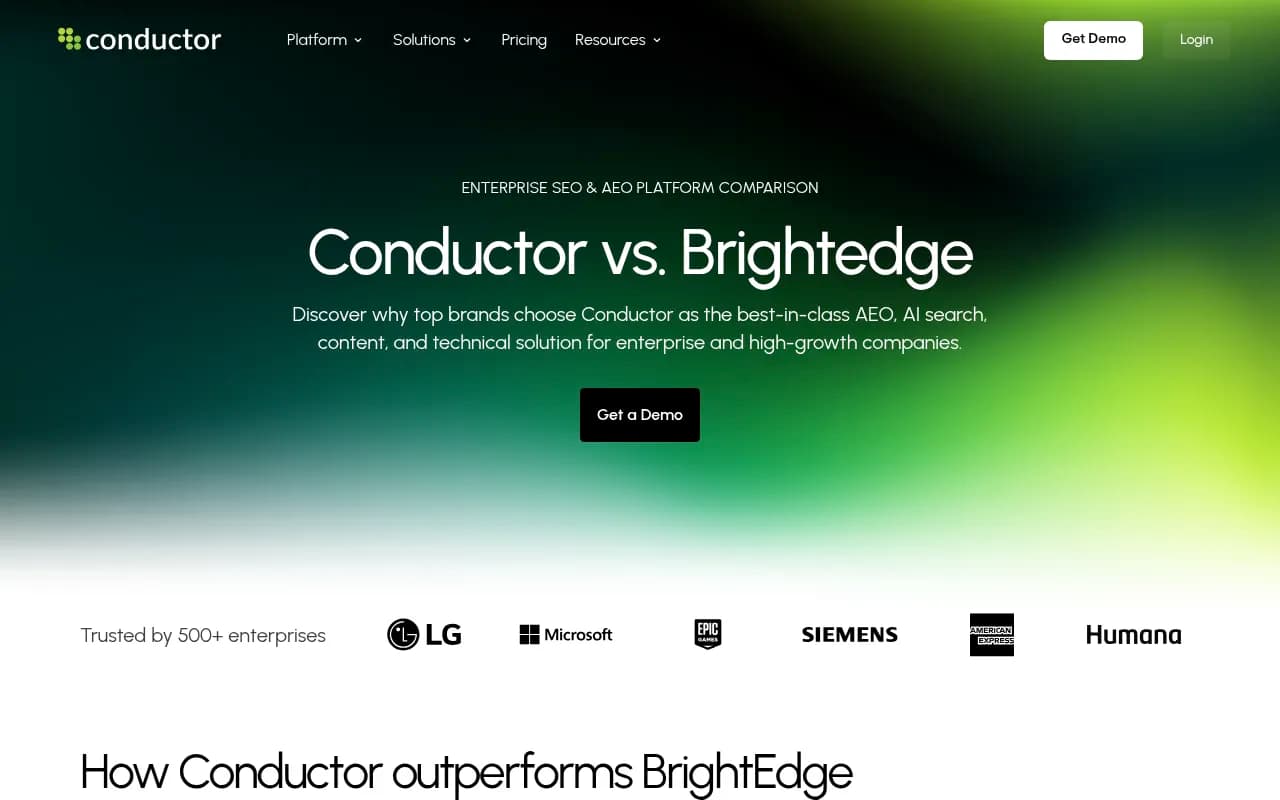
SeoClarity's comparison table credits Conductor with mention and citation share of voice, AI crawler monitoring, IndexNow submission to Bing and Yandex, and dedicated customer success managers with 1:1 training. Conductor's page says it is trusted by 500+ enterprises. The marketing language about BrightEdge being "outdated" and its AI being "generic fluff" is just that: marketing. Discount it the way you would discount BrightEdge's own "#1" claims.
The honest downside
Spike AI's piece ends on a point I agree with: the real risk is choosing a platform you cannot act on. A suite can produce lovely reports while the team still needs someone to write, publish and fix. Ask Conductor to show you, in your own account, what happens after a recommendation is generated.
Brandlight
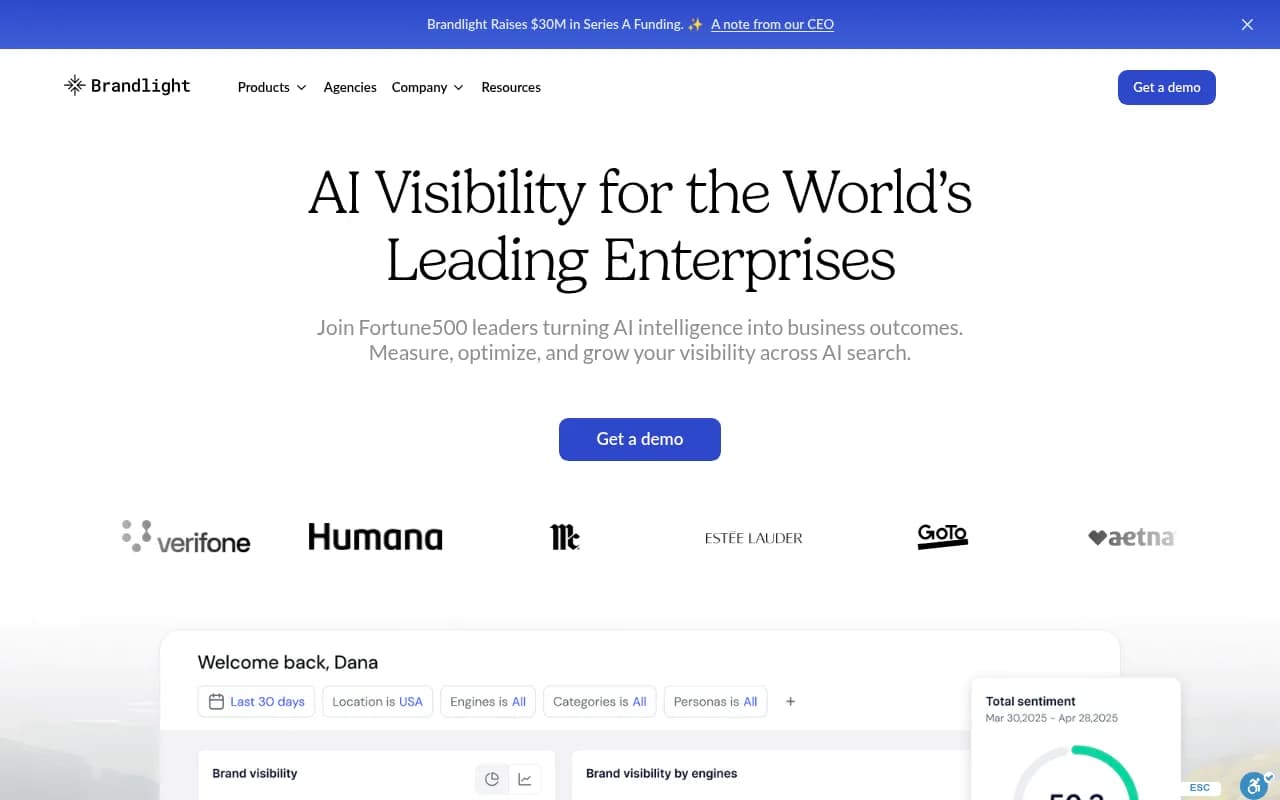
Brandlight calls itself an AI visibility platform for enterprise brands. It is not an SEO suite. Its homepage lists prompt tracking across markets, technical health (crawl and schema fixes), content briefs and page fixes, shopping, publisher and PR outreach, competitor paid-prompt visibility, social, and a leadership portfolio view.
Features worth a closer look
- A Brand Entity feature that flags inconsistent facts across sources. Their example: a product priced at $380 on the brand site, $295 at a retailer and $240 on Wikipedia, with AI quoting $295 in 6 of 10 responses. This is a real problem and a smart demo.
- Content optimization with page-level recommendations and an estimated impact score, plus one-click handoff to a writing agent.
- An AI Ads module showing ad presence against competitors.
- A dedicated AEO team that works alongside the customer, so part of what you buy is services.
What to treat carefully
Brandlight claims to be the #1 AEO platform globally, lists Google, McKinsey and Microsoft as partners and shows a 4.9/5 G2 rating from 240 reviews. All of that is vendor-stated, and I did not verify the G2 numbers. Support hours in the terms of use are Monday to Friday, 9:00 to 18:00. I also found no independent head-to-head against Conductor or BrightEdge, so any claim that one beats the other is opinion at this point.
One thing to check in every demo: per-engine reporting
Engines behave differently. Promptwatch's Average Sources Per Response report (based on 26B+ data points, with ChatGPT figures limited to messages where web search triggered) shows ChatGPT citing about 5 sources per answer, Google AI Overviews about 10, and Perplexity almost exactly 10 every day. Microsoft Copilot swung from under 2 to nearly 17 within weeks before settling at the low end.
That matters because a single blended "AI visibility score" hides the fact that engines have very different numbers of citation slots. Ask each vendor to show visibility per engine, and ask how the score is calculated. Perplexity's steady count also makes it a decent control when you test whether a content change moved anything.
Suite or dedicated platform?
Yotpo's BrightEdge alternatives article makes a point I find sensible, even though Yotpo sells its own tool: most enterprise teams keep a broad SEO tool and add a dedicated AI visibility layer on top. They rarely swap one for the other. That matches what I see.
| Your situation | Likely fit |
|---|---|
| Already on BrightEdge, AI is a new reporting line | AI Catalyst, since it is bundled |
| Already on Conductor, want content and technical in one place | Conductor with AgentStack |
| Brand or comms owns AI visibility, needs entity accuracy and services | Brandlight |
| Need to prove AI traffic, crawler access and publish content fast | A dedicated platform, ideally alongside your suite |
| Large site, mostly classic SEO, AI is 5% of the plan | Stay with your suite, revisit in two quarters |
Where a dedicated platform like Promptwatch fits
The gap I keep seeing in suite comparisons is what happens after the dashboard. Promptwatch is an end-to-end AI visibility platform rather than a suite add-on, and that shows in three places: it reads the real interfaces of ChatGPT, Google AI Overviews, AI Mode, Gemini, Perplexity, Copilot, Meta AI and others by country and language; it has IP-verified AI crawler logs that separate an access problem from a content problem; and its Content Agents write and publish to WordPress, Webflow or Framer, then track whether the page gets crawled, cited and clicked.

It is also easier to evaluate: the 7-day free trial or the free AI visibility report gets you data without a sales cycle. Current plans run from $95/mo (Essential) to $579/mo (Business), with the Content Agent starting at Business; confirm on the pricing page. It is ISO/IEC 27001 certified and GDPR compliant, which usually matters in the same procurement reviews these suites go through. If you are weighing it against other specialists, the 2026 platform comparison and the Promptwatch vs Profound page lay out the differences.
To be fair about the trade-off: Promptwatch does not replace a deep enterprise SEO suite's keyword universe and SERP history. It is the AI layer, and a good one to run next to BrightEdge or Conductor.
Other enterprise-grade names to shortlist
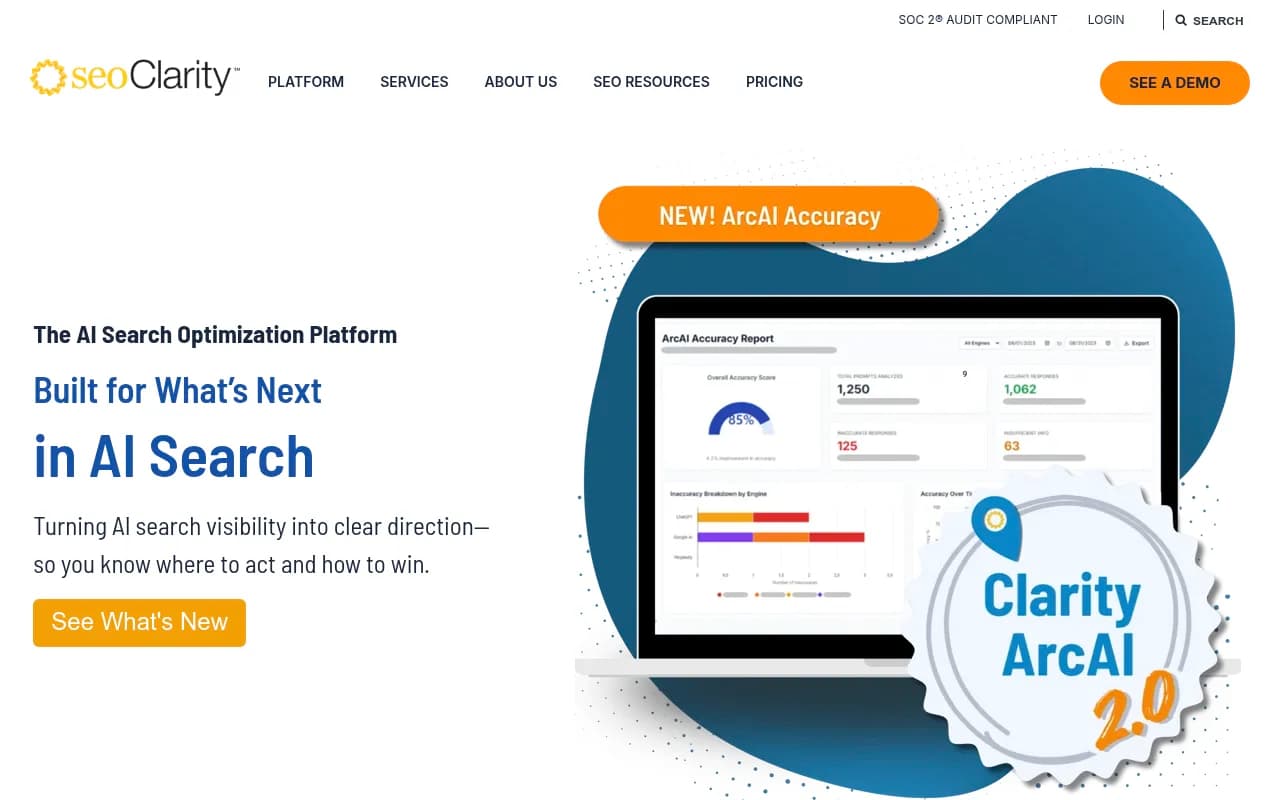
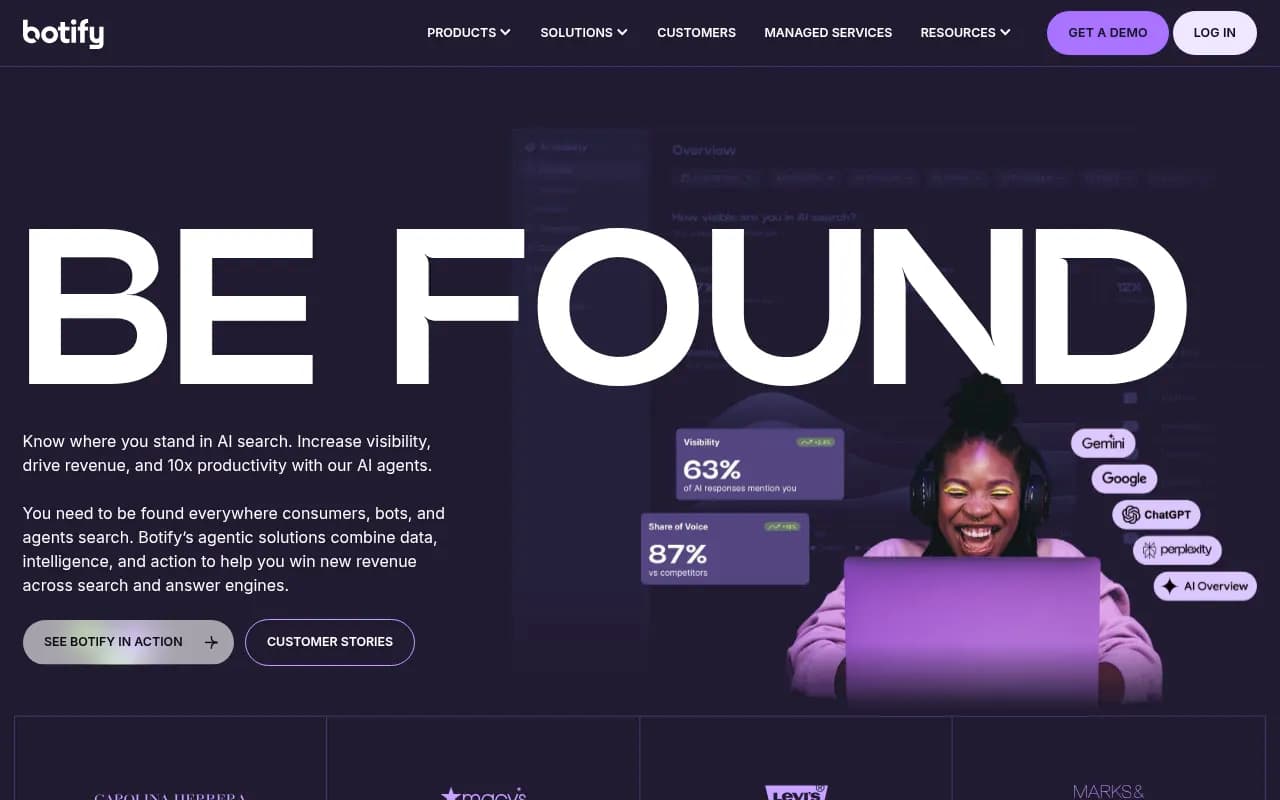
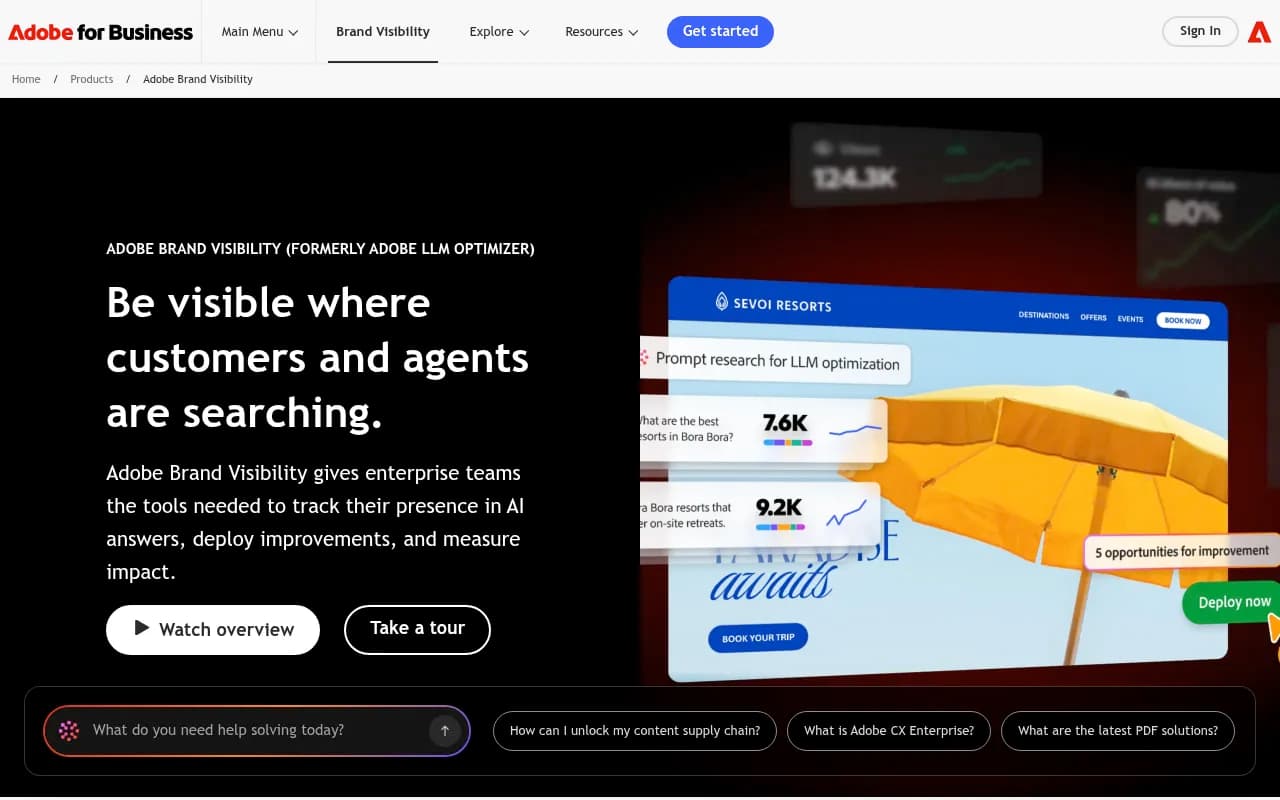
If none of the three feels right, a few catalog options sit in similar territory:

For wider browsing, the GEO software directory at bestgeosoftware.com lists far more options by category.
How to run a fair evaluation
- Give every vendor the same 50 prompts, across two markets, and compare the per-engine output, not the headline score.
- Ask who can see crawler activity. Can they show GPTBot, ClaudeBot and PerplexityBot hits on your pages, verified by IP?
- Ask what ships after a recommendation. Who writes the page, who publishes it, and how is the result measured?
- Ask about refresh cadence for AI data. Daily, weekly, monthly? Get it in writing.
- Ask how AI-referred traffic is attributed to conversions, since referrers are unreliable.
- Get pricing in writing for the exact scope. None of these three publishes it.
- Talk to one reference customer who has been live for over six months.
Whoever you pick, run a 60 to 90 day pilot on a defined set of pages before committing to a multi-year contract. AI search moves fast enough that a tool that was ahead in January can lag by autumn.
Verdict
Pick BrightEdge AI Catalyst if you are already a BrightEdge shop and want the lowest-friction start. Pick Conductor if you want suite-level content and technical workflows with hands-on customer success. Pick Brandlight if brand-level oversight, entity accuracy and a services-backed team matter most. And if the thing keeping you up is whether AI actually reads, cites and sends traffic to your pages, and who fixes it when it does not, add a dedicated platform and let the suite keep doing what it already does well.