Key takeaways
- Brandlight is sold through a paid 3-month pilot with no free trial. Its own onboarding estimate is 2-4 weeks standard and 6-8 weeks for enterprise, and reviewers describe 30-90 days to full productivity.
- Several alternatives let you see data the same day: Profound and Scrunch offer 7-day trials, and Promptwatch has a 7-day free trial plus a free AI visibility report.
- Claims of a first insight in 2 or 10 minutes come from vendor marketing pages. Treat them as signup-to-first-chart times, not time to a decision you can defend to a CMO.
- First insight is not the same as first action. Ask how long until a page is published, crawled and cited, not just how long until a dashboard loads.
- Run the same 20-30 buyer prompts through every shortlisted tool during the trial. That is the fastest way to compare them fairly.
Why time to first insight matters more than feature lists
Most Brandlight comparison posts line up features and prices. That is useful, but it skips the question enterprise buyers actually feel in week three: when do I get something I can show my boss?
AI search moves quickly. Promptwatch Data shows ChatGPT's query fanouts averaged 2.15 queries per response in early December 2025, eased to about 1.84 by early March, and average query length fell from about 117 characters to about 53 (ChatGPT query fanouts). If a rollout takes a quarter, the prompts you configured on day one may already be out of step with how the engines search. Slow onboarding has a real cost beyond the invoice.
So this guide ranks the options on one axis: how fast you get from decision to a trustworthy first insight, and then to a first action.
What Brandlight onboarding looks like
Brandlight is an enterprise AI visibility platform aimed at Fortune 500 teams. According to Orchly's comparison, it tracks 12 engines across 10 markets and puts a strategist team on each account. There is no public pricing, no self-serve plan and no free trial. Every engagement starts with a paid 3-month pilot, followed by an annual platform and service contract.
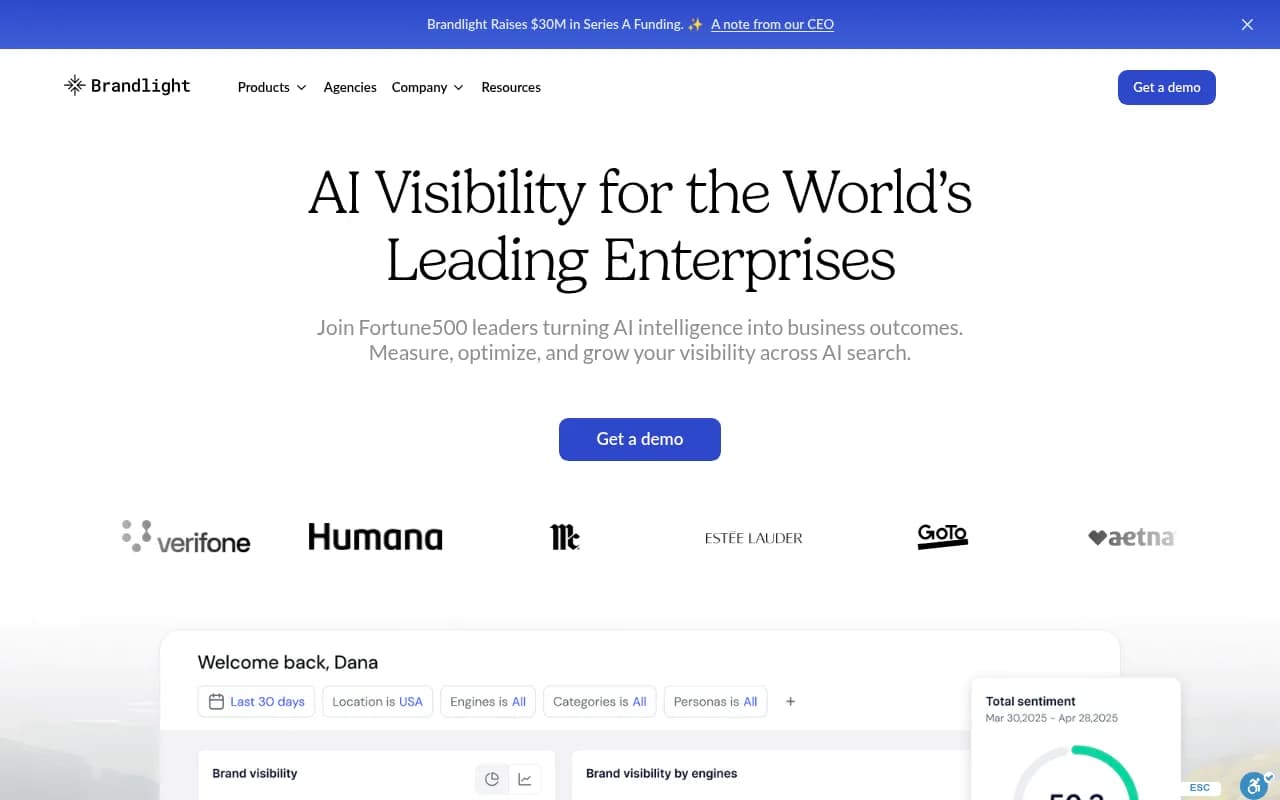
The timing claims are worth laying out side by side:
| Source | What it says about time to value |
|---|---|
| Brandlight (via checkthat.ai) | Standard onboarding 2-4 weeks, enterprise deployments 6-8 weeks |
| Brandlight Activation tier (via checkthat.ai) | Implementation assistance, typically 30-90 days to full productivity |
| G2 users (via Orchly) | Implementation about 2 months |
| G2 reviewers (via checkthat.ai) | Results take months, not weeks |
| Brandlight's own Profound comparison | Admits "higher friction than Profound's trial" |
Brandlight scores 4.7/5 from 19 verified G2 reviews, so this is not a story about a bad product. One VP of Marketing Operations said internal bandwidth, not the platform, limits how fast they can act on recommendations. That is a fair point and applies to every tool on this list. Still, a managed program with a pilot, a contract and a scoping stage means the clock starts late.
One caution: some third-party pages say Brandlight starts around $199/month. Others say there is no public pricing. I would treat the $199 figure as unverified and ask for a quote.
How to measure time to first insight
Before comparing tools, agree on what counts. I split it into three milestones.
- First data. You can see responses from real engines for your brand. This is where the 2-minute and 10-minute claims live.
- First trustworthy insight. Your own prompts, your own competitors, the right country and language, and enough runs that the number is stable. Realistically days, not minutes.
- First action and result. A fix is shipped, then crawled, cited and measured. This is where most tools stop and where the months get spent.
Prompt cadence affects milestone two. Per the Orchly review, Scrunch runs new prompts daily for 14 days and then every 72 hours. A tool that refreshes weekly, as Brandlight describes its licensed panel data (refreshed weekly, audited quarterly), gives you a steadier but slower-moving picture. Neither is wrong, but you should know which one you are buying.
Also check how many sources each engine uses. Promptwatch Data shows ChatGPT citing about 5 sources per web-search answer, while Google AI Overviews cites about 10 and Perplexity almost exactly 10 (average sources per response). A first insight that blends engines hides this, so look for per-engine breakdowns.
Brandlight alternatives compared by time to first insight
The minute-level figures below are vendor claims I could not verify independently. The trial lengths are more reliable.
| Tool | How you start | Stated time to first data | Acts on findings | Best for |
|---|---|---|---|---|
| Brandlight | Paid 3-month pilot | Weeks to months | Strategist-led | Fortune 500 managed programs |
| Profound | Free 7-day trial, then custom pricing | Same day via trial | Monitoring-led | Closest like-for-like enterprise |
| Promptwatch | 7-day free trial, free AI visibility report | Same day | Yes, content agents and action board | Teams that want to fix gaps, not just see them |
| Scrunch | 7-day trial | Same day | Mostly monitoring | Technical enterprise teams |
| Mentionova | Self-serve | About 2 minutes (vendor claim) | Reddit and content workflows | Fast first signal |
| Baby Penguin | Self-serve | Under 10 minutes (vendor claim) | Light | Accessible pricing |
| Cited | Free audit, no account | 3-5 minutes (vendor claim) | Expert-led recommendations | SMEs and agencies |
| LLM Pulse | Self-serve | Same day | Monitoring | Enterprise-grade tracking without enterprise-only pricing |
The alternatives in more detail
Promptwatch: days to first insight, and a path to first action
Promptwatch is the option I would put first if your real goal is moving from a dashboard to published, cited content quickly. You can start with the free AI visibility report with no login, or take the 7-day free trial on monthly billing, so there is no pilot contract before you see data.

The speed argument is not only about the first chart. Promptwatch monitors the real interfaces of ChatGPT, Google AI Overviews, Google AI Mode, Gemini, Perplexity, Copilot and others in the countries and languages you pick. Prompts run daily on every plan, and on Business a monitor can run every 12, 6 or 1 hours, which helps if you are following a launch. Then the loop continues: the Action Board prioritizes gaps, the Content Agent can write and publish to WordPress, Webflow or Framer, and IP-verified crawler logs plus visitor analytics show whether the page was read, cited and clicked.
It is also priced in the open: Essential is $95/mo, Professional $245/mo and Business $579/mo, with agency plans from $199/mo. Confirm current numbers at promptwatch.com/pricing. Compared with a pilot-first model, you can know within a week whether it fits. There is a head-to-head page if you are weighing it directly: Promptwatch vs Brandlight is not in the verified list, so see the full 2026 platform comparison instead.
Honest caveat: the Content Agent and faster-than-daily tracking start at the Business tier. If you only need monitoring, a cheaper plan is enough, but you give up the fix-it half.
Profound: the closest like-for-like enterprise option
Profound is the tool Brandlight itself compares against, and it admits its own process has higher friction than Profound's trial. You get a free 7-day trial, then custom pricing, and Profound has over a thousand G2 reviews. LLM Pulse's roundup calls it the closest direct competitor in the GEO-native enterprise category.

I could not find independent data on how long Profound's real enterprise rollout takes after the trial, so ask for a reference customer. Also note that it is mainly a monitoring product; see Promptwatch vs Profound for the execution differences.
Scrunch: technical enterprise teams
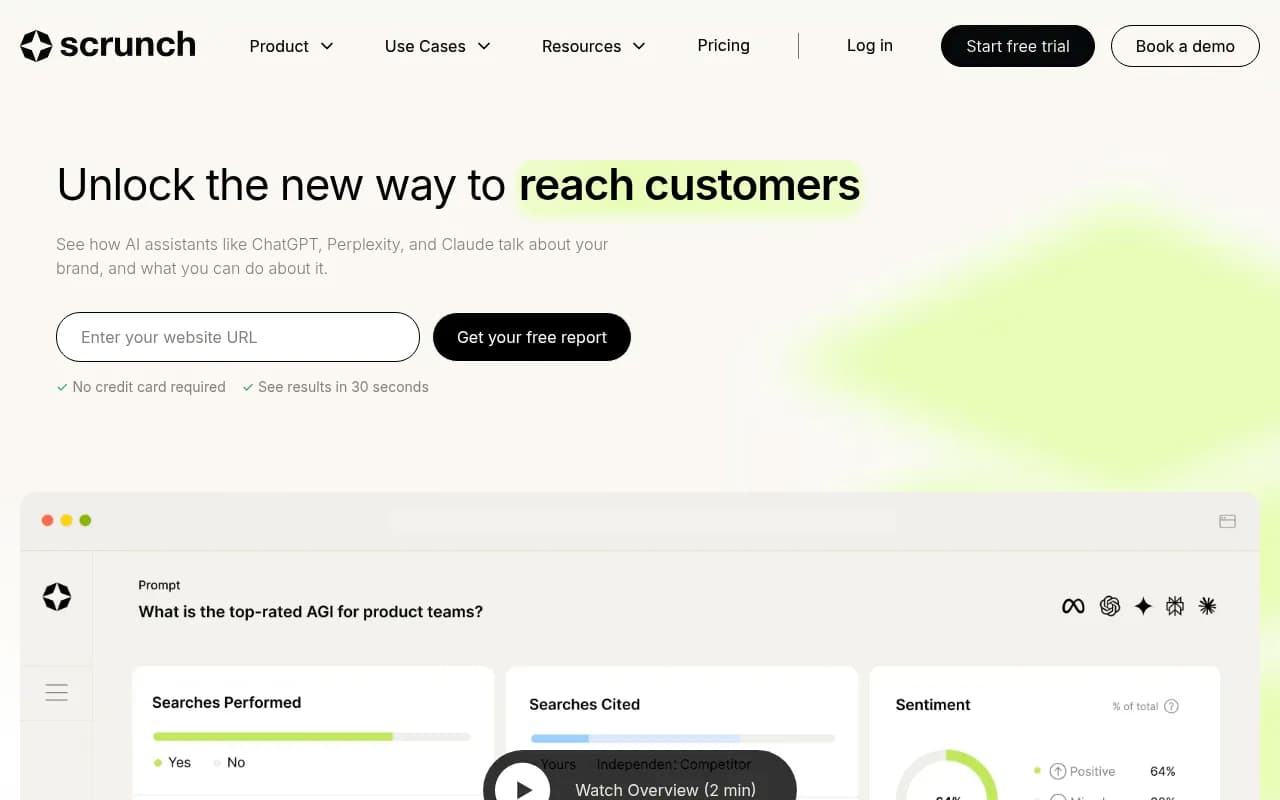
Scrunch offers a 7-day trial. Per Orchly, its Core plan is $250 a month for 125 prompts across ChatGPT, Perplexity, AI Overviews and Copilot, with 5 seats and 5 site audits a month, and Enterprise is custom with 9 engines, API and SSO. The 72-hour refresh after the first 14 days matters when you judge how fresh your first insight is.
Fast-start self-serve tools
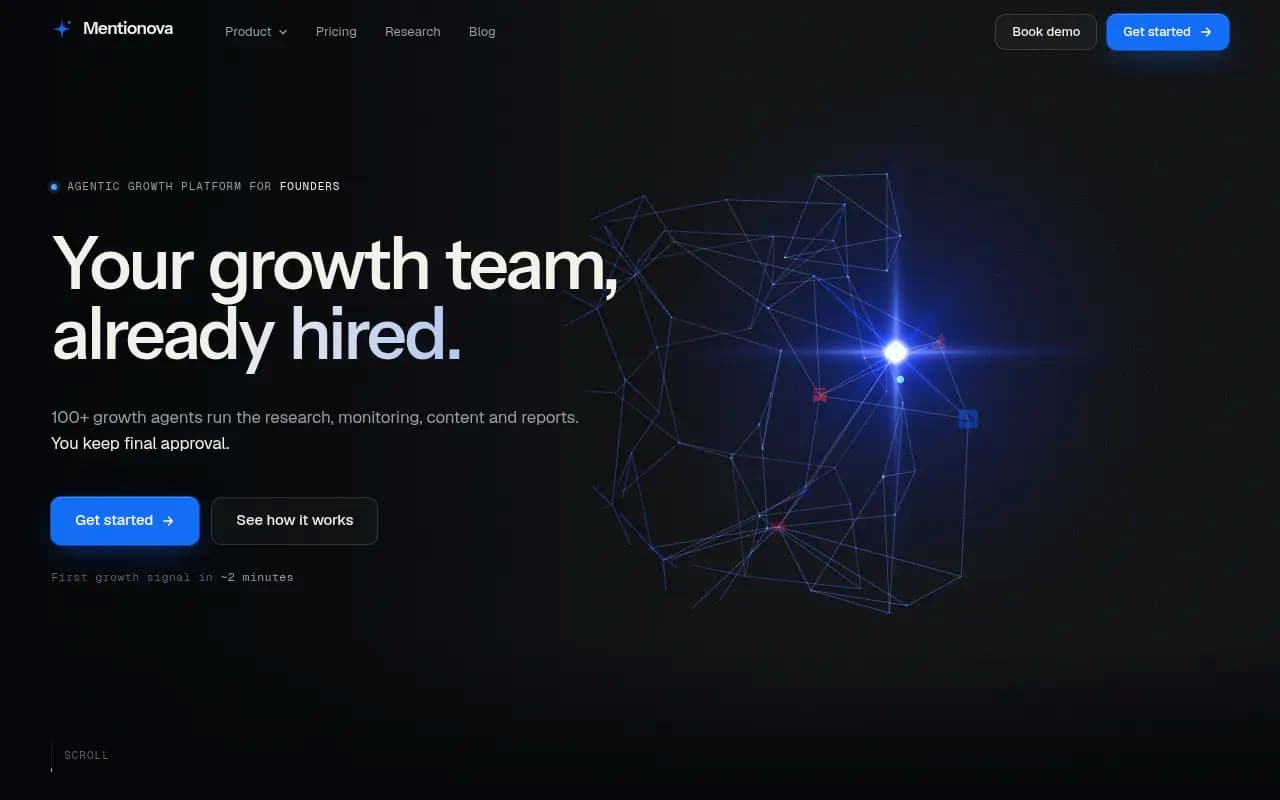
If you just need a first signal this afternoon, several tools are built for it. Mentionova claims a first signal in roughly two minutes, and Baby Penguin claims under ten. Both are marketing claims, and Mentionova notes that Profound and Scrunch focus on monitoring rather than optimization. Otterly.AI starts at $25/month for 15 prompts across four engines, according to Mentionova's FAQ.


These suit a quick proof of concept. They are less likely to satisfy an enterprise security review or multi-market rollout.
Cited and LLM Pulse
Cited sells expert-led audits that start free and claims results in 3-5 minutes with no account. It is a service, so it suits teams who want recommendations rather than software. LLM Pulse positions itself as enterprise-grade tracking without enterprise-only pricing, and its own roundup ends by saying it is the right answer for most buyers, so read that with the obvious bias in mind.
For more options, the GEO software directory at bestgeosoftware.com lists dozens of competing tools.
When Brandlight's slower path is justified
I do not want to dismiss it. If you are a global brand with legal review, multiple lines of business and 10 markets, a strategist-led program with a pilot can make sense. Reviewers also say the insights inform strategy. The pilot is a buying structure as much as an onboarding delay.
The problem is paying for months before you know whether prompts, markets and competitors are set up right. A cheaper way to de-risk is to run a 7-day trial elsewhere first, then bring the data into the Brandlight conversation.
A 7-day bake-off you can run
- Day 1. Write 25 buyer prompts across branded, comparison and category questions. Add three competitors. Use the same list in every tool.
- Days 1-2. Start trials on two or three shortlisted tools. Note minutes to first data and what you had to configure by hand.
- Days 3-4. Compare per-engine results and check whether each tool shows the actual cited sources, not just a score.
- Days 5-6. Ask each vendor what happens next: who writes the fix, how it gets published, and how they measure whether it worked.
- Day 7. Score each tool on time to first data, trust in the numbers and time to first action.
Use the free AI visibility report as a baseline if you want a no-login first scan.
Questions to ask any vendor
- What is the longest realistic time from contract to live data in my markets?
- Are the numbers from real user interfaces or APIs?
- How often do my prompts refresh after the first two weeks?
- Is there a paid pilot, and what does it convert into?
- Who does the work after the insight, my team or yours?
- Can I see crawler logs or traffic to prove an action worked?
Bottom line
Brandlight's own numbers put full productivity at 30-90 days, with a paid pilot before that. The alternatives can show you data this week. For teams that want to fix gaps as well as see them, Promptwatch is the strongest fit, while Profound is the nearest enterprise match and the self-serve tools are fine for a quick proof of concept. Start two trials on the same prompt list, and let the data decide.
To keep browsing, the AI rank tracking directory at ai-rank-tools.com covers the monitoring-only end of the market.