Key takeaways
- "Best X" and comparison prompts are commercial-intent prompts, and ChatGPT cites a different mix of pages for them than for informational ones. Your tracking tool needs to segment by intent.
- Per Promptwatch Data (Sep 28 to Oct 4, 2026), product pages, landing pages, listicles and comparisons make up almost 70% of ChatGPT citations on commercial prompts.
- Profound's self-serve story has reportedly changed. One competitor-written page says it now offers only a limited free trial and a sales-led Enterprise plan. Verify that on Profound's pricing page before you decide.
- Pure monitors tell you whether you were named. For B2B software, the harder question is what to publish or fix next, so look for tools that connect tracking to content and crawler data.
- Treat every vendor-published price in this article as a starting point and confirm it yourself.
Why "best X" and comparison prompts deserve their own tracking
If you sell software, the prompts that matter most are not "what is a CRM." They are "best CRM for a 20-person SaaS team," "HubSpot vs Pipedrive," and "alternatives to Salesforce." Those are shortlist moments. If you are not in the answer, you are not on the list.
A G2 report, quoted in one of the vendor guides I reviewed, claims 51% of B2B software buyers start research with an AI chatbot more often than Google. I can't verify that independently, but it matches what I hear from SaaS marketers: the shortlist is getting built inside the answer.
Here is the part that changes how you should pick a tool. Prompt intent changes what gets cited. In Promptwatch's data on ChatGPT citation share by content type (Sep 28 to Oct 4, 2026), commercial prompts like "best CRM for small businesses" cited:
- Product pages: 26.0%
- Landing pages: 20.6%
- Listicles: 15.0%
- Comparisons: 7.9%, against 5.9% across all prompts
Those four types are almost 70% of commercial citations. Informational prompts lean more on how-tos and documentation, and branded prompts cite reviews at more than 3x their normal share. So a dashboard that lumps everything into one visibility number will hide the thing you care about. You want to see commercial prompts on their own.
Why teams look past Profound
Profound was early and has the broadest data surface in the category, including prompt volumes and agent analytics. Nobody serious disputes that. The reasons people shop around are more practical.
- Access. A Sophyx comparison page dated Sep 19, 2026 says Profound no longer publishes a paid self-serve tier, just a free trial (10 prompts, run once, ChatGPT only) and Enterprise by demo. That comes from a competitor, so check tryprofound.com/pricing yourself. A Subsig page describes a $99 Starter plan that tracks only ChatGPT, so the picture is murky and plans may have changed.
- Engine coverage by tier. Several reviewers complain that full multi-engine tracking sits behind higher tiers.
- Execution. Many B2B teams don't have a content function ready to act on gap reports. A report that nobody has time to action is just a dashboard.

To be fair to Profound: if you want SOC 2, SSO, the deepest data surface, and an enterprise contract, it is still a serious option. The alternatives below make sense when you want a different price shape or want the fix handled too.
What a B2B software team should require
Before comparing tools, write down what you actually need. For comparison and "best X" tracking, I'd use this checklist.
- Intent tagging. Commercial, informational and branded prompts reported separately, with competitor comparison prompts as their own group.
- Competitor and share of voice views. On "best X" prompts you win or lose against named rivals, so position and share of voice matter more than a raw mention count.
- Citation sources. You need to see which listicles, G2 pages and competitor pages the engines cite. That is your outreach and content list.
- Query fan-outs. The searches an engine runs behind a prompt tell you what to write.
- A path to action. Content briefs, gap analysis or publishing, not only charts.
- Crawler and traffic data. Whether AI bots can read your pages, and whether AI sends visitors who convert.
One more caution, from Ahrefs CMO Tim Soulo's own post about Brand Radar: you pick prompts, you track prompts, and you optimize for those prompts. That is a measurement trap. Spamming your product into "Top 10" listicles may win the exact prompts you chose and tell you little about the ones you didn't. Build your prompt set from real buyer language, not just from the list you hoped to win.
What the software category actually cites
B2B software has its own citation pattern. In Promptwatch's ChatGPT citation data for software prompts (Sep 28 to Oct 4, 2026), the leading domains were:
| Domain | Share of software citations |
|---|---|
| github.com | 1.2% |
| learn.microsoft.com | 0.98% |
| g2.com | 0.73% |
| docs.aws.amazon.com | 0.41% |
| gartner.com | 0.34% |
| capterra.com | 0.32% |
By source type, docs and help centers led at 2.64%, vendor sites came next at 2.01%, and review sites and analysts together reached 1.57%. Vendor pages and docs combined earn about 3x what review sites and analysts do.
The practical read: keep G2 and Capterra profiles current, keep documentation public and crawlable, and don't assume review sites are the whole game. Your own product and comparison pages carry real weight.
The alternatives, grouped by what they do
I've grouped these by approach, because the right choice depends on whether you need a monitor, an action layer, or an extension of a suite you already pay for. Pricing below comes from vendor-written or competitor-written pages and is unverified, so confirm each on the vendor's site.
Platforms that track and then help you fix
Promptwatch is the one I'd start with for B2B software teams, and it's the platform 1001 SEO Media uses for its own AI visibility work. Promptwatch monitors the real interfaces of ChatGPT, Google AI Overviews, AI Mode, Gemini, Perplexity, Copilot and others. Prompts are tagged by type (organic, brand-specific, competitor comparison) and by intent, and each carries volume and difficulty scores plus query fan-outs. That matters for "best X" tracking: you can see the exact searches ChatGPT runs and which pages it cites.

Where it differs from a plain tracker is the work after the report. The Action Board prioritizes gaps, content gap analysis maps your pages against the prompts AI answers, and the Content Agent writes and publishes to WordPress, Webflow or Framer. IP-verified AI crawler logs show whether bots can even read your comparison pages, and visitor analytics show whether AI traffic converts. Brand Narrative pulls out the claims AI makes about you, like "expensive for small teams," which is useful when a competitor comparison goes against you.
Pricing is published at promptwatch.com/pricing: Essential $95/mo, Professional $245/mo, Business $579/mo, with agency plans from $199/mo. The Content Agent, faster-than-daily tracking and Fact Check start on Business. There's a 7-day free trial on monthly billing, and a free AI visibility report if you want a quick read first. For a head-to-head view, see Promptwatch vs Profound.
Other tools in this "track and fix" camp:
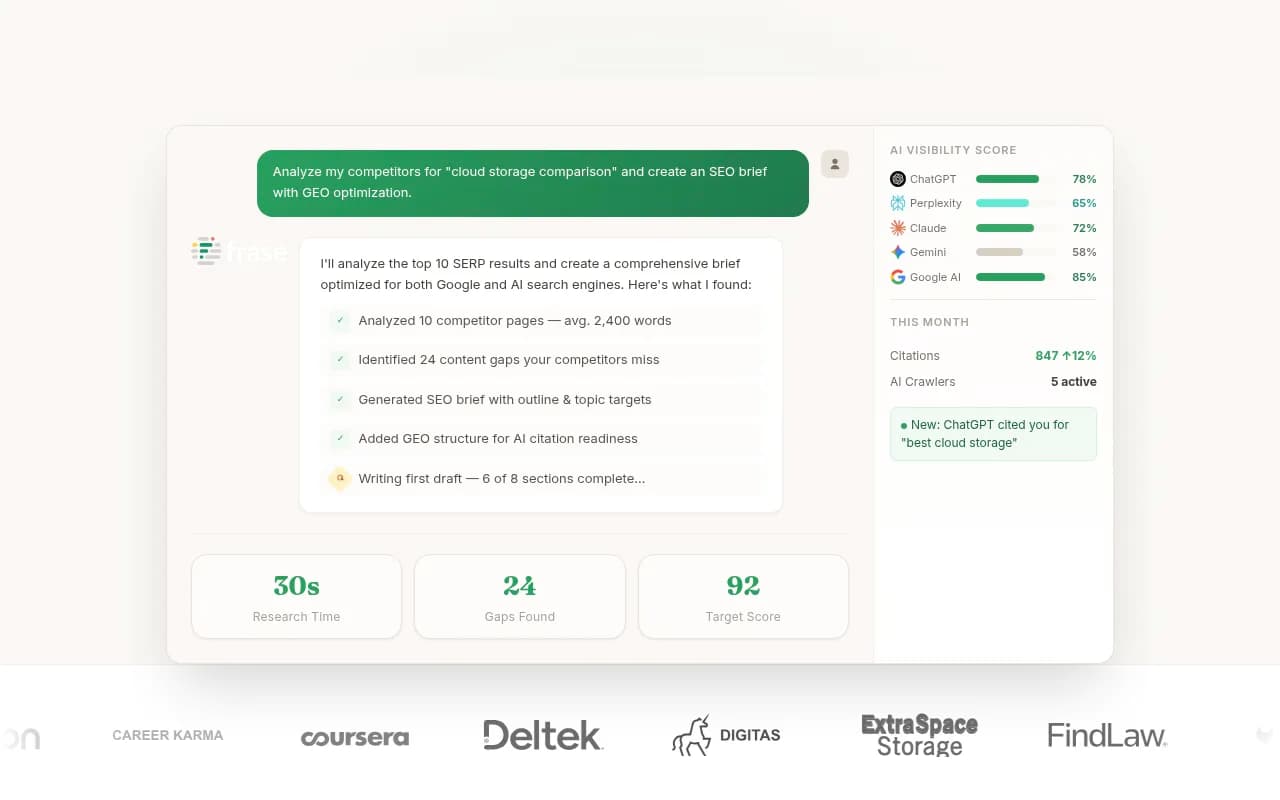
Frase sorts prompts into awareness, consideration and decision stages, each with its own visibility score. That's a neat fit for B2B, since you can see where in the buying journey you drop out. It also drafts and publishes updates. Note that its own guide ranks itself first, so weigh that.
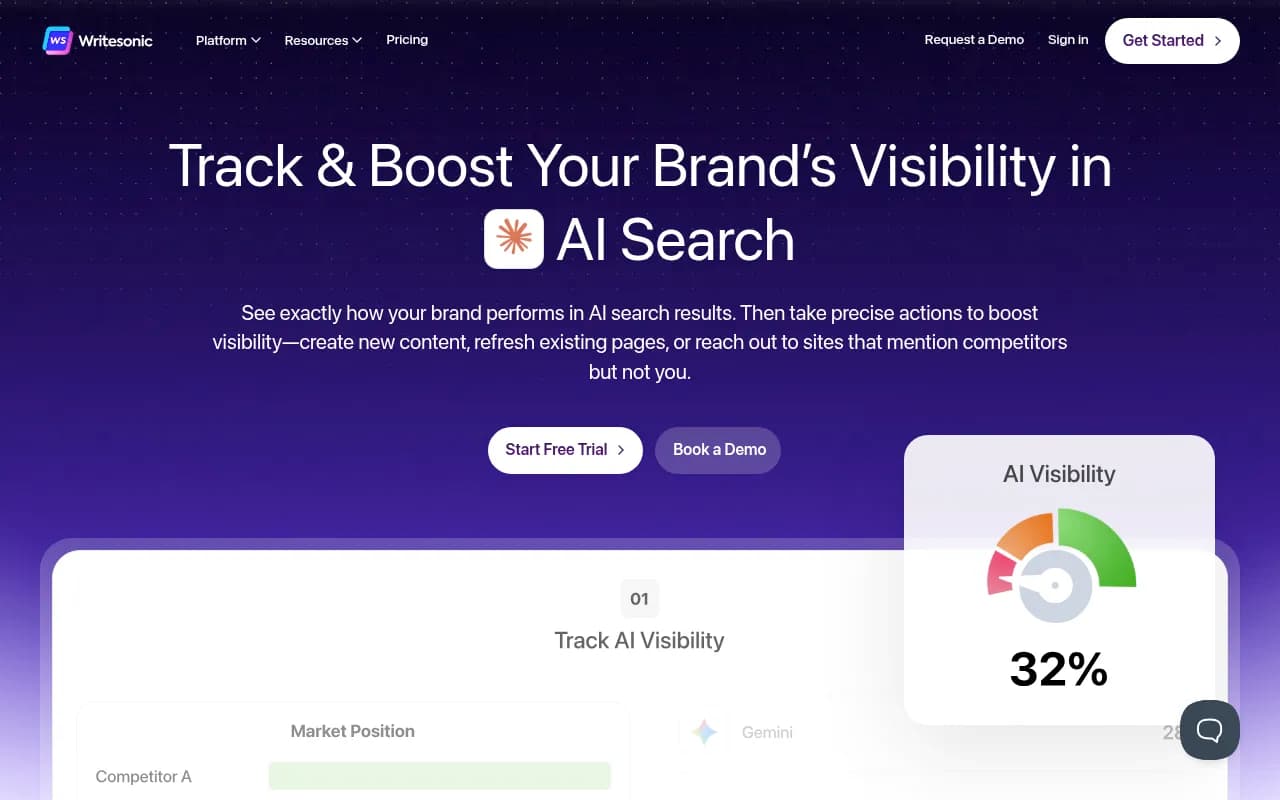
Writesonic bundles AI tracking with content creation and turns results into a prioritized to-do list. A comparison page I reviewed lists it from $99/mo with three engines at the entry tier.
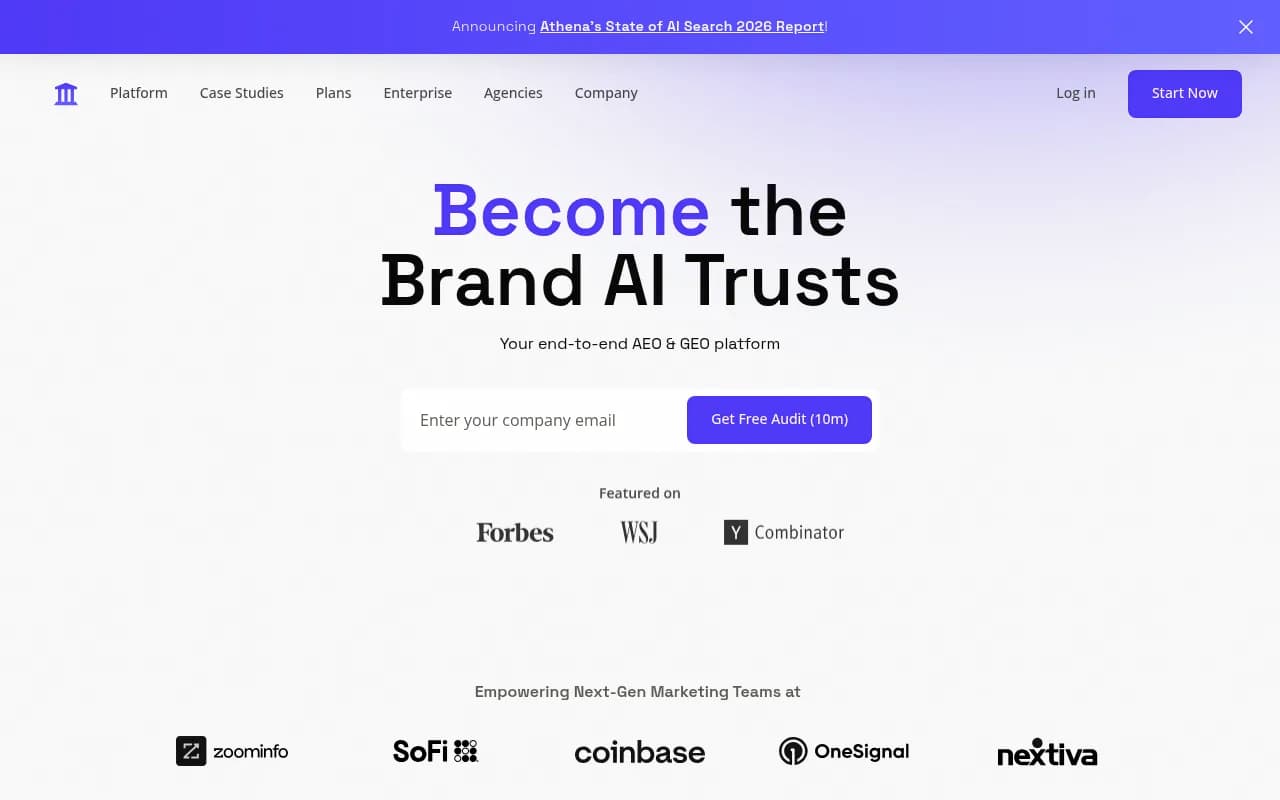
AthenaHQ offers prompt-level analytics, share of voice and content gap analysis, with an action center and a content agent. One roundup lists it at $295/mo plus a free tier. Treat that as unverified.
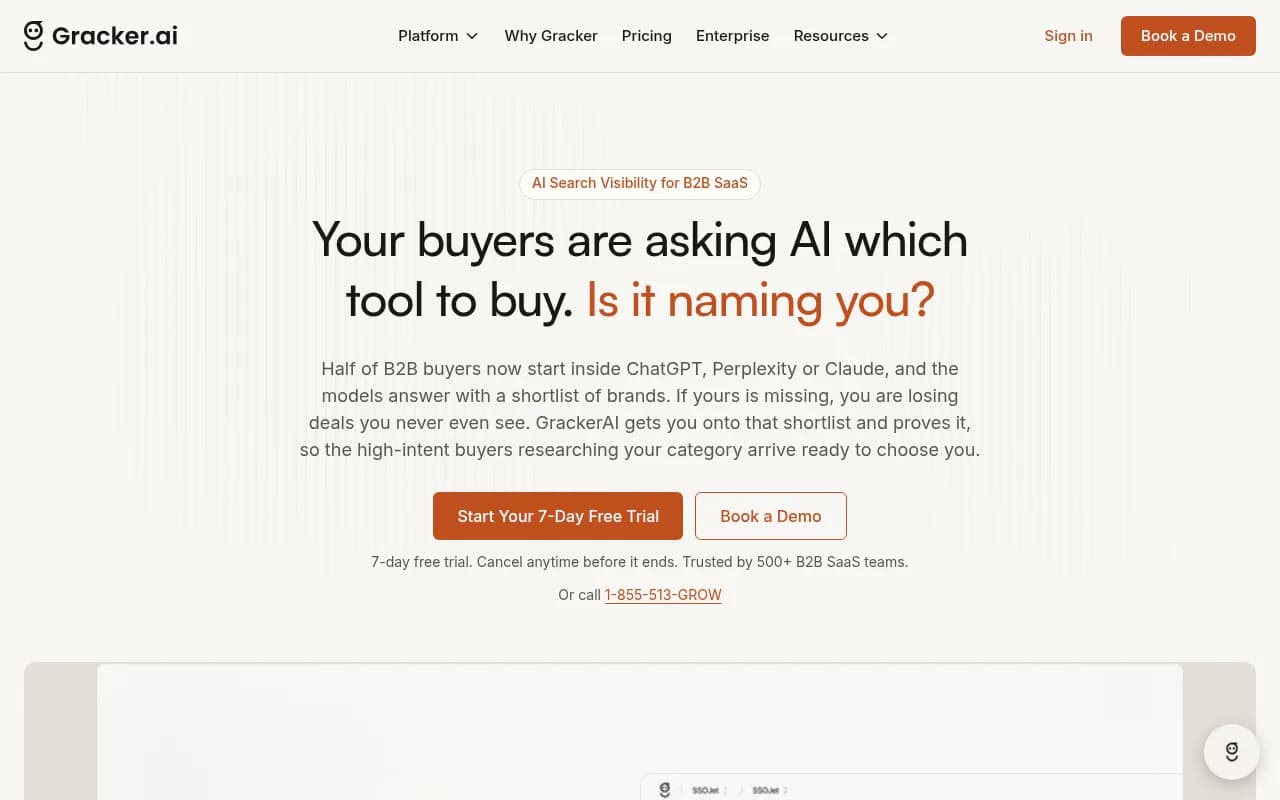
GrackerAI is aimed squarely at B2B SaaS and pairs monitoring with generated listicles, comparison pages and FAQs, from $99/mo per its own site's roundup. Again, a vendor-written claim.
Monitors for teams that just need the baseline
If you only want to know where you stand across a defined prompt set, these are cheaper and simpler.

Peec AI reports prompt by prompt across markets. The Demand-Genius guide lists it from EUR 89/mo with daily tracking. Its limitation is the one every pure tracker shares: it shows gaps but doesn't help you close them, and costs scale with prompt volume. One mechanic worth knowing from the Frase guide is that allowance is sold in prompts, and adding models or tracking more often drains it faster.

Otterly.AI has the lowest published entry price I saw, $29/month, according to the Sophyx page. Good for a first look. Not a growth platform.
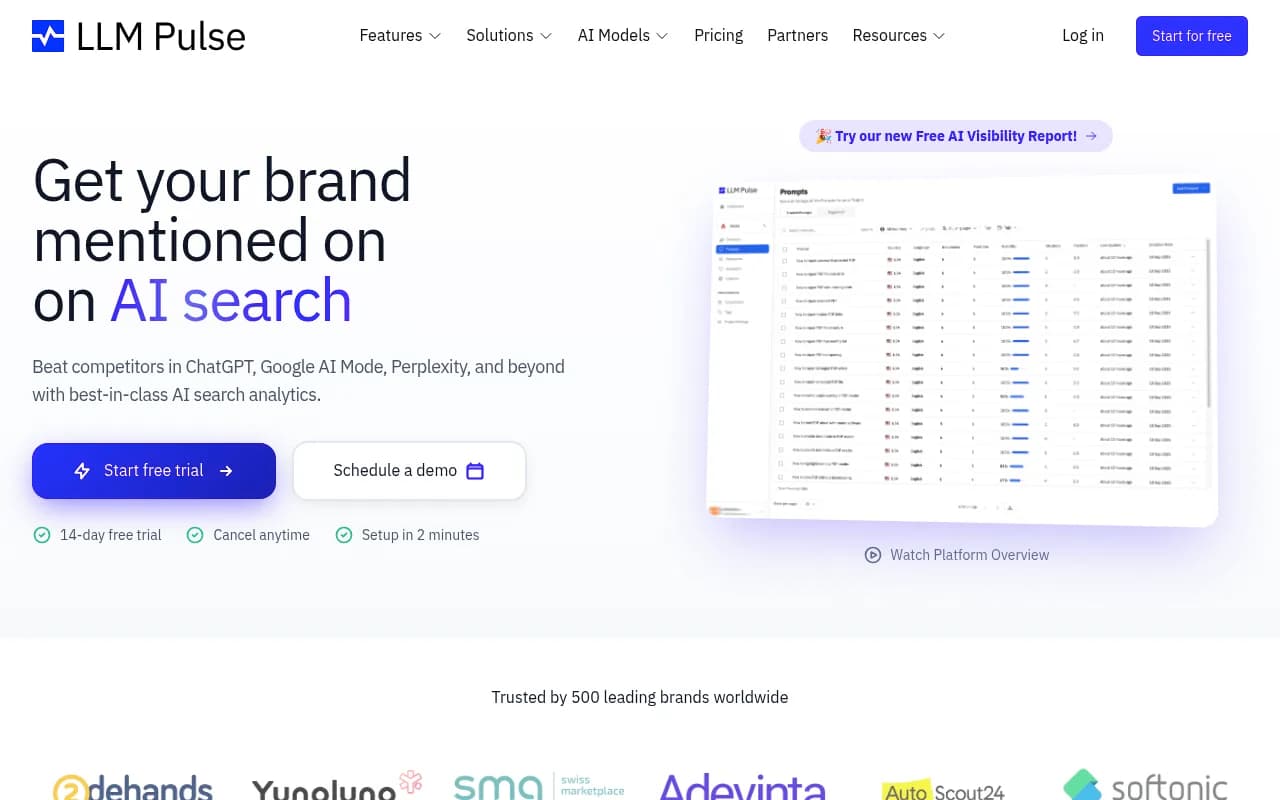
LLM Pulse tracks 10+ models with weekly monitoring and share of voice, from $53/mo per Demand-Genius. Weekly frequency is a real limit if you're watching a launch.
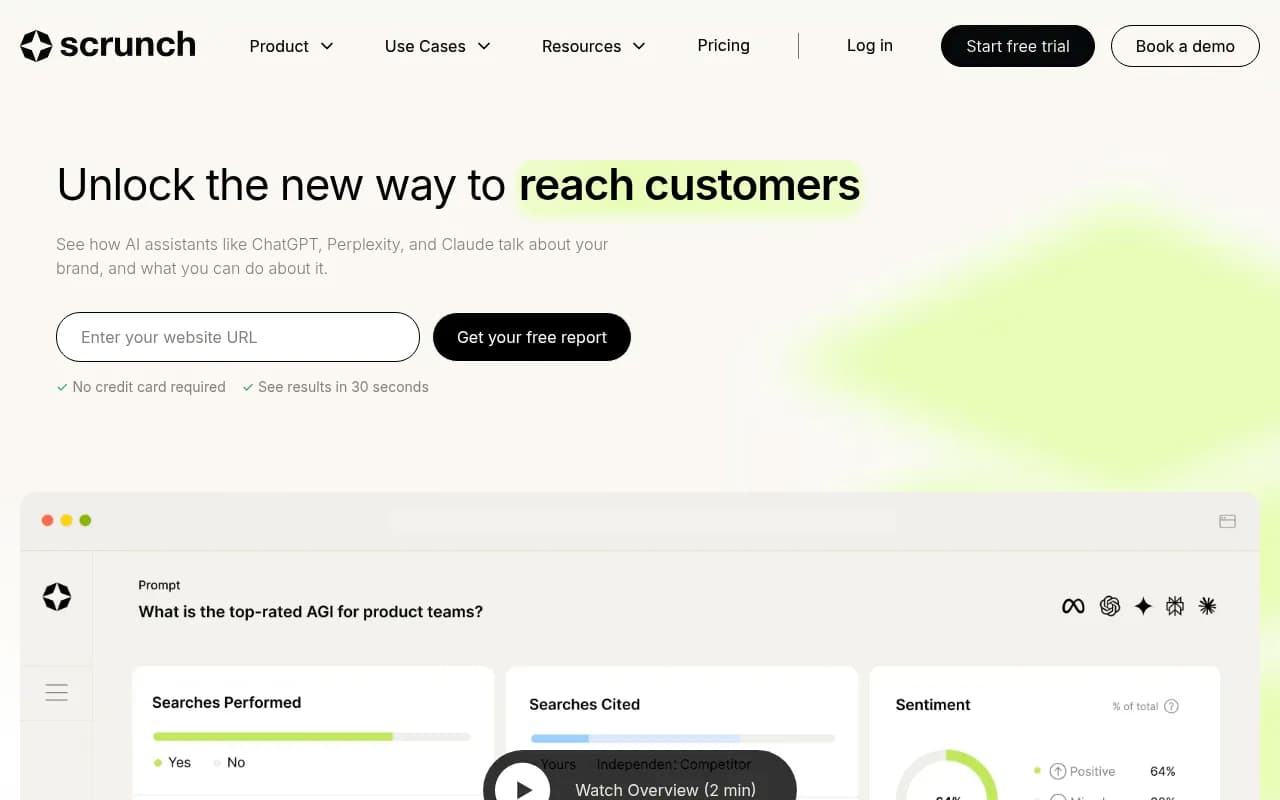
Scrunch watches brand presence and audits how AI agents read a site, with page optimizations metered by plan.
Extensions of an SEO suite you already own

Ahrefs Brand Radar sits next to keyword and backlink data. Tim Soulo's post says it tracks YouTube, Reddit and TikTok visibility and AI-search traffic, but not Amazon Rufus or AI crawler activity. Demand-Genius lists $29/mo standalone or $129/mo for Lite. The trade-offs noted there: cost at scale and data that can lag.
Semrush's AI visibility toolkit reports AI answer visibility inside the suite many teams already pay for. Fixed prompt sets and shallower AI-specific data are the usual complaints.
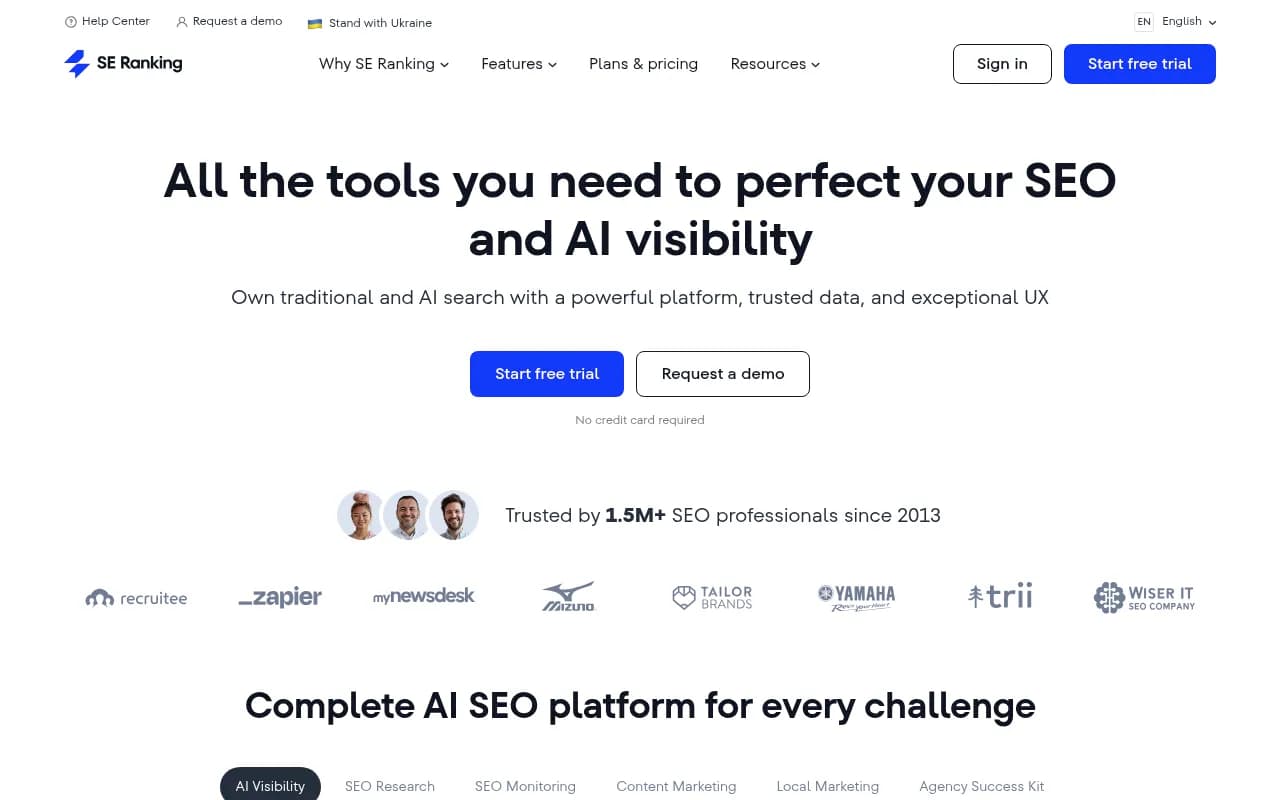
SE Ranking puts daily AI prompt tracking next to rank tracking and an on-page checker, though fuller AI-visibility checks come through a paid add-on.
If you want to browse more options than I can cover here, the GEO software directory at bestgeosoftware.com lists many of them.
Side-by-side summary
| Tool | Best for | Intent or stage segmentation | Helps fix gaps | Crawler logs |
|---|---|---|---|---|
| Promptwatch | B2B teams wanting tracking plus execution | Prompt types and intent, personas, topics | Content Agent, Action Board, CMS publishing | Yes, IP-verified |
| Frase | Content-led teams | Awareness, consideration, decision | Drafts and publishes | Not a focus |
| GrackerAI | B2B SaaS marketers | Not confirmed | Generates listicles and comparisons | Not confirmed |
| Peec AI | Multi-market monitoring | Prompt-level | No | No |
| Otterly.AI | Cheap baseline | Basic | No | No |
| Ahrefs Brand Radar | Existing Ahrefs users | Prompt-based | No | No |
| Semrush | Existing Semrush users | Fixed prompt sets | Limited | No |
| Profound | Enterprise with budget and SOC 2 needs | Strong | Agents module | Agent Analytics |
I've written "not confirmed" where the research didn't give me a reliable answer. Ask vendors directly.
How to run a fair trial
Don't compare dashboards. Compare what each tool tells you to do.
- Build a prompt set of 30 to 50. Split it into commercial "best X for [segment]" prompts, "[you] vs [competitor]" prompts, "alternatives to [competitor]" prompts, and a handful of branded ones.
- Run the same set in two or three tools for two weeks. Check whether the tools agree on who is cited. If one says you're named and another says you're not, find out whether it uses real interfaces or API calls, since user-facing answers can differ from API outputs.
- Look at the sources, not the score. For each lost prompt, which pages did the engine cite? That list is your to-do list: listicles to get into, comparison pages to write, review profiles to refresh.
- Check content longevity. Promptwatch's content half-life data found that landing pages and docs stayed cited longest, while news lost half its pages within 36 days. Evergreen comparison and product pages are a better bet than news-style posts.
- Test the fix. Ship one comparison page or refresh one product page, then see whether the tool shows it getting crawled, cited and clicked. If the tool can't tell you, you're back to guessing.
Picking by situation
- Small team, no content person: a tool with a content layer (Promptwatch, GrackerAI, Frase) beats a cheap monitor, because a monitor will sit unused.
- Already on Ahrefs or Semrush: try their add-ons first for a baseline, but expect to outgrow them if comparison prompts matter.
- Tight budget, just curious: Otterly.AI or LLM Pulse for a baseline, then upgrade once you know what you need.
- Agency serving B2B clients: look at agency plans with unlimited projects and white-label options. Promptwatch's start at $199/mo, though white-label and client portal are Enterprise.
- Enterprise with compliance requirements: Profound remains a contender. Promptwatch is ISO/IEC 27001 certified and GDPR compliant, which also helps procurement.
For more tools in the AI rank tracking category, the AI rank tracking directory at ai-rank-tools.com is worth a look.
What I'd do this week
Pull your top 10 "best X" and "vs" prompts, run them by hand in ChatGPT and AI Overviews, and write down which pages get cited. Then start a trial of one tracker with a fix layer and one cheap monitor, and see which one tells you something you didn't already know. The tool that points to a specific page to write or repair is the one worth paying for.