Key takeaways
- Most enterprise AI visibility vendors do not publish prices. In one third-party procurement review of 12 vendors, only 4 could be priced from public pages at a 500-prompt workload. Your order form is the only source of truth, so read it line by line.
- The platforms being measured change overnight. Your contract needs clauses for model releases, baseline resets, and annotated reporting, or a platform-wide drop will look like your brand failing.
- Check the pricing unit (prompt, engine, market, or credit), the engines contractually covered, and whether strategist hours renew with the platform fee.
- Security claims vary. A cloud host's certificate or a parent company's SOC 2 is not the same as a Type II report covering the product you are buying.
- The vendor market is consolidating. Add change-of-control, assignment, and termination rights before you sign.
Why renewal is the moment that matters
The first contract is usually signed in a hurry. A CMO wants an AI visibility number, a pilot starts, and the dashboard looks interesting. Renewal is different. You now have six to twelve months of your own data, you know what the tool actually did for you, and the vendor knows you are probably not going to rip it out in a week.
That is leverage, and most teams waste it by auto-renewing.
This guide uses Brandlight as the running example because the question came up around it, but the checklist applies to any enterprise AI visibility contract. One caveat up front: I found no public Brandlight contract terms, renewal terms, or price points. Everything below about Brandlight comes from its own marketing pages or from competitor claims, and competitor claims are questions to ask, not facts to repeat. Your order form is what counts.
What Brandlight says about itself
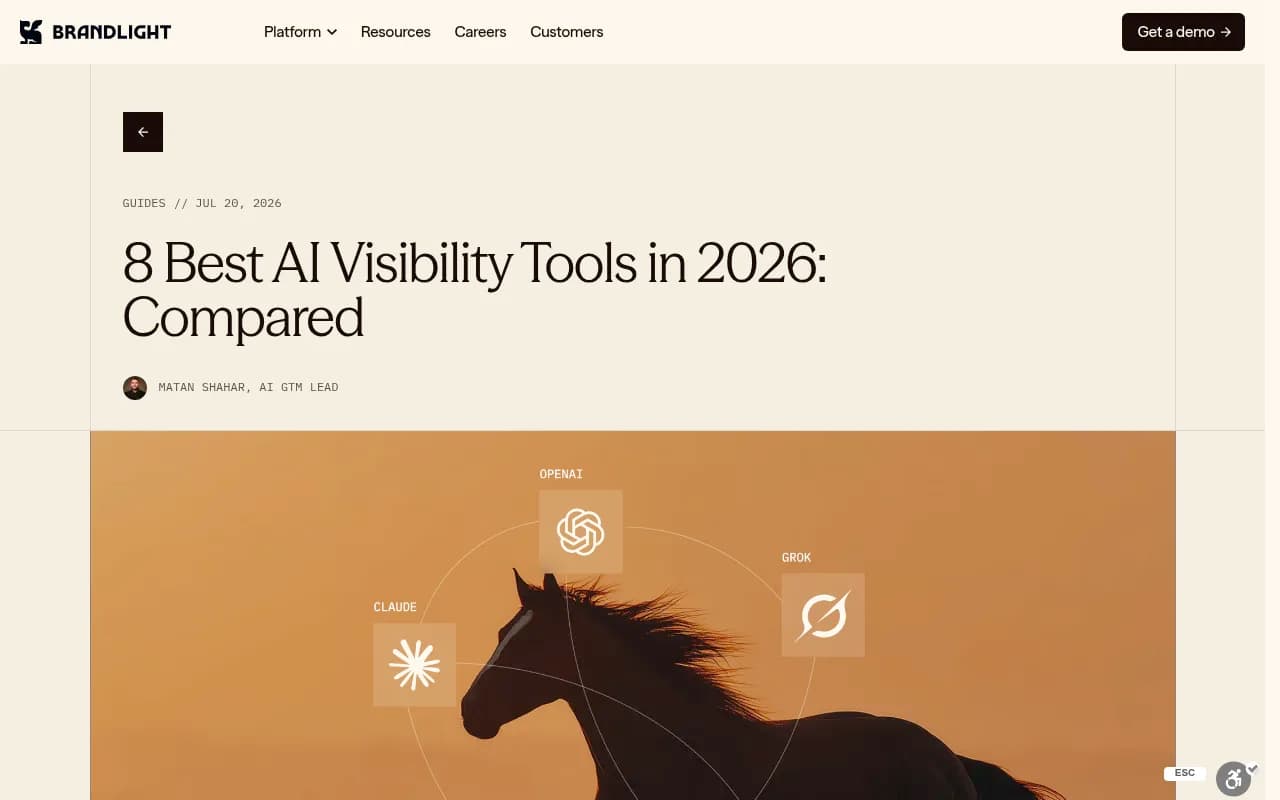
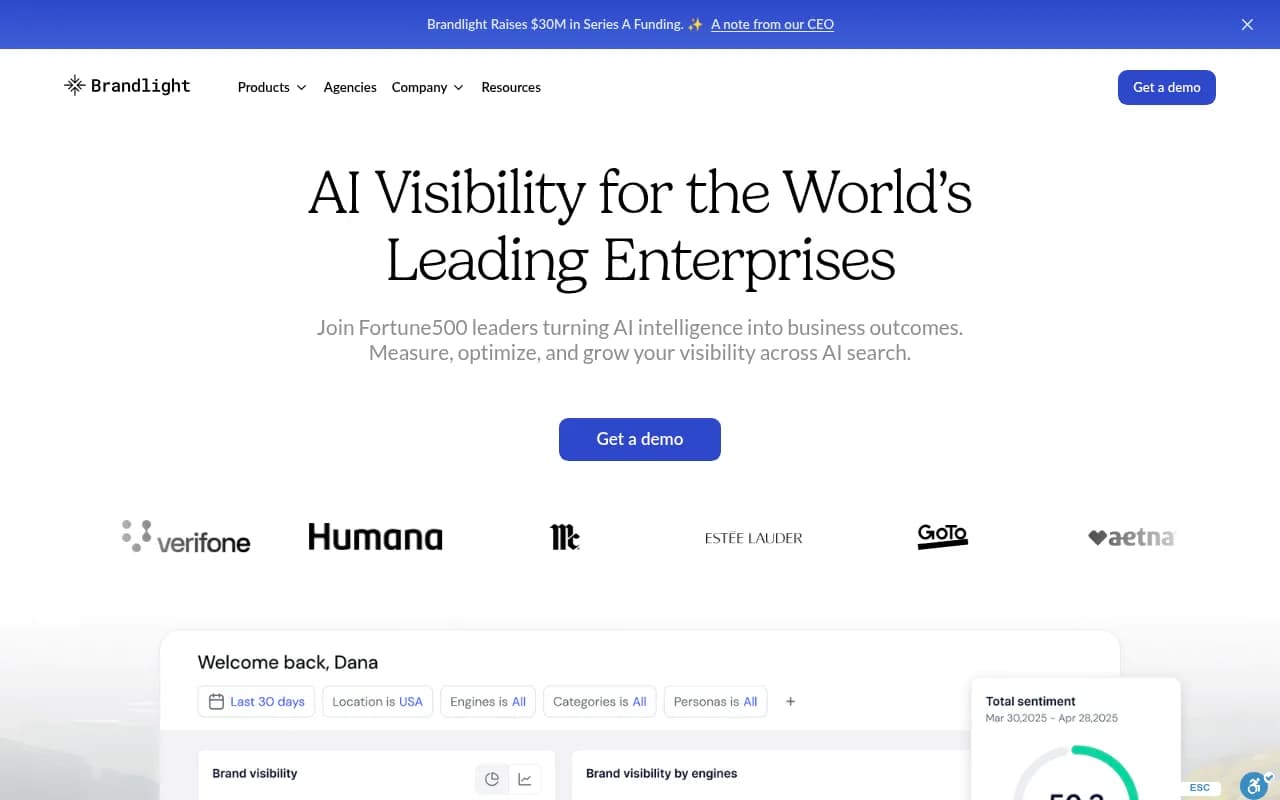
Per Brandlight's own comparison post, it is enterprise-only and priced to scope. It starts with a paid 3-month pilot rather than a free trial. It lists coverage of ChatGPT, Google AI Overviews, Google AI Mode, Gemini, Perplexity, Copilot, and Claude, with per-market adaptation. It also pairs the platform with an AI-strategy service.
Those facts raise concrete contract questions:
- Does the pilot fee credit against the first annual term? I found no source on this. It is a negotiating ask, not a known term.
- Do the strategist and service hours renew with the platform fee, or are they a separate line item that can be dropped or repriced?
- Is the engine list in the contract the same as the engine list on the website?
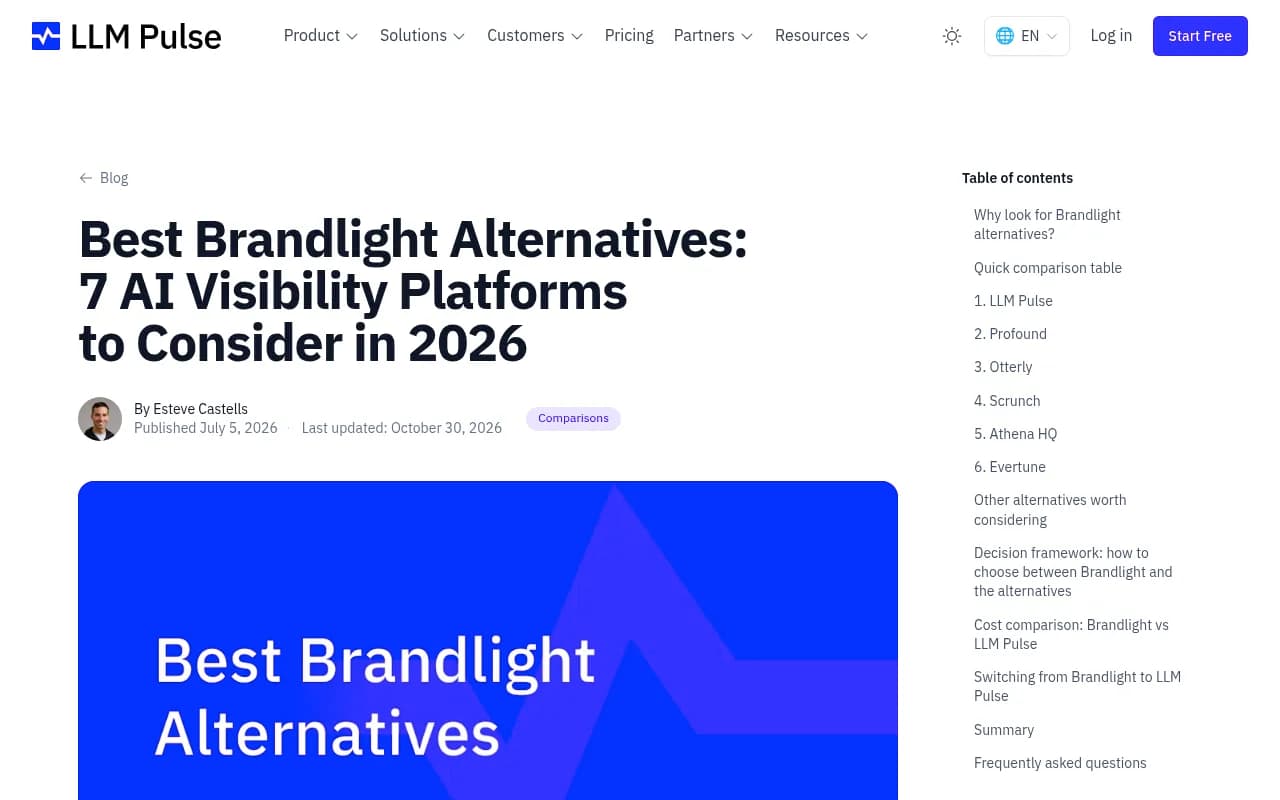
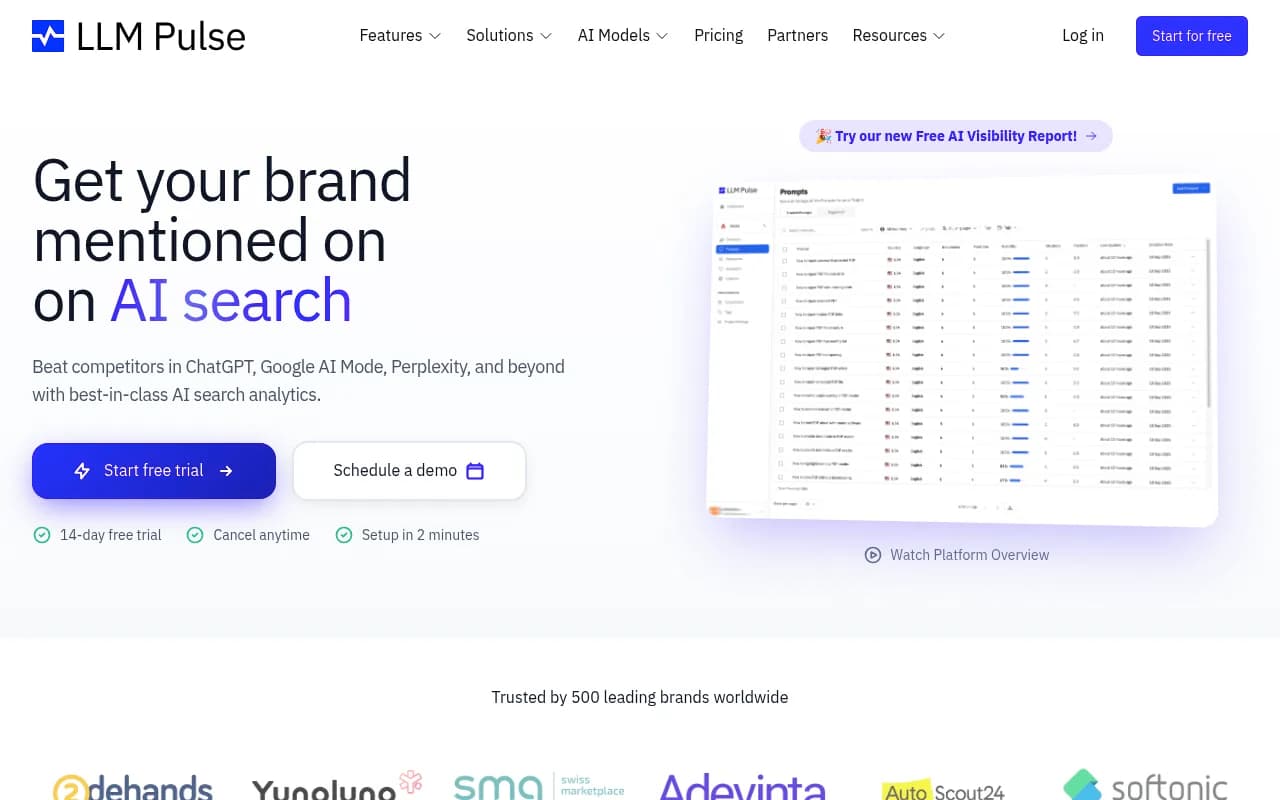
That last one matters more than it sounds. LLM Pulse's comparison article lists Brandlight as tracking ChatGPT, Gemini, Perplexity, Copilot, and Grok, which differs from Brandlight's own list. Profound's agency comparison says Brandlight tracks the fewest engines in its list and has the shortest track record. Both are competitor-authored, so weigh them accordingly. But the discrepancy is exactly why you should name the engines in the order form.
Red flag 1: opaque pricing units
If a vendor will not tell you the unit it bills on, you cannot compare quotes or forecast next year's cost.
In Rework's procurement review (updated October 5, 2026), only 4 of 12 vendors could be priced from public pages at a 500-prompt workload. Only Ahrefs ($1,499/mo, annual commitment) and Trakkr (from $1,000/mo, annual) published an enterprise price that includes SSO. Rework read public pages only, and "not stated" means it found nothing, not that the control is missing. Still, that is the market baseline.
Units differ in ways that quietly multiply cost:
- Ahrefs counts one prompt on one platform in one location as one "check" (per seoClarity's comparison, which I could only verify from a snippet).
- Rankscale's Claude costs 8x ChatGPT in credits, so a credit price without per-engine multipliers is incomplete.
- Multi-market enterprises can multiply spend fast when each country or language is billed separately.
Ask for a written quote at your real workload: prompts, engines, markets, and personas. Ask for overage rates in writing. Rework's weighted RFP checklist puts "price at your workload" first, at 20%, and I agree with that ordering.
Red flag 2: auto-renewal and one-way exits
AthenaHQ publishes its terms, which makes it a useful example of what standard vendor paper looks like:
- Order Forms auto-renew unless you give 30 days' notice.
- No termination for convenience.
- 99.9% monthly availability, with a 5% credit per hour-long outage as the sole remedy.
- Either party may assign the contract in an acquisition.
- Invoicing is net 30, in advance.
None of that is unusual. But each line is a negotiation point. Put the notice deadline in your calendar the day you sign. Push for a 60 to 90 day reminder from the vendor, a shorter renewal term than the original, and a price cap on renewal uplift. An SLA where the only remedy is a small credit is not much of an SLA for a tool you report to the board.
Red flag 3: vague methodology
LLM Pulse says Brandlight has limited public documentation of how prompts are executed, how citations are extracted, and how rate-limited models are handled. Again, that is a competitor claim. But it points at the right question for any vendor: where does the data come from?
There is a real difference between capturing answers from the actual user interfaces of AI engines and calling APIs. User-facing answers and citations can differ from API outputs. Promptwatch states that it collects from real UIs of ChatGPT, Gemini, Perplexity, Claude, and Google AI Overviews, and you can read how in its data collection guide. Using that as a benchmark, ask your vendor:
- Is data captured from the UI or via API?
- How often are prompt sets re-validated?
- How are failed or rate-limited runs handled, and are they excluded or counted as zero?
- Can we export raw responses and citations, not just scores?
Put the answers in an appendix. A methodology that exists only in a sales call is a methodology that can change without notice.
Red flag 4: no clause for platform volatility
This is the one most contracts miss completely, and it is the one that will hurt you.
The engines your vendor measures change behaviour without warning. Promptwatch's data shows several examples:
- ChatGPT's citation slots dropped about 27% after GPT-5.3. In the week before the March 4, 2026 rollout it cited about 6.4 sources per search-enabled response. By late March that was about 4.7 to 4.9, with no recovery a month later. It hit GPT-5.3, GPT-5.4, and GPT-5-Mini within a day. (ChatGPT citation drop report, published March 12, 2026)
- ChatGPT's average web searches per response fell from 2.15 in early December to about 1.84 by early March, then returned in April at exactly 1.0. Average query length fell from about 117 characters to about 53. (ChatGPT query fanouts)
- On August 8, 2026, ChatGPT started using the site: operator at scale, rising from about 0.4% to about 17% of fanout queries. (site: operator report)
- Reddit's share of ChatGPT citations collapsed from about 4% to 0.5% on August 14, 2026. (Reddit citations report)
If your KPI is "citations" or "visibility" and your baseline was set before one of these events, a platform-wide shift looks like your brand losing ground. Promptwatch's own analysis calls single-snapshot audits unreliable and continuous monitoring essential.
Clauses worth requesting:
- The vendor annotates model releases and platform changes directly in your reports.
- Baselines are re-set, or at least flagged, after a documented platform change.
- Any performance commitment is measured relative to the market or competitor set, not against an absolute number.
- The vendor tells you how often prompt sets and fan-out modelling are re-validated.
Red flag 5: stale statistics used to sell strategy
Brandlight's blog says roughly 85% of the sources AI cites for category questions are third-party or social. That is a vendor figure, and source mixes move quickly by engine.
Promptwatch's social citation data for September 28 to October 4, 2026 shows how different the engines are. ChatGPT got 0.46% of its citations from social platforms, down from 5.8% in the earlier report, with Reddit falling from 5.19% to 0.09%. Google AI Overviews got 12.2%, with YouTube at 4.28% and Facebook at 2.38%. Perplexity got 2.7%.
If the strategy service builds a Reddit or YouTube program on a headline statistic, ask for the date range and the engine split behind it. A recommendation that was right in spring can be wrong by autumn.
Red flag 6: security claims that do not match the product
In Rework's review, 7 of 12 vendors stated their own SOC 2 report. Two of those claims covered a parent platform rather than the AEO product, three cited only their cloud host's certificates, one was in progress, and one stated nothing.
For your security review, treat these as red flags:
- "In progress" or "coming soon"
- A hosting provider's certificate presented as the vendor's own
- A parent company's report that does not cover the visibility product
Ask for the latest Type II report with its period and scope. Ask where data is stored, who the subprocessors are, and whose DPA applies. A SOC 2 report does not establish data residency, as Lightsite's FAQ points out, so ask about that separately. If you need SSO, confirm it is in your tier and priced, since it is often reserved for the top plan.
Red flag 7: vendor continuity and change of control
The vendor you sign with may not be the vendor you renew with. Recent examples from the research:
- Adobe closed its Semrush acquisition on April 28, 2026.
- Sitecore announced its Scrunch purchase on June 3, 2026.
- HubSpot's AEO product came from its XFunnel deal, announced October 31, 2025. It is a $50/mo Beta, described as "as-is, no support duty."
- Profound says it raised a $180M Series D at a $1.8B valuation on September 15, 2026. That is a company statement.
Brandlight is reported by LLM Pulse to have raised a $30M Series A, which I could not verify elsewhere. Funding is not a guarantee of anything, in either direction. What you can control is the paper:
- Notice of any change of control or assignment
- A right to terminate without penalty within a set window after an acquisition
- Data export rights, including raw responses, at termination
- A support and roadmap commitment if the product is folded into a bigger suite
Red flag 8: the service layer that does not renew
Enterprise AI visibility contracts often bundle software with a services layer: strategists, workshops, content recommendations. That layer is where a lot of the value, and a lot of the cost, sits.
At renewal, get the answers in writing: named strategist or team, monthly hours, response-time expectations, and what happens to those hours if the platform fee is renegotiated. Services are also the easiest thing for a vendor to quietly thin out.
Also ask whether the tool does more than report. A dashboard that scores you and leaves the work to your team is a different product from one that helps you fix gaps. Promptwatch, for example, pairs monitoring with content gap analysis, a Content Agent, CMS publishing, and IP-verified AI crawler logs, then tracks whether published pages get crawled and cited. Whatever you pick, decide in advance whether you are buying measurement or measurement plus execution, and price accordingly.
Contract checklist at a glance
| Area | What to ask for | Warning sign |
|---|---|---|
| Pricing | Written quote at your workload, with overage rates | "Priced to scope" with no unit defined |
| Units | Definition of prompt, engine, market, credit | Per-engine credit multipliers hidden |
| Renewal | 60 to 90 day reminder, capped uplift, shorter term | Auto-renew with 30 days' notice |
| Exit | Termination for convenience or after change of control | No exit, assignment allowed freely |
| SLA | Uptime, data freshness, meaningful remedy | 5% credit as sole remedy |
| Coverage | Named engines in the order form | Website list differs from contract |
| Methodology | UI vs API capture, validation cadence, export of raw data | Method only explained verbally |
| Volatility | Annotated model releases, baseline resets | Absolute KPIs on moving platforms |
| Security | Type II report with scope, residency, subprocessors | Host certificate offered as your own |
| Services | Named team, hours, renewal terms | Hours not specified |
How to compare alternatives before you renew
Even if you plan to stay, get two competing quotes. It improves your position and tells you whether you are overpaying. Entry pricing from vendor pages and the Rework review (October 2026) gives a sense of range, though enterprise tiers are usually custom.
| Vendor | Entry pricing |
|---|---|
| Peec AI | $95/mo |
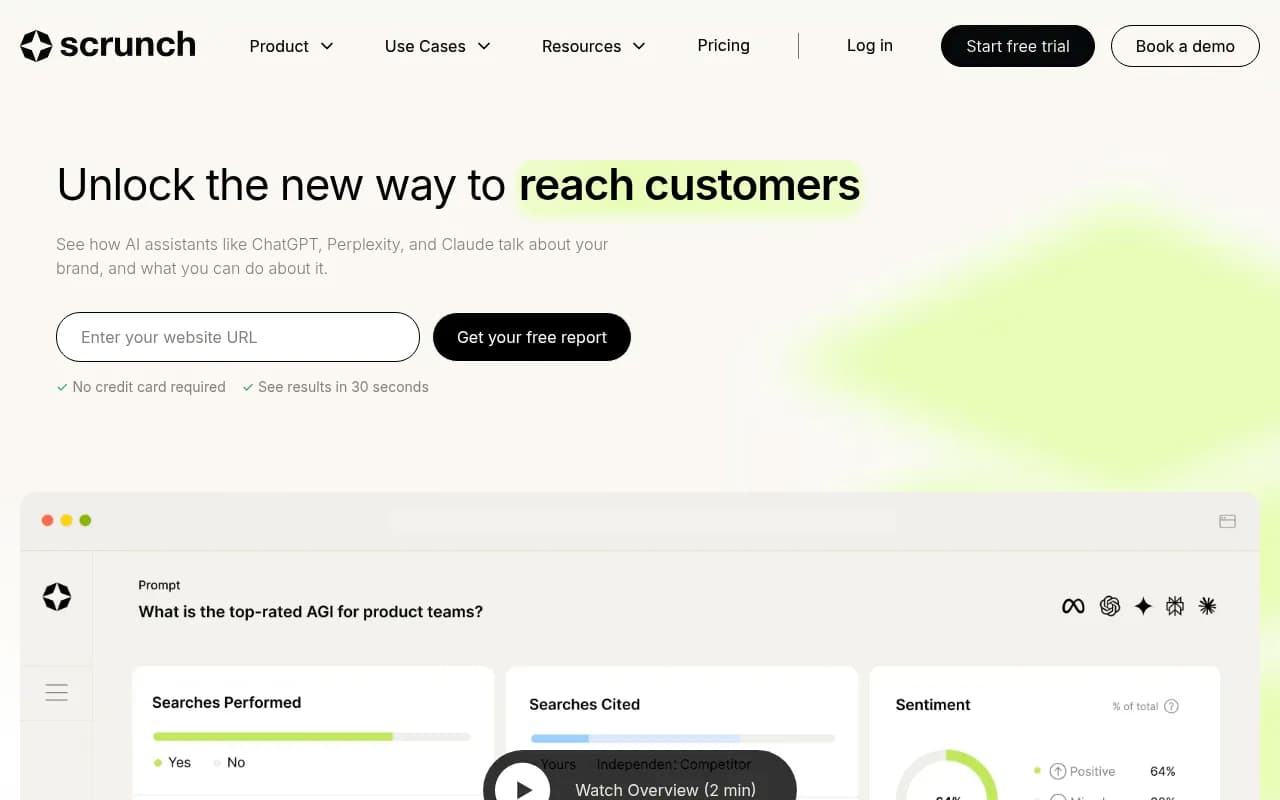
| Scrunch | $250/mo Core |
| Goodie | $399/mo annual |
| AthenaHQ | Free; Starter $295/mo |
| Otterly | $29/mo; Premium $489 plus 100-prompt pack at $99 = $588/mo |
| Trakkr | $100/mo |
| Profound | Free 7-day trial; Enterprise custom |
| LLM Pulse | EUR 49/mo for 50 prompts; EUR 99 for 150; EUR 299 for 450 |
| Promptwatch | Essential $95/mo, Professional $245/mo, Business $579/mo; agency and Enterprise plans available |
Promptwatch prices come from its pricing page, which you should confirm before quoting. Other figures are as reported in the sources above and change often.
A few of these are worth a closer look depending on your situation:




For enterprise buyers, I would add a platform that publishes pricing, holds an ISO/IEC 27001 certification, and ties visibility to outcomes. Promptwatch is ISO/IEC 27001 certified, GDPR compliant, and combines prompt tracking across real AI interfaces with crawler logs, visitor analytics, and content execution. Its Business plan is $579/mo and covers faster-than-daily tracking, local targeting, Fact Check, and an audit log; enterprise needs like SSO and a white-label portal sit in a custom tier.

If you are still building the shortlist, the GEO software directory at bestgeosoftware.com lists far more options than fit in a table here. The head-to-head pages for Promptwatch vs Profound and Promptwatch vs Brandlight are a quick way to see how the feature sets differ.
A practical renewal process
Start 120 days before the notice deadline, not 30.
- Pull your usage. Prompts, engines, markets, and seats actually used versus contracted. Shelfware is your first discount.
- Re-read the original order form and any MSA. Highlight the renewal, assignment, SLA, and price-change clauses.
- Send the vendor a written list of the questions above. Their answers, and how fast they arrive, tell you about the partnership.
- Request two competing quotes at the same workload. Use the same prompt count, engines, and markets.
- Run a data portability test. Ask for a raw export of your responses and citations. If it is painful now, it will be worse at exit.
- Negotiate for a shorter term or a pilot-style opt-out if the product roadmap is uncertain.
If you would rather have an outside view during this process, an agency that runs GEO programs day to day can sanity-check scope and reporting. 1001 SEO Media works with Promptwatch as its AI visibility platform and can review a renewal from the buyer's side.
Bottom line
The biggest risk in an enterprise AI visibility contract is not a high price. It is paying for numbers you cannot interpret, on engines that change without notice, under terms you cannot leave. Define the unit, name the engines, annotate the volatility, verify the security scope, and protect your exit. Do that and renewal becomes a decision rather than a default.