Key takeaways
- Most AI visibility tools stop at monitoring -- they show you where you're invisible but don't help you fix it
- The most useful tools in 2026 combine citation tracking, content gap analysis, and some form of optimization workflow
- Promptwatch is the only platform rated "Leader" across all categories in a 2026 comparison of 12 GEO platforms
- For teams just getting started, lightweight tools like Otterly.AI or Peec AI are fine; for teams serious about improving visibility, you need a platform that closes the loop
- Prompt volume data, crawler logs, and Reddit/YouTube citation tracking are the features that separate serious platforms from dashboards
There are now dozens of tools claiming to track your brand's visibility in AI search. Most of them do roughly the same thing: they run a set of prompts against ChatGPT, Perplexity, or Gemini, check whether your brand shows up, and put the results in a chart.
That's useful. But it's also where most of them stop.
The real question isn't "am I visible?" It's "what do I do about it?" And that's where the gap between tools becomes enormous. Some platforms give you a number and leave you to figure out the rest. Others walk you all the way from "here's where you're losing" to "here's the content that will fix it" to "here's proof it worked."
This guide ranks the best AI search visibility tools in 2026 by what you can actually do with the data -- not just what the marketing page says.
Why "monitoring only" isn't enough anymore
A year ago, just knowing whether ChatGPT mentioned your brand felt like a win. That bar has moved.
AI search is now a meaningful traffic and revenue channel for most mid-size and enterprise brands. Perplexity alone is sending referral traffic that shows up in analytics. ChatGPT's browsing and shopping features are influencing purchase decisions. Google's AI Overviews are eating the top of the SERP for informational queries.
If you're only monitoring, you're watching competitors pull ahead without a clear path to catch up. The tools worth paying for in 2026 are the ones that answer three questions:
- Where exactly am I losing visibility, and to whom?
- What content do I need to create or fix to win those gaps?
- Is my visibility actually improving, and is it driving traffic?
Let's look at how the major platforms stack up against those three questions.
How the tools break down
Before getting into specific tools, it helps to understand the categories. The market has split into roughly four tiers:
Full-cycle optimization platforms -- track visibility, identify gaps, generate content, and attribute traffic. These are the most expensive but also the most useful for teams that need to move the needle.
Deep monitoring platforms -- strong citation tracking, competitive analysis, and source-level insight, but limited or no content creation. Good for research-heavy teams.
Lightweight monitoring tools -- affordable, easy to set up, good for alerts and basic tracking. Fine for early-stage monitoring but you'll outgrow them.
Traditional SEO tools with AI features bolted on -- Semrush, Ahrefs, and similar platforms that have added AI visibility modules. Useful if you're already paying for them, but rarely best-in-class for GEO specifically.
The full-cycle platforms
These are the tools that go beyond tracking and actually help you do something with what you find.
Promptwatch
Promptwatch is the most complete platform in this category. It monitors 10 AI models (ChatGPT, Claude, Perplexity, Gemini, Grok, DeepSeek, Copilot, Meta AI, Mistral, and Google AI Overviews), but the monitoring is really just the entry point.
The core workflow is built around three steps: find the gaps, create content that fixes them, and track the results. The Answer Gap Analysis shows you exactly which prompts competitors are getting cited for that you're not -- not as a vague "you're missing coverage here" warning, but as a specific list of prompts with volume estimates and difficulty scores. You can see what your competitors are ranking for and what content they have that you don't.
From there, the built-in AI writing agent generates articles, listicles, and comparisons grounded in citation data from over 880 million citations analyzed. This isn't a generic content tool -- it's trained on what actually gets cited by AI models, which is a meaningfully different optimization target than traditional SEO content.
The features that genuinely differentiate it from competitors: AI crawler logs (real-time visibility into when ChatGPT, Claude, and Perplexity crawl your site and which pages they read), Reddit and YouTube citation tracking (surfacing the discussions that actually influence AI recommendations), ChatGPT Shopping tracking, and query fan-outs that show how one prompt branches into sub-queries. Traffic attribution closes the loop -- you can connect visibility improvements to actual revenue via a code snippet, GSC integration, or server log analysis.
Pricing starts at $99/month for the Essential plan (1 site, 50 prompts, 5 articles). Professional is $249/month and adds crawler logs, city/state tracking, and 150 prompts. Business is $579/month for 5 sites and 350 prompts. Free trial available.

Profound
Profound is well-regarded for citation and source-level insight. It goes deep on understanding which sources AI models are pulling from and why, which makes it genuinely useful for competitive research and content strategy. The interface is polished and the data quality is strong.
Where it falls short relative to Promptwatch: no content generation, no crawler logs, no Reddit/YouTube tracking, and pricing tends to run higher. It's a strong choice for teams that want deep research capabilities and have a separate content workflow, but it doesn't close the loop on its own.

AthenaHQ
AthenaHQ tracks visibility across 8+ AI search engines and has solid competitive benchmarking. The monitoring layer is good. But like Profound, it's primarily a monitoring platform -- there's no content generation or optimization workflow built in. Teams using AthenaHQ typically need to pair it with a separate content tool to act on what they find.

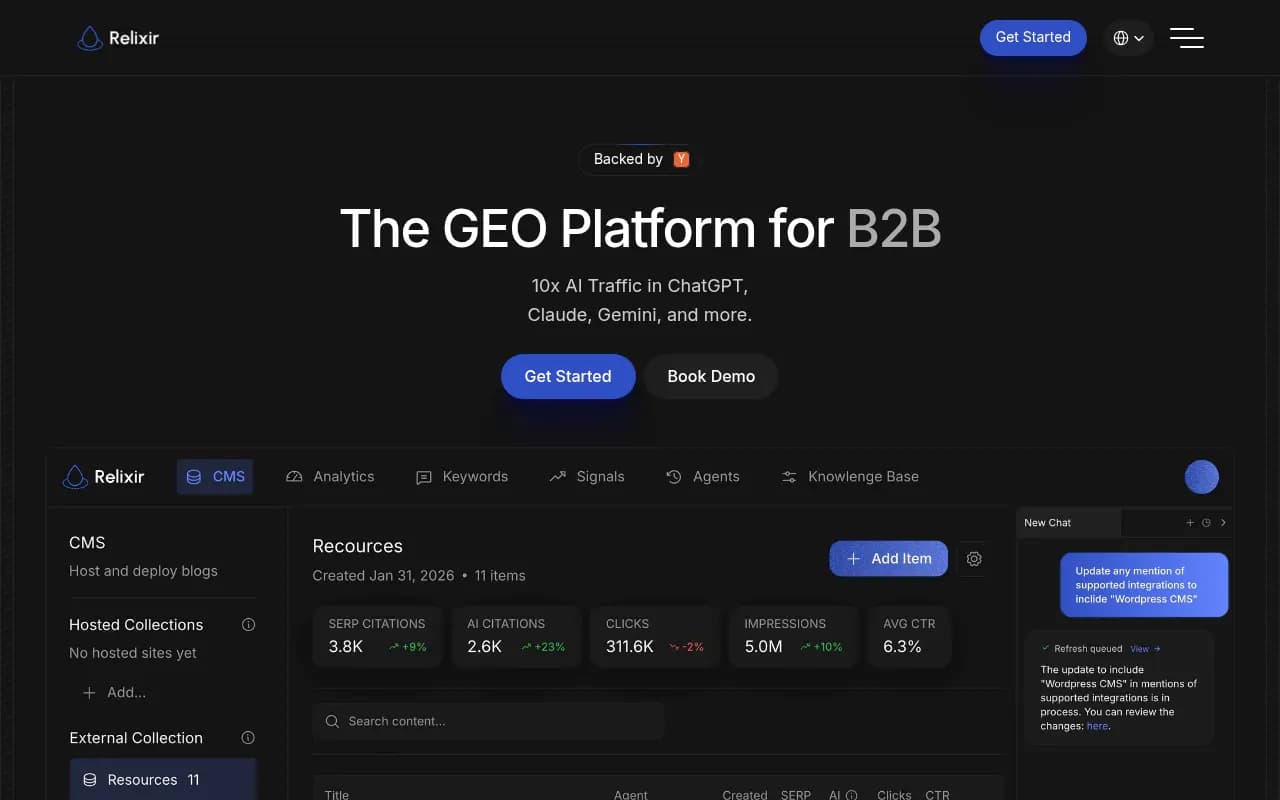
Relixir
Relixir takes an interesting approach with its AI-native CMS -- it's built around generating and publishing content specifically for AI visibility, which puts it closer to the full-cycle end of the spectrum. Worth evaluating if content production at scale is your primary need.
Deep monitoring platforms
These tools are strong on data but expect you to bring your own content strategy.
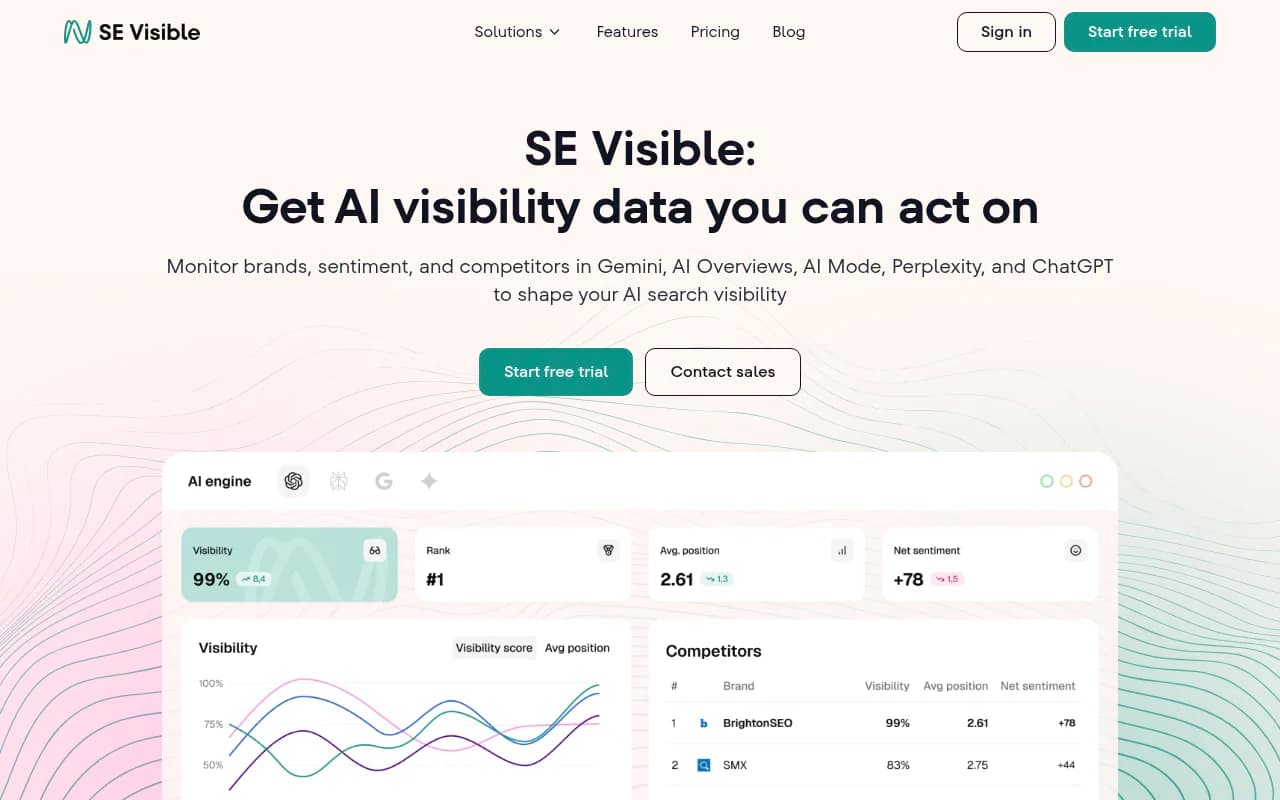
SE Visible (by SE Ranking)
SE Ranking's dedicated AI visibility product is one of the more thorough monitoring tools available. It tracks LLM answer presence, AI Overview appearances, brand mentions, and URL citations across major models. The evidence logs and screenshot capture are useful for client reporting. It doesn't generate content or provide crawler logs, but the data quality is solid and it integrates well with SE Ranking's broader SEO suite.
Otterly.AI
Otterly.AI is frequently recommended as the most affordable entry point for AI visibility monitoring. It's lightweight, easy to set up, and does the basics well -- prompt tracking, brand mention alerts, and basic competitive comparisons. The Zapier blog rated it highly for teams just getting started. The limitation is that it's genuinely monitoring-only: no content tools, no crawler logs, no traffic attribution. Fine for early-stage awareness, but you'll hit its ceiling quickly if you're serious about improving visibility.

Peec AI
Peec AI stands out for multi-language support, which matters more than people expect -- AI models respond differently to prompts in different languages, and most tools only track English. If you're operating in multiple markets, Peec AI is worth a close look.

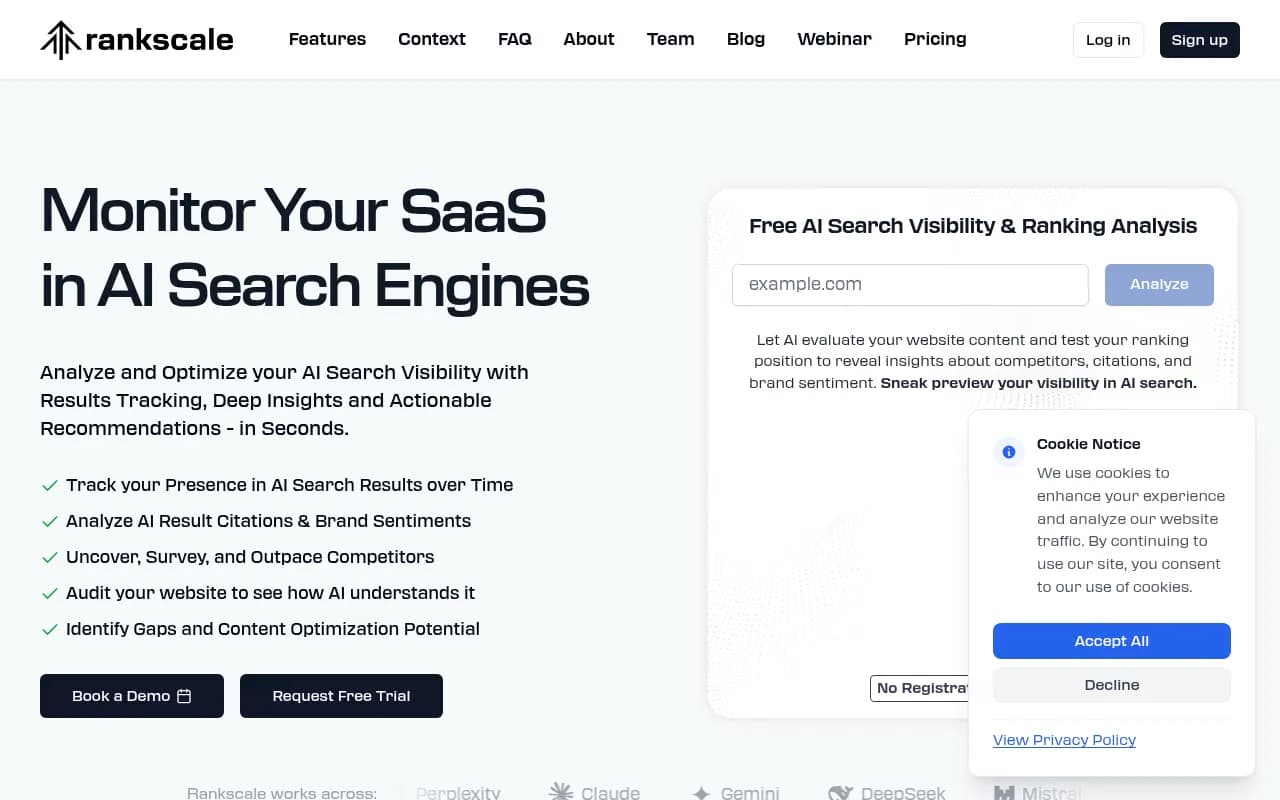
Rankscale
Rankscale focuses on AI search ranking metrics and URL detection -- which of your pages are being cited, how often, and in what position. Clean interface, good for teams that want a focused ranking view rather than a full platform.
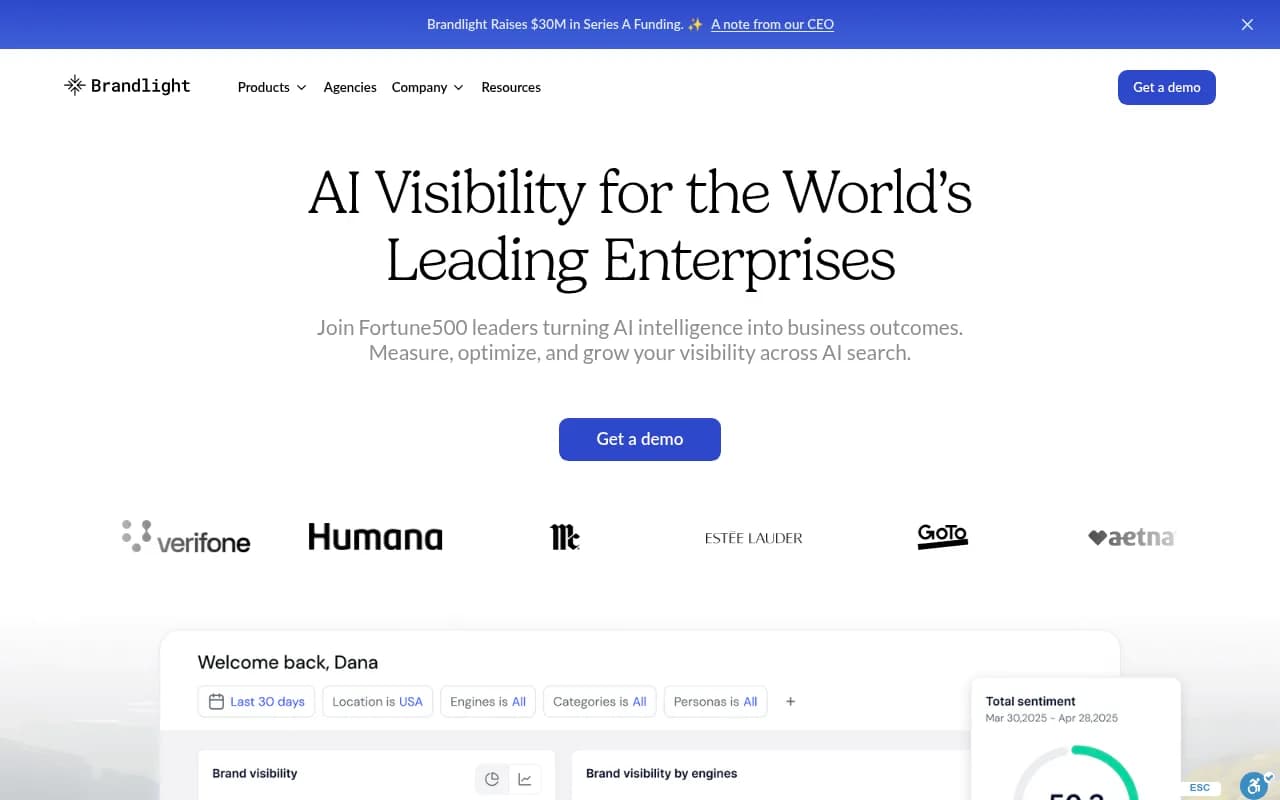
Brandlight
Brandlight tracks brand visibility and sentiment across AI-generated responses. Useful for brand teams that care as much about how they're being described as whether they're being mentioned.
Traditional SEO tools with AI features
Semrush
Semrush added AI visibility tracking to its platform and it's genuinely useful if you're already a Semrush customer. The limitation is that it uses fixed prompts rather than letting you define your own, which means you're tracking a predetermined set of queries rather than the ones that actually matter to your business. No AI traffic attribution either. Good for a quick read on visibility; not a replacement for a dedicated GEO platform.
Ahrefs Brand Radar
Ahrefs Brand Radar monitors brand mentions in AI search results. Same structural limitation as Semrush -- fixed prompts, no AI traffic attribution, no content generation. Useful as a supplementary signal if you're already in the Ahrefs ecosystem.
Newer and niche tools worth knowing
A few tools in the catalog are worth calling out for specific use cases:
GetCito -- focused on AI visibility tracking and optimization, with a clean workflow for smaller teams.
Ranksmith -- positions itself around actionable insights rather than raw data, which is a useful framing for teams that get lost in dashboards.
Trakkr.ai -- tracks brand visibility across ChatGPT, Claude, and Perplexity with a straightforward interface.
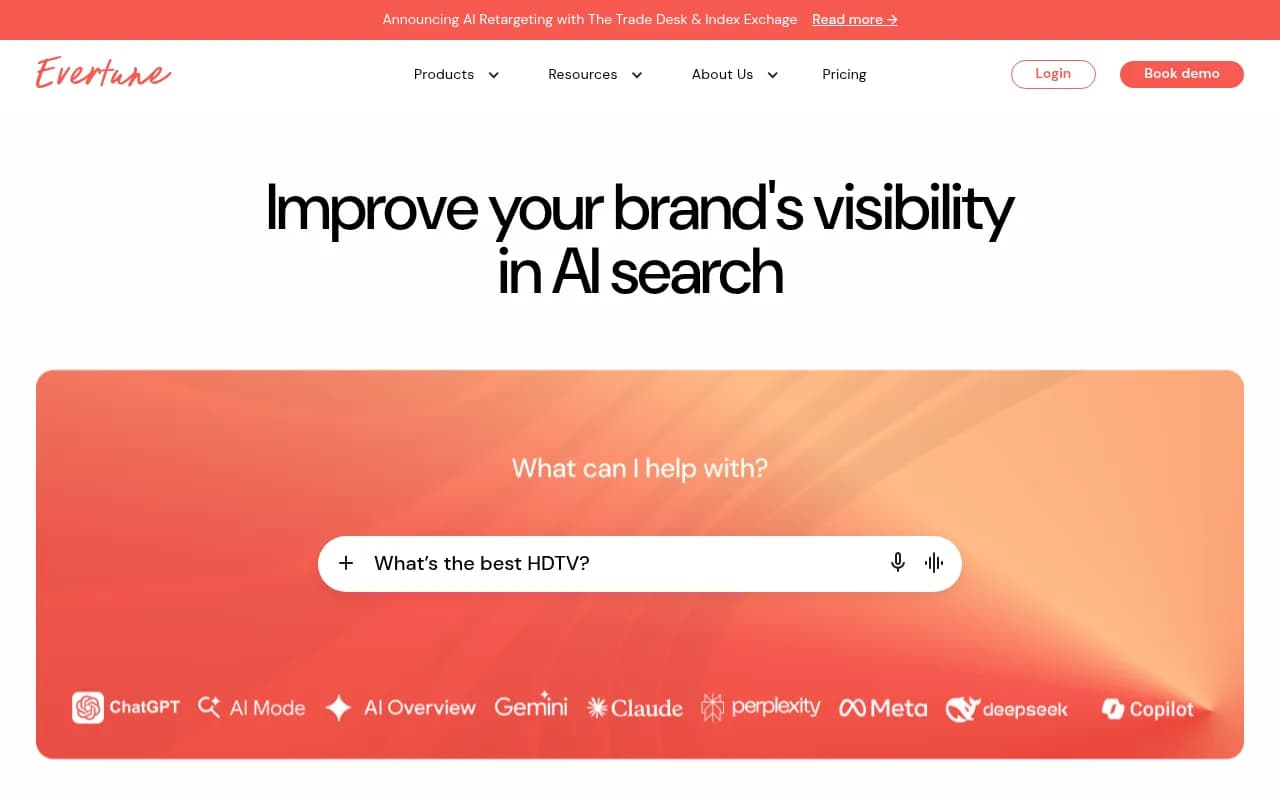
Evertune -- enterprise-focused GEO platform with strong Fortune 500 positioning. Higher price point, but built for large-scale brand monitoring.
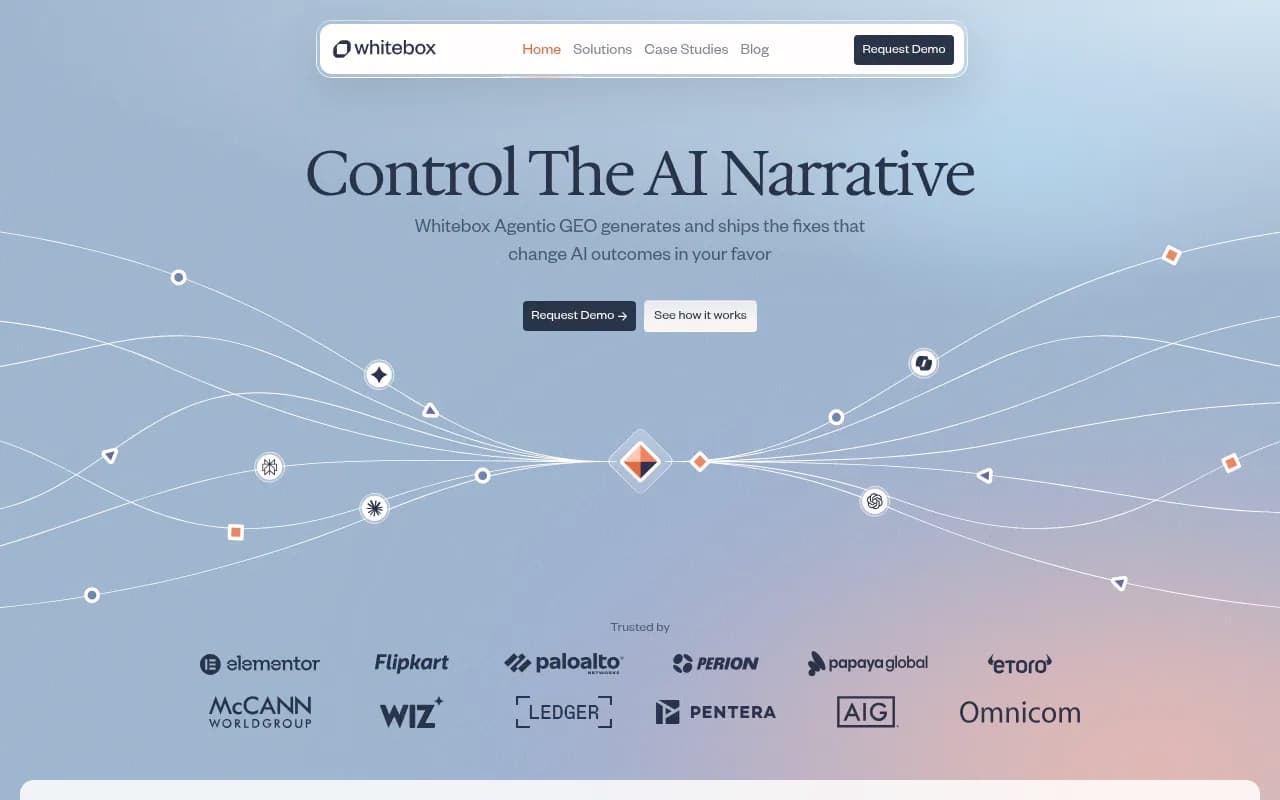
Whitebox -- takes an agentic approach, automatically generating and shipping AI narrative fixes. Interesting if you want automation rather than a workflow you manage manually.
Feature comparison table
Here's how the major platforms stack up on the capabilities that actually matter:
| Tool | Citation tracking | Content generation | Crawler logs | Reddit/YouTube tracking | Traffic attribution | Prompt volume data | Multi-language |
|---|---|---|---|---|---|---|---|
| Promptwatch | Yes | Yes | Yes | Yes | Yes | Yes | Yes |
| Profound | Yes | No | No | No | No | Limited | Limited |
| AthenaHQ | Yes | No | No | No | No | No | Limited |
| SE Visible | Yes | No | No | No | No | No | Yes |
| Otterly.AI | Yes | No | No | No | No | No | No |
| Peec AI | Yes | No | No | No | No | No | Yes |
| Semrush | Yes | No | No | No | No | No | Limited |
| Ahrefs Brand Radar | Yes | No | No | No | No | No | No |
| Relixir | Yes | Yes | No | No | No | No | No |
| Evertune | Yes | No | No | No | No | No | Limited |
How to choose the right tool for your situation
The honest answer is that the right tool depends on where you are in your GEO journey and what you're trying to accomplish.
If you're just starting out and want to understand your baseline visibility, Otterly.AI or Peec AI are low-cost ways to get a read on where you stand. Expect to spend a few hours setting up prompts and interpreting results manually.
If you're doing competitive research and need deep citation data, Profound or SE Visible give you more granular source-level insight. Good for building a content strategy, though you'll need to execute it separately.
If you're a marketing or SEO team that needs to actually improve visibility, you need a platform that closes the loop. Promptwatch is the clearest option here -- the combination of gap analysis, AI content generation grounded in citation data, and traffic attribution is what separates it from the monitoring-only tools. The crawler logs alone are something most competitors don't offer at all.
If you're an enterprise brand with complex multi-market needs, Evertune and Promptwatch's Business/Agency tiers are both worth evaluating. Promptwatch has the advantage of covering more AI models (10 vs. most competitors' 4-6) and offering Reddit/YouTube tracking that most enterprise tools ignore.
If you're already deep in the Semrush or Ahrefs ecosystem, their AI visibility features are worth turning on as a supplementary signal -- just don't mistake them for a complete GEO strategy.
What to look for beyond the feature list
A few things that don't show up in comparison tables but matter in practice:
Prompt quality matters more than prompt quantity. A tool that tracks 50 well-chosen prompts with volume data and difficulty scores is more useful than one tracking 500 generic queries. Look for platforms that help you prioritize which prompts to care about, not just how many you can add.
Evidence logs are underrated. The ability to see the actual AI-generated response -- not just a "you were mentioned" notification -- is important for understanding context and sentiment. Some tools do this well; many don't.
Crawler logs are a hidden differentiator. Knowing when AI crawlers visit your site, which pages they read, and what errors they encounter is genuinely useful for diagnosing why certain pages aren't getting cited. Very few tools offer this.
Reddit and YouTube matter more than most tools acknowledge. AI models frequently cite Reddit discussions and YouTube content in their responses. If your visibility tool doesn't surface these, you're missing a significant part of the picture.
The bottom line
The AI visibility tool market has matured fast. In 2024, any tool that could tell you whether ChatGPT mentioned your brand felt like a breakthrough. In 2026, that's table stakes.
The platforms worth investing in are the ones that help you act on what you find. That means gap analysis that shows you specific missing content, not vague coverage warnings. It means content generation grounded in real citation data, not generic SEO writing. And it means traffic attribution that connects visibility improvements to revenue, so you can justify the investment.
Most tools in this space are still monitoring dashboards. A few are starting to close the loop. Promptwatch is the furthest along on that path, which is why it's the top recommendation for teams serious about winning in AI search.
That said, the right tool is the one you'll actually use. If a lighter-weight option gets your team tracking and thinking about AI visibility for the first time, that's a better outcome than a full platform that sits unused.
Start somewhere. Then upgrade when you hit the ceiling.